
The MEXC card is a thin virtual wrapper around an exchange balance
 Available in US
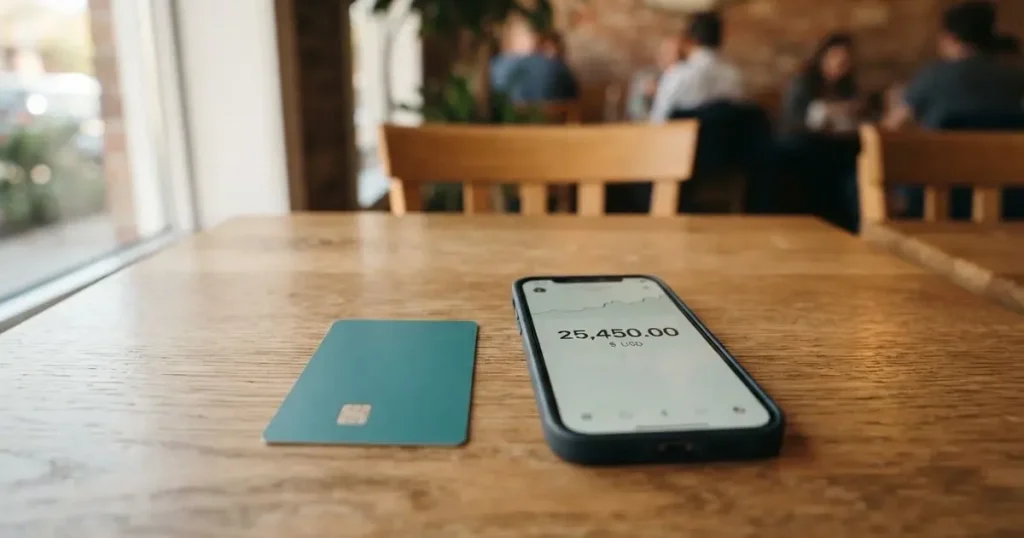
The MEXC card is not a bank card in the ordinary sense. It is a virtual Visa Platinum that spends money sitting on a MEXC exchange account, and only that money — there is no physical card, no ATM, and no second currency to fall back on. That single design choice shapes almost everything else: who can have one, what it costs to use, and how much of your own money you have to trust to a company whose name you will not find on the card.
My score for it is 5.6 out of 10. That is not a polite middling number; it is the honest sum of a card that is cheap and pleasant in one narrow scenario and structurally limited in almost every other.
The conditions described here are current as of October 28, 2026.
The score at a glance
| Criterion | Mark | Why |
|---|---|---|
| Who can get it | 8 / 10 | Closed to residents of 69 countries and territories; other applicants are judged by the country of their proof of address, and the blacklist has changed more than once. Unofficial sources put it in 110 countries. |
| Cost | 7 / 10 | Global Card: issuance 20 USD (temporarily waived), annual fee and top-up 0, crypto conversion 0 %, currency at the Visa rate with no markup, and a 1 % payment fee from 1 October 2026. |
| Top-up options | 4 / 10 | USDT only: you transfer it to the Fiat account, then to the card. No networks are named. |
| Reliability and complaints | 3 / 10 | Issuer not named, balance held at the exchange; on Trustpilot the exchange has no usable score, 88 % one-star reviews, frozen funds and delayed withdrawals; unofficial: listed on Hong Kong SFC’s suspicious-platforms list. |
| Everyday use | 4 / 10 | Virtual Visa Platinum only; Apple Pay and Google Pay exist; no physical card and no ATM. |
| Total | 5.6 / 10 | A tidy instrument for one kind of person, and an awkward one for everybody else. |
Who this suits: you already hold USDT, you mostly spend in USD or in countries where Visa conversion is cheap, you are in Asia and comfortable with an exchange-held balance, and the cashback genuinely matters to you. Who it does not suit: anyone who needs cash, a plastic card, a second currency, a clear answer about who is liable for the money, or a way to spend without first moving crypto onto an exchange.
Will they give you the card?
Yes, for most of the world, and no in a list that keeps moving. The card page opens with “The Philippines, Taiwan, Thailand…” behind a Details link, so the country list is deliberately not laid out in full. Eligibility follows the country of your proof of address: as of August 2026 the application blacklist includes the United States, China, India, Indonesia, Turkey and Russia among others, while the Philippines, Taiwan, Vietnam and Thailand are not on it. That list changes, so the version you read today may not be the version you are judged against in November.
Two unofficial catalogues paint a wider picture. DefiLlama lists the card in 110 countries. SpendNode says Global Card covers Southeast Asia, Latin America, Africa, the Caribbean, the Gulf and Central Asia, plus Japan, South Korea, New Zealand and Israel (per DefiLlama and SpendNode, 2026). Note the tension: the official list excludes Russia and Turkey. When an unofficial source is broader than the official one, believe the official one.
How to get it
Three steps, and the first one is the real gate. You complete Advanced KYC, you apply on the My MEXC Card page, and you transfer USDT to your Fiat account and then fund the card.
Advanced KYC means a government ID plus face verification. A proof of address is required and must come from an eligible country. No income proof is required. Two things the public pages do not say: any age requirement, and any processing time or list of rejection reasons. Not stated means not stated — if either matters to you, you will have to ask support before you start.
You receive a virtual card only. Physical cards are, in the card’s own words, “not yet available”, so nothing is shipped and there is no delivery window to ask about. The card is Visa Platinum virtual, in USD.
Fees: what it really costs
Here is where this card is better than its reputation suggests, with one large asterisk.
| Fee or limit | Global Card | APAC Card |
|---|---|---|
| Issuance | 20 USD standard, waived for a limited time (Aug 2026) | 0 |
| Annual fee | 0 | not stated |
| Top-up fee | 0 | 0 |
| Inactivity fee | 0 | not stated |
| Termination fee | 0 | not stated |
| Crypto conversion | 0 % | 1 % |
| Currency conversion | Visa rate, no MEXC markup | Visa rate plus 1 % on non-USD purchases |
| Payment fee | 1 % from 1 October 2026 | 0 % |
| ATM | Not applicable to virtual cards | Not applicable to virtual cards |
| Per transaction | 80,000 USD | 50,000 USD |
| Per day | 1,000,000 USD | 50,000 USD |
| Per year | no annual spend cap listed | 1,000,000 USD |
| Transactions per day | 100 | 50 |
| Transactions per month | 2,500 | not stated |
| Transactions per year | 25,000 | 1,040 |
Two caveats about the numbers above. The APAC card’s currency conversion is Visa rate plus 1 % on non-USD purchases, and the Visa spread itself is said to be usually 0.1 % to 0.3 % — so a non-dollar purchase on either card costs a little more than the headline suggests. And the monthly fee is not stated on the Global Card page; the zero in the annual row is what the card itself claims, not an inference.
The Visa rate plus no markup on the Global Card is genuinely good. A 1 % spending fee from 1 October 2026 is the price of admission: a 100 USD purchase deducts 101 USDT. The card waived that 1 % between 31 August and 30 September 2026 and waived the 20 USD issuance for a limited time as of August 2026, so the launch pricing you may have read about is not the pricing you will pay.
Three everyday payments
A 40 USD subscription in USD, Global Card. This is the best case the card has. Crypto conversion is 0 %, the currency conversion never fires because the currency is the currency, and you pay 40 USD plus the 1 % fee, so 40.40 USDT leaves your balance. The subscription sits inside the daily and monthly limits, and every monthly payment is a separate transaction against the 100-per-day and 2,500-per-month counts.
A 25 USD restaurant in a country that is not the US. The Visa rate applies with no MEXC markup, plus the spread of usually 0.1 % to 0.3 %, plus the 1 % payment fee. So roughly 25.30 to 25.65 USDT, depending on the day. A restaurant terminal may also apply address verification or treat a foreign BIN with extra caution, which is a decline risk rather than a cost.
A 200 USD flight, paid in a non-USD currency, APAC Card. Here the APAC card hurts: 1 % on non-USD purchases on top of the Visa rate and its 0.1 % to 0.3 % spread, and 1 % crypto conversion, before any 1 % payment fee — the APAC card’s payment fee is 0 %, so that particular line disappears. This is the case where the Global Card is the obviously better product, and it is worth knowing which card you actually hold.
Top up: the one route that exists
USDT, and only USDT. You transfer it to your Fiat account on MEXC, then add it to the card from the My MEXC Card page. There is no top-up fee and moving USDT into the Fiat account is free. Each top-up runs 1 to 1,000,000 USDT per the Global Card guide — though an older MEXC post cites a 100 USDT minimum, which conflicts with it.
Two gaps you should notice before you plan around this. No networks are named, and that is not a cosmetic omission: USDT exists on Ethereum, Tron, Solana, Polygon, Avalanche and others, and a transfer sent on a network the provider does not support can be lost or need manual recovery with no guarantee. Circle also stopped supporting USDC on Tron in February 2024, so “USDC over TRC20” is not a native option. And there is no stated route for topping up with fiat, nor any multi-currency balances.
On the way back out: the termination fee is 0 and there is no inactivity fee, but how you move the remaining balance back to the exchange account, and what happens to it if the card is closed, is not stated.
Paying with it every day
Spend it in a wallet. Apple Pay and Google Pay are both supported on the Global Card; the APAC Card supports Google Pay only. That is how most people will use this card, because there is no plastic to carry.
The rewards structure is where this card earns its place. Cashback depends on your M-Score tier and is paid by the 15th of the following month:
| Tier | Cashback | Monthly cap |
|---|---|---|
| Standard | 4 % | 100 USDT |
| Premier (600–799) | 6 % | 300 USDT |
| Elite (800+) | 10 % | 800 USDT |
The Standard and Premier and Elite differences change only cashback and the monthly cap. There is no metal tier and no physical tier, because there is no physical card at all. Referral pays 20 USDT to the referrer and 10 USDT to the referee.
One rule that will decide whether the cashback is worth anything: repeated failed payments can trigger a risk review and card termination. The card is not forgiving of decline loops.
If something goes wrong with a purchase, the process is: contact the merchant first, then MEXC Customer Service with a reason and evidence. The windows are 90 days for duplicate charges and 120 days for suspected fraud, goods not received, or goods not as described. Filing a dispute is free, but a review fee may apply if it is rejected for incomplete evidence. Refunds usually arrive in 1–7 days and travel refunds can take up to 30 days. A fee of USD 0.50 per refund applies only if the refund rate is excessively high, and cashback on refunded purchases is deducted. Whether any specific merchant category is blocked is not stated.
What can go wrong
The uncomfortable part of this review, and the reason the mark is 3 out of 10.
Nobody will tell you who issues the card. The issuer and licences are not named on the page. That is not a technicality. A card payment involves the network (Visa), the issuer (a licensed bank or e-money institution), and the crypto brand, which is often only a programme manager or front end. SpendNode, in 2026, states that the reviewed documents identify no issuer and no safeguarding arrangement. Nobody has published an issuer name. You are spending exchange money, and the contractual path between you and the entity that actually owes you the money is not something the public pages describe.
The balance is custodial. The exchange holds the spending balance, and no safeguarding or insurance statement was found. Control of crypto belongs to whoever holds the private key, and here that is not you. Transfers are typically irreversible, and a stolen key has no built-in recovery — the network cannot freeze or return funds. Custodial platforms have a record of it: Mt. Gox (about US$350 million reported stolen, 2011–2014), Coincheck (about US$400 million, 2018), Ronin Network (US$625 million, 2022).
The exchange’s reputation is not good. On Trustpilot, as read on 2026-10-20, MEXC had 1,368 reviews with 88 % one-star and no usable score, after a “breach of our guidelines” notice and the removal of fake reviews. User reports describe accounts flagged as “risk” with no reasons given and restrictions applied, withdrawals frozen or delayed for months, generic support replies and unresolved tickets, and hard account deletion. One review describes a $0.50 fee on a declined Apple Pay transaction. FinTelegram reported a 1.8/5 Trustpilot score with one-star reviews on frozen or withheld funds, withdrawal friction and support, and says MEXC appeared on the Hong Kong SFC’s suspicious-platforms alert list. That last one is an unofficial report, not a finding by me.
Third-party catalogues also contradict each other on the product itself: DefiLlama says Visa, 110 countries, while CryptoCardHub describes a Mastercard EUR restricted to inner test users in February 2026.
Small practical risks. 3-D Secure sends a one-time code by email (valid 4 minutes) or in the MEXC app. If you lose the card, you freeze it in Card Management and then contact Customer Service for a replacement — but a virtual card has no delivery to wait for. Declined authorisations can leave a hold for several days, typically up to 7. The issuer can restrict the tokenised number, for example blocking it on magnetic-stripe or website use. A support ticket from the platform and the help centre exist, including a Russian version at mexc.com/ru-RU/, but live chat and hours for the card are not stated on the pages I checked. Official incidents involving the card itself are not stated either — the complaints are about the exchange.
And on taxes, carefully: I am not advising you here. What the IRS position means is that digital assets are treated as property, so each payment funded from crypto can be a separate disposal measured at the fair market value on that date. Whether that applies to you depends on where you live and on your own situation.
What to take instead
If the MEXC card’s problem is that it is virtual, USDT-only, and thin on documentation, the alternatives fail in different places. None of these figures below are official; where a fact is not published, I say so.
| MEXC | Young Card | MSX | Bybit Card | |
|---|---|---|---|---|
| Score | 5.6 / 10 | 5.7 / 10 | 6.4 / 10 | 6.0 / 10 |
| Card | Virtual Visa Platinum, USD | not stated officially | not stated officially | Virtual and physical, Mastercard or Visa by region |
| Issuance | 20 USD (temporarily waived) / 0 APAC | not stated officially | not stated | Virtual free “until further notice”; physical 29.99 USD Australia, 5 USD or USDT Argentina and Asia Pacific, 29.99 USDT Georgia and Kazakhstan (AIFC), none in Brazil and Mexico |
| Conversion fee | 0 % Global / 1 % APAC | not stated | not stated | 0.9 % (0.5 % Argentina) |
| FX | Visa rate, no markup | not stated | not stated | 2 % on top of the network rate in several regions (7 % Argentina, 1.5 % Brazil, 1 % Peru) |
| Rewards | 4 %–10 % cashback by M-Score tier | Cashback paid in YNG tokens: Essential 0.1 %, Gold 1.8 %, Platinum 3.6 % | not stated | 2 %–10 % by tier, crypto-funded spending only from 2026-10-05 |
Bybit is the one that gives you a physical card in some regions and publishes the most detail, but it is also the one with the most complicated fee schedule, a rewards system that only pays on crypto-funded transactions from 5 October 2026, and an explicit statement that the product is not meant for European Economic Area customers and that all EEA participation is strictly prohibited. Its card regions listed in the official help centre are Argentina, AIFC (Kazakhstan), Georgia, Kazakhstan, Australia, Mexico, Brazil, Peru and Asia Pacific; if your country of residence is unsupported, Bybit says it “will register your interest”. No card-specific statement on Russian or Belarusian citizens was found, and no citizenship-versus-residence rule.
Young Card scores almost the same as this one and pays cashback in its own token, which is a different kind of risk. MSX scores highest here and publishes nothing I could read on card terms. For a reader who needs a physical card, an ATM, or a published issuer, none of these three obviously fixes the problem — the honest answer is that you are choosing between undocumented options rather than a documented one.
Who I would recommend it to
If you are an USDT holder in Asia who spends most of what they earn, in dollars, through a phone wallet, and you value the cashback more than you value the paperwork — go and read the fee table above before you do, because the 1 % payment fee from 1 October 2026 is what you will actually be paying.
If you need cash, a card in your hand, a local currency account, or a defensible answer to “who holds my money and what happens if they go bust”, this is the wrong card, and I would rather say so than talk you into it. The combination of an unnamed issuer, a custodial exchange balance, no published limits page I could reach, and an exchange with 88 % one-star reviews on Trustpilot is not a small objection. It is the whole objection.
Frequently asked questions
What is the MEXC card?
The MEXC card is a virtual Visa Platinum that spends money from your MEXC exchange account rather than from a bank account. You get a card number you add to Apple Pay or Google Pay, and the balance behind it is loaded from crypto. There is no physical card, no ATM, and no separate bank relationship. It is a payment front end for an exchange balance, which is the single fact that explains most of its strengths and most of its risks.
Is MEXC a bank?
No — and nothing on the card page names a bank as the issuer. A card payment normally involves the network (Visa), a licensed issuer, and often a brand acting only as programme manager. Here the issuer and licences are not named, and a 2026 third-party review found no safeguarding arrangement documented. That is why I treat the money as sitting with the exchange rather than with a regulated bank.
Who can get the card?
Eligibility follows the country of your proof of address, and as of August 2026 the application blacklist includes the United States, China, India, Indonesia, Turkey and Russia, while the Philippines, Taiwan, Vietnam and Thailand are not listed. Unofficial catalogues say 110 countries. The page shows “The Philippines, Taiwan, Thailand…” behind a Details link rather than the full list. The list changes, so check it on the day you apply.
What does it cost to use the MEXC card?
On the Global Card: crypto conversion 0 %, currency at the Visa rate with no MEXC markup, issuance 20 USD waived for a limited time, and annual, top-up, inactivity and termination fees at 0. The catch is a 1 % payment fee that applies from 1 October 2026 — a 100 USD purchase deducts 101 USDT. The APAC Card charges 0 % payment fee but adds 1 % on non-USD purchases and 1 % crypto conversion.
How do I top up the MEXC card?
With USDT, and nothing else. You transfer USDT to your MEXC Fiat account, then add it to the card from the My MEXC Card page. There is no top-up fee, and each top-up runs 1 to 1,000,000 USDT according to the Global Card guide, though an older post cites a 100 USDT minimum. No networks are named, which matters because a transfer on an unsupported network can be lost.
Can I get cash out with the MEXC card?
No. The card is virtual only, and the card’s own position is that ATM withdrawal fees are “Not applicable to virtual cards” — because there is no ATM to use. Physical cards are described as “not yet available” on the card page. If you need cash regularly, this card cannot do that job at all.
Does the MEXC card need KYC?
Yes, Advanced KYC before you apply: a government ID plus face verification, and a proof of address from an eligible country. No income proof is required. The public pages do not state an age requirement, a processing time, or the reasons an application can be rejected, so if any of those matter to you, ask before you start rather than after.
Is the MEXC card safe to use?
Safe in the everyday sense — 3-D Secure codes, freeze controls, tokenised wallets — and unsafe in the sense that matters most here. The balance is custodial, held at the exchange, with no safeguarding or insurance statement found and no named issuer. Trustpilot showed 1,368 reviews at 88 % one-star when read on 2026-10-20, with reports of frozen withdrawals and accounts flagged without reasons. Use it for spending you can afford to have frozen.
Is the MEXC card worth it?
For an USDT holder who spends in dollars and earns 4 % to 10 % cashback by M-Score tier, possibly — the 1 % payment fee is real but the cashback can outweigh it. For anyone who needs cash, a physical card, a second currency, or a clear answer about who is liable for the funds, no. The card is a narrow instrument, and the honest test is whether your spending looks like its best case.
Can I use the MEXC card in my country?
Probably, if your country of address is not on the blacklist, but “probably” is doing real work in that sentence. The card’s country list is partly hidden behind a Details link, unofficial catalogues disagree with each other, and the blacklist has changed as recently as August 2026. The way to know is to read the eligibility list on the day you apply and to compare it with your proof-of-address country — not to rely on a review, including this one.
Exchange cards put to the test – cryptocardtested
Content created by the «cryptocardtested» team