
The Kinesis virtual card spends your gold and crypto balance, pays 2% back in gold, and leaves most of the practical details unstated
 Available in US
The Kinesis card is best understood as a spending front end for a metals account rather than as a bank card in its own right. You hold gold, silver, crypto and the C1USD stablecoin inside a Kinesis account, and the card converts from that balance when you pay. On top of that, the card advertises 2% cashback paid in gold, with six months of that plan free from launch. That is the pitch, and there is something genuinely unusual in it — cashback denominated in metal rather than in fiat or points.
The problem is how much of the ordinary card experience is simply missing from the company’s own pages. The card is virtual only. Apple Pay and Google Pay are not mentioned. There is no ATM. The card network is not stated officially, the issuing bank and its licences are not named, the fees are not stated in a form I could confirm, and the eligibility rules are not stated at all — only starting data pointing at the United States, Latin America and the Caribbean, with pre-registration on the site. Third-party coverage adds a great deal, and some of it is reassuring, but third-party coverage is exactly what it is.
So the honest summary: this is an interesting product built on a real idea, at a moment when it is still being rolled out, described in public terms that are thinner than the marketing tone suggests. If you already hold gold or silver through Kinesis and want to spend it, the economics are worth looking at. If you want an ordinary payment card that works in shops, at terminals and in your phone wallet, this is not that card.
The conditions described here are current as of October 28, 2026.
Verdict: 4.8 out of 10
| Criterion | Mark | Why |
|---|---|---|
| Who can get it | 5 / 10 | The page does not say; starting data points at the United States, Latin America and the Caribbean, overall availability is unclear, and the site shows pre-registration |
| Cost | 6 / 10 | Not officially disclosed; unofficially, no monthly or sign-up fee, a 1.95% transaction fee on one page, and 0.22% conversion plus 0.45% per transaction in another source |
| Top-up options | 5 / 10 | Instant conversion of gold (KAU), silver (KAG), crypto and C1USD from the Kinesis account at the point of sale; networks not named |
| Reliability and complaints | 4 / 10 | Card issuer and licences not named; Kinesis Money sits at 2.4 out of 5 on Trustpilot from 750 reviews, with withdrawal delays of around 40 days, complaints about fees and about liquidity |
| Everyday use | 3 / 10 | Virtual only; Apple Pay and Google Pay are not mentioned; no ATM |
That total is not a rounding of a marketing impression. It is what the card scores when you ask the five questions a payment card has to answer: who can hold one, what does it cost, how do I load it, can I rely on the operator, and will it work on a Tuesday afternoon in a shop. The last two are where it loses most of its ground.
Who it suits: someone already holding metal or crypto at Kinesis who wants to spend that balance and cares more about the 2% gold cashback and the metal exposure than about tap-to-pay in a phone wallet or physical card acceptance. Who it does not suit: anyone for whom the card is a route to being able to pay normally — because a virtual-only card with no wallet support, no ATM and no stated network is not a reliable replacement for a bank card. If you have no Kinesis account, you would be opening a metals account first and getting a payment method afterwards, which is a very different decision from getting a card.
The gold-and-silver angle is the part I would not dismiss. Cashback that arrives as metal rather than as dollars is a genuinely different proposition, and it is the single most interesting thing about this card. The problem is that the card is the secondary object here. The account is primary, and the account carries a complaint profile I will come to.
Who they will give the card to
Here I have to be blunt: the card’s public pages do not state the eligibility rules. Not stated on the page I read; the starting data says the United States, Latin America and the Caribbean. That is all I can confirm, and “not stated” here is not a technicality — it is the first question anyone outside those regions should ask, because there is no published answer to find.
What I can add from the general shape of these products, without guessing at Kinesis’s rules: prepaid and debit cards are generally available to adults aged 18 or over, and some issuers set higher limits for some customers. That is the floor, not the answer. The card’s own pages do not tell me which countries are open, whether eligibility follows residence or citizenship, or whether there is a waiting list beyond the pre-registration mentioned on the site.
The pre-registration point deserves emphasis, because it changes the tone of everything else. When a site invites you to pre-register and offers a plan “free from launch”, the product is in a rollout. Rollouts mean launch conditions, regional phases and eligibility screens that are rarely written down in one place. Third-party coverage says the virtual card is live, though that comes from a single Substack post whose date I did not read.
There is also a question you should settle early rather than late: nationality and residence are recorded and screened separately in this industry. Sanctions screening and issuer risk policy are often applied to citizenship and country of birth as well as to country of address, which means a card that works in your country of residence may still depend on your citizenship. Kinesis does not publish that matrix, so you would be asking support, and support hours and languages are not stated either.
KYC levels are also not stated for the card, and that is a separate gap from eligibility. The site links a KYC verification guide whose content I did not read, which tells me verification exists as a topic but not what you will have to hand over. In the EU, customer due diligence normally covers name, address, date of birth, nationality and identity documentation, a sanctions check, the purpose of the relationship, and whether you are a politically exposed person; in the US, the customer identification programme requires name, date of birth, address and an identification number, with electronic systems also validating proof-of-address documents. Where you sit changes what that means for you in practice.
How to get it
The practical answer is that the path runs through the Kinesis account, not through a bank. You register, complete whatever verification the site requires, open the account, and then the virtual card appears alongside your gold, silver, crypto and C1USD holdings. The card is virtual; delivery is not applicable because there is no physical product in the card lineup as described. The card currency is not stated, which matters more than it sounds — a virtual card with no stated currency has a conversion question hiding behind every purchase made outside its home market.
What sits underneath is less clear. Unofficially, and I want to be explicit that this is not confirmed by the card’s own pages, the card runs on Mastercard and is operated by BAANX. That comes from Brave New Coin and Substack coverage from 2026. The same coverage notes that a physical Visa card in the US, from 2021, is a separate product — which is worth holding onto, because it means “Kinesis card” can refer to different things depending on who you ask, and the Visa story is not the story of this card.
Why does the issuer matter to you even when everything works? Because the network sets the rules and the issuer holds the licence. A payment card sits on three parties: the network (Visa or Mastercard) routes the messages and writes the rules, the issuer (a bank or an e-money institution licensed under that network’s licence) runs the programme, and the crypto brand is often just the programme manager or front end that markets it. When you want to know who is behind the balance, who you complain to when a payment is wrong, and who actually has your money, you are asking about the issuer — and here the issuer is not named.
There is one more reason this matters. Networks do not issue consumer crypto cards themselves; they license issuers, and they can suspend a programme. Visa said in November 2022 that it had “terminated our global agreements with FTX”, and the FTX US debit card programme was wound down by its issuer. WaveCrest, a Visa issuer that supplied crypto card brands, was suspended by Visa in Europe in 2018, closing every WaveCrest-issued Visa programme. Card programmes end. Knowing who your issuer is would tell you how much notice you would get.
Fees and what a payment really costs
This is the section where I have to be most careful, because the card’s own pages do not state the fees. Not stated. The site links a general fees page whose content I did not read, and I would not want to reconstruct a number from memory of a page I have not seen. What I can give you are the unofficially reported figures, marked as unofficial because that is what they are.

| Fee or limit | Value | Status |
|---|---|---|
| Issuance / sign-up fee | Not stated; unofficially none | Unconfirmed by the card’s pages |
| Monthly fee | Not stated; unofficially none | Unconfirmed by the card’s pages |
| Transaction fee | 1.95% in one promotional page; 0.45% per transaction in another source | Unconfirmed, and the two do not agree |
| Conversion fee | Not stated; unofficially 0.22% in another source | Unconfirmed |
| FX / foreign exchange fee | Not stated | Unconfirmed |
| ATM | Not stated; no ATM mentioned | Unconfirmed |
| Daily limit | Not stated; unofficially up to $15,000 daily, and €15,000 daily in another source | Unconfirmed |
| Monthly limit | Not stated; unofficially over $400,000 monthly in one source | Unconfirmed |
| Tiers | Not stated; a single card | — |
| Card currency | Not stated | — |
Two figures that cannot both be right, from two different sources, for the same thing. That is not a rounding difference; 1.95% against 0.45% is more than four times the cost of using the card for one purchase. Before you commit anything, get the current figure in writing from the fee page itself.
Now the part that matters more than any single line: what does a payment actually cost you? A crypto card does two operations when you pay, and you can be charged for both.
If you hold gold and pay for something, there is a conversion from metal to fiat at the point of sale, plus whatever transaction fee the card charges, plus the spread between the price you get and the mid-market price — and nothing in what I could read tells me how that spread behaves. Gold has a published price that moves all day; a metals account converting at sale time is exposed to that. If you hold a stablecoin instead, the conversion cost may be smaller, but then you are exposed to the stablecoin’s own behaviour, which the BIS put at about 90% of stablecoin market capitalisation concentrated in USDT and USDC in July 2025 — and which can depeg, as TerraUSD did in May 2022 and USDC briefly did in March 2023 during the US banking crisis.
Everyday example one: you buy groceries for $60 from a balance of gold. There is the gold-to-cash conversion, the card’s transaction fee at whichever rate is real, and any spread between the account’s metal price and the market price at that second. On the unofficial figures, the transaction fee component alone is either about $1.17 or about $0.27, depending on which source is right. Nobody can tell you what the spread is, because it is not stated.
Everyday example two: you are abroad and the card converts in a currency you do not hold. There is no stated FX fee and no stated card currency, so you are paying an unknown conversion twice: once into whatever the card’s balance is, once from there into the merchant’s currency. Two unknowns stacked.
Everyday example three: you want cash from a machine. There is no ATM mentioned. That line is not really about fees; it is about whether this card can be a whole way of paying for you, and the answer looks like no.
One fee you will not escape if you fund by chain: on-chain network fees for your deposit are charged by the blockchain, not by the card provider. Gas on Ethereum is paid only in ETH, which means a wallet holding USDT with no ETH cannot send it — a small thing that catches people regularly. Tron prices its fees through bandwidth and energy resources, often burning TRX. Circle stopped supporting USDC on Tron in February 2024, so “USDC over TRC20” is not the native option it once was.
Top up: what actually fills the card
The funding model is the clearest thing about this card, and it is also what makes it different. Starting data describes instant conversion of gold (KAU), silver (KAG), crypto and C1USD at the point of sale from the Kinesis account; the page says spending converts from the account balance. Networks not stated. That is a genuine structural advantage: there is no separate card-loading step, no minimum top-up, no waiting for a transfer to clear. The balance is already there, in the metals, and the conversion happens when you pay.
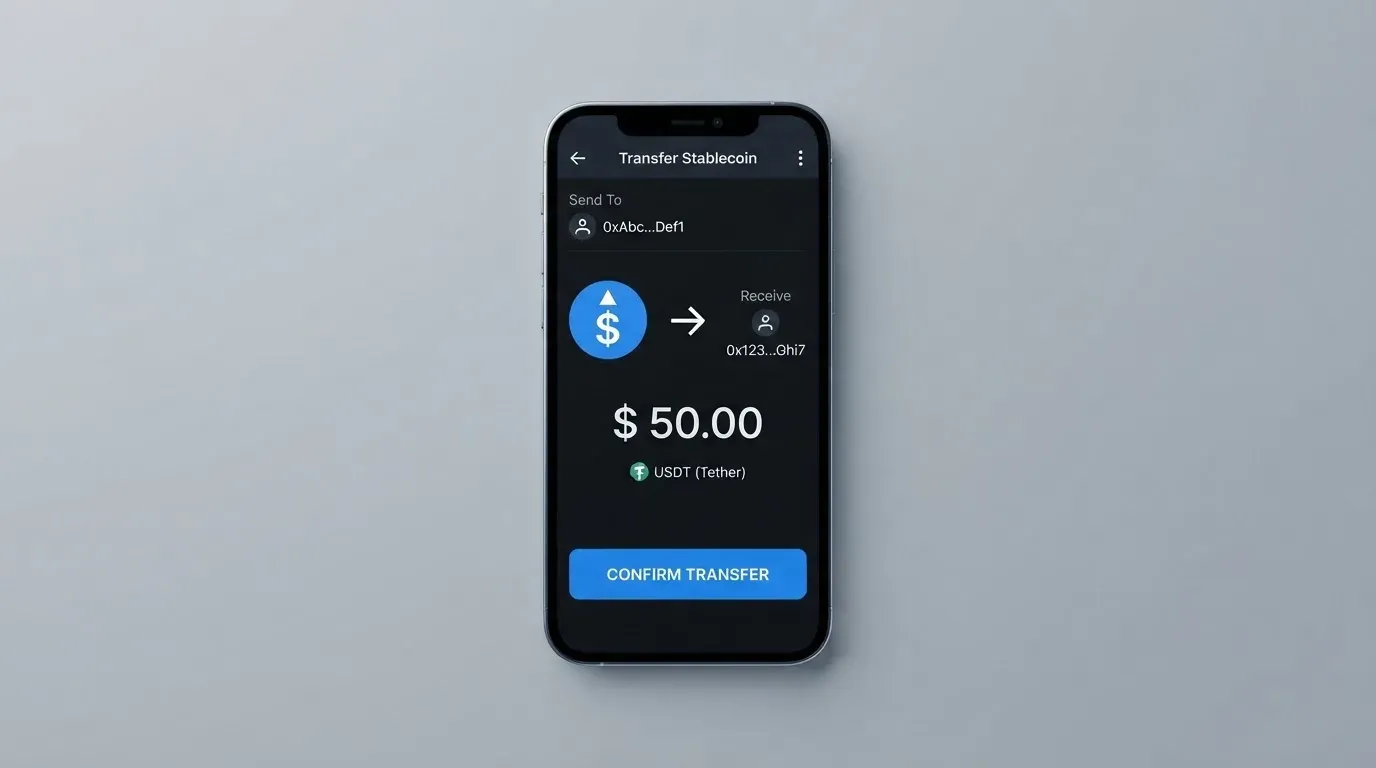
The consequence is that “top up” means something slightly different here than on an ordinary prepaid card. You are not topping up the card; you are buying more of the underlying assets. The page says gold and crypto can be bought with your card or a bank transfer. A card-specific top-up fee and a minimum are not stated. Withdrawal from the card is not stated either, so if you overfund, I cannot tell you from the public pages how you get the excess back out.
That is the single biggest operational question I would put to support before using this at scale, and I would want the answer in writing. An asset you have bought but cannot withdraw, from a platform whose Trustpilot reviews mention frozen withdrawals, is a specific and unpleasant scenario.
On the crypto side, if you send tokens directly rather than converting from your account, you are exposed to the least forgiving thing in this whole space: blockchain transfers are irreversible. A deposit sent on a network the provider does not support, or to an address belonging to a different network, can be lost or need manual support recovery with no guarantee. Nobody can reverse it. And stablecoins are not censorship-proof either — Tether says it disables tokens in wallets on the OFAC sanctions list and has frozen funds tied to illicit activity.
The sensible route, if you want to move value in, is to use the account’s own conversion from the assets you already hold, or a transfer on a network the provider has confirmed it supports. Not a guess. Confirmed.
Paying with it every day
Here the card is at its weakest, and the score reflects it. Virtual only. Apple Pay and Google Pay are not mentioned. No ATM. Wallets not stated. Merchant acceptance: not stated, which means I cannot tell you whether it works at the shops you use, and acceptance is not automatic even for a virtual card on a major network.
The one daily-use feature that is stated positively is the cashback: “Get 2% cashback in gold”, with access to the plan “6 months free from launch”, paid in gold. I want to be fair about how unusual that is. Most card rewards are worth something back in the same money you spent. This pays you in metal, so a portion of your everyday spending quietly becomes gold. If you were going to buy gold anyway, this is a way to accumulate it at a positive rate rather than a zero rate.
The costs of that arrangement sit on the other side of the ledger, though. Every payment involving a conversion is a disposal for tax purposes in the US, where the IRS treats digital assets as property: exchanging them for goods, services, dollars or other digital assets generally produces a taxable gain or loss. Gain is measured in local fiat currency at fair market value on the date of the transaction, so each card payment funded from crypto may be a separate disposal. Hold for a year or less and it is short-term. If you are in the US, a card that converts and spends your holdings generates a record of many small taxable events. That is not tax advice and I am not giving any — it is a reason to think about which balance you spend from before you start.
Disputes are not stated. What happens when a charge is wrong, a merchant takes payment and does not deliver, or a transaction you did not make appears — nothing on the page tells me. Chargebacks work through the issuer, with reason codes for fraud, duplicate billing or goods not received. US debit card reversal rights come from Regulation E and credit card rights from Regulation Z, and prepaid-card coverage varies and should not be assumed. With no named issuer, that machinery is hard to even address.
Other everyday friction worth knowing about, from the industry rather than from Kinesis. A merchant category code is a four-digit number classifying a business under ISO 18245, assigned when a business starts accepting cards; MCC 7995 covers gambling, and many issuers block it by policy rather than by law, with the blocked list varying by issuer — so whether your card works at a betting site is a per-issuer question nobody has answered for you here. Address Verification Service compares numeric parts of the billing address a buyer types against issuer records; it is mainly offered in the US, Canada and the UK and is generally unavailable for foreign-issued cards, which causes declines. And a card issued in one country can look foreign to a shop in another, because merchants can look up the issuer identification number at the start of the card number and apply extra scrutiny when it differs from the billing address.
One small mercy: declined authorisations may leave a hold that can sit for several days, typically up to seven.
What can go wrong
No official card incidents found. That is worth saying plainly — I looked, and there is nothing on the record from the card itself. But absence of card-specific incidents is not the same as a good picture, and the platform-level complaints are directly relevant to anyone whose balance sits with this company.
Trustpilot for Kinesis Money — the company, not the card — stands at 2.4 out of 5 from 750 reviews, with 115 of those in the last 12 months, read on 2026-10-21. The user-reported pattern from July to October 2026 includes delayed or frozen withdrawals, some around 40 days; template support replies; complaints about fee disclosure; and liquidity concerns, with CIMA complaints mentioned in October 2026. None of the reviews I sampled mention the card. The detail section repeats the same shape: delayed withdrawals July–October 2026, poor communication in October 2026, fee disclosure in October 2026.
Read that against what you are being asked to do. A 2% gold cashback is attractive. Frozen withdrawals of around 40 days at the same provider are what the complaints describe. Those two facts sit next to each other, and the second one is the reason the reliability mark is 4 rather than higher.
The company structure: Kinesis Money, with Kinesis Cayman in the starting data; KMS Labs is described as the issuer of the ERC-20 gold (KAU) and silver (KAG); the card issuer and its licences are not stated on the page. So the asset side and the card side are documented at different levels, and the card side is the one that is silent.
What the page does claim on safety: “Your assets are in safe hands”, with independent audits and monthly attestations linked. Audits and attestations are worth having and are not the same as knowing who holds the keys. The custody model is not stated. Two-factor authentication is not stated. Whether you can freeze the card instantly is not stated. In this category the standard safeguards are app-based 2FA, instant card freeze, spending limits, 3-D Secure confirmation and tokenised mobile wallets — a list I am quoting from the industry, not from Kinesis.
The regulatory picture depends heavily on where you are. MiCA, the EU’s markets-in-crypto-assets regulation, took legal effect in June 2023, with the rules on asset-referenced tokens and e-money tokens applying from 30 June 2024 and the remaining provisions, including crypto-asset service provider rules, from 30 December 2024. Under MiCA, e-money tokens may be issued only by a credit institution or an electronic money institution (Article 48), and the transitional grandfathering period lets providers operating under national law continue only until 1 July 2026 or until a MiCA authorisation is granted or refused, whichever comes first. ESMA keeps an interim register of authorised CASPs, white papers and non-compliant entities — a register you can check a provider against. A CASP authorised in one member state can serve the whole EU, as Coinbase’s Luxembourg licence replaced its national ones with one EU-wide authorisation. In the US, FinCEN guidance (FIN-2013-G001) treats administrators and exchangers of convertible virtual currency as money transmitters, while ordinary users buying goods or services are not.
Note the structural point: a card is a payment service regulated separately under e-money and payment-services law, while MiCA covers the crypto side. A crypto card therefore often depends on two licences, and you should be able to name both. EMIs must safeguard customer funds by segregating them in dedicated accounts or insuring them, but such funds are not bank deposits and may not be covered by a deposit guarantee scheme. “Safe hands” and a deposit guarantee are different promises.
Two industry precedents are worth holding in mind because they show how abruptly this can end. Visa terminated its global agreements with FTX on 13 November 2022. WaveCrest was suspended by Visa in Europe in 2018, closing every WaveCrest-issued Visa programme. Closures generally follow a pattern: a notice period, then spending and loading stop, then users are asked to withdraw remaining balances.
Support: a support centre, a contact route and a community forum are linked. Languages and hours are not stated, which matters when you are chasing a transfer on a network the provider does not support.
What to take instead
If the card is your reason to look at Kinesis, compare it against the alternatives below on the dimensions where this card is silent. I am not ranking them above Kinesis for you — I am showing what a card page looks like when the issuer, the fees and the acceptance are all disclosed.
| Kinesis | Gemini | Lava | GoMining | |
|---|---|---|---|---|
| Score | 4.8 / 10 | 4.9 / 10 | 7.1 / 10 | 6.6 / 10 |
| Card | Virtual; network not stated officially | Mastercard World Elite credit card; form and currency not stated | Lava Card; spend at 150 million merchants in 150+ countries; network and physical/virtual not stated | Virtual now, physical “coming soon”; network and currency not stated |
| Cost | Not stated; unofficially no monthly or sign-up fee | No annual fee; issuance not stated | “no annual fees”; issuance not stated | Not stated; opening a card grants a free 1 TH miner |
| Fees | Not stated; unofficially 1.95% or 0.45% transactions, 0.22% conversion | No foreign transaction fees; crypto conversion not applicable (credit card) | “no FX fees, and no FX spread”; no exchange fees or spread on Bitcoin buy/sell per page | Not stated |
| Funding | Instant conversion of KAU, KAG, crypto, C1USD from account; networks not stated | Credit card paid off in fiat; coins/networks not applicable | Local currency or stablecoins; networks not stated | BTC, USDT, GOMINING and other coins |
| Rewards | 2% cashback in gold, 6 months free from launch | 4% gas/EV/transit on first $300/month, dining 3%, groceries 2%, other 1%, paid in Bitcoin or 50+ cryptos; 10% Vault Rewards at some merchants | “up to 5% back in bitcoin on every purchase”; conditions not stated | Cashback in mining power, rising with VIP level; “up to 5% cashback” |
| Who can get it | Not stated | Not stated | Not stated | Not stated as a list; “may not be available in your jurisdiction” |
Two things stand out from that table. First, Gemini’s card is a credit card, which changes the model completely: you pay it off in fiat, so there is no conversion at the till and no taxable disposal per purchase — but equally no metal exposure. Second, Lava at least states its fee philosophy in plain language on the page (“no FX fees, and no FX spread”), which is more disclosure than Kinesis offers on any line.
The reward structures are not comparable in kind, and that is the point. Kinesis pays metal, Lava and Gemini pay bitcoin or crypto, GoMining pays mining power. Only one of these is a claim on something you could hold outside the platform, and only one changes what you own.
If your actual problem is that you cannot get an ordinary bank card, then the comparison above is a distraction and the real question is a different one: which regulated e-money or payment institution in your country is authorised to issue a card, and is it on ESMA’s register if you are in the EU? An EMI in the EU can issue e-money, payment cards and e-wallets but cannot lend, and may offer services across the EU/EEA from a licence granted in one member state. That is a firmer footing than a pre-registration page.
Who I would recommend it to
To someone who already holds gold or silver at Kinesis, has verified what the current fee actually is, and treats the card as one way to spend a balance they were going to hold anyway. For that person the 2% gold cashback is a genuine, slightly clever incentive, and paying a bills cycle in metal you were buying regardless is a defensible choice.
I would not recommend it as your primary or only payment card. Virtual only, no stated wallet support, no ATM, no stated network, no named issuer, no stated limits, and a platform whose reviews describe 40-day withdrawal delays. A card you cannot freeze, cannot tap, and cannot verify is not the card to depend on when something goes wrong at the till.
Before you commit, five things: read the fee page yourself and get one transaction figure in writing. Ask support which countries and which nationalities are eligible, and how long that takes. Ask which network the card runs on and who the licensed issuer is. Ask what happens if you fund by chain — which networks are supported, and what the recovery process is if you send on the wrong one. And ask how you withdraw, because “buy metal you cannot withdraw” is not a position anyone wants.
The card is worth watching. The metals account behind it is the interesting product, and the card is a reasonable way to use it. But on the evidence available in public, it is a rollout rather than a settled product, and I would size it accordingly.
Frequently asked questions
What is the Kinesis card?
The Kinesis card is a virtual payment card attached to a Kinesis account that holds gold, silver, crypto and the C1USD stablecoin. Spending converts from that account balance at the point of sale. It advertises 2% cashback paid in gold, with six months of that plan free from launch. It is virtual only, with no physical version in the card lineup as described.
How does the Kinesis card work?
You hold KAU, KAG, crypto or C1USD in your Kinesis account, and when you pay, the balance is converted and the purchase goes through on the card network. There is no separate card-loading step or minimum top-up. It behaves structurally like a prepaid card drawing on a stored balance, which means it cannot overdraw. The card currency and the network are not stated officially.
Is Kinesis a bank?
Not on the public pages I read. Kinesis Money is the company name, with Kinesis Cayman in the starting data, and KMS Labs is described as the issuer of the ERC-20 gold and silver tokens. The card issuer and its licences are not stated. Since a card is a payment service, usually requiring its own e-money or banking licence, and the issuer is the party that runs the programme and handles disputes, that silence is worth resolving before you rely on it.
Who can get the Kinesis card?
The card’s public pages do not state the eligibility rules. Starting data points at the United States, Latin America and the Caribbean, overall availability is unclear, and the site shows pre-registration. Cards of this type are generally for adults 18 or over, some issuers with higher limits, but citizenship and residence are screened separately, so your nationality may matter as much as where you live.
Is the Kinesis card free?
Fees are not stated on the card’s pages. Unofficially, one source reports no monthly or sign-up fee, another gives a 1.95% transaction fee, and a third gives 0.22% conversion plus 0.45% per transaction. Those transaction figures disagree by more than four times, so read the current fee page yourself before assuming anything. On-chain network fees for any deposit are charged by the blockchain, not by the card provider.
Can I use the Kinesis card in my country?
Nobody can tell you from the public pages, which is the honest answer. Acceptance depends on the issuer and network, neither of which is stated officially, and merchants can decline prepaid or foreign-issued cards because a lookup of the issuer identification number reveals the card type and the issuing country. Availability in your country is a separate question from whether a shop would accept the card once you have it.
Does the Kinesis card require KYC?
Verification is a topic on the site, which links a KYC guide whose content I did not read, but KYC levels for the card are not stated. What is stated generally: in the EU, due diligence covers name, address, date of birth, nationality and identity documentation, a sanctions check, the purpose of the relationship and PEP status; in the US, the customer identification programme requires name, date of birth, address and an identification number. If due diligence cannot be completed, EU rules require the institution to decline or end the relationship.
How do I top up the Kinesis card?
Strictly speaking you do not top up the card — you add to the assets it converts from. The page says gold and crypto can be bought with your card or a bank transfer, and the card converts gold (KAU), silver (KAG), crypto and C1USD from your account balance at the point of sale. Networks are not stated, and any card-specific top-up fee or minimum is not stated either, so confirm both before sending anything on-chain.
Is the Kinesis card safe and is it worth it?
Safe is the wrong question to ask about a payment card; ask who holds your money and who you complain to. The page says “Your assets are in safe hands” with independent audits and monthly attestations linked, but the custody model, two-factor authentication and instant freeze are not stated. Kinesis Money sits at 2.4 out of 5 on Trustpilot from 750 reviews, citing withdrawal delays of around 40 days and fee disclosure complaints — none of the sampled reviews mentioned the card.
Can I add the Kinesis card to Apple Wallet or Google Pay?
Not stated, and this is a real limitation rather than an oversight on my part. The card is virtual only, and Apple Pay and Google Pay are not mentioned anywhere in what the card’s pages say. Given that no ATM is mentioned either, this card looks like an online and in-app payment method rather than a full everyday card — which is exactly why I would not treat it as a replacement for a bank card.
Credit and cashback cards put to the test – cryptocardtested
Content created by the «cryptocardtested» team