
Free to hold, silent on what it costs: an honest read of the Kryptonim Card
 Available in US
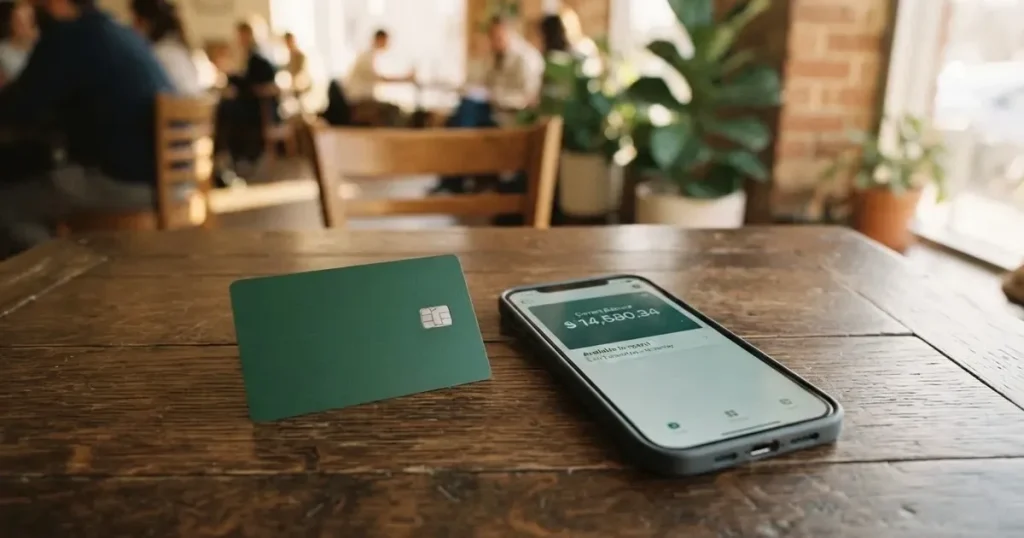
The Kryptonim Card is a Visa you hold as a virtual or physical card, paid for from a crypto balance rather than from a current account. On paper it is a neat fit for one specific person: someone already inside the Kryptonim wallet who wants a card number for subscriptions and online payments without opening a bank account. Set that expectation down now, because the rest of the picture is quieter. The card’s own public pages confirm almost nothing about who qualifies, what it charges, what the limits are, or which institution stands behind the card. That silence is not proof of anything bad — plenty of small fintechs simply have thin documentation — but it is the central fact of this review, and it shapes every practical question below.
*Conditions are current as of October 28, 2026.*
Verdict: 6.1 out of 10
The Kryptonim Card scores 6.1 / 10. The high mark is for cost, because the virtual card is described as free with no monthly fee — that is a genuinely good headline number for anyone who currently pays a monthly card fee. The drags are everywhere else: no published country list, no stated fee schedule, no stated limits, no named card issuer, and no card-specific review history either way.
Who it suits: if you already hold assets in the Kryptonim wallet, if you want a card for recurring online payments, and if you are comfortable reading the fee schedule inside the app before your first transaction rather than on a public page. Who it does not suit: anyone whose only question is “will this work in my country and what will it cost me at the till?” — because the public pages do not answer either, and you would be deciding blind.
| Criterion | Mark | Why |
|---|---|---|
| Who can get it | 5 / 10 | No country list published; the card is described as working “where VISA cards are accepted” |
| Cost | 8 / 10 | Virtual card free, no monthly fee; demo top-up shows 1.00 EUR with 0.00 EUR fee and 0.00 EUR network fee; physical card price and FX charges not disclosed |
| Top-up options | 5 / 10 | Top-up by QR code in Kryptonim Wallet with automatic conversion of digital assets; coins and networks not named |
| Reliability and complaints | 6 / 10 | Group includes Swaps Ltd (FCA), QuantiPay AG, KTM Virtual Services (FINTRAC); card issuer not named; no card-specific complaints, main service has an unofficial Trustpilot 3.2 from 166 reviews |
| Everyday use | 6 / 10 | Virtual or physical Visa, Google Pay available; Apple Pay and ATM not disclosed |
Total: 6.1 / 10.
Who will they give the card to?
The short answer: the card’s public pages do not say. There is no country list anywhere on the card pages, and no eligibility statement beyond the card working “where VISA cards are accepted” — which is a statement about merchant acceptance, not about who can sign up. If you are outside the euro area, outside a country with an existing crypto-card user base, or in a place where crypto is restricted, you cannot tell from what is published whether you qualify.
This matters more than it might sound. Country and citizenship are recorded separately from address in identity checks, because sanctions screening and issuer risk policy are usually applied to citizenship and country of birth as well as to where you live. A card that is “accepted everywhere Visa is accepted” can still be issued only to residents of particular places. Anyone’s answer to “can I use it in my country” and “can I get it in my country” are two different questions, and only the second is about eligibility.
Also not stated: the card currency, and whether any KYC tiers exist on the card specifically. The one thing that is stated is the geography of use, and it is stated loosely.
How to get it
The documented route is short. The card pages say you get a free virtual card shortly after account verification, and you choose between a virtual and a physical Kryptonim Card, on the Visa network — accepted anywhere Visa cards are accepted.
What is not documented is most of what normally fills this section:
- Documents, age and proof of address — not stated. The page says “account verification” without describing what it involves.
- KYC levels or steps — not stated. If you have been through a regulated crypto service before, you will recognise the pattern: a name, address, date of birth, nationality and identity document, a sanctions check, and sometimes a proof-of-address document. Under EU rules the institution must also decide whether you are a politically exposed person and what the purpose of the relationship is. If that due diligence cannot be completed, the rules require the institution to decline the transaction or relationship, and to end an existing one where necessary — which is why accounts get frozen pending paperwork rather than simply declined.
- Delivery — not stated. If you want the physical card, nobody publishes how long it takes or what it costs.
- Card currency — not stated.
My practical read: budget for a verification step you cannot preview, and for a virtual card that arrives quickly once it clears. Do not plan around the physical card arriving before a trip.
Fees: What It Really Costs
The headline is good and the detail is missing. The card pages state there are no monthly fees for the virtual card and describe it as free. On the demo top-up screen, a 1.00 EUR deposit shows “Fees 0.00 EUR, Network fee 0.00 EUR”. Beyond that, the fee FAQ on the card page — the one headed “Are there any fees for Kryptonim Card?” — has no answer in the page text. The same silence covers the physical card price, the ATM, and the currency.

| Item | What is published |
|---|---|
| Virtual card issuance | Free; “no monthly fees for virtual card” |
| Physical card issuance | Not stated |
| Monthly fee | None for the virtual card |
| Crypto-to-fiat conversion fee | Not stated (page mentions “Automatic conversion of digital assets”) |
| Foreign exchange fee | Not stated |
| ATM withdrawal | Not stated |
| Spending limits | Not stated (the FAQ question on limits has no answer in the page text) |
| Tiers or plan levels | Not stated |
Three everyday payments, so you can see what is unresolved:
A coffee costing about 3 EUR in a euro-area city. If your balance is already in euros or in a euro-pegged stablecoin and the merchant prices in euros, the network cost you should expect is the conversion from your crypto into fiat, plus whatever conversion fee the provider takes. That fee percentage is not stated. If your balance is in a dollar-pegged token and the shop charges in euros, you are also crossing a currency line, and the FX charge is not stated either. The total you pay over the counter is therefore not something I can give you a number for.
A monthly subscription in dollars, about 10 USD. The merchant sees a Visa number. Whether the charge passes depends on the merchant’s own filters: some decline prepaid or foreign-issued cards, because the issuer lookup at the start of the card number reveals the card type and the issuing country. Address verification, which compares the numeric parts of the billing address you type against the issuer’s records, is offered mainly in the US, Canada and the UK and is generally unavailable for foreign-issued cards — a common reason for declines. If the charge is declined, a hold may remain on the funds for several days, typically up to seven.
A withdrawal from a cash machine abroad. This is the one I would not attempt until you have read the in-app schedule. Whether the card works at ATMs at all is not stated, and if it does, three separate numbers decide what you pay: the ATM’s own fee, the FX conversion rate applied on the spot, and any charge the issuer adds on top. Only the first is outside the provider’s control.
One general point about top-ups, since it is easy to confuse the two fees: on-chain network fees for your deposit are charged by the blockchain, not by the card provider. A zero network fee on a demo screen says something about that screen, not about the network you will actually send on.
How to Top Up
The documented method is a QR code scanned inside Kryptonim Wallet. The same card pages refer to automatic conversion of digital assets, which is how a crypto balance becomes spendable balance.
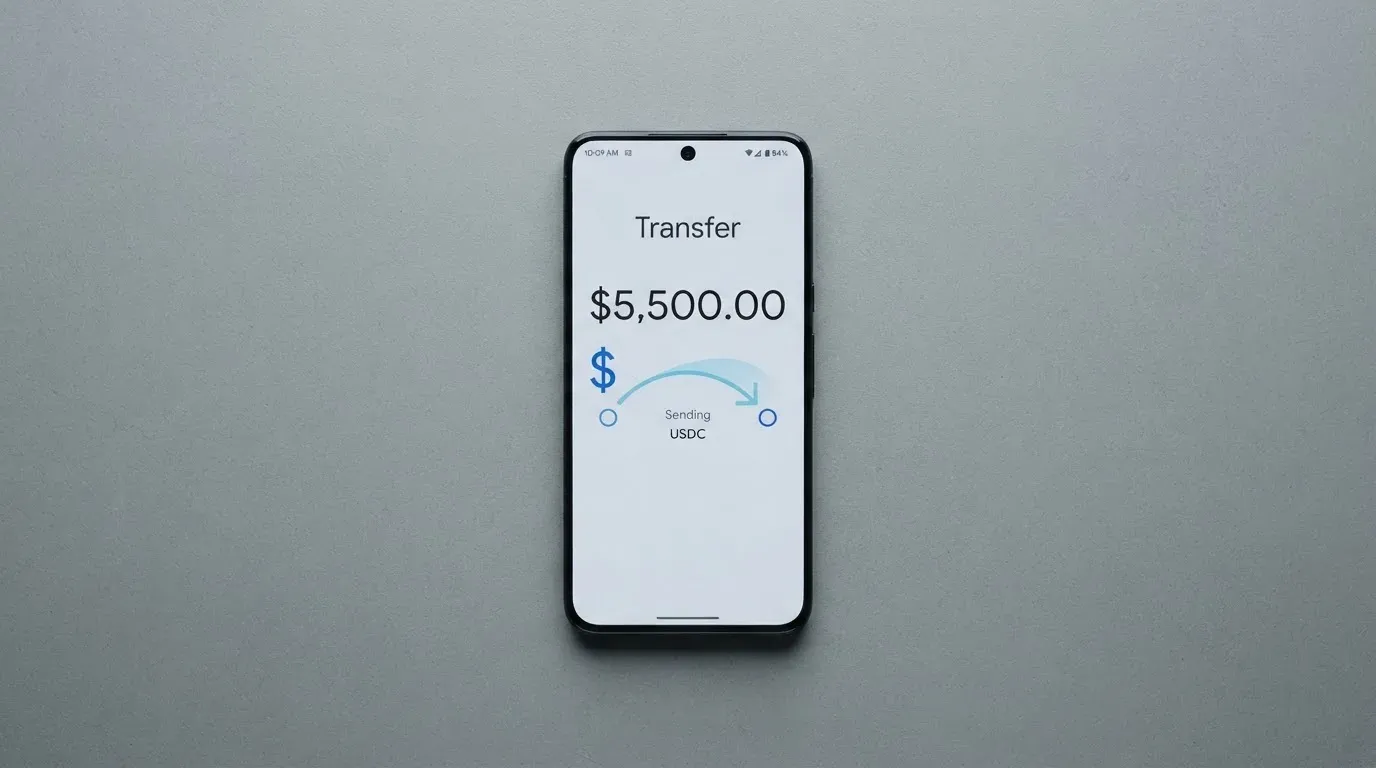
What is not named: which coins, which networks, minimum amounts, or whether you can add plain fiat. That last omission is the one to sit with. A card whose only documented funding route is a crypto transfer is a different product from a card you can preload with euros from your bank.
The demo deposit screen shows “Fees 0.00 EUR, Network fee 0.00 EUR” on a 1.00 EUR deposit. Treat that as evidence that the interface itemises fees, not as evidence about what your deposit will cost.
There is also a question the FAQ raises and does not answer: whether the balance can be withdrawn to a wallet or a bank. No answer appears in the page text. That is not a small gap. If money goes in and the only documented way out is to spend it, your exit is the shop counter — and your leverage in a dispute is much weaker there.
On network choice, the general risk applies: blockchain transfers are irreversible, so a deposit sent on a network the provider does not support, or to an address belonging to another network, can be lost or need manual support recovery with no guarantee. Getting this right is on you.
Paying With It Every Day
The card is a Visa, virtual or physical. You can add it to Google Pay — the page links to the Google Pay Terms. Apple Pay is not mentioned anywhere, which for iPhone users is the single most useful thing to check first, because “add my card to my phone” is close to a precondition for daily use these days. Blocked merchant categories are not stated either, and this matters more than it sounds: gambling sits under a specific merchant category code, and many issuers block it by policy rather than by law, with the blocked list varying by issuer.
Also not stated: any rewards or cashback, and where a merchant refund would land. The FAQ raises that last question — where a refund goes — and gives no answer in the page text.
The app is on iOS with a link to “Kryptonim Wallet”; store ratings were not part of this review.
Two everyday mechanics to keep in mind. Online payments may trigger 3-D Secure, an identity check where the issuer assesses risk and either waves the payment through or challenges you with a one-time code or a biometric — Visa’s version is called Visa Secure. And when you add a card to a mobile wallet, the card number is replaced by a device-specific number stored in the Secure Element, never on the wallet provider’s servers, with a fresh one-time security code per payment. That is a real safeguard, but it does not protect you from a compromised account.
What Can Go Wrong
Not knowing which institution issued the card. A card payment involves several parties: the network routes messages and sets the rules, the issuer holds the programme, and the crypto brand is often only a programme manager or front end. The Kryptonim site lists several entities — Swaps Ltd (England and Wales, no. 11850124, registered with the UK Financial Conduct Authority as a cryptoasset business), QuantiPay AG, KTM Virtual Services Inc. (British Columbia, FINTRAC MSB M23813101), Kryptonim Colombia, and Kryptonim sp. z o.o. as data controller. The card issuer and e-money institution are not named, and the site does not link these entities to the card. You are being asked to trust a card without being told which regulated entity stands behind it.
Programme shutdown. This has happened to crypto cards before, and it is the risk that hurts most. Visa terminated its global agreements with FTX on 13 November 2022 and the FTX US debit card was wound down by its issuer. WaveCrest, a Visa issuer that supplied several crypto card brands, was suspended by Visa in Europe in 2018, closing all of its Visa programmes. Closures follow a pattern: a notice period, then loading and spending stop, then users are asked to withdraw what remains. If this card is issued by an entity you cannot name from the public pages, you cannot easily tell whether it has a first-line licence, a sponsor arrangement, or a single-client programme.
Trusting a custodian with your balance. If the card draws on a stored balance, control of that balance belongs to whoever holds the keys. The page’s only security guidance is “never share your private keys or sensitive information”; whether the card balance is custodial or self-custody is not stated. The record of custodial platforms failing is long: Mt. Gox (about US$350 million reported stolen, 2011-2014), Coincheck (about US$400 million, 2018), Ronin Network (US$625 million, 2022). Crypto transfers are also irreversible by nature — a stolen key has no built-in recovery because the network cannot freeze or return funds.
Spending blocked at the till. Declines come from merchant-side logic as much as anything else: foreign-issued BINs, unavailable address verification, declined 3-D Secure challenges, or the issuer restricting a tokenised number to certain channels.
Complaints — none on the card. No official incidents were found, and no card-specific reviews were found either. That cuts both ways: it is not evidence of trouble, and it is not evidence of a track record. For unofficial context on the related on-ramp service at kryptonim.com (not the card itself), third-party review sites show Trustpilot 3.2 out of 5 from 166 reviews, with user reports of unpaid withdrawals and a deposit not returned for weeks. That is a user report on a third-party site, not a confirmed finding, and it is about the service rather than the card.
Regulatory drift. In the EU, MiCA took legal effect in June 2023; its rules on stablecoins applied from 30 June 2024 and the remaining provisions, including crypto-asset service provider rules, from 30 December 2024. Transitional arrangements let providers already operating under national law continue only until 1 July 2026 or until they are authorised or refused, whichever comes first. A card is regulated as a payment service in its own right, so a crypto card often depends on two licences — one for the crypto side, one for the card.
If you withdraw, someone is waiting. Under EU rules, e-money institutions must safeguard customer funds in dedicated accounts or insure them; those funds are not bank deposits and may not sit under a deposit guarantee scheme. In the US, prepaid-card coverage varies and should not be assumed — Regulation E and Regulation Z cover debit and credit, not every prepaid product.
Taxes. I am not giving tax advice, but you should know the shape of it before you spend. The IRS treats digital assets as property, so exchanging them for goods generally produces a taxable gain or loss, measured in local currency at the value on the date of the transaction. Each card payment funded from crypto may therefore be a separate disposal. Ask a qualified adviser in your own jurisdiction.
Alternatives to Consider
If what you actually need is a card that spends from crypto, the field is not empty. Here is how the alternatives line up against the same criteria — and note how much of this is unstated there too, which is itself a signal about this category.
| Card | Score | Card type | Stated cost | Stated top-up |
|---|---|---|---|---|
| Kryptonim | 6.1 / 10 | Virtual or physical Visa | Virtual card free, no monthly fee | QR code in Kryptonim Wallet; coins and networks not named |
| Cardex | 5.6 / 10 | Debit card on VERVE, VISA, Mastercard, UnionPay; virtual and physical | Not stated | USDT, USDC and BTC wallets; networks not stated |
| CardFlow | 4.9 / 10 | Virtual USD Mastercard, created in about 3 minutes | Creating a virtual card is free; monthly fee not stated | Bitcoin, USDT, ETH or Naira bank transfer |
| HyperCard | 4.7 / 10 | Prepaid card; network not stated on the App Store page | Not stated; App Store page lists no fees | Crypto such as USDT, BTC, ETH, converted to USD or EUR |
Cardex markets itself as “one crypto card, 200+ countries” with no country list or exclusions published, though its app listing is Naira-focused and its card currency is shown as Naira. Its distinguishing feature is conversion at the moment of payment: the site describes an “AI-Powered Conversion Rate” that scans global exchange rates and picks the best one when you spend. No fee percentage is stated. Worth a look if you are in a market where naira-denominated spending is the point.
CardFlow targets Nigeria — “Nigeria’s smartest fintech card platform”, aimed at Nigerians and global users — and emphasises speed: a virtual USD Mastercard, free to create. Fees are not stated, and funding runs through Bitcoin, USDT, ETH or a naira bank transfer.
HyperCard is the thinnest-documented of the four. Its pages state no country list, while the App Store says the card works in “more than 176 countries” — acceptance, not eligibility. The card balance sits in USD or EUR, funded by depositing crypto in the app. The network is not stated on the App Store page, which for a card is a real omission.
None of these publishes a full fee schedule either. What separates Kryptonim is that it is free to hold and it at least names Google Pay.
Who I Would Recommend It To
I’d recommend the Kryptonim Card to one person in particular: someone who already uses the Kryptonim wallet, wants a free virtual Visa for online payments and subscriptions, is comfortable treating the app’s own screens as the source of truth, and has a fallback payment method for the payments that get declined. For that person it is a reasonable free tool.
I would not recommend it as a primary card, and I would not recommend it to anyone who cannot read the fee schedule inside the app before their first transaction. Nor to anyone who needs Apple Pay, ATM access, a physical card in hand quickly, or a named issuing institution they can point to — because the public pages name none of those things.
Before you commit, check five things in this order: whether you are eligible at all, what the conversion and FX charges are, what the daily and monthly limits are, whether the balance can leave the card if you need it to, and who the issuer is. The first three decide whether the card is cheap. The fourth and fifth decide whether it is safe to depend on.
Frequently asked questions
What is the Kryptonim Card?
It is a Visa payment card — virtual or physical — that you spend from a crypto balance instead of a bank current account. The crypto side is converted and loaded as spendable balance, so the card behaves more like a prepaid card than a debit card. The card is offered alongside the Kryptonim wallet, and the virtual version is described as free with no monthly fee.
How does the Kryptonim Card work?
You hold assets in the Kryptonim wallet, top the card up, and the balance converts automatically into spendable currency when you pay. Card payments are routed by Visa, and an issuer holds the programme. Because many crypto cards work on a pre-loaded balance rather than a linked bank account, the card generally cannot overdraw.
Is Kryptonim a bank?
The public pages do not describe it as one. They list several entities — Swaps Ltd, QuantiPay AG, KTM Virtual Services Inc., Kryptonim Colombia and Kryptonim sp. z o.o. — but do not name the card’s issuer or e-money institution, and do not link those entities to the card. An electronic money institution can issue cards but cannot lend, and must safeguard customer funds separately from bank deposits.
Who owns Kryptonim?
Ownership is not stated on the card pages. What is published is a set of related companies and registrations: Swaps Ltd in England and Wales (no. 11850124), registered with the UK Financial Conduct Authority as a cryptoasset business; QuantiPay AG; KTM Virtual Services Inc. in British Columbia as FINTRAC MSB M23813101; Kryptonim Colombia; and Kryptonim sp. z o.o. in Poland as data controller.
Is the Kryptonim Card free?
The virtual card is described as free, with no monthly fee. A demo deposit screen shows fees of 0.00 EUR and a network fee of 0.00 EUR on a 1.00 EUR deposit. The price of a physical card, the conversion fee, the foreign exchange fee and ATM charges are all not stated on the public pages, so “free” refers to holding the virtual card, not necessarily to every transaction.
Does the Kryptonim Card require KYC?
Account verification is stated as the step before the card arrives, but the documents, age requirement, proof of address and any KYC levels are not stated. In practice, regulated providers check name, address, date of birth, nationality and identity documents, run a sanctions check, and may require proof of address. If that cannot be completed, accounts are commonly frozen or closed pending documents.
How do I top up the Kryptonim Card?
By scanning a QR code in the Kryptonim Wallet, with automatic conversion of digital assets. Which coins and which networks are supported is not named on the card pages, and no minimums or direct fiat top-up options are stated. Sending on an unsupported network, or to an address of another network, risks losing the deposit, since blockchain transfers cannot be reversed.
Can I use the Kryptonim Card in my country?
The card works “where VISA cards are accepted”, which describes merchant acceptance, not eligibility to hold it. No country list is published, and the FAQ questions on fees, spending limits and withdrawing the balance are all left unanswered in the page text. Check your own eligibility and the fee schedule inside the app before relying on it.
Can I add the Kryptonim Card to Apple Pay or Google Pay?
Google Pay is documented — the card page says you can add the Kryptonim Card to Google Pay and links the Google Pay Terms. Apple Pay is not mentioned anywhere on the card pages. If your phone is an iPhone and phone payments are essential to how you would use the card, confirm Apple Pay support inside the app first.
Is the Kryptonim Card safe and worth it?
It is worth it if you already use the Kryptonim wallet and want a free virtual Visa for online payments, with a backup card for declines. Safety is harder to answer: the issuing institution is not named, whether the balance is custodial or self-custody is not stated, and crypto card programmes have been shut down before. No card-specific complaints were found, and for unofficial context the related on-ramp service shows Trustpilot 3.2 from 166 reviews.
Virtual cards put to the test – cryptocardtested
Content created by the «cryptocardtested» team