
A crypto Visa card with no monthly fee and 0.5% cashback in B3TR — thin on the details that matter
 Available in US

Most crypto cards make you pay something every month, or load you up with a coin whose name you have never heard. Greencart does neither. It promises no monthly fee, no annual fee, and a floor of 0.5% cashback in B3TR on every purchase. That combination is genuinely rare. The problem is what comes next: I went through the card’s own pages looking for the things I would need before I trusted it with my own spending — which coins I can send, how much I can pull from a cash machine, what happens if I lose my login — and a lot of that simply is not written down anywhere the public can see.
The conditions described here are current as of October 28, 2026.
My score is 6.9 / 10. That is not a bad score, and it is not a good one. It sits where a card with a very good idea lands when the paperwork stops halfway.
Verdict: 6.9 out of 10, and the gap between two kinds of person
Greencart suits someone who already holds crypto, believes in the Gnosis ecosystem specifically, and wants a clean Visa number to spend from a self-custodial wallet without paying a subscription to hold it. If that is you, the economics are attractive and the cashback floor is real.
It does not suit someone shopping for their first card, someone who needs to know the exact cash-machine fee before they leave the house, or anyone whose spending depends on Apple Pay or Google Pay. Those details are absent from the public pages, and absent is not the same as zero.
| Criterion | Mark | Why |
|---|---|---|
| Who can get it | 7 / 10 | EEA plus Argentina, Bolivia, Brazil, Colombia, Mexico on Gnosis Pay’s eligible list; the list on the card’s own page did not open when I checked |
| Cost | 9 / 10 | “No hidden, monthly, or annual fees”, no fees for withdrawals, transfers, deposits or FX; virtual card free, physical may carry a one-off fee; optional Greencart+ at $7.99 monthly |
| Top-up options | 5 / 10 | Bank account or crypto wallet, fiat or crypto — but no coins or networks named |
| Reliability and complaints | 7 / 10 | Issuer Monavate Limited, FCA electronic money institution, FRN 901097, under Visa Europe licence; company is Linfa Inc.; account is “not a regulated product”; App Store 4.86 from 44 ratings |
| Everyday use | 5 / 10 | Free virtual card and a physical one, iOS and Android apps; Apple Pay and Google Pay not named; cash machine 250 per withdrawal (unofficial) |
The company behind the card is Linfa Inc., a Delaware corporation at 850 New Burton Road, Suite 201, Dover, Delaware 19904, US. The card itself is issued by Monavate Limited, an FCA-authorised electronic money institution (FRN 901097) under licence from Visa Europe Limited. In March 2026 the app passed 1 million users and more than $1.2 million in crypto rewards were distributed. That is a young product with real traction, and also a young product with a thin public record.
Will they give you the card?
Yes, if you are in the right place and old enough. The eligible geography is the EEA plus Argentina, Bolivia, Brazil, Colombia and Mexico, taken from Gnosis Pay’s list of eligible countries. The contracting entity depends on where you live: EEA residents are contracted with Gnosis P. Tech or Unipessoal Lda, residents of the listed non-EEA countries with Gnosis Pay Co Ltd. You must be 18 or older, and you cannot be on sanctions lists or located in, controlled from, or a national or resident of a sanctioned country.
Two things worth pausing on. First, the country list came from Gnosis Pay rather than from Greencart’s own page, and the list on the Greencart page did not load. So the boundary of who can actually apply is something I am taking on trust from a partner. If you sit near the edge of that list — a resident of one of the five Latin American countries, say — that is worth confirming before you start.
Second, eligibility is not the same as approval. Onboarding runs through third-party compliance providers who collect identity, address and source-of-wealth information, and the account is personal only. That is normal for this category. What it means practically is that your application will be judged by a process you will not see, and being turned down will probably not come with a detailed explanation.
What nobody will tell you at signup
Two of the things I would want to know are simply not stated: whether there are different verification tiers, and how long delivery of a physical card takes. Neither appears on the public pages. You will find out the same way everyone else does.
How to get it
The path is the ordinary one: apply through the app, pass the compliance checks, and you are issued a Visa card powered by Gnosis Pay. Virtual cards are free. A physical card may carry a one-off administrative fee, which the card’s wording leaves open rather than pinning down.
What is not stated: the card currency, whether there is a separate application step for the physical card, or how long it arrives. I would not put a date-dependent payment on a physical card arriving, and neither should you.
Fees: what it really costs
This is the strongest part of the offer, and it deserves to be said plainly before the caveats. The site states “No hidden, monthly, or annual fees” and no fees for withdrawals, transfers, deposits or FX. That last one matters more than it sounds: a crypto card that loads a balance in dollars and spends it in euros can quietly bleed you at the exchange rate, and Greencart says it does not.
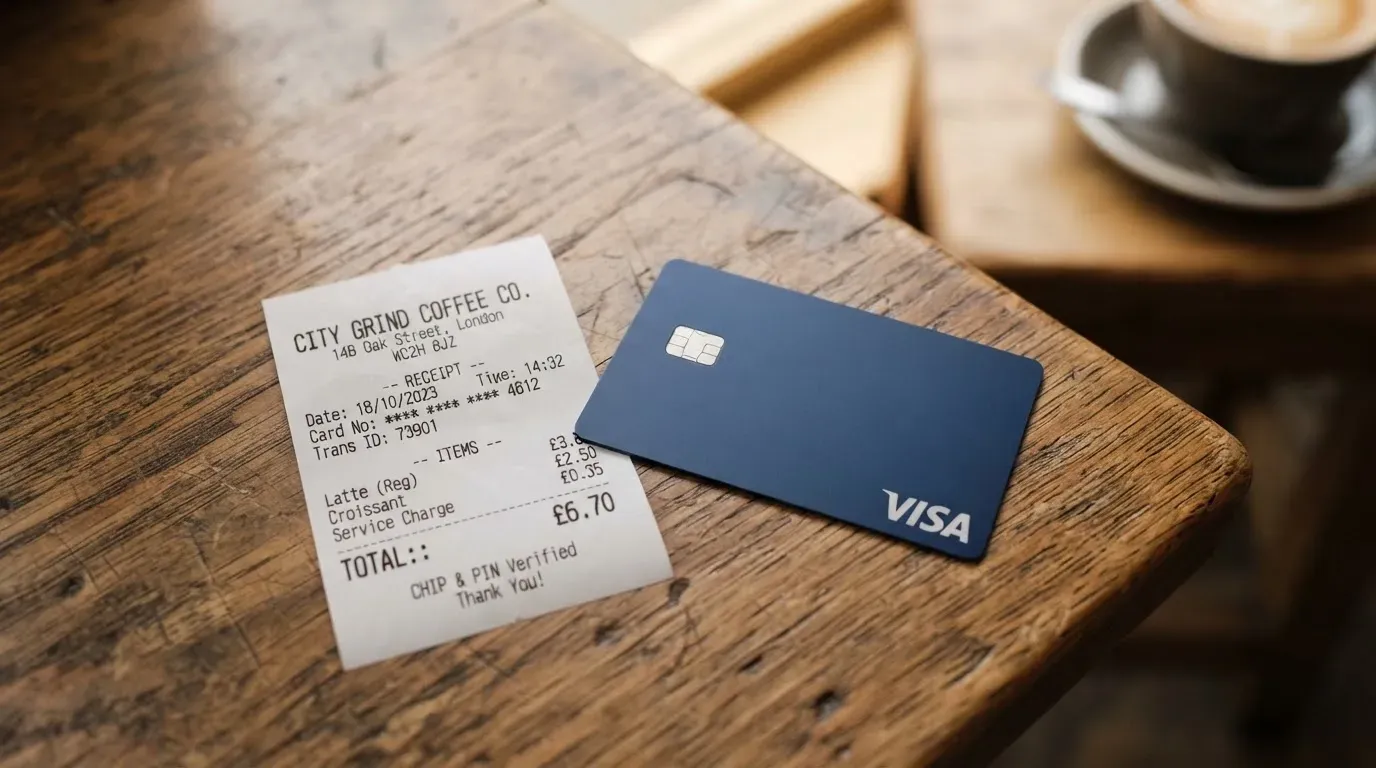
What the subscription tier does: Greencart+ is optional at $7.99 monthly, or $4.99 for the first two months, and $79.99 yearly. The App Store also lists a “Greencart Max” at $350.00 — a figure I would want you to see before you assume the $7.99 tier is the top of the range.
| Fee or limit | What the card says |
|---|---|
| Issuance | Virtual card free; physical card may carry a one-off administrative fee |
| Monthly fee | “No hidden, monthly, or annual fees” |
| Annual fee | “No hidden, monthly, or annual fees” |
| Optional subscription | Greencart+ USD $7.99 monthly, USD $79.99 yearly, or $4.99 for the first 2 months; Greencart Max listed at $350.00 in the App Store |
| Conversion | No transaction fee and no FX markup beyond Visa’s rate (unofficial, from Gnosis Pay help, October 2026) |
| FX | No fees for FX stated on the site |
| ATM | 5 free withdrawals per month or 200 EURe/GBPe/USDCe, whichever comes first, then 2% (unofficial, from Gnosis Pay help, October 2026) |
| Daily limits | ATM 250 per withdrawal and 500 per day; spending 5,000 per transaction and 8,000 per rolling 24 hours (unofficial) |
| Monthly limits | Not stated |
The two rows I have marked unofficial come from Gnosis Pay’s help pages as read in October 2026, not from Greencart itself, and the source page was not opened in full. Treat them as the best available reading rather than as terms. The card’s own pages do not state the ATM fee, the daily limits or the monthly limits at all.
Three everyday payments
A £12 coffee in London. If you have topped up in euros or pounds, no FX fee applies per the site, and the Visa rate does the work. The cashback floor of 0.5% would come to something small — and note that a coffee shop is likely not among the categories earning nothing, but I cannot promise which side of the line it falls on.
A €40 supermarket run. Here the 48 excluded categories are the thing to check: cash withdrawals, transfers, gambling, taxes and insurance all earn nothing. Grocery spending is not on that list, so it should earn the floor, capped at $40 per transaction and $40 per month.
A €200 night out with a cash machine stop. This is the case where the missing numbers bite. If you take out €200, an unofficial reading of the Gnosis Pay terms gives you 250 per withdrawal as the ceiling — so one withdrawal fits, two do not. And the free allowance runs out: after five withdrawals in a month, or after 200 in EUR, GBP or USDC-equivalent, the stated figure is 2%. If cash is part of your routine, this is the line to verify yourself before you rely on it.
Top up: getting money onto the card
You recharge from a bank account or from a crypto wallet, in fiat or in crypto. The card spends from the self-custodial Gnosis Pay Safe, which means the funds sit in a wallet you control rather than an account the provider holds. The site states no fees for deposits.
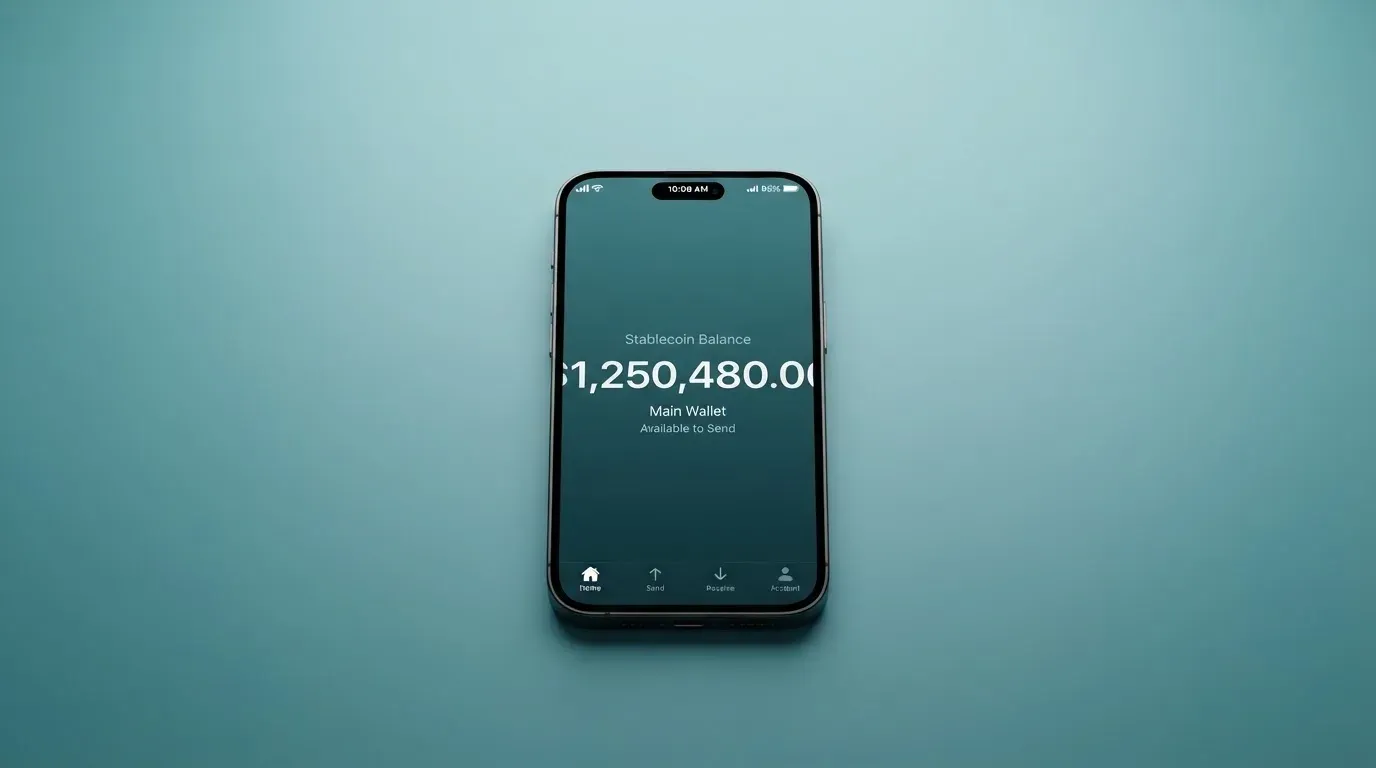
Here is the central weakness of the whole offer. The card’s pages do not name the coins or networks you can send, do not state a minimum deposit, do not say who pays the network fee, and do not list which fiat rails work. That is not a small gap, because it is exactly the gap where money disappears.
- If you send on a network the provider does not support, or to an address belonging to a different network, the transfer can be lost entirely or need manual support recovery with no guarantee.
- On Ethereum, fees are paid only in ETH. A wallet holding USDT and no ETH cannot send it.
- Circle stopped supporting USDC on Tron in February 2024, so “USDC over TRC20” is not a native option.
None of this is Greencart’s design; it is how stablecoin transfers work everywhere. But it is the thing to ask about before your first deposit, not after.
If you ever leave: termination is by written notice to [email protected], and you have 60 days of platform access afterwards to move assets out of the Safe. No fee is stated for withdrawals or transfers.
Paying with it every day
The mechanics are a prepaid model: you convert or top up a balance, and the card spends only that balance, so it cannot overdraw. Some of your spend earns 0.5% in B3TR as a floor, rising with staked B3TR and a Greencart+ plan up to a 4% ceiling, capped at $40 per transaction and $40 per month. Forty-eight merchant categories earn nothing, including cash withdrawals, transfers, gambling, taxes and insurance.
Two numbers disagree here. The site describes a floor of 0.5% rising to a 4% ceiling. The App Store text says “up to 8% cashback” and partner purchases up to 15%. I would plan on the site’s figures, which are the more conservative and the more detailed.
On the practical side: Apple Pay and Google Pay are not named on the public pages. That is a real daily-use question rather than a technicality — many people now tap rather than insert, and a card you cannot add to a phone wallet is a card you use differently.
The app is on iOS and Android. In the US App Store it showed 4.86 from 44 ratings; the app page at another read showed 4.9 from 44. Forty-four ratings is a thin base, so treat the number as a signal about engagement rather than a settled verdict. The app displays a level as “My Level”, recalculated weekly, based on holding B3TR and on in-app activity; lounge access is marked “coming soon”.
If a payment goes wrong, the terms specify no time frame for a chargeback. What they do specify: Safe-funded card transactions can be disputed or fraud-reported through the platform; complaints are acknowledged within 24 hours, resolved within 15 Working Days, with a final response no later than 35 Working Days, and escalation to Monavate.
What can go wrong
The most important thing on this page is not the fees. It is this: Gnosis Pay’s terms say your account “is not a regulated product or service”, there is no safeguarding commitment in the terms, and liability is capped at £100. Lost credentials may mean permanent loss of funds, and Gnosis Pay states it does not offer a crypto-asset wallet.
Self-custody is a genuine advantage over a custodial platform — your funds are not sitting behind someone else’s balance sheet, and the failures are real: Mt. Gox, about US$350 million reported stolen 2011-2014; Coincheck, about US$400 million in 2018; Ronin Network, US$625 million in 2022. But self-custody moves the risk rather than removing it. A seed phrase is typically 12 to 24 words and anyone who has it can spend your money. Transfers are irreversible. And clipboard-hijacking malware that swaps a copied address is a real and common theft route. If you are not comfortable with that responsibility, this is not the card for you.
Then there is the programme risk that belongs to the category rather than to Greencart. Visa terminated its global agreements with FTX on 13 November 2022 and the FTX US debit card was wound down. WaveCrest, a Visa issuer that supplied crypto card brands, was suspended by Visa in Europe in 2018, closing all its Visa programmes. Closures typically mean a notice period, then loading and spending stop, then a request to withdraw. Greencart’s licence sits with a Monavate that is FCA-authorised, which is a genuine mitigant — but the network holds the power to switch a programme off regardless.
Two smaller ones. Card payments can be declined for reasons that have nothing to do with your balance: merchants may look at the issuer’s country and apply extra scrutiny, some decline prepaid or foreign BINs outright, and a declined authorisation can leave a hold on your funds for several days. Address verification is generally unavailable for foreign-issued cards, which can cause declines. And 3-D Secure — Visa’s version is called Visa Secure — can shift liability for a fraudulent online payment toward you.
What I could not find is as informative as what I could. A search for Greencart card reviews on Trustpilot and Reddit returned no such reviews, and there is no Trustpilot page for greencart.ai. The absence of complaints is not a clean bill of health; on a product this new it is mostly an absence of history.
Support is by email at [email protected] or [email protected], with priority support for Greencart+ subscribers; Gnosis Pay uses [email protected] and an in-app chat bot. Languages and hours are not stated.
What to take instead
Three names come up if you are choosing here, and they fail in different directions.
| Alternative | Score | Card | Annual fee | Key difference |
|---|---|---|---|---|
| Gemini | 4.9 / 10 | Mastercard World Elite credit card | No annual fee | A credit card paid off in fiat; rewards paid in crypto |
| Lava | 7.1 / 10 | “Lava Card” | “no annual fees” | “no FX fees, and no FX spread”; up to 5% back in bitcoin |
| GoMining | 6.6 / 10 | Virtual now, physical “coming soon” | Not stated | Opening a card grants a free 1 TH miner; cashback paid in mining power |
| Greencart | 6.9 / 10 | Visa, virtual free and physical | None stated | Self-custodial Safe; cashback in B3TR |
Gemini is a credit card, which changes the category entirely: you are not pre-loading a balance, you are paying a bill in fiat, so crypto conversion never enters the transaction. Its rewards are 4% on gas, EV and transit for the first $300 per month, 3% dining, 2% groceries and 1% elsewhere, paid in Bitcoin or 50+ cryptos and changeable at any time. But its page does not state who can get it, what the card currency is, or whether an issuance fee applies — and for someone without a normal bank card, a credit card may not be reachable at all.
Lava scores highest of the three at 7.1 and is the closest competitor on pure economics: “no annual fees”, “no FX fees, and no FX spread”, and “up to 5% back in bitcoin on every purchase” with conditions not stated. It claims spending at 150 million merchants in 150+ countries. Deposits are in local currency or stablecoins. The catch is that the network, the card form, the eligible countries and the reward conditions are all unstated on the page.
GoMining at 6.6 is a different proposition: opening a card grants a free 1 TH miner, you top up with BTC, USDT, GOMINING and other coins, and cashback is paid in mining power rather than a token you can spend, rising with VIP level. The physical card is “coming soon”, and fees are not stated at all.
None of these three publishes a limits table either. If the absence of numbers is your deciding factor, this category is not ready for you.
Who I would recommend it to
I would recommend Greencart to someone who already runs a self-custodial wallet on Gnosis Pay, who has read the Gnosis Pay terms and understood the £100 liability cap, and who spends in currencies close to the ones they top up in. For that person this is a well-priced, well-built card with a small but real cashback floor and no subscription unless they want the paid tier. The 1 million-user milestone and the reward distribution are encouraging, and the issuer is a properly FCA-authorised e-money institution rather than an anonymous shell.
I would not recommend it as a first card, and I would hesitate before recommending it to anyone who needs Apple Pay, travels with heavy cash use, or cannot tolerate being responsible for their own keys. And I would want two things verified personally before a first deposit: exactly which coins and networks are accepted, and what the cash-machine terms actually are. Both are answerable from Gnosis Pay’s support; neither is answerable from the marketing page.
One last thing that is not advice but is easy to miss. If the balance is funded from crypto, each card payment is generally a disposal of a digital asset for tax purposes in the US framing, measured in local currency at fair market value on the date of the transaction. That is a general characteristic of crypto-funded spending, not a Greencart-specific rule, and how it applies to you depends on your own situation — take it to an accountant rather than to a card review.
Frequently asked questions
What is the Greencart card?
It is a Visa card powered by Gnosis Pay, issued by Monavate Limited, an FCA-authorised electronic money institution (FRN 901097). Virtual cards are free and a physical version may carry a one-off administrative fee. The company behind the service is Linfa Inc., a Delaware corporation. Spending draws on a self-custodial Gnosis Pay Safe rather than a custodial balance.
Is Greencart a bank?
No. It is a card programme from a Delaware company, with Monavate Limited as the issuing e-money institution under a Visa Europe licence. The Gnosis Pay terms state your account “is not a regulated product or service”, contain no safeguarding commitment, and cap liability at £100. That is a materially different position from holding money at a bank.
Who can get the Greencart card?
Residents of the EEA, plus Argentina, Bolivia, Brazil, Colombia and Mexico, according to Gnosis Pay’s eligible-countries list — the list did not open on Greencart’s own page when I checked. You must be 18 or older, and cannot be on sanctions lists or a national or resident of a sanctioned country. The contracting entity differs for EEA and non-EEA residents.
Does the Greencart card require KYC?
Yes. Onboarding runs through third-party compliance providers collecting identity, address and source-of-wealth information, and the account is personal only. In the EU, customer due diligence covers name, address, date of birth, nationality, identity documents, a sanctions check, and whether you are a politically exposed person. If due diligence cannot be completed, the relationship must not proceed.
How much does the Greencart card cost?
The site states “No hidden, monthly, or annual fees”, and no fees for withdrawals, transfers, deposits or FX. Gnosis Pay’s help pages, read October 2026 and not confirmed on the card’s own pages, show no transaction fee and no FX markup beyond Visa’s rate. The optional Greencart+ subscription is $7.99 monthly or $79.99 yearly, or $4.99 for the first two months.
How do I top up the Greencart card?
You recharge from a bank account or a crypto wallet, in fiat or crypto, and the card spends from the self-custodial Gnosis Pay Safe. The site states no deposit fees. Not stated publicly: which coins and networks are accepted, any minimum, and who pays the network fee. Sending on an unsupported network can lose the funds outright.
Is Greencart safe to use?
It is safer than a custodial wallet in one important sense, since your funds stay in your own wallet until payment, and less safe in others: lost credentials may mean permanent loss of funds, and liability is capped at £100. Transfers are irreversible. Whether 2FA and an instant card freeze exist is not stated publicly. Check Gnosis Pay’s register position and the terms yourself before funding.
What are the Greencart cashback rates?
A floor of 0.5% in B3TR on every purchase, rising with staked B3TR and a Greencart+ plan up to a 4% ceiling, capped at $40 per transaction and $40 per month. Forty-eight categories earn nothing, including cash withdrawals, transfers, gambling, taxes and insurance. The App Store text claims “up to 8% cashback” and 15% at partners, which conflicts with the site.
Can I use the Greencart card in Apple Wallet?
Apple Pay and Google Pay support are not named on the card’s public pages, so I cannot confirm either way. What is confirmed: iOS and Android apps, a free virtual card and a physical card. If tapping to pay is how you normally pay, verify this in the app before you rely on the card day to day.
Is the Greencart card free?
The virtual card is free and the site states no monthly or annual fees. A physical card may carry a one-off administrative fee, and the optional paid tier is $7.99 monthly. Gnosis Pay’s help pages, unofficial and read October 2026, list 5 free cash withdrawals per month or 200 EURe/GBPe/USDCe, then 2% — but the card’s own pages do not confirm any ATM terms at all.
Credit and cashback cards put to the test – cryptocardtested
Content created by the «cryptocardtested» team