
A Wallet and Two Cards, With Most of the Numbers Missing
 Available in US
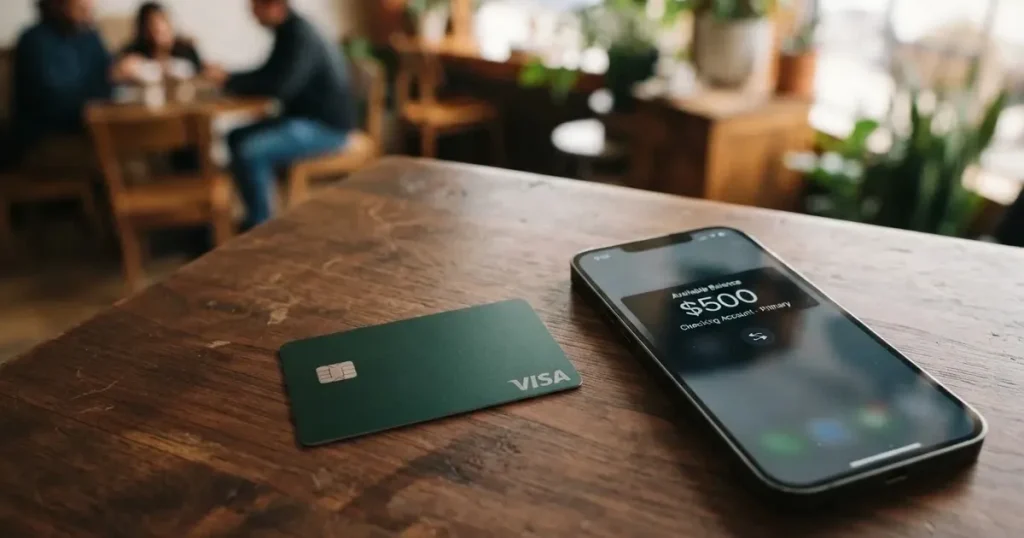
PPAY looks, on paper, like a straightforward answer for anyone who cannot get an ordinary bank card: a crypto wallet, a virtual card in US dollars for spending online, and a physical Mastercard for everything else. The idea is easy to grasp. The details are not. When I went through the card’s own public pages, the eligibility rule is a residence test rather than a citizenship one, the cost structure is described only by saying fees “may apply” without a single amount, the coins and networks you can fund the card with are never listed, and the company behind it states plainly that it is a technology company and not a bank. That is the picture I have to work from, and it shapes everything below.
*Conditions are current as of October 28, 2026.*
My overall mark for PPAY is 4.5 out of 10. That is not a rounding of a better number, and I want to be straight about why before we go anywhere near the fees.
The score, and who this card is really for
| Criterion | Mark | Why |
|---|---|---|
| Who can get it | 3 / 10 | Residence of Nigeria or an “eligible country”; the site says “10+” countries but names none of them |
| Cost | 5 / 10 | No issuance or monthly fee published, no fee amounts disclosed; P2P sends are fee-free |
| Top-up options | 4 / 10 | The wallet holds crypto and swaps run through a WhatsApp bot; the coins and networks for funding the card are not disclosed |
| Reliability and complaints | 5 / 10 | Owned by PROSPER DIGITAL SYSTEMS LTD, described as “not a bank”; issuer and licences not named; no complaints or reviews found |
| Everyday use | 6 / 10 | A USD virtual card and a physical Mastercard; Apple Pay, Google Pay and ATM support not disclosed |
| Total | 4.5 / 10 |
Where the marks come from is worth spelling out, because the pattern matters more than any single number. The card does two things visibly well: it gives you a virtual card and a physical Mastercard, and it scores highest of all its categories on everyday use, at 6 out of 10. The weak point is access. Who gets one scores 3 out of 10, because the residence rule points at “10+” countries that the public pages never list, and if you are outside that set you are left guessing. Costs land in the middle at 5, not because anything is cheap, but because nothing is actually quoted: no issuance fee, no monthly fee, no conversion percentage, no withdrawal fee, nothing. Top-up options score 4 because the plumbing is undescribed — you are told the wallet holds crypto and that swaps happen through a WhatsApp bot, which is not the same as knowing which asset to send and on which network.
Reliability sits at 5, and I want to be careful with that figure in both directions. I found no official incidents. I also found no user reports at all, and a search for reviews turned up a different company with a similar name rather than anything about this one. An absence of complaints is not a clean record; at this size, with this little public footprint, it is closer to absence of evidence. If you have been burned by a small provider before, you will recognise the shape: nobody has written the post-mortem yet.
So: who suits this card? Nigerian residents who want a wallet holding crypto together with virtual and Mastercard cards, and who can accept a fast-moving, lightly regulated setup and a feature set that is described in broad strokes rather than numbers. Who it does not suit? Anyone whose decision depends on knowing the cost of a payment before they make it, anyone outside Nigeria who cannot confirm they are in an eligible country, and anyone for whom the phrase “not a bank” is a dealbreaker on its own.
Will they give you the card?
The terms say you must be a resident of Nigeria or of an eligible country where PPAY operates. The home page says “10+” countries are supported and names none of them, which is the single most useful thing on this page to know before you start: the list exists, you just cannot read it from the public site. The test is residence, not citizenship. That distinction cuts both ways. A Nigerian passport holder living in London is not obviously covered on the strength of nationality alone, and a non-Nigerian living in Lagos may be. If your plans involve moving, or living in more than one country, this is a question for support rather than for the terms page.
One more line from the anti-money-laundering policy is worth noting for completeness: it refers only to “high-risk jurisdictions”, without listing them. So the residence rule points at a list you cannot see, and the exclusions point at a list you also cannot see.
How to get it
The onboarding path is ordinary and, on paper, thorough. You create an account in the app, verify your identity, and then use the features. For verification, the AML policy lists your full legal name, residential address, date of birth, phone, email, a government-issued ID, a selfie or biometric check, proof of address, and “BVN, NIN, or equivalent verification data where applicable”. The terms add that identity verification is mandatory before the account is activated, and that KYC applies for certain features “in compliance with CBN regulations”. The BVN and NIN are Nigerian identifiers; the “or equivalent” wording is doing real work for anyone elsewhere, and it leaves the question of what is accepted open.
You need to be 18 or over.
What the pages do not tell you is what comes out the other end. Card delivery is not stated. And on limits there is one sentence doing a lot of work: “PPay operates tiered verification limits”. The tiers themselves are not described, nor is how long verification takes, nor the reasons a check might be rejected. The one rejection path that is described is a warning rather than a rule — if you do not respond to verification or enhanced-due-diligence requests, the account may be suspended or terminated. Enhanced due diligence means extra questions, and the sensible assumption is that a large or unusual first transaction is what triggers it.
Fees: what it really costs
Here is the honest summary: the card’s public pages do not publish a single amount. No issuance fee, no monthly fee, no conversion percentage, no foreign-exchange markup, no ATM fee, no daily or monthly limit. The terms say fees “may apply to bank transfers, card funding, and certain third-party services” and stop there. Everything below marked “not stated” is absent from the public pages, not something I failed to find.
| Fee or limit | What the card says |
|---|---|
| Issuance | not stated |
| Monthly fee | not stated |
| Conversion fee | not stated; the home page advertises “Live Rates: crypto and fiat rates with a built-in converter” |
| Foreign exchange fee | not stated |
| ATM | not stated |
| Daily limit | not stated; “tiered verification limits” are mentioned with no amounts |
| Monthly limit | not stated; same |
| P2P sends | “zero peer-to-peer fees” — for P2P sends only |
Two things follow from that table. First, the only fee the card actually commits to is the one it charges nothing for: peer-to-peer sends are fee-free. Second, everything you will actually pay at a till is unpriced. A live-rate converter in the app is not the same thing as a free conversion. The rate you see is a rate, and what lands in the balance after the spread, the network cost and any platform cut is a different number that the pages do not show you.
So let us walk three ordinary payments through what we can and cannot say.
A coffee in a local currency. You have a USD virtual card, or a Mastercard loaded from crypto. If the terminal offers to charge you in dollars, the network or the merchant may do the conversion and you may never see a separate line item — but the rate is not the card’s rate, and no FX fee is stated. If you convert in the app first, the conversion fee is not stated. Either way, the honest position is that you do not know the cost of this coffee in advance, and you cannot compute it from the published material.
An online subscription in dollars. This is the cleanest case, and it is the reason the virtual card exists. A USD-denominated virtual card paying a USD merchant is the transaction with the fewest moving parts: no currency conversion of your own, and the only fee the card names anywhere is not even relevant here. What you still do not have is the daily and monthly spending limits, which are not stated.
A withdrawal at an ATM. Not stated — whether ATMs are supported at all, and what they charge. The physical Mastercard is described as “accepted everywhere Mastercard is”, which is about acceptance, not about cash.
How to top it up
The card’s own pages are the thin point here, and no amount of reading between the lines will fix it. Card funding is not stated. The wallet itself is described as holding crypto and offering swaps through a WhatsApp bot — the home page calls it “OTC trades, crypto swaps” — but the coins and networks you can use to fund the card are not listed. The top-up method is not stated either.
That last omission is the one with teeth. Sending crypto means choosing a network, and networks are not interchangeable: a transfer sent on a chain the provider does not support can be lost or need manual support recovery with no guarantee of success. This is why “which coin and which network” is not a technicality. It is the difference between a top-up that lands in a minute and one that disappears.
Network fees are charged by the blockchain, not by the card provider, so on-chain cost is outside its control and outside its published terms.
One related number you will see and should not confuse with the card: the wallet’s savings feature is advertised at “up to 8.5% APY”. That is a savings rate. No cashback is stated for card spending, and a savings yield is not a reward for using the card.
There is one withdrawal answer in the terms. You may close your account at any time through the app settings, and any outstanding balance will be settled before closure. The settlement method and any fee are not stated — so treat “you can close it” as a fact and “you can get your money out easily” as something to confirm with support before you deposit anything you cannot afford to lose.
Paying with it every day
The everyday case is the card’s strongest suit, and it earns the 6 out of 10. There are two instruments: a virtual card in USD, positioned for online shopping, and a physical Mastercard described as accepted everywhere Mastercard is. The virtual card’s network is not stated, which matters if you need a specific network’s checkout flow or a wallet that only accepts one. The card currency for the virtual card is USD, and there is no multi-currency information at all — no indication that you can hold or switch between several currencies.
What is missing is everything between the card and your phone. Apple Pay, Google Pay and ATM support are all not disclosed. There is an iOS app and an Android app, but the store buttons on the home page are placeholders, so I found no listing to read and no ratings to report — which means the app’s reputation is genuinely unknown rather than quietly good.
On disputes, the terms say transactions are final once confirmed, that refunds are decided case by case, and that disputes should first go through support. Chargebacks are not mentioned at all. Read that combination carefully: “final once confirmed” plus no mention of chargebacks is a weaker position than you would get from a regulated card issuer in the EU or US, where a chargeback is a formal mechanism with reason codes such as fraud, duplicate billing, or goods not received. Here the first route appears to be support, and the outcome is discretionary.
One practical point about declined payments, which applies to any card: a declined authorisation can leave a hold on your funds for several days, in some cases as long as seven. Money that is gone from your wallet but not yet in the merchant’s account is a real state to expect.
What can go wrong
Here the picture gets thinner, not thicker, and I would rather tell you that than dress it up.
The company. The footer names the owner as PROSPER DIGITAL SYSTEMS LTD. PPAY describes itself as “a technology company, not a bank”. The registration country, the issuing bank and any licences are not stated. The terms are governed by the laws of the Federal Republic of Nigeria, and disputes go to the courts of Lagos State. For a user anywhere else, that is worth pausing on: the contract, the law and the forum are all in one country you may never have visited.
Custody. The custody model is not stated, which means the single most important question about a crypto wallet — who holds the keys — has no published answer. What is stated is that “every account, and every sensitive action within it, is protected by biometric and two-factor verification”, and that transactions are screened for fraud and sanctions. Both are reasonable. Neither tells you what happens to your funds if the provider’s own systems fail. Safeguarding is not stated: there is no published promise that customer funds are held separately from company funds or insured. In the EU an electronic money institution must safeguard customer funds by segregating them or insuring them, and even then those funds are not the same as bank deposits and may not sit under a deposit guarantee scheme. Whether any comparable arrangement applies here is simply not on the page.
Freezing. The help page lists the question “Can I freeze my card?” without an answer. Instant card freeze is one of the standard safeguards you expect from any card app, along with app-based 2FA, spending limits and 3-D Secure confirmation. Two of those are implied by the security line; the freeze is a question mark in an otherwise complete-looking help index.
Money that cannot be moved. Crypto transfers are typically irreversible, and a stolen private key has no built-in recovery — the network cannot freeze or return funds. Stablecoins are not censorship-proof either: Tether says it disables tokens in wallets on the OFAC sanctions list and has frozen funds tied to illicit activity. So a card that converts your crypto into a spendable balance has, on the one hand, an irreversibility problem on the way in and, on the other, a set of screens it does not control.
No track record to check. No official incidents found, no user reports found, no Trustpilot page found, no dated events found. To be fair to the card: nothing bad surfaced either. But it also means there is no history of the service holding up, which is not the same as a good one.
Support. Email at [email protected], in-app chat, X and Instagram, and a WhatsApp bot. Replies are promised “within one business day”. Languages and opening hours are not stated. One business day is a reasonable commitment; whether it holds in practice is one of the things a user base would normally be telling you about, and there is no user base to ask.
A broader caution, not specific to this card. Card programmes do get closed. Visa terminated its global agreements with FTX on 13 November 2022 and the FTX US debit card was wound down by its issuer. Visa suspended WaveCrest in Europe in 2018, closing all WaveCrest-issued Visa programmes. The usual sequence is a notice period, then spending and loading stop, then you are asked to withdraw what is left. That is the shape to expect from any provider in this category, and it is why the top-up section above matters so much.
What to take instead
If the reason you are looking at PPAY is that an ordinary bank card is hard to get, or that spending from crypto is the point, these are the alternatives I compared — each with its own score from the same criteria.
| Alternative | Score | Card | Cost and fees | Access |
|---|---|---|---|---|
| International Visa Card | 6.7 / 10 | U.S.-issued Platinum Visa, virtual, pays in USD; physical “coming soon” | $5 one-time issuance, no maintenance fee; plans Classic free, Pro $9.00/month, Max $19.00/month; USD use free on all plans; foreign currency “Visa exchange rate + 2% FX fee”; deposits of any kind free | Not available to residents or legal registrants of Belarus, mainland China, North Korea, Cuba, India, Iraq, Iran, Israel, Myanmar, Nepal, Nicaragua, Russia, Syria, Turkey, Ukraine, Venezuela, Vietnam; FATF grey-list countries reviewed case by case |
| UNi Card | 6.1 / 10 | Multicurrency card on the Mastercard network, spends from the UNi.Global balance; physical or virtual not stated | “No annual fee or foreign transaction fee”; issuance fee not stated; assets converted at live OTC rates; “No hidden exchange fees” | Not stated |
| Whop Cards | 5.2 / 10 | Visa, works anywhere Visa is accepted online and in stores; type and currency not stated | “No extra fees”; no issuance or monthly amounts listed; conversion and FX fees not stated | Consumers in 31 US states; businesses in 41; unsupported consumer countries include Belarus, China (Mainland), Cuba, Hong Kong, India, Iran, Iraq, Israel, Myanmar, Nepal, Nicaragua, North Korea, Russia, Syria, Turkey, Ukraine, Venezuela, Vietnam |
Three contrasts are worth drawing out.
The first is disclosure. Every one of these alternatives publishes something you can actually compute with — $5, $9.00 a month, a 2% FX fee, “no foreign transaction fee”. PPAY publishes none. For a card whose entire appeal is being spendable when the banking system is closed to you, that is the wrong corner to be in.
The second is access geography. The alternatives’ exclusion lists are long, and they are printed. PPAY’s eligible-country list is described but not printed. A long, visible exclusion list is workable; an invisible one is not something to plan around.
The third is scope. The International Visa Card restricts a specific set of countries; UNi Card’s eligibility is not stated; Whop is built around US states. If you are a Nigerian resident, most of these may be closed to you anyway — which is exactly why PPAY exists, and also why the absence of published numbers matters more here than it would for someone with five options.
On rewards, the picture is thin across the board. The International Visa Card states no cashback. UNi Card advertises spend-to-earn rewards up to 3%. Whop offers 5% cashback at select merchants, currently Uber, more planned, with payout currency and conditions not stated. PPAY states none.
Who I would recommend it to
I would recommend PPAY, with the caveats above attached, to someone in Nigeria who already holds crypto and wants a wallet that pays out through a virtual and a physical Mastercard, and who is comfortable treating the card as a spending tool rather than as a financial account. That person gets a real Mastercard and a USD virtual card, two-factor and biometric protection described in the security policy, screening for fraud and sanctions, and support across email, chat, social channels and a WhatsApp bot with a one-business-day reply commitment. That is a usable set of features for a specific job.
I would not recommend it as a first stop for anyone who needs to know what a payment costs. Without a published conversion fee, an FX rate, an ATM charge or a spending limit, you cannot model your own spending, and I would not want you to find the numbers by making payments you care about.
I would also not recommend it to anyone outside the eligible set who cannot confirm their own country is covered, to anyone treating the balance as savings — the custody model and safeguarding position are not published, and stablecoins can and do lose their peg — or to anyone who needs chargeback rights today. “Transactions are final once confirmed” is a short sentence to have in your pocket when a merchant argues with you.
If you are in Nigeria and comparing options, the honest summary is that PPAY is one of very few routes to a card that actually works for you, and that scarcity is real leverage: ask support, in writing, for the conversion fee, the FX rate, the daily and monthly limits, whether the funds are safeguarded, and who the issuing bank is. Keep the answers. If the numbers are good, this is a workable card. If they are not, you have lost nothing but a message.
Frequently asked questions
What is the PPAY card?
The PPAY card is a crypto wallet with two payment instruments attached: a virtual card denominated in US dollars, aimed at online spending, and a physical Mastercard described as accepted everywhere Mastercard is. The wallet holds crypto and converts it into a spendable balance. The virtual card’s network is not stated, and there is no information about holding more than one currency.
How does the PPAY card work?
You create an account in the app, complete identity verification, and then use the card. Spending draws on the balance the wallet holds rather than on a bank account, which is how most crypto cards work — a prepaid model where crypto is converted and loaded as fiat. Card payments pass through the network, which routes the messages, and an issuer, which holds the card programme.
Is PPAY a bank?
No. PPAY describes itself as “a technology company, not a bank”, and the footer names PROSPER DIGITAL SYSTEMS LTD as the owner. The issuing bank and any licences are not stated, and the terms are governed by Nigerian law with disputes to Lagos State courts. That distinction matters for how you treat any balance you leave there.
Who can get a PPAY card?
The terms require residence in Nigeria or in an eligible country where PPAY operates. It is a residence test, not a citizenship test. The home page says “10+” countries are supported but names none, so if you are not in Nigeria you need to confirm your country with support rather than assume. You must also be 18 or over.
Does the PPAY card require KYC?
Yes, and it says so directly: identity verification is mandatory before account activation. The AML policy lists your full legal name, residential address, date of birth, phone, email, government-issued ID, a selfie or biometric check, proof of address, and BVN, NIN or equivalent data where applicable. Certain features attract KYC “in compliance with CBN regulations”.
What does the PPAY card cost?
The public pages quote no amounts. There is no published issuance fee, no monthly fee, no conversion percentage, no FX fee and no ATM fee. The terms say fees “may apply to bank transfers, card funding, and certain third-party services” without figures. The one thing stated as free is peer-to-peer sends, at “zero peer-to-peer fees”.
How do I top up the PPAY card?
The pages do not say. Card funding is not stated, the top-up method is not stated, and the coins and networks are not listed. The wallet holds crypto and swaps run through a WhatsApp bot, but that is not the same as knowing where to send. Get the asset and network confirmed in writing before transferring anything, because a transfer to the wrong network can be lost.
Can I use the PPAY card in my country?
Whether you can hold the card depends on whether you are a resident of Nigeria or of an eligible country — and the eligible countries are not named on the public site. Where you can spend is a separate question: the physical Mastercard is described as accepted everywhere Mastercard is, but acceptance is not the same as working smoothly, and foreign-issued cards can be declined by some merchants.
Is the PPAY card safe?
It has real protections on paper: biometric and two-factor verification on every account and sensitive action, plus screening for fraud and sanctions. But the custody model is not stated, so who holds the keys is unknown, and safeguarding is not stated. The help page even lists “Can I freeze my card?” without answering. Ask about key custody and fund safeguarding before you deposit meaningfully.
Is the PPAY card worth it?
For a Nigerian resident who wants a wallet with a virtual and a physical Mastercard and can accept a lightly regulated setup, it may be. For anyone choosing on price, there is nothing to compare: no fee and no limit is published, so no one can model their spending on it. I would get the fee schedule in writing from support first, and I would compare it against alternatives that do publish numbers.
How do I close my PPAY account?
The terms say you may close your account at any time through the app settings, and that any outstanding balance will be settled before closure. The settlement method and any fee are not stated, so ask support how and how quickly you would receive money before you rely on being able to withdraw. Support is reachable at [email protected], in in-app chat, on X and Instagram, and via the WhatsApp bot, with replies promised within one business day.
App and neobank cards put to the test – cryptocardtested
Content created by the «cryptocardtested» team