
A USDT-funded Visa card with four tiers and no monthly fee, priced for people already holding stablecoins
 Available in US
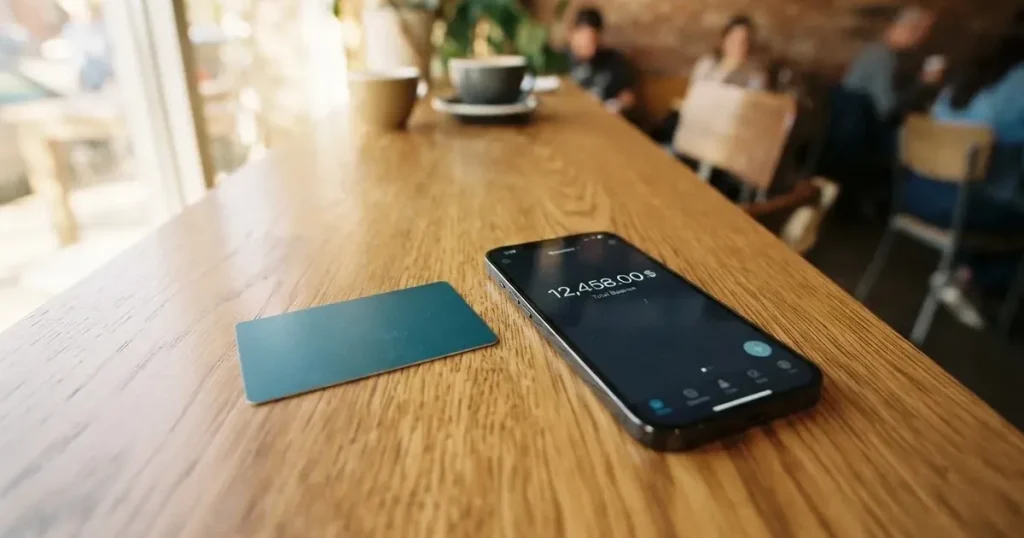
The Tevau card is a Visa payment card you fund with USDT rather than from a bank account, sold in four versions — virtual, plastic, metal and 24K Gold — with Apple Pay and Google Pay across the range and a stated monthly fee of $0. My verdict is 6.0 out of 10. That is not a bad score and not a good one. It sits exactly where I would put a card that does a narrow job well and asks you to accept narrowness.
The details below are current as of October 28, 2026.
Everything I could confirm came from one unofficial source, and that shapes the whole review. The public pages say they are maintained by an independent information site that describes itself as not being Tevau itself — even while the same domain hosts what looks like the card’s own product pages. No Trustpilot profile, no Reddit thread, no independent review surfaced. So the pricing and mechanics below are consistent with what the pages describe, but they are not confirmed by the card operator, and where the pages contradict themselves or a maker’s own launch listing, I flag it.
Verdict: 6.0 out of 10, and here is where the marks come from
| Criterion | Mark | Why |
|---|---|---|
| Who can get it | 9 / 10 | Pages claim 200+ countries with availability varying by region; no country list or exclusions published |
| Cost | 4 / 10 | Virtual $20, plastic $100, top-up 1%, non-USD payment 1.2%, ATM 1.9%, monthly fee $0, $3 after 90 days idle |
| Top-up options | 4 / 10 | USDT only, app shows the network, networks unnamed on the page; no fiat route disclosed |
| Reliability and complaints | 4 / 10 | Hong Kong office, issuer not named, a claimed Bank of Canada registration I could not verify; no complaints or independent reviews found |
| Everyday use | 9 / 10 | Virtual, plastic, metal and 24K Gold, Apple Pay and Google Pay on all types, ATMs on physical cards |
| Total | 6.0 / 10 | Strong on reach and everyday convenience, weak on cost transparency, funding options and independent evidence |
The audience note is simple: this is a card for USDT holders who want a virtual or metal card. If you already sit on stablecoins and want to spend them at ordinary shops, the pitch is coherent. If you need to move fiat in and out of a card account, if you want a wide range of funding sources, or if you want a long public record of how the operator behaves under stress, this is thin.
Notice the shape of the score. The two highest marks are reach and everyday use — the things the pages can most easily claim. The two lowest are cost transparency, funding flexibility and independent evidence — the things that would need real-world usage to establish. A young product with no public complaint history is not necessarily unsafe; it is simply unproven, and unproven deserves caution, not enthusiasm.
Will they give you the card
Mostly, apparently — with the important caveat that nobody has published the rule. The pages say “200+ countries” with availability that “varies by region.” There is no country list, no exclusion list, and no explanation of what varies. Your eligibility is effectively decided inside the app after you sign up and start KYC, not from a table you can read beforehand.
Two things about that phrasing deserve a second look. “Availability varies by region” can mean many things — a soft area-by-area rollout, some countries blocked, some blocked only for certain card types — and the pages do not distinguish. And since citizenship and residence are screened differently in this industry generally (sanctions lists and issuer risk policy attach to citizenship and country of birth, not just where you live), “available in your country” is not the same question as “available to you.” Check inside the app before you plan a payment method around it.
How to get it
The route is short and ordinary: download the app, complete KYC, pick a card type, pay the one-time fee. The app exists on iOS as “Tevau” by Tevau Technology Limited, rated 4.4 out of 5 from seven ratings when I looked, latest version 2.0.010 dated 11 September, with an Android listing present but showing no rating. Seven ratings is not a track record; it is a hint that very few people have written an honest public verdict.
KYC is mandatory. The specifics are not given in full: the pages confirm identity verification is required but do not itemise which documents, whether proof of address is needed, or the exact age rule. What the pages describe is a single, one-level flow — one government ID (passport, driving licence or national ID) plus a selfie in the app, 18 and over, no tiered levels. Processing time is not stated as policy. Blurry photos are given as the usual reason a submission is sent back, which is at least honest about what actually goes wrong.
The card is a Visa. Virtual cards are issued instantly in the app. The pages say card shipping and replacement are free, but do not name delivery countries and do not state a delivery time — if a physical card has not arrived within 14 days, the advice is to check the tracking code and then contact in-app support.
| Card type | One-time fee | Notable |
|---|---|---|
| Virtual | $20 (unconfirmed figure $10) | App only, no in-store tap, no ATM, 3,000,000 USD per transaction |
| Plastic | $100 | ATM: $3,000 (unconfirmed)/day and $10,000/month, 3 withdrawals per day and 30 per month |
| Metal | $199 | ATM limits as above; per-transaction cap 80,000 USD (unconfirmed) |
| 24K Gold | $499 | Refunded after $100,000 (unconfirmed) spent within 3 months; 2 virtual + 5 physical cards; top-up discount |
That top row contains a contradiction worth pausing on. The official price list puts the virtual card at $20; a Product Hunt listing by the maker from 2026 mentions $10, though this is unconfirmed. Get the current price from the app before you commit, and do not let a launch-day figure set your expectation.
The Gold card’s own terms are internally unclear: the tier table speaks of five waivers per month while the fee table describes a 50% discount on up to five top-ups (an unconfirmed figure). Small money, but it is a sign the published figures are maintained by hand.
Fees and limits: what it really costs
The headline people quote is $0 monthly. That is right, and it is the least interesting number here. The card’s real cost is in its per-transaction fees and, above all, in what you pay to put money in and spend it outside the US. Read this table as the working budget, not the marketing line.
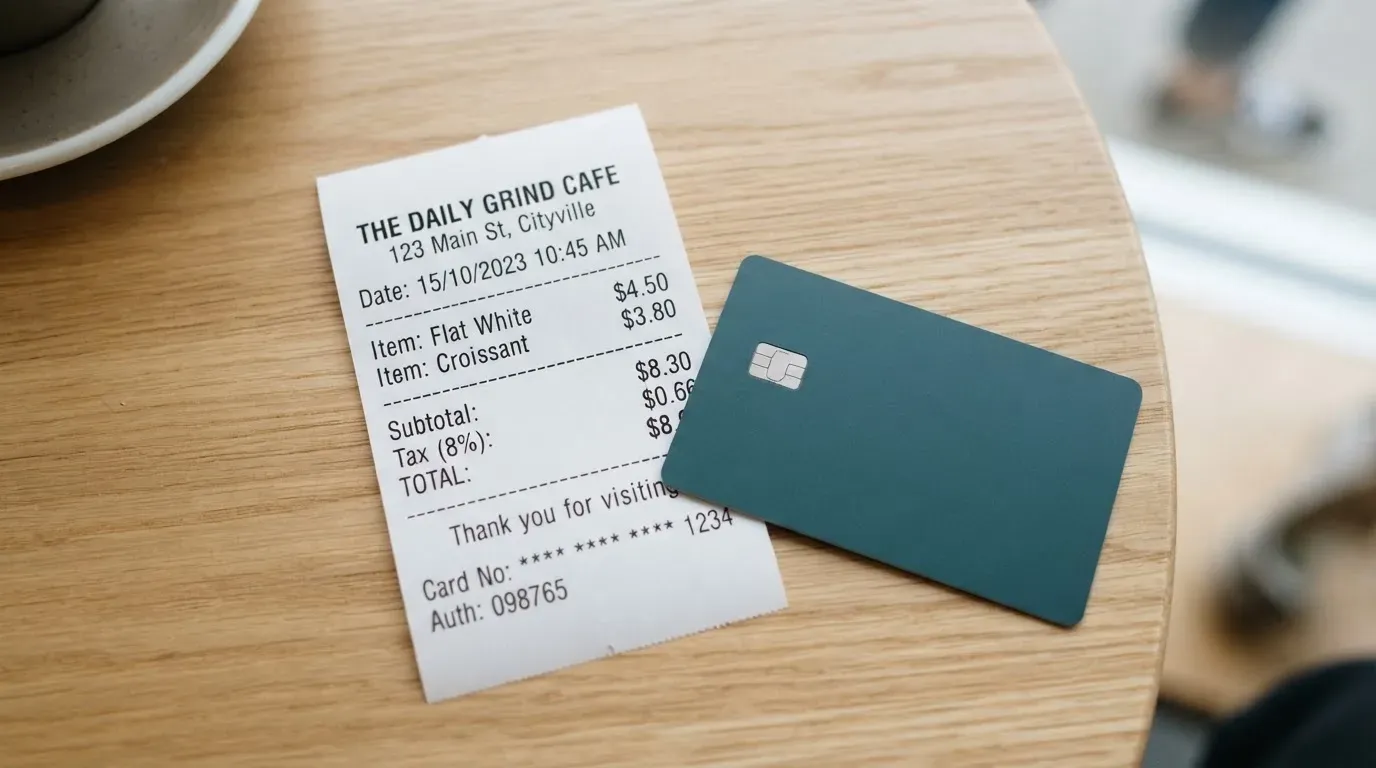
| Fee or limit | Value |
|---|---|
| Card issuance | Virtual $20, Plastic $100, Metal $199, 24K Gold $499 (one-time; figures unconfirmed) |
| Monthly fee | $0 |
| Annual fee | Not stated |
| Close-card fee | $2 (unconfirmed) |
| Inactivity | $3 after 90 days without a transaction, then $1 (unconfirmed) every 30 days |
| Card validity | 3 years |
| Top-up from wallet | 1% (Gold: 0.5% (unconfirmed) on up to 5 top-ups per month) |
| Wallet deposit | No fee |
| USD payment | $0.20 + 0.5% (unconfirmed) |
| Non-USD payment | 1.2% |
| Small authorisation (up to $3) | First 5 per month free, then $0.20 (unconfirmed) |
| Declined transaction | First 3 per month free, then $0.50 (unconfirmed) |
| ATM | 1.9%; not available on the virtual card; operator fees may apply |
| FX | Described only as “FX rate spread for overseas spending”, not quantified |
| Per-transaction limit | 3,000,000 USD (virtual, plastic); 80,000 USD (metal, gold; limits unconfirmed) |
| Daily and monthly spend limit | 3,000,000 USD (unconfirmed) for all cards |
| ATM withdrawal limits | Plastic, metal, gold: $3,000/day (unconfirmed), $10,000/month, 3 per day, 30 per month |
Two things are not stated that matter. The FX spread is never given as a number — only named. And the card currency is not stated, nor is multi-currency balance support. Since spending is converted to the merchant’s currency at checkout, the spread is the piece you cannot cost in advance.
Three everyday payments, to make the percentages real. A $30 grocery shop paid in the US dollars: $0.20 plus 0.5% of $30, so 15 cents, roughly $30.35. A €24 dinner in Europe: the non-USD rate of 1.2%, so about $0.29 on the converted amount — but that excludes whatever the unquantified FX spread takes. A $40 withdrawal from a cash machine: 1.9% (unconfirmed), about 76 cents, before the ATM operator’s own charge, and impossible on the virtual card. Then the fee you cannot avoid per top-up: funding $500 of USDT costs $5 to move into the card balance.
The $3 inactivity charge is the sleeper. A card you use occasionally — which is exactly what an emergency or travel card is — can start costing you $3 after three months of quiet, then $1 (unconfirmed) a month after that. If you are keeping this as a backup, set a calendar reminder or accept the drip.
The pages themselves warn that fees “can differ by card type, campaign, and region.” Treat every number above as the standard rate, not a guarantee.
How to Top up the card
One way in: USDT. The app shows you the network to use at the moment of transfer, but the networks themselves are not named on the page. That gap is worth internalising — blockchain transfers are irreversible, so funds sent on a network the provider does not support, or to an address belonging to another network, can be lost or need manual support recovery with no guarantee. There is no undo button on a blockchain. If the app shows a network, use exactly that network; if you are guessing, stop.
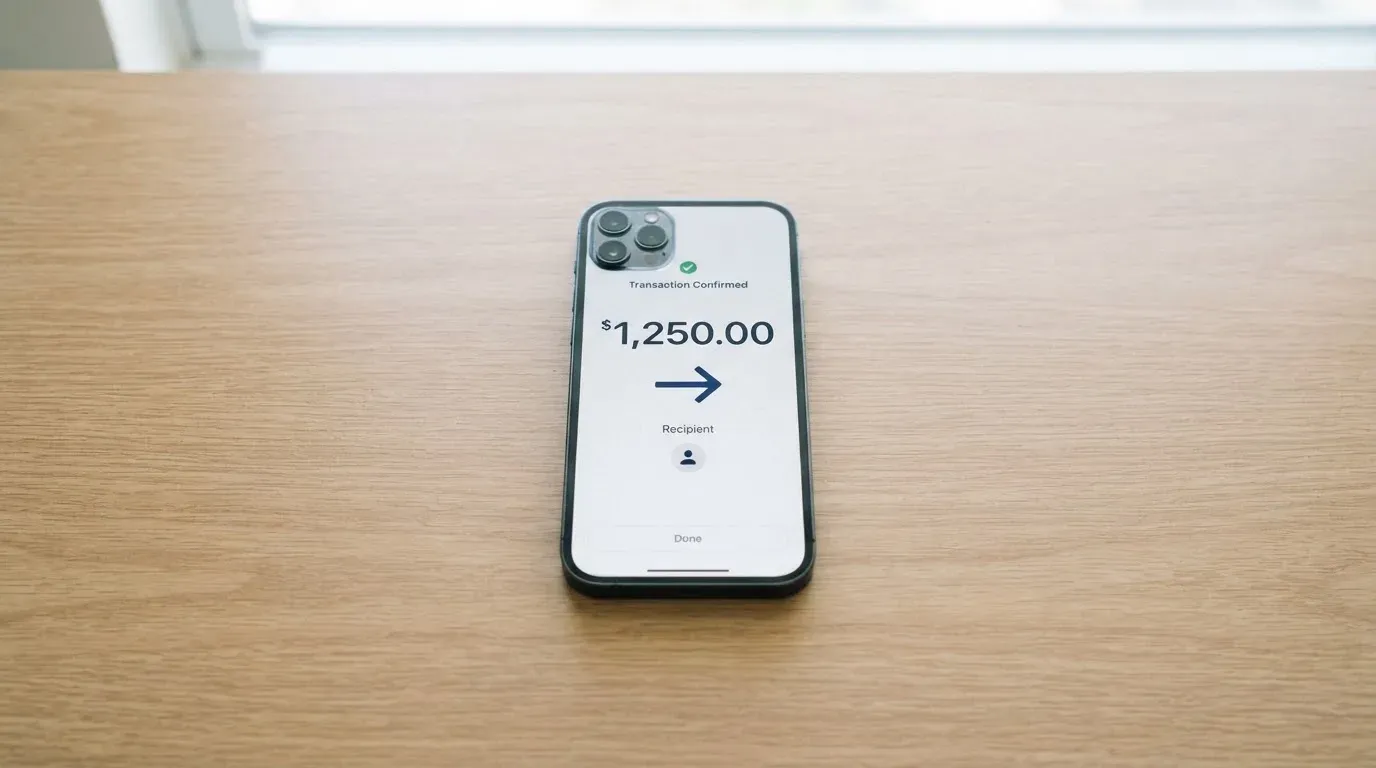
There is a link to a “Withdraw to bank (IDR supported)” guide, which hints at an Indonesian-rupiah route, but no fiat top-up method is described in the materials I could read. If fiat funding is the point for you, that is an open question to put to support before you rely on the card.
The minimum top-up is not stated. Deposits straight into the wallet are free; the 1% applies when moving USDT from the wallet onto the card balance.
Getting money back out has its own set of rules, and they are not generous. USDT can be withdrawn from the wallet to an address shown in the app. But once a card is topped up, that balance can only be spent or withdrawn at an ATM — there is no stated route to return card funds to the wallet except closing the card, which costs $2 (unconfirmed) and cannot be undone. A closed card returns its remaining balance to the wallet, but the closed card cannot be restored, and the application fee is not refunded on closure. Separately, a virtual card with no transactions for four consecutive months closes automatically — which means a $20 virtual card you set up “just in case” will quietly shut itself if you never touch it.
Paying with it every day
Day to day, this is a well-built card. Apple Pay and Google Pay work on all four card types, physical and virtual alike, which puts it ahead of plenty of crypto cards that only offer a number to paste into a checkout page. ATM withdrawals are available on the physical cards. The four formats — virtual for online, plastic, metal, and a gold one that is refunded after $100,000 (unconfirmed) of spend in three months — let you choose how the card looks in your hand.
There is no cashback mentioned anywhere, which is worth stating plainly: if you are moving from a bank card with rewards, this is a step down on that axis.
The friction lives at the merchant, not the card. The pages note that merchants blocking prepaid or crypto-funded cards will decline it — and they will, because the card number’s issuer identification prefix tells the merchant what kind of card it is and where it was issued, and a mismatch with your billing address invites extra scrutiny. Address verification, which quietly checks the numeric parts of the billing address you type against issuer records, is generally unavailable for foreign-issued cards, which is a common cause of declines on foreign-issued ones. OpenAI billing is explicitly not supported. Categories that are blocked otherwise are not stated, and gambling and similar merchant categories are the ones most often blocked by policy rather than law — the list varies by issuer and I cannot give you Tevau’s, because it is not published. Declines and refunds can occasionally be delayed. On chargebacks and dispute handling: not stated, and that is a gap you should feel before you rely on the card for anything large — the usual protections attached to bank cards, and in the US the specific reversal rights that come with regulated debit and credit cards, may simply not apply to a card like this, and prepaid-card coverage in particular should not be assumed.
A declined authorisation can also leave a hold on your funds for several days, sometimes up to a week. On a card funded from a single stablecoin, a week of held money is a real cost with no interest earned while it waits.
What can go wrong
The company is young and small. Headquartered in Hong Kong, launched 2024. The card issuer is not named — meaning the institution actually behind your Visa number is not something you can look up. The pages state that Tevau’s registration as a payment service provider with the Bank of Canada was approved in August 2026; that is a claim as stated on the site, not something I could independently verify. The pages also state plainly that Tevau is not a bank licensed in Japan, the US or the EU, and that home-country deposit protection may not apply to you. Take that at face value: your money here is not bank-deposit-protected in the way an ordinary current account is.
Your crypto is custodial. Assets are said to be stored with licensed custodians, with cold and hot wallet separation claimed. But control of crypto belongs to whoever holds the private key — here, the provider does, and you must trust them completely. Custodial platforms have a real record of failure: Mt. Gox (roughly $350 million reported stolen, 2011–2014), Coincheck (roughly $400 million, 2018), Ronin Network ($625 million, 2022). You are exposed to that counterparty risk by choosing this card over a self-custody one. Tether itself says it disables tokens in wallets on sanctions lists and has frozen funds tied to illicit activity, so stablecoins are not censorship-proof either.
If something goes wrong, help is in-app. There is in-app chat (a bot first, a live agent on request, with “business hours” undefined), a Help Center, a Telegram community and an X account. The website is offered in 17 languages including Russian, though it is not confirmed that every support channel matches. Two-factor authentication and insurance are not stated. A frozen account must be re-verified personally through support. If your card is stolen or leaked you can lock it in the app and then close it. The good news: a security update on suspicious transactions and risk-control upgrades was published on 21 August 2026, and a USDT card guide on 27 August. Around that, the site claimed 500,000 users in August 2026 — a user-count claim, not a customer record.
There is no independent track record. No Trustpilot page, no Reddit thread, no independent review found; no official incidents are stated either way. An absence of complaints from a young product is weak evidence, not strong evidence — it can mean nothing went wrong, or that nobody was looking, or that unhappy users went elsewhere.
Compliance can close your account. Due-diligence rules require regulated businesses to verify customers and monitor transactions, and where due diligence cannot be completed, the institution is expected to refrain from the transaction or relationship and, where necessary, end the relationship. That is the normal, lawful reason accounts get closed or frozen pending documents. Nationality is screened separately from residence. None of this is a reason to avoid the card; it is a reason to keep your documents current and not to be shocked if paper is requested twice.
One more structural point. Visa and Mastercard do not themselves issue crypto cards to consumers — they license issuers and can suspend a programme. Visa terminated its global agreements with FTX in November 2022, and the FTX US debit card was wound down; WaveCrest, a Visa issuer that supplied crypto card brands, was suspended in Europe in 2018, closing its programmes. Programme closures typically mean a notice period, then spending and loading stop, then you are asked to withdraw remaining balances. Nothing suggests Tevau is heading that way — but the category has a track record, and it is why “who is the issuer” and “how do I get my money out” are the right questions to ask of any card in this space, including this one.
What to take instead
If Tevau does not fit, the alternatives below are the closest comparable crypto cards I looked at. All three share its core weakness — thin public information — so the comparison is less about picking a winner and more about picking which set of unknowns you prefer.
| Tevau | Cardex | CardFlow | HyperCard | |
|---|---|---|---|---|
| Score | 6.0 / 10 | 5.6 / 10 | 4.9 / 10 | 4.7 / 10 |
| Who it targets | 200+ countries claimed, no list | One card, 200+ countries, no list or exclusions | Nigeria-focused; Nigerians and global users | No country list; “176+ countries” is acceptance, not eligibility |
| Network | Visa | VERVE, Visa, Mastercard, UnionPay | Virtual USD Mastercard | Not stated |
| Card cost | $20–$499 (figures unconfirmed) one-time | Not stated | Virtual card free | Not stated |
| Funding | USDT only | USDT, USDC, BTC | BTC, USDT, ETH or Naira transfer | USDT, BTC, ETH, converted to USD or EUR |
| Conversion fee | 1% top-up; 0.5% (unconfirmed) USD / 1.2% non-USD payment | Real-time conversion at payment; no percentage stated | Not stated | Not stated |
| Cashback | Not mentioned | Not stated | Not stated | Not stated |
Read that table with the missing cells in mind. Cardex converts crypto to fiat at the moment of payment and claims an “AI-powered” rate scan picks the best rate, but names no fee percentage — the same opacity as Tevau’s unquantified FX spread. CardFlow is aimed squarely at Nigeria and makes its virtual Mastercard free, which beats Tevau’s $20 if that market is you. HyperCard is the vaguest: no network named on its store page, no fees listed at all, and its “176+ countries” line is about where the card is accepted, not who can get one.
The honest summary of this comparison is that in this category the published information is uniformly thin, and choosing between these cards is closer to choosing a risk tolerance than a feature set. Tevau’s edge over the field is the widest everyday-use story — four formats, both mobile wallets, no monthly fee. Its deficits are cost transparency and a single-asset funding rail.
Who I would recommend it to
I would recommend the Tevau card to someone who already holds USDT, wants to spend it at ordinary shops without converting back to a bank account first, and is comfortable being an early adopter of a young Hong Kong platform with an unnamed card issuer and an unverified regulatory claim. If you travel and want a physical metal or gold card in your pocket with Apple Pay behind it, the everyday-use side of this card is genuinely good, and the $0 monthly fee means keeping it costs nothing if you use it.
I would steer you elsewhere if any of the following is true. You need fiat in, because no fiat funding route is disclosed. You want to move money in and out frequently, because card funds cannot return to the wallet except by closing the card. You want cashback, because there is none mentioned. You need cardholder protections you would recognise from a regulated bank card, because dispute handling is not stated and the pages say plainly that home-country deposit protection may not apply. Or you simply prefer not to hand a young provider custody of your funds when a self-custody-linked card exists — which does not mean this one is unsafe, only that you would carry the risk yourself instead.
Above all, treat this as a spending tool funded from stablecoins, not as a bank account, and check the app for your country’s availability before you build a habit around it.
Frequently asked questions
What is the Tevau card?
The Tevau card is a Visa payment card funded from USDT rather than a bank account. It works like a prepaid card: you move stablecoin onto the card balance and spend that balance, so it cannot overdraw. It is sold as virtual, plastic, metal and 24K Gold versions, with Apple Pay and Google Pay across the range and a stated monthly fee of $0.
How does the Tevau card work?
You deposit USDT into the app’s wallet, then move it onto the card balance, which costs 1%. At checkout the amount is converted to the merchant’s currency and charged to the card — $0.20 plus 0.5% (unconfirmed) in US dollars, or 1.2% in other currencies. Card funds can be spent or taken out at an ATM, but otherwise not returned to the wallet.
Who owns Tevau?
Tevau describes itself as a Hong Kong-based platform, launched in 2024, with an office in Hong Kong. The app is published by Tevau Technology Limited. The actual card issuer is not named on the pages I read, and the company’s own registration details have not been independently confirmed.
Is Tevau a bank?
No — the pages state plainly that Tevau is not a bank licensed in Japan, the US or the EU. It says its registration as a payment service provider with the Bank of Canada was approved in August 2026, but that is a claim on the site, not something I could verify. It also warns that home-country deposit protection may not apply to your money.
Is the Tevau card safe?
It depends what you mean by safe. The card is custodial — assets are said to be held with licensed custodians — so you trust the provider, a risk that has ended badly for other custodial platforms. There is a good security track record so far (an update on suspicious transactions on 21 August 2026) and an in-app card lock, but no independent reviews, no stated insurance and no published dispute handling.
Does the Tevau card require KYC?
Yes, identity verification is mandatory. The pages describe a single level: one government ID — passport, driving licence or national ID — plus a selfie in the app, for applicants 18 and over. Exactly which documents are required and any proof-of-address rule are not stated, and processing time is not given as policy. Blurry photos are the usual cause of a re-submission.
How much does the Tevau card cost?
The one-time fee is $20 for virtual, $100 for plastic, $199 for metal and $499 for 24K Gold. A maker’s 2026 Product Hunt listing says the virtual card is $10, which contradicts the official price list (figures unconfirmed) — confirm in the app. The monthly fee is $0, but top-up costs 1%, payments cost $0.20 plus 0.5% in dollars or 1.2% in other currencies, and ATM withdrawals cost 1.9%.
How do I top up the Tevau card?
You fund it in USDT. The app shows you which network to send on, though the networks are not named on the page — always use exactly what the app shows, because transfers on a wrong network can be lost with no guarantee of recovery. Deposits into the wallet are free; moving USDT onto the card balance costs 1%. No fiat top-up method is disclosed.
Can I add the Tevau card to Apple Wallet?
Yes. Apple Pay and Google Pay are supported on all four card types, virtual and physical alike — one of the card’s real strengths. The card number becomes a device-specific token in the Secure Element with a fresh security code per payment, so you do not paste your card number anywhere. One limitation to know: OpenAI billing is explicitly not supported.
Is the Tevau card free and worth it?
The monthly fee is free, and there is no annual fee stated — but it is not free to use. Between the 1% top-up, 0.5% (unconfirmed) or 1.2% per payment, the 1.9% ATM fee, and $3 after 90 days of inactivity (then $1 a month), it pays for itself only if you spend steadily. No cashback is mentioned. For someone already sitting on USDT it is worth a try; as a primary everyday card, most people will find the fees add up.
Virtual cards put to the test – cryptocardtested
Content created by the «cryptocardtested» team