
A crypto card that keeps the keys on your own device
 Available in US
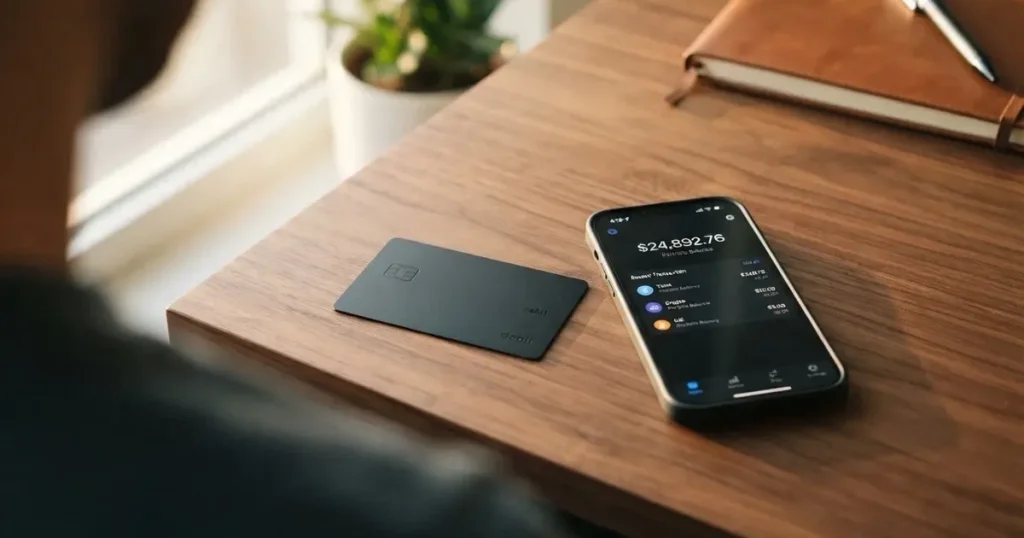
The Oppi card is one of the more interesting crypto cards to come out of the self-custody crowd: your private keys stay on your phone, the card spends from that balance, and nobody else holds the funds. The tradeoff is that the card sits with a small company rather than a household bank, the physical option is expensive at $100, and spending outside the US dollar costs you 2%-2.5%. My score for it is 7.2 out of 10 — a strong product with real rough edges at the edges of the wallet-to-card plumbing.
The conditions described on this page are current as of October 28, 2026.
Verdict: 7.2 / 10 — good for self-custody users who want the plastic to be optional
If you are the kind of person who has already decided that a custodial exchange is not where your money should sit, and you want a card that spends straight out of your own wallet, Oppi is worth an afternoon of reading. It scores highest on the things that actually matter for that profile: coverage, coin support, and the simple mechanics of paying at a shop. It scores worst on cost — a virtual card that costs $10 up front (with $5 credited back), a physical card at $100 including shipping, and no monthly fee to offset either.
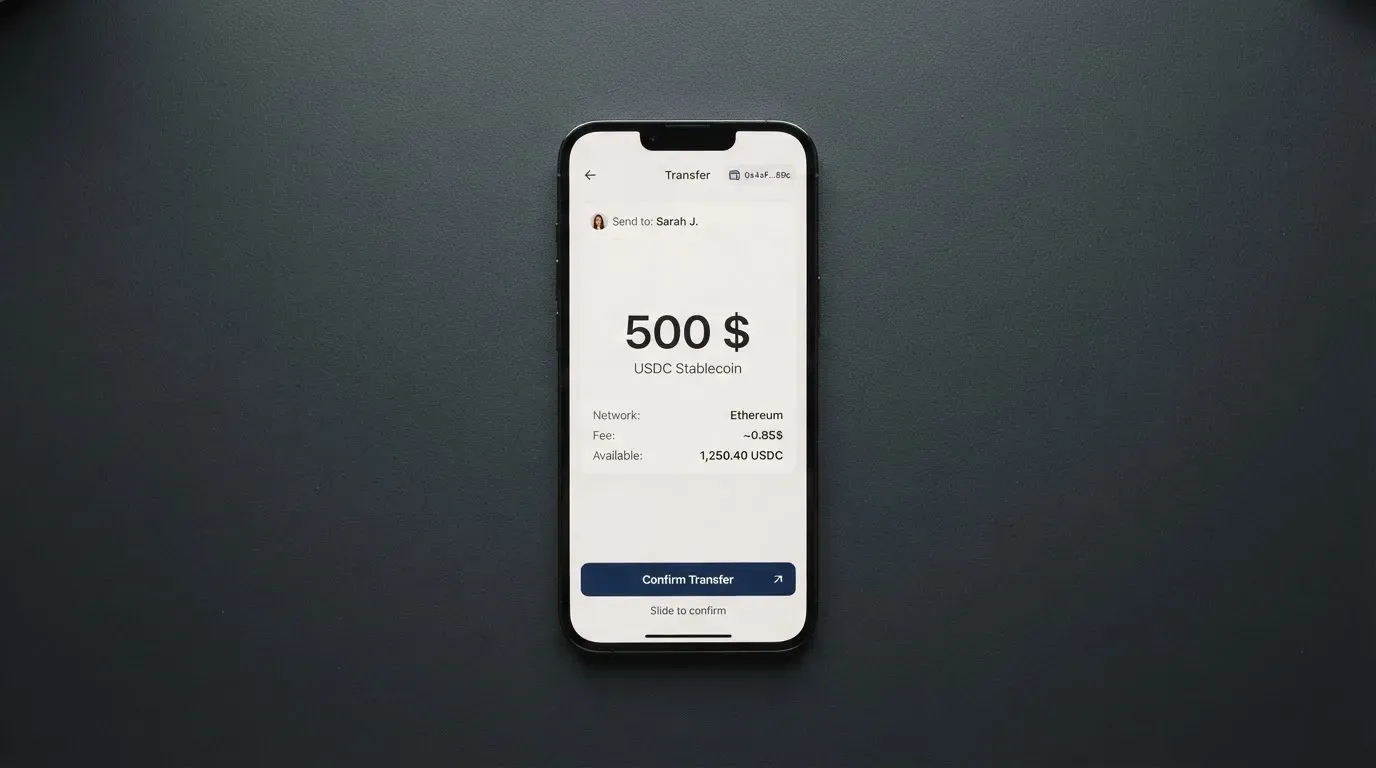
It is not for someone who wants the reassurance of a bank, for someone who needs a free card, or for someone who wants predictable pricing when they spend in euros or pounds.
Here is how it breaks down.
| Criterion | Mark | Why |
|---|---|---|
| Who can get it | 9 / 10 | Card is claimed in 210+ countries; unofficial: 221 countries, with Cuba, Iran, North Korea and Syria closed |
| Cost | 4 / 10 | Virtual activation $10 with $5 returned; physical $100 with delivery; non-USD payments 2%-2.5%; no monthly fee |
| Top-up options | 9 / 10 | BTC, BCH, BNB, ETH, LTC, SOL, USDT, TRX, USDC on Ethereum, BSC, Polygon, TRON, Solana |
| Reliability and complaints | 6 / 10 | Self-custody; keys on device; issuer not named, company is Encoin Limited; no complaints found; App Store 4.6 from 5 by 50 ratings |
| Everyday use | 9 / 10 | Virtual Mastercard, optional physical card, Apple Pay and Google Pay, ATM withdrawals stated |
| Total | 7.2 / 10 |
The single most useful thing about Oppi is the shape of it: a wallet you hold, a card you can hold, and one balance behind both. That is a simple proposition, and it works.
Who gets the card
Oppi says the card is available in “210+ countries”, with other pages of its own site saying 100+ or 200+. The site also warns that “availability varies, regulatory limits apply”, and eligibility is checked at signup rather than promised up front.
An unofficial source puts the real number at 221 countries, with Cuba, Iran, North Korea and Syria restricted. The same source says the AML policy also bars Crimea, Donetsk and Luhansk. Those figures are not on Oppi’s own pages and I could not confirm them there — treat them as a third-party reading, not as the card’s statement.
One more unofficial detail worth knowing: the “210+” figure is said to refer to Mastercard acceptance rather than to countries where you can actually open the account. If you are outside the US, that distinction may matter more than the headline number.
- Country of residence and of ID are both part of the check.
- Restricted-country rules are in the site’s FAQ, but the answers were not readable, so I could not verify the exact list from Oppi itself.
- Your eligibility is decided when you sign up, not before.
How to get it
Getting the card is straightforward, with one gate in the middle: you need to pass KYC to switch on the card features. The wallet itself works without KYC.
To enable the card, Oppi asks for a government ID plus a selfie. Proof of address and age requirements are not stated on the pages I read. There is only one verification level described on the page — ID and selfie turns the card on — with no tiers.
The card you get first is a virtual Mastercard. The page’s own table lists the physical card as Visa; the App Store listing says the virtual card is Mastercard and the physical is VISA; another page says Visa/Mastercard. The brand of the physical card is a small contradiction inside Oppi’s own material, and I would check it in the app before ordering.
You can run several virtual cards off one balance, and the physical card is optional rather than bundled.
- The physical card is $100 including shipping (see the cost section below).
- Delivery time, delivery countries and replacement cost are not stated.
- Currency is USD-implied, with an FX charge on non-USD purchases.
An unofficial reading adds a proof-of-address requirement under the AML policy, and a higher verification tier above USD 10,000 daily or USD 100,000 monthly in withdrawals — proof of funds, a source-of-wealth questionnaire and a video call. None of that is on Oppi’s pages, so I would not plan around it, but if you intend to move large sums it is worth asking the support center directly.
Fees and what a payment actually costs
This is where the card is weakest. The $10 virtual activation is not nothing but is not a subscription, and there is no monthly or annual fee to go with it. The physical card at $100 is a real number, and it includes shipping. Oppi calls the fee a virtual activation of $10 one-time with $5 credited back to you; a comparison table on the same site calls issuance $5.
| Fee or limit | Value |
|---|---|
| Virtual card activation | $10 one-time, $5 credited back (a comparison table says $5 issuance) |
| Physical card | $100 including shipping |
| Monthly fee | None |
| Annual fee | None |
| Conversion fee | Crypto top-up converts at the real-time rate; swap fees described as “low”, not quantified |
| FX charge on non-USD purchases | 2%-2.5% |
| ATM withdrawal | Supported (“withdraw cash worldwide”); fee and allowance not stated |
| Daily / monthly limits | Not stated on the card page |
Now, three everyday payments, and which fees actually touch each one:
- A $30 subscription in US dollars. You spend $30 of your balance. The FX charge does not apply. There is no per-transaction fee listed. What you really pay is whatever the crypto cost you in US dollars — and if you hold a non-USD-pegged coin, the rate at the moment of conversion is your cost.
- A €45 dinner in Berlin. You pay €45. The card converts at the real-time rate and adds the 2%-2.5% FX charge, so roughly €0.90-€1.13 lands on top, plus the conversion spread if you hold something other than a dollar-pegged stablecoin. This is the fee you will feel most.
- Withdrawing $100 from an ATM. The site says withdrawals are supported and that you can “withdraw cash worldwide”, but it does not state the fee or the allowance. I would not treat this as free — check the in-app terms before you rely on it.
Two conflicts you should hold in mind. The App Store listing says travel bookings carry “no currency exchange fees”, while the main page states the 2%-2.5% FX charge. And the daily/monthly limits are not stated on the card page: an Oppi blog gives $100,000/day and another page gives $10,000/day, which contradict each other, so I have left them out rather than pick one. Unofficial sources suggest no limit table is published and a December guide says “several thousand dollars per day” depending on verification.
For your own reference, an unofficial February comparison says the virtual card is free and the physical is $10 — that contradicts Oppi’s own figures, so I would go with the official $10/$100 rather than the cheaper numbers.
One thing that is genuinely nice: there is no monthly fee. So the $10 is a one-time entry cost, not a subscription you have to keep paying to keep the card in a drawer.
How to top it up
Topping up is the strong suit. Oppi accepts BTC, BCH, BNB, ETH, LTC, SOL, USDT, TRX and USDC, on the Ethereum, BSC, Polygon, TRON and Solana networks. The App Store listing puts it at 40+ assets.
The way it works: your pre-funded wallet balance, the virtual card and the physical card all sit on one balance. So you load once and spend from wherever. When you deposit crypto, it converts at the real-time rate.
Two practical things about the deposit side:
- Minimums and fiat top-ups. Neither is stated on Oppi’s pages. There is no mention of loading from a bank account; the documented route is crypto in.
- Network choice matters, hard. If you send a deposit on a network Oppi does not support, or to an address belonging to a different network, the transfer can be lost or need manual support recovery with no guarantee. Blockchain transfers are irreversible. Match the network, match the address.
An unofficial guide says loading the card typically runs 1%-2%, though Oppi’s own page does not itemize it. Separately, the on-chain network fee (gas or bandwidth) for your deposit is charged by the blockchain, not by Oppi.
A note on the coins you can hold on each network: USDT exists on Ethereum, Tron, Solana, Polygon, Avalanche and others. USDC is natively supported on a long list of networks, but Circle stopped supporting USDC on Tron in February 2024, so “USDC over TRC20” is not a native option. USDT on TRON is the version that works.
Withdrawing money back out of the card balance is not stated.
Paying with it every day
Day-to-day use is where Oppi scores well. You have a virtual Mastercard you can use anywhere cards are accepted, and a physical card if you want one. Apple Pay and Google Pay are both supported, which is how most people will actually use it — tokenised in the phone’s Secure Element, with a fresh security code per payment.
Eligible card spending earns Oppi Points, redeemable for top-ups. The earning rate and any caps are not stated.
There is a whole tier of small annoyances that the card’s pages simply do not cover:
- Whether gambling and blocked merchant categories are restricted is not stated.
- Whether disputes and chargebacks are handled is not stated — the help center shows a list of FAQ questions but the answers were not visible.
- Whether the help center explains 3-D Secure or address verification is also not stated.
Two other practical points. A declined authorisation can leave a hold on your funds that stays for several days, sometimes up to a week. And some merchants decline prepaid or foreign-issued cards, because the BIN lookup reveals the card type and the issuer’s country — a card issued in one country can look “foreign” to a shop in another. That is not an Oppi problem specifically, but it is a crypto-card problem, and Oppi’s card is a prepaid-style card.
The App Store rating was 4.6 out of 5 from 50 ratings when I read it on 2026-10-20, with four visible 2025 reviews all positive. Unofficial figures for the App Store and Google Play vary quite a bit — you will see everything from 4.3 to 4.8 depending on where in the page you look.
What can go wrong
Oppi is honest about the big one, which is a point in its favour: it is self-custody. Your private keys stay on your device, and the company says it does not hold your funds at any point. The flip side is the standard one — with self-custody you bear sole responsibility for key loss, for phishing, and for malware that swaps an address you copy. Blockchain transfers are irreversible, so a stolen key has no recovery path; the network cannot freeze or return anything.
What I could not establish:
- The issuer is not named. The card’s issuing institution and BIN sponsor are not identified on Oppi’s own pages. The App Store developer is Encoin Limited (Oppi Wallet); the site says it is operated by Oppiwallet and “VASP-certified”. No licence number or jurisdiction is stated.
- The rewards programme is new. Oppi Points were introduced in July 2026, per an unofficial source, in the same report that notes the issuer is still not publicly identified.
- No freeze, no spending controls, no insurance are described on the page — the typical safeguards you would want to see named.
- Support hours and languages are not stated beyond English-only on the App Store listing. There is a support center and an in-app ticket system.
On complaints: my own search of Trustpilot and Reddit found nothing about Oppi — only unrelated products. That is genuinely unusual, and it is not the same as a clean record, because it may just mean the card is small. The App Store’s 4.6/5 from 50 ratings is the only real user signal I found. One unofficial source says Trustpilot has a single review, and that one reviewer said a physical card was never arrived. That is one anecdote, but it is the one complaint in the whole set, and it is about the $100 physical card, so it is worth asking about delivery before you order.
The wider risk to understand is not Oppi’s fault but applies to it: card programmes do close. Visa terminated its global agreements with FTX in November 2022 and the FTX US debit card was wound down. WaveCrest, a Visa issuer that supplied several crypto card brands, was suspended by Visa in Europe in 2018 and all its programmes closed. When programmes close, the pattern is a notice period, then spending and loading stop, then you are asked to withdraw what is left.
I am not saying Oppi is heading there. I am saying the card network and the issuer, not Oppi, decide whether you can keep spending — and Oppi has not told you who the issuer is.
Alternatives worth comparing
If Oppi’s $10/$100 costs you pause, or you want a named issuer, there are three cards I looked at with different shapes.
MetaMask (7.1/10) is the closest in spirit and the clearest on issuer. It is a Mastercard, issued by Monovate with Crypto Life as card provider. The virtual card is free with no annual fee; the metal card is $199/year. It spends directly from your connected wallet on Linea, Base, Monad and Solana, from a set of named tokens. Its limits are narrower: sign-up is open in 45 listed countries, with US and UK sign-ups temporarily closed and other regions on a waitlist. Fees are described as a “minimal fee for each transaction” with no additional MetaMask fees and no foreign transaction fee. Cashback is 1% on the virtual card. If you want a named issuer and a free virtual card, this is the one to look at; if you want 200+ countries, it is not.
KAST (6.1/10) is the fee-transparent one. Stablecoin top-up 0%, card spend in USD 0%, Apple/Google Pay 0%, non-USD FX 0.5%-1.75% depending on your country and the transaction country. It is membership-tied: Standard is free, Premium is $1,000/year, Private is $10,000/year, with cashback of 1.5%, 2% or 3% on a monthly cap. But it demands proof of residency, checks citizenship and ID separately from residence (a VPN does not bypass it), and its Terms say acceptable tokens are “currently USDT and USDC” even though the app also lists PYUSD and RLUSD. Physical cards on Standard cost 40 USD delivery.
TokenPocket (5.8/10) is the narrowest. A Visa/Mastercard debit for a list of European countries and a list of Asia-Pacific ones, running on Arbitrum. It charges 1% to deposit crypto into the card, refunded later through rewards or lower transaction fees. Its cards are virtual. If you are in one of its listed countries it may be a cheap option; if not, it is not for you.
| Oppi | MetaMask | KAST | TokenPocket | |
|---|---|---|---|---|
| Score | 7.2 | 7.1 | 6.1 | 5.8 |
| Virtual card cost | $10, $5 back | Free | Included (membership tiers) | Small portion of NFT fee |
| Physical card | $100 incl. shipping | $199/year metal | 40 USD delivery on Standard | Not mentioned (virtual) |
| Non-USD FX | 2%-2.5% | None stated | 0.5%-1.75% | Not stated |
| Issuer named | No | Yes (Monovate) | Not stated here | Not stated |
| Custody | Self-custody | Self-custody (connected wallet) | Custodial balance | Custodial |
| Geography | 210+ countries claimed | 45 countries | Listed at KYC | Europe + Asia-Pacific lists |
Who I would recommend it to
I would recommend Oppi to you if all of this is true: you already hold your own keys and want to keep it that way, you want a card that spends from that wallet directly, you mostly spend in US dollars or are comfortable paying a 2%-2.5% fee when you do not, and you are the kind of person who reads network names before sending a deposit.
I would not recommend it if any of this is true: you want a bank behind the card, you need a free virtual card, you need the issuer’s name and licence number in front of you, you plan to lean on ATM withdrawals, or you intend to spend abroad and the FX charge matters to you.
My one specific piece of advice: start with the virtual card. It costs $10, $5 of which comes back, it tells you whether the card works in the shops you actually use, and it does not commit you to $100 for plastic you may not need.
And if you are still deciding between this and something else, ask Oppi one question I could not answer from their pages: who is the card issuer, and what happens to my balance if the programme is wound down? A company that has not published its issuer has not thought about that question publicly, and you are the one left holding the answer if it ever comes up.
Frequently asked questions
What is the Oppi card?
The Oppi card is a payment card that spends from a crypto wallet you control yourself. Your private keys stay on your device, and the card draws on that balance — virtual Mastercard first, with an optional physical card. It is aimed at people who want crypto spending without handing their funds to a custodial exchange. USD is the implied currency, and non-USD purchases carry a 2%-2.5% FX charge.
How does Oppi card work?
You top up your self-custody wallet with crypto, and it converts to a spendable balance at the real-time rate. The virtual and physical cards draw on one shared balance, so you load once and pay from either. You can hold multiple virtual cards. Spending works wherever Mastercard is accepted, and Apple Pay and Google Pay are supported. The balance, not a bank account, is the funding source.
Is Oppi a bank?
No — Oppi is a crypto wallet company, and the App Store developer is Encoin Limited. It is not a bank, and the card’s issuing institution and BIN sponsor are not named on its own pages. The site says it is “VASP-certified”, but it gives no licence number or jurisdiction. That matters: the entity that actually stands behind your card is not one Oppi has publicly identified.
Who owns Oppi?
The App Store listing names the developer as Encoin Limited, trading as Oppi Wallet. The site says the wallet is operated by Oppiwallet. Beyond that, Oppi has not publicly identified the card’s issuer or BIN sponsor, and an unofficial report from August 2026 notes the same gap. If ownership of the issuing institution is important to you, this is the first thing to ask them directly.
Is the Oppi card available in my country?
Oppi claims 210+ countries, with other pages of its own site saying 100+ or 200+, and warns that availability varies and regulatory limits apply. An unofficial source counts 221 countries and names Cuba, Iran, North Korea and Syria as restricted. The restricted-country list is in Oppi’s FAQ but the answers were not readable. In practice, your eligibility is decided at signup, not in advance.
How do I get the Oppi card?
You sign up, then pass KYC with a government ID and a selfie — which switches on the card features. The wallet itself works without KYC. You get a virtual Mastercard instantly. The physical card is optional and costs $100 including shipping, though delivery times and countries are not stated. Proof of address and age requirements are not stated on the pages I read.
Does the Oppi card require KYC?
KYC is required to enable the card, not to use the wallet. You submit a government ID plus a selfie, and there is only one verification level described — no tiers. Proof of address is not stated on Oppi’s own pages, though an unofficial reading says it is required under the AML policy, with extra checks above USD 10,000 daily or USD 100,000 monthly in withdrawals. Ask before moving large sums.
How much does the Oppi card cost?
The virtual card costs $10 to activate, with $5 credited back to you — a comparison table on the same site calls it $5 issuance. The physical card is $100 including shipping. There is no monthly and no annual fee. Spending in a non-USD currency adds 2%-2.5%, and crypto deposits convert at the real-time rate with swap fees described only as “low”. An unofficial February comparison claims the virtual card is free and the physical is $10; that contradicts Oppi’s own figures.
Is the Oppi card safe?
The self-custody design is a real strength: keys stay on your device and Oppi says it never holds your funds. But safety also depends on things Oppi does not publish — no card freeze, spending controls or insurance are described, and the issuer is unnamed. Self-custody means you own the risk of key loss and phishing with no recovery path, since blockchain transfers are irreversible. For protections elsewhere, check what your country requires of prepaid cards.
Can I add the Oppi card to Apple Wallet?
Yes — Apple Pay and Google Pay are both supported. When you add the card to Apple Pay, the number is replaced by a device-specific token stored in the phone’s Secure Element, not on Apple’s servers, and each payment uses a one-time code. Note that one claim in the App Store listing — that travel bookings have “no currency exchange fees” — contradicts the main page’s stated 2%-2.5% FX charge, so do not plan around it.
Wallet cards put to the test – cryptocardtested
Content created by the «cryptocardtested» team