
The Bitunix card, rated against the costs, limits and everyday use of a crypto payment card
 Available in US
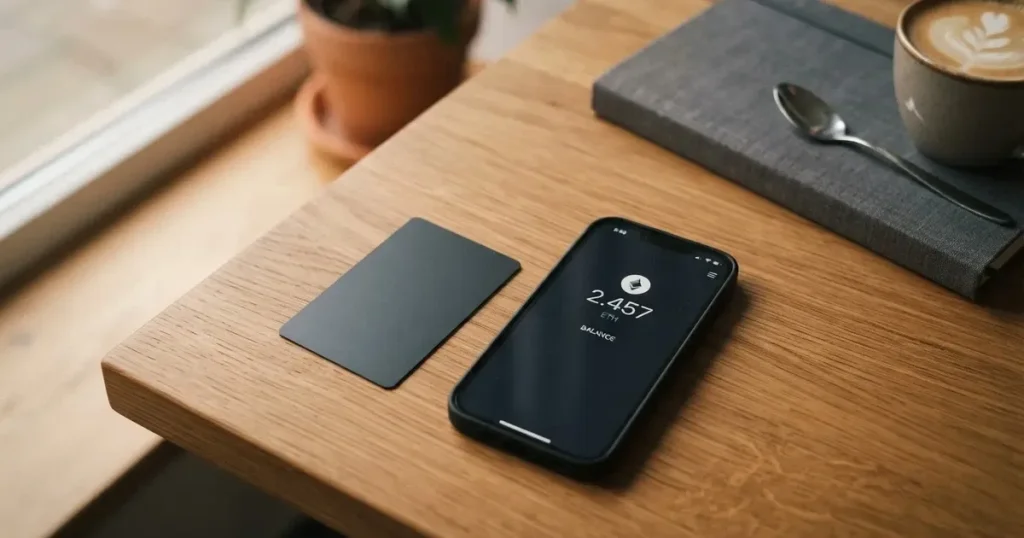
The Bitunix card is a virtual Visa that draws on a USD balance funded by USDT held inside the Bitunix exchange. At launch it works only as an online and in-store payment instrument: no ATM withdrawals, no physical card, only a digital token you can push into Apple Pay, Google Pay, WeChat Pay, Alipay, PayPal, LINE Pay, GrabPay or Samsung Pay. It is a card for people who already keep USDT inside Bitunix and want to spend it through a Visa rail rather than moving funds out to a bank first.
This review walks through who can actually get one, what it costs in real spending scenarios, how the top-up flow works and where it stumbles, and where the published information stops. Where a number or policy is not stated by Bitunix itself, I say so.
The card’s terms and fee pages are current as of October 28, 2026.
Verdict
The Bitunix card earns 5.3 out of 10. The headline fees are low and the cashback structure is clear, but the card is virtual-only, supports only one cryptocurrency, and runs on top of a relatively new exchange whose issuer, licence and BIN sponsor are not named. The audience that fits the card well is narrow: existing Bitunix exchange users who hold USDT, pay online or in stores, and are comfortable staying entirely within one platform for both custody and spending.
The card does not fit people who want a physical card today, who need ATM access, who live in one of the 80 restricted jurisdictions, or who prefer a non-custodial wallet for the funds behind the card.
| Criterion | Score | Why it matters |
|---|---|---|
| Who can get it | 7 / 10 | 80 countries/regions are blocked (US, Canada, France, Turkey, Singapore, Hong Kong, China, India, UAE, Brazil and others); the rule is by residence, and a long shortlist of common expat locations is excluded |
| Cost | 6 / 10 | Issuance, monthly and annual fees are 0; a 1.5% FX markup and a 0.5% cross-border fee apply on top of the Visa rate, plus a USD 1/month inactivity charge after 12 months |
| Top-up options | 3 / 10 | Only USDT from Spot, Futures or Earn; no direct blockchain deposits to the card account, no bank transfer, no other token |
| Reliability and complaints | 4 / 10 | The card programme is run by Blue Rock Management Pte. Ltd., the issuer is unnamed and no licence is disclosed; the Bitunix exchange sits at 3.7/5 on Trustpilot with mentions of account freezes and regulatory attention |
| Everyday use | 5 / 10 | Virtual Visa only at launch, no ATM in the first version, but a broad list of mobile wallets is supported and the card can be frozen from the app |
| Total | 5.3 / 10 | — |
If your situation matches the audience note above, the card can work. If you need a physical card, need to spend anything other than USDT, or live in a restricted country, look elsewhere.
Who they will give you the card
Bitunix publishes a “Restricted Jurisdictions” list in its help center and warns that the list is not exhaustive — it says it “may include” 80 countries and regions. The list covers the United States, Canada, France, Turkey, Ukraine, Singapore, Hong Kong, China, India, the United Arab Emirates, Cyprus, Serbia, Armenia, Kyrgyzstan, Tajikistan, Brazil, Israel, the Russian Federation, Belarus and others. The rule is by residence, not by passport: where you live is what the system checks.
For a reader in a smaller market not named on that list, the application process will reveal whether your country is supported. For a reader in any of the explicitly named countries — and that includes many of the places where crypto card demand is highest — the card is not available.
Beyond country rules, the sign-up flow requires KYC and a confirmed residential address before you can apply. Bitunix runs different KYC levels on the exchange, and the help center describes those tiers in general terms; the card-specific KYC level, the documents you need to upload, the processing time and the reasons an application would be rejected are not stated on the pages I could read.
Age and document requirements: not stated. The card agreement is silent on the minimum age, the list of accepted identity documents and the verification turnaround. If any of those matter to you, the only way to find out is to start the application.
The short version: the card is open to adults who live in a country that is not on the restricted list, who can complete identity verification with proof of address, and who already have a verified Bitunix account.
How to get it
The card sits inside the Bitunix app rather than a separate card app. The flow Bitunix describes is: sign up, complete verification, apply, get a virtual card on approval. There is no separate download and no separate login to manage.
The card itself is a Visa, virtual only at launch, and Bitunix says a physical card is “planned for a future phase” but is not yet available to order. The card currency is not stated explicitly, but because USDT converts to USD at 1:1 when moved into the card account, the balance you spend against is in USD. Merchants receive either USD or, after a conversion at the Visa rate plus the FX markup, the local currency.
The virtual card itself is free to issue and free to replace. The physical card, once it becomes available, will have a delivery window of “7–20 business days” and a fee that depends on the delivery location — those fees are not yet published because the application is not yet open. The card agreement was last updated on 2026-07-22 and was preceded by a public launch announced on 16 July 2026.
A few practical points to check before you start:
- The application lives in the Bitunix app, not on a separate site. If you do not already have the app, you will need to download it first.
- KYC and a residential address must be confirmed before the application unlocks. The verification step blocks the card step.
- Approval is followed by the virtual card being made available in the app, where you can view the card number and add it to a mobile wallet.
What the help center does not say: how long KYC takes, what documents you need, and what happens if your application is rejected.
What it really costs: Bitunix card fees
The fee page is unusual in that several fields are left blank: percentages for the network fee on USD and non-USD transactions, and the small-amount threshold for the USDT service fee. Where Bitunix has published a number, the costs table below is precise. Where a figure is not stated, I have not invented one.

| Fee or limit | Amount |
|---|---|
| Card issuance (virtual) | 0 |
| Card replacement (virtual) | 0 |
| Monthly fee | 0 |
| Annual fee | 0 |
| Crypto conversion fee | 0 |
| FX markup | 1.5% on top of the Visa rate |
| Cross-border fee | 0.5% on USD spending |
| WeChat Pay and Alipay | 3% over 200 CNY |
| Small-amount service fee | 0.3 USD per transaction under 10 USD; first 3 per month waived |
| Inactivity | 1 USD/month after 12 months of no transactions |
| Card cancellation | 0 |
| ATM withdrawal | not supported in the initial version |
| Transaction limit | 10,000 USD per transaction, 10,000 USD per day, 50,000 USD per month (adjustable in Card Management) |
To turn the table into a sense of what an actual day of spending looks like, three common scenarios help. The first is paying a US-based subscription in USD. With the FX markup and the cross-border fee both sitting at zero for domestic USD settlement, the only real cost is the cashback you would have earned — and, depending on your VIP tier, that more than offsets nothing. The second is a tourist tap at a Paris café: the merchant receives euros, the network converts USD to EUR, the 1.5% FX markup is added on top, and the 0.5% cross-border fee is layered on top of that. A 50 EUR coffee becomes roughly 1.25 USD in extra fees. The third is a small subscription under 10 USD billed in USDT. For the first three sub-10-USD transactions in a calendar month, the 0.3 USD service fee is waived. From the fourth onward, the small fee kicks in.
The physical card, when it arrives, will change a few of these lines. ATM withdrawals will carry a 2% fee on amounts over 100 USD per month, with the first 100 USD per month fee-free, and the ATM limit will be 1,500 USD daily and 15,000 USD monthly. Those are the only ATM numbers published, and they apply to a card that is not yet orderable.
Top up options
Topping up the Bitunix card is a one-rail operation: USDT moved from one of three Bitunix accounts into the Card Account. The three sources are Spot, Futures and Earn. There is no other way to fund the card.
The practical effect is that the card sits on top of the exchange rather than next to it. You do not send USDT from an external wallet to a card address; you transfer USDT from your own Bitunix account to the card sub-account. External bank transfers are not supported for card top-ups, and direct blockchain deposits to the card account are not supported. The card account is not a wallet address; it is a balance inside Bitunix. The crypto conversion fee on this transfer is 0, and USDT converts to USD at 1:1 when it lands in the Card Account.
Because no blockchain deposit is involved, the network fees that normally apply to a USDT transfer are not relevant here. You are not paying gas. You are paying the opportunity cost of having USDT inside the exchange rather than in your own wallet.
The minimum top-up amount is not stated. The funding article describes the transfer flow in general terms but does not publish a floor. If you want to top up 5 USDT, the system will tell you at the time of transfer whether that is allowed.
Because the card holds USD after conversion, your spending is in USD and the FX markup applies at the moment of payment rather than the moment of top-up. That is a small but useful feature: you do not need to time the market to lock in a conversion rate, because the only rate you ever see is 1:1 USDT to USD. The Visa rate at the time of payment is what determines how much local currency your USD balance buys.
What the help center does not say: which networks the underlying USDT was originally on, and whether USDT held in Earn can be moved to the card without first being unstaked. The article refers to the source accounts by name but does not detail the mechanics of each source.
Paying with it every day
Once the virtual card is in your app, you can add it to Apple Pay, Google Pay, WeChat Pay, Alipay, PayPal, LINE Pay, GrabPay and Samsung Pay, with the caveat that wallet availability is subject to platform terms and regional restrictions. In practice this means the card behaves like any other tokenised Visa for tap-to-pay and online checkout.
The card supports online and in-store purchases but does not support ATM withdrawals in the first version. If you need cash, you cannot get it directly from the card. You can sell USDT inside Bitunix, withdraw to a bank account, and then take cash out — but that is a separate process, with its own fees and its own time.
Cashback is the main reward on offer. Bitunix structures it as a percentage of daily spend, paid in USDT into the Card Account after settlement, scaled by your exchange VIP level:
- VIP 1: 1%
- VIP 2–3: 2%
- VIP 4–5: 4%
- VIP 6–7: 6%
- VIP 8: 8%
A company press release distributed in July 2026 — unofficial and not yet reflected in the card fee page I could read — describes cashback “up to 8%” on eligible spending, capped at 1,000 USDT per month, with a balance yield of “up to 11.6% annually” depending on the asset and conditions. Treat the upper end of that range as marketing until the fee page catches up.
Cashback excludes refunds, chargebacks, cash-like transactions and certain merchant category codes. The blocked-MCC list is not published, so a specific transaction type — gambling, for example — may or may not earn cashback depending on the merchant code the network assigns.
Disputes and chargebacks are free to file, but a formal Visa chargeback carries a 50 USD fee per case (the FAQ phrases this as “per case”, the fees article as “per transaction”; both pages are official, and the discrepancy is not resolved in the published material). Investigations take several weeks and in some cases up to 90 days. Unauthorised transactions must be reported within 14 days of the transaction or posting date. Merchant refunds usually take 5–14 business days after the merchant confirms the return. Chargeback rights are not guaranteed, and cash-like transactions may be ineligible for the dispute process at all.
Address Verification Service, which many US, Canadian and UK merchants use to check the numeric parts of a billing address, is generally unavailable for foreign-issued cards. That can produce declines on US ecommerce sites that treat a missing AVS match as a fraud signal. The same issue affects any card whose BIN points to a country different from the merchant’s market.
What can go wrong
The most important thing this review can say is what Bitunix does not say. The card agreement names the company operating the programme as Blue Rock Management Pte. Ltd., registered in Singapore. The card issuer is referred to as “the Issuer” throughout the agreement and is not named. No banking licence, e-money licence or card-issuing licence is disclosed on the pages I could read. The BIN sponsor — the bank that actually holds the Visa BIN — is not named. Without a named issuer, a user has limited visibility into who is responsible if the programme is suspended or wound down.
The exchange side of Bitunix has a public reputation. The Trustpilot profile for the Bitunix exchange (not the card specifically) shows 3.7 stars from 819 reviews, with 546 of those in the last twelve months; the profile also notes that the company “has received regulatory attention”. The themes that come up in the user reports are familiar from the wider crypto exchange market: account freezes pending additional verification, withdrawal delays, and disputes over liquidations. I did not find card-specific complaints in one round of searching, but the card is new and the review volume for the card alone is correspondingly thin.
The financial reality of the card is that the funds behind it are not bank deposits. The card terms say “No entity assumes custody of fiat funds on behalf of users”, and the funds are explicitly not deposit-insured. If the operating company or the issuer fails, the funds in the Card Account sit alongside the exchange’s other liabilities rather than in a segregated, insured account. The WaveCrest suspension in 2018 and the FTX card wind-down in 2022 are reminders that a Visa card programme can be closed by the network with relatively short notice.
The security controls that are available are: freeze and unfreeze from Card Management and the app, adjustable spending limits in Card Management, an email alert for transactions of 200 USD or more, app-based 2FA, and the option to add up to 15 third-party wallets per card. None of those replace a deposit guarantee, and a freeze does not protect against an issuer-level shutdown.
A few specific points worth checking before you load a meaningful balance:
- The card agreement is the binding document, and the fees page is not always consistent with it. The “per case” versus “per transaction” chargeback phrasing is one example.
- The fee page leaves several percentages blank. Where a number is missing, you do not know what you will be charged on a given transaction.
- 3-D Secure applies to online payments, and the issuer can require a one-time code or biometric step. If you do not have access to the registered phone or device at checkout time, the payment will fail.
What to take instead
The Bitunix card is one option among several. Three alternatives worth comparing are the Young Card, the MSX card and the Bybit card. The scores below come from the same research process used for the Bitunix card, so the comparisons are on a consistent basis.
| Card | Score | Best fit | Notable difference |
|---|---|---|---|
| Young Card | 5.7 / 10 | People who want cashback paid in a project token | Cashback paid in YNG tokens at rates from 0.1% to 3.6% depending on Club tier |
| MSX | 6.4 / 10 | Users already on the MSX platform | Limited published detail on the card terms; the higher score reflects stronger fundamentals where details could be confirmed |
| Bybit Card | 6.0 / 10 | Users in the supported regions who want a phased rollout with virtual and physical | Available in Argentina, AIFC/Kazakhstan, Georgia, Australia, Mexico, Brazil, Peru and the Asia Pacific region; explicit exclusion of the European Economic Area; 2% FX fee on top of the network rate in most regions |
The Bybit card is the most directly comparable. It supports both virtual and physical cards, accepts BTC, ETH, XRP, USDT, USDC and GRAM, and has a tiered cashback structure that runs from 2% at the Base tier to 10% at the Infinite tier, paid in USDT. The fees are higher: a 0.9% crypto conversion fee over the One-Click Sell rate in most regions, a 2% FX fee in the main group, and a 0% FX padding that is refunded. From 2026-10-05, only crypto-funded transactions earn cashback; fiat-funded spending does not.
The MSX card scores higher than the Bitunix card, but the published detail is thin, so the comparison is on weaker evidence. If the MSX card’s terms match your situation, it is worth a closer look; if not, the Bybit card is the more thoroughly documented alternative.
The Young Card sits between the two in the headline score, with the distinguishing feature that cashback is paid in YNG tokens rather than USDT, which introduces price exposure on the reward.
Two practical differences to weigh:
- The Bybit card supports several cryptocurrencies; the Bitunix card supports USDT only.
- The Bybit card has a phased physical rollout already in place; the Bitunix physical card is “planned for a future phase” with no firm date.
Who I would recommend it to
The Bitunix card is a sensible second card for a specific kind of user. If you keep USDT on the Bitunix exchange, are happy with the exchange’s risk profile, do not need a physical card or ATM access, and pay mostly online or through mobile wallets, the card removes the friction of moving funds out of the exchange and back in. The 0% issuance and monthly fees, the 0% crypto conversion fee, and the tiered cashback make it cost-effective for the use case it is built for.
I would not recommend the card to anyone who:
- Lives in a country on the restricted list, including the US, Canada, France, Turkey, Singapore, Hong Kong, China, India, the UAE, Brazil and others
- Needs a physical card with a known delivery window
- Needs to withdraw cash from an ATM
- Holds assets other than USDT on the exchange and expects to spend them through the card
- Wants a non-custodial wallet to back the card balance
- Needs a named, licensed issuer for compliance or risk-management reasons
For that last group, the card’s biggest gap is what the agreement does not say. The issuer is unnamed, no licence is disclosed, and the funds are explicitly not deposit-insured. The card works as long as the issuer and the network continue to back the programme; if either pulls out, the user’s recourse is the operating company in Singapore, with whatever that turns out to mean in practice.
The single most important pre-flight check is the restricted-jurisdictions list. If your country of residence is on it, the rest of this review does not apply. If it is not, the next check is the KYC step: make sure you can complete identity verification with proof of address before committing USDT to the card account. And before loading a meaningful balance, compare the fees you would pay on the Bitunix card with the fees you would pay moving USDT to a more fully disclosed card programme — the Bybit card is the natural benchmark, and the difference comes down to how much you value staying inside Bitunix.
Frequently asked questions
What is the Bitunix card?
The Bitunix card is a virtual Visa payment card that draws on a USD balance funded by USDT held inside the Bitunix exchange. It is intended for online and in-store spending, not for ATM withdrawals in the first version, and it is added to mobile wallets like Apple Pay and Google Pay for tap-to-pay.
How does the Bitunix card work?
You transfer USDT from your Bitunix Spot, Futures or Earn account into the Card Account. The USDT converts to USD at 1:1, and the card balance is in USD. When you make a payment, the network converts USD to the merchant’s currency at the Visa rate plus a 1.5% FX markup, and a 0.5% cross-border fee applies on USD spending outside the US.
Is Bitunix a bank?
No. The card terms explicitly state that “no entity assumes custody of fiat funds on behalf of users” and that card funds are not bank deposits and not deposit-insured. The operating company named in the card agreement is Blue Rock Management Pte. Ltd.
Who owns Bitunix?
The card agreement names the operating company as Blue Rock Management Pte. Ltd. The card issuer is referred to as “the Issuer” and is not named. No banking or e-money licence is disclosed on the card’s public pages.
Is the Bitunix card available in my country?
The card is not available in 80 countries and regions on the restricted list, which includes the US, Canada, France, Turkey, Ukraine, Singapore, Hong Kong, China, India, the UAE, Cyprus, Serbia, Armenia, Kyrgyzstan, Tajikistan, Brazil, Israel, the Russian Federation and Belarus. The list is not exhaustive, so a country not on the list is not a guarantee of availability.
Does the Bitunix card require KYC?
Yes. KYC and a confirmed residential address are required before the card application unlocks. The specific documents, processing time and rejection reasons for the card’s KYC are not stated in the published help center pages.
How do I top up the Bitunix card?
You move USDT from your Bitunix Spot, Futures or Earn account into the Card Account inside the app. External bank transfers and direct blockchain deposits to the card account are not supported. The minimum top-up amount is not stated.
How do I add the Bitunix card to Apple Wallet or Google Pay?
The virtual card is issued inside the Bitunix app. From there, you add it to Apple Pay, Google Pay, Samsung Pay, WeChat Pay, Alipay, PayPal, LINE Pay or GrabPay, subject to platform and regional restrictions. The same process is used for any of the supported wallets.
Is the Bitunix card safe?
The card offers app-based freeze, adjustable limits, 2FA, an email alert for transactions of 200 USD or more and tokenised mobile wallet support. The funds are not deposit-insured, the issuer is unnamed, and the card programme depends on the operating company and the card network continuing to back it.
Is the Bitunix card worth it?
For an existing Bitunix exchange user who holds USDT, pays online or in stores, and is comfortable with the exchange’s risk profile, the 0% issuance and monthly fees, the 0% crypto conversion fee, and the tiered cashback make the card worth using as a spending rail. For anyone who needs a physical card, ATM access, multiple cryptocurrencies, or a named, licensed issuer, the card is not the right fit.
Exchange cards put to the test – cryptocardtested
Content created by the «cryptocardtested» team