
A free crypto card for people who already keep their coins in Ledger — with the fine print read line by line
 Available in US
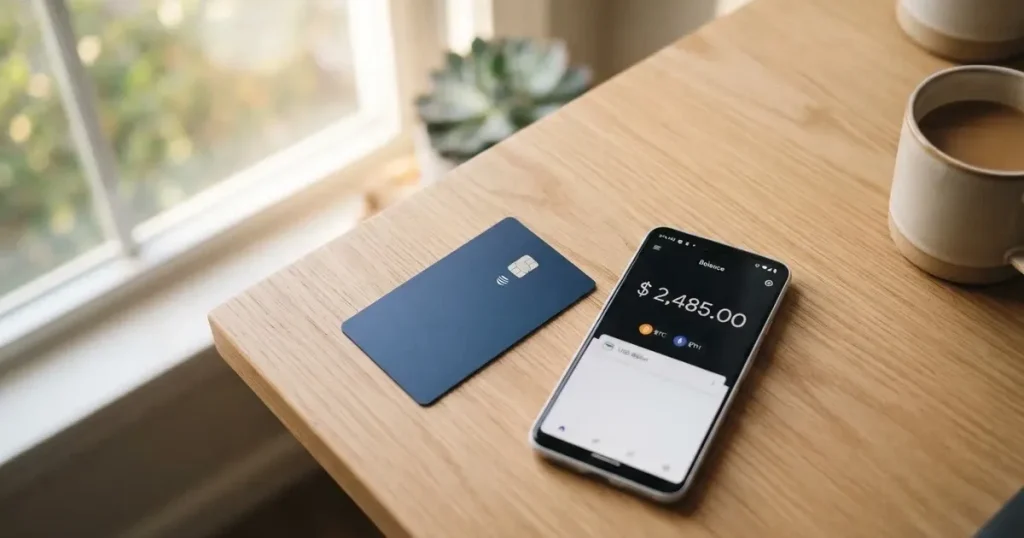
Ledger Cl is one of those cards that promises two things at once: you load crypto, and you spend it like an ordinary payment card. That sounds simple. In practice the interesting details are in the legal documents, the issuer list and the user reviews — and those are exactly what I went through to write this.
The conditions described here are current as of October 28, 2026.
My overall mark for this card is 5.9 out of 10. Not a disaster, not a recommendation. A competent product with a real weakness, and you can see both if you look.
Verdict: 5.9 / 10 — good for Ledger owners, uneasy for everyone else
The card scores well where it counts for the audience it was built for. It costs nothing to hold, it converts crypto at the moment of purchase, Apple Pay and Google Pay are supported, ATMs work worldwide, and you earn 1% back in crypto rather than points that expire. If you already keep your coins in a Ledger and want to spend them without touching an exchange, that is a genuine convenience.
It scores badly on the thing no amount of good design fixes: trust. The issuer names are real and regulated, but the user reports I read describe frozen balances, compliance reviews that run for 60 days or more, card declines, and support passing people between Ledger and the processing partner. The Trustpilot score sits around 3.5–3.8 out of 5, with a minority of reviewers getting replies and replies often slow. For someone whose problem with banks is that they do not answer the phone, moving that irritation to a smaller, less established stack is a downgrade, not a fix.
There is also a price dispute I could not settle. The EU fee document from 2023 lists a foreign-currency card payment at €0.00 plus 0% — free. A third-party site the same year quotes “1.75% conversion + 2% spend fee” in its cons list, and Reddit commenters mention a 2% spending fee. I cannot confirm which is current, and neither the product page nor the fee document I read resolves it. That single unresolved percentage is worth more to your finances than anything else on this page, which is why it has its own section.
| Criterion | Mark | Why |
|---|---|---|
| Who can get it | 7 / 10 | Available in the EEA, the UK, the US, Canada, Switzerland, Colombia, Mexico and Brazil |
| Cost | 5 / 10 | Officially (2023 document): issuance €0, maintenance €0, foreign-currency payment 0%, ATM €3.00 plus 1.5%. Unofficial pages quote 1.75% conversion plus 2% spend, and the figures disagree |
| Top-up options | 7 / 10 | BTC, ETH, SOL, stablecoins and more from a Ledger wallet; networks not named |
| Reliability and complaints | 3 / 10 | Issuers UAB Monavate and Monavate Ltd named; reports of freezes, blocked funds, reviews lasting 60+ days; an unconfirmed claim of Baanx/Monavate insolvency |
| Everyday use | 8 / 10 | Free virtual card, Apple Pay and Google Pay, ATMs worldwide; an unofficial source also lists a physical Visa |
Total: 5.9 / 10.
Who this suits: someone who already uses a Ledger device, holds enough stablecoin or bitcoin to spend regularly, lives in one of the listed countries, and is comfortable that the balance sits with an issuer rather than with themselves. Who it does not suit: anyone who needs a card they can rely on at a shop without fear of a decline, anyone in a country not on the list, and anyone whose main worry is funds they cannot move at all for months.
Who will they give you the card to
Available in the EEA, the UK, the US, Canada, Switzerland, Colombia, Mexico and Brazil. That is a long list for a crypto card, and it covers the places people usually ask about.
What the public pages do not say is whether the test is citizenship or residence, and they say nothing about applicants from Russia or Belarus. If your situation is a mismatch between the two — a citizen of one country living in another — that is exactly the kind of detail this page cannot answer for you, and you will only learn it by applying and reading the rejection. The card’s terms say the issuer verifies your identity before issuing the card or opening the e-wallet, which in practice means there is a check; the levels, the documents, how long it takes and why an application fails are not stated anywhere I could find.
For the wider background, it helps to know why a card can be refused for reasons that have nothing to do with you. Payment card numbers start with six or eight digits identifying the issuing institution, and merchants can look that up. If the issuing country differs from the billing address on file, some shops apply extra scrutiny. A Lithuanian or UK-issued card can simply look foreign to a merchant’s system, and that is one more reason a decline here is not always about your balance.
How to get it
The product page describes a free virtual card, and it also mentions Visa debit in the US. Whether there is a physical card in plastic, what it costs to order one and how long delivery takes — not stated. The EU fee document does list issuance of a debit card at €0.00, a replacement at €5.00 and cancellation at €3.50, though the row alignment in the extracted PDF text is partly ambiguous, so I would not treat those three numbers as settled without seeing the original document.
An unofficial source, cryptocards.so, lists a physical Visa as well and describes the ID checks as email, phone and an identity document, with no proof of address and no selfie. Take that as one site’s summary, not as the card’s promise. The official terms say only that identity is verified before the card is issued; they do not itemise the documents.
How to apply, then, is short: sign up, complete the identity check the issuer runs, and the card appears in the Card section of the Ledger Wallet app. If you want to know the practical sequence — what happens when you add the card to Apple Wallet, what the virtual card can and cannot do — that is worth reading further down; the short version is that it is a virtual card first, and everything else is a later step.
What it really costs: the Fees
The cost picture is the part I would not take on trust from a product page, because the numbers live in legal PDFs and one of them is old enough to matter. Here is what I could actually verify, and where it comes from.

The official EU fee document, issued by UAB Monavate and dated 3 November 2023, lists: monthly maintenance €0.00, card payment in pounds €0.00, a card payment in a foreign currency at €0.00 plus 0% of the transaction value, a replacement card at €5.00, and card cancellation at €3.50. On that document, a Ledger Cl card costs nothing to hold and nothing to spend, in any currency. A domestic cash withdrawal is €2.50; a cash withdrawal in a foreign currency is €3.00 plus 1.5% of the transaction value; a balance enquiry at an ATM is €0.35. It lists no fee for loading the card.
Then the contrary evidence. The same third-party site that says monthly fee and issuance are free quotes “1.75% conversion + 2% spend fee” in its cons list, while its fee table says the FX fee and top-up fee are both free. Reddit commenters in r/ledgerwallet mention a 2% spending fee. A card that is free to hold but takes 2% of every purchase is a very different product from one that takes 0%, and I could not find a current official document that resolves the contradiction.
| Fee or limit | What the official EU fee document says (UAB Monavate, 03/11/2023) | What unofficial sources say |
|---|---|---|
| Card issuance | €0.00 for a debit card | Free |
| Monthly fee | €0.00 | Free |
| Card payment, home currency | €0.00 in pounds | Free |
| Card payment, foreign currency | €0.00 plus 0% of transaction value | FX fee free — but “1.75% conversion + 2% spend fee” appears in the same site’s cons |
| Cash withdrawal, domestic | €2.50 per withdrawal | ATM fee 1.5% |
| Cash withdrawal, foreign currency | €3.00 plus 1.5% of transaction value | ATM withdrawal limit $2,000 |
| ATM balance enquiry | €0.35 | Not stated |
| Replacement card | €5.00 | Not stated |
| Card cancellation | €3.50 | Not stated |
| Loading the card | No load fee listed | Top-up fee free |
| Daily limits | Not stated in the documents I read | Daily spend $15,000 |
| Monthly limits | Not stated | Monthly spend unlimited |
Two or three everyday payments, so the fees stop being abstract. A €40 lunch in a country where your balance is in euros: on the 2023 document, you pay €40. On the 2% reading, you pay €40.80. A €200 online purchase in a currency you do not hold: on the document, €200 plus 0%; on the 2% reading, €204. A €100 ATM withdrawal abroad: €3.00 plus 1.5% comes to about €4.50 on the document, and the unofficial 1.5% figure alone would come to about €101.50.
Then the limits. The official terms say limits on loading the e-wallet and on payments may be set by the issuer from time to time, without stating the amounts — which is a licence for them to change. The unofficial figures are a daily spend of $15,000, unlimited monthly spend, and an ATM withdrawal cap of $2,000. A third-party listing adds an ATM fee of 1.5% and a $2,000 withdrawal limit, agreeing on the withdrawal cap.
How to Top up the card
Topping up is the part that is genuinely well designed. You fund the card from a Ledger signer through the Ledger Wallet app, and the supported assets are BTC, ETH, SOL, stablecoins and more. No exchange account, no deposit from a bank, no waiting for a bank to open an account — the coins you already hold move across.
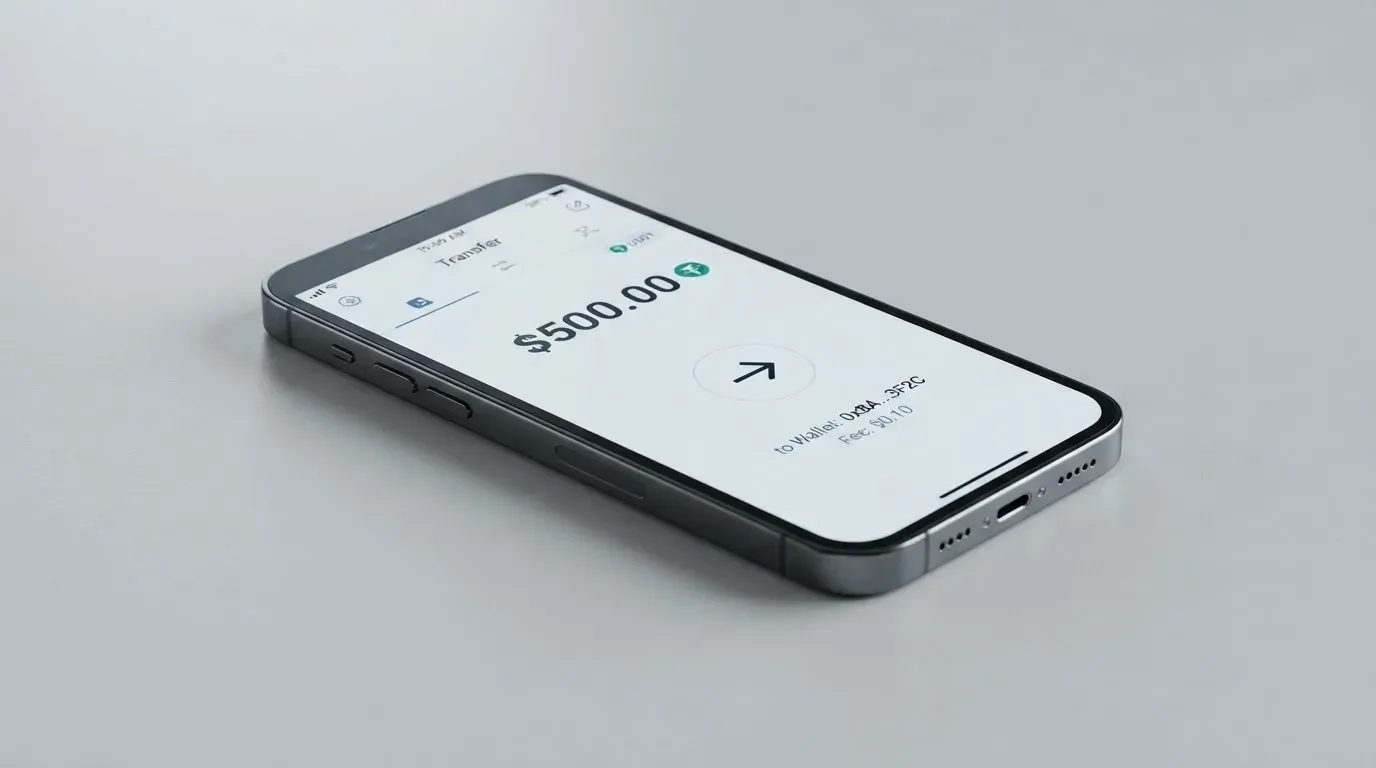
The details that would matter are not on the product page: the networks are not specified, and the top-up fee and minimum are not stated there either. The EU fee document lists no load fee for cards, which is consistent with top-ups being free, but that document is from 2023 and specific to the EU entity.
Here is the trap that catches people, and it is worth reading twice. Blockchain transfers are irreversible. If you send on a network the card provider does not support, or to an address belonging to a different network, the money can be gone or need manual recovery with no guarantee. The product page naming “stablecoins” without naming networks means you, not the card, have to know whether your USDT is on Ethereum, Tron or Solana, and whether that is the one this flow expects. The fee for getting the coins moving is paid to the blockchain — gas on Ethereum, bandwidth and energy on Tron — and not to the card provider, so top-ups are never quite costless even when the card charges nothing.
One more word on currencies, because it changes what you feel at the till. The card converts crypto to fiat at the time of purchase. The UK terms say the e-wallet can hold GBP and other supported currencies, and that if your balance in the payment currency is missing, another currency balance is converted at a rate, with a fee. The card’s own currency is not stated.
Paying with it every day
Apple Pay and Google Pay are supported, so the day-to-day question is mostly answered: you put the card in your phone and tap. The Ledger Wallet app on iOS and Android manages it from a Card section. As a context point rather than a CL Card rating: a third-party snapshot of the Ledger Wallet app on the App Store shows a 4.9 average across 564 reviews, updated 10 July 2026, from the Brazil storefront — that is the whole wallet app, not this card.
The rewards are real and simple: 1% back, calculated monthly on your total card spend, paid in BTC or USDC in the US and BTC or USDT elsewhere. Paid in crypto, not cash, which means the reward itself is something you will convert again.
A virtual card has obvious gaps. Which merchants are blocked is not stated. An unofficial source lists a physical Visa, so plastic may exist, but the official page only describes the virtual one. And a declined payment can leave a hold on your balance for several days — up to seven — so a failed attempt at a petrol station can quietly reduce what you have available for a week.
If a payment goes wrong, the terms say that on request the issuer refunds the amount including fees. There are two carve-outs: no refund if you acted fraudulently or with gross negligence, and none if you do not report it within one month. Complaints go to the card’s official support email. The card network’s chargeback procedure and its time frames are not stated, which is a real gap when you are trying to reverse something.
What can go wrong
This is where the card loses most of its marks, and I would rather be blunt than reassuring.
Trustpilot for CL Card sits at roughly 3.5–3.8 out of 5 across 247–256 reviews. The company replies to somewhere between 41% and 69% of negative reviews, and replies slowly — one review describes responses every four to six days. Recurring themes: slow support, card declines, and frozen or unreturned balances from 2023 onward. A separate one-star review on the Baanx page (2.5 out of 5 from six reviews) says a Ledger device purchase was declined twice. Reddit commenters in r/ledgerwallet note that the card account and balance can be blocked, and mention that 2% spending fee again. Further detail gathered on the same subject: compliance reviews lasting “up to 60+ days”, funds blocked, support bouncing people between Ledger and Baanx, identity-verification failures, and phishing emails impersonating the card.
Where does the money actually sit? The card is custodial through the issuer, with the e-wallet held by Monavate. The Ledger signer is not required, only recommended. The UK terms say funds are not protected by the FSCS but are safeguarded under the Electronic Money Regulations 2011. That is a real protection and it is not nothing — but it is not a bank deposit guarantee either.
On the regulation side, the picture is coherent. The EU issuer is UAB Monavate in Lithuania; the UK issuer is Monavate Ltd, FCA registered number 901097; the US Visa debit comes from Cross River Bank, a Member FDIC. US availability was added after older Ledger pages said “EEA and UK” only. An aggregator claim of Baanx/Monavate insolvency in April–May 2026 was not confirmed by a second source, and I found no official incidents. Unconfirmed is unconfirmed, and I am not going to build anything on it — but it is the kind of rumour that matters in this category.
The honest risk is not the rumour. It is the pattern: a small programme, an issuer relationship several entities removed from the brand on your screen, and user reports of money that stayed put for months while support explained why. Custodial platforms have form here — Mt. Gox at about $350 million reported stolen between 2011 and 2014, Coincheck at about $400 million in 2018, Ronin Network at $625 million in 2022. And any card programme can be closed: WaveCrest, a Visa issuer that supplied crypto card brands, was suspended by Visa in Europe in 2018, closing every WaveCrest-issued Visa programme. Closures typically mean a notice period, then spending and loading stop, then you are asked to withdraw what is left. One 2026 closure reported by a secondary source had new loads end on 8 July 2026 and spending stop on 8 August 2026 — single source, unconfirmed, but that is the shape of it.
Freezing a card is your job when something goes wrong: the terms say report a lost or stolen card immediately to block it. App-based freeze, two-factor authentication and spending controls are not stated. The standard safeguards for this category are typically app-based 2FA, instant freeze, spending limits, 3-D Secure and tokenised mobile wallets — do not assume you get all five.
What to take instead
I looked at three alternatives with published details, and each trades something away. Scores are mine on the same scale, so you can line them up against the 5.9 above.
TokenPocket — 5.8 / 10. A Visa debit for a list of European countries and territories (Germany, France, Spain, Switzerland among them), a Mastercard debit for Australia, Canada, Hong Kong, Japan, Taiwan, New Zealand, Singapore, South Korea and the UK. The Americas were described as planned for Q2 2025. The cards are virtual, running on Arbitrum, with balances in EUR24 and USD24. On fees: a 1% fee when depositing cryptocurrency into the card, said to be refunded later through rewards or reduced transaction fees, and apart from that the provider states it charges no additional fees — though settlement between institutions can add costs. No cashback is stated outright. Similar score, more coins, but a deposit fee where Ledger Cl’s documents say there is none.
MetaMask — 7.1 / 10. The strongest of the three. A Mastercard, virtual first and instant, with a metal card you can pre-order after approval and one card per user; the issuer is Monavate and the card provider is Crypto Life. Sign-up is open in 45 listed countries and territories, with proof of residence required and other regions on a waitlist; US and UK sign-ups are temporarily closed per the FAQ. Free virtual, no annual or maintenance fee; the metal card is $199 a year. Fees are described as a “minimal fee for each transaction” with no additional MetaMask fees and no foreign transaction fee — the amount itself is not on the pages I read. It spends directly from the connected wallet on Linea, Base, Monad and Solana, and the named tokens include mUSD, wETH, EURe, GBPe, USDC and USDT. Cashback is paid in mUSD: 1% on the virtual card, and 3% on the metal card up to the first $10,000 spent, then 1%. If your country is on that list and the US and UK closures do not affect you, this is the one I would look at first.
KAST — 6.1 / 10. The most rules-heavy. Availability is shown at sign-up rather than published, and identity matters beyond residence: if you live in a supported country but hold an ID from a restricted region you may still fail, dual citizens with an ID from a supported country may pass, and a VPN does not help. Virtual and physical cards, up to ten per user, from Visa Platinum through to Visa Infinite metal and gold. Annual membership: Standard $0, Premium $1,000 a year, Private $10,000 a year, billed annually with no monthly option. Fees are transparent: stablecoin top-up 0%, USD spend 0%, transaction fee 0%, Apple and Google Pay 0%, and a non-USD FX fee of 0.5%–1.75% depending on your country, the transaction country and the card programme. Under-$25 non-USD transactions cost $0.10, a declined transaction costs $0.50, and there is a $1 a month inactivity fee after 12 months. Cashback runs 1.5%, 2% or 3% per tier on a monthly spend cap. It is stablecoin-only, spends from your own balance, and the terms conflict with the app over which tokens are acceptable — the terms say “currently USDT and USDC”, the app lists PYUSD and RLUSD too.
| Ledger Cl | TokenPocket | MetaMask | KAST | |
|---|---|---|---|---|
| Score | 5.9 / 10 | 5.8 / 10 | 7.1 / 10 | 6.1 / 10 |
| Network | Visa, issuer Monavate (EU/UK), Cross River Bank (US) | Visa or Mastercard, on Arbitrum | Mastercard, issuer Monavate | Visa, Platinum to Infinite |
| Card | Virtual, free; physical unofficial | Virtual | Virtual free; metal $199/year | Virtual and physical, up to 10 |
| Cost to hold | €0.00 monthly (EU document, 2023) | Not stated | Free virtual | $0 / $1,000 / $10,000 per year |
| Main cost | 0% FX officially; 1.75% + 2% claimed unofficial | 1% on crypto deposit, refunded via rewards | “Minimal fee” per transaction, amount not stated | 0.5%–1.75% FX on non-USD |
| Rewards | 1% in BTC, USDC or USDT | 1% deposit fee refunded via rewards | 1% virtual, 3% metal (first $10,000) in mUSD | 1.5% / 2% / 3% cashback by tier |
| Rewards paid in | Crypto | Not specified | mUSD | USD |
| Best for | Existing Ledger owners | Multi-chain users, EU-heavy | Broadest country list, lowest friction | US-heavy stablecoin spenders |
Who I would recommend it to
If you hold a Ledger already, live in the EEA, the UK, the US, Canada, Switzerland, Colombia, Mexico or Brazil, and spend crypto steadily enough that 1% back in crypto matters — and if you have read the section above and can live with an issuer holding your balance while the price of that convenience is a 2% figure nobody will confirm — then this card does what it says and does not charge you for existing.
If instead you need a card that always works, or you are outside the listed countries, or the idea of a compliance hold lasting 60 days would keep you awake, I would not choose this. MetaMask scores higher, has a published country list and a clearer fee story; KAST publishes its membership prices and FX band outright; TokenPocket is roughly level with Ledger Cl but with a stated deposit fee instead of an unresolved one. Pick the one whose worst case you can describe without wincing.
Before you sign up for anything, do three things. Find the current fee document for your country and read the conversion and spend fees yourself, because I could not settle them. Ask what the withdrawal route is if you need your money back tomorrow — the terms allow withdrawal through the personal login area minus pending transactions, with a fee that is not stated, closing the account needs one month’s written notice, funds can be redeemed for up to six years after closure, and a maintenance fee starts being deducted if funds sit 12 months after the agreement ends. And keep a balance you can afford to have frozen.
One last thing, and it is not card-specific: if you are spending crypto, the tax treatment can be the largest “fee” of all. Digital assets are generally treated as property, so exchanging them for goods, services or dollars produces a taxable gain or loss measured in local currency at fair market value on the date of the transaction — which can make every card payment a separate disposal. I am not going to tell you what you owe; that is a conversation with an accountant in your country. But check the treatment before you make it a habit.
Frequently asked questions
What is the Ledger Cl card?
It is a payment card that spends a balance funded from crypto you hold in Ledger. You top it up from a Ledger device through the Ledger Wallet app, and each purchase converts crypto to fiat at the moment you pay. It is provided by Baanx and designed for Ledger; the issuing banks are Monavate in the EU and UK, and Cross River Bank for the US Visa debit.
How does Ledger Cl actually work?
You move BTC, ETH, SOL, stablecoins or other supported assets from your Ledger wallet into the card’s e-wallet, then spend that balance like a normal card, in-store or online. Apple Pay and Google Pay are supported. Because the balance is custodial, held by the issuer rather than by you, the card behaves more like a prepaid card than a bank debit linked to your account.
Is Ledger Cl a bank?
No. It is a card programme: the card network routes the payments, an e-money institution or bank issues them under licence, and Ledger is the programme manager and brand. That structure means your balance is safeguarded as e-money under the Electronic Money Regulations 2011 in the UK, but it is not protected by the FSCS as a bank deposit would be.
Do I need KYC to get the card?
Yes, some form of identity check happens — the terms say the issuer verifies your identity before issuing the card or opening the e-wallet. The card’s own pages do not list the documents, levels, timing or rejection reasons. A third-party site describes email, phone and an identity document, without proof of address or a selfie; treat that as unofficial, and expect the standard checks a regulated institution must run.
Is the card free?
Officially yes, at least on the EU fee document dated 3 November 2023: issuance €0.00, monthly maintenance €0.00, card payment in pounds €0.00, and a foreign-currency payment at €0.00 plus 0%. Unofficial pages also call it free to hold, but the same source quotes “1.75% conversion + 2% spend fee” in its cons list. Confirm the current figure for your country before you rely on it.
How do I top up the card, and what will it cost me?
You fund it from a Ledger signer via the Ledger Wallet app with BTC, ETH, SOL, stablecoins and more. The top-up fee and minimum are not stated on the product page, and the EU fee document lists no load fee. What you do pay is the blockchain’s own network fee for the transfer, and you must send on a supported network — the page does not name them, so check before you send.
Can I use it in my country and where is it accepted?
The card is available in the EEA, the UK, the US, Canada, Switzerland, Colombia, Mexico and Brazil. Once loaded it should work at any ordinary merchant that accepts the card network, and at ATMs worldwide, but blocked merchants are not listed. Some shops decline foreign or prepaid BINs on sight, so expect the occasional refusal that has nothing to do with your balance.
Is Ledger Cl card safe to use?
The issuer side is regulated and named: UAB Monavate in Lithuania, Monavate Ltd in the UK (FCA 901097), Cross River Bank in the US. The practical risk is counterparty and support risk — Trustpilot reviews describe account freezes, blocked funds and compliance reviews running 60 days or more, with support replying to a minority of negative reviews and often slowly. Treat the balance you leave on it as money you cannot instantly reach.
How do I withdraw money and close the account?
Funds can be withdrawn from the e-wallet through the personal login area, minus any pending transactions, and a fee may apply. Withdrawing everything does not close the account: closure needs one month’s written notice and payment of relevant fees, after which funds can be redeemed for up to six years. If money is still there 12 months after the agreement ends, a maintenance fee starts being deducted.
What are the limits, and can I change the card currency?
The issuer’s terms say limits on loading and on payments may be set from time to time without stating amounts; unofficial figures are $15,000 daily spend, unlimited monthly spend and a $2,000 ATM withdrawal cap. The card’s own currency is not stated. The UK terms say the e-wallet can hold GBP and other supported currencies, converting one balance into another when the payment currency is missing, at a rate with a fee.
Wallet cards put to the test – cryptocardtested
Content created by the «cryptocardtested» team