
Telecard, reviewed for people who want a card that just works
 Available in US
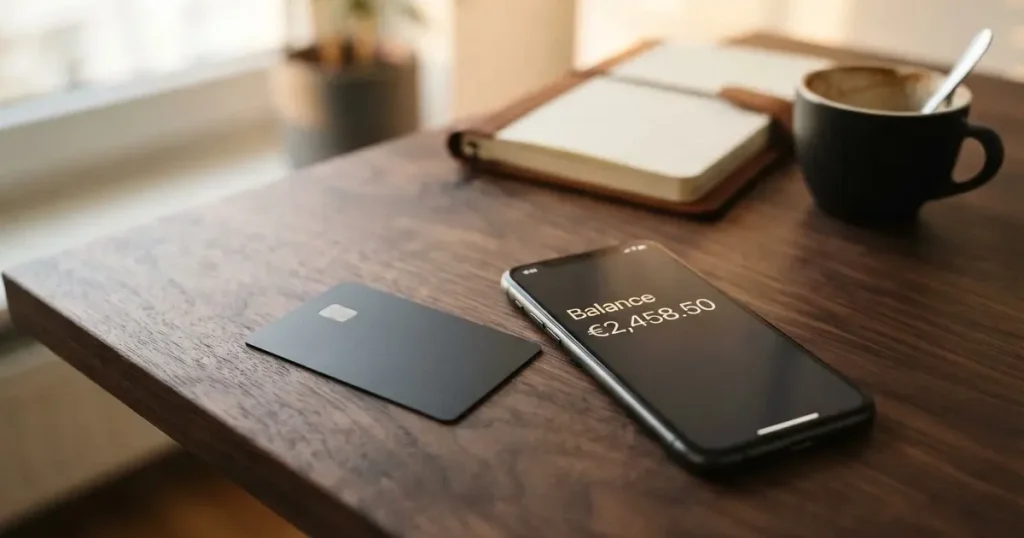
Telecard is a virtual Mastercard that lives inside a Telegram bot, costs $5 to join on the standard plan, and takes USDT and USDC straight onto its balance. That is the pitch, and for someone who has spent months failing to get an ordinary bank card issued, it is a pitch worth taking seriously. On the evidence the company publishes, it is also a service where the answer to the question “who is actually behind this?” is silence.
I scored it 6.1 out of 10.
That number is not a shrug. It is a card that does the basic thing it promises — issue a virtual Mastercard instantly, convert crypto, pay anywhere Mastercard is accepted — while leaving the questions a careful person would ask in advance mostly unanswered. Who is the legal entity? Which country does it belong to? Which institution issues the card and holds the licence? The terms name none of them, and describe the company as “a financial technology company, not a bank and not insured by the FDIC”.
For you, that matters most in one specific way. A virtual card with no physical plastic, no ATM, no published regulator and no published complaints record is not obviously wrong — thousands of people use arrangements like this. But it is also not a bank account wearing a bank’s clothes, and it should not be treated as one. If you are choosing between this and a regulated provider because you need money to be *there* next month, the difference in risk is the whole decision.
Let me take the card apart piece by piece: who gets it, how you sign up, what it costs to run, how you put money on it, what daily use feels like, what could go wrong, and what the alternatives are. The conditions described here are current as of October 28, 2026.
Who gets a Telecard card
You can use it in more than 150 countries, wherever Mastercard is accepted — that is the company’s own wording, and it is a wide claim rather than a list. What is genuinely useful about it is the absence of an exclusion list: the card does not publish which countries are supported and which are not. Instead, the only restriction stated is that you cannot be someone “blocked or sanctioned by the United States Government, including OFAC”.
So there is no country to check your name against. If you are in one of the places where ordinary banking has become difficult and you are not on an international sanctions list, the card’s own terms do not exclude you.
Two things follow, and both are caveats rather than promises. First, “usable in over 150 countries” describes where the card *works*, not who may hold it — acceptance geography and eligibility are different claims, and the pages give you only the first. Second, the identity check on the standard plan is described as “available in most major regions”, which is a softer phrase than it sounds. No minimum age is stated anywhere on the pages I read.
As a broad category note that applies to cards like this everywhere: prepaid and debit cards are generally sold to adults, and some issuers set higher age or limit thresholds. Telecard does not publish its own number.
How to get a Telecard card
It is a Telegram-native signup, which is unusual and worth understanding before you start. The card is issued inside a bot: you open it, you verify, and the virtual Mastercard appears. There is nothing to ship, because there is no physical card — no plastic, no metal, and no delivery of any kind.
There are two plans, and they differ on the point that matters most for people who cannot complete verification:
- Standard — $5 one-time, and a full KYC check before you get the card.
- VIP — $49 setup, then $19 per month, and no KYC.
The standard-plan check asks for a government ID, a selfie holding that ID, and proof of address dated within three months. Review takes 24–48 hours and the result arrives by Telegram. The card activates after approval. The company does not publish the reasons a review might be refused.
VIP skips all of that. It also lets you ask, by email, for higher limits, and it charges $15 to reissue the card.
One inconsistency to be aware of, because it will otherwise cost you patience: the main page says verification “takes up to 5 minutes”, while the help page says 24–48 hours for a standard review. Those cannot both describe the same thing. Plan your time around the help page.
The card itself is virtual, instant, denominated in USD, and works with Apple Pay and Google Pay. Because it is USD-denominated, a conversion fee applies to any payment you make in another currency — I come back to that in the fees section.
Fees: what it really costs
The headline is friendly: the main page says signing up is free, and there is no monthly fee on the basic plan. Underneath that, the costs arrive per transaction rather than per month, which is the pattern to hold in your head as you read this table.
| Fee or limit | Details |
|---|---|
| Issuance (Standard / VIP) | $5 / $49 |
| Monthly fee (Standard / VIP) | $0 / $19 |
| Currency conversion | 1.5% (non-USD payments) |
| FX and cross-border fees | up to 3% each |
| ATM access | not stated |
| Daily limit | $500 |
| Monthly limit | $5,000 |
The limits reset at midnight UTC and on the 1st. They do not apply to deposits, withdrawals or internal transfers. No ATM fee is published, but you should not read that as “free” — there is no ATM feature described anywhere in the product itself, so the question is largely hypothetical.
Now three ordinary days, with the fees that actually bite.
Buying coffee in your own currency, from a USD card. This is the everyday case, and it is the one where most people feel the model for the first time. Your card is priced in dollars; the café’s terminal charges in local money; the conversion costs 1.5%, and the gas fee of 0.5 USDT rides on top per successful card transaction. That 0.5 USDT is not small next to a $4 coffee — you are paying a fixed network-ish fee on every tap, however small the purchase.
A monthly subscription. Here the arithmetic is kinder, because 1.5% of a $30 recurring charge is a rounding error against the fixed per-transaction fee. This is where a card like this feels best: larger amounts amortise the fixed costs, and if your subscription is priced in dollars you avoid conversion entirely.
Anything on a card-present terminal in a shop that inspects the BIN. This is not a Telecard fee but a category one, and it is the risk that catches people least prepared. A card number carries a six- or eight-digit issuer identification number at the front, and merchants can look it up to see which institution and country issued it. Some apply extra scrutiny when the issuer country differs from the billing address, and some decline prepaid or foreign-issued cards outright. An online decline can also leave a hold on your funds for several days.
Also worth knowing: address verification, which compares the numeric parts of the billing address you type with the issuer’s records, is mainly offered in the US, Canada and the UK and is generally unavailable for foreign-issued cards. Which categories are blocked on a Telecard card is not stated.
How to Top up the card
Topping up is where crypto cards are most straightforward, and Telecard’s list is short and clear enough to plan around. You send:
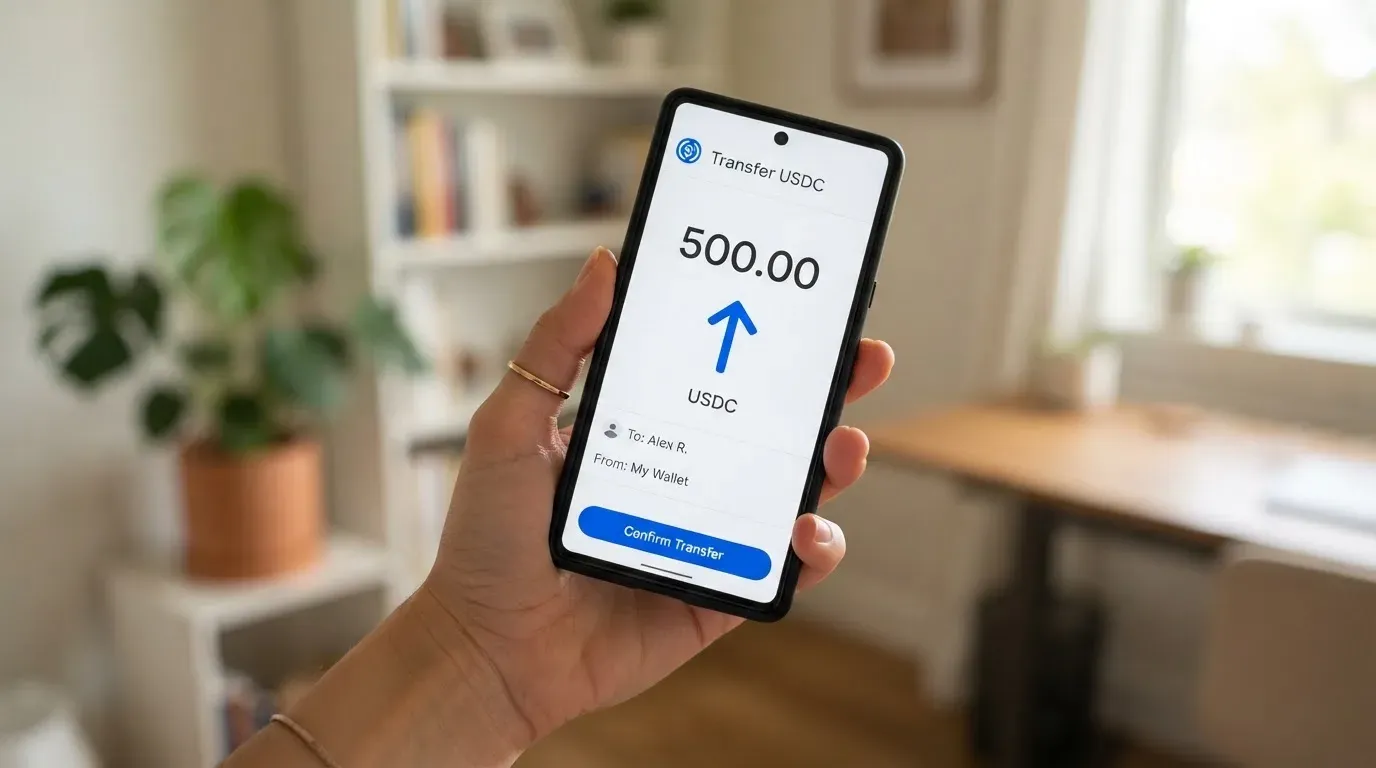
- USDT on Tron (TRC-20)
- USDT on Ethereum (ERC-20)
- USDC on Ethereum (ERC-20)
Polygon is not supported. The main page additionally lists ETH and TRX, which the help page does not — treat those two as unconfirmed. Bank transfers are marked “coming soon”, which means card-only, crypto-only funding today.
The deposit fee is advertised as 0%. The minimum to activate the card is $99, and the company is explicit that this is not a fee — the money stays in your wallet. Who pays the network fee for a deposit is not stated, which is a small but real unknown: an ERC-20 deposit can cost materially more than a Tron deposit.
Get the network right. This is the single most expensive mistake available to you here, and it is irreversible by design. Blockchain transfers cannot be undone by the recipient or the provider. Sending on a network the provider does not support, or to an address belonging to a different network, can lose the funds outright or need manual recovery with no guarantee of success. Also note that USDC on Tron is not a native option: Circle stopped supporting USDC on Tron in February 2024, so “USDC over TRC20” is not the same thing as USDT over TRC20.
Getting money back out works in the reverse direction. There is a withdraw button in the app that sends to an external crypto wallet on Tron or Ethereum, usually within minutes. Network fees are about 0.5–2 USDT on Tron and 5–50+ USDT on Ethereum, and the main page lists a 0.5 USDT withdrawal gas fee. Withdrawal is irreversible once confirmed. Bank withdrawals are “coming soon”, and what happens to a leftover balance if you close the account is not stated.
That last point is worth pausing on, because it interacts with the limits: at $500 a day, money above the cap sits in the account until you use it or withdraw it.
Paying with it every day
Day-to-day, the experience is small and mostly pleasant. You add the card to Apple Pay or Google Pay and pay by phone. Apple Pay replaces your card number with a device-specific number stored in the phone’s Secure Element, and each payment carries a one-time code, so handing over your phone is not the same as handing over your card number. The issuer can still restrict the tokenised number — blocking it on websites, say, or on phone payments — so a decline is not always about the merchant.
The wallet sits inside the Telegram bot rather than in a separate app. Store ratings are not published, and 2FA or an instant card freeze is not mentioned anywhere in the terms I read, which for a card holding real money is the gap I would want closed.
There is a referral scheme: you earn Fiorini for each friend who activates, plus cashback on what your friends spend, at 1 USDT to 100 Fiorini. The cashback rate itself is not specified, so I cannot tell you what it is worth.
Three everyday realities that are not features but are part of the product:
- There is no ATM access and no cash. This is a purely digital card. If cash matters to you, it does not solve that.
- A declined payment can leave a hold. Declined authorisations may hold funds for up to seven days.
- Disputes go through arbitration. The terms state binding arbitration and no class actions, with [email protected] as the first point of contact. The refund policy is not addressed. For contrast, US debit card reversal rights come from Regulation E and credit card rights from Regulation Z, and prepaid-card coverage varies and should not be assumed to apply here.
Support itself is reachable three ways: in-app chat via Telegram @telecardcryptobot, a Help Center at telecard.ai/help, and email at [email protected], with a stated general response time of 24–48 hours and urgent cases such as a blocked card prioritised.
What can go wrong
The first thing to say plainly: I found no official incident reports and no complaints to weigh. A search for the brand on Trustpilot and Reddit returned nothing naming it, and no Trustpilot page was found. Read that carefully. It is not a clean track record; it is an absence of data. For a service of this size, the more likely explanation is that it is too new or too small to have been written about, which is neutral at best. When there is no complaint history, the only evidence you have left is what the company itself publishes — and here that runs thin.
The corporate question is the big one. The card is described as “a financial technology company, not a bank and not insured by the FDIC”, as a Mastercard partner. The legal entity, its jurisdiction, the issuer and the licences are not named in the terms. That means you cannot answer three questions you would want answered before depositing: who legally holds your balance, which regulator supervises them, and what happens to the money if they stop trading.
Your money is held by them, not by you. Funds sit in the Telecard account — custodial — and are withdrawable to external wallets. Custody means the provider holds the credentials, so you must trust them completely. The category’s record here is not encouraging: Mt. Gox (about US$350 million reported stolen, 2011–2014), Coincheck (about US$400 million, 2018) and Ronin Network (US$625 million, 2022). Where funds sit with a custodian you carry counterparty risk and hack risk; that is the trade for convenience.
Stablecoins are not what the name suggests. USDT and USDC are dollar-pegged, and the BIS (July 2025) put about 90% of stablecoin market capitalisation in those two. But as the category background puts it, “despite the name, stablecoins are not necessarily stable”: TerraUSD collapsed in May 2022, and USDC temporarily lost its peg in March 2023 during the US banking crisis. Tether also states that it disables tokens in wallets on the OFAC sanctions list and has frozen funds tied to illicit activity, so these balances are not censorship-proof either.
The card can be taken away. Visa and Mastercard do not issue crypto cards to consumers themselves; they license issuers, and they can suspend a programme. Visa terminated its global agreements with FTX on 13 November 2022 and the FTX US debit card was wound down. WaveCrest, a Visa issuer that supplied crypto card brands, was suspended by Visa in Europe in 2018, closing all its programmes. A closure typically means a notice period, then spending and loading stop, then you are asked to withdraw what remains. If you keep the balance on the card rather than withdrawing it, you are exposed through exactly that window.
A wrong-network deposit. Already covered, but it belongs on the risk list because it is the fastest way to lose money here, and because a fix depends on the support team’s goodwill.
Limits can bite. $500 a day and $5,000 a month on both plans, with VIP able to request more by email. If your spending pattern exceeds that, the ceiling is a hard stop.
Finally, a governance note worth knowing: in the EU, customer due diligence covers identity documents, a sanctions check and a politically-exposed-person assessment, and where due diligence cannot be completed the institution is required to refrain from the transaction or end the relationship. That is why accounts close or freeze pending documents — it is the rules working, not a judgement on you, but it will still interrupt you. In the US, FinCEN guidance treats administrators and exchangers of convertible virtual currency as money transmitters, while people simply buying goods with crypto are not.
And a word on tax, since every card payment funded from crypto is a disposal of a digital asset in the eyes of the IRS, which treats digital assets as property. For personal holdings the result is a capital gain or loss, short-term if held a year or less, measured in local fiat currency at fair market value on the date of the transaction. So each card payment may be a separate taxable event. That is a description of how the rules work, not advice about what to do — speak to a professional about your own position.
What to take instead
There is no single alternative to a Telecard card, because the alternatives fail in different ways. Comparing them honestly is more useful than recommending one.
| Telecard | Azul Card | OnCards | Ape Wallet | |
|---|---|---|---|---|
| My score | 6.1 / 10 | 5.3 / 10 | 4.6 / 10 | 5.5 / 10 |
| Card | Virtual Mastercard | Virtual Mastercard | Virtual Mastercard / Visa in Telegram | Virtual Visa, service card and mobile wallet card |
| Onboarding | Standard plan KYC 24–48 h; VIP none | not stated | not stated | Passport KYC, Russian passport for SBP payments |
| Cost to join | $5 one-time (Standard) | $20, refunded after $2,000 of spending | not stated | not stated; promo codes change the price |
| Monthly | none on Standard; $19 on VIP | $5 | not stated | not stated |
| Top-up | USDT and USDC on named networks | crypto sent to the card in Telegram; coins and networks not named | USDT BEP20; no bank transfers | USDT wallet balance |
| Per-transaction | 1.5% conversion on non-USD; 0.5 USDT gas | $0.25 per transaction; crypto top-up 4%; FX not stated | not stated | amounts not stated, shown before confirming; no fee on transfers to other users by Telegram username |
| Cashback | Fiorini referral scheme, rate not specified | none stated | none stated | none stated |
| Where it works | 150+ countries; only US-sanctioned users barred | Worldwide except Russia, Belarus, North Korea, Iran, Syria, Cuba, Sudan, Venezuela, Ukraine and the Crimea, Donetsk, Luhansk, Zaporizhzhia and Kherson regions | not stated | wherever Visa is accepted; no country list |
Three comparisons worth reading closely.
Azul Card has the clearest geographic statement of the group and the sharpest one: the exclusions apply “regardless of the user’s nationality”, so the card genuinely cannot be used in those places by anyone. That is more honest than a 150-country claim. Against that, it costs $20 to create the card, refunded only after $2,000 of spending, plus $5 a month, and charges $0.25 per transaction on top of a 4% crypto top-up fee. Its FX fee is not stated.
OnCards is the thinnest of the four. Country eligibility is not stated, with no mention of Russian or Belarusian citizens or residents; fees are described as “simple and clear — no hidden charges” with no amounts attached; card currency is not stated; and the network is not fixed. Funding is USDT on BEP20 only, and bank transfers are not accepted. Its one concrete advantage is timing: the first top-up takes up to 10 minutes, later ones 1 to 5 minutes.
Ape Wallet leans the other way, toward Russian users, with SBP payments and passport KYC using a Russian passport. It uses Visa rather than Mastercard, offers a “service card” for subscriptions alongside an Apple Pay / Google Pay card, and has no amounts for its fees, though it does show a fee and total before you confirm an operation — a courtesy Telecard does not document. Card currency is not stated. Transfers to other users by Telegram username carry no fees.
The pattern across all four is the pattern of the category: virtual only, crypto funding, no published regulator in most cases. If your priority is a named, checkable counterparty, none of these is where you will find it — you need a licensed e-money institution you can look up in a public register, and in the EU that register is ESMA’s, which holds authorised crypto-asset service providers, white papers and non-compliant entities. A card itself is regulated separately as a payment service; MiCA, which took legal effect in June 2023 and whose stablecoin rules applied from 30 June 2024 with the remaining provisions from 30 December 2024, covers the crypto side. In practice a crypto card often depends on two licences — which is why a provider that names neither is harder to assess.
Who I would recommend it to
I would recommend Telecard to someone in a specific situation: you hold USDT or USDC on Tron or Ethereum, you spend most of your money in dollars or in larger amounts rather than small daily taps, you are comfortable with your balance being custodial and with the card company naming no regulator, and you treat it as a spending tool rather than as somewhere your savings live. Under those conditions it is a genuinely useful card at a fair price — $5, no monthly fee on Standard, Apple Pay and Google Pay on day one, and limits of $500 a day and $5,000 a month that are reasonable for ordinary spending.
I would not recommend it as your only card. If you need a fallback when payments are declined, or you need cash, or you want a dispute path with more than binding arbitration behind it, or the answer to “who holds my money” matters to you, look elsewhere — ideally at a licensed e-money institution you can verify in a public register.
Three specific cases where I would steer you away. If you cannot complete identity verification, VIP technically removes KYC — but that is a $49-and-then-$19-a-month plan with no stated age requirement and an unnamed legal entity, and buying your way past a check that a regulated provider would insist on is not a trade I would encourage anyone to make. If you are in one of the places where Telecard’s own competitors list explicit exclusions, be aware that Telecard publishes no exclusion list at all, which tells you less than a list would. And if you are sending meaningful sums, withdraw to your own wallet rather than parking a balance on the card — that removes the closure-window risk entirely.
My honest summary: the product works as described and the price is low, and that is genuinely worth something. But “works” is a lower bar than “I would be comfortable holding my money here for a year”, and Telecard does not give you the information to make the second judgement. Judge it on the first, and use it accordingly.
Frequently asked questions
What is the Telecard card?
Telecard is a virtual Mastercard issued through a Telegram bot rather than a bank. You send USDT or USDC from an external crypto wallet, and the card spends that balance as dollars wherever Mastercard is accepted. It has no physical version, no ATM access, and no cash function. Everything happens inside Telegram, which is also where support lives.
How does the Telecard card work?
You open the Telegram bot, choose a plan, complete identity verification on the standard tier, and a virtual Mastercard appears immediately and can be added to Apple Pay or Google Pay. Each payment converts the balance if needed and charges a 0.5 USDT gas fee on top. The card is USD-denominated, so a 1.5% conversion fee applies whenever you pay in another currency.
Is Telecard a bank?
No, and the company says so plainly: it describes itself as a financial technology company, “not a bank and not insured by the FDIC”. It is a Mastercard partner. The legal entity, its jurisdiction, the issuing institution and the licences are not named in the terms, which is a real difference from a regulated e-money provider you can look up in a public register.
Who owns Telecard?
The terms do not say. No legal entity, jurisdiction, issuer or licence is named, and I found no Trustpilot page or review footprint naming the brand. That absence is not evidence of a problem, but it does mean you are trusting a service on the strength of its own description alone.
Does the Telecard card require KYC?
It depends on the plan. Standard requires a government ID, a selfie holding that ID, and proof of address dated within three months, with a 24–48 hour review notified by Telegram. VIP requires no KYC, costs $49 to set up and $19 per month. No minimum age is stated anywhere on the published pages.
How much does the Telecard cost?
Standard costs $5 once and has no monthly fee. VIP is $49 to set up plus $19 a month, with a $15 card reissue. On top of that: 1.5% conversion on non-USD payments, 0.5 USDT gas per successful card transaction, and FX and cross-border fees quoted as “up to 3% each”. You need a $99 minimum deposit to activate, which stays in your wallet.
Is the Telecard card free?
Partly. The main page says signing up is free and that the basic plan has no monthly fee, which matches the $5 one-time Standard charge. But it is not free to use: every non-USD payment costs 1.5% in conversion plus 0.5 USDT in gas, and those are the costs you will actually feel on a small everyday purchase.
How do I top up the Telecard card?
Send USDT on Tron (TRC-20) or Ethereum (ERC-20), or USDC on Ethereum (ERC-20). Polygon is not supported, bank transfers are marked “coming soon”, and the deposit fee is advertised as 0%. Get the network right — transfers are irreversible, and a deposit on an unsupported network or to the wrong address can be lost outright.
Is the Telecard card safe?
There is no way to answer that fully from public information. No official incidents and no complaints were found, which is an absence of data rather than a clean record. Your balance is custodial, held by the provider, and the company names no regulator, issuer or licence. Two-factor authentication and instant card freeze are not mentioned in the published terms.
Can I withdraw money from a Telecard card?
Yes, through a withdraw button in the app, to an external crypto wallet on Tron or Ethereum, usually within minutes. Network fees run about 0.5–2 USDT on Tron and 5–50+ USDT on Ethereum, with a 0.5 USDT withdrawal gas fee listed on the main page. Withdrawals are irreversible once confirmed, and bank withdrawals are not yet supported.
Virtual cards put to the test – cryptocardtested
Content created by the «cryptocardtested» team