
Kolan, read closely: a USD virtual card for paying online with crypto, with the fine print nobody publishes
 Available in US
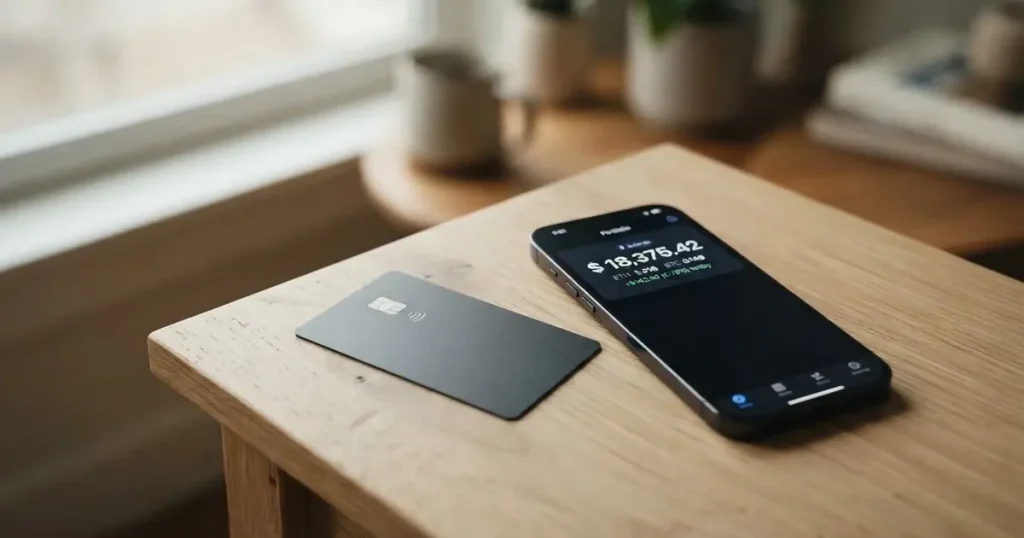
Kolan is a virtual dollar card you load with crypto and spend online — the sort of thing you consider when an ordinary bank card is out of reach, or when you want a card number for a subscription that will not take your usual one. On paper it is a narrow, useful tool. In practice, almost every detail that would let you judge it — who qualifies, what it costs, what identity checks apply, which networks to send crypto over, who issues the card — is either absent from the company’s public pages or visible only through third-party listings. I went through what is published, weighed it against the way crypto cards work in general, and scored it 5.7 out of 10.
The score is not a verdict on the product idea. It is a verdict on how much I could confirm.
The conditions described here are current as of October 28, 2026.
Verdict: 5.7 out of 10
Kolan suits a specific reader: someone who already holds crypto, mainly in USDC, and wants to pay for online services — subscriptions, software plans, hosting, ads — with a virtual USD card that sits in a wallet rather than in a physical slot. If that is you, and you are comfortable holding an undisclosed fee schedule in your hands, the card may do its job. If you need to know what a payment will cost you before you make it, or you need a card for anything physical, or you are choosing on the basis of published terms, you will be disappointed.
What holds it back is not the concept. It is that the card’s own public pages do not tell you who issues the card, whether there are fees, or what limits apply — and a card without that information is a card you cannot properly plan around.
Here is the breakdown, criterion by criterion, with my reasoning:
| Criterion | Mark | Why |
|---|---|---|
| Who can get it | 8 / 10 | Starting data points to 100+ countries; unofficially, Hurupay accounts reach users in “more than 100 countries” and Kolan’s profile describes non-US individuals in 50+ countries — broad reach, though the card’s own eligibility rules are not published. |
| Cost | 5 / 10 | Not disclosed officially; an unofficial directory line says “no hidden FX fees” — which reads well but is not a published fee schedule. |
| Top-up options | 5 / 10 | Crypto is deposited into a Kolan account, held as USDC in a linked wallet, and converted to USD to load the card — workable, but the networks are not named. |
| Reliability and complaints | 6 / 10 | Hurupay Inc. (DBA Kolan); unofficially a US-based, MSB-registered fintech and a Circle grant cohort member; issuer not named; Cursor staff say such cards “often have issues”; no Trustpilot reviews found. |
| Everyday use | 3 / 10 | Virtual USD card only; unofficially a card freeze exists, Apple Pay and Google Pay not disclosed. |
| Total | 5.7 / 10 | Strong on reach, weak on transparency and everyday practicality. |
The reader I keep in mind here is anyone, anywhere, who has trouble getting a normal bank card. For that person the gap between “there is a card” and “there is a card I can rely on and understand” is the whole decision, and on this card that gap is wide.
Will they give you the card?
Officially, the answer is not published. The card’s public pages do not state a country list, a citizenship rule, an age rule, or an exclusion list. What I do have is a starting figure — 100+ countries — and two unofficial data points, both third-party rather than the company’s own: Hurupay is said to offer accounts to users in “more than 100 countries” (note: account availability, which is not the same as card eligibility), and Kolan’s own profile, as listed by Alchemy and au-startups in 2026, describes non-US individuals in over 50 countries.
That “non-US” qualifier is the one concrete thing in the public record, and it points the wrong way for the reader most likely to be looking at this card: someone in the United States who cannot get a normal card is precisely the person the profile seems to exclude. I would not treat either number as confirmed by Kolan; both are directory and listing descriptions, not terms.
So the honest position is this: reach looks wide, eligibility is undefined, and the one signal you can lean on suggests US users are out. If you are outside the US and in a supported market, that is encouraging. If you are in the US, treat this card as probably not for you until Kolan says otherwise in writing.
How to get it
The signup mechanics are not published either. Whether Kolan runs full identity verification, at what level, and what documents it wants are all marked not stated on the public pages — and I am not going to fill that gap with guesses, because for someone without easy access to documents or a fixed address, the verification tier is not a detail, it is the deal.
What is described is the product itself, and again only via listings: a USD virtual card for online spending, per the Alchemy listing from 2026. The card network is unknown — Cursor’s forum said it “could work if it’s a Visa or Mastercard,” which is exactly how much is confirmed. Delivery is virtual only; whether a physical card is even planned is not stated.
Two consequences follow. First, if the verification flow is the sticking point for you, you will need to confirm it with Kolan before you count on the card — this review cannot tell you whether documents are required. Second, a virtual card with an unknown network behaves in practice like a card you add to a wallet and pay online with; think of it that way, not as a bank card in your pocket.
Fees: what it really costs
This is the section where the card is quietest, and it is the section that matters most to anyone spending real money. Issuance fee: not stated. Monthly fee: not stated. Conversion fee on crypto-to-fiat: not stated. Foreign-exchange fee: not stated. ATM fees: not stated. Daily limits: not stated. Monthly limits: not stated. Tiers: not stated. Not one of these numbers appears on the pages I could read.

| Fee or limit | What is published |
|---|---|
| Issuance | Not stated |
| Monthly fee | Not stated |
| Crypto-to-fiat conversion | Not stated |
| Foreign exchange (FX) | Not stated |
| ATM withdrawals | Not stated |
| Daily limit | Not stated |
| Monthly limit | Not stated |
| Card currency | Not stated officially; Hurupay offers virtual USD, EUR and GBP accounts (Alchemy listing) |
An unofficial directory description says “no hidden FX fees.” I would rather you read that as marketing than as a term. “No hidden” can be true while a visible spread, a conversion margin, or a network gas fee still applies — and blockchain network fees for your deposit are charged by the blockchain itself, not by the card provider, so that cost exists whatever the card says.
Let me walk three everyday payments through what I can and cannot tell you:
- A monthly software subscription. You convert crypto to USD, load the card, and the merchant charges the stored balance. Whether the conversion takes a cut, and whether the subscription itself has a currency-conversion charge on its side, are both unknown to you in advance.
- An ad platform or hosting bill in a non-dollar currency. Your card is denominated in USD, so the merchant or your own bank applies an FX rate. Kolan’s own FX treatment is not published. This is the payment most likely to surprise you.
- A small everyday purchase. Prepaid-style models like this usually cannot overdraw, so the ceiling is your loaded balance — but the minimum or maximum per transaction is not stated, so even this is not fully predictable.
The card currency itself deserves one more line: not officially stated for the card, though Hurupay’s accounts come in virtual USD, EUR and GBP per the Alchemy listing. Which currency your card is denominated in affects every FX purchase you make with it, and it is not something the public pages commit to.
Top up: how the money gets in
The funding model is the clearest thing about Kolan, and it is genuinely simple once you accept one design choice. Crypto is deposited into a Kolan account, held as USDC in a linked wallet as collateral, and then converted to USD to load the virtual card. The design choice is that your crypto sits with the provider until you spend it — this is a custodial, pre-loaded model, not a self-custody card where the money stays in your wallet until the moment of payment.
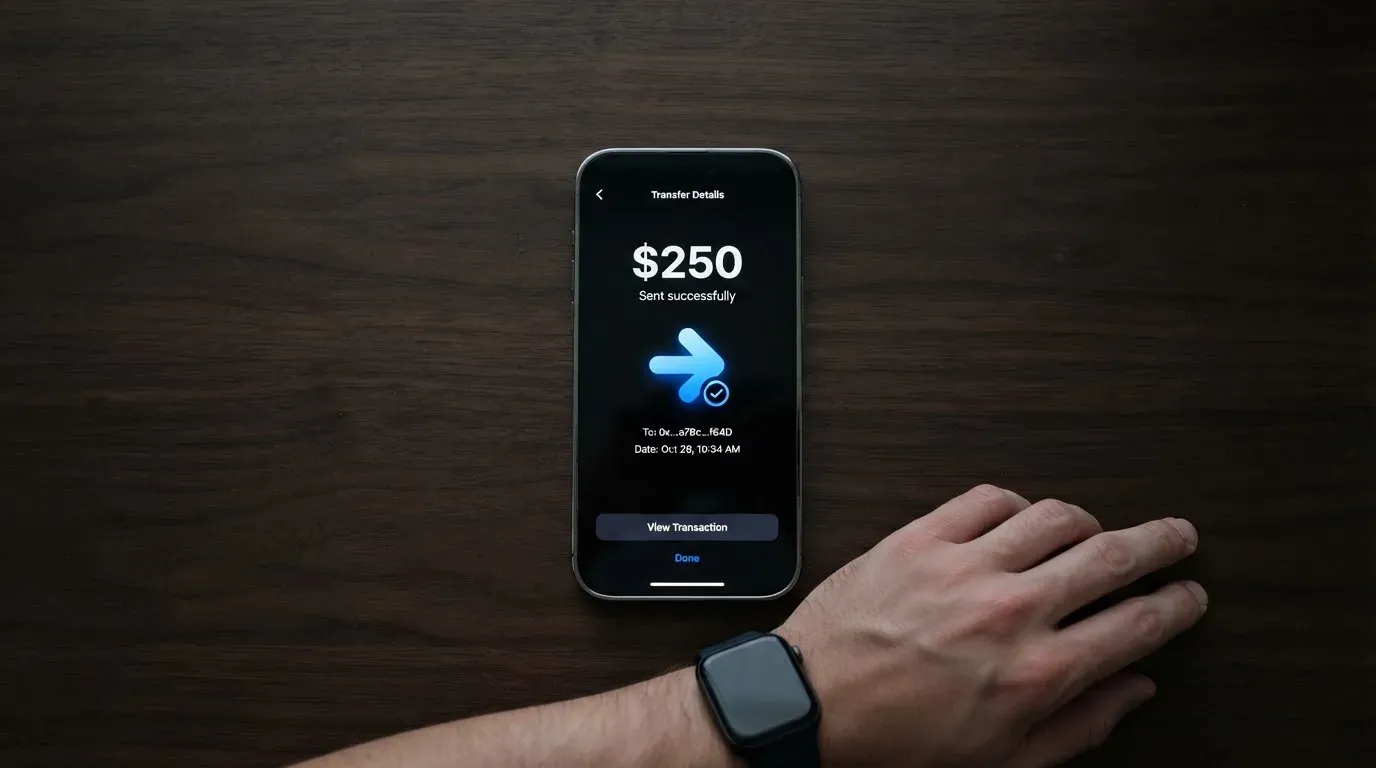
Where the process gets thin is networks. Which networks to send your crypto over is not stated, and this is the single most consequential gap in the whole product. A stablecoin transfer sent on a network the provider does not support, or to an address belonging to another network, can be lost outright — blockchain transfers are irreversible, and recovery depends on the provider’s goodwill, with no guarantee. So the practical advice, before you ever send anything: confirm the supported network and deposit address in the app, for the specific token you hold, before you transfer.
There is also a note on getting money back out. Withdrawal from the card is not stated. Hurupay’s accounts, per the Alchemy listing, allow withdrawal to crypto exchanges or local banks — but that is the account, not the card, and I would not read it as a promise about the card’s own withdrawal behaviour.
Paying with it every day
Everyday use is where Kolan scores lowest in my assessment, at 3 out of 10, and the reason is narrow: it is a virtual USD card for online spending, and not much else.
- Wallets. Apple Pay and Google Pay support is not disclosed.
- Rewards. Not stated.
- App. Not stated beyond the fact that one is implied by the mobile listings.
- Disputes and chargeback process. Not stated.
Why does that matter? Because a virtual card’s whole appeal is that you can hold it in a wallet and tap. If tokenised mobile wallets are not supported, you are typing your card number into checkout forms, which is where friction, fraud risk and declined authorisations cluster. And if no dispute process is described, your recourse when a charge goes wrong is unclear before you even need it.
There are category-wide habits worth knowing, because they affect any prepaid-style crypto card. A merchant category code (MCC) is a four-digit number classifying a business by type; the gambling code 7995 is one issuers often block by policy rather than by law, and the list differs per issuer. Address verification (AVS), which compares the numeric parts of your billing address, is mainly a US, Canada and UK service and is generally unavailable for foreign-issued cards — a common cause of declines. Apple Pay, where supported, replaces your card number with a device-specific token stored in the phone’s Secure Element rather than on Apple’s servers, with a fresh one-time code per payment; an issuer can still restrict such a token to certain channels. And a declined authorisation can leave a hold on your funds for several days, typically up to seven. None of this is Kolan-specific; all of it shapes what a virtual USD card feels like day to day.
What can go wrong
Two buckets, and I will take them in order: what I found about Kolan specifically, and what is structurally true of this kind of card.
On Kolan specifically, I found no official incidents — but absence of incidents is not the same as a good record. What I did find is thin and worth weighing honestly:
- The company. Hurupay Inc. (DBA Kolan). Third-party descriptions call it a US-based, “MSB-registered” fintech — the registration body and number are not given — and note that Kolan was in the inaugural Circle Developer Grant Program cohort. The card issuer is not stated. An unstated issuer means the licence under which your money is held is unstated, and licence is what determines your protection if things go wrong.
- A warning from adjacent users. On 13–15 August 2026, Cursor staff said on their forum that prepaid and crypto-funded virtual cards “often have issues” — checkout declines and failed renewals — in a thread about using a Kolan card for a Pro+ plan. Cursor neither supports nor blocks it. This is one company’s staff describing a category, not a verdict on Kolan, but it is the kind of experience a virtual card like this invites.
- No reviews. There is no Trustpilot page or reviews for Kolan or Hurupay in what I could find, so there is no public track record either for or against.
- Controls and custody. A directory description mentions spend controls including a card freeze. Custody arrangements and two-factor authentication are not stated.
Then the structural risks, which apply whether or not Kolan is above board on any of them:
- You are trusting a custodian. In a custodial model the provider holds the credentials, so you must trust it completely; with self-custody, by contrast, the funds stay in your wallet until payment and you alone bear the risk of key loss, phishing, or malware that swaps a copied address.
- Transfers are one-way. Crypto transfers are typically irreversible and a stolen key has no recovery path. Custodial platforms have a real record of failure — Mt. Gox (about US$350 million reported stolen, 2011–2014), Coincheck (about US$400 million, 2018), Ronin Network (US$625 million, 2022).
- Stablecoins are not perfectly stable. Despite the name, stablecoins can depeg: TerraUSD collapsed in May 2022, and USDC temporarily lost its peg in March 2023 during the US banking crisis. If your balance is held as USDC, that is the exposure.
- Programme closures happen. Card programmes can be wound down — Visa terminated its global agreements with FTX on 13 November 2022, and WaveCrest, a Visa issuer that supplied crypto card brands, was suspended by Visa in Europe in 2018. When a programme closes, the pattern is a notice period, then spending and loading stop, then you are asked to withdraw what remains. There is no guarantee you get to keep spending until you are ready.
- Regulation is a moving floor. If Kolan serves the EU, MiCA applies: its rules on stablecoins took effect from 30 June 2024 and the remaining provisions from 30 December 2024, e-money tokens may be issued only by a credit institution or an electronic money institution, and the transitional period for existing providers runs only until 1 July 2026 or until they receive or are refused authorisation, whichever comes first. In the US, FinCEN treats administrators and exchangers of convertible virtual currency as money transmitters, while ordinary users buying goods are not. Neither fact tells you where Kolan stands; both tell you the ground is shifting under providers.
If a payment goes wrong, your remedy is a chargeback — a refund ordered by the issuer — and US rights differ for debit versus credit cards, with prepaid-card coverage varying and not to be assumed.
What to take instead
If Kolan’s main attraction is a virtual USD card for online services, these three are the alternatives I weighed, and none of them is dramatically better — they are differently shaped.
| Alternative | Score | Reach | Card | Top-up | Cost |
|---|---|---|---|---|---|
| Cardex | 5.6 / 10 | “One crypto card, 200+ countries”; App Store listing is Naira-focused | Debit crypto card on VERVE, Visa, Mastercard, UnionPay; virtual and physical; Naira per listing | USDT, USDC, BTC; networks not stated | Not stated; conversion at payment via an “AI-Powered Conversion Rate”, no percentage published |
| CardFlow | 4.9 / 10 | Aimed at Nigeria and “Nigerians and global users”; no country list | Virtual USD Mastercard, created in about 3 minutes | Bitcoin, USDT, ETH or Naira bank transfer; networks not stated | “Creating a virtual card is completely free”; monthly fee not stated |
| HyperCard | 4.7 / 10 | No country list on official pages; App Store says works in “more than 176 countries” | Prepaid “HyperCard”; network not stated; balance in USD or EUR | Crypto such as USDT, BTC, ETH in the app; networks not stated | Not stated; App Store page lists no fees |
| Kolan | 5.7 / 10 | 100+ countries starting data; unofficial non-US individuals in 50+ countries | Virtual USD card; network unknown | Crypto held as USDC, converted to USD; networks not stated | Not stated |
Read across the table and a pattern appears: this whole corner of the market is thin on published detail. Cardex at least names its networks and says it has physical cards; CardFlow at least says the virtual card is free to create; HyperCard at least states the app works in a lot of countries. Kolan’s distinctive point is reach and the Circle grant cohort membership — everything else about it is thinner than its rivals’ published pages.
My honest read: if your priority is a card whose payment network you know, Cardex is the one that publishes it. If your priority is a free virtual Mastercard created in minutes, CardFlow says so outright. If you are comparing purely on who publishes more, none of these four is a clear winner, and the right next step for anyone seriously considering any of them is to ask the provider directly the questions this review could not answer.
Who I would recommend it to
I would recommend Kolan to one reader, in fairly specific terms: someone outside the US, already holding crypto — most obviously USDC — who wants to pay for online services with a virtual USD card, is comfortable with a custodial pre-loaded model, and has a habit of confirming network and address in the app before transferring. To that person, the card does a narrow job, and reach is genuinely wide.
I would not recommend it to anyone who needs to predict costs, who needs a physical or wallet-tapped card for daily life, who needs to know who holds their funds and under what licence, or who is choosing a card to solve a banking-access problem and needs something dependable. For the reader who cannot get an ordinary bank card — the person this card most obviously attracts — the missing issuer, the missing fees, and the missing limits are not acceptable gaps. A card you cannot explain to yourself when it declines is not a solution to a banking problem; it is a different problem.
The category has a habit of closing: I would hold this one the way you hold anything small, not the way you hold savings.
Frequently asked questions
What is the Kolan card?
Kolan is a virtual USD card you load with crypto and use for online payments, aimed at paying for subscriptions and services. Crypto goes into a Kolan account, is held as USDC in a linked wallet, and is converted to USD to fund the card. It is virtual only, so it lives in a wallet rather than your pocket. Kolan is run by Hurupay Inc., trading as Kolan; the card’s issuing bank is not stated on its public pages.
How does Kolan card work?
You deposit crypto into a Kolan account, where it is held as USDC in a linked wallet as collateral. Kolan converts it to USD and loads the virtual card, and the card spends that stored balance like a prepaid card. Because it draws on a loaded balance, it cannot overdraw. Which networks to send your crypto over is not stated, and network mismatches risk losing the transfer.
Is Kolan a bank?
No — Kolan is a fintech company, Hurupay Inc. (DBA Kolan), described by third parties as a US-based, MSB-registered company. That is money-services registration, not a bank licence. The bank or institution that actually issues your card is not stated. The distinction matters: if you are choosing this card because you lack a normal bank account, a money-services registration is not the same protection as deposit insurance.
Who owns Kolan?
Kolan is the trading name of Hurupay Inc., a US-based fintech described as MSB-registered, and Kolan was part of the inaugural Circle Developer Grant Program cohort. The card’s issuing institution is separate and not named publicly. Ownership is straightforward; who holds your balance and under whose licence is the part that is unstated.
Can I get the Kolan card in my country?
The public pages do not publish an eligibility list. Starting data points to 100+ countries, and unofficially Hurupay serves accounts in “more than 100 countries” while Kolan’s profile describes non-US individuals in over 50 countries. The “non-US” detail is the only concrete signal, and it is third-party rather than from Kolan. Check with Kolan directly for your specific country before you plan around it.
Does Kolan card require KYC?
The public pages do not state what identity checks apply or at what level, so I cannot tell you whether documents are required. As general background, KYC rules in both the EU and US require regulated businesses to verify customers and screen for sanctions, and if due diligence cannot be completed, accounts can be frozen or closed. If documents are your sticking point, ask Kolan in writing before you rely on the card.
How do I top up the Kolan card?
You deposit crypto into your Kolan account; it is held as USDC in a linked wallet and converted to USD to load the card. Bitcoin is not mentioned in what I could read. The critical step before you send anything is confirming the supported network and deposit address for your specific token in the app, because transfers on an unsupported network can be lost with no guaranteed recovery.
Is Kolan card free?
The public pages do not state an issuance fee, a monthly fee, or a conversion fee, and no tiers are published. An unofficial directory line says “no hidden FX fees”, which is marketing language rather than a fee schedule. Note also that the blockchain network fee on your deposit is charged by the blockchain, not by Kolan. Treat “free” as unconfirmed rather than as a fact.
Can I add the Kolan card to Apple Wallet or use contactless?
Apple Pay and Google Pay support are not disclosed for this card, so I would not count on tapping it in a shop — it is built for online spending. Category-wise, Apple Pay stores a device-specific token in the phone’s Secure Element, never on Apple’s servers, but an issuer can restrict a tokenised card to specific channels. If wallet use is important to you, ask Kolan before you commit.
Is the Kolan card safe and worth it?
Worth it is a fair question if you want a virtual USD card for online services and you already hold crypto; the card does that narrow job well. Safety is harder to answer: I found no Trustpilot or Reddit track record for Kolan or Hurupay, the issuer is unstated, custody arrangements and two-factor authentication are not described, and Cursor staff in August 2026 said such prepaid and crypto-funded virtual cards “often have issues” such as checkout declines. Add the usual crypto risks — stablecoins can depeg, custodial platforms have failed before, and card programmes can close — and this is a small-balance tool, not a place for money you need.
Virtual cards put to the test – cryptocardtested
Content created by the «cryptocardtested» team