
The no-KYC crypto card that only works in Europe
 Available in US
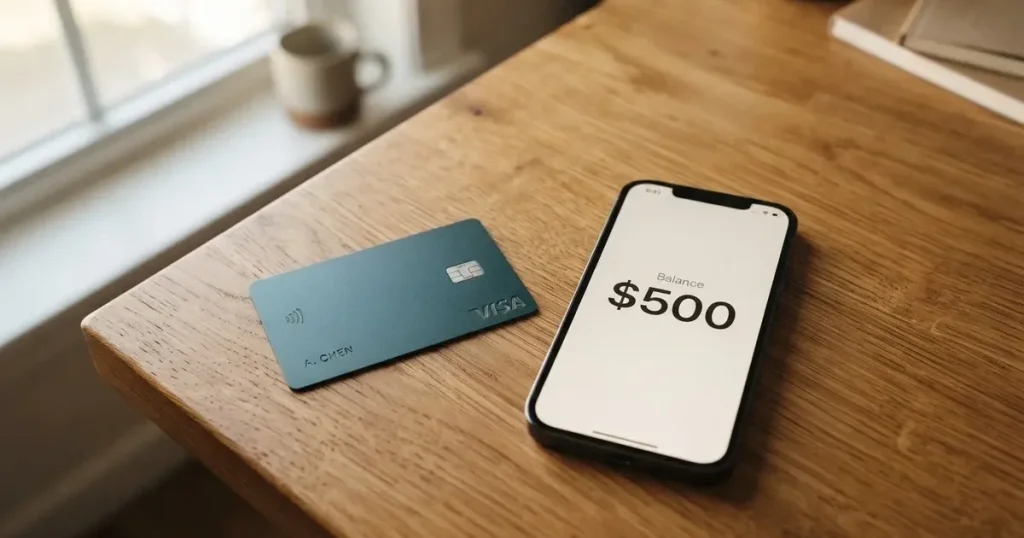
The DeFiPay card is one of those crypto payment cards that promises exactly what a lot of people quietly want: spend your crypto balance like ordinary money, without handing over a passport, a selfie, or a phone number. On paper it does that well. It issues both a virtual and a physical Mastercard, it works with Apple Pay and Google Pay, you can draw euros 750 a day from a cash machine, and registration asks for no name, no ID, no email verification and no phone confirmation at all.
Then you read further. Use is limited to Europe, at EEA and UK merchants and cash machines — online purchases outside Europe are possible, but in-store spending is confined to European merchants. The deposit fee is 5% flat. The card pricing on the site contradicts itself: one section says 10 USDT for a virtual card and 16 USDT for a physical one, another says 7 USDT and 19 USDT *per month*. And the company behind it is named in the footer as SC PAYMENTS LIMITED with a licence number, while the support page describes a Singapore registration and the starting data pointed to Hong Kong. The issuing bank is not named anywhere I could find.
That combination — genuinely useful for one narrow job, and genuinely murky about its own basics — is why my score sits where it does.
The conditions described here are current as of October 28, 2026.
Verdict: 5.3 out of 10, and the 10s and 2s explain it
I scored this card 5.3 out of 10. That number is not a rounding of something more flattering. It is an average of a very strong everyday-use score and a very weak cost score, with the corporate and reliability picture sitting in between. If your use case is anonymous crypto spending in Europe, this card is one of the more direct tools available and the everyday-use mark is not exaggerating. If your use case is cheap day-to-day spending, the cost mark of 2 out of 10 is going to hurt, and it is going to hurt on every single top-up.
Here is how the criteria break down.
| Criterion | Mark | Why |
|---|---|---|
| Who can get it | 5 / 10 | Use is limited to Europe (EEA/UK merchants and ATMs); online use outside Europe is possible; no registration country list is named |
| Cost | 2 / 10 | Two conflicting price sets — virtual 10 USDT vs 7 USDT/month, physical 16 USDT vs 19 USDT/month — and a 5% deposit fee |
| Top-up options | 8 / 10 | BTC, ETH, USDT, TRX, LTC, SOL, XRP, BNB, plus USDC on the support page; networks not named |
| Reliability and complaints | 4 / 10 | SC PAYMENTS LIMITED, number 78350827, country inconsistent across sources (Singapore or Hong Kong), issuer unnamed, no Trustpilot page |
| Everyday use | 10 / 10 | Virtual and physical Mastercard, Apple Pay and Google Pay for both, €750 per day at cash machines |
| Total | 5.3 / 10 |
Who this suits: you already hold crypto, you want to spend it in Europe without a KYC process, you value a mobile wallet over a branch, and you do not mind paying five percent to move money in. Who it does not suit: anyone who spends outside Europe, anyone on a tight budget who will feel that 5% fee, anyone who needs a named issuing bank and a clear dispute process, and anyone for whom an unbranded card arriving in unbranded packaging raises a question they cannot answer.
Will they give you the card?
The short answer is: probably yes, because the card asks almost nothing of you — but only where it works.
The card’s own wording on use is the important line. “Use is limited to Europe (EEA/UK merchants and ATMs),” and online purchases outside Europe are possible while in-store use is limited to European merchants. That distinction matters more than it first appears. A shop in London, Berlin or Milan will see the card and treat it as a card. A shop in Lagos, Dubai or Bangkok will see a card whose issuing country may not match your billing address, and some merchants decline prepaid or foreign-issued cards for exactly that reason. Online, more merchants will simply let the payment attempt go through, which is why “works online worldwide, in person in Europe” is an accurate summary.
Registration itself requires nothing: no name, no ID, no phone number, no email verification. Personal accounts only — a business account is described as under development — and no specific age restriction is stated anywhere I could read. There are no KYC levels, in the sense that there is no verification at all, not that verification is skipped at a higher tier. So the gate is not the paperwork; the gate is geography.
What the card pages do not say is which countries you may register from. That list is simply not named. If you are reading this outside Europe, the honest position is that you cannot tell from the public pages whether an address of yours would be accepted, and support is the only route to an answer. That is not a disqualification on its own — plenty of no-KYC products work this way — but it is an unanswered question, and I would rather flag it than round it off.
How to get it
The process is short, and the shortness is the product.
You sign up, and you can sign up with Google or with a wallet login as well as by email. You deposit crypto. You get a virtual card, or you order a physical one. There is no document upload in the middle and no waiting for approval.
Both forms of the card are Mastercard, usable “wherever Mastercard is accepted,” with the balance shown in EUR. That Mastercard word is doing real work: the card routes through a network whose rules and acceptance are established, rather than through a private payment rail that few shops will take. It also means the acceptance ceiling for a virtual card is the same as for any other Mastercard, subject to where the card is allowed to be used at all.
On delivery, the physical card has a reasonably documented set of options:
- Standard shipping — about 5–7 business days (the home page says 4–7 days), free, 0 USDT
- Secure shipping — 4 USDT
- Express — 1–3 business days, price not stated
- Packaging — unbranded, and the delivery address is deleted after delivery
- Replacement — not stated
That last line is the one I would ask about. A lost or damaged card with no stated replacement cost is an open variable, and it sits inside the same section as free standard shipping and a stated express window, which suggests the information exists and simply was not published where I looked. Ask support for the replacement fee before you order, not after.
Fees: what it really costs
This is the weak point, and I am going to be specific because the site is not.

Two price sets appear on the site, and they do not agree with each other. The pricing section lists a virtual card at 10 USDT and a physical card at 16 USDT. The guide and FAQ section lists a virtual card at 7 USDT per month and a physical card at 19 USDT per month. The support page compounds it by saying each card carries a monthly fee and then listing $10 virtual and $16 physical in one section and 7/19 USDT per month in another.
So one reading is a one-off issuance fee of 10 and 16 USDT. The other is a recurring monthly charge of 7 and 19 USDT. Those are not the same product. If the monthly reading is correct, a physical card costs more per year than most people would spend on it in a single month of use — 19 USDT times twelve is a figure I will leave you to compute, but it is not a small number. If the one-off reading is correct, the card is unusually cheap to hold. The card does not resolve this on the pages I could read, and I found no third-party source that settles it either.
What I can state clearly is the table below.
| Fee or limit | Value |
|---|---|
| Issuance | Conflicting: virtual 10 USDT, physical 16 USDT — or virtual 7 USDT/month, physical 19 USDT/month |
| Monthly fee | Each card carries a monthly fee, per the support page; amount contradicts the pricing section |
| Deposit / top-up | 5% flat fee on deposits |
| Conversion | Deposits convert to USDT and the balance is shown in EUR; conversions “typically complete within 2 business days” |
| FX fee | Not stated |
| ATM withdrawal | No DeFiPay fee; the ATM operator may charge its own |
| ATM limit | €750 per day, up to €15,000 per month |
| Card spending limit | Virtual card $20,000 daily; physical card $30,000 daily |
| Monthly purchase limit | €30,000 per month (support page) |
| Cards per account | Up to 200 |
| Tiers | Virtual and physical cards only; a “Pro plan” is referenced in the FAQ without explanation |
Two everyday payments, to make the fee structure concrete rather than abstract.
Payment one: a €30 lunch in Amsterdam. Here the 5% deposit fee has already done its work at the moment you loaded the balance, so the lunch itself carries no visible surcharge on the card side. The FX fee is not stated, so whether the euro cost you anything beyond the displayed amount is genuinely unknown rather than zero. This is the payment where the card looks cheap.
Payment two: topping up with $500 of USDT to cover a month. The 5% flat deposit fee takes $25 before you have bought anything. Add on-chain network fees charged by the blockchain rather than the card provider, and add whatever the monthly card fee turns out to be under whichever price reading is correct, and the same month that produced a clean €30 lunch now carries at least a quarter of its deposit gone before the first purchase. The cost score of 2 out of 10 is not about the €30 lunch; it is about payment one being small and payment two being routine.
The cash machine case is its own category. No DeFiPay fee is charged on ATM withdrawals, which is better than many prepaid products, but the ATM operator may charge its own fee and that operator’s fee is not something the card sets or discloses. The €750 daily limit is tied on the home page to a “Pro plan” that appears nowhere else — no tiers are described, no plan list, no pricing for it. That is an unexplained reference, and unexplained references in fee documentation are where surprises live.
Top up: how the money gets in
The top-up list is genuinely the strongest part of this card, and it earns its 8 out of 10 for that reason.
You can deposit BTC, ETH, USDT, TRX, LTC, SOL, XRP and BNB, and the support page additionally lists USDC. The coins go to a personal deposit address, get converted to USDT, and the balance is shown in EUR. That is a wide list: BTC and ETH for people with main-chain holdings, TRX for the cheap-and-fast option, and SOL, XRP and BNB alongside them.
Two things the card does not tell you, and both are the ones that decide whether a transfer succeeds:
- Networks are not named. Which chain you must use for each coin is the single most common way a crypto deposit gets lost.
- The minimum top-up is not stated, and it is not stated who pays the network fee on the deposit.
On that second point about the network fee, the general rule for this category is worth knowing: on-chain network fees (gas, bandwidth) for your deposit are charged by the blockchain, not by the card provider. In practice that usually means you need a small amount of the network’s own token to cover the transfer, and a wallet holding USDT with no ETH in it cannot send on Ethereum, because gas is paid only in ETH. On Tron, fees work differently, being paid through bandwidth and energy resources that often burn TRX.
The irreversible-transfer point is not a scare, it is arithmetic. Blockchain transfers cannot be undone, so a deposit sent on a network the card provider does not support, or to an address belonging to a different network, can be lost or need manual recovery through support with no guarantee of success. This is precisely the gap the missing network list creates. My advice, framed as a question rather than instruction: ask support which network to use for each coin before your first transfer, and write the answer down.
On the way out: withdrawing your balance back to crypto or to a bank account is not stated. That is a real gap, because a card you can load but not obviously unload is a card you think about differently. What is stated is that the account can be closed at any time by emailing support. Whether closing returns the balance, and how, I could not determine from the public pages.
Paying with it every day
This is where the card gets its 10 out of 10, and I want to explain why I think that mark is earned rather than generous.
Both the virtual and the physical Mastercard are listed as working with Apple Pay and Google Pay. That is the thing that turns a card into a daily instrument. Typing sixteen digits into a shop’s web checkout is an occasional activity; tapping a phone is the default way a lot of people now pay. Two of the largest mobile wallets accepting both card types removes the single most tedious objection to using a crypto card in an ordinary week.
The virtual card exists for online payments; the physical card exists for the terminal and the cash machine. Between them, plus the two wallets, the everyday surface area is complete for a European user. Cash withdrawals in Europe run at €750 per day and up to €15,000 per month, and there is no DeFiPay fee on them. You can hold up to 200 cards on one account, which is a number that suggests flexibility rather than describing a typical use.
Three things about daily use are simply not stated, and each of them is something you might notice only after you started:
- PIN — it cannot be changed. A forgotten PIN is reset via support. A PIN you did not choose is a small, permanent oddity about a card you hold every day.
- Blocked merchant categories — not stated. For context, gambling sits in MCC 7995, the four-digit merchant category code that classifies a business by what it sells, and many issuers block it on specific cards by policy rather than by law. Whether DeFiPay blocks anything, I cannot say.
- Rewards — not stated. There is no cashback described anywhere, so assume none until support tells you otherwise.
There is also no dedicated app — a web dashboard only. For a card aimed at people who want a lightweight experience, that cuts both ways: fewer things to install, and no native push notifications for a transaction or a freeze.
What can go wrong
I searched for reviews and complaints and found almost nothing, which is itself ambiguous. There is no Trustpilot page for defipay.cc — that page does not exist. A search for DeFiPay card reviews across Trustpilot and Reddit returned nothing about defipay.cc, only unrelated pages about DePay and Defi Pay Network, which are different things with confusingly similar names. No official incidents came up. I am not going to convert “no complaints found” into “no problems exist”: a product with almost no public footprint and no review history can be new, quiet, or simply not talked about.
The corporate picture is where I would slow down.
The footer names SC PAYMENTS LIMITED with licence number 78350827. The home page says the programme “runs via licensed partners in the EU” — the card itself labels this nothing, and I could not verify it. The support page says it is registered under Singapore law and headquartered in Singapore. The starting data for this review pointed to Hong Kong with BRN 78350827, the same number. So the company name and number are consistent; the country is not, across sources. And the issuing bank is not named anywhere — which, given how the card market is regulated, is a meaningful gap rather than a detail.
For background on why that matters: Visa and Mastercard do not issue crypto cards to consumers themselves. They license issuers, and they can suspend a programme. Card payments involve the network (routing and rules), the issuer (a bank or e-money institution licensed to issue under the network’s licence, holding the programme), and often a crypto brand that is only a programme manager or front end marketing the card. When the bank is not named, you are trusting the front end for something only the back end can do.
On regulation, the EU is mid-transition and the dates matter. MiCA — Regulation (EU) 2023/1114 — took legal effect in June 2023; its rules on asset-referenced and e-money tokens applied from 30 June 2024, and the remaining provisions including crypto-asset service provider rules from 30 December 2024. Under it, e-money tokens may be issued only by a credit institution or an electronic money institution (Article 48). The transitional period lets providers operating under national law continue only until 1 July 2026 or until they receive or are refused a MiCA authorisation, whichever comes first. ESMA maintains an interim register of authorised crypto-asset service providers, white papers and non-compliant entities — that register is where you would look up this provider yourself. Note also that a card is a payment service regulated separately from the crypto side, so a crypto card often depends on two licences. If you want to check the company behind this card, that register is the place to start.
Then the risks that belong to the category rather than to this operator.
- Programme closure. This is not theoretical. Visa terminated its global agreements with FTX on 13 November 2022 and the FTX US debit card was wound down. WaveCrest, a Visa issuer that supplied crypto card brands, was suspended by Visa in Europe in 2018, closing all WaveCrest-issued Visa programmes. A closure typically means a notice period, then spending and loading stop, then you are asked to withdraw remaining balances. One 2026 closure reported by a secondary source had new loads ending 8 July 2026 and spending stopping 8 August 2026 — a single unconfirmed source, given here as a shape rather than a fact.
- Custody. The custody model is not stated. Control of crypto belongs to whoever holds the private key or a seed phrase; with a custodial wallet the provider holds the credentials and you must trust it completely. A seed phrase — typically 12 to 24 words — is an unencrypted private key, so anyone who obtains it can restore the wallet and spend the funds. Transfers are typically irreversible and a stolen key has no built-in recovery: the network cannot freeze or return the funds. The record is not comforting: Mt. Gox (about US$350 million reported stolen, 2011–2014), Coincheck (about US$400 million, 2018) and Ronin Network (US$625 million, 2022).
- Frozen funds. Cards can be frozen and unfrozen from the dashboard, and lost cards should be blocked immediately and replaced. A declined authorisation can leave a hold on funds for up to seven days, so a failed payment at a shop is not necessarily a lost payment.
- Disputes. Not stated. There is a chargeback mechanism in the card world — a refund ordered by the issuer with reason codes for fraud, duplicate billing or goods not received — but coverage for prepaid cards varies and should not be assumed. Terms, Guidelines and Risk Disclosure exist as linked PDFs; I have not read them, and neither, probably, has most people who will end up needing them.
- Stablecoins are not stable. USDT and USDC are dollar-pegged, and the BIS in July 2025 put about 90% of stablecoin market capitalisation in those two. TerraUSD collapsed in May 2022 and USDC temporarily lost its peg in March 2023 during the US banking crisis. Your balance converts to USDT first.
- And not censorship-proof. Tether says it disables tokens in wallets on the OFAC sanctions list and has frozen funds tied to illicit activity. A balance that passes through a stablecoin passes through an issuer with its own compliance decisions.
One small thing that genuinely reduces risk here: the delivery address is deleted after delivery, and the packaging is unbranded. For a card designed around not handing over your name, that is the correct instinct at the point where a plastic object arrives in a real mailbox.
Support, for what it is worth, is described as 24/7 by email and Telegram (@defipay_admin) plus a community group, with an average response time of 15 minutes. A stated average is not a promise, but a support channel that answers is worth more than a fee table that cannot decide between 16 USDT and 19 USDT per month.
What to take instead
If the no-KYC, Europe-only shape is what you want, the alternatives below are the same general category of thing. None of them is clearly better; they differ in where they point.
| DeFiPay | Cardex | CardFlow | HyperCard | |
|---|---|---|---|---|
| Score | 5.3 / 10 | 5.6 / 10 | 4.9 / 10 | 4.7 / 10 |
| Card | Virtual and physical Mastercard | Virtual and physical; networks VERVE, VISA, Mastercard, UnionPay | Virtual USD Mastercard | Prepaid “HyperCard”; network not stated |
| Geography | Use limited to Europe (EEA/UK merchants and ATMs) | “One crypto card, 200+ countries”; no list or exclusions | Aimed at Nigeria and “global users”; no list | Official pages give no list; App Store says works in “more than 176 countries” (acceptance, not eligibility) |
| Cost | Conflicting: 10/16 USDT or 7/19 USDT per month, 5% deposit fee | Not stated | “Creating a virtual card is completely free”; monthly fee not stated | Not stated; App Store lists no fees |
| Conversion fees | Not stated beyond the 5% deposit; FX not stated | Real-time crypto-to-fiat conversion at payment, with an “AI-Powered Conversion Rate”; no percentage stated | Not stated | Not stated on pages I could read |
| Top-up | BTC, ETH, USDT, TRX, LTC, SOL, XRP, BNB, plus USDC on support | USDT, USDC and BTC wallets | Bitcoin, USDT, ETH or Naira bank transfer | Crypto such as USDT, BTC, ETH |
| Rewards | Not stated | Not stated | Not stated | Not stated |
Reading across the row, three things stand out.
Cardex scores highest of the four at 5.6, and it points somewhere different: “200+ countries” rather than a European corridor, on Visa and Mastercard networks alongside VERVE and UnionPay. Its App Store listing is Naira-focused, though, with card currency in Naira — so the global reach and the day-to-day shape may not match. Its fee percentage is not stated, which is the same gap DeFiPay has.
CardFlow is the cheapest to start and the narrowest. Creating a virtual card is free. But it is aimed at Nigeria explicitly, funds from Bitcoin, USDT, ETH or a Naira bank transfer, and its monthly fee is not stated — so “free” may mean the card costs nothing and the account costs something.
HyperCard is the vaguest. A prepaid card with the network not stated on the App Store page, a balance in USD or EUR, deposits in crypto converted on the card, and no fees listed anywhere. The “more than 176 countries” line is about acceptance, not about whether you may sign up.
The honest summary is that every one of these cards has unstated costs, and the two with the highest marks are the two with the widest claims and the least detail behind them. Choosing between them is choosing which unknown you prefer. If your priority is paying in Europe from a crypto balance with no paperwork, DeFiPay is the direct answer. If your priority is cost, none of these four has published enough for me to tell you which is cheapest.
Who I would recommend it to
I would recommend this card to one specific person: someone already holding crypto, based anywhere, who wants to spend it at European shops and cash machines without submitting a single document, and who treats the balance as spend money rather than as savings. For that person it is close to ideal — Apple Pay and Google Pay on both card forms, €750 a day at the ATM, Mastercard acceptance, and a registration that asks for nothing.
I would not recommend it to anyone spending outside Europe on a regular basis, because in-store use is limited to European merchants. I would not recommend it to anyone whose budget is tight enough that a 5% deposit fee changes decisions, because it will, on every top-up. I would not recommend it to anyone who needs to answer “which bank issued this card” or “how do I get a disputed payment reversed”, because neither is answered in public. And I would recommend that anyone in that group at least open the support channel before funding — the card claims a fifteen-minute average response, and a three-question email costs nothing and would settle more than this page could.
My own order of operations, if you do proceed: ask which network to use for each coin you intend to send; ask the replacement fee for a lost card; ask whether the 7 and 19 USDT figures are monthly fees or one-off prices; ask how a balance is withdrawn, or whether closing the account returns it; and check SC PAYMENTS LIMITED against ESMA’s interim register. Those five answers would move this score more than any feature the card could add.
Frequently asked questions
What is the DeFiPay card?
It is a crypto payment card issued as a virtual or physical Mastercard, funded from a crypto balance rather than a bank account. You deposit coins, they are converted to USDT, and the balance is shown in EUR for you to spend. There is no conventional bank account behind it in the ordinary sense — the operator in the footer is SC PAYMENTS LIMITED, and the issuing bank is not named.
Does the DeFiPay card require KYC?
No, and this is its central feature. Registration requires no name, no ID, no phone number and no email verification, and there are no KYC levels because there is no verification at all. Personal accounts only; a business account is described as under development, and no specific age restriction is stated. Cards are generally available to adults aged 18 or over in this category.
Where can I use the card?
In Europe. The card’s own wording limits use to Europe — EEA/UK merchants and ATMs — so in-store spending is confined to European merchants. Online purchases outside Europe are possible. Cash machines in Europe withdraw €750 per day and up to €15,000 per month. Merchants may decline a foreign-issued or prepaid card, since the BIN reveals the issuer country.
How do I get the card?
Sign up — by email, Google, or wallet login — deposit crypto, and either receive a virtual card immediately or order the physical one. Standard shipping for the physical card takes about 5–7 business days and is free; secure shipping costs 4 USDT and express is 1–3 business days at a price that is not stated. There is no application form and no approval step.
What does it cost to hold the card?
The site contradicts itself. One section lists 10 USDT for a virtual card and 16 USDT for a physical card; another lists 7 USDT and 19 USDT per month. The support page says each card carries a monthly fee and then shows both figures again. On top of that, deposits carry a 5% flat fee, ATM withdrawals carry no DeFiPay fee but the operator may charge its own, and the FX fee is not stated.
How do I top up the DeFiPay card?
Send crypto to your personal deposit address — BTC, ETH, USDT, TRX, LTC, SOL, XRP, BNB, and USDC per the support page — and it is converted to USDT and shown in EUR, typically within two business days. The catch is that networks are not named, minimum top-up is not stated, and network fees are charged by the blockchain rather than the card. No fiat top-up is described.
Can I add it to Apple Wallet?
Yes. Both the virtual and the physical Mastercard are listed as working with Apple Pay and Google Pay. Apple Pay replaces the card number with a device-specific number held in the phone’s Secure Element and uses a one-time code per payment, so adding it is the normal mobile-wallet flow rather than a crypto-specific workaround. No app is needed — there is no dedicated app, only a web dashboard.
Is the DeFiPay card safe?
There is no history of complaints to judge it by — no Trustpilot page exists for defipay.cc, and searches surface nothing about the domain. That is absence of evidence, not evidence of safety. Real questions remain open: the custody model is not stated, the issuing bank is not named, dispute handling is not stated, the company country differs between Singapore and Hong Kong across sources, and crypto transfers are irreversible with no recovery if a deposit goes to the wrong network.
Who owns DeFiPay?
The footer names SC PAYMENTS LIMITED, licence number 78350827. The home page says the programme runs via licensed partners in the EU, which the card does not substantiate and I could not verify. The support page describes Singapore registration and headquarters, while the starting data for this review pointed to Hong Kong under the same number. The company and number are consistent; the country is not.
Is it worth it?
For one situation, yes: spending a crypto balance in Europe without any paperwork. Outside Europe, at a shop, it does not apply. In a tight budget, the 5% top-up fee makes it expensive as a general spending tool. And because the company, issuing bank, custody model and withdrawal route are all unstated in public, I would treat it as spend money rather than money you need back on demand.
Virtual cards put to the test – cryptocardtested
Content created by the «cryptocardtested» team