
A promising stablecoin card with open questions about access and reliability
 Available in US
If you have trouble getting an ordinary bank card, or you hold stablecoins and want to spend them without converting everything in advance, the Walme card is a plausible option. It is a virtual card you sign up for without documents, top up with USDT or USDC, and use for everyday spending, including in Apple Pay and Google Pay. Its stablecoin top-ups across TRC-20, ERC-20 and Solana are a real strength. But the card comes with open questions. Who issues it is not named on the official pages. Reviews are almost nonexistent. It is virtual only, with no physical card described, and the Android app is still marked “Coming Soon”. My score is 5.8 out of 10 — promising, not certain.
The conditions described here are current as of October 28, 2026.
Verdict: 5.8 out of 10, promising but open to question
I gave the Walme card a 5.8 out of 10 overall. It is not a bad card; it is an early one with real strengths and some genuinely unresolved gaps. Whether it suits you depends almost entirely on two things: whether you can actually get it where you live, and whether you are comfortable trusting a provider whose issuer it does not name.
Here is how I broke the score down.
| Criterion | Score | Why |
|---|---|---|
| Who can get it | 7/10 | Availability may vary by region, but the list is not disclosed; unofficial reports say transactions are blocked in several countries. |
| Cost | 3/10 | $10 issuance, 3% top-up, $0.25 per transaction, $0.25 per cancellation, 0.4% per successful transaction, $30 minimum top-up. |
| Top-up options | 9/10 | USDT and USDC on TRC-20, ERC-20 and SOL, with WLM token also possible. |
| Reliability and complaints | 5/10 | Legal entity and issuer not named on official pages; few complaints or reviews found; card first presented in November 2025. |
| Everyday use | 6/10 | Virtual card valid 2 years, Apple Pay and Google Pay; no physical card, ATM details undisclosed, Google Play app still “Coming Soon”. |
| Total | 5.8/10 | A strong top-up story, offset by gaps in access, cost transparency and reliability. |
The single biggest positive is top-up flexibility. Depositing USDT or USDC across three major networks, with the option to use a WLM token, is more choice than most crypto cards in this category offer. If your funds already sit in stablecoins on Solana or Tron, that matters.
The biggest negative is the one that affects everything else: on the official pages, Walme does not name the legal entity behind the card or the institution that issues it. When the entity that holds your money is not disclosed, you have less to fall back on if something goes wrong. That is why I scored reliability and complaints at 5, and why I would not suggest you load large balances.
Who this suits: someone who already holds stablecoins, wants a virtual card for online spending, and is comfortable with an early provider. Who it does not suit: someone who needs a physical card, needs cash from ATMs, lives somewhere availability is uncertain, or wants the reassurance of a clearly named issuer and a public track record of reviews.
Will they give you the card?
Short answer: probably, but not everywhere, and you cannot tell exactly where from the official pages. Walme states only that “card availability may vary by region”. It does not publish a country list or a list of exclusions. So the honest answer to “can I get a Walme card in my country” is: check the sign-up flow, because the card’s own pages will not tell you up front.
There is more colour, but it is unofficial. A Walme team reply on Product Hunt lists countries where merchant transactions are blocked for regulatory reasons, including Belarus, Iran, Russia, Ukraine and Venezuela. That is not confirmed on the official pages, so treat it as a signal rather than a rule — but if you are in one of those countries, you should expect the card not to work at merchants there.
The important distinction here is between getting the card and using it. A virtual card can be issued to you while the underlying card is restricted at the merchant level in particular countries. That is exactly what the unofficial block list describes. So even if sign-up goes through, the question “can I use a Walme card in my country” may still be no, at least for some merchants. This is one of the reasons my “who can get it” score is a 7 and not higher: the answer is permissive on the surface and restricted in practice, and the card does not lay that out plainly.
How to get it
This is the easiest part. Walme is a virtual card and, on the official pages, requires no documents to sign up. That is genuinely unlike a traditional bank card, where identity verification is standard. For someone without easy access to conventional banking, that no-documents signup is the main appeal.
The card is virtual and valid for 2 years. Third-party reporting (per stablecoininsider.org, November 2025) describes it as a virtual Mastercard; the card’s own pages do not name the network. So plan on it being a virtual card in a phone wallet, not a piece of plastic you swipe.
Two things the official pages simply do not say. Delivery is not stated, which makes sense for a virtual card but leaves the physical-absence question open by omission rather than by design. And the KYC level is not stated either: signup needs no documents, but whether limits or features change once you are verified is something you would only learn by doing it. If you expect to hold larger balances, check in the app what verification is offered beyond the no-documents start.
In short: applying is quick and light, but the card’s pages stay quiet on what happens after you get in, especially around identity tiers and any physical option.
Fees: what it really costs
Costs are where this card loses the most ground. Walme charges for several things, and they stack. Here is the full picture from the official pages.
| Fee or limit | Amount |
|---|---|
| Issuance | $10 |
| Monthly fee | not stated |
| Top-up fee | 3% |
| Per transaction | $0.25 |
| Cancellation | $0.25 |
| Successful transaction | 0.4% |
| ATM fee | not stated (ATM limits exist) |
| Per-transaction limit | $10,000 |
| Per-day limit | $500,000 |
| Monthly limit | none |
| Minimum top-up | $30 |
I want to walk through what those numbers mean at the till, because fees that look small in a table add up fast. There is a “reduced fees” arrangement for holders of the WLM token, but on the official pages there is no monthly fee statement at all, and no tier structure is set out.
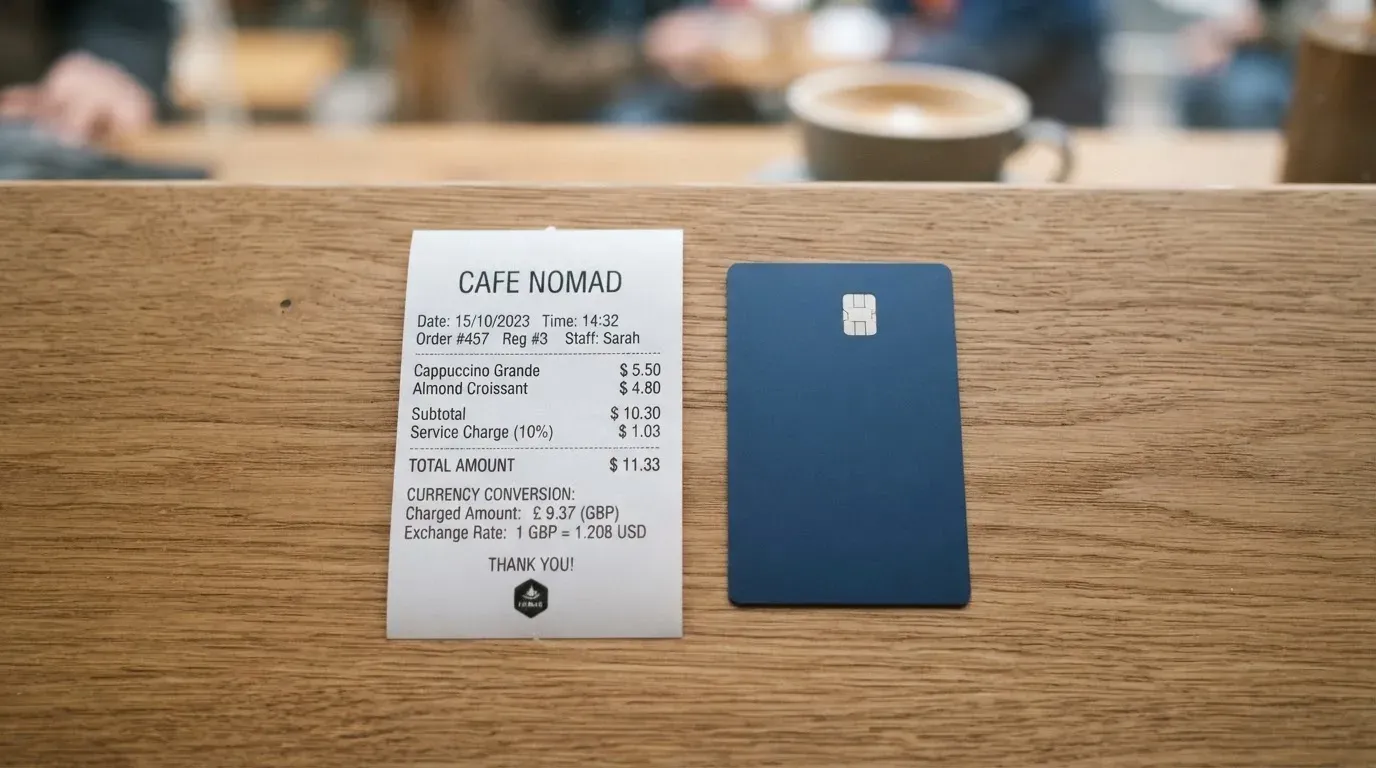
Let me price three ordinary payments at the listed rates, ignoring any WLM discount, and assuming the balance is funded and the conversion works as described. I am not estimating; I am applying the stated figures to show how they combine.
- A $20 grocery shop. The 0.4% successful-transaction fee is about $0.08, plus the flat $0.25 per transaction — call it roughly $0.33 on top of the $20.
- A $12 coffee. The 0.4% is about $0.05, plus $0.25 per transaction — again roughly $0.30 over the $12.
- A $75 online order. The 0.4% is $0.30, plus $0.25 — around $0.55 on $75.
Two observations. First, the flat $0.25 per transaction is what hurts small purchases: on a $12 coffee it is more than twice the size of the percentage fee. Second, and more importantly, none of these numbers include the 3% top-up fee. Every time you move crypto into the card, 3% comes off at the top. If you top up in small amounts to stay within limits, or top up often, that 3% can dominate everything else. Someone spending $12 per coffee is not paying a 0.4% problem; they are paying a 3%-on-every-top-up problem.
What the card does not tell you is just as important. There is no stated monthly fee, no ATM fee (though ATM limits exist), no stated card currency, and no tier structure. On-chain network fees for a deposit are also charged by the blockchain, not by Walme, so a top-up on a busy network can cost more than the card’s own numbers suggest. If you spend heavily in a non-dollar currency, the FX cost is also simply not stated here. The cost score of 3 out of 10 reflects that: several charges are disclosed, but the headline rate is a 0.4%-plus-flat arrangement that is uncompetitive next to many ordinary cards, and 3% to load is steep.
Top up: how the money gets in
Topping up is Walme’s best feature, and the reason its top-up score is 9 out of 10. You deposit crypto, and it is converted to fiat at the time of purchase, which is then loaded to spend. You can top up in USDT or USDC, on the TRC-20, ERC-20 and SOL networks. The WLM token is also usable. Third-party reporting (per stablecoininsider.org, November 2025) likewise describes USDT via TRC20 or ERC20.
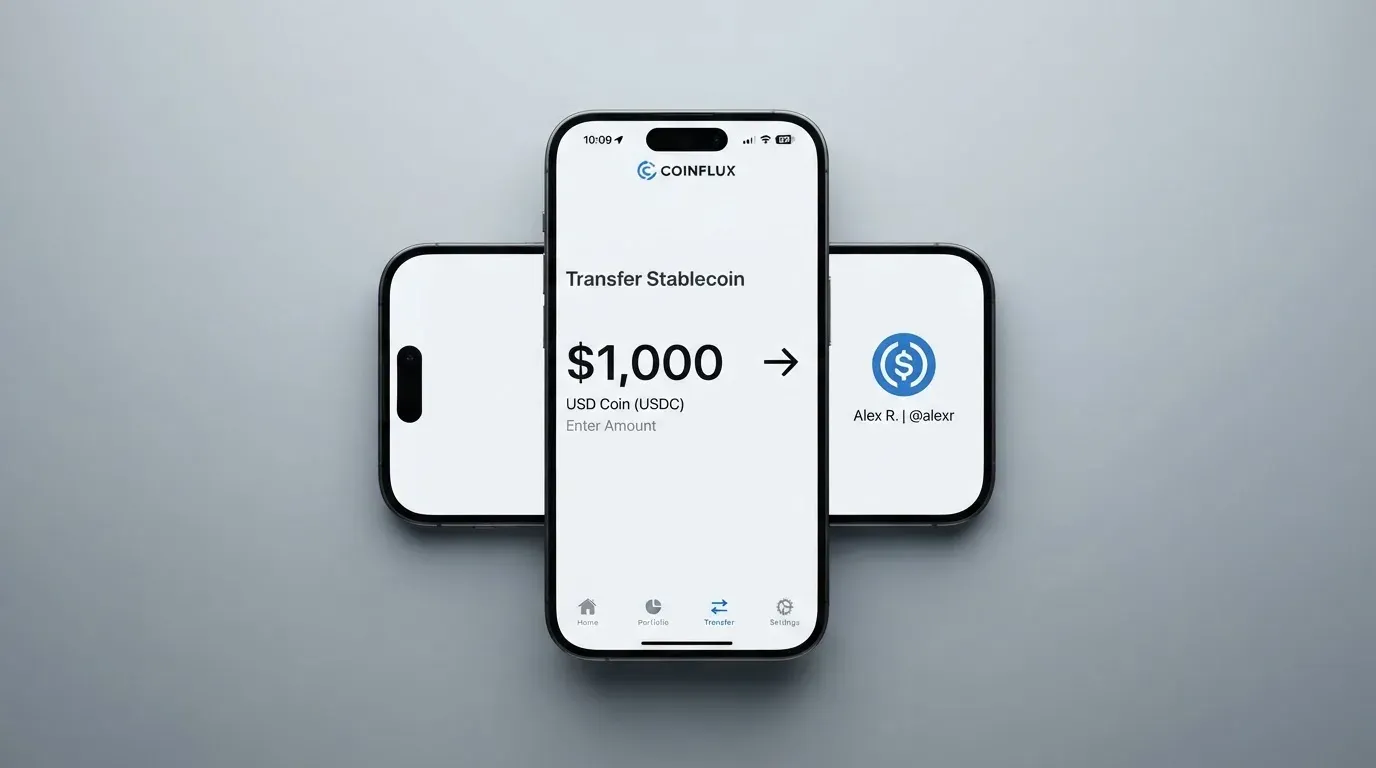
The minimum top-up is $30, and the top-up fee is 3%. There is no stated withdrawal method, so I cannot tell you how you would cash funds back out to a bank — that is a question to ask before you rely on the card as your only route to spend.
The network choice deserves a word of care. Depositing USDT or USDC on the wrong network, or to an address for a network the provider does not support, is a common way to lose money: blockchain transfers are essentially irreversible. Two stablecoin facts worth keeping in mind. USDC over TRC20 is not a native option, because Circle stopped supporting USDC on Tron in February 2024; and on ERC-20 networks the network fee is paid in the network’s own coin, so a wallet holding USDT but no ETH cannot send. Match the network to the token before you send. A stablecoin is designed to hold a stable value, but as the BIS put it, stablecoins are not necessarily stable, and both USDT and USDC have pegged and depegged in the past.
The web app is at app.walme.io. For how it feels to use day to day, see the next section.
Paying with it every day
Walme is a virtual card built for wallets. You can add it to Apple Pay and Google Pay; third-party reporting confirms both (per stablecoininsider.org, November 2025). Add it to your phone’s wallet once and then pay by tapping or by phone in the same way you would any other card, which is the everyday-use case it is designed for.
There are real limitations to plan around. There is no physical card, so anything that needs to be swiped, inserted, or handed over has to be handled through the phone. ATM details are not disclosed: ATM limits exist, but the card does not say how many or under what conditions, and I could not confirm whether cash withdrawal works well in practice. And the Android app is a gap — the Google Play listing is still marked “Coming Soon” and has no ratings yet. The web app at app.walme.io is the route in the meantime. On an Android-heavy or Android-only setup, that is a real inconvenience.
Two things are simply not stated: whether there are any rewards, and how disputes are handled (a chargeback process). For spending limits, see the fees table above — $10,000 per transaction and $500,000 per day, with no monthly limit, so the constraint is per transaction and per day rather than monthly.
In day-to-day terms, expect this to work well for online and contactless spending from a phone, and to be less useful for physical-card situations, cash, or Android. That mix is why everyday use scored 6 out of 10 rather than higher.
What can go wrong
Let me separate what the official pages say from what third parties say, because here the sources genuinely disagree and that itself is a risk.
The big one: Walme does not name the legal entity behind the card or the institution that issues it on its official pages. When you cannot see who holds your funds and who stands behind the card, your recourse if something goes wrong is unclear. That is the core of my reliability score of 5.
On security, the official pages say nothing. Third-party articles claim the card is non-custodial with 2FA and fraud monitoring, but Walme’s own GitHub page describes custodial wallets with KYC for cards. These two accounts contradict each other. Which is right matters a great deal: a custodial wallet means the provider holds the keys, so you must trust them with your funds; a self-custody card means the funds stay in your wallet until you pay, but you carry the risk of key loss and phishing. I am not resolving the contradiction here — I am flagging it as something you should pin down before you deposit anything meaningful.
History is a caution. Custodial platforms have failed badly: Mt. Gox (roughly $350 million reported stolen, 2011–2014), Coincheck (roughly $400 million in 2018) and Ronin Network ($625 million in 2022). Card programmes have been shut down too: Visa terminated FTX’s global agreements in November 2022, and WaveCrest’s Visa programmes were suspended in Europe in 2018. A closure typically means a notice period, then spending and loading stop, then you are asked to withdraw what remains. So hold only what you can afford to have stranded for a while.
There is no public complaint history to lean on, in either direction. I found no Trustpilot page for Walme, and a search for reviews on Trustpilot and Reddit returned none. That is not evidence of good service; for a card first presented in November 2025, it mostly means there is not yet a track record. On the positive side, there is a Help Center and a Contact page, though the channels, hours and languages are not stated. How disputes and chargebacks work is not stated either, so do not assume the refund rights you would have with a bank card.
In day-to-day use, expect the usual crypto-card frictions: some merchants decline prepaid or foreign-issued cards when they check the card’s issuing country; online payments may prompt 3-D Secure verification; and a declined payment can leave a hold on your funds for several days. Keep a little buffer above what you need to spend.
What to take instead
If you want a comparison, here are three other cards from the same category and how they line up against Walme on what I could check. All are young products too, and none is a substitute for a well-regulated mainstream card if you need certainty.
| Card | Score | Card type | Top-up | Notable |
|---|---|---|---|---|
| Walme | 5.8/10 | Virtual, valid 2 years | USDT/USDC on TRC-20, ERC-20, SOL; WLM | Top-up choice is the strong point; issuer not disclosed |
| Cardex | 5.6/10 | Debit crypto card on VERVE, VISA, Mastercard, UnionPay; virtual and physical | USDT, USDC, BTC wallets; networks not stated | One card, 200+ countries; Nira-focused app listing; cost not stated |
| CardFlow | 4.9/10 | Virtual USD Mastercard, created in about 3 minutes | Bitcoin, USDT, ETH, or Naira bank transfer | Free to create a virtual card; aimed at Nigeria; fees not stated |
| HyperCard | 4.7/10 | Prepaid; network not stated; balance in USD or EUR | USDT, BTC, ETH in the app; converted to USD/EUR | Accepted in 176+ countries; fees not stated |
How to read this. Cardex scores just below Walme and offers something Walme does not: a physical card, plus several networks. But its App Store listing is Naira-focused and its fees are not stated, so it is a swap of one unknown for another. CardFlow is the cheapest to start — creating a virtual card is free — but it is aimed at Nigeria and its fees are not stated. HyperCard is the simplest conceptually, converting deposits into USD or EUR, but again its fees are not stated and the network is unclear.
The honest takeaway from this comparison is that Walme has the best-documented top-up story of the four and a middling overall score, while the others trade its transparency for other strengths. None of these replaces a named, regulated incumbent if that is what you need.
Who I would recommend it to
I would recommend the Walme card, with care, to a specific kind of person: someone who already holds USDT or USDC, is comfortable picking a network and checking the card’s fine print themselves, primarily shops and pays online, and wants to top up in stablecoins across several chains. For that person, the flexibility is a genuine advantage and the no-documents virtual card is convenient.
I would steer others elsewhere or wait. If you need a physical card, plan to use ATMs, or are on Android and need a working app today, this is not ready for you. If you live somewhere the official pages do not confirm availability and the unofficial block list gives you pause, I would not build on it. And if you are putting meaningful money on it, do so only after you have pinned down the two contradictions I found — who the issuer is, and whether the wallets are custodial or self-custodial — and confirmed how a dispute or a withdrawal would work. Those are the questions I would want answered myself before I relied on it day to day.
Treat it as a promising early card rather than a proven one. Load lightly, check your facts, and keep it as one option among several.
Frequently asked questions
What is the Walme card?
Walme is a virtual payment card that lets you spend crypto. You sign up without documents, top up with stablecoins such as USDT or USDC, and the crypto is converted to fiat that you then spend, including through Apple Pay and Google Pay. It is virtual only, with no physical card described on the official pages, and it is valid for 2 years.
How does the Walme card work?
You top up the card with crypto, it is converted to a fiat balance, and you spend that balance like an ordinary card number in a phone wallet. Because it works from a stored balance rather than a bank account, it cannot overdraw. Payments go through the usual card network, so some merchants may treat it as prepaid or foreign-issued.
Is Walme a bank?
Not one that the official pages identify. Walme’s own pages do not name the legal entity behind the card or the institution that issues it, which is unusual and one of the main reasons I rated reliability at 5 out of 10. It looks more like a crypto brand managing a card programme than a bank, but the card’s own pages do not spell that out.
Does the Walme card require KYC?
No documents are required to sign up for the virtual card, according to the official pages. However, the KYC level beyond that initial no-documents start is not stated, so if you expect to hold larger balances, check in the app what further verification is offered. Identity checks, where they apply, are a legal requirement for regulated providers, not something to try to avoid.
Is the Walme card free?
No. Issuance costs $10, and there are several ongoing charges: 3% to top up, $0.25 per transaction, $0.25 per cancellation, and 0.4% per successful transaction. The minimum top-up is $30. Holders of the WLM token get reduced fees. There is no stated monthly fee.
What are the Walme card limits?
The card allows $10,000 per transaction and $500,000 per day, with no monthly limit. That means the practical constraints are the per-transaction and per-day caps rather than a monthly ceiling. ATM limits exist, but the specific numbers are not disclosed on the official pages.
How do I top up the Walme card?
Send USDT or USDC on the TRC-20, ERC-20 or Solana network; the WLM token is also usable. The minimum top-up is $30 and the top-up fee is 3%. Match the token to the network carefully — USDC over TRC20 is not natively supported, and ERC-20 transfers need the network’s own coin for gas — because wrong-network transfers are usually irreversible.
Is the Walme card safe?
That depends on questions the official pages do not answer. The issuer is not named, and third-party sources disagree on whether the wallets are custodial or non-custodial. A custodial setup means you trust the provider with your funds; a self-custody card puts key-loss and phishing risk on you. Load lightly, and confirm which model applies before relying on the card for large balances.
Can I use the Walme card in my country?
Unclear from the official pages, which say only that availability may vary by region. Unofficial reports indicate merchant transactions are blocked in countries including Belarus, Iran, Russia, Ukraine and Venezuela. Even if you can sign up, some merchants may decline a foreign-issued or prepaid card, so the safest route is to test a small payment where you live first.
Is there a Walme physical card?
Not that the official pages describe — Walme is a virtual card, valid 2 years, meant for use through a phone wallet. Delivery of any physical card is not stated. If you need something you can swipe or hand over, this is not it; the virtual-only design is one of the reasons everyday use scored 6 out of 10.
Virtual cards put to the test – cryptocardtested
Content created by the «cryptocardtested» team