
A Visa debit card funded by USDT and USDC, with a score of 7.6 out of 10
 Available in US
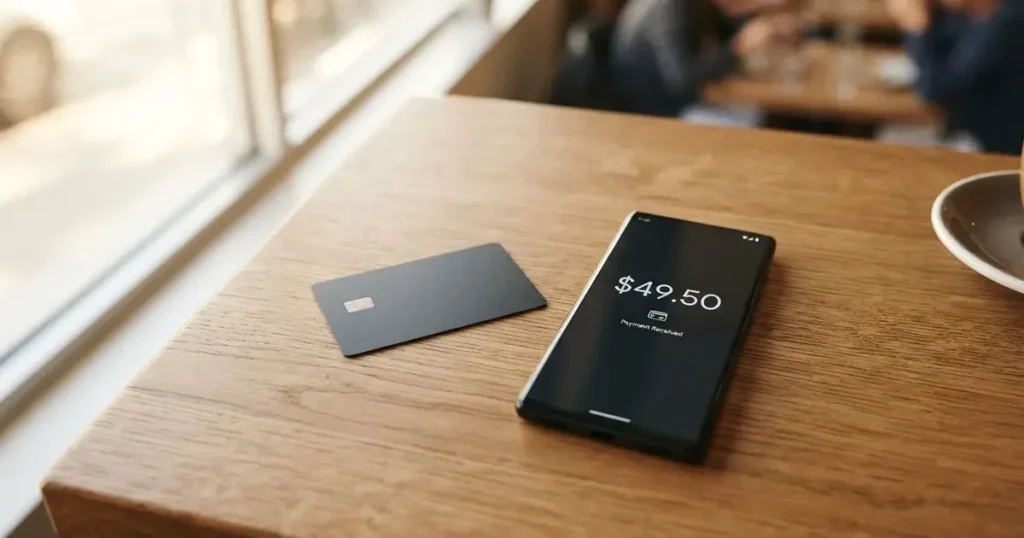
Winity Exclusive is a Visa card that lives on top of a crypto balance. You send USDT, USDC or one of six other tokens to a partner custody wallet, the provider converts them to USD, and you spend the resulting balance anywhere Visa is taken. There is a virtual card for online use and a physical card for shops and ATMs, and the card runs on a Google Pay-ready setup that means most day-to-day spending is frictionless once it is loaded. The product sits in an awkward but useful middle ground: it is more accessible than a regular bank card if you have trouble opening a bank account, but it is also less feature-rich than the big crypto cards from the major exchanges, and a few of its real costs are not spelled out on the public page.
I spent time going through Winity’s public pages, the FAQ, the terms and what little independent feedback exists. The overall picture is positive but with caveats. I scored it 7.6 out of 10, which I will justify in detail in the verdict below. The short version: a wide-reaching card with a sensible fee structure for stablecoin users, but it is light on cashback, it is light on details about the issuer, and there is essentially no public track record to lean on yet.
The conditions described below are current as of October 28, 2026.
Verdict
The Winity Exclusive card earns 7.6 out of 10 in my review. That score reflects a product that does the basics well for a specific kind of user, without yet offering the polish, the rewards or the public reputation of a more established card.
| Criterion | Score | Why it matters |
|---|---|---|
| Who can get it | 9 / 10 | Available in 187+ countries per the FAQ and 180+ per the site footer, with restricted territories excluded but not listed. Among the widest reach of any crypto card I have looked at. |
| Cost | 7 / 10 | USD 20 per year for the physical card, with the first six months waived on new activations. USDT and USDC top-ups are 0%, other assets carry a 5% conversion fee. A USD 0.10 minimum spend fee on transactions under USD 25 adds up over time. Virtual card issuance cost and FX are not disclosed. |
| Top-up options | 9 / 10 | USDT and USDC at 0% across six networks, plus ETH, SOL, POL, TRX, WCO and BNB at 5%. Six networks: Ethereum, Solana, Tron, Polygon, BNB Chain and W Chain. A USD 25 minimum balance is required. |
| Reliability and complaints | 5 / 10 | The company behind the card is Winity Life, with WTY Technology Hong Kong Limited as a related entity. The card programme itself is run by unnamed licensed partners, and the provider is at pains to say it is “not a bank.” Trustpilot shows a single 5-star review, which is not enough to judge reliability. |
| Everyday use | 8 / 10 | A virtual and a physical Visa, both denominated in USD. The virtual card is Google Pay ready, so phone payments work out of the box. ATM withdrawals on the physical card cost USD 3 each. Apple Pay is not mentioned anywhere. |
| Total | 7.6 / 10 | A clean, focused product for spending USDT or USDC with a virtual and physical Visa. It is not the cheapest or the most rewarding card on the market, but it is one of the most widely available. |
Who it suits: anyone who holds USDT or USDC and wants a Visa they can spend from a crypto balance, especially if you live in a country where getting a regular bank card is difficult or if you simply want a clean separation between your crypto and your daily spending. The 187-country reach is unusually wide.
Who it does not suit: anyone who wants cashback, anyone who wants Apple Pay, anyone who wants to fund the card from a bank transfer in fiat, and anyone who is uncomfortable with a card whose issuer and licence details are not stated in public.
Will they give you the card
The Winity Exclusive card is positioned as one of the more accessible crypto cards on the market, and the eligibility page reflects that.
The provider states “187+ countries” in the FAQ and “180+” in the site footer, which suggests the precise number fluctuates or that one of those figures is rounded. The card programme excludes a number of restricted countries, but the public list of excluded territories is not published, so you only find out whether your country is on it once you try to sign up. The terms speak about residence in a supported non-restricted country rather than citizenship, which is the friendlier of the two policies for travellers and expats, but it does mean that holding a passport of an excluded country while living elsewhere could still cause problems at the KYC stage. This is something to check by contacting support before you upload documents if your situation is unusual.
Age is set at 18 or over. Identification is by passport, driving licence or national ID, and proof of address is not stated as a requirement, which keeps the application lighter than many bank accounts. KYC usually completes within minutes, with a manual review window of one to two business days for harder cases. The card is only issued after KYC succeeds, so you cannot pre-load the card and then find out you are not eligible.
There are no public KYC tiers to climb. Either you are approved at the standard level, or you are not. Rejection reasons are not stated, which means you may not get useful feedback if your application is turned down. If you travel or hold dual citizenship, be ready to explain the country of residence you actually use, and consider emailing [email protected] before you submit documents if you suspect your profile is on a borderline.
How to get it
Signing up is a four-step process that runs through the Winity app on iOS or Android, which is the only way to actually apply.
The first step is the standard account creation: an email address and a password. The second is the identity check, where you upload a passport, driving licence or national ID. Most accounts clear in minutes, and the rest go into a one-to-two-business-day manual review. The third step is virtual card issuance: the Exclusive Virtual card appears in the app once KYC is approved, and you can add it to Google Pay straight away.
The fourth step is the physical card, which is the part where the rules tighten up. Free physical issuance is described as “limited” on the public page, and to qualify you need to spend at least USD 25 on the virtual card first. The annual fee for the physical card is USD 20, with the first six months waived on new activations, so the effective cost in year one is between USD 10 and USD 20 depending on when in the billing cycle you activated. Shipping charges may apply, but the countries, the delivery time and the replacement cost are not stated, so ask support before you commit if any of those matter to you.
One thing worth knowing: if you activate the virtual card and do not load it with at least USD 25 within 14 days, the virtual card is deactivated. That is a small but real footgun, and it is the kind of detail you only find by reading the terms carefully.
Fees: what it really costs
The fee structure is the part of Winity Exclusive that I find genuinely interesting, because it treats USDT and USDC as the “default” asset class and everything else as an exception. That maps well onto how most crypto users actually hold their funds, but it also means a few everyday costs are not stated.
| Fee or limit | Amount |
|---|---|
| Physical card annual fee | USD 20 (first 6 months waived on new activations) |
| Virtual card issuance | Not stated |
| USDT or USDC top-up | 0% |
| Other assets top-up (ETH, SOL, POL, TRX, WCO, BNB) | 5% |
| Minimum spend fee | USD 0.10 on transactions under USD 25 |
| FX fee | Not stated |
| ATM withdrawal | USD 3 (physical card only) |
| ATM PIN change | USD 5 |
| Statement request | USD 5 |
| Chargeback fee | USD 100 |
| Minimum balance for card transactions | USD 25 |
| Daily and monthly limits | Not published; vary by user, tier and jurisdiction |
The clearest cost is the 0% conversion for USDT and USDC. If those are the only tokens you ever top up with, the spread between your stablecoin balance and your USD card balance is zero, and the only fees you pay are the on-chain gas fees for the transfer itself (which go to the network, not to Winity). At the other end, the 5% fee for non-stable assets is a meaningful haircut, and it puts Winity at the expensive end of the crypto card market for anyone who wants to spend ETH or SOL directly.
The two costs that irritated me most are the ones the public page leaves blank. There is no published figure for virtual card issuance, and there is no published figure for FX. The card is denominated in USD, which means a UK cardholder buying coffee in pounds or a Brazilian cardholder buying lunch in reais will be converted at the Visa rate with an unspecified mark-up. For someone who travels, that is the most important fee to clarify before you rely on the card abroad. Email support and ask, and do not be surprised if the answer is “depends on the rate at the time.”
A few everyday scenarios make the cost picture concrete:
A USD 10 coffee paid in USD with USDT funding. The conversion is 0%, the minimum spend fee kicks in because the transaction is under USD 25, so you pay USD 0.10 in fees plus whatever gas you spent funding the card. Net cost: roughly USD 0.10 plus gas.
A USD 60 grocery shop paid in USD with USDT funding. The conversion is 0%, the transaction is over USD 25 so the minimum spend fee does not apply, and there is no other spend fee stated. Net cost: roughly the gas you spent funding the card.
A USD 80 dinner paid in EUR while travelling, funded from USDT. The conversion from USDT to USD is 0%, but the conversion from USD to EUR is via Visa, and the FX fee is not stated. Net cost: at least the on-chain gas for funding, plus an unknown FX mark-up.
A USD 200 ATM withdrawal abroad. The card charges USD 3 for the withdrawal, and the issuing bank or ATM operator may charge its own fee on top. The FX fee applies, again at an undisclosed rate.
Top up: how to fund the card
Topping up the Winity Exclusive card is a crypto-only process. There is no bank transfer option and no card-to-card funding, so if you do not already hold crypto on a supported network, the card is not useful to you.
The supported tokens split cleanly into two tiers. USDT and USDC are the cheap option, with 0% conversion fees. ETH, SOL, POL (Polygon), TRX, WCO and BNB are the more expensive option, with 5% conversion fees. The 0%/5% split is the kind of pricing that nudges you towards stablecoins, which is the right financial advice anyway, but it is worth noting that the 5% fee is high enough to make a casual top-up of ETH a poor decision.
The supported networks are Ethereum, Solana, Tron, Polygon, BNB Chain and W Chain. That is a sensible set: the major EVM chains plus Solana plus Tron, where USDT does most of its volume, plus Winity’s own W Chain. Circle stopped supporting USDC on Tron in February 2024, so the “USDC on Tron” combination is not a native option, and you should check the deposit screen carefully to see which network is actually being requested for USDC.
Mechanically, you send the tokens from your own wallet to a deposit address inside the Winity app. The provider converts the tokens to USD in a partner custody wallet before the funds become available on the card, which means there is a short settlement window during which the tokens are not yet spendable. The on-chain gas fee for the transfer is paid by you, and it varies wildly by network: cheap on Solana and Polygon, expensive on Ethereum at busy times. Choosing the right network for a top-up can easily save you more money than the conversion fee would have cost.
The USD 25 minimum balance rule applies in two ways. You need at least USD 25 on the card balance for it to work at all, and the virtual card is deactivated if you do not load at least USD 25 within 14 days of activation. Once the card is in steady use, the minimum balance rule mostly just means you cannot run the balance down to zero and then make a small purchase. The card also deactivates if the balance is allowed to drop below USD 25 and stay there, which is a small operational gotcha.
There is no fiat top-up, no card-to-card transfer, and no way to withdraw back to crypto through the app. The only cash-out path is an ATM withdrawal on the physical card, which costs USD 3 per transaction. If you top up with USDT and want to cash out to dollars, you pay 0% to convert to USD on the card, then USD 3 to take it out at an ATM. The refund path is narrow: only the most recent deposit can be reviewed, you have to request it immediately, and you cannot have used the card at all in the meantime.
Paying with it every day
Once the card is funded, everyday spending is mostly the experience of using a regular prepaid Visa. The Winity Exclusive line comes in three tiers: Exclusive Virtual, Exclusive Physical and Executive Metal. The virtual card is the entry point and is the one that is Google Pay ready, which is the big convenience win for anyone who taps their phone to pay. Apple Pay is not mentioned anywhere in the public materials, and that is a meaningful gap for iPhone users who would prefer not to type in a card number for online purchases.
The physical card works in shops and at Visa ATMs in 180+ countries. ATM withdrawals cost USD 3 each and PIN changes cost USD 5. Free ATM allowance is not stated, so do not assume you get a certain number of free withdrawals per month.
There is no cashback on the Winity Exclusive card. The rewards programme runs on Winity Points, with 1 point per USD 10 spent on eligible purchases at the Exclusive tier, and a redemption portal that is described as “coming soon.” The Executive tier is described as having a faster earn rate and extras like a concierge and a 24/7 relationship manager, but the precise earn rate is not specified. Loyalty levels (Silver, Gold, Platinum) kick in at USD 5,000+ of spend. Some of the partner perks are interesting: the Umi mobile data allowance, for example, gives Exclusive cardholders 1 GB after USD 5,000 of spend and Executive cardholders 3 GB per year, which is a small but real benefit if you would otherwise pay for data.
For online shopping, the card supports 3-D Secure with biometrics-based authentication rather than a one-time passcode, which is the modern, smoother version of the flow. You can freeze the card instantly in the app, and the physical card has a PIN. Biometric login for the app itself is optional. There is no published list of blocked merchant categories, so the usual gambling, adult content and other categories that many issuers block may or may not apply — if a specific category matters to you, ask.
For disputes, the process is to report the transaction to support and block the card, after which Winity reviews the case and escalates to Visa if appropriate. There is a USD 100 chargeback fee, which is high enough that you should only raise a chargeback for serious disputes. Winity’s decisions are described as “final and binding,” and cases that remain unresolved after 60 days go to arbitration. There is no guaranteed recovery; the outcome depends on the merits.
One operational note: declined authorisations can leave a hold on the funds on a Visa card for up to several days (typically seven), and that hold can briefly reduce your available balance. This is normal card-network behaviour and not a Winity-specific issue, but it can look like the card has eaten your money if you do not know to expect it.
What can go wrong
Crypto cards carry category-level risks that Winity cannot fully remove, and they layer on top of the risks specific to this product. The honest answer is that the public information available about Winity is too thin to call any of these risks certain; they are possibilities you should be aware of.
The company is not a bank and the issuer is unnamed. Winity Life and WTY Technology Hong Kong Limited are listed as the corporate entities behind the card, but no registration number is given in the public materials. Winity describes itself as a technology provider and programme manager, explicitly “not a bank.” The cards themselves are issued by unnamed licensed partners, and the services are issued in Hong Kong. Hong Kong law governs, and disputes go to Hong Kong International Arbitration Centre arbitration. For a European user, that is a more cumbersome legal backdrop than a card issued under an EU e-money licence would be, and it is worth factoring in.
Custodial wallet risk. When you top up the Winity card, the tokens sit in a partner custody wallet before being converted to USD. That means the tokens are exposed to the custody provider’s solvency and security for the duration of the settlement window, and the converted USD sits in the card programme’s balance, not under your direct control. The history of crypto custodians includes Mt. Gox (around USD 350 million reported stolen 2011–2014), Coincheck (around USD 400 million in 2018) and the Ronin Network bridge hack (USD 625 million in 2022). None of those failures involved Winity’s partners, but they are the reason the category-level risk exists. The provider does not state that funds are safeguarded in the way an EU e-money institution would safeguard them, and that absence is a real gap.
No public track record. The Trustpilot profile for winity.life shows a TrustScore of 3.7 (with stars labelled 3.5) from a single 5-star review dated 26 December 2025. There are no complaint themes because there is essentially no data. That makes it impossible to judge real-world reliability from independent feedback, and it means you are taking the product on faith. The Trustpilot profile is claimed from October 2025, so the product itself is recent.
Stablecoins are not risk-free. USDT and USDC are pegged to the US dollar, but “stablecoin” does not mean “risk-free.” USDC temporarily lost its peg in March 2023 during the US banking crisis, and TerraUSD collapsed in May 2022. Tether and Circle both publish reserve attestations, but Tether’s reserves have historically been a subject of debate and Circle’s USDC backing is mostly short-dated US Treasuries held in money market funds. A depeg event, even a short one, would mean your 0% top-up buys you fewer dollars than you expected.
Network and sanctions risk. Tether has frozen USDT in wallets on the OFAC sanctions list, so stablecoins are not censorship-proof at the issuer level. Circle stopped supporting USDC on Tron in February 2024, which is a reminder that network support is not guaranteed forever. If you send a deposit on a network Winity does not support, or to an address of a different network, the transfer is irreversible and recovery requires manual support with no guarantee.
Programme-closure risk. A card programme can be wound down by Visa or Mastercard, by the issuer, or by the programme manager. WaveCrest was suspended by Visa in Europe in 2018, closing every WaveCrest-issued Visa programme overnight, and Visa terminated its global agreements with FTX in November 2022 with the FTX US debit card being wound down by its issuer. If a Winity partner loses its Visa licence, the card could be stopped on short notice. The standard pattern is a notice period, then spending and loading are stopped, then a window to withdraw your balance, but the timing and the practicality of withdrawal depend on the circumstances.
Sanctions and KYC risk. The card operates in 187+ countries but excludes restricted ones, and KYC is mandatory. If your country of residence changes, or if you travel to a sanctioned jurisdiction, or if a transaction triggers an automated review, the card can be frozen pending documentation. Rejection reasons are not published, so resolving a freeze can take time and may end in account closure.
Support responsiveness. Support is reachable at [email protected], in the in-app Support tab, and 24/7 member service is claimed for members, with email replies typically within 24 hours. None of that is independently verified.
None of these risks are unique to Winity. They are the standard risk profile of any crypto-funded card, and Winity is more transparent about some of them than many of its competitors. The thing I would want to see before committing significant funds is more disclosure about the issuing partner and the safeguarding arrangements.
What to take instead
If the Winity Exclusive does not quite fit, the three alternatives below are the closest matches in the same general category of crypto-funded debit cards. I have included their public scores so you can see how they compare on the basic dimensions.
| Card | Score | Strengths | Limitations |
|---|---|---|---|
| Winity Exclusive | 7.6 / 10 | 187+ countries, USDT/USDC at 0%, virtual + physical Visa, Google Pay ready | Unnamed issuer, no cashback, no Apple Pay, 5% on non-stables, FX not stated |
| Cardex | 5.6 / 10 | One crypto card, 200+ countries, multi-network (VERVE, VISA, Mastercard, UnionPay), “AI-powered” conversion rate | Card currency is Naira per the App Store listing, fees not stated, no cashback |
| CardFlow | 4.9 / 10 | Free virtual USD Mastercard, created in about 3 minutes, Bitcoin/USDT/ETH or Naira bank funding | Aimed at Nigeria, country list not stated, fees not stated, no cashback |
| HyperCard | 4.7 / 10 | Prepaid USD or EUR balance, 176+ country acceptance, deposit crypto in app | Eligibility list not published, fees not stated, no cashback, network not specified |
Cardex is the most direct alternative if your priority is the broadest country reach. It claims 200+ countries and supports four card networks including Visa, Mastercard, UnionPay and VERVE, which is unusual. The card currency on the App Store listing is Naira, and the “AI-powered conversion rate” is a marketing phrase rather than a published fee. There is no cashback and no published fee schedule. If you are in a market where VERVE or UnionPay acceptance is more useful than Visa, Cardex is worth a look; otherwise, the missing fee detail is a problem.
CardFlow is the simplest of the alternatives. A free virtual USD Mastercard that you can create in 3 minutes, fundable with Bitcoin, USDT, ETH or a Naira bank transfer. It is aimed at the Nigerian market but claims to serve “Nigerians and global users.” Fees are not stated, and there is no cashback. The strength is the speed of the setup and the Naira on-ramp for Nigerian users.
HyperCard is a prepaid card with a USD or EUR balance, deposit-funded by crypto such as USDT, BTC or ETH. The App Store page says the card works in 176+ countries (which is an acceptance figure, not an eligibility figure), and the public pages do not publish a country list. Fees are not stated, and there is no cashback. The card is best for users who want a USD or EUR balance without the stablecoin-fee focus of Winity.
There are also larger alternatives outside this trio. Mainstream crypto cards from major exchanges tend to offer cashback, more published fee detail and a longer public track record, usually at the cost of more demanding KYC and a shorter list of supported countries. If you can get one of those and Winity’s wider country list is not essential to you, the bigger products may be a better fit.
Who I would recommend it to
After going through the card, the public terms and the alternatives, here is how I would actually frame the choice.
I would recommend the Winity Exclusive card to someone who already holds USDT or USDC, who wants a Visa to spend from that balance without paying a conversion spread, and who lives in a country where the card is supported. The 0% top-up fee on USDT and USDC is the real selling point, and the 187-country reach is meaningful for anyone who has been told “no” by a bank. The Google Pay support on the virtual card is a quality-of-life win, and the USD 25 minimum spend fee is a manageable cost if you mostly use the card for purchases over USD 25.
I would not recommend it to someone who wants cashback, who lives in an Apple Pay household, who plans to fund the card primarily from non-stable tokens (the 5% conversion fee is steep), or who needs to top up from a bank account in fiat. The unnamed issuing partner and the absence of published FX and virtual-issuance fees are the things that would give me pause before putting a large balance on the card.
The honest summary is that this is a focused, well-priced stablecoin-spending card with a real niche, light on rewards and on public track record, and best suited to a user who is already comfortable with the custody and depeg risks of holding USDT or USDC.
Frequently asked questions
What is the Winity Exclusive card?
The Winity Exclusive is a Visa debit card linked to a crypto balance. You send USDT, USDC or one of six other tokens to a partner custody wallet, the tokens are converted to USD, and you spend the resulting balance anywhere Visa is taken, either through a virtual card (Google Pay ready) or a physical card (shops and ATMs).
How does the Winity Exclusive card work?
The card works on a “pre-loaded balance” model: you top up the card with crypto, the provider converts the crypto to USD in a partner custody wallet, and the card spends only that USD balance. The card cannot overdraw, and the balance is held by the card programme rather than by you directly.
Is Winity Exclusive a bank?
No. Winity describes itself as a technology provider and programme manager and explicitly states it is “not a bank.” The cards are issued by unnamed licensed partners, and the services are issued in Hong Kong. The company behind the card is Winity Life, with WTY Technology Hong Kong Limited as a related entity.
Who owns Winity Exclusive?
Winity Exclusive is operated by Winity Life, with WTY Technology Hong Kong Limited as a related technology entity. Neither a company registration number nor a named individual owner is published in the public materials, which is a transparency gap compared to EU-licensed e-money institutions.
Is the Winity Exclusive card available in my country?
The card is described as available in 187+ countries (FAQ) or 180+ countries (footer), with restricted countries excluded but not listed. The terms refer to residence in a supported non-restricted country rather than to citizenship. The only way to confirm eligibility is to start the sign-up and see whether your country is on the supported list at the KYC stage.
How do I get the Winity Exclusive card?
You download the Winity app for iOS or Android, create an account, complete KYC with a passport, driving licence or national ID (usually minutes, with manual review of one to two business days for harder cases), and the virtual card is issued once KYC is approved. The physical card requires at least USD 25 of spend on the virtual card and carries a USD 20 annual fee (first six months waived on new activations).
Does the Winity Exclusive card require KYC?
Yes. KYC is mandatory, and the card is only issued after KYC succeeds. The documents accepted are passport, driving licence or national ID. Age 18 or over is required. Proof of address is not stated as a requirement.
How do I top up the Winity Exclusive card?
You send USDT, USDC, ETH, SOL, POL, TRX, WCO or BNB from your own crypto wallet to a deposit address inside the Winity app, on one of the supported networks (Ethereum, Solana, Tron, Polygon, BNB Chain or W Chain). USDT and USDC convert at 0%, the others at 5%, and you pay the on-chain gas fee for the transfer. The minimum balance for card transactions is USD 25.
How do I withdraw money from the Winity Exclusive card?
The only cash-out path is an ATM withdrawal on the physical card, at a Visa ATM in 180+ countries, costing USD 3 per withdrawal. Crypto withdrawals are not supported in the app, and the refund path is limited to reviewing the most recent deposit if you have not used the card since.
Is the Winity Exclusive card safe?
The card uses standard safeguards: 3-D Secure with biometric authentication, instant freeze in the app, PIN on the physical card, and optional biometric login. The custody risk is the standard category risk for crypto-funded cards: tokens are held in a partner custody wallet before conversion, and the converted balance is held by the card programme rather than by you. Public safeguarding arrangements are not stated, the issuing partner is unnamed, and the independent review base is a single 5-star Trustpilot review, so the public track record is too thin to call.
Virtual cards put to the test – cryptocardtested
Content created by the «cryptocardtested» team