
Ezzocard Review: A Prepaid Virtual Card With Unstated Costs and Troubling Complaints
 Available in US
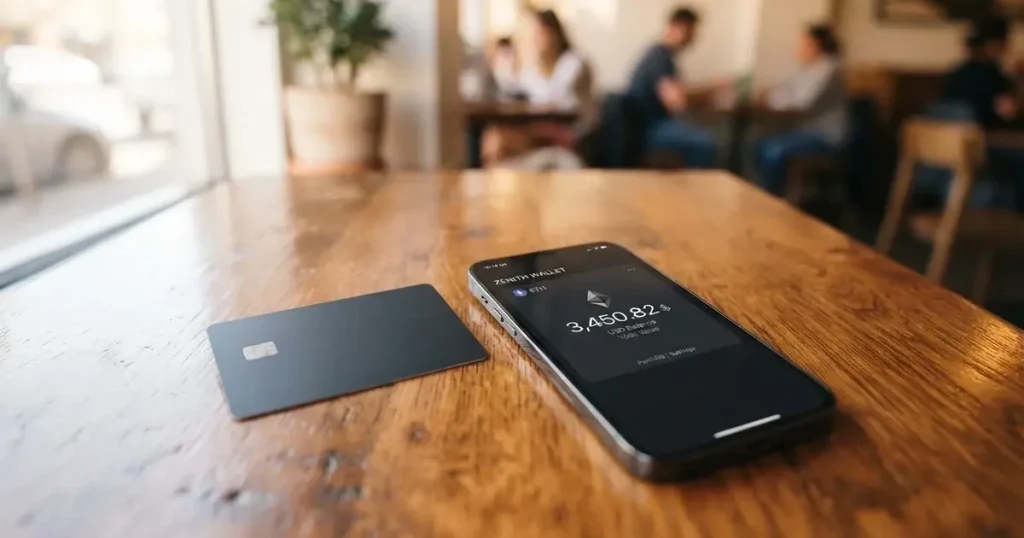
If you are weighing Ezzocard against a dozen similar crypto cards, you are probably trying to answer one question: can I rely on this card with money I actually care about? My answer, after reading everything the card publishes and what its users report, is cautious. Ezzocard is a virtual prepaid card that converts crypto into spendable balance — useful for one-off online payments where an ordinary bank card is awkward or unavailable. But the card does not disclose its costs, its limits, or even who stands behind it, and the review record is poor. It scores 5.3 out of 10 in my assessment. That is not a card I would hand a large balance to, though for a single $20 subscription while traveling, it may be the right tool.
The conditions described here are current as of October 28, 2026.
Verdict: Who This Card Suits
Let me give you the number first because you came for it: Ezzocard scores 5.3 out of 10. That is a middling grade, and it is a deliberate one. The idea behind the card is sound and genuinely useful in a narrow lane. The execution — the missing information, the complaint record — pulls it well below where a card you would trust with real money should sit.
Who is this card for? Someone who needs to make a one-off online payment, in crypto they already hold, without linking a bank account. Perhaps you are paying for a service that does not accept your country’s card, or you want to keep a subscription entirely separate from your everyday spending. A prepaid virtual card with a small, throwaway balance is a reasonable tool for that.
Who is it not for? Anyone planning to use it as a primary card, hold a meaningful balance on it, or rely on it for everyday spending. If you are asking whether you can trust it with savings or a month’s expenses, the answer from the facts is no: limits are not stated, fees are not stated, and the complaints include payments taken with no card delivered and refunds left hanging for months. Read on, and I will show you exactly what each section reveals.
| Criterion | Score | Why |
|---|---|---|
| Who can get it | 8 / 10 | The site is hard to read, but a search summary says cards can be bought “from anywhere in the world” — the most inclusive picture of any card here. |
| Cost | 5 / 10 | Issuance and fees are not disclosed; the site was returning an empty page when checked. |
| Top-up options | 7 / 10 | Crypto is accepted at payment: Bitcoin, Ethereum, USDT, Dogecoin, Litecoin, Tron, Solana, BNB; cards are prepaid and non-reloadable; networks are not named. |
| Reliability and complaints | 2 / 10 | Owner, registration and issuer not found; Trustpilot 2.5 from 368 reviews citing payment without a card, declined cards, a site that was down, and copycat domains in 2025. |
| Everyday use | 4 / 10 | Virtual prepaid Visa or Mastercard, single-use and reloadable per a third-party summary; Apple Pay, Google Pay and ATM access are not disclosed. |
| Total | 5.3 / 10 | A narrow, workable idea wrapped in missing information and a poor reliability record. |
Read that top-up row again, because it contains a contradiction you need to understand before anything else. The card’s starting data says cards are prepaid and cannot be reloaded with crypto. Yet a third-party summary (Ahrefs, unofficial and not confirmed by the card) describes both single-use and reloadable virtual card options. These two pictures do not agree. That ambiguity about whether you can add money later is a theme running through this whole review.
Will They Give You the Card?
Here is the most straightforward part of the story, and it is also the part I trust least — because it is a single sentence. No page of the Ezzocard site that could be read says the cards can be bought “from anywhere in the world.” That is the entire stated eligibility rule. There is no country list. There is no statement about which nations are excluded. There is nothing about what happens if you live in a sanctioned country, or if your citizenship differs from where you are paying from. I want to be honest with you about what this means: an open claim like this sounds generous, but it also means almost every restriction is left for you to discover at the moment you try. If you are in a jurisdiction with tight crypto rules, you cannot learn from this card’s pages whether you are welcome. You would only find out by attempting to register.
This is a card that, on paper, asks nothing about where you are. Whether that openness is a feature or a warning sign depends on what you compare it to — and as you will see in the alternatives, most cards say the same vague thing.
How to Get It
The signup story is short, and that brevity is itself the finding. The site states that no verification is required at card registration — neither an ID nor other documents. That is the card’s own claim, and it is unusual; most regulated cards in this category verify identity (more on why that is normal below). But look at the tension: one Trustpilot reviewer, in September 2025, reports that ID verification blocked their use of a card. In other words, the site promises no documents, and a user experienced a document wall anyway. Which of those you will meet is genuinely unpredictable from the outside.
What you get is a virtual prepaid card, usable on sites that accept Mastercard or Visa prepaid cards. A third-party summary (Ahrefs — unofficial, not confirmed by the card) says there are single-use and reloadable options. The card’s currency is not stated. The verification level required is not stated.
There is no physical card. This is virtual only — you receive card details and spend with them online. Delivery, in other words, means the numbers appear in your account. One consequence worth noting from the complaint record: a reviewer reports a card that had not arrived 1.5 days after payment (March 2023, user report). For a virtual product “arrival” means the details showing up in your account, and the gap between paying and being able to use the card is one of the practical things to watch.
Fees and Other Costs: What You Are Not Told
I want to lead with the blunt version: on the pages I could read, the costs are not disclosed. The card’s cost is not stated. The fees are not stated. ATM fees are not stated. Daily and monthly limits are not stated. Any tiers are not stated. The card currency is not stated — though one Trustpilot review mentions a “$25 CAD” card (June 2026, user report), which hints at a Canadian-dollar product without confirming it.

This matters more for Ezzocard than for a normal card, and I will explain why shortly. But first, the table, because when a card publishes nothing you should at least know precisely what the empty cells are.
| Fee or limit | What the card publishes |
|---|---|
| Issuance | not stated |
| Monthly fee | not stated |
| Conversion (crypto to balance) | not stated |
| Foreign-exchange fee | not stated |
| ATM fee | not stated |
| Daily spending limit | not stated |
| Monthly spending limit | not stated |
| Card currency | not stated (one review mentions “$25 CAD”, June 2026, user report) |
Now let me walk you through three everyday payments, and tell you which fees I can and cannot account for. This is the honest way to price a card that publishes no prices: you cannot total the cost, but you can see exactly where the unknown charges would land.
Paying a subscription in dollars. You load crypto, the card converts it to a balance, and the subscription renews monthly. What applies: the conversion rate the card uses — not stated — and any recurring monthly fee — not stated. You have no way to estimate the yearly cost of this subscription from anything the card tells you.
Paying a foreign online service. You are charged in a currency that is not your own. What applies: the foreign-exchange fee — not stated. This is the fee that quietly erodes balances, and on this card it is invisible to you. Some merchants simply decline foreign-issued prepaid cards outright, so this payment may not even go through.
Withdrawing cash at an ATM. What applies: the ATM fee — not stated — and any per-transaction or daily limit — not stated. I want to add a caution here, not about this card specifically but about cards in general: crypto cards frequently do not offer ATM access at all, and this card’s pages say nothing either way. Assume nothing works until you have read otherwise.
Why does the missing price information matter more here than elsewhere? Because of how these cards work. A card number begins with an issuer identification number that tells a shop which institution and country issued it. Merchants can look that up, and if the issuer country differs from the billing address you typed, the merchant may apply extra scrutiny or decline the payment. On a card that publishes no fees and no country, you are flying blind on both the cost side and the acceptance side.
Top up: Getting Balance Onto the Card
The funding model is where this card is clearest, and also where the ambiguity from earlier returns. At checkout the card accepts crypto: Bitcoin, Ethereum, USDT, Dogecoin, Litecoin, Tron, Solana and BNB are all named. That is a generous coin list — the best top-up score of any card in this comparison, and it is why this section is not a total write-off.
But the critical detail is in the next sentence: the cards are prepaid and cannot be reloaded with crypto. So the model is one-shot. You buy a card, fund it at purchase, and spend it down. Any top-up after the fact is not stated. Withdrawing is also not stated. In practice this means you are choosing your balance up front, once, with no ability to add more, and if you misjudge the amount you are choosing between a too-small balance or a too-large one you cannot easily move.
The networks are not named, and with crypto that is not a small omission. Here is why. Blockchain transfers are irreversible. If you send a deposit on a network the provider does not support, or to an address belonging to a different network, the funds can be lost or require manual recovery with no guarantee. There are also per-network mechanics you need to know: on Ethereum (ERC-20), fees — gas — are paid only in ETH, so a wallet holding USDT but no ETH literally cannot send. Tron prices fees through bandwidth and energy, often burning TRX. And the choice of stablecoin matters: USDT has been issued on Ethereum, Tron, Solana, Polygon, Avalanche and others, while USDC is natively supported on 38 networks but has not been on Tron since Circle stopped support in February 2024. So “send USDT” is not a complete instruction — it is the beginning of a set of choices you must get right, on a card that will not tell you which one it expects.
One more caution about stablecoins generally, because you will be choosing among them: they aim to hold a steady value, but “despite the name, stablecoins are not necessarily stable.” TerraUSD collapsed in May 2022; USDC temporarily lost its peg in March 2023. Tether also states it disables tokens in wallets on the OFAC sanctions list and has frozen funds tied to illicit activity, so these tokens are not censorship-proof. And note the network fee point from earlier: on-chain gas for your deposit is charged by the blockchain, not by the card, so that cost is real but it is not a card fee and will not appear in any card total.
Paying With It Every Day
“Every day” is the honest test, and Ezzocard is built for something narrower. The card is virtual and prepaid, good for sites that accept Visa or Mastercard prepaid cards. That is the whole everyday-use story the facts support. Apple Pay and Google Pay support are not disclosed. Wallets are not stated. Rewards are not stated. There is no app — no app was found. Disputes and chargeback handling are not stated.
Take those gaps seriously, because “not disclosed” for this card has repeatedly meant “does not work well.” But there is one everyday-use detail worth flagging because it is genuinely useful context, even though it comes from complaints: several reviewers report their cards were declined by PayPal and by eSIM providers (August 2023 and August 2025). PayPal is one of the most common places people try to put a prepaid card. The pattern across reviews is cards declined from 2022 through 2026, which tells you this is not a one-off glitch but a persistent acceptance problem.
For transparency: virtual cards work with tokenised mobile wallets in general — Apple Pay replaces the card number with a device-specific number stored in the phone’s Secure Element and uses a one-time security code per payment. But whether Ezzocard’s numbers can be added to Apple Pay or Google Pay is exactly what this card does not tell us. You would have to test it yourself.
What Can Go Wrong
This is where I have the most to say, because the risk section is not speculation — it is documented patterns. I found no official incident announcement from the card. What I found is a long list of user reports on Trustpilot (rating 2.5 out of 5 from 368 reviews, read 21 October 2026), and I am listing these because collectively they describe how the failure modes of this card look in practice. These are user reports, not verified company findings:
- Payment taken but no card delivered (March 2023, and again July 2026).
- Cards declined by PayPal and by eSIM providers (August 2023, August 2025).
- Refunds delayed or left unanswered, from September to December 2025; reviewers report refund requests pending 12 to 54 days (September 2025, user report).
- The site was offline, and copycat (“lookalike”) domains appeared, in August to November 2025.
- Requests for extra fees after an “ezzo gift card” transfer (May to June 2026).
That last cluster deserves a pause. Lookalike domains and requests for extra fees after a gift-card transfer are the pattern of impersonation fraud, and reviewers claim a move to a new domain (September to November 2025, user report). Trustpilot itself warns that the profile is unclaimed and the company “may be associated with high-risk investments.” I am not accusing the operator of anything — I am telling you that strangers impersonating a service is a real risk in this space, and it is one more reason never to keep a large balance here and never to act on a “pay a fee to unlock your card” message.
Two structural risks sit underneath the specific complaints.
The first is that I could not find the company behind it. The provider is named in the starting data as Ezzocard.Finance (formerly the Ezzocard site), but the owner, its registration and its issuer were not found. Support is by email; company replies are visible on some reviews, but most 2025–2026 negative reviews show no reply at all, and language support is not stated. When the legal entity behind your money cannot be identified, you have no one to complain to. Security safeguards are not stated, either.
The second is that a card programme can simply close. This is not a scare tactic — it is what has happened in this category. Visa terminated its global agreements with FTX on 13 November 2022, and the FTX US debit card was wound down by its issuer. WaveCrest, a Visa issuer that supplied crypto card brands, was suspended by Visa in Europe in 2018, closing all its Visa programmes. When a programme winds down, the pattern is a notice period, then spending and loading stop, then users are asked to withdraw remaining balances. A 2026 closure reported by a single unconfirmed secondary source shows the shape: new loads ended 8 July 2026 and spending stopped 8 August 2026. I cite that one source only as a shape, not as verified fact.
What to Take Instead
If Ezzocard’s missing information bothers you — and I hope this review has shown you exactly why it should — the alternatives below are the cards I compared it against. None is perfect, and I want to be fair: every one of them has gaps too. But each discloses something Ezzocard does not, and that difference is the whole point of this comparison.
| Ezzocard | Cardex | CardFlow | HyperCard | |
|---|---|---|---|---|
| Score | 5.3 / 10 | 5.6 / 10 | 4.9 / 10 | 4.7 / 10 |
| Who can get it | “from anywhere in the world” (per search summary) | “One crypto card, 200+ countries”; no country list | Aimed at Nigeria (“Nigeria’s smartest fintech card platform”) and global users | App Store says it works in “more than 176 countries” (acceptance, not eligibility) |
| Card | Virtual prepaid Visa or Mastercard | Debit crypto card on VERVE, Visa, Mastercard, UnionPay; virtual and physical; currency Naira per listing | Virtual USD Mastercard, created in about 3 minutes | Prepaid; balance in USD or EUR |
| Cost | not stated | not stated | “Creating a virtual card is completely free” | not stated |
| Fees | not stated | Real-time crypto-to-fiat conversion at payment; an “AI-Powered Conversion Rate” is claimed; no percentage stated | not stated | not stated |
| Top-up | Crypto at checkout; prepaid, non-reloadable; networks not stated | USDT, USDC and BTC wallets; networks not stated | Bitcoin, USDT, ETH or Naira bank transfer | Crypto such as USDT, BTC, ETH, converted to USD or EUR; networks not stated |
Two contrasts stand out. Cardex scores slightly higher and at least names its card networks and its funding coins. CardFlow, despite the lower score, is the only one that states a price for anything: creating a virtual card is free. HyperCard is the least transparent on fees and network, and its “176 countries” figure describes where the card is accepted, not who can get one — a distinction the Ezzocard search summary blurs too.
What none of these cards fixes is the underlying category risk. Every one of them, Ezzocard included, sits somewhere in a chain where the card network (Visa or Mastercard) routes the payment, a licensed bank or e-money institution actually issues it, and the crypto brand is often only a front end and programme manager. That layering is why “who issued this?” is such a hard question for every card here — including the ones above.
Who I Would Recommend It To
I would recommend Ezzocard to exactly one kind of person: someone who already holds crypto, needs to make a small one-off online payment, and can afford to treat the balance as spent in advance. If you can accept that the fee might be higher than you expect (because it is not published), that a reload may not be possible (because it is prepaid), and that you may need to raise a chargeback yourself if something goes wrong (because support is unresponsive and the legal entity is unknown) — then the card does its one job.
I would not recommend it to you if any of these are true: you plan to keep more than a small amount on it; you need a card you can draw cash from; you depend on Apple Pay or Google Pay; you need someone to answer an email when a payment is wrong; or you are making payments regularly enough that an undisclosed conversion fee becomes a real cost. For those cases, Cardex or CardFlow disclose more and are the more sensible starting points.
The general lesson, which applies to any card in this category and not just this one: before you load any balance, the two questions worth asking are “who issued this card, under whose licence?” and “what does a payment cost?” A card that cannot answer either is not a card to entrust with money you would miss. On today’s evidence, Ezzocard answers neither.
Frequently asked questions
What is the Ezzocard card?
Ezzocard is a virtual prepaid payment card that you fund with cryptocurrency and spend like an ordinary Visa or Mastercard online. You buy it, load it at checkout with crypto, and it converts that into a spendable balance. The cards are prepaid and, according to the card’s starting data, cannot be reloaded with crypto. It exists mainly for one-off online payments, not everyday banking.
How does the Ezzocard card work?
You choose a card, pay for it in cryptocurrency — Bitcoin, Ethereum, USDT, Dogecoin, Litecoin, Tron, Solana or BNB are all accepted at checkout — and the value is converted into a card balance. You then use the virtual card details at sites that accept prepaid Visa or Mastercard. Because the balance is loaded up front and is not reloadable, the card simply runs down as you spend; there is no overdraft because there is no credit line behind it.
Is Ezzocard a bank?
No — the card’s own pages do not present it as a bank. The provider is named in the starting data as Ezzocard.Finance, formerly the Ezzocard site. I could not find the owner, the registration details or the licensed issuer behind the card programme. That is an important distinction: a card that spends a prepaid balance is a different thing from a bank account with deposit protection.
Does the Ezzocard card require KYC?
The site says no verification is needed at card registration — neither an ID nor other documents. But the picture is not clean: one Trustpilot reviewer, in September 2025, reports that ID verification blocked their use of a card anyway. So the stated rule and one user’s experience disagree. Expect that you may be asked for documents at some point, and treat the “no KYC” line as unconfirmed in practice.
How much does the Ezzocard card cost?
I cannot tell you, and neither can the card. The issuance cost, the monthly fee, the conversion fee, the foreign-exchange fee, the ATM fee and the spending limits are all not stated on the pages that could be read, and the site was returning an empty page when checked. One reviewer mentions a “$25 CAD” card (June 2026), but that is a single user report and not a published price. Ask the operator directly before you commit any money.
How do I top up the Ezzocard card?
You do it once, at purchase, in cryptocurrency — the accepted coins are Bitcoin, Ethereum, USDT, Dogecoin, Litecoin, Tron, Solana and BNB. The cards are prepaid and non-reloadable, so topping up again is not something the card supports. The networks are not stated either, which matters because a transfer sent on the wrong network can be lost, since blockchain transfers are irreversible.
Can I use the Ezzocard card in my country?
The only guidance is a search summary saying cards can be bought “from anywhere in the world” — the site itself says nothing readable about eligibility, and there is no country list or exclusion list. That claim also describes purchase availability rather than where the card will be accepted at a shop. Some merchants decline prepaid or foreign-issued cards, so acceptance in your country is a separate question you should test with a small payment first.
Is the Ezzocard card safe and is it reliable?
Reliability is where this card is weakest. Its Trustpilot rating is 2.5 out of 5 from 368 reviews, with recurring reports of payment taken but no card delivered, cards declined, refunds delayed for weeks, the site being offline, and lookalike domains appearing in 2025. The legal entity behind the card could not be identified, and most recent negative reviews show no reply. Treat any message asking you to pay an extra fee to “unlock” a card as suspicious.
Is the Ezzocard card free, and is it worth it?
There is no free offer that the card publishes — its cost is not stated at all, so I would not assume free. Whether it is worth it depends entirely on your use: for a single small online payment it is a workable, disposable tool, but for regular spending the undisclosed conversion and foreign-exchange fees could add up invisibly, and there is no clear support or chargeback process if a payment goes wrong. Compare Cardex or CardFlow, which disclose more, before committing.
How do I delete my Ezzocard account?
I could not find instructions for closing an Ezzocard account on the pages I could read, and the support channel is email with no stated response time — many 2025–2026 negative reviews show no reply at all. If you hold a balance, do not simply abandon the account: ask the operator in writing how to withdraw any remaining funds and how to close the account, and keep a copy of that request. Given the reported refund delays, written confirmation is worth more than an in-app tap.
Virtual cards put to the test – cryptocardtested
Content created by the «cryptocardtested» team