
A zero-fee virtual Visa that spends your USDC — with a support record that gives me pause
 Available in US
The VaultLeap card is a virtual Visa debit card that spends money you have already loaded onto the platform, in USDC, with no monthly fee, no per-purchase fee and no foreign transaction charge on its face. On paper that is one of the cleaner offers in the crypto card category. In practice there are three things I would want you to look at before you trust it with your balance: the card is issued under U.S. law and is described as not directly marketed outside the United States, you can only spend money you have manually moved onto the card, and the Trustpilot record I read on 21 October 2026 sits at 3.4 out of 5 from 34 reviews, with accounts suspended without explanation the most common theme among those complaints.
The conditions described here are current as of October 28, 2026.
VaultLeap suits readers who are residents of the United States or Latin America, or of Ghana, who already hold USDC and mainly pay online. It does not suit readers who want cash from an ATM, who want a plastic card in the post, who want to top up in anything other than USDC, or who cannot afford to lose access to their money for a few weeks while a support ticket is answered.
My verdict: 6.0 out of 10
The score is not a statement about whether VaultLeap is honest or dishonest. It is a weighted reading of what the card actually does, what it charges, how reliably it does it, and what people who use it say. On costs it is unusually strong. On reliability, on the narrowness of the top-up route, and on everyday practicality it is middling. A middling set of middling scores gives 6.0 out of 10.
| Criterion | Mark | Why |
|---|---|---|
| Who can get it | 5 / 10 | Advertised for 27 countries — the United States, Latin America and Ghana — but the cardholder agreement says it is issued under U.S. law and “not directly marketed outside the U.S.” |
| Cost | 9 / 10 | $0 per month, $0 per year, $0 per purchase, free closure, 0% international fee, no FX markup; conversion still carries about 0.5% partner pass-through, and the issuance fee is not stated |
| Top-up options | 5 / 10 | Manual USDC only, from your VaultLeap balance via Dashboard, Card, Add Funds; other coins and networks are not stated, and you pay the gas |
| Reliability and complaints | 5 / 10 | Lead Bank issues, Bridge Ventures LLC manages the programme; Trustpilot 3.4 from 34 reviews, with reports of account blocks in 2026 and funds not being credited |
| Everyday use | 5 / 10 | A virtual Visa issued in minutes, Apple Pay and Google Pay supported; no plastic card and no ATM access |
| Total | 6.0 / 10 | Free to hold and free to spend, but narrow on funding and unproven on support |
Let me take those one at a time, because the reasons behind the numbers matter more than the numbers.
The cost mark is the strongest single thing about this card. A $0 monthly fee, a $0 annual fee, $0 per purchase, free closure and a stated 0% international transaction fee with no currency markup is genuinely unusual. The catch is the word “about” in the 0.5% partner pass-through on conversion, and the fact that the issuance fee is not disclosed anywhere in the public material I read. Neither is fatal, but both are the kind of thing you want to see in writing before you commit.
The top-up mark is low, and I think it deserves to be. The only documented route is moving USDC manually from your VaultLeap account balance to the card wallet. That means: you have USDC first, you press a sequence of buttons yourself, and you pay the blockchain’s gas fee each time. No card funding by bank transfer, no card funding by card, no automatic balance sweep from a linked wallet. A card that only spends what you push into it by hand is closer to a prepaid voucher than to a bank card.
The reliability mark is low because of the record, not because of anything official. I found no official incident announcement. What I did find, on Trustpilot and as user reports rather than confirmed facts, were accounts suspended or blocked without a clear reason in January 2026 and across June to August 2026, funds that were not credited or not returned in October 2025 and June 2026, and communication that people found unclear. On 12 October 2026 a reviewer acknowledged problems with card issuance. Thirty-four reviews is a small sample, and small samples swing. But a card is a tool you depend on when something goes wrong, and the pattern of “my account disappeared and nobody told me why” is exactly the pattern that makes a card untrustworthy.
Who should look elsewhere
- You need cash from an ATM. Withdrawals and balance inquiries are listed as “n/a”.
- You want a physical card. There is no plastic; replacement of the virtual card is free, but that is not the same thing.
- You want to fund in BTC, ETH, USDT or anything other than USDC. Other coins and networks are not stated.
- You live somewhere outside the stated 27 countries, or you are outside the United States, Latin America and Ghana and worried about the “not directly marketed outside the U.S.” line.
- You are nervous about handing control of your identity documents to a small platform with a 34-review Trustpilot page.
Will they give you the card?
Short answer: probably, if you are in the right place and prepared to verify your identity — but the cardmaker’s own paperwork contains a line that should stop you before you apply if you are not in the United States.
VaultLeap advertises the card for 27 countries. The starting data on the site names the United States, Latin America and Ghana, and within Latin America it lists Argentina, Colombia, Mexico, Brazil, Peru, Bolivia, Guatemala, Dominican Republic, Ecuador, Costa Rica, El Salvador, Honduras, Panama, Paraguay and Uruguay. The full 27-country list is not published on the page, so if you are counting countries, know that two of the three regions above may contain more than the ones named.
The important detail is in the cardholder agreement rather than the marketing page. The card is issued under U.S. law, and the agreement says the product is “not directly marketed outside the U.S.” That is a statement about how they market, not a guarantee that you will be refused if you live in Bogotá or Accra — the marketing clearly does address Latin America and Ghana. But it does mean that if your address is outside the United States, you are applying to a U.S. issuer for a product its own terms say it does not market abroad. If your income, your documents and your banking life are all outside the U.S., that mismatch is worth weighing before you upload anything.
You must be at or above the age of majority. Identity verification is required, and the card is requested from the dashboard “once your account is verified”. Which documents you need and whether you must supply proof of address: the card’s public pages do not say. That is a real gap. If you are in a country where documents are not in Latin script, or where your address format confuses automated checks, you are the person who will discover the requirements the hard way.
One more thing the public pages do not say: whether there are verification tiers, and what triggers an upgrade or a review. Nobody in the public material describes a two-tier or three-tier path where higher balances unlock better limits.
How to get it
The application is short, because the card is virtual and there is no plastic to post. You are 18 or over, you complete identity verification, and once your account is verified you request the card from the dashboard. The card’s legal description is “Prepaid Debit Visa Card”, it is issued in minutes, and it is a USD card.
What “issued in minutes” means is worth being precise about, because it is easy to over-read. You receive card credentials quickly. You do not receive an unlimited, unblocked card. Issuance is instant; usability is decided later by the issuer’s risk systems, and the complaints I read in §Reliability and complaints are largely about what happened after issuance.
Replacement is free — the card’s own words are “There is no fee for replacing your Card”. That is genuinely useful if your card details are compromised or you freeze the card by accident. It is not the same as a physical replacement arriving.
There is no activation ritual described beyond verification and request. If you are used to a phone call, an app-based activation code or a first chip transaction, do not wait for one; the design here is dashboard-first. Anything you type into search about “how to activate VaultLeap card” will probably lead you to a page about verifying your account instead.
Fees: what a payment really costs
The headline numbers are unusually good, and then there is a layer underneath them that you should understand before you assume a purchase is free.
| Fee or limit | What the card states |
|---|---|
| Monthly fee | $0 |
| Annual fee | $0 |
| Per purchase | $0 |
| Account closure | Free |
| International transaction fee | 0% |
| Currency markup | None — “No FX markup” |
| Conversion | Carries about 0.5% partner pass-through fees |
| Issuance fee | Not stated |
| ATM withdrawals and balance inquiries | “n/a” — unavailable |
| Maximum per-transaction load | $2,000.00 |
| Other limits | May be set by the bank |
Two entries in that table do most of the work. The first is the conversion line: the card charges you nothing for converting, but the partners in the chain take about 0.5% in partner pass-through fees. A $200 purchase means about $1 in fees. Over a year of ordinary spending that is money, and it is not something the “free card” framing prepares you for.
The second is the $2,000.00 per-transaction load cap. That is the ceiling on a single top-up, not on your balance, so it will not stop you holding more — but it does mean large purchases need the balance already in place, and it means you cannot fix a problem with one large transfer.
Let me run three everyday payments through that table.
A $30 subscription in your home currency. You are subscribed to something that bills in euros. The card is a USD card, so the Visa network rate applies for a foreign purchase, and the card states no FX markup. What you do get is the about 0.5% conversion pass-through. On $30 that is roughly fifteen cents, plus whatever your subscription itself charges for foreign billing. You pay no card fee: no monthly, no per-purchase, no international fee.
A $12 lunch paid online. This is the cleanest case. Domestic, in USD, funded from an already-loaded balance. No monthly fee, no per-purchase fee, no conversion if the balance is already in the currency the merchant wants. This is the payment the card is genuinely good at.
A $180 online purchase from a merchant that declines prepaid or foreign BINs. Here you pay nothing extra in fees, but the payment may simply fail. A merchant can look at the first six or eight digits of your card number and see which institution and country issued it, and some merchants decline prepaid cards or foreign-issued cards on that basis alone. That is not a fee, but it is a cost, and it is the cost that makes the international 0% figure less impressive than it sounds.
If you hold an account rather than just the card, note that account plans are separate from the card: Standard, Pro at $14.99/month or $144/year, and a Zero tier for transfer fees. The card itself is a single product. You do not need Pro to hold the card, and I would not open a Pro plan expecting a better card — the card does not change tier.
How to Top up the card
There is one documented way in, and it is manual.
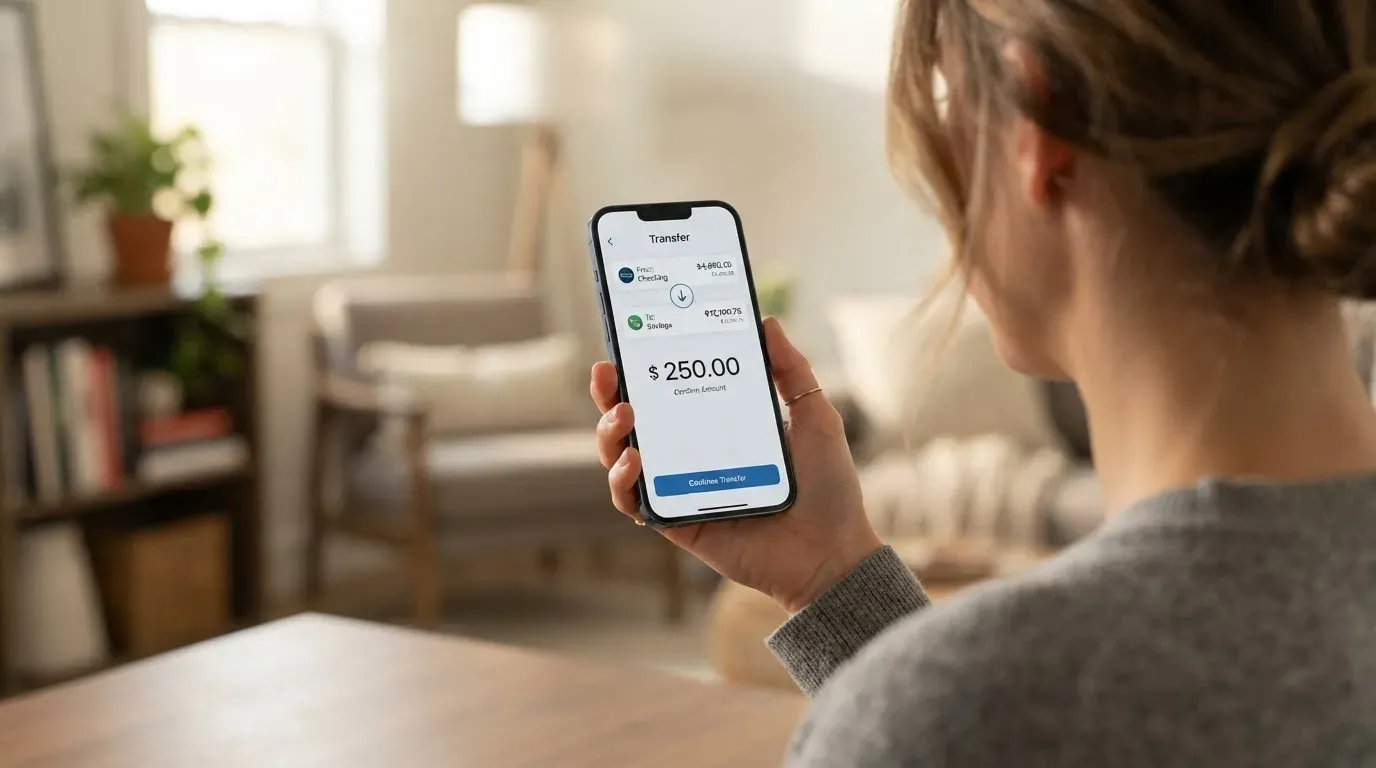
You hold USDC on your VaultLeap balance. You go to Dashboard, then Card, then Add Funds, and you move USDC into a card wallet powered by Bridge. That is the route. Other coins and other networks are not stated. The deposit fee and the minimum deposit are not stated. The blockchain fee for the transfer is yours — the network charges it, not VaultLeap.
For someone with USDC already sitting on the platform, this is workable and cheap. For everyone else, it is a hard stop. There is no stated route to add funds by bank transfer, and no stated automatic sweep from an external wallet. If your income arrives as dollars in a bank account and you would have to buy USDC first, then pay gas to move it, you are paying for two conversions to use a card that advertises no conversion fee. That is not a dealbreaker, but it is not “free” either.
Getting money back out works differently from getting money in. If you close the account, the remaining fiat balance goes to the platform wallet as stablecoins. The bank may refuse balances under $1.00. Separately, you can withdraw the account balance to any supported USD or EUR bank account.
One caution belongs here rather than in the risks section, because it is a mechanics problem rather than a trust problem: blockchain transfers are irreversible. If you send on a network the provider does not support, or to an address belonging to a different network, the money can be lost, or recoverable only through manual support work with no guarantee. Check the network before you confirm, every time.
Paying with it every day
Apple Pay: yes. Google Pay: yes. Both are supported, and adding a virtual card to a phone wallet is the single most useful thing about this card, because it is how you would realistically use it — tokenised, in an app, without handing a card number to a shop.
Which merchant categories are blocked: not stated. That is a bigger gap than it sounds. Gambling (MCC 7995), adult content, fuel, and gift cards are the categories that issuers commonly restrict, and the block list varies by issuer, so a card that is silent about it may be silent because nothing is blocked or because the page simply was not written. If you spend in any of those areas, you will find out by decline.
Rewards are not stated. No cashback is promised. The apps are on the App Store and Google Play.
Disputes, which matter more than rewards if something goes wrong, follow a stated path: Dashboard, Support, File a Ticket, Dispute a Charge. Report errors within 60 days. The bank decides within 10 business days, and may take up to 45 days — 90 days for a new card, for a point-of-sale transaction, or for a foreign transaction. Unauthorized transactions must be reported within 2 business days; liability is capped at $50 for the first two days and can rise to up to $500 later.
That structure is standard and reasonable. What is not stated anywhere in the public pages is prepaid-card coverage under U.S. consumer protection rules. Debit and credit card reversal rights come from Regulation E and Regulation Z respectively, and prepaid-card coverage varies. This card’s legal description contains the word “Prepaid”. Do not assume you have the same protection a debit card gives you until you have read the terms yourself.
What can go wrong
I want to separate two things here: what is official and what is user-reported. Only the second kind is uncertain, and I am labelling it.
Official and documented. The funds are not FDIC insured, and VaultLeap’s terms state that it “does not hold customer funds” — the platform describes itself around a self-custodial wallet model. You can freeze the card yourself in the app, at Dashboard, Card, Freeze. The issuer is Lead Bank, a Missouri state-chartered bank. The programme manager is Bridge Ventures LLC, a Delaware company licensed as a money transmitter. The operator of the VaultLeap brand is Klydo Inc., a California S Corporation. Support is available in English and Spanish, through email and the in-app Support tab. None of that is hidden, and none of it is disqualifying.
User-reported, not confirmed by the card. On Trustpilot, read on 21 October 2026, the page showed 3.4 out of 5 from 34 reviews. The recurring themes, all from users rather than from any official statement: accounts suspended or blocked without a clear reason, dated January 2026 and June to August 2026; funds not credited or not returned, from October 2025 and June 2026; and support communication people found unclear. A review dated 12 October 2026 acknowledged problems with card issuance. I found no official incident announcement, and none of these reports are verified. But if your fallback plan for “my card stopped working” is “open a ticket and hope”, that is the risk to price in.
Structural risks that are not anyone’s fault. Merchant declines: prepaid cards and foreign BINs are declined more often than mainstream cards, and a decline can also leave a hold on your funds for several days, typically up to seven. Address verification: AVS compares the numeric parts of your billing address against issuer records, is mainly a U.S., Canadian and UK mechanism, and is generally unavailable for foreign-issued cards — which can cause declines on addresses that are perfectly correct. Irreversibility: crypto transfers cannot be reversed, and stablecoins are not censorship-proof — Tether states that it disables tokens in wallets on the OFAC sanctions list and has frozen funds tied to illicit activity.
The regulatory floor. KYC is not optional here. In the U.S., the customer identification programme requires name, date of birth, address and an identification number, and electronic systems check proof-of-address documents against records. Nationality is recorded and screened separately from residence, because sanctions screening and issuer risk policy often apply to citizenship and country of birth as well as address. If due diligence cannot be completed, the institution is expected to refrain from the transaction or to end the relationship — which is the ordinary, lawful reason behind most of the “account closed, no explanation” complaints in this category. A closure is not automatically misconduct, and it is not automatically your fault either.
A word on stablecoins. VaultLeap spends USDC, and USDC is a stablecoin, which means it aims to hold a steady dollar value but, in the words of the BIS, “despite the name, stablecoins are not necessarily stable”. Circle says USDC is redeemable 1:1 for USD and 100% backed by cash and cash equivalents, mostly in a government money market fund, with monthly reserve attestations; it lists USDC as natively supported on 38 networks as of 16 September 2026. Stablecoins have depegged before. If the balance behind your card slips against the dollar, the card’s dollar value slips with it.
Tax. The IRS treats digital assets as property, so exchanging them for goods, services or dollars generally produces a taxable gain or loss, measured in local fiat currency at fair market value on the date of the transaction. For personal holdings held a year or less, that is a short-term gain. Each card payment funded from crypto may therefore be a separate taxable disposal. I am not giving you tax advice — I am telling you that this is a question to take to a professional in your own jurisdiction before you spend heavily through the card.
What to take instead
Three alternatives came up in my comparison, all with their own scores. Take them for what they are: a comparison, not a recommendation, and none of them a guarantee of anything.
International Visa Card — 6.7 out of 10. A U.S.-issued Platinum Visa, virtual, paying in USD, with a physical card “coming soon”. Issuance is $5 one-time with no maintenance fee; plans are Classic free, Pro $9.00/month, Max $19.00/month. Card use in USD is free on all plans, but foreign currency is charged at the “Visa exchange rate + 2% FX fee”. Deposits of any kind are free: USDC or USDT into the USD account, plus USD, EUR, SEPA, SWIFT and FedNow. No cashback stated. Its country rules are explicit in a way VaultLeap’s are not — not available to residents or legal registrants of Belarus, mainland China, North Korea, Cuba, India, Iraq, Iran, Israel, Myanmar, Nepal, Nicaragua, Russia, Syria, Turkey, Ukraine, Venezuela and Vietnam, with FATF grey-list countries reviewed case by case, and purchases blocked in North Korea, Cuba, Iran, Russia, Syria, Ukraine and Venezuela. The rule follows residence or registration; citizenship is not mentioned. Note the trade: a clear country list and a real deposit menu, against a 2% FX fee on every foreign purchase where VaultLeap states none.
| VaultLeap | International Visa Card | UNi Card | Whop Cards | |
|---|---|---|---|---|
| Score | 6.0 / 10 | 6.7 / 10 | 6.1 / 10 | 5.2 / 10 |
| Network | Visa | Visa (Platinum) | Mastercard | Visa |
| Card type | Virtual only | Virtual; physical “coming soon” | Physical/virtual not stated | Not stated |
| Currency | USD | USD | Multicurrency | Not stated |
| Annual fee | $0 | None | “No annual fee” | “No extra fees”; no amounts listed |
| Issuance fee | Not stated | $5 one-time | Not stated | Not stated |
| Foreign transaction fee | 0%, no FX markup | Visa rate + 2% FX fee | None stated | Not stated |
| Monthly plans | Standard, Pro $14.99/mo or $144/yr, Zero tier | Classic free, Pro $9.00/mo, Max $19.00/mo | Not stated | Not stated |
| Top-up | USDC, manual from balance | USDC, USDT, USD, EUR, SEPA, SWIFT, FedNow | Not stated | Whop balance |
| Rewards | Not stated | None stated | “Spend-to-Earn” up to 3% | 5% cashback at select merchants, currently Uber |
UNi Card — 6.1 out of 10. A multicurrency card on the Mastercard network spending from a UNi.Global account balance, with “no annual fee or foreign transaction fee”, assets converted at “live OTC (Over-the-Counter) rates” and “no hidden exchange fees”. It offers “Spend-to-Earn rewards” up to 3%. Its weakness in this comparison is silence: eligibility is not stated, and so are the funding route, whether the card is physical or virtual, and the issuance fee. If multicurrency is your priority, it is worth a look; if you need a documented answer about who can open an account, you will not get one here.
Whop Cards — 5.2 out of 10. A Visa that works anywhere Visa is accepted, spending from a Whop balance — a pending balance becomes usable as soon as a payment arrives, while standard withdrawals use settled funds. The balance is backed by stablecoin collateral from a linked wallet. Coins and networks are not stated. The page says “No extra fees” without listing amounts, no cashback is stated generally, but there is 5% cashback at select merchants, currently Uber, with more planned and the payout currency and conditions not stated. Its country coverage is the most detailed of the three: 31 U.S. states for consumers and 41 for businesses, with unsupported consumer countries including Belarus, mainland China, Cuba, Hong Kong, India, Iran, Iraq, Israel, Myanmar, Nepal, Nicaragua, North Korea, Russia, Syria, Turkey, Ukraine, Venezuela and Vietnam, and unsupported corporate countries including Russia and Belarus. Whether the basis is citizenship or residence is not stated.
| Alternative | Best for | Watch out for |
|---|---|---|
| International Visa Card | Readers who want a clear country list and many deposit rails | 2% FX fee on foreign purchases; physical card not yet available |
| UNi Card | Readers who want multicurrency and no stated FX fee | Eligibility, funding route and issuance fee all unstated |
| Whop Cards | US consumers in supported states who shop at earning merchants | No fee amounts, no conversion figures, spending tied to a platform balance |
Who I would recommend it to
I would recommend the VaultLeap card to a reader who already holds USDC, lives in the United States, Latin America or Ghana, pays mostly online, and treats the card as one of several payment tools rather than their only one. Someone in that position gets a genuinely free card — no monthly fee, no annual fee, no per-purchase fee, a stated 0% international charge and no currency markup — with Apple Pay and Google Pay, and gets it in minutes without waiting for plastic.
I would not recommend it as the card you depend on. Not because anything I found shows it is unsafe by design, but because the funding route is a manual USDC transfer you pay gas for, because there is no ATM and no plastic, because merchant-category blocks and prepaid-card consumer protections are both unstated, and because the user-reported record includes accounts blocked without clear explanation and funds not credited. If your income arrives as ordinary fiat and your fallback payment method is a bank card you control, VaultLeap is a reasonable second card. If it would be your first, it is a thin foundation.
Before you commit, check three things yourself, in this order: whether your country and your address appear in the 27-country marketing as a full published list; whether the issuance fee and the about 0.5% conversion pass-through are stated as you expect in the terms you are shown at signup; and whether you can live with funding the card by hand, in USDC, paying gas each time.
Frequently asked questions
What is the VaultLeap card?
The VaultLeap card is a virtual Visa debit card that spends money you have loaded onto the platform beforehand. Its legal description is a prepaid debit Visa card, it is issued in minutes, it holds and spends US dollars, and there is no physical plastic version. Funds are drawn from a stored balance rather than from a linked bank account, so it behaves more like a prepaid card than an ordinary debit card.
How does the VaultLeap card work?
You keep USDC on your VaultLeap balance, then move it manually from Dashboard to Card to Add Funds into a card wallet powered by Bridge. The card then spends that balance wherever Visa is accepted online, or through Apple Pay and Google Pay. Because the balance is pre-loaded, the card cannot overdraw it. You pay the blockchain’s own fee for each transfer in, and other coins and networks are not stated as supported.
Is VaultLeap a bank?
No. VaultLeap is operated by Klydo Inc., a California S Corporation, with Bridge Ventures LLC as programme manager, a Delaware company licensed as a money transmitter. The card itself is issued by Lead Bank, a Missouri state-chartered bank. So a real bank stands behind the card instrument, while the brand, the platform and the programme are separate companies — and the funds themselves are not FDIC insured.
Who owns VaultLeap?
Ownership sits with Klydo Inc., a California S Corporation that operates the VaultLeap brand. The programme manager is Bridge Ventures LLC, registered in Delaware and licensed as a money transmitter, and the issuing bank is Lead Bank in Missouri. None of these details are hidden, but they do mean three different legal entities stand behind the product you would be using.
Does the VaultLeap card require KYC?
Yes — identity verification is required, and the card can only be requested once your account is verified. You must be at or over the age of majority. Which documents you need and whether proof of address is required: the card’s public pages do not say, nor do they describe any verification tiers, so expect to find out during the application rather than beforehand.
Is the VaultLeap card free?
The fees it states are $0 monthly, $0 annual, $0 per purchase, free closure, 0% international transaction fee and no FX markup. Two caveats sit underneath: the issuance fee is not stated, and conversion carries about 0.5% in partner pass-through fees. Separately, the account has Standard, Pro at $14.99/month or $144/year, and Zero tiers — those are account plans, not card tiers.
How do I top up the VaultLeap card?
The only documented route is manual, in USDC, from your VaultLeap balance: Dashboard, then Card, then Add Funds. The deposit fee and minimum are not stated, and you pay the blockchain’s gas fee yourself. Bank transfer funding and automatic sweeps from an external wallet are not stated, and there is a $2,000.00 maximum per transaction load. Always check the network before confirming, since transfers are irreversible.
Where can I use the VaultLeap card?
Anywhere Visa is accepted online, plus Apple Pay and Google Pay on your phone. There is no ATM functionality at all — withdrawals and balance inquiries are listed as “n/a” — and no physical card. Merchants can decline prepaid or foreign-issued cards based on the issuing institution and country in the card’s first digits, so occasional declines are more likely than with a mainstream bank card.
Is the VaultLeap card safe?
There is no official incident I found, and the company states it does not hold customer funds, offers an in-app freeze, and is not FDIC insured. User-reported concerns on Trustpilot, read 21 October 2026, included accounts suspended without clear reason in 2026, funds not credited or refunded in October 2025 and June 2026, and unclear support. Treat that as reported experience from 34 reviews, not as confirmed fact, and as the main reason I hesitate to depend on it.
Is the VaultLeap card worth it?
For someone already holding USDC who pays online in the United States, Latin America or Ghana, the zero monthly and zero annual fee make it worth trying as a second card. For someone starting from a bank account, the manual USDC funding plus gas plus the roughly 0.5% conversion pass-through erodes the free-card advantage, and the lack of an ATM, plastic card or stated merchant-category rules makes it a thin sole card.
App and neobank cards put to the test – cryptocardtested
Content created by the «cryptocardtested» team