
Tangem Pay reviewed: a self-custody Visa paid in USDC, with costs worth reading twice
 Available in US

Tangem Pay is the payments arm of Tangem, the hardware-wallet maker best known for its NFC card-shaped cold wallets. The promise is unusual for a crypto card: you keep control of the USDC that funds it, the card is just a payment rail on top, and there is a free tier for anyone who only needs a virtual Visa. The reality, as you will see below, is more layered. The free tier is real, but several pieces of the offering are still being rolled out, the geographic list is narrower than the marketing suggests, and the everyday-cost picture depends heavily on which of the three plans you sit on.
This review is a personal, plain-English walk through what Tangem Pay actually offers today, what it costs in the cases you will run into most often, and where it makes sense over the alternatives. The information is current as of October 28, 2026.
Verdict
Tangem Pay earns 6.9 out of 10 in this review. That is a middle-of-the-pack score for a crypto card, and it reflects a specific trade-off: the card is genuinely cheap to obtain and to spend with on a basic plan, but the published pricing has gaps, several advertised features are not yet live, and the geographic reach is narrower than the headlines imply.
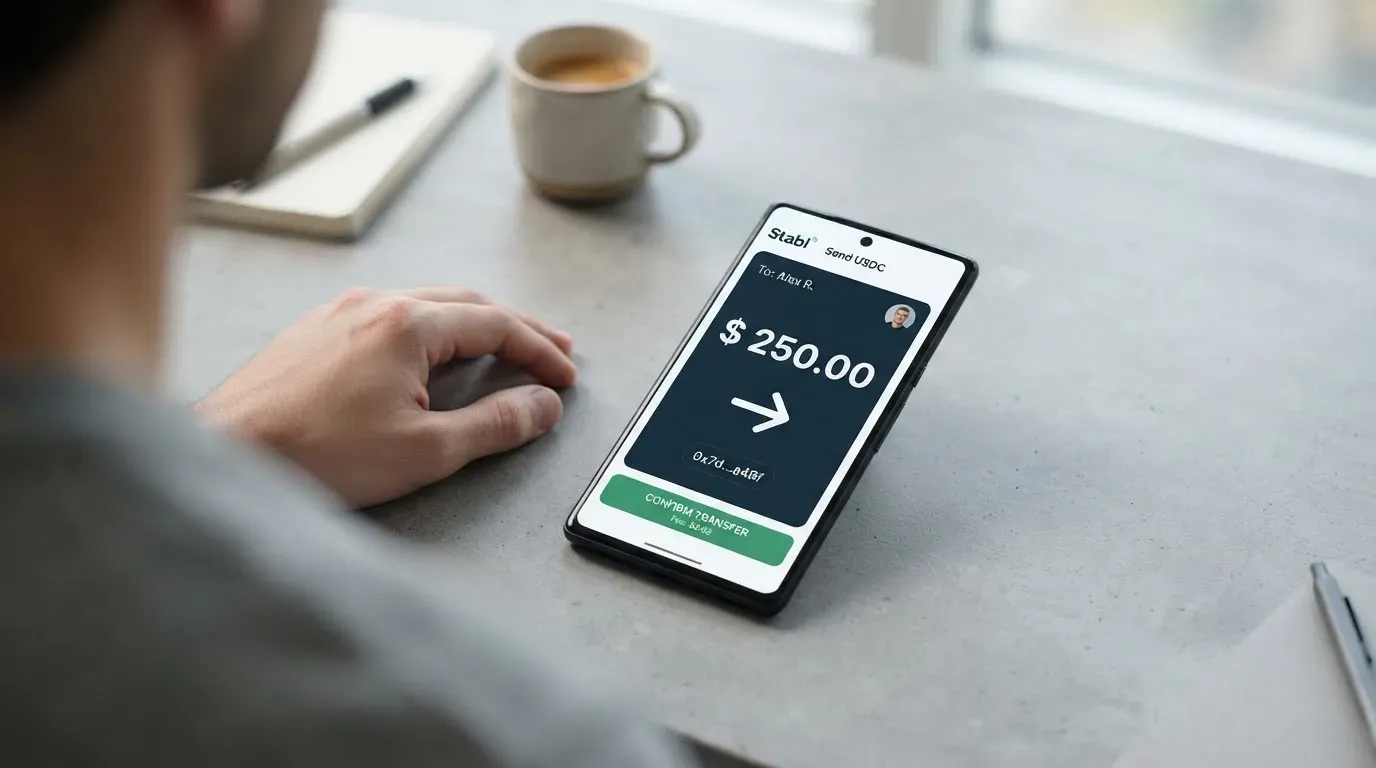
If you already own a Tangem hardware wallet, want a free virtual Visa, and live in a supported country, Tangem Pay is worth a serious look. If you want a physical card today, a metal card with rich travel insurance, or a programme that is fully live across the US, UK and the EU, you should keep reading and probably end up in the alternatives section.
Here is how the score breaks down by criterion:
| Criterion | Mark | Why it scores where it does |
|---|---|---|
| Who can get it | 7 / 10 | Available in the US (not all states) and selected countries across LATAM, APAC, MEA and Africa; the full country list is not published, and the UK plus EU are still on the roadmap for 2026 |
| Cost | 7 / 10 | Basic is $0 per month, Plus is $29.99 per month, and there is no per-transaction fee; the catch is a 1.5% FX markup on non-USD spending and an ATM fee that ranges from 1% to 4% depending on the plan |
| Top-up options | 6 / 10 | Native USDC on Polygon from any wallet, or an in-app swap; bank top-ups via ACH or FedWire exist but are not equally available everywhere |
| Reliability and complaints | 7 / 10 | Rain is the Visa programme manager and Third National issues the card, with Paera LLC running the service; Tangem itself is not regulated as a financial provider, and user reports mention declines at fuel pumps and KYC lockouts |
| Everyday use | 7 / 10 | A virtual card is available at the Basic tier, with Apple Pay and Google Pay through manual entry of the card details; ATM access and physical cards are uneven in practice, especially on the free plan |
The audience I have in mind as I write: a Tangem Wallet owner who wants a free virtual Visa to spend a stablecoin balance, and is happy to live inside a partly-rolled-out product in exchange for the lower fees and the self-custody angle.
Who they will give the card to
Tangem Pay is a residence-based product. The official site says eligibility is decided by your country and region of residence, and the precise list is shown in the app during onboarding rather than on a public web page. Outside of the US, where availability is confirmed, the card is offered in selected countries across Latin America, the Asia-Pacific region, the Middle East and Africa. The UK and EU are not live as of writing, with the operator stating they are planned for 2026.
A community-tracked unofficial list circulated by third parties in 2026 names around 31 countries as available, including Argentina, Australia, the Bahamas, Barbados, Brazil, Chile, Colombia, Costa Rica, Hong Kong, Japan, Mexico, New Zealand, the Philippines, Singapore, South Africa and the United Arab Emirates, and flags the UK, Andorra and EU member states as restricted. I would treat that as a working list, not a guarantee, because Tangem does not publish it and onboarding is the only place you see the truth.
The US picture is its own story: Tangem Pay is available across most of the country but not every state, and the operator has not published the exclusions. If you are in a US state where Tangem is not licensed for the Pay account, the onboarding flow will simply stop.
There is also a separate shipping exclusion that applies even to people who pass onboarding. Tangem has said its physical card shipping covers nearly 200 countries but excludes about 20, including China, Russia, North Korea and Palestine. In other words, you can hold a virtual card in a number of places where a plastic card will simply not arrive at your door. Citizenship is checked separately from residence, and dual citizens should expect a more careful review.
How to get it
You download the Tangem app (iOS 16.4+ or Android), confirm your country of residence, and complete an identity check. The official page describes it as an ID verification and eligibility check; Tangem’s coverage of the flow says it is run by Sumsub, a third-party KYC provider, and takes two minutes. The wallet check is unaffected: this is only for the Pay account.
The card itself is a Visa issued by Third National, with Rain managing the programme and Paera LLC operating it. Tangem AG, the company behind the well-known hardware wallet, is the brand and app maker. The card comes in three tiers: Basic (Visa Platinum), Plus (Visa Signature) and Prestige (Visa Infinite). Basic is a virtual card, with plastic as an option. Plus is a plastic card. Prestige is offered as virtual, plastic or metal, although Tangem’s own materials mark it as “coming soon” in several places, which matters for the timeline below.
Once you have passed the check, the virtual card is issued quickly; third-party reports put the typical wait at under five minutes, with a worst case of up to 48 hours if a manual review is needed. Physical cards, when they are available, attract a delivery fee of $14.53 to $82.10 depending on where they are being shipped, and the first card on Basic or Plus is itself free, with a $5 fee for additional virtual cards and a $1 fee for a replacement. The fee is shown in the app before you confirm the order.
The fact that KYC is handled by Sumsub and not by Tangem is a real point, not a footnote. Tangem does not see your ID document; Sumsub does, and Tangem is explicit on its own pages that it “is not regulated as a financial services provider.” That is a meaningful structural choice, and it shapes who has the obligation to look after your data and who does not.
What it really costs (fees)
The headline numbers on Tangem Pay are simple. The Basic plan is free. Plus is $29.99 per month. Prestige is a single $999 yearly payment, which Tangem also shows as roughly $83 per month for comparison. There is no per-transaction fee on the card itself. What you do pay for is FX, ATM use, the few non-zero service events (disputes, replacements, extra virtual cards) and shipping for the plastic card.

The everyday cost of spending the card sits in two places: the FX markup on non-USD purchases, and any network fee you pay when you fund it. Tangem’s published tariffs say the non-USD FX rate is the Visa exchange rate plus 1.5%. USDC is converted 1:1 to USD on the card, so funding and spending in USD is the cheapest way to use it; spending in any other currency, you eat the 1.5% on top of whatever Visa’s wholesale rate is. Bank on-ramps via ACH cost $1 on Basic and $0 on Plus; FedWire costs $10 on Basic and $11 on Plus, with Plus the cheaper option for the wire path.
ATM withdrawals, where they are available, cost 4% on Basic, 2% on Plus and 1% on Prestige, with a cap of three withdrawals per 24 hours and $250 per withdrawal. Cashback is paid on spending: 1% (Basic, capped at $100 per month), 2% (Plus, $300 cap) and 4% (Prestige, $1,000 cap), with a boosted rate on the first $500 of spending advertised as “coming soon” across the three tiers.
Here is the costs table for easy reference:
| Fee or limit | Basic | Plus | Prestige |
|---|---|---|---|
| Plan fee | $0 / month | $29.99 / month | $999 / year (≈$83 / month) |
| 1st physical card issuing fee | $0 | $0 | not stated |
| Additional virtual card | $5 | $5 | $5 |
| Replacement card | $1 | $1 | $1 |
| Plastic card delivery | $14.53 – $82.10 | $14.53 – $82.10 | $14.53 – $82.10 |
| Card transactions | $0 | $0 | $0 |
| Non-USD FX markup | Visa rate + 1.5% | Visa rate + 1.5% | Visa rate + 1.5% |
| ATM fee | 4% | 2% | 1% |
| ATM cap (per 24h / per withdrawal) | 3 / $250 | 3 / $250 | 3 / $250 |
| ACH bank top-up | $1 | $0 | not stated |
| FedWire bank top-up | $10 | $11 | not stated |
| Dispute fee | $30 | $30 | $30 |
| Daily POS limit per card | $10,000 | $50,000 | $100,000 |
| Cashback | 1% (cap $100 / month) | 2% (cap $300 / month) | 4% (cap $1,000 / month) |
| Cards per user | 3 | 5 | 10 |
To make this concrete, three everyday payments:
- A $50 coffee in Berlin, paid with the Basic plan. Your USDC is converted to USD on the card at 1:1, the EUR transaction goes through at the Visa rate, then Tangem adds 1.5%. On a $50 charge that is roughly $0.75 of FX cost. There is no per-transaction fee. The cost is purely the FX markup.
- A $1,000 monthly subscription, paid on Plus in USD. No FX markup, no per-transaction fee, you get 2% cashback with a $300 monthly cap, so $20 back. Net: the plan fee minus the rewards and any free allowance you used.
- A $200 ATM withdrawal on Basic. ATM fee is 4%, so $8 in fees, on top of whatever the ATM owner charges. The withdrawal is capped at $250 per go and three withdrawals per 24 hours, so a larger cash need costs more than just the percentage.
The $30 dispute fee deserves a separate mention. If a charge goes wrong and you raise a dispute, you are charged $30 regardless of the outcome, which is on the higher end for a crypto card. There is no published “free allowance” for ATM withdrawals, so even the first cash withdrawal costs 4% on Basic.
A few of the figures you might expect are simply missing from the public pages. The minimum top-up amount, the monthly aggregate spend limit, the free ATM allowance and the welcome bonus terms are all either “not stated” or marked “coming soon” in the official fee schedule. Treat any confident figure on those points as a guess.
How to top it up
The funding model is the most distinctive part of Tangem Pay, and the part most worth slowing down on. There are two ways to put money on the card: a crypto top-up in USDC, or a bank top-up where it is available.
For the crypto path, Tangem Pay accepts native USDC on the Polygon network from any external wallet that supports it. Polygon is a popular low-fee sidechain for Ethereum, and the cost of sending USDC over it is the network’s gas fee, paid in POL (the network’s token) to Polygon, not to Tangem. You can also swap into USDC inside the Tangem app, which keeps the experience inside one place but adds the usual swap cost. On-chain withdrawal from the card account back to your own wallet costs $0 per the official fee schedule; the off-ramp to a US bank account is $1 by ACH and $11 by FedWire on Basic, with Plus waiving the ACH fee.
For the bank path, Tangem supports ACH and FedWire top-ups where jurisdiction allows, with the fees above. Availability is the watchword here. ACH is a US-only rails, so US users get the cheapest bank-funded path; users elsewhere will mostly fund from crypto.
The minimum top-up is not stated, which is unusual and worth flagging if you plan to make small, frequent loads. Official tariffs also note that transaction limits depend on your risk profile, your verification level and your account history, so two people at the same tier can see different ceilings.
For practical use, the Polygon USDC path is the one to plan around. The trade-off is that you are exposed to the USDC peg and to Polygon’s uptime; you are not exposed to Tangem’s balance sheet, because the USDC sits in a smart contract you control until the moment you spend it.
Paying with it every day
The card is a Visa, and behaves like one at the checkout. You can spend it at any merchant that accepts Visa, which is the usual “millions of places” territory, including online shops and in-store contactless terminals. The card can be added to Apple Pay or Google Pay by entering the card details manually in the app; Tangem does not run a one-tap “add to wallet” flow at this stage, so the path is a few extra taps rather than a single click.
Day to day, the experience is closest to a prepaid USD card. The balance is what you have loaded; if there is no balance, the transaction is declined. There is no overdraft, no credit line, and no instalment-style pay-later. Spending in USD is the cheapest path; spending abroad eats the 1.5% FX markup on top of Visa’s wholesale rate. Cashback is paid in the card’s base currency (USD) at the rates above, and is subject to a monthly cap.
There are a few category-level restrictions. The published block list covers gambling, online casinos and liquor stores, with Tangem’s own materials suggesting the full list is broader than those three. If you intend to use the card at, for example, a fuel pump or a hotel, it is worth knowing that crypto cards in general can be flagged by the merchant’s pre-authorisation process. A pre-authorisation hold is a temporary charge the merchant places on the card to make sure the funds exist, and the hold can be larger than the final bill. For Tangem Pay specifically, third-party reports describe a $175 hold at fuel pumps that the user’s balance did not always comfortably clear. This is not unique to Tangem Pay, but it is the kind of friction that hits Basic users harder because the balance ceiling is lower.
The Tangem app is the control surface. It is the same app as the Tangem hardware wallet, with a rating of 4.9/5 from 25,000 reviewers on the App Store (a figure that covers the whole wallet app, not only Pay). Tangem Pay needs app version 5.35 or later to be available. The app supports spending limits, an instant freeze, and the dispute flow with the $30 fee.
What can go wrong
Crypto cards live at the intersection of card-network rules, the issuing bank, the programme manager, the operator, and the underlying crypto rails. Each layer has its own failure mode. For Tangem Pay, the layers are: Third National (the card issuer), Rain (the Visa programme manager), Paera LLC (the operator doing onboarding, KYC and AML), Tangem AG (the wallet maker and brand), Sumsub (the KYC vendor) and Elliptic (the transaction-monitoring vendor). Tangem is explicit in its footer that it “does not hold, custody, or control users’ assets” and “is not regulated as a financial services provider,” so the regulated obligations sit with the other parties in that list, not with the Tangem brand.
The first real risk is the country one. The eligibility decision is taken at onboarding, and Tangem does not publish a list, so a non-trivial share of users will only find out at the KYC step whether the card is for them. If you are in the UK, the EU, or a US state where the issuer is not licensed, you cannot get the card. If you are in a country on the shipping-exclusion list (about 20 countries, including China, Russia, North Korea and Palestine) you can hold a virtual card but the plastic will not reach you. Tangem has not published delivery times for physical cards, which is a real gap if you are ordering the plastic and need it by a date.
The second is KYC friction. Sumsub runs the check, and it can take longer than the advertised two minutes when a case goes to manual review. The aggregator-summarised user reports (Reddit-based, not Tangem’s own Trustpilot page) describe KYC lockouts after the card has already been issued, and support asking for video proof in some cases. The on-chain balance is not affected by a KYC lockout, because that balance sits in a smart contract you control, but you cannot move it through the card until the KYC situation is resolved.
The third is merchant friction. The fuel-pump and hotel-hold scenario above is the textbook case: a pre-authorisation hold larger than the balance, a decline at the pump, and the user left with an awkward experience. AVS, the address-verification service, is largely US, Canada and UK only, so cross-border online checkouts can hit a higher decline rate, especially with a card issued by a foreign bank (in this case Third National, which is US-domiciled, helps).
The fourth is the platform-closure scenario that has hit the category before. Visa terminated its global agreement with FTX in November 2022, and the FTX US debit card was wound down by its issuer. WaveCrest, a Visa card issuer that supplied several crypto programmes in Europe, was suspended by Visa in 2018, closing all WaveCrest-issued Visa programmes on the continent. The pattern is well known: the network ends the relationship, the issuer stops the card, the user has a notice period to withdraw the balance. With Tangem Pay, the issuer is Third National and the programme manager is Rain, both of which carry their own regulatory standing. There is no public indication that either is at risk, but the structural exposure is there.
The fifth is the smart-contract and stablecoin risk. USDC is a Circle-issued token with a published reserve attestation, and Polygon is a working mainnet, but “stablecoin” is a description, not a guarantee. USDC briefly lost its peg in March 2023 during the US banking turmoil. Tangem Pay’s non-custodial model means a Circle or Polygon incident would affect you directly rather than being absorbed by an exchange, which is also the point of the model.
The sixth is the dispute fee. $30 per dispute, on top of the network and merchant side of the case, is on the higher end, and there is no published SLA on dispute resolution times. If you intend to lean on chargebacks as a buyer-protection tool, this is a cost worth counting.
The seventh is the support and language picture. The Tangem site lists English, German, French, Spanish, Portuguese, Turkish, Chinese, Korean, Japanese and Ukrainian as supported languages, with Russian not in the list. The Pay-specific help is handled by Paera LLC, and the published promise is 24/7 online support; in practice, response times for KYC and dispute cases appear to be the main friction point in user reports.
The eighth is a quiet one. Insurance of funds is not stated, so if Paera or Rain were ever to fail, your ability to recover the on-card balance depends on the legal structure of the programme and on Visa’s continuation of the card number, not on a stated insurance backstop.
What to take instead
Tangem Pay sits in a small but well-defined group. The honest comparison is with three alternatives that cover the main reasons people look at Tangem Pay in the first place: a free virtual card, a metal card with travel insurance, or a self-custody-flavoured card in a region Tangem does not yet serve.
TokenPocket (TP Card), 5.8 / 10. A crypto card linked to the TokenPocket wallet, available as a Visa debit in a list of European countries and a Mastercard debit in Australia, Canada, Hong Kong, Japan, Taiwan, New Zealand, Singapore, South Korea and the UK, with the Americas marked as planned for Q2 2025. TP Card charges a 1% fee on crypto deposits to the card, which the project says is later refunded through rewards or reduced transaction fees, and the card balances sit in EUR24 and USD24 on the Arbitrum network. The card is virtual only. TokenPocket partly covers an NFT creation fee, with the user paying “a small portion” (amount not stated).
MetaMask Card, 7.1 / 10. Issued by Monovate and provided by Crypto Life, the MetaMask Card is a Mastercard that spends directly from the user’s self-custody wallet, supporting mUSD, wETH, EURe, GBPe, USDC, USDT and others across Linea, Base, Monad and Solana. The Virtual tier is free with no annual or maintenance fee; the Metal tier is $199 a year, and headline cashback is 1% (Virtual) and 3% on the first $10,000 of Metal spend, dropping to 1% after that. MetaMask has sign-up open in 45 listed countries (with the US and UK temporarily closed per the FAQ), which gives a wider geographic reach than Tangem Pay but a narrower one than the headline implies. There is no foreign transaction fee; Mastercard’s wholesale rate is used.
KAST, 6.1 / 10. A Visa programme with a Standard free tier, a Premium tier at $1,000 a year and a Private tier at $10,000 a year (billed annually upfront), offering up to 10 cards per user, including Visa Platinum (Standard), Visa Infinite metal (Premium) and a Visa Infinite gold-plated card (Private). KAST accepts stablecoin top-ups in USDT, USDC, PYUSD and RLUSD across Ethereum, Solana, Polygon, Arbitrum and TRON, with the Terms page narrower than the app and listing only USDT and USDC. Cashback is paid in USD: 1.5% on the first $2,000 a month for Standard, 2% on the first $10,000 for Premium and 3% on the first $40,000 for Private, with extra KAST Points for the upper tiers. The KAST review is positive on the FX side (0.5% to 1.75% depending on the country and card programme, with no card spend fee) and slightly weaker on the geographic transparency: the supported-country list is shown at KYC rather than published.
If your main reason for looking at Tangem Pay is “I want a free virtual Visa and I already use the Tangem wallet,” Tangem Pay is the most natural pick. If your priority is a self-custody card in a region Tangem does not yet cover, MetaMask Card is the strongest alternative, with the caveat that the US and UK sign-up windows are currently closed. If you want a richer card with travel insurance and lounge access, KAST Premium or Private is a more developed option than Tangem Pay’s Plus and Prestige, with the trade-off being a much higher annual fee. If you are in the EU and want a Tangem-style experience, the closest fit is TokenPocket, with the understanding that it is a Visa debit only and that the geographic list is narrow.
Who I would recommend it to
Tangem Pay makes sense for a specific reader, and a quick checklist will tell you whether you are that reader.
You are a good fit if you already own a Tangem hardware wallet, hold USDC, and want a free virtual Visa to spend it. The Basic plan is genuinely free, the per-transaction fee is zero, the FX markup is 1.5% on non-USD spending, and the on-chain USDC sits in a smart contract you control rather than on a centralised balance. If you live in the US (in a state where the card is licensed), or in one of the listed countries in LATAM, APAC, MEA or Africa, and you do not need a physical card or ATM access, the Basic plan is hard to beat on price for the use case.
You should look at the alternatives if you are in the UK or the EU, where Tangem Pay is not yet live; if you want a physical card delivered quickly with published delivery times; if you want a metal card with travel insurance, lounge access and price protection today rather than “coming soon”; if you need ATM access at all, since the published 4% fee on Basic is high and the practice is patchy; or if the 1.5% FX markup on every non-USD purchase is the wrong shape for your spending mix.
In short: the free virtual card, paid from USDC on Polygon, with self-custody intact, is a real and useful product. The wider offering, with metal cards, lounge access and physical shipping, is still being assembled. Decide based on which of those two descriptions matches what you actually need.
Frequently asked questions
What is the Tangem Pay card?
Tangem Pay is a Visa card issued by Third National, with the programme managed by Rain and the service operated by Paera LLC. It is the payments arm of Tangem, the company known for hardware wallets, and it lets you spend a USDC balance held in a self-custody smart contract at any merchant that accepts Visa.
How does the Tangem Pay card work?
You fund the card with USDC on the Polygon network, or by swapping into USDC inside the Tangem app, or by ACH or FedWire in supported regions. The card then behaves like a USD-denominated prepaid Visa, with USDC converted 1:1 to USD on load and non-USD purchases using the Visa exchange rate plus a 1.5% markup. The on-chain USDC stays in a smart contract you control until the moment of spend.
Is Tangem Pay a bank?
No. Tangem explicitly says it is not regulated as a financial services provider. The regulated entities in the stack are Third National as the card issuer, Rain as the Visa programme manager, Paera LLC as the operator running onboarding, KYC and AML, and Sumsub as the KYC vendor. Tangem AG is the brand and wallet maker.
Who owns Tangem Pay?
Tangem Pay is a product of Tangem AG, the company behind the Tangem hardware wallet. The card itself is issued by Third National and the programme is managed by Rain, with Paera LLC as the operator. Tangem AG does not hold, custody or control the funds, which sit in a smart contract under the user’s control.
Is the Tangem Pay card available in my country?
The official site says eligibility is decided by your country and region of residence, with the list shown only inside the app during onboarding. The US is broadly available (with some state exclusions), and selected countries in LATAM, APAC, MEA and Africa are supported. The UK and EU are planned for 2026, and physical-card shipping is excluded in about 20 countries including China, Russia, North Korea and Palestine.
Does the Tangem Pay card require KYC?
Yes. You complete an ID and face verification through Sumsub, the third-party KYC vendor, which Tangem says takes two minutes. The check is on the Pay account only and does not affect your Tangem wallet. If the case goes to manual review, the wait can be longer, and Tangem does not publish the typical time.
How do I add the Tangem Pay card to Apple Pay or Google Pay?
You add the card by entering the card details manually in the Tangem app, then completing the issuer’s verification in Apple Wallet or Google Wallet. Tangem does not currently offer a one-tap “add to wallet” flow, so the path is a few extra taps rather than a single click.
How do I top up the Tangem Pay card?
You can top up with native USDC on the Polygon network from any external wallet, swap into USDC inside the app, or use ACH or FedWire from a US bank in supported regions. ACH costs $1 on Basic and $0 on Plus; FedWire costs $10 on Basic and $11 on Plus. The minimum top-up amount is not stated in the published tariffs.
Is the Tangem Pay card free?
The Basic plan is free, with no monthly fee. Plus is $29.99 per month and Prestige is $999 per year. The card has no per-transaction fee, but non-USD spending carries a 1.5% FX markup on top of the Visa rate, ATM withdrawals cost 1% to 4% depending on the plan, and raising a dispute costs $30.
Is the Tangem Pay card safe?
The on-chain USDC sits in a smart contract you control, which is the part of the model that is structurally different from a custodial card. The regulated pieces (the card issuer, the programme manager, the KYC vendor and the operator) carry their own licences and obligations. The published risk notes are that insurance of funds is not stated, the dispute fee is $30, and the card has been reported to decline at fuel pumps where pre-authorisation holds exceed the loaded balance.
Wallet cards put to the test – cryptocardtested
Content created by the «cryptocardtested» team