
Anodos review: your crypto stays put, the card spends against it
 Available in US
The Anodos card is not a prepaid card you load with money, and it is not a bank account. It is a Visa-branded payment card that spends against crypto you have locked as collateral in a wallet you keep control of. If the crypto is worth $100, the card can spend $100 — no more, and the moment payment is missed the collateral can be liquidated to cover it. That single design choice explains almost everything about this card: why it reaches 150-odd countries, why it never asks for a top-up, and why the terms read more like a secured credit agreement than a consumer wallet.
I scored it 7.2 out of 10. That is a good card for one specific person: someone who already holds crypto in their own wallet, understands what locking collateral means, and wants ordinary card spending without handing the private keys to anyone. It is a poor fit for someone who wants to top up with $50 in a week, wants cashback, wants Apple Pay, or wants a company that behaves like a bank in the ways a bank behaves.
Before any of the detail below: these are the terms and facts as they stood on October 28, 2026, and card terms change — the country availability page itself was last updated on 26 September 2026, which is the kind of date that moves under you.
Verdict: 7.2 out of 10
The score is not a rounding of “good enough”. It is an average of six things that pull in opposite directions: excellent country reach, ordinary pricing, a top-up model that is really not a top-up model, no complaints I could find but a young and thin public record, workable everyday use with some gaps, and a set of terms that are detailed in places and visibly unfinished in others.
| Criterion | Mark | Why |
|---|---|---|
| Who can get it | 9 / 10 | Available in 150+ countries with a few exceptions; 17 countries closed to residents, including Russia, Belarus, China, India, Turkey, Ukraine |
| Cost | 7 / 10 | Free tier at $0, first virtual card free, FX 1.50%, ATM $1.00 + 1.75%; Pro $9.99/mo, Elite $29.99/mo |
| Top-up options | 6 / 10 | No top-up — collateral locked in your own wallet on Ethereum, Polygon, Optimism, Arbitrum; coins not listed |
| Reliability and complaints | 6 / 10 | Anodos Labs Inc. is not a bank, issuer is Third National, Visa licence; terms survive as written; no complaints found |
| Everyday use | 7 / 10 | Physical or virtual card, ATM available on tiers with a $5,000 monthly limit on Free; Apple Pay and Google Pay not disclosed |
That table is the whole review in miniature. The 9 is real and unusual. The 6s are also real, and one of them is not about the card at all.
So: who is this for? In my reading, the person this card was built for keeps crypto in their own wallet as collateral and is deliberately avoiding the version of the crypto card where a company custodies your coins and hands you a shiny card. If that is you, the design is coherent and the country reach is genuinely exceptional. If you are shopping by cashback rate or by how many metal you can get for nothing, this is the wrong card and it will feel like one.
Who is it not for? Anyone who needs the card to behave like a bank. The issuer is named in the terms, but Anodos Labs Inc. itself describes itself as a technology provider that is “not a bank, credit union, or money services business”. The terms are governed by Puerto Rico law and route disputes to binding AAA arbitration in New York. That is a legal architecture, not a reassurance. Read it as a fact about who you are dealing with, not as a red flag and not as a green light.
Will they give you the card?
Broadly yes, and then the answer narrows in ways worth reading twice.
By residence, the card states it is currently available in 150+ countries “with a few exceptions”. The exceptions are not minor footnotes. Cards cannot be issued to residents of Belarus, China (Mainland), Cuba, India, Iran, Iraq, Israel, Myanmar, Nepal, Nicaragua, North Korea, Russia, Syria, Turkey, Ukraine, Venezuela and Vietnam. That is 17 countries. Chinese and Hong Kong passports are not eligible at all. Nigeria, Sri Lanka and South Africa are served only with “enhanced review + explicit approval” — which in practice means your application can be accepted on paper and still not result in a card.
Spending is blocked in a smaller set: Cuba, Iran, North Korea, Russia, Syria, Ukraine, Venezuela. Note the difference in kind. In Russia the card cannot be issued to residents and cannot be used for spending there; in Belarus it cannot be issued to residents. If your question is “can I use this where I live”, the honest answer for those countries is no, and I am not going to dress it up.
There are two citizenship conditions. The terms require users to attest that they are not US citizens — the international programme is for people outside the United States. A separate US programme exists in 30 US states. So “available in 150+ countries” and “available to Americans” are two different statements, and the second one is narrower than it sounds.
Why country lists work this way, in general terms: nationality is recorded and screened separately from residence, because sanctions screening and issuer risk policy get applied to citizenship and country of birth as well as to address. In the EU, customer due diligence covers name, address, date of birth, nationality, identity documentation, a sanctions check, the purpose of the relationship, and whether you are a politically exposed person. If due diligence cannot be completed, EU rules require the institution to refrain from the transaction or relationship and, where necessary, end existing relationships — which is why accounts close or freeze pending documents rather than being politely declined.
One more category note that matters if you are under 18: prepaid and debit cards are generally available to adults (18+), and some issuers set higher limits. Anodos does not state an age at all. That gap is not permission to assume you can sign up; it is a question to ask before you plan around it.
How to get it
The sequence the card describes is short, and that is either the whole process or the whole public part of it.
- Link a wallet you control.
- Lock collateral in that wallet on a supported network.
- Your spending limit is set by the value of that collateral — $100 of collateral supports a $100 limit, across all cards and tiers.
- Choose physical or virtual.
What is not there is as informative as what is. The card terms describe no KYC process; the public pages do not state one. They do say you must provide “true, correct, and complete” information, that the card is for personal, family or household use only, and that the age requirement is not stated. Identity verification levels, if any exist, are not stated either. For a card issued under a Visa licence in a regulated market, the absence of a described KYC flow is the single thing I would want an answer to before sending anything of value.
If you are weighing this against how other providers handle onboarding, remember the general pattern rather than the marketing: KYC rules require regulated businesses to verify customers and assess risk as part of anti-money-laundering and counter-terrorism-financing law, including ongoing transaction monitoring and suspicious-activity reporting. In the US the customer identification programme requires name, date of birth, address and an identification number. Any provider that is genuinely issuing cards under a licence is working inside that frame, whether or not the card page narrates it to you.
Physical or virtual, you get both options. Cards are issued “under license from Visa”. Delivery time and replacement are not stated, and neither appears in the fee schedule — so if a card is lost or never arrives, what happens is not something I can tell you from the public terms.
Fees: what it really costs
Three tiers, and the difference between them is almost entirely about how much you spend abroad and how much you pull out of ATMs.

| Fee or limit | Free (“Financial Freedom”) | Pro (“Empower Pro”) | Elite (“Sovereign Elite”) |
|---|---|---|---|
| Monthly or annual cost | $0 | $9.99/mo or $99.90/yr | $29.99/mo or $299.90/yr |
| First virtual card | Free | Free | Free |
| Extra virtual card | $20 | $10 | $10 |
| Card FX / international fee | 1.50% | 1.25% | 1.00% |
| Currency exchange (non-card) | 1.00% | 0.75% | 0.50% |
| ATM fee | $1.00 + 1.75% | $1.00 + 1.00% | $1.00 + 0.75% |
| ATM monthly limit | $5,000 | $10,000 | $15,000 |
| Spending limit | Equal to collateral value | Equal to collateral value | Equal to collateral value |
| Interest on purchases | 0% APR currently | 0% APR currently | 0% APR currently |
Two other numbers belong on this table even though they are not tier-specific: a late payment is “Up to $40”, and a returned payment is $29.00.
Now three everyday payments, because that is where the fee design either works or does not.
A $30 subscription billed in euros. Your spending limit covers it if your collateral covers it. The foreign-currency transaction is converted to USD by the card network, and then the card FX fee of 1.50% on Free applies. That is 45 cents on $30. Upgrade to Pro and it is 1.25% ($0.375); Elite, 1.00% ($0.30). Nobody pays for the conversion twice — the network does the currency conversion, and the card’s international fee is the layer on top.
$60 spent in your own country, or anywhere else. No FX fee, no conversion fee. The cost is whatever your collateral earns or loses while it sits there, which is a market risk, not a fee, and no one in this card’s pricing structure prices it for you.
$200 from an ATM. Free tier: $1.00 plus 1.75% of $200, which is $3.50 — $4.50 total, and it counts against your $5,000 monthly ATM limit. Elite: $1.00 plus $1.50, or $2.50. If you take cash out regularly, the tier maths is the only reason to pay $29.99 a month, and it is a real reason, but a narrow one.
Three caveats on this table, because a table is tidy and the terms are not. First, the ATM row and the limits row are printed in the same terms that also say “Cash advances and balance transfers are not available” — which appears to conflict. Second, spending limits are “dynamic and may be modified at any time”, including reduction to $0, so your limit is not a number you own. Third, daily limits are not stated anywhere.
Nothing here covers gas. If you lock or unlock collateral, the network charges you, and network fees are paid in the network’s own token — a classic trap is holding a stablecoin balance with no gas token in the wallet, which makes the transfer impossible to send at all.
How to Top up the card
You do not top it up. That is the whole point, and it is the thing people who search “how do I top up an Anodos card” are actually asking about.
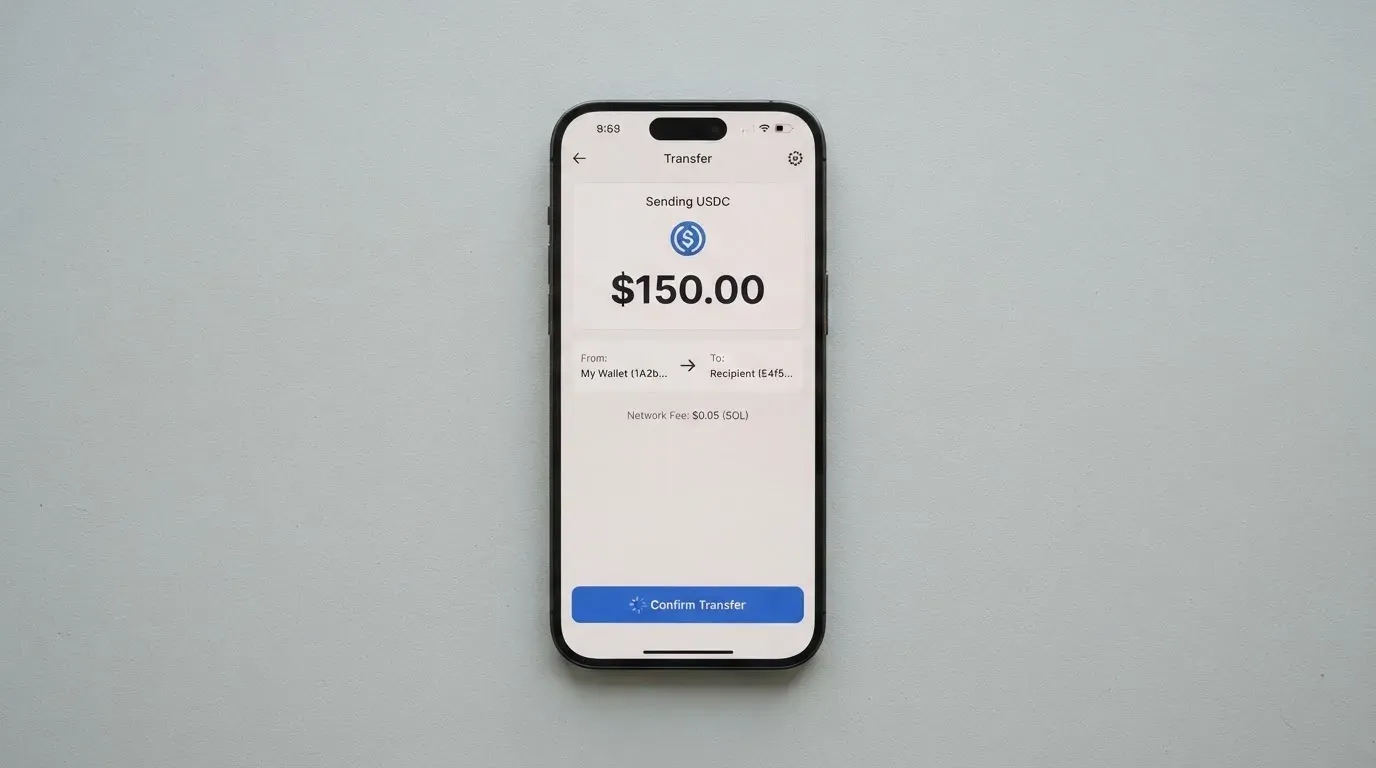
The model is collateral. Your crypto stays in your wallet — the terms are explicit that Anodos and the Issuer “will not, in any circumstance, be holding custody of your Collateral”. You grant a security interest over it. You spend against the value. If you do not pay, the collateral is liquidated and gas on liquidation is paid out of the collateral itself.
Supported blockchains are Ethereum, Polygon, Optimism, Arbitrum (spelled “Arbitrium” in the terms), “or others the issuer adds”. Which coins are accepted is not listed. That is a genuine unknown and it is the first question I would ask support, because it determines whether the card is usable by you at all.
There is no deposit fee — because there is no deposit. There is no top-up mechanism to learn, and nothing to get wrong. And you cannot withdraw from the card, because there is nothing in it to withdraw: the collateral stays in your wallet.
What happens at the end of the relationship matters, so read it even if you never plan to leave. On termination the card must be surrendered or destroyed, and repayment obligations survive the termination. Your crypto never belonged to them, but your debts to them outlive the card.
This is the honest core of the appeal. Custodial platforms have a record of failure: Mt. Gox at about US$350 million reported stolen between 2011 and 2014, Coincheck at about US$400 million in 2018, Ronin Network at US$625 million in 2022. A card that never holds your coins removes that category of risk from your life. In exchange, you take on sole responsibility for key loss, phishing, and clipboard-hijacking malware that swaps a copied address — because with a self-custody-linked card the funds are yours right up to the moment of payment. Blockchain transfers are typically irreversible; a transfer sent on a network the provider does not support, or to an address of another network, can be lost or need manual recovery with no guarantee. Stablecoins are not censorship-proof either: Tether says it disables tokens in wallets on the OFAC sanctions list and has frozen funds tied to illicit activity.
Paying with it every day
Physical or virtual, Visa-branded, accepted wherever Visa is accepted. That is the short version and it is genuinely convenient.
Some everyday specifics. Cash-like transactions — crypto purchases, gambling, money transfers — may be restricted. That is not specific to this card: a merchant category code is a four-digit number classifying a business by goods or services under ISO 18245, and MCC 7995 covers gambling. Issuers block categories by policy rather than by law, and the blocked list varies by issuer, so what fails on one card works on another. Expect decline, not a fine.
Apple Pay and Google Pay are not stated. This is one of the sharpest gaps for daily use in 2026, and it is a gap rather than a no. I would not assume tokenised mobile wallets work here. The general principle, if you go looking elsewhere: Apple Pay replaces the card number with a device-specific Device Account Number kept in the Secure Element, never on Apple’s servers, and each payment carries a one-time dynamic security code; the issuer can still restrict a tokenised number to certain channels. 3-D Secure, branded Visa Secure by Visa, adds a risk check and either approves silently or challenges you. And note that Address Verification Service, which compares the numeric parts of your billing address with issuer records, is mainly offered in the US, Canada and the UK and is generally unavailable for foreign-issued cards — one common cause of declines on a card issued in one country and used in another.
Money out through an ATM is available “where ATM withdrawals are enabled”, at the fee and monthly limit set out above. Read the same terms twice, though, given the “cash advances not available” line.
The Anodos app exists, described as covering send, save and invest. Platforms are not stated and store ratings were not found, so I cannot tell you whether it is good or bad, only that it exists. 2FA and an in-app freeze are not stated either — and those two, with 3-D Secure and spending limits, are the standard safeguards I would want before leaving real value in a wallet-linked card.
Rewards are not stated in the card terms. There is no cashback scheme in what I can see, and I would plan as though there never will be one.
If a charge goes wrong, the route the terms give is: try the merchant first, then report the dispute no more than 60 days after the disputed charge is posted on your periodic statement. Two traps in that. Pending disputed charges may still be due while the dispute runs. And card network rules apply, which is where the reason codes live — fraud, duplicate billing, goods not received.
Support is email at [email protected] and phone +1 (307) 683-5768, with official pages on X, Discord, LinkedIn, Facebook, YouTube, Instagram and TikTok. Languages and opening hours are not stated.
What can go wrong
Sorted from the boring to the serious, because the order you meet them in is not the order that matters.
The terms are not finished. The card terms contain a literal placeholder. That is not a small typographical slip, it is an unresolved counterparty in a contract, and it tells you how recently this document was assembled or how lightly it was reviewed. I do not treat it as evidence of bad intent. I do treat it as a reason to ask, in writing, who the counterparty actually is.
The issuer is a small bank with a big licence. Anodos Labs Inc. is the technology provider; Third National is the issuer; the card runs under a Visa licence. The relationship is normal for this category — the crypto brand is often only a programme manager or front-end, while the licensed institution holds the programme — but it means your contractual counterparty for the card account is not the company whose app you installed. That is also why programme closures are a category risk and not a personal failing: FTX’s Visa agreements were terminated on 13 November 2022 and its US debit card programme wound down; WaveCrest, a Visa issuer that supplied crypto card brands, was suspended by Visa in Europe in 2018, closing all WaveCrest-issued Visa programmes. Visa and Mastercard do not issue crypto cards to consumers themselves — they license issuers, and they can suspend a programme. Closures typically follow a pattern: notice, then spending and loading stop, then you are asked to withdraw remaining balances. One 2026 closure reported by a secondary source gave new loads ending 8 July 2026 and spending stopping 8 August 2026 — single source, unconfirmed, but the shape of it is the shape you should expect.
Liquidation is fast and it is not a fee. If payment is not made within one (1) calendar day, or if collateral value falls below your outstanding charges, a liquidation event follows — and this happens on a crypto market, which does not wait for business hours. The account may be suspended or cancelled “in our sole discretion”. In practical terms: this card is only safe to hold collateral in if you can top the collateral back up quickly. A 20% drawdown on the asset you have locked is a liquidation trigger, not a stress test. And the terms say plainly that a security interest is granted — that is what secured lending means.
Your limit can be cut to zero without your consent being the point. Limits are dynamic and may be modified at any time, including down to $0. If you treat this as your everyday spending card, treat that as the risk of an ordinary debit card, not of a savings account.
No complaint history is not a track record. No official incidents are reported, and there is no public complaint history or review presence for the Anodos card. When a provider is this new and this quiet, silence is weak evidence either way. It is not a reason to distrust the card; it is a reason not to treat “nobody has complained yet” as “nobody has been hurt yet”. The provider is also not on any register I could point you to, though if you want to check any European provider, ESMA keeps an interim register of authorised CASPs, white papers and non-compliant entities, and a CASP authorised in one member state can serve the whole EU.
Tax. I am not giving tax advice, and you should not take this as advice — but the structural point is factual and it bites specifically on this card. The IRS treats digital assets as property, so exchanging them for goods, services or dollars generally produces a taxable gain or loss, measured in local fiat currency at fair market value on the date of the transaction. The consequence for a collateral card is that each card payment funded from crypto may count as its own disposal. That is a bookkeeping question for a professional in your country, not one I can answer for you.
What to take instead
I am not going to rank these against Anodos on a single number — they answer different questions, and the right comparison is against what *you* need. Three alternatives from the same category, with what each does differently:
| Sponge | Nexo | Xplace | |
|---|---|---|---|
| My score | 4.9 / 10 | 6.3 / 10 | 7.7 / 10 |
| Card type | Virtual, described as a credit card issued by Rain, a Visa Principal Member | Virtual (activates in app) and physical; issuer DiPocket UAB, Mastercard trademark on page, network not stated explicitly | Visa; virtual instantly, physical Silver live, Gold and Platinum coming soon with delivery quoted at 7–14 business days |
| Who can get it | Not stated; no country list on the card pages, platform terms set a minimum age of 13 for the service | Residents and citizens of “selected European countries, including the EEA and the United Kingdom”; excluded jurisdictions unnamed | Country list not stated; “services are not available in all jurisdictions” |
| Fees | Not stated | No monthly, annual or inactivity fee; FX fee on weekdays 0.2% (EEA/UK/CH) and 2% (rest of world), weekends 0.7% and 2.5%; crypto conversion fee not stated | “0% FX on Platinum”; FX for other tiers and conversion fee not stated; stablecoin spending “no hidden spread” |
| Annual or tier cost | Not stated | No monthly, annual or inactivity fee | Basic free, Silver $99/y, Gold $249/y, Platinum $999/y; no origination fee on borrowing |
| What funds it | USDC collateral moved from the Sponge wallet with a card-funding command; example chain base, SDK mentions base or solana as optional | Spends from the Nexo account over 100 digital assets; Debit Mode uses stablecoins, crypto and FiatX assets | Deposit BTC, ETH, SOL, JitoSOL, USDC, USDT, xStocks on Solana |
| Rewards | Not stated | Cashback on purchases in Credit Mode, requires more than $5,000 in digital assets, paid in NEXO tokens or Bitcoin; by tier NEXO/BTC: Platinum 2%/0.5%, Gold 1%/0.3%, Silver 0.7%/0.2%, Base 0.5%/0.1%; rates may change and vary by region | Credit-mode cashback by tier: Basic 0.5%, Silver 1%, Gold 1.5%, Platinum 2%, paid in USDC to the wallet at settlement; Cash-mode cashback not stated |
Where each of them wins and loses, in plain terms:
- Xplace has the clearest published economics of the three and the highest FX story on its top tier, plus cashback you can name. Against that: an annual fee where Anodos’s is $0, a funding model that starts with a deposit on Solana rather than collateral already in your wallet, and its physical tiers beyond Silver do not exist yet. If your spending is on a card rather than in a wallet, this is the most conventional of the three.
- Nexo publishes real numbers and has the broadest detail on who qualifies, but it is a custodial platform — the opposite of the Anodos proposition — and its cashback is gated behind holding more than $5,000 in digital assets and using Credit Mode. One non-official note, since it bears on eligibility: Cointelegraph reported a 2025-era Bulgarian police raid on Nexo’s Sofia office over alleged Russia-sanctions and AML violations; I found no official Nexo statement about Russians. I am repeating a news report, not a finding.
- Sponge is the weakest of the three on published substance. Country coverage, fees and card currency are not stated on the card pages, and the funding model is a script move of USDC rather than a rule. If you are choosing it, you are choosing it on the interface, not on the documents.
And if the reason you are reading any of this is that ordinary bank cards are hard to get where you are, it is worth checking the general category before you settle: an electronic money institution in the EU can issue e-money, payment cards and e-wallets but cannot lend, and may offer services across the EU and EEA from a licence granted in one member state. Under MiCA — the EU’s markets-in-crypto-assets regulation, whose stablecoin and e-money-token rules applied from 30 June 2024 and whose remaining provisions applied from 30 December 2024 — e-money tokens may be issued only by a credit institution or an electronic money institution, and the transitional period for providers already operating under national law ran until 1 July 2026 or until a MiCA authorisation was received or refused. A card is regulated separately from the crypto side, so a crypto card often rests on two licences at once. EMIs must safeguard customer funds by segregating them in dedicated accounts or insuring them, though such funds are not bank deposits and may not sit under a deposit guarantee scheme.
Who I would recommend it to
If you keep crypto in your own wallet as collateral and want a card that spends against it without surrendering your keys, this is one of the more interesting designs available, and the country reach is genuinely better than almost anything else I have looked at.
Before you commit, four things. Ask which coins are accepted, because the networks are listed and the assets are not. Ask what happens in practice on a liquidation — how fast, at what price, with whose trigger. Ask what KYC and identity checks actually happen at application, because the public terms describe none. And read the placeholder and ask who the counterparty is, because a contract with a hole in it is not a contract you can rely on when things go wrong.
I would not recommend it to you if you want cashback, a mobile wallet, a top-up-and-go experience, a dispute process you can read in one page, or a provider with a name people have heard of.
My score of 7.2 out of 10 is the honest middle: a card that does one unusual thing carefully and leaves the ordinary things unsaid.
Frequently asked questions
What is Anodos?
Anodos is a technology company that issues a Visa-branded payment card under licence. It is not a bank, credit union, or money services business, by its own description. The card account itself is issued by Third National, while Anodos Labs Inc. provides the technology and runs the app. The card spends against crypto you have locked as collateral in your own wallet.
How does the Anodos card work?
You link a wallet you hold the keys to, lock collateral in it, and the card’s spending limit is set to the value of that collateral — $100 of collateral gives a $100 limit. The crypto never leaves your wallet; you grant a security interest over it. When you spend, the collateral stays put. If a payment is not made within one calendar day, or collateral value falls below what you owe, liquidation follows.
Is Anodos a bank?
No. Anodos Labs Inc. describes itself as a technology provider that is “not a bank, credit union, or money services business”. The card is issued by a bank — Third National — under a Visa licence, which is a common structure for this category. Note that the card terms are governed by Puerto Rico law and route disputes to binding AAA arbitration in New York, which is worth understanding before you sign up.
Who can get the Anodos card?
It is stated as available in 150+ countries with a few exceptions. Cards cannot be issued to residents of 17 countries including Russia, Belarus, China (Mainland), India, Turkey and Ukraine; Chinese and Hong Kong passports are not eligible; Nigeria, Sri Lanka and South Africa require enhanced review and explicit approval. Users must also attest they are not US citizens — a separate US programme covers 30 states.
Does the Anodos card require KYC?
The card terms describe no KYC process. They do require “true, correct, and complete” information, and personal, family or household use only. Minimum age is not stated, and identity verification levels are not stated. If that gap matters to you, ask support directly before sending anything of value.
How much does the Anodos card cost?
The Free tier costs $0 with the first virtual card free, 1.50% card FX and $1.00 plus 1.75% per ATM withdrawal up to $5,000 a month. Pro costs $9.99 a month or $99.90 a year, with FX at 1.25%. Elite costs $29.99 a month or $299.90 a year, FX at 1.00%. Extra virtual cards cost $20 on Free and $10 on Pro and Elite.
Can I top up the Anodos card?
There is no top-up, because there is no balance to top up. Collateral is locked in your wallet on Ethereum, Polygon, Optimism or Arbitrum, and your limit follows its value. Which coins are accepted is not listed in the public terms, so check before relying on it. You also cannot withdraw from the card — the collateral never leaves your wallet.
Is the Anodos card safe?
Your crypto stays in your own wallet and neither Anodos nor the Issuer holds custody, which removes provider and hack risk — but you carry sole responsibility for key loss and phishing. The real risks are structural: liquidation if a payment is missed or collateral value falls below your balance, limits that can be cut to $0 at any time, and programme-closure risk that applies to this whole category. I found no complaints, which for a provider this young is weak evidence either way.
Does the Anodos card work with Apple Pay or Google Pay?
Not stated. The public pages say nothing about Apple Pay, Google Pay, 2FA, or an in-app freeze, which is a meaningful gap for everyday use in 2026. Do not assume tokenised mobile wallets work here because comparable cards offer them — check with support before you count on tapping your phone to pay.
Is the Anodos card worth it?
Worth it if you already hold crypto in a self-custody wallet and want card spending without giving up control, and if the Free tier’s 1.50% FX fee suits how little you spend abroad. Not worth paying Pro or Elite for unless ATM use or foreign spending is frequent enough that the lower FX percentage pays for the subscription. And read the unresolved placeholder in the terms before you commit — I would want that answered in writing.
Credit and cashback cards put to the test – cryptocardtested
Content created by the «cryptocardtested» team