
Wallbit Card Review: A US Visa for Crypto, With Real Limits and Real Complaints
 Available in US
If you have been searching for an ordinary bank card and running into walls — no local account, no address a shop will accept, a bank that will not open for you — then a crypto-funded Visa is one of the few routes left. Wallbit is one of the names in that category. It gives you a U.S.-issued Platinum Visa, virtual to begin with, funded from stablecoins or ordinary bank rails, with an account that also holds USD, EUR, USDT and USDC.
I went through the card’s own pages, its fee schedule, its plan tiers and its support material, and then read the user reports that sit behind it. My score is 6.7 out of 10. That is not a bad score. It is a card that is cheap and functional for a narrow set of people, and genuinely wrong for everybody else. The reason it is not higher is not the fees — the fees are, in places, excellent. It is the combination of a card that is virtual-only, an issuer that is not named anywhere on the public pages, and a support function that several users describe as silent.
The conditions described here are current as of October 28, 2026.
Verdict: 6.7 / 10, and that is the honest middle
The Wallbit card suits one reader very precisely: someone who holds dollars or dollar-pegged stablecoins, wants a U.S. account and a Visa that spends from that balance, and is comfortable with a virtual card in a phone wallet rather than a piece of plastic in a wallet. If that is you, the economics are genuinely attractive — $5 to open, nothing to maintain, free spending in dollars, free deposits.
It does not suit a reader who needs a physical card, who lives in one of the seventeen closed countries, who expects a bank you can walk into, or who intends to move meaningful sums out through wires and SEPA without reading the withdrawal table first. The withdrawal fees are where the pleasant impression ends, and on the Classic plan they are not small.
| Criterion | Mark | Why |
|---|---|---|
| Who can get it | 8 / 10 | Closed to residents and legal registrants of 17 named countries; rule runs on residence or registration, not citizenship |
| Cost | 7 / 10 | $5 issuance, no maintenance, free USD spending, +2% on foreign currency, 1% ATM with $5 minimum, 2% USDC withdrawal on Classic |
| Top-up options | 6 / 10 | USDC and USDT free 1:1, plus USD, EUR, SEPA, SWIFT, FedNow — but no networks named on the public pages |
| Reliability and complaints | 5 / 10 | Wallbit LLC with U.S.-registered partners, SOC 2 Type I and II; issuer unnamed; Trustpilot 4.0 from 69 reviews, with account closures after approval reported |
| Everyday use | 7 / 10 | Virtual Visa, Apple Pay and Google Pay, NFC ATMs up to $250 per transaction; physical card still “Coming soon” |
| Total | 6.7 / 10 | Cheap and usable for the right holder; thin support and an unnamed issuer cap the ceiling |
Read that table column by column rather than as an average. Access is the strong point: a fairly long list of countries is shut out, but that is a compliance requirement, not a design failure. Cost is strong for spending and weak for pulling money out. Reliability is the weak column, and it is weak for a specific reason — not because Wallbit has collapsed, but because users report accounts closing after approval and unanswered emails, and because the card’s issuing institution is not named on the public pages.
Will they give you the card?
Yes, but not to everyone, and the rule that decides it is where you live or are registered — not what citizenship you hold.
The account and card are not available to residents or legal registrants of seventeen countries: Belarus, mainland China, North Korea, Cuba, India, Iraq, Iran, Israel, Myanmar, Nepal, Nicaragua, Russia, Syria, Turkey, Ukraine, Venezuela and Vietnam. Countries on the FATF grey list are reviewed case by case, with compliance approval required. So if you are in any of those seventeen, the answer is a flat no, and asking support will not change it.
There is a second, separate rule that catches people who pass the residency test: purchases are blocked in North Korea, Cuba, Iran, Russia, Syria, Ukraine and Venezuela. That is not the same as being refused an account. You may hold a card and still find that a merchant in one of those places will not take it. Note the asymmetry, because it is easy to trip over: the closed list includes Turkey and Vietnam, while the blocked-purchase list does not.
One thing the card does not say: citizenship is not mentioned anywhere in this rule. If you are a citizen of a closed country but live and register elsewhere, the residency-or-registration wording is what applies. That is how the rule is written, and I would not want you to build a plan on the assumption that it is enforced more loosely than it reads.
How to get it
The application is short, and the verification is described in one sentence.
You sign up with an email address, a password, your full name and a phone number. You submit an identity document issued by the country where you reside. The card’s own description says verification “typically takes up to one business day.” What is not stated on the pages I read: whether proof of address is required, whether an age check is performed beyond what the identity document implies, what the verification levels are, and what the stated reasons for rejection are. If your application stalls, that is a real gap in the published information rather than something you can look up.
Once you are in, the card is activated from inside the app — tap the card button, then “Activate my card.” What you are activating is virtual only. The card is a U.S.-issued Platinum Visa that pays in USD. The physical card is listed as “Coming soon,” both for issuance and for shipping, and that was still the wording on 2026-10-21.
That single word, “soon,” is doing a lot of work in this review. A virtual card lives in Apple Pay and Google Pay, which covers phone checkout and contactless terminals well. It does not cover a slot-only terminal that wants a physical card inserted, and it does not cover the many places where a tap-to-pay terminal is simply not present. If you have ever had a card rejected at a shop for being virtual, you already know how that feels.
What it really costs: Fees
Start with the number that will not change: the virtual card costs $5 once, and there is no maintenance fee. Spending in USD is free on every plan. Deposits of any kind are free. That is a strong opening position, and it is genuinely rare to find a crypto card that charges nothing for holding.
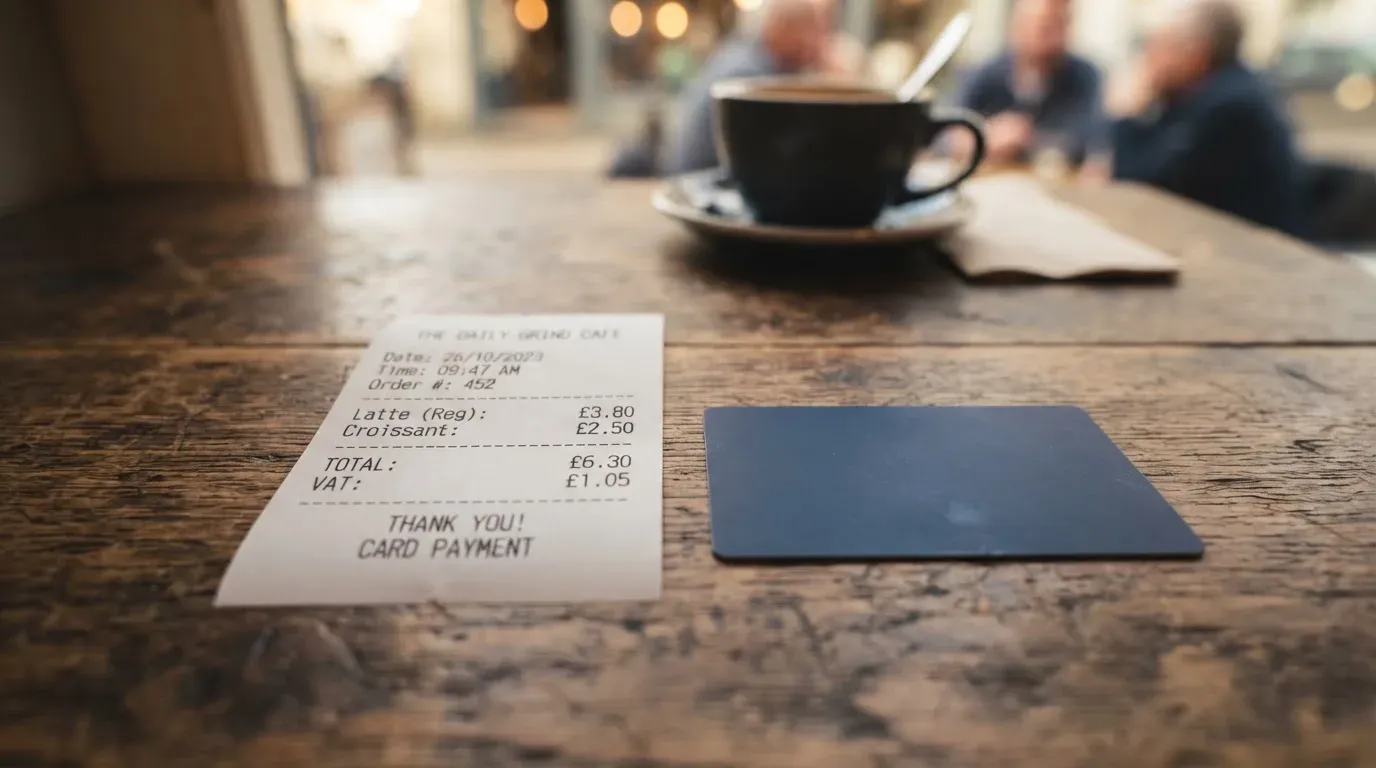
The money starts moving against you in three specific places — foreign currency, cash machines, and withdrawals — and the plan you choose changes two of them substantially.
| Fee or limit | Value |
|---|---|
| Issuance, virtual card | $5 one-time |
| Monthly fee | None on Classic; Pro $9.00/month; Max $19.00/month |
| Card spending in USD | Free on all plans |
| Foreign currency spend | Visa exchange rate + 2% FX fee |
| Deposits, any kind | No fee |
| ATM, contactless, virtual card via Apple Pay or Google Pay | 1% with a minimum $5 USD, plus 1% extra for non-USD; ATM operator may add its own fee |
| ATM per-transaction limit | $250 USD |
| Daily spending limit | Exists, shown in the app; amounts not stated |
| USDC withdrawal | 2% Classic; 1% Pro and Max |
| USDT withdrawal | 2% Classic; 1.25% Pro and Max |
| ACH withdrawal | 1% minimum $5 Classic; 0.5% Pro and Max |
| Wire withdrawal | 1% minimum $25 Classic; 0.5% Pro and Max |
| SEPA withdrawal | 1% minimum $10 Classic; 0.5% Pro and Max |
| SWIFT withdrawal | 1% minimum $25 on all plans |
| Inactivity fee | $2.00/month after 3 months |
Now let us walk three ordinary payments through that table, because the abstract numbers do not tell you which ones matter.
A coffee in dollars, in a New York café, paid by tapping your phone. Fee: none. The card spends USD, USD spending is free, and there is no monthly charge on Classic. This is the case the card is built for and it costs you exactly nothing.
The same coffee in a Lisbon café, paid by tapping your phone. Fee: the Visa exchange rate, plus 2%. The conversion is done by Visa’s rate rather than by Wallbit’s own pricing, so you cannot shop for a better rate inside the app. Add the 2% and a small purchase becomes noticeably more expensive. This is the single most common way people get surprised by a crypto card abroad, and Wallbit’s 2% is on the higher side rather than the lower.
Cash from an ATM in a city where dollars are the currency. Fee: 1% with a $5 minimum, up to $250 per transaction, and the ATM operator may add its own. Note what the $5 minimum does at small withdrawals. Take out $20 and the 1% would be twenty cents; you pay $5. The minimum, not the percentage, is what you feel. This is also the one route that physically requires a physical card in many countries — and Wallbit’s route is a virtual card linked to Apple Pay or Google Pay, read over NFC by a contactless ATM. That works, but only where contactless ATM withdrawal is actually supported.
One more thing about spending, because it is a category fact rather than a Wallbit fact and it explains a lot of declines. Some merchants look at the first six or eight digits of a card number — the BIN — and see which institution and which country issued it. If that country differs from the address you typed at checkout, some merchants apply extra scrutiny, and some decline outright. A U.S.-issued card paying a European merchant is exactly that pattern. Some merchants also require a US billing address, and Wallbit’s pages do not state which categories are blocked.
How to top up
Deposits are free, and there are more ways in than most cards of this kind offer.
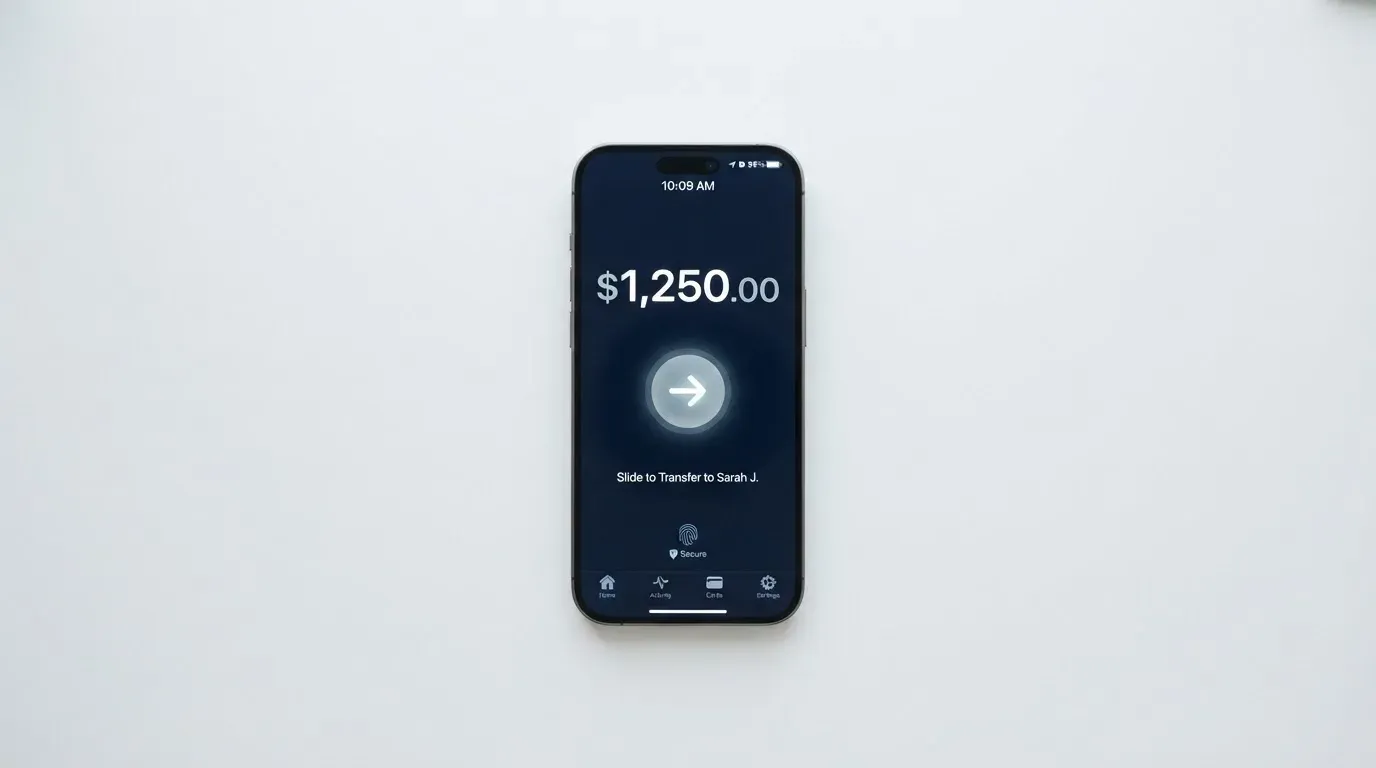
You can deposit USDC or USDT into the USD account free at 1:1. The account also accepts USD and EUR through SEPA, SWIFT and FedNow. Earlier checks found the same no-fee position on the fee page, which now states deposits of any kind are free.
The networks are not named on the public pages. The card does not tell you which blockchain to send USDC on, which is a significant omission because crypto transfers are irreversible. Sending on an unsupported network, or to an address belonging to a different network, can mean the funds are lost or require a manual recovery with no guarantee of success. The minimum deposit is not stated, and it is unclear who pays the on-chain network fee for your deposit. Plan as though the network will charge its own fee on top of Wallbit’s zero, and confirm the supported networks in the app before your first transfer, not after.
The account holds USD, EUR, USDT and USDC, which is worth noting if you are used to thinking of these cards as single-currency. The card itself is USD; the multi-currency holding sits behind it.
Withdrawals work the other way, and this is where the free story ends. The table above covers it, but the shape is worth stating plainly: on Classic, taking USDC out costs 2%, USDT out costs 2%, and every bank rail out costs 1% with a floor — $5 for ACH, $25 for wire, $10 for SEPA, and $25 for SWIFT regardless of plan. On Pro and Max the crypto fees fall to 1% and 1.25% and the bank rails to 0.5%, but SWIFT stays at 1% with a $25 minimum on every plan. The Pro plan also halves withdrawal fees generally and cuts trading commissions; Max has the lowest investment commissions, the highest APR on cash, and a dedicated Account Executive reachable on WhatsApp.
Two more withdrawal details: there is a $2.00 per month inactivity fee after three months of nothing, and what happens to a remaining balance at closure is not stated.
Paying with it every day
Everyday use is the card’s second-strongest area, and it is strong in a narrow way.
Apple Pay and Google Pay are both supported, which is how you will actually use the virtual card day to day — you add it to a wallet and tap. The apps are on iOS and Android. When a tokenised card number is in a mobile wallet, the device stores a device-specific number rather than your actual card number, and each payment carries a fresh one-time security code, so a leaked card number is not directly reusable at a terminal.
There is no cashback stated anywhere on the card’s pages. If a rewards programme is what you are after, Wallbit does not offer one — the account earns yield on balances and cash instead, which is a different proposition and is not the same as money back on a coffee.
Two gaps worth naming. The merchant categories that might be blocked are not stated, which matters more than it sounds: gambling has its own merchant category code, MCC 7995, and many issuers block it on specific cards by policy rather than by law — but the blocked list varies by issuer, and Wallbit does not publish one. And a declined or pending payment is a real possibility regardless of issuer, because a failed authorisation can leave a hold on your funds that stays for several days, sometimes up to seven. The card’s help centre has articles on declined and pending payments, but the chargeback process and its time frames are not stated on the pages I read. One user report concerns a missing payment trace for a PIX transaction, which I will come to in the risks section.
Where the money itself sits, and this is a category point rather than a Wallbit one: this is a custodial account. The provider holds the credentials, so the balance depends on the provider’s solvency and security, not only on your own care. For investments held in the account, SIPC excess insurance of up to USD 75 million per account is cited. That protection attaches to securities, not to the card balance or the stablecoins you deposit, and it is not the same as a bank deposit guarantee.
What can go wrong
Five things, roughly in order of how likely they are to affect you.
Your account is closed after approval. A user report describes an account closed after approval, with compliance cited, in January 2026. This is the single most serious complaint theme, because it happens after the checks have already passed. The card’s own pages do not name the issuer, which means you cannot easily tell which institution’s policy was applied.
Support does not answer. Another report, from October 2025, describes support emails going unanswered and no phone line. The Help Center exists at help.wallbit.io in English and Spanish, which tells you documentation is maintained; it does not tell you a human will reply. Treat that as a real operational risk if you are planning to hold a balance you may need to move quickly.
A payment goes missing and there is no trace. One report describes a PIX payment with no end-to-end identification document to trace it, running from May to July 2026. PIX is Brazil’s instant payment system, and the practical lesson generalises: keep your own record of what you sent, when, and how much. On a custodial card funded from an irreversible blockchain transfer, your receipt is often the only receipt.
The physical card never arrives. It is still “Coming soon.” Nothing has gone wrong; the thing simply does not exist yet, and if you need a card that goes into a reader, that gap is decisive.
The issuer is not named. Wallbit LLC is the company, and Wallbit states that it and its banking and investment partners are registered in the United States. Brokerage runs through Alpaca Securities LLC (FINRA/SIPC), and advisory through W2B, Inc. (SEC-registered, CRD# 331220). SOC 2 Type I and II are cited. But the bank or institution that actually issues the Visa is not named on the public pages, and no licence or issuer change was found. That is the gap behind the 5 out of 10 for reliability. Ask yourself, before you fund it: which institution stands behind the card, and what happens to my balance if that institution’s programme is suspended? The category has a precedent for the answer being “you get asked to withdraw.” WaveCrest, a Visa issuer that supplied crypto card brands, was suspended by Visa in Europe in 2018 and all its Visa programmes were closed.
On the aggregate ratings: Trustpilot shows 4.0 out of 5 from 69 reviews as read on 2026-10-21, with 70% five-star and 23% one-star. That is a good average attached to a small and polarized sample — most of the negative weight sits in the closure and support themes above. No official incident was found.
What to take instead
If Wallbit’s shape does not fit, these three are the closest alternatives I found, with the same lens applied to each.
| Wallbit | UNi Card | Whop Cards | Stella | |
|---|---|---|---|---|
| Score | 6.7 / 10 | 6.1 / 10 | 5.2 / 10 | 6.5 / 10 |
| Network | Visa | Mastercard | Visa | Visa |
| Card type | Virtual (physical “Coming soon”) | Not stated | Not stated | Virtual and physical |
| Annual or monthly fee | None; $5 issuance | “No annual fee” | “No extra fees” listed | Not stated |
| FX fee | Visa rate + 2% | “No foreign transaction fee”; live OTC rates | Not stated | Not stated |
| Funding | USDC/USDT, USD, EUR, SEPA, SWIFT, FedNow | Not stated | Whop balance, stablecoin-backed from a linked wallet | Crypto deposit into custodial in-app wallet |
| Rewards | None stated | “Spend-to-Earn” up to 3% | 5% cashback at select merchants (Uber), payout terms not stated | None stated on the card page |
Reading the comparison: UNi is the one to look at if your problem is foreign exchange. It advertises no foreign transaction fee, conversion at live OTC rates, and spend-to-earn rewards up to 3% — none of which costs you anything to consider. Its limitations are the mirror image of Wallbit’s: countries are not stated, funding is not stated, and I would not want to guess at the eligibility rules for someone who has just been turned down elsewhere.
Stella scores closest at 6.5 and is the alternative if you specifically need a physical card, since it offers both virtual and physical and works at over 40 million Visa merchants globally. Its terms bar users under economic sanctions programmes and route US and European users through affiliates, and fees are only described by reference to the User Agreement and the app — which means you would be reading the contract rather than a schedule.
Whop Cards is the odd one out at 5.2, and the reason is coverage rather than price. It is limited to consumers in 31 US states, named individually on its pages, and to businesses in 41; it is not supported in a long list of countries including Belarus, mainland China, Cuba, Hong Kong, India, Iran, Iraq, Israel, Myanmar, Nepal, Nicaragua, North Korea, Russia, Syria, Turkey, Ukraine, Venezuela and Vietnam. The basis — citizenship or residence — is not stated, which is exactly the ambiguity that makes the Wallbit rule easier to reason about. What Whop does offer is a clean spend: a Visa, 5% cashback at select merchants currently Uber, and a balance that becomes usable as soon as a payment arrives. The currency of the card and the payout currency of the cashback are not stated.
| UNi Card | Whop Cards | Stella | |
|---|---|---|---|
| Best for | People who travel and hate FX fees | US consumers in the 31 listed states who want cashback | Anyone who needs a physical card |
| Watch out for | Eligibility not stated | Narrow state and country coverage | Fees only in the User Agreement |
Who I would recommend it to
I would recommend the Wallbit card to a specific person, and I would hesitate for everyone else.
The person I would recommend it to holds dollars or USDC, lives in a country that is not on the seventeen-country list, does not need plastic, and wants a U.S.-issued Visa they can add to their phone in a minute and fund at 1:1 without a fee. For them this is a good deal: $5 once, nothing monthly, free spending, free deposits, and yield on the balance. The Pro plan at $9 a month is worth a look if they expect to move money out often, because it halves the withdrawal percentages — though at that price the saving has to be real money moved, not occasional top-ups.
I would hesitate for anyone whose plan involves leaving the balance. On Classic, converting USDC back costs 2%, and every bank rail has a 1% floor starting at $5. Someone using this card as a bridge to move value rather than to spend it is paying the least favourable part of the structure, and the Pro tier exists precisely because the maker knows it.
And I would hesitate for anyone who is choosing between this and an ordinary bank on the basis of a Trustpilot average. 4.0 from 69 reviews is a good number and a small sample, and the complaints inside it cluster on the two things that matter most — accounts closing after approval, and silence from support. If you cannot afford to be unreachable for a few weeks while a payment is traced, that risk is worth more to you than the 2% you would save.
Frequently asked questions
What is the Wallbit card?
The Wallbit card is a U.S.-issued Platinum Visa that spends from a balance held in a Wallbit account, funded by stablecoins or ordinary bank money. It is virtual at launch, pays in USD, and the account holds USD, EUR, USDT and USDC. Wallbit LLC markets it; the issuing institution is not named on the card’s public pages.
How does the Wallbit card work?
You deposit USDC or USDT into the USD account free at 1:1, or arrive with USD or EUR through SEPA, SWIFT or FedNow. The virtual card is activated in the app and added to Apple Pay or Google Pay, then taps at contactless terminals. In the “pre-loaded balance” model the card spends only what is loaded, so it cannot overdraw.
Is Wallbit a bank?
Not as far as its own pages state. Wallbit LLC is the company, and it says it and its banking and investment partners are registered in the United States. Brokerage runs through Alpaca Securities LLC (FINRA/SIPC) and advisory through W2B, Inc. (SEC-registered, CRD# 331220). It describes a custodial account with SIPC excess insurance up to USD 75 million applying to investments, not to your card balance.
Which countries can get the Wallbit card?
The account and card are not available to residents or legal registrants of Belarus, mainland China, North Korea, Cuba, India, Iraq, Iran, Israel, Myanmar, Nepal, Nicaragua, Russia, Syria, Turkey, Ukraine, Venezuela or Vietnam. FATF grey-list countries are reviewed case by case. Purchases are separately blocked in North Korea, Cuba, Iran, Russia, Syria, Ukraine and Venezuela. The rule runs on residence or registration; citizenship is not mentioned.
How much does the Wallbit card cost?
Issuance is $5 once for the virtual card, with no maintenance fee on Classic. Spending in USD is free on all plans, and deposits of any kind are free. Foreign currency spend is charged at the Visa exchange rate plus a 2% FX fee, ATM withdrawals cost 1% with a $5 minimum plus 1% for non-USD, and Pro and Max plans cost $9.00 and $19.00 per month.
Does the Wallbit card require KYC?
Yes, and the description is brief. You sign up with email, password, full name and phone, and submit an identity document from your country of residence. Verification “typically takes up to one business day.” Proof of address, verification levels and stated rejection reasons are not given on the pages I read. It matters that the issuer’s KYC decision can end the account later, not only at signup.
How do I top up the Wallbit card?
Deposit USDC or USDT into the USD account free at 1:1, or use USD and EUR via SEPA, SWIFT or FedNow. Deposits are free on all sources. The card does not name supported networks on its public pages, and blockchain transfers are irreversible, so check the supported network in the app before sending rather than after.
Is the Wallbit card safe?
It is custodial, so the provider holds the credentials and your balance depends on that provider’s solvency and security as well as your own care. Stated safeguards include app-based card lock and unlock, SOC 2 Type I and II attestations, and tokenised use through Apple Pay and Google Pay. Treat crypto transfers out as final, keep your own payment records, and be aware that SIPC cover attaches to investments rather than stablecoin balances.
Can I use the Wallbit card at ATMs and in stores?
At contactless ATMs, yes — but only by linking the virtual card to Apple Pay or Google Pay and reading it over NFC. The fee is 1% with a $5 minimum, plus 1% for non-USD, with a $250 per-transaction limit and whatever the ATM operator adds. In stores, U.S. merchants are the smoothest fit; some merchants inspect the issuing country of the card number and apply extra scrutiny or decline, and some require a U.S. billing address.
Is a physical Wallbit card coming?
It is listed as “Coming soon” as of 2026-10-21, for both issuance and shipping. I found no confirmed date, and Wallbit’s blog guides were dated September 2026 with no licence or issuer changes in that period. If you need a card that goes into a physical reader, plan as though it will not exist this year and treat Apple Pay and Google Pay as the actual product.
App and neobank cards put to the test – cryptocardtested
Content created by the «cryptocardtested» team