
I read the KuCard terms and priced up what it costs to spend from a crypto balance
 Available in US

KuCard is a Visa debit card that spends from a crypto balance held inside a KuCoin account, aimed squarely at people who already keep money on that exchange. It works like a normal Visa at the till — virtual card instantly, physical card with Chip&Pin — and it converts crypto to euro as you spend. But it is also a product with more blank spaces than a typical card page: no published spending or ATM limit table, no list of supported coins or networks, and a fee schedule whose own numbers disagree with each other in places. My score is 6.0 out of 10. For an EU resident who is already a KuCoin user and is happy to have their balance held on a custodial platform, that is enough to justify a trial — not enough to move your whole spending onto.
The conditions described here are current as of October 28, 2026.
What I checked and what I found
I spent my time on the card’s own terms and help pages rather than on the marketing language. What follows is what I verified there, what I could only confirm from outside sources, and where I had to tell you plainly that the public pages just don’t say.
My overall mark:
| Criterion | Mark | Why |
|---|---|---|
| Who can get it | 5 / 10 | Only EEA citizens and residents plus Iceland, Liechtenstein and Norway; not available on Malta |
| Cost | 6 / 10 | First virtual card free, later ones €9.90, physical €9.90 for the first; euro payments free, other currencies 2%, ATM in Europe €2 |
| Top-up options | 4 / 10 | Main route is crypto in the KuCard account, USDT by default; the list of coins and networks is not disclosed |
| Reliability and complaints | 7 / 10 | Issuer is Wallester AS (Estonia, supervised by the Estonian FSA); almost no card-specific complaints, one Trustpilot card review, but exchange-level complaints limit how far that reassures me |
| Everyday use | 8 / 10 | Visa; virtual instantly, physical Chip&Pin; unofficial reports say Apple Pay and Google Pay work; ATM €2; the virtual card expires at month end |
| Total | 6.0 / 10 | A workable crypto-spend card for an existing KuCoin user in the EEA, held back by missing numbers and a narrow eligibility window |
Who this suits: EEA residents who already hold a KuCoin account, already have crypto sitting there, and want a simple Visa to spend it without moving funds to an exchange or a bank first. Who it does not suit: anyone outside the EEA, anyone unwilling to complete full identity checks, anyone who wants their own keys rather than a custodial balance, and anyone who needs published spending and withdrawal limits before they commit.
Will they give you the card?
Yes — but only if you are inside a narrow geographic box. Terms section 3.1 say the card is “only available to citizens and residents of the European Economic Area (EEA)”. The permitted jurisdictions in section 3.2 are the EU states plus Iceland, Liechtenstein and Norway, and the help page adds that it is not available in Malta. So the practical list is the EEA plus those three countries, with Malta carved out. You need an ID issued in the EEA.
Note that this is about both citizenship and residence — the wording covers both, so belonging to one of those countries by passport alone is not the whole test; where you live matters too. If you are reading this from outside Europe, this card is not for you and no amount of account history changes that.
How to get it
The route runs through KuCoin itself, not through a separate card application. You need a valid KuCoin EU account and full KYC (know your customer) with a supported EEA-issued identity document; your address is verified as well, and you must be 18 or over. The steps are: open a KuCoin EU account, complete KYC, then apply for the virtual or physical card on the platform.
There is only one KYC level. It means a full identity check against an EEA-issued ID or passport, a verified address, and 18+. The card’s own list of reasons an application gets rejected is useful to know, because several are things you can fix before you apply: an invalid phone number, an incorrect name or date of birth, an invalid 3-D Secure password, an insufficient balance to cover the card fee, and risk control.
What the card itself is: a Visa debit card. There is a virtual card you can use immediately — it expires at the end of the month and has to be reapplied — and a physical Chip&Pin card. You can hold up to five cards. The default spending currency is USDT, converted to euro. The physical card is posted to the address you give (terms 5.5) and is activated in the KuCoin site or app. Express card delivery is €30 per card; replacing a card is €9.90. The standard delivery time and its cost are not stated on the pages I read, and neither is how long an application takes. Card availability is the EEA excluding Malta.
One thing that catches people out: because the virtual card expires at the end of the month, “get a virtual card and use it forever” isn’t a thing here. It’s a stopgap, or a way to start spending before the plastic arrives.
Fees: what it really costs
The headline numbers are friendly but incomplete. Spending in euro is free. Spending in another currency costs 2% of the transaction total. A withdrawal at an ATM within Europe is €2; international it’s 2% of the transaction total plus €2, and the ATM operator may add their own fee. A declined payment for insufficient funds is free, and there is no overdraft.

Issuance is where it gets confusing. The fee schedule says the first virtual card is free, each further virtual card is €9.90, the physical card is €9.90 for the first one and €19.90 thereafter, replacing a card is €9.90, cancelling is free, and express delivery is €30. But an older support article quotes €9.99 per further virtual card, and the physical fee is written in a way that is genuinely ambiguous. And the first-card fee and the standalone physical-card fee amount are not stated cleanly anywhere I could find.
The costs table, gathered:
| Fee or limit | What the card states |
|---|---|
| First virtual card | Free |
| Further virtual cards | €9.90 (fee schedule) / €9.99 (older support article) |
| Physical card | €9.90 (the first) / €19.90 — ambiguous as written |
| Replacement card | €9.90 |
| Express card delivery | €30 per card |
| Cancelling a card | Free |
| Euro payments | Free |
| Non-euro payments | 2% of the transaction total |
| ATM within Europe | €2 per withdrawal |
| ATM outside Europe | 2% of the transaction total + €2, plus operator fees |
| Declined payment (insufficient funds) | Free |
| Overdraft | Not available |
| Local, third-party, network fees, conversion spread, IOF | May apply |
| Refunds | Paid in euro, fees non-refundable |
| Spending and ATM limits | Not stated; the issuer may set daily limits |
| Monthly inactivity fee | €2 on a virtual card after 90 days without a transaction (unofficial) |
Two or three everyday payments, and which fees bite:
- A coffee in a euro country. Free. If the card converts from crypto to euro for you first, the conversion happens at KuCoin’s rate — the “conversion spread” may apply, and that spread is not published.
- A subscription billed in dollars. 2% of the transaction total, plus whatever the conversion spread does. This is where the “free in euro” headline stops being reassuring: anything billed in another currency costs you.
- A cash withdrawal at an ATM in Europe. €2 a pop, before the ATM’s own surcharge.
So the pattern is simple: euro spending is free, anything else costs 2%, and cash costs €2 or more. A cardholder who pays mostly in their own currency will be fine; one who travels or subscribes in dollars pays a visible premium on every transaction.
Two other costs that don’t appear as rows but exist in the terms: a “Fee Schedule” is referenced but not shown, and foreign-use fees are described only as whatever the provider “may reasonably prescribe”. If a fee matters to your decision, the honest answer is that the public terms do not commit to it. I couldn’t confirm a published limit table — a third-party source (SpendNode, October 2026) says KuCoin does not publish one universal KuCard spending and ATM limit table, and that the issuer may set its own daily limits. Treat that as unofficial, not as a confirmed number.
Top up: how the money gets in
The primary way to fund the card is supported cryptocurrency held in the KuCard account, with USDT as the default spending currency. That is the route the card is designed around, and it works: you hold crypto, you spend it, the conversion to euro happens on the way.
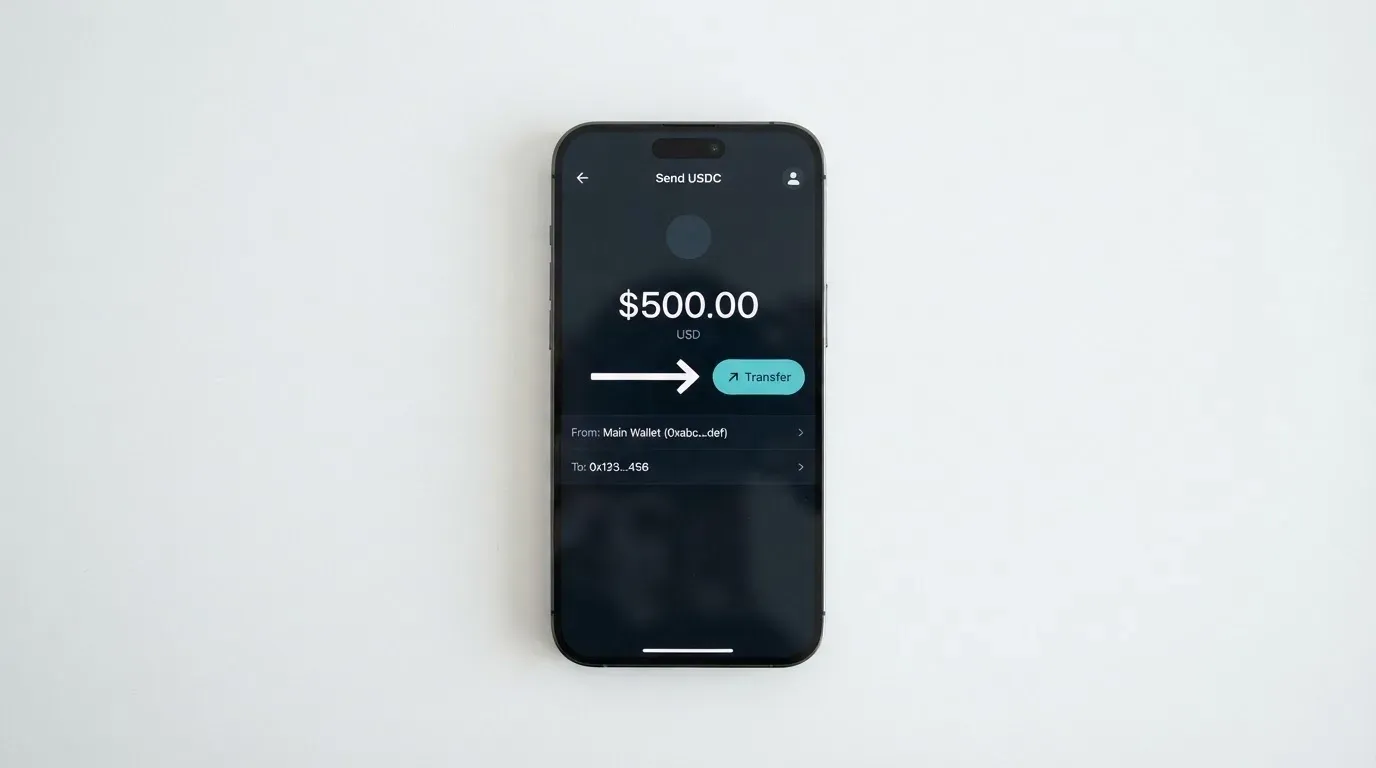
What isn’t disclosed matters here. The list of supported coins and networks is not given. Fiat top-up is not stated. The minimum top-up is not stated. And who pays the network fee for a crypto deposit — you or the provider — is not stated either. So when you send a transfer, the network fee comes off the top, and I can’t tell you from the public pages whose money that is.
There is no top-up fee row in the fee schedule, which is mildly encouraging, but a “conversion spread” may still apply. Terms 10.2 say the crypto-to-euro rate is “solely determined by” KuCoin. That is the phrase to sit with: you are not getting a quoted mid-market rate, you are getting their rate.
Getting money back off the card is not documented. Moving a card balance back to crypto or to a bank is not stated. Refunds always come back as fiat. Cancelling a card is free, but an unactivated card may be closed after three months with no refund of service charges, and a card can be terminated after four consecutive months closed or blocked, or six months of no use at all. What happens to your balance on closure is not stated. If you’re going to hold a balance on this card, ask that question before you fund it.
Paying with it every day
Day to day, it’s a Visa, which is the strongest part of the offer. It works at any terminal that accepts Visa, and it’s limited only to purchases not prohibited by law — there’s no merchant category list restricting you to, say, groceries or travel. Apple Pay and Google Pay support are reported by third parties (SpendNode, October 2026, with PYMNTS in 2024 saying the same), but that’s unofficial and not confirmed on the card’s own pages. You activate the card in the KuCoin app or site, and I didn’t read App Store or Google Play ratings for the app.
Two things to plan around. The virtual card expires at month end and must be reapplied, so it’s not your only card. And Apple Pay and Google Pay, if they do work, are the practical way to keep the physical card in your wallet rather than in a terminal.
On rewards, I’ll be straight with you: the terms mention only “different benefits or rewards” from time to time, with no rates. There is a separate “Benefits and Rewards” article I did not read. Unofficial reports describe an EU programme based on monthly eligible spend, with rate and cap rising through seven levels (L0 below 500 USDC at 1% capped at 5 USDC, up to L6 at 30,000+ USDC at 8% capped at 200 USDC), points available after 15 days, expiring after 90 days, and 1,000 points worth 1 USDC — and SpendNode itself notes KuCoin has no single published reward table. Treat all of that as unconfirmed. A separate report says there’s a €2 monthly inactivity fee on a virtual card after 90 days without a transaction; also unofficial.
If disputes go wrong, the clock is the thing to remember: unauthorised transactions must be reported within 60 days of the transaction date or are treated as correct (terms 14.3). Refunds are in fiat, valued at the euro amount at the time of the transaction (11.2). How long a refund takes is not stated, and fees are non-refundable. The 60-day window is a real deadline, not a formality.
What can go wrong
The reassuring news first: I found no official incident involving the card, and almost no card-specific complaints — no Reddit threads either. One Trustpilot review, July 2026, mentions about $120 stuck after the card on file expired, KuCoin asking for an old bank PDF statement, and slow replies. It’s on the kucoin.com profile, which is the exchange’s profile rather than a card-only one, and it’s a single account of one bad month.
But that profile is worth a look anyway, because the card inherits the exchange’s reputation. As of my read on 20 October 2026 it showed no TrustScore (“unavailable due to a breach of our guidelines”), 1,597 reviews, 78% one-star, with themes of withdrawal and account restrictions (August–October 2026), dormancy fees and repeated ID demands at login (September–October 2026), P2P disputes, and deposits not credited. These are exchange-level complaints and they limit how much the quiet card record should reassure you — the money sits on the same platform.
Who actually holds things together:
- Issuer: Wallester AS (Estonia, reg. 11812882, a Visa principal member, supervised by the Estonian FSA).
- Virtual currency exchange and deposits: UAB EURLITA (Lithuania).
- Platform and card front-end: KuCoin.
Wallester describes itself as KuCoin’s card-issuing partner for Visa cards in the EU. The fee schedule page is shown as last updated 29 September 2026. I found no licence loss and no fine.
On security, the card is funded from the KuCard account on the KuCoin platform — an exchange account that is custodial in practice, though the terms don’t use that word. If you lose the card or it’s stolen, the instruction is to freeze your account immediately on the platform. Strong Authentication (two independent elements) is required. Your liability for unauthorised use is capped at €50 unless it’s fraud or gross negligence. Two-factor authentication isn’t specifically mentioned in what I read, and insurance isn’t stated.
Support is a Help Center and a “Submit a Ticket” on KuCoin EU, and there are help articles in Russian. Chat or Telegram channel and service hours are not stated.
What to take instead
I looked at three other cards with the same broad idea, and none of them is unambiguously better. Their published scores: Young Card 5.7, MSX 6.4, Bybit Card 6.0. I’ll take them in turn.
Young Card (5.7 / 10) says the least officially. Who can get it, what the card physically is, what it costs, what fees apply, and how it’s funded for the card itself — all not stated on pages I could read. The one concrete thing is rewards: cashback paid in YNG tokens at a rate set by your Club tier — Essential 0.1%, Gold 1.8%, Platinum 3.6%, with Bronze and Silver not stated. Cashback in a platform token rather than cash is something to think hard about.
MSX (6.4 / 10) is even quieter officially: who can get it, what the card is, cost, fees, funding, and rewards all not stated on a page I could read. I’d be cautious about anything I can’t see priced.
Bybit Card (6.0 / 10) is the most transparent of the three, and also the one most clearly not aimed at you if you’re in Europe. Its cards page says plainly: “This product is not meant for European Economic Area customers. All European Economic Area customer participation is strictly prohibited.” Its card regions are Argentina, AIFC (Kazakhstan), Georgia, Kazakhstan, Australia, Mexico, Brazil, Peru and Asia Pacific. So it is not an alternative for an EEA reader — it’s a comparison point for how much clearer a card can be when it chooses to publish.
That said, Bybit publishes what KuCard doesn’t. Its virtual issuance is free in all regions until further notice; physical issuance/replacement ranges from 5 USD/USDT (Argentina, Asia Pacific) to 29.99 USD (Australia) and 29.99 USDT (Georgia, Kazakhstan), and none in Brazil and Mexico, with VIPs exempt in several regions; and it states “no annual fees”. Its crypto conversion fee is 0.9% over the One-Click Sell rate in several regions, 0.5% in Argentina; its FX fee is 2% on top of the network rate in some regions, 7% in Argentina, 1.5% in Brazil, 1% in Peru, with FX padding 0% in some and 5% in Argentina (the excess refunded). It funds from a Funding Account with a stated coin priority — USDT, USDC, GRAM, BTC, ETH, XRP, reorderable — and runs a published cashback ladder from Base at 2% (5 USD cap) to Infinite at 10% (600 USD cap), with points settling after four calendar days. All that and it still tells an EEA reader to stay away. The lesson for KuCard isn’t that it’s stingy; it’s that the same industry can publish its numbers, and KuCard mostly doesn’t.
Who I would recommend it to
I’d recommend KuCard to you if you’re an EEA resident (Malta excepted), you already have a KuCoin EU account, you already hold crypto on it, and you want a plain Visa to spend that balance — especially if most of your spending is in euro and you don’t mind a virtual card that expires monthly or a €2 ATM fee when you need cash.
I wouldn’t recommend it if you’re outside the EEA, if you need published spending and ATM limits before you commit, if you want non-custodial control of your funds, or if the idea of the conversion spread being set by KuCoin unsettles you. And I’d pause if you’re the sort of person who reads the 60-day dispute window as comfort — it’s a deadline, not a protection.
My honest summary: a competent, unremarkable crypto card for the platform’s own users, held back less by what it does than by what it doesn’t tell you.
Frequently asked questions
What is KuCard?
KuCard is a Visa debit card issued through KuCoin, letting you spend a crypto balance held on the KuCoin platform. It comes in two forms: a virtual card you can use immediately and a physical Chip&Pin card. Spending happens in euro, converted from crypto at the provider’s rate. It’s aimed at people who already keep money on KuCoin.
How does KuCard work?
Your crypto sits in a KuCard account on KuCoin. When you pay, the amount is converted to euro (the default spending currency is USDT) and debited like a normal debit purchase. It works at Visa-accepting terminals. A conversion spread may apply on top, and non-euro transactions cost 2% of the total.
Who owns KuCard?
The card is issued by Wallester AS, an Estonian company registered as 11812882, a Visa principal member supervised by the Estonian financial regulator. Virtual currency exchange and deposits are handled by UAB EURLITA in Lithuania. KuCoin runs the platform. Wallester describes itself as KuCoin’s card-issuing partner in the EU.
Is KuCard a bank?
No. It’s a Visa debit card issued by an e-money and card issuer, not a bank account. Because the balance comes from crypto converted on a platform, it behaves more like a prepaid card than a bank debit card. Funds are safeguarded under e-money rules, not bank deposit guarantee schemes.
Who can get a KuCard?
Citizens and residents of the European Economic Area, plus Iceland, Liechtenstein and Norway — but not Malta. You need an EEA-issued ID, a KuCoin EU account, full KYC, a verified address, and to be 18 or over. Applications can be refused for things like an invalid phone number, wrong name or date of birth, or insufficient balance to cover the fee.
Is KuCard available in the UK?
The permitted jurisdictions listed are the EU states plus Iceland, Liechtenstein and Norway, with Malta excluded. The United Kingdom is not among them, so on the terms as stated it isn’t available there. If you’re in the UK, this isn’t your card — but check the current terms, since jurisdictions can change.
Does KuCard require KYC?
Yes. There’s a single KYC level: full identity verification with an EEA-issued ID or passport, your address verified, and age 18+. That’s not unusual for a regulated card, but it does mean the card is tied to a fully documented identity, with all the data-handling that implies.
How do I top up KuCard?
The primary way is supported cryptocurrency in your KuCard account, with USDT as the default. What isn’t published is which coins and networks are supported, whether you can top up in fiat, the minimum top-up, and who pays the network fee for a transfer. On-chain fees are charged by the blockchain, not the provider.
What are KuCard’s fees?
Euro payments are free; non-euro payments cost 2% of the total; a European ATM withdrawal is €2 (international, 2% plus €2, plus operator fees). The first virtual card is free, later ones €9.90, physical is €9.90 for the first, replacement is €9.90, and express delivery is €30. Spending and ATM limits aren’t published.
Is KuCard safe, and can I withdraw money from it?
Your balance is custodial — it sits on the KuCoin platform, not in a wallet you hold keys to. The issuer is a supervised Estonian company and I found no card-specific complaints or incidents, but the exchange itself has drawn heavy Trustpilot criticism over withdrawals and account restrictions. Moving a card balance back to crypto or a bank isn’t stated, so don’t treat it as a two-way street.
Exchange cards put to the test – cryptocardtested
Content created by the «cryptocardtested» team