
A payroll card, not a spending card
 Available in US
Toku is not really a crypto card in the sense most people mean the phrase. There is no wallet you load, no crypto you convert, no spending limits you set. Toku is a payroll product: a contractor is paid in stablecoins, the money lands in a connected Rain wallet, and a Toku-branded Visa card spends that balance. If that matches how you get paid, the arrangement is genuinely neat. If you were hoping for a normal everyday card you top up yourself, this is a different product entirely, and the gaps in what Toku publishes will tell you quickly whether it is for you.
Conditions are current as of October 28, 2026.
My score for Toku is 5.2 out of 10. That is not a rounding of something better or worse. It is the arithmetic of a service that does one narrow thing reasonably well and leaves almost every practical question — fees, limits, currency, top-ups, cash withdrawals — unanswered on its public pages.
Who the card suits, and who it does not
Toku suits a specific person: a contractor who is paid in stablecoins by a company that uses Toku for payroll and compliance. That person does not need to move money to the card, because the money arrives there by itself. They get a virtual card immediately, spend it as they would any Visa, and leave the conversion problem to their employer.
Toku does not suit anyone who wants a general-purpose spending card. If you have to top it up, ask what currency it holds, or figure out what a withdrawal costs, you will be reading pages that do not answer. The public material covers issuance eligibility and the payroll mechanics; it is thin everywhere else.
The score table below breaks the 5.2 down. I have left the marks exactly as they were and written my own reasons beside them, because a number without a reason is not much use to you.
| Criterion | Mark | Why |
|---|---|---|
| Who can get it | 5 / 10 | Issuance is available now for recipients in the US and Latin America, with Mexico, Colombia and Brazil named; APAC is listed as “APAC Q2 2026” |
| Cost | 5 / 10 | Issuance cost, conversion fees and ATM fees are not disclosed |
| Top-up options | 4 / 10 | You do not top it up: the employer pays stablecoins into a connected Rain wallet and the card draws on the settled balance; Rain supports USDG, USDC, RLUSD |
| Reliability and complaints | 6 / 10 | The card is issued by a partner under a Visa licence; for Rain it names Cross River Bank, and whether that applies to the Toku card is not stated; Trustpilot shows 3.2 from one review |
| Everyday use | 6 / 10 | Virtual card available immediately, physical “where applicable”; Apple Pay, Google Pay and ATM are not disclosed |
| Total | 5.2 / 10 | A payroll instrument with a real gap in published detail |
One thing I want to be clear about, because it is the single most useful fact on this page: this is not a company that issues you a card so you can spend your own money. It is infrastructure for paying people. The card exists at the end of a payroll chain. If your employer is not Toku, this review is probably academic for you.
Will they give you the card?
Availability depends on who you are in a payroll chain, not just where you live. Toku lists issuance as “available now” for recipients in the US and Latin America, and the page names Mexico, Colombia and Brazil specifically. The Asia-Pacific region is listed as “APAC Q2 2026” — that is a stated intention, not a live offering, and plans of this kind slip.
So the honest answer to “will they give me the card?” has three parts: you are receiving payroll through Toku, you are in a listed region, and your identity check completes. If you are a salaried employee somewhere else entirely, or a freelancer whose clients pay invoices in dollars, there is no path described here for you.
The distinction between a recipient and a business matters too. The card is for payroll recipients of Toku customers: the employer pays in stablecoins to the recipient’s connected Rain wallet. That is the designed flow, and it is why the card can exist without you depositing anything.
One user report I found, from January 2026, records a business applicant being told “we are not right fit for you business at this time” after a KYB inquiry. That is one applicant’s experience with business verification, not a pattern, and it is not evidence about recipients. I mention it because it is a reminder that the business side of Toku does apply its own checks.
How to get it
There is no application form I can point you to. Verification happens as part of issuance: the page describes a “Standard KYC process at issuance”, meaning recipients verify their identity once, at the point the card is created. The documents required, whether proof of address is needed, and what age you must be are not stated on the public pages, and the tier structure of checks — whether anyone gets enhanced due diligence — is also not stated.
What you get is a Toku-branded Visa card. Visa is the only network named; Mastercard is not mentioned anywhere on the material I read. A virtual card is available immediately. A physical card is issued “where applicable” in supported regions — the card’s currency is not stated, which matters more than it sounds, because a card’s settlement currency determines what you pay when you spend abroad.
Fees, limits and what a purchase really costs
This is where I have the most to say and the least to quote, because Toku publishes no numbers at all. Every cell in this table says “not stated”. That is the finding, and I would rather show it to you plainly than dress it up.
| Fee or limit | What Toku states |
|---|---|
| Issuance | not stated |
| Monthly fee | not stated |
| Conversion | not stated |
| FX (foreign exchange) | not stated |
| ATM withdrawal | not stated |
| Daily limit | not stated |
| Monthly limit | not stated |
| Tiers | not stated (no tiers published) |
| Card currency | not stated |
To make the shape of the problem concrete, here is what that means for a few ordinary payments. I am not quoting fees — I am walking through the questions you will not be able to answer from the page.
A coffee at a local café. This is the easy case, and even here you are guessing. If you are paid in USDG, USDC or RLUSD into a Rain wallet and the card draws on a settled balance, then the coffee only costs what the merchant charges — provided the card’s currency is the currency of the café and no conversion is triggered. Whether the balance is converted once at settlement or per purchase is not stated. Also unknown: whether spending limits exist at all, and whether a small daily cap would block a slightly larger purchase. If your card is in a currency other than the local one, the FX fee question from the table becomes your bill at the counter.
An online subscription in a foreign currency. This is the case that should make you hesitate. Address Verification Service, which compares the numeric parts of your billing address with issuer records, is mainly offered in the US, Canada and the UK and is generally unavailable for foreign-issued cards, which can cause declines. If a merchant looks up your card’s BIN and sees an issuer country different from your billing address, they may apply extra scrutiny. Add an unknown FX fee to a declined-payment risk and you have a cost you cannot compute in advance.
A cash withdrawal at an ATM. Nothing is stated: no fee, no limit, no confirmation that ATM withdrawals are permitted at all. There is a related structural point worth knowing — blockchain network fees such as gas are charged by the network for a deposit, not by the card provider — but that says nothing about what an ATM operator and the issuer will take. With no published ATM policy, I cannot tell you this is something you should do. Treat it as unknown and ask Toku before you rely on it.
The pattern is consistent: the costs that would let you predict a bill are exactly the ones left blank.
Top up
You do not top up a Toku card. That is the defining feature of the design, and it is why the top-up category scores lowest at 4 out of 10 — not because topping up is bad, but because there is nothing for you to do and Toku is correspondingly silent about what it costs you.
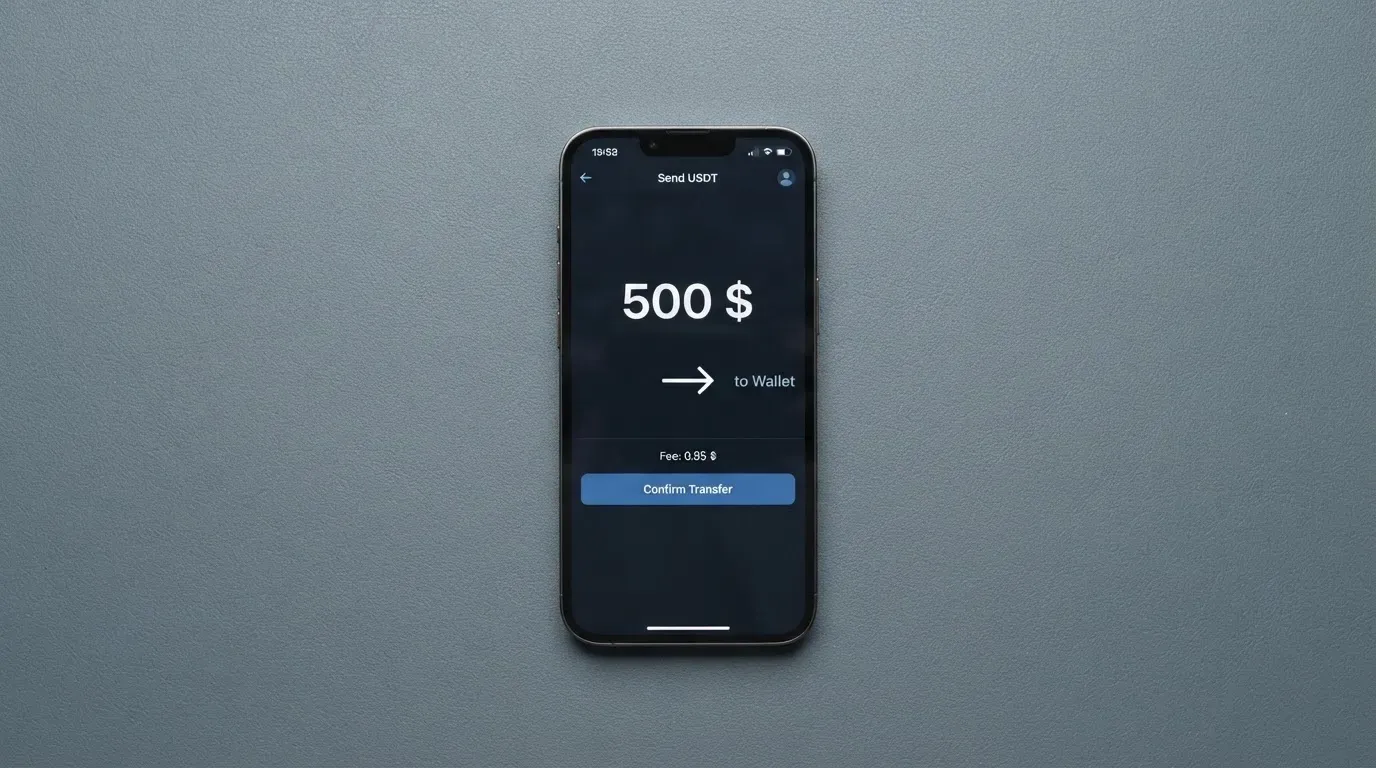
Here is the actual chain, as Toku describes it. Payroll settles in stablecoins to a connected Rain wallet, and the card draws on the settled balance. Rain supports USDG, USDC and RLUSD. So the sequence is: your employer sends stablecoins, the money arrives in a wallet connected to your Toku account, and your spending is drawn from what has settled. A user deposit flow is not stated, and neither is a withdrawal route — how, if at all, you would get money back off the card is not something the public pages answer.
There is no tier system, no menu of funding options, no choice of network for you to make. In a category where readers usually spend their energy on picking the right chain, Toku hands you one path. That is convenient right up until you want a different one.
Paying with it every day
Day to day, a Toku card is a Visa card and nothing more exotic: a virtual card instantly, a physical one where applicable, spent wherever Visa is accepted. Beyond that, the public pages are quiet in a way that matters for daily use. No dedicated card app is stated, and I did not check store ratings. Apple Pay, Google Pay and ATM access are not disclosed. Wallets, rewards or cashback are not stated. Disputes and chargeback handling are not stated.
On the background mechanics that will shape your experience regardless: a payment card number starts with a 6- or 8-digit issuer identification number that merchants can look up to see which institution and country issued it, and some apply extra scrutiny when the issuer country differs from the billing address — that is why a card issued in one country can look foreign to a shop in another. Some merchants decline prepaid or foreign BINs precisely because the lookup reveals the card type. On the other side, Apple Pay replaces the card number with a device-specific number stored in the Secure Element rather than on Apple’s servers, each payment using a one-time dynamic code, and the issuer can restrict a tokenised number to certain channels. If a declined authorisation leaves a hold, it can stay for several days, typically up to 7.
So the honest description of everyday use is: you will use it the way you use any Visa, with a small number of unknowns about how it behaves when something goes wrong. If a payment is declined, I cannot tell you from the published material what support you will reach or how quickly.
What can go wrong
I found no official incidents, and no Reddit or forum complaints surfaced in the reviews search. That is mild good news and thin evidence — the card is young and small, so a low complaint count may simply mean a low number of users. On Trustpilot the score is 3.2 out of 5 from a single review, which is too thin to draw themes from.
The structural risks are worth naming plainly, because they follow from the product design rather than from anything Toku has done wrong. Toku (WorkCo Inc per starting data) provides payroll and compliance infrastructure, and the page says the card is issued by a partner under a Visa licence. Rain’s general footer states that Visa debit cards are issued by Cross River Bank, Member FDIC, under a Visa U.S.A. Inc. licence, with Rain Products, Inc. as programme manager rather than a bank — but whether that applies to the Toku card specifically is not stated, and I would not assume it is.
The spending layer sits on a connected Rain wallet, and Rain says it is not a bank, exchange or asset custodian. Two-factor authentication and a card-freeze control are not stated. Support runs through the Toku team via a demo call and a general support link; card-specific channels, languages and working hours are not stated.
Three general risks apply to this category whatever the issuer. Custody: crypto transfers are typically irreversible, a stolen private key has no built-in recovery, and custodians have a real record of failure — Mt. Gox (about US$350 million reported stolen, 2011-2014), Coincheck (about US$400 million, 2018) and Ronin Network (US$625 million, 2022). Stablecoins can depeg: TerraUSD collapsed in May 2022 and USDC temporarily lost its peg in March 2023 during the US banking crisis. And programmes can end: Visa terminated its global agreements with FTX on 13 November 2022 and the FTX US debit card was wound down by its issuer, while WaveCrest was suspended by Visa in Europe in 2018, closing all WaveCrest-issued Visa programmes. Visa and Mastercard do not issue crypto cards to consumers themselves; they license issuers and can suspend a programme. If Toku’s payroll chain or its issuing partner changed direction, your card’s future would change with it.
On support for a frozen or disputed payment: a chargeback is a refund ordered by the issuer, with reason codes such as fraud, duplicate billing or goods not received; US debit reversal rights come from Regulation E, prepaid coverage varies and should not be assumed; and under 3-D Secure, liability for fraudulent online payments can shift from merchant to bank. None of that is Toku-specific advice — it is the frame in which any unanswered dispute question sits.
The context worth holding: in June 2025 Rain and Toku announced a stablecoin payroll partnership covering USDC, RLUSD and USDG, across 100+ jurisdictions for payroll. That is the partnership the card sits on.
What to take instead
If you want a card you control, the alternatives below come with more published detail — sometimes much more. None of them is a Toku equivalent, and I am not recommending any of them outright; I am showing you what a well-documented version of this product looks like, so you can see how much the missing numbers here cost you.
| Option | Score | Card and cost | Availability |
|---|---|---|---|
| Toku | 5.2 / 10 | Toku-branded Visa; virtual instantly, physical where applicable; costs not stated | Payroll recipients in the US and Latin America (Mexico, Colombia, Brazil named); APAC listed as “APAC Q2 2026” |
| MetaMask | 7.1 / 10 | Mastercard; virtual free with no annual or maintenance fee, Metal $199/year; “minimal fee for each transaction” with no amount stated | Sign-up open in 45 listed countries/territories; proof of residency required; other regions on a waitlist; US/UK sign-ups temporarily closed |
| KAST | 6.1 / 10 | Visa Platinum/Infinite; Standard 0 USD/year, Premium 1,000 USD/year, Private 10,000 USD/year billed annually upfront; FX fee 0.5%–1.75% | Residence-based list shown at KYC, country list not published; citizenship and ID matter, VPN does not bypass |
| TokenPocket | 5.8 / 10 | Visa/Mastercard debit; NFT creation fee partly covered, user pays “a small portion”; 1% fee on depositing cryptocurrency | Visa debit for a list of European countries/territories; Mastercard debit for Australia, Canada, Hong Kong, Japan, Taiwan, New Zealand, Singapore, South Korea, UK and others; Americas “planned for Q2 2025” |
Where each is more honest than Toku:
- MetaMask publishes a fee structure and two card tiers, states that there is no foreign transaction fee and that the Mastercard rate is used, and names its networks and tokens: Linea, Base, Monad and Solana, with mUSD, wETH, EURe, GBPe, USDC and USDT among those listed. Its catch is availability: ineligible regions limit sign-ups rather than spending, and US and UK sign-ups are temporarily closed.
- KAST prints the most complete fee table of the three: stablecoin top-up 0%, card spend in USD 0%, transaction fee 0%, Apple/Google Pay 0%, non-USD FX fee 0.5%–1.75% depending on residence country, transaction country and card programme, non-USD transactions under 25 USD at 0.10 USD, and a 0.50 USD fee on a declined transaction for insufficient balance. Cashback is 1.5% on the first 2,000 USD/month for Standard, 2% on the first 10,000 USD/month for Premium and 3% on the first 40,000 USD/month for Private. The catch is its membership pricing at the top tier and the fact that you need your own stablecoins.
- TokenPocket is the weakest-documented of the three and still beats Toku on fees: “Apart from these, TP Card does not charge any additional fees”, with a 1% fee on depositing cryptocurrency that it says will later be refunded through rewards or reduced transaction fees.
The pattern across all four: three of them let you fund the card yourself, which is the opposite of Toku’s design and better if you need control.
Who I would recommend it to
I would recommend Toku to exactly one person: someone already being paid in stablecoins by an employer on Toku, in the US or a listed Latin American country, who wants to spend that money without thinking about it. For them it removes friction, the virtual card is immediate, and there is nothing to top up or convert. That is a real benefit and the partnership behind it is documented.
I would not recommend it to anyone shopping for a spending card. The fee page is empty, so you cannot know what a purchase costs or what an ATM withdrawal costs; the currency is not stated; Apple Pay and Google Pay support is not disclosed; and there is no stated withdrawal route. A card that asks you to trust it and then publishes nothing about limits, fees or dispute handling is not a card I would build a daily routine on.
And if you are in the “APAC Q2 2026” group, wait and check back rather than planning around a date on a marketing page.
Frequently asked questions
What is the Toku card?
The Toku card is a Toku-branded Visa card issued to people who are paid in stablecoins through Toku’s payroll service. Your employer pays in stablecoins to a connected Rain wallet, and the card spends that settled balance. A virtual card is available immediately, and a physical one is issued where applicable. Visa is the only network named; Mastercard is not mentioned.
How does the Toku card work?
It works as a Visa card drawing on a payroll balance rather than on money you deposit. Rain supports USDG, USDC and RLUSD, payroll settles into a connected Rain wallet, and spending comes out of what has settled. A prepaid card draws on a stored balance, and many crypto cards behave this way. How that conversion happens, what it costs and in what currency is not stated publicly.
Is Toku a bank?
No. Toku (WorkCo Inc per starting data) provides payroll and compliance infrastructure, and the page says the card is issued by a partner under a Visa licence. Rain’s footer states that its Visa debit cards are issued by Cross River Bank, Member FDIC, under a Visa U.S.A. Inc. licence, with Rain Products, Inc. as programme manager rather than a bank — but whether that applies to the Toku card is not stated.
Who owns Toku?
Toku is a US company, WorkCo Inc per the starting data for this review, operating payroll and compliance infrastructure for companies paying contractors. Rain is the partner that holds the wallet and issues the cards in the arrangement Toku describes. In June 2025 Rain and Toku announced a stablecoin payroll partnership covering USDC, RLUSD and USDG across 100+ jurisdictions for payroll.
Can I get the Toku card in my country?
Issuance is described as available now for recipients in the US and Latin America, with Mexico, Colombia and Brazil named on the page. The Asia-Pacific region is listed as “APAC Q2 2026”, which is a plan rather than an available product. The card is for payroll recipients of Toku customers, so being in a listed country is necessary but not sufficient.
Is the Toku card free, and what are the fees?
The public pages do not say. Issuance cost, monthly fee, conversion fee, FX fee, ATM fees, daily limits and monthly limits are all not stated, and no tiers are published. With every cost line blank, you cannot compute what a purchase will cost you in advance. That absence, rather than a high number, is why cost scored 5 out of 10 here.
Can I top up the Toku card myself?
No — you do not top it up. Funding comes from employer payroll paid in stablecoins to your connected Rain wallet, and the card draws on the settled balance; Rain supports USDG, USDC and RLUSD. A user deposit flow is not stated, and a withdrawal route is not stated either, so how you would take money back off the card is something to ask Toku about directly.
Does Toku require KYC, and can I use it in Apple Pay?
Toku describes a “Standard KYC process at issuance”, so recipients verify identity once when the card is created; the documents, proof of address and age requirements are not stated. Apple Pay, Google Pay and ATM access are all not disclosed, so I cannot confirm the card can be added to a phone wallet. In general, Apple Pay replaces the card number with a device-specific number, and each payment uses a one-time code.
Is the Toku card safe?
There is no single answer. I found no official incidents and no Reddit or forum complaints in the reviews search, but Trustpilot shows 3.2 out of 5 from a single review — too little to draw themes from. Structurally, stablecoins can lose their peg, transfers are typically irreversible with no recovery for a stolen key, and card programmes have been wound down before when a network or issuer withdrew.
Is Toku worth it, compared with MetaMask, KAST or TokenPocket?
It depends entirely on how you are paid. If you already receive stablecoin payroll through Toku, the value is that nothing needs topping up. If you are choosing a card, MetaMask (7.1), KAST (6.1) and TokenPocket (5.8) all publish more about costs and let you fund the card yourself — MetaMask with a free virtual tier, KAST with a full fee table, TokenPocket with no additional fees beyond a partly covered NFT creation fee and a 1% deposit fee.
Wallet cards put to the test – cryptocardtested
Content created by the «cryptocardtested» team