
I read the fine print so you don't have to: the Anon card, examined without the sales pitch
 Available in US
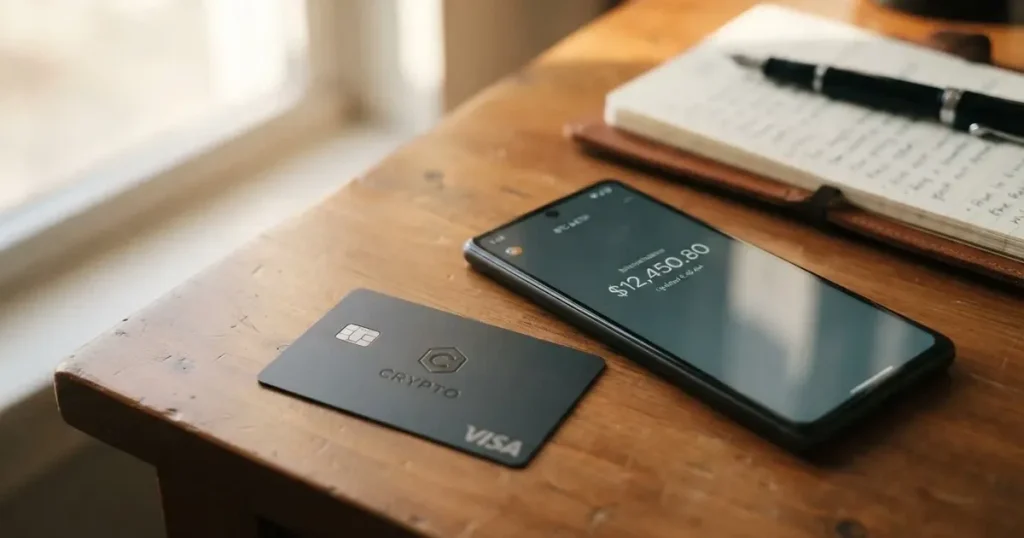
The Anon card is a virtual Visa you open with an email address, load with crypto, and spend online without handing over identity documents. That sounds like a niche tool with a narrow purpose, and it is one: I scored it 5.6 out of 10. The appeal is real but thin, and the details that would make a card trustworthy — what a card actually costs, which networks the crypto arrives on, who the issuing partner is — are largely absent from the company’s public pages. If you just want to pay for something once without a bank account in your name, the idea fits. If you want to know exactly what a payment costs before you make it, this card will not tell you.
The conditions described here are current as of October 28, 2026.
Verdict: who the Anon card suits, and who it does not
Anon is built for a very particular person: someone who wants to make an anonymous one-off online payment, sign up with only an email, and not open a bank account in their own name to do it. If that is you, the concept is clean and the country coverage is unusually broad. If you are comparing cards to find the cheapest way to spend crypto every day, or the safest place to hold a balance, Anon loses on both counts — the score table below makes that plain.
The score breaks down as follows, criterion by criterion.
| Criterion | Mark | Why, in short |
|---|---|---|
| Who can get it | 9 / 10 | Not redeemable in 22 named countries; the rest of the world is open; no KYC, email is enough |
| Cost | 5 / 10 | Creation and load fees apply but the amount is never published; conversion fee at top-up not stated; no extra fees on online buys |
| Top-up options | 7 / 10 | 10+ cryptocurrencies accepted; networks not named; up to $1,000 per card, funded once |
| Reliability and complaints | 3 / 10 | Anon Services, Inc. is not a bank; issuing partners not named; user reports of loading failures and silence from support |
| Everyday use | 3 / 10 | Virtual Visa only; Apple Pay / Google Pay only above $500; no 3-D Secure; no ATM; card lives 60 days |
That total of 5.6 / 10 is not a rounding of a bad product. It is a good idea held back by missing information and a thin track record. Read the rest of this page before you decide, because the gaps in the fee and network details are exactly the gaps that decide whether this card works for you.
Will they give you the card?
Anon will issue you the card almost anywhere, and this is the strongest part of the offer. There is no KYC: the company states it will never ask for identification or personal information, and signing up needs only an email address. There are no tiers and no verification levels — one flat, open door.
The catch is a list of places the card will not work. It is not redeemable in Albania, Belarus, Congo, Democratic Republic of the Congo, Côte d’Ivoire, Cuba, Iran, Iraq, North Korea, South Korea, Lebanon, Libya, Myanmar, Nicaragua, Pakistan, Somalia, South Sudan, Sudan, Syria, Venezuela, Yemen, and Zimbabwe — 22 countries in all. Russia is not on that list. One thing the public pages do not say is whether these rules follow your citizenship or where you live, so if you are near a border or hold a passport from one of those countries, that ambiguity is yours to raise with support, not something the site settles for you. The card itself is virtual only — a Visa-branded debit product, issued by unnamed partner financial institutions under a licence from Visa U.S.A. Inc., with the balance held in US dollars.
So: open to almost everyone, but only useful in the places the card is actually accepted.
How to get it
Getting the Anon card is deliberately minimal, and that minimalism is the product. The sign-up flow has three steps: register with your email, fund the balance with crypto, and create the virtual card. That is the whole sequence. No documents are collected at any point, and there is no waiting period for approval because there is nothing to approve. Because the card is virtual only, delivery is not a step you will encounter — there is no plastic in the post, ever. Once created, it behaves like any other online Visa for purchases.
That simplicity is also the tradeoff. A card that never asks who you are also never knows anything about you, which is precisely why its support and dispute options are thin (we come back to this under what can go wrong).
Fees: what it really costs
This is where the card is hardest to judge, because the numbers that matter are the ones the company does not publish. At issuance there is a creation and load fee — described only as “standard card creation and load fees apply” — and it is non-refundable, but the amount is never listed. No monthly fee is stated, either way: the pages simply do not say.
| Fee or limit | What the card states |
|---|---|
| Card creation / load fee | Applies at issuance, non-refundable, amount not listed |
| Monthly fee | Not stated |
| Crypto-to-USD conversion | Done automatically on deposit; fee or spread not stated |
| FX fee | Not stated |
| Online purchase fees | “No additional fees” for online purchases |
| ATM | Not applicable (virtual card only) |
| Per-card balance limit | Up to 1,000 USD |
| Funding frequency | Each card can be funded only once |
| Daily / monthly spend limits | Not stated |
| Cash redemption | Balance is not redeemable for cash, outside limited legal exceptions |
Let me walk a few everyday payments through what that table actually means for you. First, buying a $20 subscription online: the card says “no additional fees” for online purchases, and your crypto was already converted to USD when it was deposited, so if you funded the card with exactly what you needed, the $20 comes out of the balance and nothing is added on top. Second, buying something priced in euros or pounds with a dollar balance: there is a currency conversion, and no FX fee or spread is published, so you cannot know in advance what it costs you — that unknown sits inside every one-off deal. Third, loading the card: the creation and load fee is charged once and is non-refundable, and since each card can be funded only once, a mistaken load is not a second attempt you can fix by trying again.
None of that is fraud or a hidden trap; it is simply missing arithmetic. If knowing the all-in cost before you commit is part of how you choose a card, that gap alone may rule Anon out for you.
How to Top up the card
Topping up Anon is a crypto transfer, and that is the heart of the card’s design. It accepts over 10+ cryptocurrencies: Bitcoin, Litecoin, Ethereum, Bitcoin Cash and USDT are named on the homepage, with the starting data also listing XMR, USDC, SOL and XRP. Your crypto is converted to US dollars on deposit, so what the card spends is dollars, not coin. Monero balances are credited once confirmed on the Monero network.
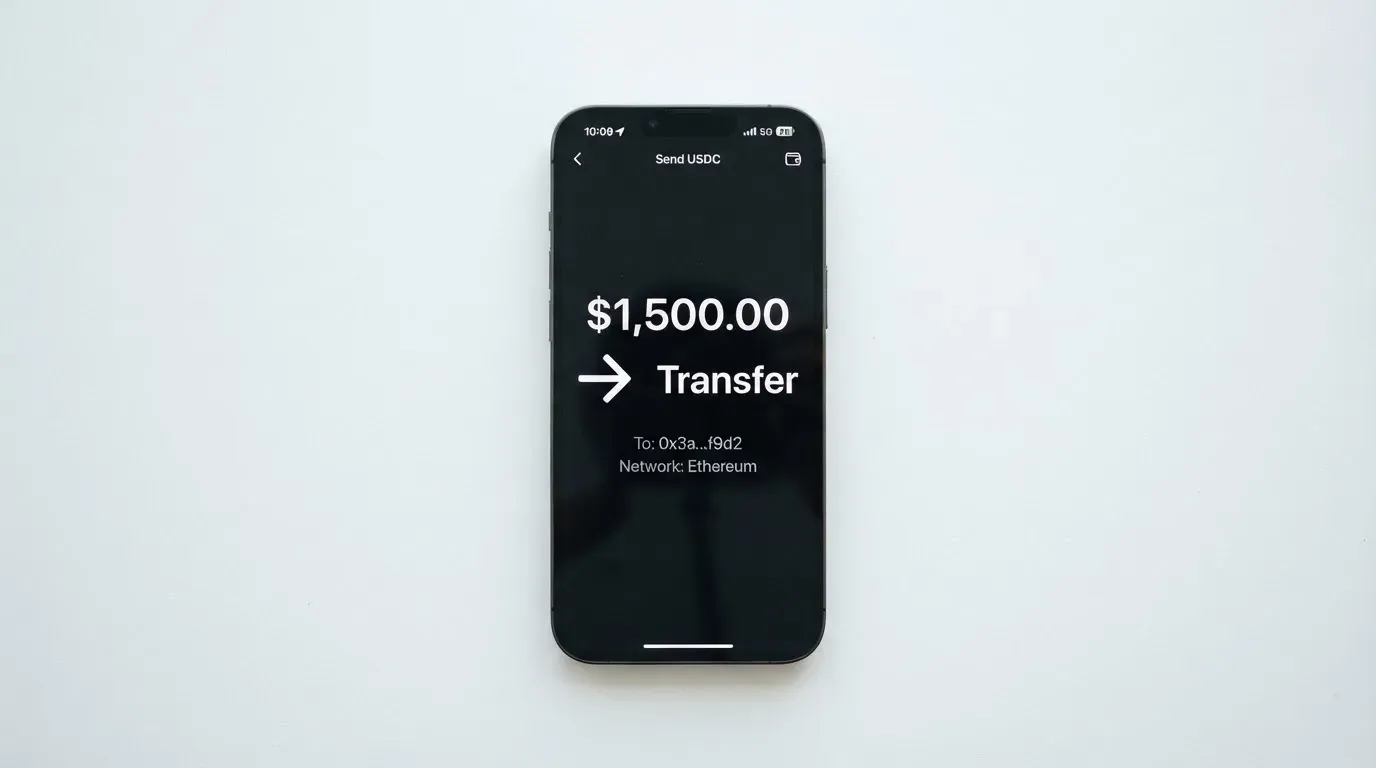
Two things to keep in mind as you plan a deposit. First, the networks are not specified on the public pages. Sending on the wrong network is the classic irreversible mistake in crypto — a transfer to an address on a different chain can be lost or need manual recovery with no guarantee — so you would want support to confirm the exact network and address before you send anything substantial. Second, the practical limits: each card can be funded only once, up to $1,000 USD. There is no published deposit fee or minimum beyond that.
On the way out, the balance is not redeemable for cash outside limited legal exceptions. If you delete the card, unspent balance can be returned to Anon credit — but that credit is not cash, and after 12 months of inactivity it may be reduced, and the company reserves the right to close an account. Think of money on an Anon card as money you intend to spend, not money you intend to store.
Paying with it every day
“Everyday” is the word that does this card the least justice. The Anon card is virtual-only — there is no physical card to tap, slide, or hand over at a counter, so it does not function as an ordinary in-store payment card. What it does offer is online spending, and for that the picture is mixed.
The good part: no 3-D Secure, and no extra fees on online purchases. The catch: Apple Pay and Google Pay work only on cards loaded with more than $500 USD, which sits awkwardly against the $1,000 cap and the one-funding rule — you have to load over half the maximum to use your phone. There is no store app; you sign in on the web at open.paywithanon.com. There is no cashback or rewards programme stated on the page. And because there is no 3-D Secure, merchants that require it will not process the payment — a real ceiling on where it works.
So the honest picture: fine for paying a bill or subscribing to a service online, but not a card you keep in your wallet for coffee. If “everyday use” is what you are shopping for, this is the wrong shape of product.
What can go wrong
The concrete risks here are not dramatic; they are mundane and that is almost worse. Let me take them in order of how likely they are to affect you.
- The card is not redeemable in 22 countries, including South Korea, Syria, Iran, Venezuela, Pakistan, Iraq and others. If you are in one, it simply will not work. The pages do not clarify whether this follows citizenship or residence.
- Balance is custodial. The balance is held by Anon in US dollars, so you are trusting the company with the funds, and the page does not mention two-factor authentication, an in-app freeze, or spending controls.
- Refunds and disputes are one-sided. Merchant refunds return to the original Anon card, the company says it “cannot refund you if you are unable to use your card with all or specific merchants,” and in an ownership dispute “Anon will be the sole arbiter.” No chargeback process or time frames are stated.
- Inactivity erodes value. After 12 months without activity, credit balance “may result in reductions,” and the company may close an account.
- Card lifespan is short. Each card must be used within 60 days of creation.
- Complaints are a real signal. While no official incidents were found, user reports on AlternativeTo (December 2025, November 2024, October 2023) describe the service working “until you try to load a card,” after which support stops responding, and some low-activity accounts calling it a “scam.” A separate report on stacker.news (22–23 October 2023) raised doubts about the company’s legitimacy and missing details such as a VAT number. These are unofficial user reports, not confirmed by the card, but they are consistent enough to take seriously.
The wider pattern is worth naming: crypto card programmes have a history of closing. Visa terminated its global agreements with FTX in November 2022, and WaveCrest, a Visa issuer that supplied several crypto card brands, was suspended by Visa in Europe in 2018. Programmes typically end with new loads stopped, then spending stopped, then a request to withdraw what is left. Your money on a crypto card is never truly banked.
On the company itself: it is Anon Services, Inc., described as “a financial technology company, NOT A BANK,” with the state of incorporation not given and the issuing partner financial institutions not named. Support is by live chat and email, with hours and languages not stated. For scale, the site’s own statistics — last updated 05/03/2026 — show 154,918 total cards issued and USD volume of $59,231,973.12. Those numbers are real activity; they are not the same as a regulated issuer or a named partner you can hold to account.
What to take instead
If Anon’s idea appeals but its missing details do not, three comparable cards come up. Each is summarised honestly, with the same gaps noted where they exist.
Cardex — scored 5.6 / 10, on par with Anon. It markets “one crypto card, 200+ countries” with no country list or exclusions published, and its App Store listing is Naira-focused. It is a debit card on the VERVE, Visa, Mastercard and UnionPay networks, offering both virtual and physical cards per the App Store, with card currency Naira. It converts crypto to fiat at the moment of payment using what it calls an “AI-Powered Conversion Rate” that scans global exchange rates; no fee percentage is stated. Funding is via USDT, USDC and BTC wallets, networks not stated. Rewards not stated.
CardFlow — scored 4.9 / 10. It is aimed at Nigeria (“Nigeria’s smartest fintech card platform” and “Nigerians and global users”), with no country list published. The card is a virtual USD Mastercard created in about 3 minutes. Creating a virtual card is “completely free” per its FAQ, though no monthly fee is stated. Funding is Bitcoin, USDT, ETH or a Naira bank transfer, networks not stated. Fees and rewards not stated.
HyperCard — scored 4.7 / 10. Its official pages give no country list; the App Store says the card works in “more than 176 countries” (acceptance, not eligibility). It is a prepaid “HyperCard” with the network not stated on the App Store page and a balance in USD or EUR. You deposit crypto such as USDT, BTC or ETH in the app and it converts to USD or EUR on the card. No fees and no rewards stated on the pages I could read.
Where Anon stands out among these three: it is the only one of the four that advertises no KYC, and the only one that names its accepted cryptocurrencies as broadly as “10+” including Monero. Where it falls behind: none of the four publish a full cost breakdown, so if transparent pricing is your priority, you will not find it here either — but the other three at least name a free tier or a physical option. Anon’s honest niche remains the anonymous, single-use, online payment.
Who I would recommend it to
I would recommend the Anon card to exactly one kind of reader: someone who needs to make a one-off online payment, cannot or will not open a bank account in their name, and is content to load the money once, spend it within 60 days, and accept that the all-in fee — whatever it turns out to be — is unknown. If that is your situation, the card does its job: email in, crypto in, purchase out, no identity documents.
I would steer everyone else away. If you want to know what a payment costs before you make it, the unpublished creation, load and conversion fees rule it out. If you want to spend crypto day to day, a virtual-only card without a physical option, without 3-D Secure, and with phone wallets gated above $500 is not built for it. If you want your balance to be recoverable, “not redeemable for cash” and one-sided dispute terms ending with Anon as “sole arbiter” are the wrong shape. And if the idea of an unverified provider holding your money makes you uneasy — reasonably — the official complaints, and a support team that reportedly goes quiet once you try to load a card, are enough to make you cautious.
Anon is a clever, narrow tool. Know which one you are holding before you load it.
Frequently asked questions
What is the Anon card?
The Anon card is a virtual Visa you open with an email address and fund with cryptocurrency. The crypto is converted to US dollars and loaded as a balance you spend online. It is virtual-only, with no physical card ever sent. The provider is Anon Services, Inc., which describes itself as a financial technology company and explicitly not a bank. It is built mainly for one-off anonymous online payments.
Does the Anon card require KYC?
No. Anon states it will “never ask for any identification or personal information,” and sign-up needs only an email address. There are no KYC levels or verification tiers — the card has none. That openness is the main reason to consider it, and also the main reason the provider cannot help you in a dispute or verify you as the rightful owner of an account.
Is Anon a bank, and who owns it?
No, Anon is not a bank. The company behind it is Anon Services, Inc., described as “a financial technology company, NOT A BANK,” though the state it is incorporated in is not given. The card is issued by unnamed “partner Financial Institutions” under a licence from Visa U.S.A. Inc. Those partners are not named publicly, so the entity you ultimately hold the balance with is not fully identified on the public pages.
Where can I use the Anon card, and can I use it in my country?
You can use it online wherever Visa virtual cards are accepted and the card is not blocked, but it is not redeemable in 22 named countries: Albania, Belarus, Congo, Democratic Republic of the Congo, Côte d’Ivoire, Cuba, Iran, Iraq, North Korea, South Korea, Lebanon, Libya, Myanmar, Nicaragua, Pakistan, Somalia, South Sudan, Sudan, Syria, Venezuela, Yemen and Zimbabwe. Russia is not on the list. The pages do not say whether these rules follow your citizenship or where you live.
How do I top up the Anon card?
You send cryptocurrency to the card, and it is converted to US dollars on deposit. Anon accepts over 10+ cryptocurrencies — Bitcoin, Litecoin, Ethereum, Bitcoin Cash, USDT, plus XMR, USDC, SOL and XRP in the starting data. Monero is credited once confirmed on the Monero network. Keep in mind each card can be funded only once, up to $1,000, and the exact networks are not specified publicly.
How much does the Anon card cost?
This is the honest gap. A non-refundable card creation and load fee applies at issuance but the amount is never published, and no monthly fee is stated either way. Your crypto is converted to USD on deposit, but the conversion fee or spread is not disclosed, and no FX fee is stated. What the card does commit to is “no additional fees” for online purchases — so once loaded, spending the balance adds nothing on top.
Can I add the Anon card to Apple Wallet or Google Pay?
Yes, but with a catch: Apple Pay and Google Pay are available only for cards loaded with more than $500 USD. Since each card is funded once and holds at most $1,000, that means you must load over half the card’s maximum just to use it in a phone wallet. There is no store app to manage this — you sign in on the web at open.paywithanon.com. Below that $500 threshold, phone wallets are not an option.
Is the Anon card safe to use, and is it anonymous?
It is anonymous in the sense that it asks for no identification and no KYC, so it does not tie the payment to your identity on its face. It is not a self-custody product: the balance is held by Anon in US dollars, which means you are trusting a non-bank company with the funds, and there is no built-in recovery for transfers sent in error. The page does not mention two-factor authentication, an in-app freeze, or spending controls.
Can I withdraw money from an Anon card?
No — the balance is not redeemable for cash, outside limited legal exceptions. If you delete the card, any unspent balance can be returned to Anon credit, but that is credit, not cash, and after 12 months of inactivity it may be reduced; the company may also close an account. In practice, treat money you load as money you intend to spend, because that is what it is designed for.
Is the Anon card worth it?
For a single anonymous online payment when you have no way to open a normal account, the idea is sound and the score is 5.6 / 10 — genuinely useful for that one case. For everyday spending it is not: virtual-only, no physical card, no 3-D Secure (so merchants requiring it will decline), phone wallets only above $500, and a 60-day life per card. The unpublished creation, load and conversion fees also mean you cannot know the true cost before you commit.
Virtual cards put to the test – cryptocardtested
Content created by the «cryptocardtested» team