
A virtual dollar card built for one country, priced on a promise
 Available in US
If you have heard of Monica Pay, you have probably heard it framed as a way to spend crypto on a normal-looking Visa or Mastercard without touching a bank. That part is true in the sense that the card exists, it is virtual, it is denominated in US dollars, and it can be loaded from a crypto balance sold for Nigerian naira. Everything beyond that sentence is where the picture gets narrower, and much of it is narrower than the marketing suggests. I went through the company’s public pages, its terms, its app listings and its regulatory claims, and then sat with the awkward gaps that are left over.
The short version: this is a Nigeria-only product in practice, built around selling crypto for naira and loading a dollar card from the resulting naira balance. The fees on that loop are genuinely low — zero conversion fees are advertised on both selling crypto for naira and funding the card. But the same public pages do not disclose an issuing fee, ATM fees, spending limits, blocked merchant categories, wallet support, or who actually issues the card. It scores 5.6 out of 10.
The conditions described here are current as of October 28, 2026.
Verdict
Monica Pay gets 5.6 out of 10, and the shape of that number matters more than the number itself. The two strongest scores are the one that should be strongest for this product — cost — and the breadth of assets you can sell into the balance. The weak ones are the ones a card is supposed to be reliable about: everyday use, and how much the public record can tell you about the company behind it.
If you are a Nigerian resident who already holds crypto, already has a phone, and wants to convert to naira and then spend in dollars online without a traditional bank account in reach, the logic of this card makes sense. That is exactly the person it was built for, and the cost structure rewards that person.
If you are anywhere else, or you want a card that behaves like an ordinary everyday card — one that lives in Apple Pay, works at a cash machine, gives you a clear receipt of what it costs, and comes with a complaints process you can read — this is not the product for you. The country question is not a technicality here; there is no country list at all, only a Nigeria-centred page.
| Criterion | Score | Why |
|---|---|---|
| Who can get it | 2 / 10 | The page is Nigeria-centred (Lagos, EN-NG, NGN payouts) with no country list |
| Cost | 9 / 10 | 0% conversion fees on selling crypto for naira and funding the card; an unofficial listing cites a one-time $1 unlock fee |
| Top-up options | 7 / 10 | BTC, ETH, SOL, TRX, BBN, USDT and USDC sellable for naira, card funded from naira balance; networks not listed |
| Reliability and complaints | 6 / 10 | Monica Technologies Limited (Lagos), SEC VASP alignment claimed, issuer unnamed; App Store 4.6 from 15K ratings, Trustpilot 3.7 from 1 review |
| Everyday use | 4 / 10 | Virtual dollar Visa and Mastercard with NFC and QR; Apple Pay and Google Pay not mentioned, no ATM |
| Total | 5.6 / 10 | Strong on price and asset coverage, thin on transparency and everyday convenience |
The audience this serves is narrow and real: Nigerian residents spending crypto through a virtual dollar card. Read the rest of this page with that in mind, and the score either makes sense to you or it does not.
Will they give you the card
They will give it to you if the page is telling the truth about who it is built for, which is Nigeria. The site’s own signals point there: Lagos as the location, an English-Nigeria locale string, and payouts denominated in naira. There is no country list to check yourself against, so if you are not in Nigeria you are inferring from context rather than reading a rule.
What you can rely on is that the card itself is a Visa or Mastercard, which means it will be accepted wherever those networks are accepted — subject to the catch below. That is the good news. The less good news is the terms: Monica’s terms bar use from any jurisdiction where crypto-asset services are unlawful. So the geographic question has two layers. Can the card be accepted at a merchant? Almost certainly yes. May you use the service from where you sit? That depends on a restriction that is drafted broadly, not a per-country rule you can read.
The verification side is where the real gate is. Monica describes “one-screen KYC” in the app, and the terms say only “eligible verified Users” may apply. Documents required? Not stated. Minimum age? Not stated. What “eligible” means in practice? Not stated. That is three blanks in the one part of the process where transparency would help you most, because these are exactly the things you would otherwise discover by being refused.
One more thing worth knowing: the general verification tiers in the terms, clause 5.2, apply to naira withdrawals. Card-specific verification levels are not stated. In other words, the tier structure that governs pulling money out is documented; the one governing the card is not.
So: Nigerian residents, yes. Everyone else, you are reading around the edges of a document that was not written for you.
How to get it
The route is short, which is a genuine advantage. It runs through the mobile app — Monica is on iOS and Android — and verification happens in-app as “one-screen KYC”. Then you get a virtual dollar debit card. There is no physical card and no delivery, because it is virtual by design, not as a temporary substitute for a physical one. Both Visa and Mastercard are offered, and the Pay Cards support NFC tap-to-pay and QR.
What is not stated: which documents you need, how old you must be, how long approval takes, and whether the app’s one-screen flow is genuinely one screen or a compressed description of several steps. If any of those matter to you — and the first two usually do — the honest answer is that you will find out during the flow rather than before it.
One practical note on the app itself, since it is the whole product: the App Store listing for “Monica – Pay, Send, Bills” shows 4.6 from 15K ratings. That is a substantial rating volume and a healthy score for a finance app in one market, which is a better signal than you get from most new crypto products. It is also a rating of the app, not of the card, and it is not a substitute for knowing who issues the card.
Fees and what a payment actually costs
Here is the good part, and it is why the cost score is a 9 rather than something lower: Monica advertises 0% conversion fees both when you sell crypto for naira and when you fund the card from that naira balance. On the core loop of this product — crypto in, naira balance, dollar card — there is no conversion spread to pay at the app level.
What that 0% does not cover is the rest of the chain, and here I have to be blunt about what the company publishes and what it does not.
| Fee or limit | What Monica states |
|---|---|
| Card issuance | Not stated by Monica. Unofficial: a third-party app listing (2026) cites a one-time, non-refundable $1 fee to unlock the Virtual USD Card |
| Monthly or maintenance fee | Not stated |
| Crypto-to-naira conversion | 0% conversion fees |
| Card funding from naira balance | 0% conversion fees |
| FX spread | Set by the scheme operator; Monica does not retain it |
| ATM withdrawal | Not stated |
| Spending limits | Manageable in real time; no amounts published. Transactions outside Nigeria may be subject to “additional regulatory limits” |
| Tiers | A single tier |
| Card currency | USD, funded from a naira balance; multi-currency balances not stated |
Three everyday payments, and what actually applies:
A $30 subscription paid in USD. The conversion fee is zero. What you have not been shown is the FX spread, which Monica says is set by the scheme operator and which the company does not keep. So the 0% is real but it is not the whole cost of the transaction — it is the part of the cost you can see in the app.
A $60 purchase from a merchant outside Nigeria. Same zero conversion fee, but now the card’s terms explicitly warn that transactions outside Nigeria may be subject to “additional regulatory limits”. That is the sentence to notice: the card is USD, its home market is naira, and the regulatory attention appears to be highest when you use it furthest from where you signed up.
A withdrawal at a cash machine. I cannot tell you what this costs, because ATM fees are not stated and there is no ATM mentioned anywhere in the product’s public description. I would assume nothing here — assume you cannot do it, and check in the app before you rely on it.
The real cost picture, then: a genuinely attractive core rate, an unnamed spread taken elsewhere in the chain, an unofficial $1 unlock fee, and a set of costs the company has not published. Read the limits row again too — real-time spending limits are a control you can use, but with no amounts published, you cannot tell what the ceiling is.
How to top up
Topping up is where the design is most coherent, and it is worth walking through the intended flow exactly as the company describes it.
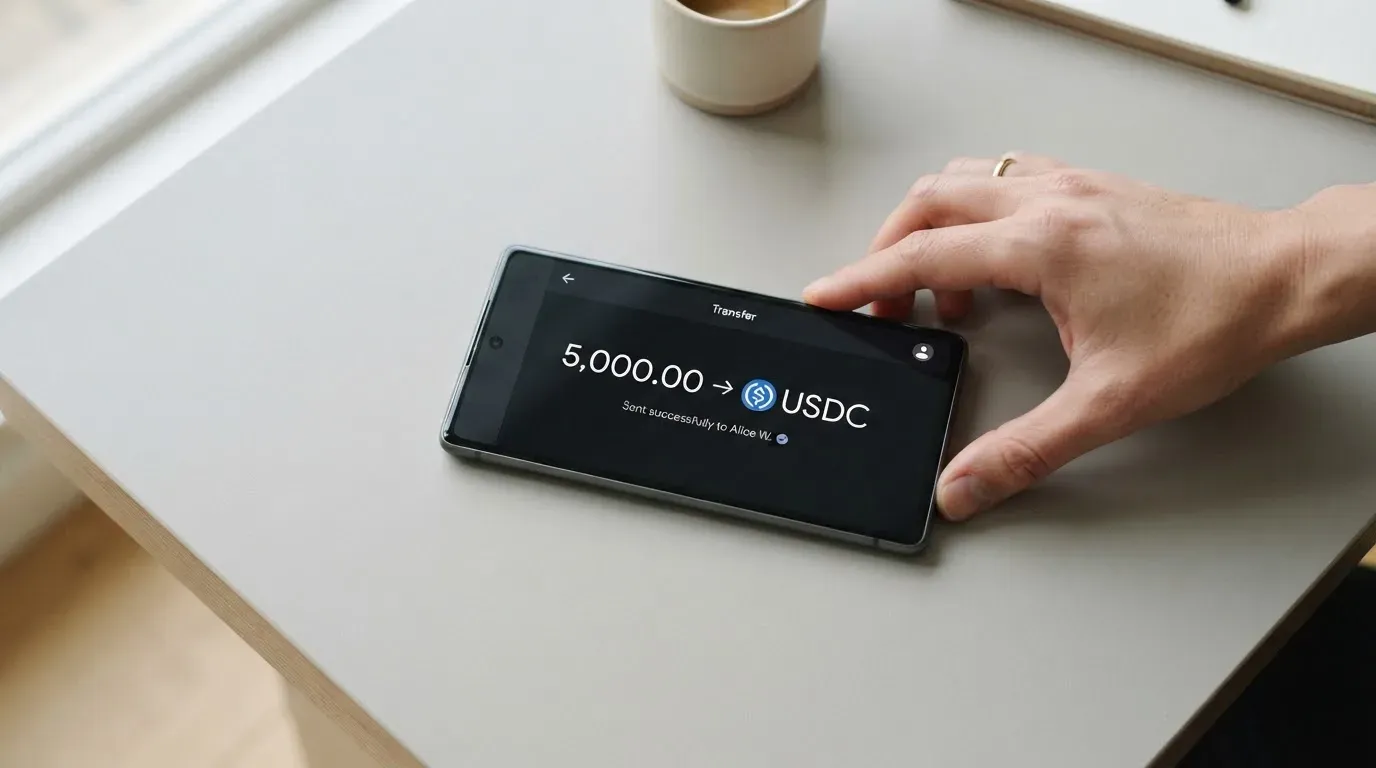
You sell BTC, ETH, SOL, TRX, BNB, USDT or USDC for naira inside Monica. The card is then loaded from that naira balance. Alternatively, you send crypto to a Monica wallet; it is converted to naira at the live rate and loaded to the card, and the company calls this instant. Naira can then reach your bank within 60 seconds of on-chain confirmation. The conversion fee on that step is 0%. The App Store listing also carries the line “Move money to your bank without fees”, with the same 60-second framing.
That is a clean, understandable loop. Seven assets, one currency of account, one card, no conversion fee in the middle.
Now the practical cautions, which are all about the same omission. The networks are not itemised. If you hold USDT, the chain matters enormously — USDT exists on Ethereum, Tron, Solana, Polygon, Avalanche and others, and sending on a network the provider does not support can mean a lost deposit or a manual support recovery with no guarantee. The same applies to the others. Minimum amounts are not stated, and neither is who pays the network fee. (Gas and bandwidth are charged by the blockchain, not by Monica — so “0% conversion fee” does not mean “0% cost” for the on-chain leg.)
One more gap: the route for returning card balance is not stated. You can get naira to your bank within 60 seconds. What happens to money sitting on the card if you want it back is a different question, and the answer is not published.
Paying with it every day
Day to day, the card is a virtual dollar Visa or Mastercard with NFC tap-to-pay and QR. That is the honest headline, and it is thinner than it sounds for a card meant to be used every day.
Apple Pay and Google Pay are not mentioned. For a card that lives entirely on a phone, that is a strange gap: tokenised mobile wallets are standard on ordinary cards, and their absence means you are tapping a virtual card in an app rather than a phone wallet. The company’s pages do not say whether wallet support exists, is coming, or is impossible for this product.
Rewards are not stated. Blocked merchant categories are not stated. This matters more than it sounds: many issuers block gambling categories by policy, and merchants themselves sometimes decline prepaid or foreign-issued cards because the BIN lookup reveals the card type and issuer country. A card issued in one country can simply look foreign to a shop in another.
And disputes are the quiet one. The card terms do not address disputes at all. What exists is the general Monica process: negotiation for 30 days, then arbitration in Lagos, under Nigerian governing law. If you are a Nigerian resident that is a workable route. If you are not, it is a route in a jurisdiction where you have no standing, no local lawyer and no leverage.
What can go wrong
I looked for official incidents and found none. I also looked for independent reviews of the virtual card specifically and found none. That absence cuts both ways: there is no documented disaster to point at, and there is also no third-party account of what happens when something goes wrong.
The company itself is Monica Technologies Limited, based in Lagos, Nigeria. It claims alignment with the SEC VASP framework, and compliance with the NDPA 2023 and NFIU on its site. The card issuer is an unnamed third-party card partner. I want to be precise about what that structure means, because it is the single most important thing to understand here.
A crypto card almost never has one institution behind it. The card network — Visa or Mastercard — sets the rules and routes the messages. The issuer, a licensed bank or e-money institution, holds the actual card programme and holds your balance. The crypto brand is frequently only a programme manager and a marketing front-end. So Monica telling you it is VASP-aligned tells you about the crypto side; it tells you nothing about who stands behind the card balance or which regulator licenses that entity. That name is not disclosed.
The Trustpilot picture is thin in a specific way: 3.7 from one review, five stars, dated May 19, 2026, on an unclaimed profile, read on October 21, 2026. One review is not a signal in either direction. It is not evidence of complaints, and it is certainly not evidence of reliability.
On security, the only control mentioned anywhere is real-time spending limits. The custody model — who holds your crypto, whether you hold keys, how the wallet is secured — is not stated. Support is a /get-support page; channels, languages and hours are not described. There is no published news or company-update record, so you have no way to see how the business is developing over time.
What to take instead
Three alternatives came up, and none of them is a clear upgrade. Each wins on a different axis, and the honest comparison is against Monica’s specific weaknesses rather than in the abstract.
| Monica Pay | International Visa Card | UNi Card | Whop Cards | |
|---|---|---|---|---|
| Score | 5.6 / 10 | 6.7 / 10 | 6.1 / 10 | 5.2 / 10 |
| Card | Virtual USD Visa and Mastercard | US-issued Platinum Visa, virtual; physical “coming soon” | Multicurrency Mastercard network card | Visa, works where Visa is accepted |
| Cost | Issuance not stated; 0% conversion fees | $5 one-time virtual issuance; no maintenance fee; plans Classic free, Pro $9.00/month, Max $19.00/month | “No annual fee”; issuance fee not stated | “No extra fees”; no amounts listed |
| Fees | FX spread set by scheme operator | USD use free on all plans; foreign currency at Visa exchange rate + 2% FX fee; deposits free | No annual or foreign transaction fee; converted at “live OTC rates”, “no hidden exchange fees” | Not stated |
| Who it is for | Nigeria-centred, no country list | Excludes residents or registrants of Belarus, mainland China, North Korea, Cuba, India, Iraq, Iran, Israel, Myanmar, Nepal, Nicaragua, Russia, Syria, Turkey, Ukraine, Venezuela, Vietnam; FATF grey list case by case | Not stated | 31 US states for consumers, 41 for businesses; unsupported countries include Belarus, mainland China, Cuba, Hong Kong, India, Iran, Iraq, Israel, Myanmar, Nepal, Nicaragua, North Korea, Russia, Syria, Turkey, Ukraine, Venezuela, Vietnam |
| Funding | Sell seven assets for naira, load card | USDC or USDT at 1:1, plus USD, EUR, SEPA, SWIFT, FedNow | Not stated | Whop balance, backed by stablecoin collateral from a linked wallet |
| Rewards | Not stated | No cashback stated | “Spend-to-Earn” up to 3% | 5% cashback at select merchants, currently Uber |
If you want the most legible cost structure in dollars, the International Visa Card is the clearest of the four: $5 to open, no maintenance fee, free card use in USD, and an explicit foreign currency cost stated as the Visa exchange rate plus a 2% FX fee. You give up the crypto-native side and the zero-conversion loop, and you gain a number you can actually predict. Its exclusion list is longer and stricter than Monica’s single-line restriction, so check your own country against it rather than assuming.
If fees are your dominant concern and you want multicurrency, the UNi Card states no annual fee and no foreign transaction fee, with conversion at live OTC rates and “no hidden exchange fees”, plus up to 3% spend rewards. But its eligibility is not stated, its funding route is not stated, and its score lands below the International Visa Card’s.
Whop Cards scores lowest at 5.2. It offers 5% cashback at select merchants, currently Uber, and a pending balance you can spend as soon as a payment arrives, but its fee amounts are not stated and its eligibility framework is US-state-based.
For the Nigerian resident holding crypto, none of these is a like-for-like substitute. Monica’s advantage is precisely that it converts crypto to naira inside the app and loads a dollar card. That is the job.
Who I would recommend it to
I would recommend this card to a Nigerian resident who already holds crypto, already has a working smartphone, and wants to spend in dollars without waiting on a bank. The 0% conversion fees on both halves of the crypto-to-card loop are the best thing about it, and seven supported assets is a wider door than most competitors leave open.
I would steer away if any of these are true of you: you are outside Nigeria and cannot confirm the terms permit your location; you need the card in Apple Pay or Google Pay; you need a cash machine; you need to know exactly what you are being charged; or you need a published complaints process for the card itself. None of those is a quirk — they are absences in the public documentation, and the documentation is what you have to decide with.
Two things to check before you commit, in this order. First, ask the app directly what your spending limit is and whether transactions outside Nigeria will be restricted on your account, since the terms warn about it without defining it. Second, find out who the issuing partner is and which regulator licenses them, because that entity — not Monica — is the one that holds your balance and the one that would have to make you whole.
And one piece of general context that applies to every card like this, not just this one: a card payment number starts with six or eight digits identifying the issuing institution, and merchants can look it up and apply extra scrutiny when the issuer country differs from the billing address. That is ordinary, and it is also why a virtual dollar card issued from one country sometimes gets declined by a shop in another. It is not a fault in your setup. It is how the system works.
Frequently asked questions
What is Monica Pay card?
Monica Pay is a virtual US dollar debit card offered on both Visa and Mastercard networks, sold by Monica Technologies Limited, a company based in Lagos, Nigeria. The card supports NFC tap-to-pay and QR payments, has no physical version, and is funded from a naira balance that you create by selling cryptocurrency inside the app. It is built for Nigerian residents who want to spend crypto through a dollar card rather than moving money through a traditional bank.
How does Monica Pay card work?
You sell BTC, ETH, SOL, TRX, BBN, USDT or USDC for naira inside the app, then load the card from that naira balance. The card spends in USD. Alternatively you can send crypto to a Monica wallet, where it is converted to naira at the live rate and loaded to the card, which the company describes as instant. Naira can reach your bank within 60 seconds of on-chain confirmation. Monica advertises 0% conversion fees at both conversion steps.
Is Monica Pay a bank?
No — it is not described as a bank, and the card is issued by an unnamed third-party card partner rather than by Monica itself. That structure is typical of crypto cards: the crypto brand manages the programme and the app, while a licensed issuer holds the actual card programme and your balance. Monica says it is aligned with the SEC VASP framework and compliant with the NDPA 2023 and NFIU, but the identity of the issuer and its regulator are not disclosed on the public pages.
Who owns Monica Pay?
The operator is Monica Technologies Limited, registered in Lagos, Nigeria. On the site it claims alignment with the SEC VASP framework and compliance with Nigeria’s NDPA 2023 and the NFIU. Beyond that company identity, the card issuer is not named, and the app carries an unclaimed Trustpilot profile showing 3.7 from a single review dated May 19, 2026 — too little to establish anything either way.
Is Monica Pay card available outside Nigeria?
The public pages do not publish a country list. The site is Nigeria-centred, showing Lagos, an EN-NG locale and naira payouts, so the practical answer is that it is built for and documented for Nigeria. The card itself, being Visa or Mastercard, would be accepted wherever those networks work. But the terms bar use from any jurisdiction where crypto-asset services are unlawful, which is a broad restriction rather than a per-country rule.
Does Monica Pay card require KYC?
Yes — the app describes “one-screen KYC”, and the terms state that only eligible verified Users may apply. What is not stated is which documents are required, what the minimum age is, or what makes a user eligible. General verification tiers under clause 5.2 of the terms apply to naira withdrawals, but card-specific verification levels are not published.
How much does Monica Pay card cost?
Monica advertises 0% conversion fees when you sell crypto for naira and when you fund the card from that naira balance. The FX spread is set by the scheme operator and Monica says it does not retain it. Issuance is not stated by Monica; a third-party app listing from 2026 cites a one-time, non-refundable $1 fee to unlock the virtual USD card, which is unofficial and not confirmed by the company. Other fees are not stated.
How do I top up Monica Pay card?
Sell one of the supported assets — BTC, ETH, SOL, TRX, BNB, USDT or USDC — for naira in the app, then load the card from the naira balance. You can also send crypto to a Monica wallet for conversion at the live rate. Networks are not itemised, minimums are not stated, and it is not stated who pays the network fee. Check the supported network before sending, because transfers on the wrong chain can be lost.
Can I add Monica Pay card to Apple Wallet?
Apple Pay and Google Pay are not mentioned anywhere in Monica’s public documentation, so there is nothing to confirm either way from the company’s own pages. This is a real limitation for a card that exists only on your phone. Related details are also absent: whether rewards exist, which merchant categories are blocked, and what ATM withdrawals cost — there is no ATM mentioned at all.
Is Monica Pay card safe?
I found no official incident and no independent reviews of the virtual card, which means there is nothing pointing at a problem and nothing vouching for it either. The only security control mentioned anywhere is real-time spending limits. The custody model is not stated, so it is unclear who holds the crypto and how it is secured. Support is a /get-support page with no channels, languages or hours described.
App and neobank cards put to the test – cryptocardtested
Content created by the «cryptocardtested» team