
PokePay reviewed: a Hong Kong Visa card for USDT users, with costs it publishes and costs it doesn't
 Available in US
The PokePay card is a Visa you load with crypto and spend like an ordinary payment card, and the part of it that most needs reading carefully is who it is actually built for. The card’s own site says its content is intended only for Hong Kong residents living in Hong Kong. That single line shapes everything else: the limits are quoted in Hong Kong dollars, the audience the card seems designed around is people already holding USDT, and the questions a reader in, say, Nairobi or Lima will ask — can I get one, will it work in my country — are not answered by the card anywhere I could find.
So this review has an unusual balance to strike. On cost, PokePay says clean things: 0 monthly fees, 0 annual fees, 0% cross-border transaction fees. On almost everything else, the public pages are quiet. The crypto conversion fee or spread is not stated. The card currency is not stated. The monthly spending limit is not stated. The issuing bank is not named. That is not me being harsh about a fine product; it is what the pages say, and you should plan your money around what is written rather than what might be true.
I have read the card’s site, its FAQ, its terms, its app listings and the third-party reporting around it, and I score it 5.4 out of 10. If you live in Hong Kong, hold USDT, and want a physical Visa that costs nothing per month, that number makes sense. If you are anywhere else and are hoping a crypto card will solve a banking problem, I would look at the alternatives before you commit a single transfer.
The conditions described here are current as of October 28, 2026.
Score card: 5.4 / 10
| Criterion | Mark | Why |
|---|---|---|
| Who can get it | 2 / 10 | The site is stated to be for Hong Kong residents living in Hong Kong; unofficial sources say most countries are covered and the United States is closed |
| Cost | 8 / 10 | Monthly and annual fees are 0, cross-border commission 0%; the crypto conversion fee is not disclosed |
| Top-up options | 8 / 10 | USDT, USDC, BTC and ETH; unofficial sources list five networks including ERC20, Arbitrum, BNB Chain, Polygon and AVAX C-Chain |
| Reliability and complaints | 4 / 10 | The issuing bank is not named and the licences are listed by the service itself; an unofficial report describes a wave of blocks in the second half of 2025 |
| Everyday use | 6 / 10 | Physical and virtual Visa, cash withdrawal mentioned; unofficial reports say Apple Pay is not supported |
Total: 5.4 / 10
Two of the five lines are 8 out of 10 and they are both about money moving in and monthly upkeep: cheap to hold, flexible to fund. Two more are low because of what is missing rather than what is broken — the eligibility line is a statement about Hong Kong, and the reliability line is thin because the bank behind the card is never named. The everyday-use line sits in the middle because the card plainly works for card payments, just with gaps around mobile wallets.
Will they give you the card?
The short answer: if you are a Hong Kong resident living in Hong Kong, that is the audience the site describes. Everyone else is in territory the card does not explain.
The card’s own site states: “The content of our website is only for Hong Kong residents living in Hong Kong”, and adds that promotion outside Hong Kong may require permits. That is a clear statement about who the service is built for, and it is the first thing to check before anything else — not because you need to be in Hong Kong forever, but because the card publishes its limits in Hong Kong dollars and directs its whole information architecture at one place.
Third-party material adds colour that the card itself does not. Unofficial sources, an affiliate review site reporting in June 2026, say the service is available in “most countries” and that the United States is explicitly restricted. The same source notes that one German-language version of the site also lists China as blocked. I would treat all of that as unofficial: it is not confirmed by the card, and where a third-party page and the card’s own pages disagree, the card’s own pages are the ones that count.
What none of this resolves is the basis of eligibility. The card does not say whether it tests where you live, where you are a legal resident, or what your citizenship is. That matters more than it sounds. If the test is residence, moving a registration is a different problem from holding a different passport; if the test is citizenship, no address change helps. Since it is not stated, treat both as open questions.
| Where you are | What the material says | How firm it is |
|---|---|---|
| Hong Kong | The site’s stated audience: residents living in Hong Kong | Card’s own statement |
| United States | Explicitly restricted | Unofficial, June 2026 |
| Most other countries | Available in “most countries” | Unofficial, June 2026 |
| China | Listed as blocked on one German-language version | Unofficial, June 2026 |
| Everywhere else | Not addressed | “not stated” |
One more thing worth knowing before you apply anywhere: KYC certification is required before you can use services, which is normal and lawful, and the data you type in must match your documents exactly. There is no way around that, and there should not be — anyone offering to skip identity checks for you is offering you a different company, not a shortcut inside this one.
How to get it
The sequence is ordinary: verify your identity, then receive a physical card or use the virtual one. The details are worth reading because several of them are precise where you would expect vagueness, and silent where you would expect precision.
- Identity verification comes first. KYC certification is required, and the data you enter “must be exactly the same as the uploaded documents”. Which documents — proof of address, proof of age — are “not stated”.
- Email verification is also required. The name you enter must exactly match the passport name, usually in English; mismatches cause failure.
- The card works best in Google Chrome with the camera enabled, because the verification flow relies on it.
- If the checks are inconclusive, the service may ask for enhanced due diligence, including your source of funds or wealth. The verification levels themselves, and how long they take, are “not stated”.
On the card itself: it exists in physical and virtual form, on Visa. The card currency is “not stated” — and I would want that answered before I loaded anything substantial, because a card that spends in a currency you did not choose changes what a 0% cross-border fee is actually worth.
Delivery is where expectations should be set low. Physical cards take about 10 to 30 working days depending on the country or region, and may take longer. Which countries, what delivery costs, and what a replacement card costs are all “not stated”.
Unofficial reporting from June 2026 describes the verification step itself in more detail than the card does: KYC free, taking under a minute, handled through Didit, requiring an ID document plus a face scan, an age range of 18 to 80 in the app, and a balance above 0 USD needed before KYC is possible. Treat that as a third-party description of the flow, not as a promise from the card. If you have never held crypto at all, note the practical implication: you would need a small balance before you could even start the verification.
Fees: what it really costs
The headline numbers are genuinely good, and I want to be fair before I list the gaps. PokePay states 0 monthly fees, 0 annual fees, no micro-transaction fees, and 0% cross-border transaction fees. There is a single tier — no account tiers are described on the site or in the FAQ — so there is no upgrade to be tempted into.

The problem is everything the card does not put next to those zeros.
| Item | What the card says |
|---|---|
| Monthly fee | 0 |
| Annual fee | 0 |
| Cross-border transaction fee | 0% |
| Micro-transaction fees | None |
| Issuance / opening fee | “not stated” |
| Crypto conversion fee or spread | “not stated” |
| Card currency | “not stated” |
| Cash withdrawal fee and allowance | Mentioned, not quantified |
| Daily spending limit | 100,000 HKD |
| Minimum single transaction | 0.1 HKD |
| Monthly limit | “not stated” |
| Account tiers | Single tier |
There is an official FAQ line that reads “no annual fee in the 0th year”, which is not clear enough to rely on — “0th year” implies something about a first year, and the sentence does not explain what changes after. And the card’s own opening fee remains “not stated”, which is a strange thing to omit when the monthly fee is zero. If the card charges nothing to issue, say so and it becomes a selling point; if it charges something, a reader deserves the number before applying.
Unofficial figures exist and you should hold them loosely. An affiliate review site reported in June 2026 that the virtual card can be opened for “as low as 5 USD” — a figure the same source attributes to the official site — and that the app actually charged 5 USD in June 2026 despite a banner advertising a limited-time free opening. If that is right, then the free-opening promotion is not something to plan around. The same source says foreign-exchange fees are not disclosed anywhere, and that an ERC20 deposit carries a surcharge of +5 USDT while Arbitrum, BNB Chain, Polygon and AVAX C-Chain carry no surcharge.
That last point deserves a second look, because it interacts with the conversion fee you cannot see. A 5 USDT deposit surcharge on one network and none on four others is a routing decision, and it is a good one to know about before you pick a network. But it also hints that the economics are not uniform, which makes the missing conversion fee more consequential, not less.
Three everyday payments, and what applies to each:
- A HK$60 lunch in Hong Kong. No monthly fee, no annual fee, no cross-border fee, minimum transaction 0.1 HKD, and your daily limit is nowhere near. This is the case the card is obviously built for, and it is the clean one.
- A €30 purchase in Europe while loaded with USDT. The cross-border transaction fee is 0%, but the crypto conversion fee or spread is “not stated” and the card currency is “not stated”. The 0% is real; what it applies *on top of* is the part I cannot tell you.
- A US$40 withdrawal from an ATM. Cash withdrawal is mentioned in the card’s material, but the fee and the allowance are not quantified. Unofficial reports do not fill the gap either — they only note that the fee is undisclosed and that heavy ATM use is a poor fit for this card. If you need cash regularly, this is the use case to ask about in writing first.
I also cannot tell you what the monthly limit is, and for a card where the daily ceiling is 100,000 HKD, an unstated monthly cap could be the constraint that actually shapes your month. Ask.
Top up: how the money gets in
Topping up is the part of PokePay that the card describes most plainly, and it is the part I like best. The card states that recharging with cryptocurrencies such as USDT, USDC, BTC and ETH is supported. Networks are “not stated” on the official pages.
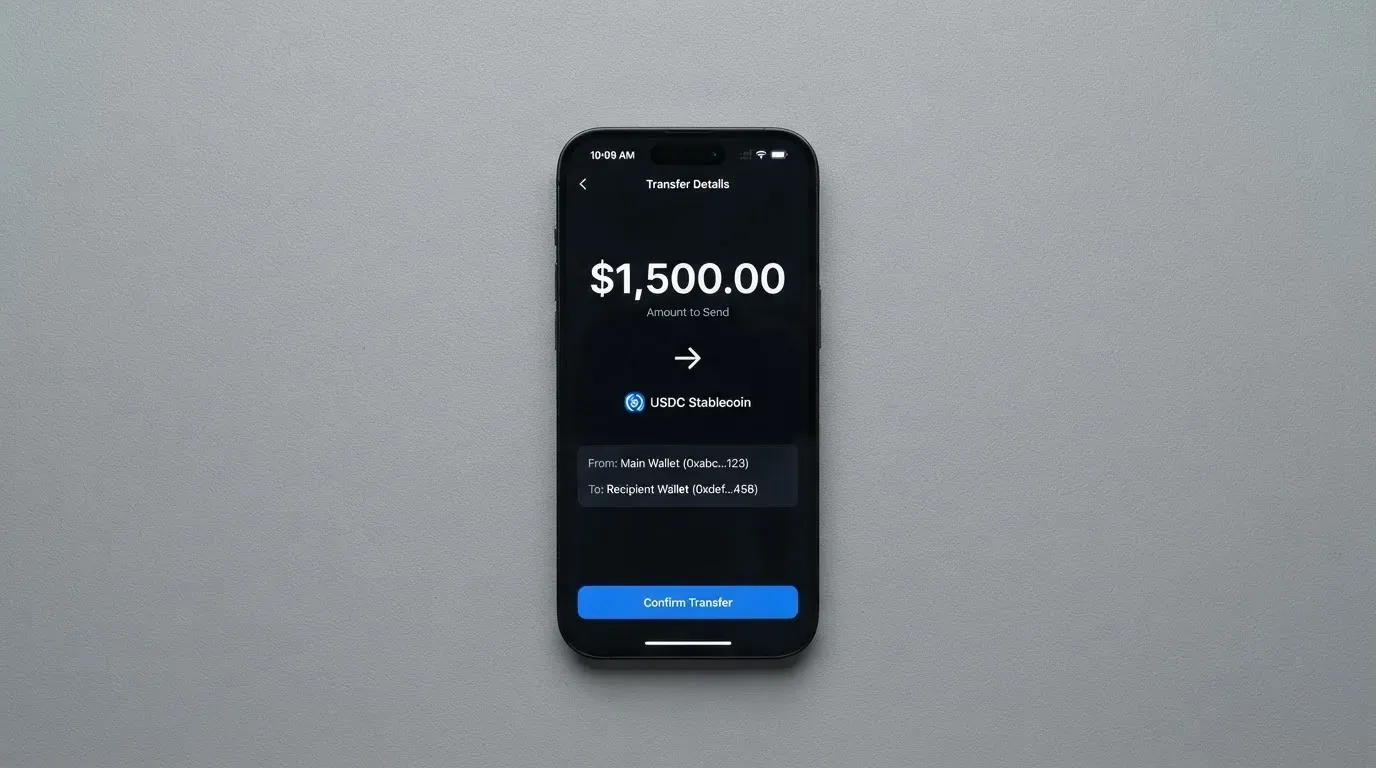
No top-up fee and no minimum are listed. That is a statement about what is published rather than a guarantee that none exists, so treat it the same way you would treat the zeros elsewhere on the site.
Crypto recharge — USDT, USDC, BTC, ETH — usually credits in about 15 minutes. If nothing has arrived after 30 minutes, the card’s instruction is to contact support. Unofficial reporting lists five supported networks: ERC20, Arbitrum, BNB Chain, Polygon and AVAX C-Chain. Again, unofficial, but it matches the deposit-surcharge pattern described above and is the kind of detail you need before sending funds, not after.
Beyond crypto, the card names WeChat, PayPal, Alipay and Wise as payment platforms, and lists SWIFT, SEPA and local clearing for overseas accounts. Fees for those routes are “disclosed before a transaction or published on the Website or a Fees Schedule” — which in the Terms carries no amounts at all. So the mechanism is described; the numbers are not.
One thing you should read properly, because it is the clause that matters if something goes wrong. Your account may be closed through the website or support, but only when there are no pending transactions and no amounts owed. Remaining funds are returned after AML/CTF checks. PokePay may suspend or freeze your account *and your balance* without prior notice in the circumstances it lists. Withdrawing the balance to crypto or to a bank account is possible, but the fee is “not stated”.
That is the single most important sentence in this review for anyone planning to keep a balance there. A card you cannot close quickly, and a balance you cannot withdraw at a published price, are a different product from a card you can spend on for free. Ask for the withdrawal fee in writing before your first deposit.
Paying with it every day
Everyday use is where this card is fine and quietly limited. Payments and cash withdrawals are both supported, the card is Visa, and both physical and virtual versions exist. Mobile apps are available: iOS through the App Store in Hong Kong, Android through Google Play, plus an APK download and a web login. The App Store Hong Kong listing shows 3.9 out of 5 from 15 ratings, as read on 2026-10-20; the Google Play rating was not read from the store.
The Apple Pay question comes up often enough to deserve a direct answer. Unofficial user reports from June 2026 say adding the card to Apple Wallet returns “this card is not supported”, and that Steam also does not work with it. Unofficial reports, not confirmed by the card — but if tap-to-pay on a phone is how you would use a card every day, that is a deal-breaker you need to know about before delivery, not after.
Other everyday details that are simply absent: which wallets are supported is “not stated” on the home page or FAQ. Rewards are described only as “generous”, with no rate, currency or conditions given — though an unofficial June 2026 report mentions 3% cashback on a first purchase under a time-limited banner, which is not the same as a standing programme.
Refunds and disputes, which you will eventually need. Typical refund times given by the card:
| Merchant type | Stated refund time |
|---|---|
| Normal merchants | 3-7 working days |
| Airlines, hotels, travel agencies | 7-14 working days |
| Online payment platforms | 3-10 working days |
| Cross-border | 7-30 working days |
| Chargebacks | 30-90 days |
Complaints go to a designated contact — the placeholder in the terms leaves it empty — and Canadian law governs. That last point is unusual for a card aimed at Hong Kong residents, and it is one of several signals that the corporate structure behind the card is not something the pages explain.
One practical piece of general knowledge worth having here, because it explains declines better than the card does: merchants can look up the card’s issuing country, and some decline prepaid or foreign-issued cards on that basis alone. Address verification, which compares parts of your billing address, is generally unavailable for foreign-issued cards and can cause a decline on an otherwise valid purchase. So if a shop refuses the card, that is not always about your balance.
What can go wrong
This section is where PokePay scores 4 out of 10, and the reasons are mostly about what is not disclosed.
The bank behind the card is not named. The card’s copyright notice reads PokePay Technology Co., Ltd. Licences are listed for Hong Kong, the United States, Canada, Ontario and Poland — but listed by the service itself, which is not the same as verified by a regulator’s register. For a product that holds your balance and issues a Visa, “which bank holds the card programme” is the first question, not the tenth.
Your funds are custodial, and that is stated plainly. User funds are held separately from operating funds, and the card says they are “not deposits” and are not insured by CDIC or any deposit insurance scheme. In plain terms: if the operator fails, you are a creditor, not a depositor with deposit protection. The card does describe 24/7 monitoring, custody through partner banks, transaction monitoring, AML screening and encryption — real safeguards, described by the party selling them.
Card security behaves reasonably. The card locks after repeated wrong CVV or expiry attempts, or three wrong PIN entries, and customer service unlocks it after verification. Multi-factor authentication is recommended but not required, which is a choice worth making yourself: turn it on.
Slow support is the recurring complaint. The most consistent theme in unofficial user reports is slow support response. This is the failure mode that matters most when you are trying to fix a declined payment, a missing deposit or a withdrawal.
There was a wave of account blocks. Unofficial reporting from 14 June 2026 describes a suspension wave in the second half of 2025, after which the company said funds would be returned within about 10 business days. This is a single unverified source and I am presenting it as such, but it sits alongside the card’s own clause allowing suspension or freezing of account and balance without prior notice, and those two things together are a real risk rather than a theoretical one.
Complaint volume is tiny, which cuts both ways. The Trustpilot page found is for pokeapay.com, possibly a different entity, with only 3 reviews at 2.8 out of 5; there is no pokepay.com page. One 1-star review calls the app “fake” and says verification passed without showing the full face. With three reviews, this is not evidence of a wide problem — and equally, three reviews is not a track record.
Registration claims are self-declared. FINTRAC in Canada, an Ontario money services business registration, a Polish VASP registration, and Hong Kong — the wording varies between the FAQ and the footer. FINTRAC itself notes that registration is not an endorsement. That is a genuinely useful thing for any card provider to tell you, and it tells you something.
What to take instead
PokePay’s 5.4 is not the worst of the cards I looked at, and the comparison below is more useful than a verdict alone. Here are three others, with the same questions asked of each.
International Visa Card — 6.7 / 10. A US-issued Platinum Visa, virtual, paying in USD, with the physical card listed as “coming soon”. Issuance is $5 one-time with no maintenance fee; plans run Classic free, Pro $9.00/month and Max $19.00/month. Card use in USD is free on all plans, foreign currency costs “Visa exchange rate + 2% FX fee” — stated, which PokePay’s is not. Deposits of any kind are free, and USDC or USDT go into the USD account 1:1; USD, EUR, SEPA, SWIFT and FedNow deposits also work. No cashback stated. On eligibility it is the strictest of the three: not available to residents or legal registrants of Belarus, mainland China, North Korea, Cuba, India, Iraq, Iran, Israel, Myanmar, Nepal, Nicaragua, Russia, Syria, Turkey, Ukraine, Venezuela and Vietnam; FATF grey-list countries are reviewed case by case. Purchases are blocked in North Korea, Cuba, Iran, Russia, Syria, Ukraine and Venezuela. The rule is by residence or registration — citizenship is not mentioned.
UNi Card — 6.1 / 10. A multicurrency card on Mastercard, spending from the UNi.Global account balance; whether physical or virtual is “not stated”, and so is who can get one. Costs: “no annual fee”, issuance fee “not stated”, “no annual fee or foreign transaction fee”, assets converted at “live OTC (Over-the-Counter) rates” with “No hidden exchange fees”. Top-up routes are “not stated”. Rewards are “Spend-to-Earn” up to 3%. If you trade in several currencies, the combination of no FX fee and stated live rates is the most attractive part of this shortlist.
Whop Cards — 5.2 / 10. Visa, works anywhere Visa is accepted online and in stores; physical or virtual and card currency are “not stated”, and cards can also be issued to team members. The page says “No extra fees” without listing issuance or monthly amounts, and conversion or FX fees are not stated. It spends from a Whop balance, with pending balance usable as soon as a payment arrives and standard withdrawals using settled funds; starting data is backed by stablecoin collateral from a linked wallet, coins and networks “not stated”. Rewards are 5% cashback at select merchants, currently Uber, more planned, payout currency and conditions “not stated”. Coverage is wide but explicitly US-centred: consumers in 31 states and businesses in 41, with Hong Kong among the unsupported consumer countries, alongside Belarus, China (Mainland), Cuba, India, Iran, Iraq, Israel, Myanmar, Nepal, Nicaragua, North Korea, Russia, Syria, Turkey, Ukraine, Venezuela and Vietnam.
| PokePay | International Visa | UNi Card | Whop Cards | |
|---|---|---|---|---|
| Score | 5.4 | 6.7 | 6.1 | 5.2 |
| Network and type | Visa, physical and virtual | US-issued Platinum Visa, virtual | Mastercard, multicurrency | Visa, type “not stated” |
| Monthly / annual fee | 0 / 0 (official) | From $0 / 0 (plans up to $19/mo) | “not stated” / 0 | “not stated” / “not stated” (unofficial) |
| FX or conversion fee | “not stated” | Visa rate + 2% | None; live OTC rate | “not stated” |
| Who can get it | Hong Kong residents in Hong Kong (stated) | Long exclusion list by residence/registration | “not stated” | 31 US states (consumers) |
| Rewards | “Generous”; unofficial 3% first purchase | None stated | Up to 3% | 5% at select merchants |
The pattern is worth naming: every one of these cards publishes its *marketing* costs and none of them publishes everything. The International Visa card is the only one of the four that states its FX fee as a number. PokePay is the only one that states its cross-border fee as zero. If your spending is domestic to Hong Kong, PokePay’s zeros are real and hard to argue with. If you spend abroad and care about the conversion rate you actually receive, you want the card that publishes the number — and that is not this one.
Who I would recommend it to
I would recommend PokePay to a Hong Kong resident who already holds USDT, already understands choosing a deposit network, and wants a physical Visa for ordinary spending without a monthly fee. For that person, the honest reading is that PokePay does its job: free to hold, free to spend across borders, loadable with four major cryptoassets, and quick — about 15 minutes to credit.
I would not recommend it to you if any of these are true of your situation:
- You are outside Hong Kong and the card’s pages give you no answer on whether you are eligible. Unofficial sources say “most countries”, the card says Hong Kong residents in Hong Kong, and that gap is not something you can resolve by trying.
- You plan to hold a balance on the card. Withdrawal fees are “not stated”, the service may freeze account and balance without prior notice, and an unofficial report describes a 2025 suspension wave.
- You need Apple Pay or wallet payments. Unofficial user reports say the card is not supported in Apple Wallet.
- You need a named, verifiable issuing bank. PokePay does not name one.
- You are choosing a card to handle money you cannot afford to have inaccessible for weeks. The dispute windows run up to 30-90 days for chargebacks, support response is the most common complaint, and the complaints contact in the terms is a placeholder.
Before you send anything, I would ask three questions in writing and keep the answers: what is the crypto conversion fee or spread; what does it cost to withdraw the balance and to replace a lost card; and which bank issues the card. All three are currently “not stated”, and all three are the kind of thing a legitimate operator can answer in a sentence.
And one last thing that is not about this card. Whatever you choose, remember that crypto payments into a card are irreversible, and that a deposit sent on a network the provider does not support, or to an address belonging to a different network, can be lost or need manual recovery with no guarantee. Check the network twice. On the Ethereum standard you also need a little ETH to pay the gas — a wallet holding USDT with no ETH cannot send.
Frequently asked questions
What is the PokePay card?
PokePay is a Visa payment card you load with cryptocurrency and spend like an ordinary card. You top up with USDT, USDC, BTC or ETH, the balance is converted, and the physical or virtual card draws on it. It costs 0 monthly fees, 0 annual fees and 0% cross-border transaction fees. What the card currency is, and what the crypto conversion fee or spread is, are not stated on its public pages.
Is PokePay a bank?
No — and the card is explicit about the part that matters. PokePay Technology Co., Ltd. operates it, user funds are held separately from operating funds, and the card says those funds are “not deposits” and are not insured by CDIC or any deposit insurance scheme. The issuing bank is not named. Licences are listed for Hong Kong, the United States, Canada, Ontario and Poland by the service itself.
Who can get a PokePay card?
The site says its content is intended only for Hong Kong residents living in Hong Kong, and notes that promotion outside Hong Kong may require permits. Unofficial June 2026 reporting says the service is available in most countries with the United States explicitly restricted. Whether eligibility follows residence or citizenship is not stated, so if you are outside Hong Kong this is the first thing to confirm.
How much does a PokePay card cost to open and keep?
Monthly and annual fees are both 0, with no micro-transaction fees and a single account tier. The issuance fee is not stated, and the FAQ line “no annual fee in the 0th year” is unclear. Unofficial June 2026 reporting mentions a virtual card opening for “as low as 5 USD” and an app charging 5 USD despite a free-opening banner.
What are the fees when I pay with a PokePay card?
The cross-border transaction fee is 0%, which is the headline number and it is stated. What sits underneath it is not: the crypto conversion fee or spread is “not stated”, the card currency is “not stated”, and the ATM cash withdrawal fee and allowance are mentioned without amounts. Undisclosed is not the same as zero, and that gap is the one to ask about.
What are the limits on a PokePay card?
The daily limit is 100,000 HKD and the minimum single transaction is 0.1 HKD. The monthly limit is not stated, which is a genuine gap for planning. Limits are quoted in Hong Kong dollars only, and no account tiers are described on the site or in the FAQ.
How do I top up a PokePay card?
With USDT, USDC, BTC or ETH. Recharge usually credits in about 15 minutes, and the card asks you to contact support if nothing arrives after 30 minutes. Networks are not stated officially; unofficial June 2026 reporting lists five — ERC20, Arbitrum, BNB Chain, Polygon and AVAX C-Chain — with a +5 USDT surcharge on ERC20 and none on the other four.
Can I add the PokePay card to Apple Wallet?
Unofficial user reports from June 2026 say adding it to Apple Wallet returns “this card is not supported”, and that Steam also does not work with it. That is not confirmed by the card, so treat it as a warning rather than a fact — but if tap-to-pay on your phone is how you would use the card daily, find out before your card arrives.
Is PokePay card safe?
The card takes real precautions: user funds segregated from operating funds, 24/7 monitoring, custody through partner banks, transaction monitoring, AML screening and encryption, plus a lock after repeated wrong CVV or expiry entries or three wrong PINs. But the funds are not deposits and carry no deposit insurance, the issuing bank is unnamed, and an unofficial June 2026 report describes a suspension wave in the second half of 2025 with funds returned over about 10 business days.
How do I withdraw money from a PokePay account?
Your account can be closed through the website or support, but only with no pending transactions and nothing owed. Remaining funds are returned after AML/CTF checks. The withdrawal fee to crypto or to a bank is “not stated”, and the card may suspend or freeze the account and balance without prior notice in listed circumstances — so ask for that fee in writing before your first deposit.
App and neobank cards put to the test – cryptocardtested
Content created by the «cryptocardtested» team