
A Visa you spend straight from crypto, priced in silence
 Available in US
The Ripio card is a prepaid Visa you load from a Ripio wallet balance and spend like an ordinary payment card, in either your local currency or dollars. On paper that is a clean idea for people who hold crypto and want to spend it at ordinary shops. My score for it is 5.5 out of 10 — a middle-of-the-road mark, and one that reflects a specific problem: the card’s own pages say plainly what it costs to open and maintain, and say nothing at all about the two fees that actually decide what a payment costs you.
The conditions described here are current as of October 28, 2026.
Let me be clear about what this review is. I did not use the card. I read what Ripio publishes about it and what third parties report, and I tell you where those two things agree and where only one of them exists. If a fact is not on the public pages, I say so rather than filling the gap with a plausible guess. That matters more here than usual, because the gaps are concentrated exactly where your money moves.
Verdict: 5.5 out of 10
The score is not a judgment on whether Ripio is a good crypto company. It is a judgment on this card, as documented. And the shape of the number tells you the story: everyday use scores highest, and the things that decide whether you can get one and what you pay score low.
| Criterion | Mark | Why |
|---|---|---|
| Who can get it | 2 / 10 | The site’s own footer disclosure says the product is available for Argentina and Brasil, and nothing more |
| Cost | 7 / 10 | The virtual and physical Visa carry no maintenance cost, but the conversion fee and the FX fee are not disclosed |
| Top-up options | 7 / 10 | The wallet balance can be held in crypto or in ARS, any coin held on Ripio can be used including BTC, ETH and USDT, and conversion happens at purchase; the networks are not named |
| Reliability and complaints | 4 / 10 | It runs on Visa with processing by Pomelo, but the issuing institution and its licences are not named, and Trustpilot for the whole company shows 2.4 out of 5 across 1,848 reviews with uncredited funds and unreachable support among the themes |
| Everyday use | 9 / 10 | Virtual and physical Visa, free delivery to your home, Apple Pay and Google Wallet, and cash withdrawals at machines |
| Total | 5.5 / 10 |
Who this suits: an Argentine or Brazilian user who already holds crypto on Ripio, already pays in Argentine pesos, and wants a second Visa for everyday spending with some cashback on crypto purchases. The everyday-use score of 9 is real and it is what lifts the total.
Who it does not suit: anyone outside those two countries, because the card pages name no other market. Anyone whose main worry is what a payment costs, because the conversion fee and the FX fee are not stated. Anyone who needs to know which institution legally holds their money, because the issuer and its licences are not stated. And anyone who treats a Trustpilot score of 2.4 out of 5 as a footnote — I don’t.
The Trustpilot figure needs one caveat that is easy to miss: it is for ripio.com as a company, not for the card specifically. Company-level complaints about uncredited deposits tell you something about operational habits that are shared across the product, but they are not a verdict on this card. Read it as context, not as a card rating.
Who Will Give You the Card
Ripio’s own footer carries a disclosure: “Product available for Argentina and Brasil”. That single line is the entire published eligibility statement on the card pages. There is no broader list, no region table, no statement about residents of other countries who happen to hold pesos or reais.
So the honest answer to “who will give you the card” is: on the evidence of the public pages, users in Argentina and Brazil. If you are anywhere else, you are not reading about a card you can order — you are reading about a card you would have to guess your way through, and I would not do that with money.
The reason this scores 2 out of 10 is not that the card is restricted to two markets, which is a perfectly normal thing for a regional card to be. It is that a person in, say, Colombia or the Philippines cannot tell from these pages whether they are excluded, whether the card would work for them with a foreign address, or whether anyone would even look at an application. Silence where a reader needs an answer is what drags the mark down.
The page also does not say anything about nationality, only about where the product is available. That distinction matters later, when we reach identity checks and sanctions screening, because residence and citizenship are screened separately in this industry.
How to Get It
The stated process is short. The page says only to sign up or log in and accept the terms and conditions to order the card. What verification you go through, what documents you need, and what tiers of checks exist are not stated on the card’s public pages.
The card itself comes in two forms. It is an international prepaid Visa, virtual or physical. The virtual card is for online and QR payments; the physical card works at any Visa merchant. Amounts are deducted immediately from your wallet balance, which is the prepaid model — you are spending what is already there, not borrowing against an account.
Delivery is the one part of this section with a concrete fact: the physical card is sent to your home free of charge, and the virtual card can be activated while you wait for the plastic to arrive. Delivery time and the cost of a replacement card are not stated. That gap matters if you lose the card — you cannot budget for a replacement fee you cannot find.
One point worth knowing before you order: the currency of the card is not stated. You are told you can spend in your local currency or in dollars, but not which currency the card itself is denominated in, and not how the choice is made or changed.
Fees: What a Payment Actually Costs You
This is the section I would read twice, and the section I would read before ordering. Ripio publishes one fee clearly and leaves two unstated.
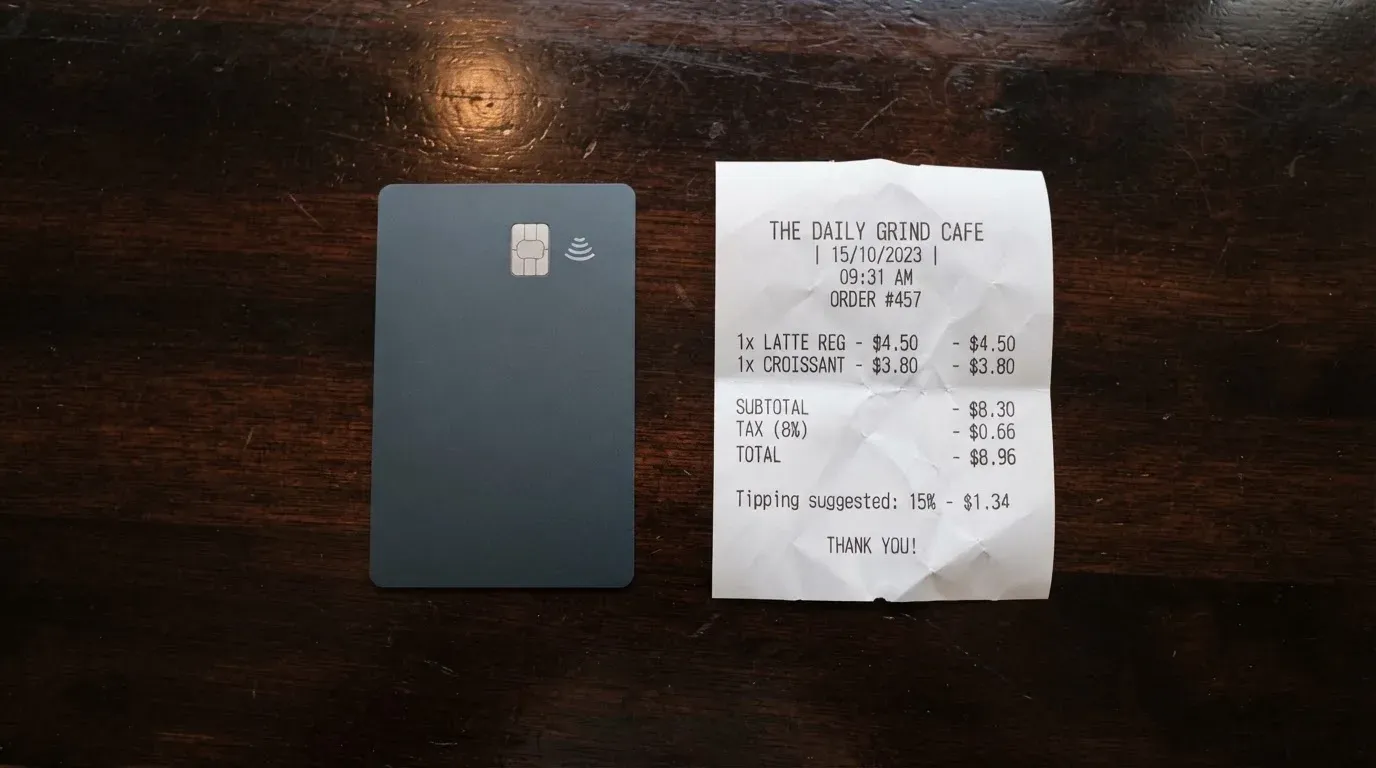
The stated one is the one that costs nothing: “Virtual and physical VISA card no maintenance cost.” No monthly charge, no annual charge, nothing for keeping the card open.
The unstated ones are the ones that decide the price of a coffee. The crypto conversion fee is not stated. The FX fee is not stated. Those are two numbers that, if known, would tell you whether spending this card leaves you better off than simply holding dollars.
| Item | What the card pages say |
|---|---|
| Card issuance | No maintenance cost for the virtual and physical VISA card; the physical card is delivered free of charge |
| Monthly fee | None — the virtual and physical VISA card carries no maintenance cost |
| Crypto conversion fee | Not stated |
| FX fee | Not stated |
| Cash withdrawal | Withdrawals available at cash machines, supermarkets and service stations; the fee and the limit are not stated |
| Daily and monthly limits | Not stated |
| Card currency | Not stated |
| Tiers | A single tier; none is mentioned |
Now the part you asked for: three ordinary payments, and which fees apply to each.
Buying coffee with crypto. You hold BTC, ETH or USDT on Ripio and pay at a café. The payment is converted at the point of purchase — the pages say conversion happens automatically at purchase — so the crypto conversion fee applies here. This is the payment where an unstated fee does the most damage, because the conversion is the whole transaction.
Paying the electricity bill in pesos. You fund in ARS rather than crypto, so there is no crypto conversion. But spending in your local currency rather than dollars means currency conversion inside the payment, which is where the FX fee sits. If the card is denominated in dollars, this payment is converted twice over in substance: once when the merchant’s pesos become card currency, once when card currency leaves your balance. The pages do not describe the mechanics, so I am not going to describe them for you either.
Taking money out at an ATM. Cash withdrawals are available at cash machines, at supermarkets and at service stations — that last one is a genuinely useful detail in Argentina and Brazil, where bank machines are not everywhere. The fee for this is not stated, and neither is the limit. This is the fee I would most want a number for, because ATM withdrawals are exactly where card issuers charge the most.
There is also a point that is not a fee but behaves like one. A declined authorisation can leave a hold on your funds, and those holds can sit for several days. If you are spending from a balance you also intend to move, that is money temporarily out of reach with no fee charged at all.
Rewards are the one number I can give you that is exact: crypto payments earn 2% (the FAQ names USDT, BTC or ETH as the qualifying coins; the Cashback section names BTC, ETH or USD), ARS payments earn 0.5%, and new card users get 4% on crypto and 1% on ARS for 30 days. Against an unknown conversion fee, a 2% return is either a meaningful cushion or a rounding error. I cannot tell you which, and neither can the page.
Top Up: How the Balance Gets There
The card has no balance of its own. It draws on your Ripio wallet, which needs to hold crypto or ARS, and any crypto available on Ripio can be used — BTC, ETH, USDT among them. You choose the payment currency in the Ripio Card section, and conversion happens automatically at purchase.
That is the whole of what the card page says about funding. The details that make top-ups work in practice are not on it.
For those, the launch article from Argentina in February 2023 gives a picture of how the wallet was loaded at launch: by bank transfer, by Mercado Pago, or in cash at Rapipago Online and Pago Fácil. That is from a launch article, not the card page, so treat it as history rather than as a current guarantee — two and a half years have passed and payment rails change. The card page itself does not state the top-up methods at all, and it does not name the blockchain networks you can transfer on.
That missing network information is the sharpest practical gap in this whole review, so I will explain why rather than just flag it. A stablecoin transfer has to go on a network the receiving side actually supports. Send it on the wrong network, or to an address belonging to a different network, and the transfer is irreversible — the network cannot freeze it or hand it back, and recovery becomes a support ticket with no guarantee attached. On Ethereum, a wallet holding USDT but no ETH cannot send at all, because gas is paid only in ETH. On Tron, fees are paid through bandwidth and energy resources, often by burning TRX. None of that is Ripio’s fee, and none of it is about whether the card works. It is about the transfer that has to succeed before the card can spend anything.
So before your first top-up, find out which networks the wallet accepts, and treat any difference between what you send and what they receive as money potentially gone.
On the cashback side, one thing to know: the rates apply per funding type, so a card funded with dollars and a card funded with crypto do not earn the same thing. And the 30-day boost for new users is a genuine, if temporary, reason to put your normal spend through the card in month one.
Paying With It Every Day
This is where the card is strongest, and the 9 out of 10 is earned rather than given.
You can add the card to Apple Pay and Google Wallet. When you do, the card number is replaced by a device-specific number held in the Secure Element on your phone, never on Apple’s servers, and each payment carries a one-time dynamic security code — so using it in a wallet is not the same thing as handing over your card number, and it is the safer of the two habits.
The physical card works at any Visa merchant. That is the plain, unglamorous advantage of the Visa mark: the acceptance you would expect of a normal card in the country where you live.
Cash withdrawals are possible at machines, supermarkets and service stations. The supermarket and service-station option is worth more attention than it sounds; it means you are not dependent on finding a bank-owned ATM.
What the pages do not tell you about daily use, and what I would want to know: which merchant categories are blocked is not stated. That is a real gap rather than a technicality. Merchants are classified by a four-digit merchant category code, and gambling (MCC 7995 — casinos, betting, lotteries) is the category most commonly blocked by policy rather than by law, with the blocked list varying by issuer. If you rely on a specific type of purchase, that is the thing to ask about. Whether disputes work, and how a chargeback is handled, is also not stated — and a chargeback is the mechanism that settles a disputed payment in your favour, so it is not a detail to leave to chance.
One everyday-use behaviour worth forming from the start: if a payment declines, that is not proof the money is gone. A declined authorisation can leave a hold for days. Check for a hold before you assume you need to top up again.
The app itself is not described on the card pages, and I did not obtain an App Store or Google Play rating. So the quality of the interface you would use to freeze the card, check a transaction or raise a problem is something I cannot vouch for.
What Can Go Wrong
Start with the part that has numbers in it. On Trustpilot, ripio.com as a whole company stands at 2.4 out of 5 across 1,848 reviews, of which 45 were in the last 12 months, read on 2026-10-21. The themes users report are funds not credited (August 2026), no reachable support (August 2026), and fees (2021).
I found no official record of incidents specific to this card. That is worth something — it means there is no documented failure to point at — but it is a weak reassurance, because the complaints that do exist are about the money side of the business, which is the same money the card spends. Uncredited funds are exactly the failure that would hurt you hardest, and unreachable support is exactly what you need when it happens.
Then the structural point. The pages name Ripio entities in the footers, including BitPagos, Inc. and Moonbird S.R.L., and the launch article says the card was created with Visa as the network, with Pomelo providing the processing technology. The issuing institution and its licences are not stated. Here is what that means in plain terms: Visa is the network that routes the payment and sets the rules; the issuer is the licensed institution that actually holds the card programme and your balance; and the crypto brand is often only the programme manager or the front end that markets the card to you. When the pages name the network and the processor but not the issuer, you are missing the one party whose licence is the legal foundation of the whole thing.
This sits against a background worth knowing. Card programmes do close. WaveCrest, a Visa issuer that supplied crypto card brands, was suspended by Visa in Europe in 2018, closing all its Visa programmes. In November 2022 Visa said it had “terminated our global agreements with FTX”, and the FTX US debit card programme was wound down by its issuer. Closures typically follow a pattern: a notice period, then spending and loading stop, then users are asked to withdraw remaining balances.
None of that predicts anything about Ripio. It tells you what to watch, and what to do: keep enough on the card for a week, not for a month.
Identity checks and sanctions are also not described. What I can tell you is the general shape, so the absence means something to you. Nationality is recorded and screened separately from residence, because sanctions screening is applied to citizenship and country of birth as well as to the address. Prepaid and debit cards are generally available to adults aged 18 and up, and some issuers set higher limits. Where due diligence cannot be completed, institutions are required to refrain from the transaction or relationship and, where necessary, end it — which is why accounts close or freeze pending documents. If you are in a position where your citizenship or country of birth could complicate a screening check, the honest move is to ask Ripio directly rather than to find out by having an application rejected.
Support is in the app and on desktop under “Support”, with a Help Center at help.ripio.com that redirects to help-ar.ripio.com; when I read it, the Ripio Card section was empty. Languages and hours are not stated. For a card where your money is converted at the moment of purchase, an empty card section in the help center is a small but genuine frustration.
Finally, the rewards changes. The card launched in Brazil in 2022 with a prepaid Visa, no acquisition or monthly fee, and a launch promotion of 5% BTC cashback capped at R$ 250 per month until 31 October. Argentina’s launch was announced on 8 February 2023 with 3% USDC cashback to 31 March 2023, capped at ARS 10,000 per month. Those launch promotions have their own dates attached to them, which tells you how these rates are managed.
One more category of risk that is not Ripio’s fault and will still happen to you. Some merchants decline prepaid or foreign-issued cards because the merchant can look up the issuer identification number at the start of the card number and see the card type and issuing country. Address verification is offered mainly in the US, Canada and the UK and is generally unavailable for foreign-issued cards, which can cause declines. If a payment of yours is refused at a shop for no visible reason, this is often why.
What to Take Instead
Comparing these cards is not straightforward. Where a card’s public pages say nothing about a fee or a limit, I do not fill the gap with a guess. I only report what is officially published.
| Card | Score | Card type | Cost | Key details published |
|---|---|---|---|---|
| Ripio | 5.5 / 10 | International prepaid Visa, virtual or physical | No maintenance cost; conversion and FX fees not stated | Argentina and Brasil; draws on a Ripio wallet balance in crypto or ARS |
| Young Card | 5.7 / 10 | Not stated officially | Not stated officially | Cashback paid in YNG tokens at Club tier rates: Essential 0.1%, Gold 1.8%, Platinum 3.6%; Bronze and Silver not stated |
| MSX | 6.4 / 10 | Not stated officially | Not stated officially | Almost nothing published on the official pages I could read |
| Bybit Card | 6.0 / 10 | Virtual and physical; Mastercard prepaid in Argentina, Visa prepaid in Brazil and Peru; credit form in several other regions | Virtual issuance free in all regions; physical issuance varies; “no annual fees” | Regional list and fees published in detail, including conversion and FX |
Two observations rather than a recommendation.
First, on published information, MSX at 6.4 and Bybit Card at 6.0 score above this card. But scoring above it on thin information is not the same as being safer for you: MSX’s advantage sits on a page set that, as far as could be read, says almost nothing, and a card that publishes nothing cannot be assessed by anyone, including me.
Second, Bybit is the most transparent of the three and that is worth weighing on its own terms. It publishes a region list, card currencies per country, card validity periods, and separate conversion and FX fees — a crypto conversion fee of 0.9% over its One-Click Sell rate in several regions, 0.5% in Argentina, and an FX fee of 2% on top of the network rate in some regions, 7% in Argentina, 1.5% in Brazil. It also says plainly that the product is not meant for European Economic Area customers and that participation is strictly prohibited. Being able to read the number is worth something even when the number is not the best on offer.
Bybit’s funding model is different in kind: the card has no balance of its own and draws on a funding account, selling crypto if fiat runs short, with a default token priority of USDT, USDC, GRAM, BTC, ETH, XRP that you can reorder. Its rewards are also conditional — since 5 October 2026 only crypto-funded transactions earn cashback, and the tier rates run from 2% at base to 10% at the top tier with monthly caps and spend thresholds.
None of that makes Bybit right for you. It makes it knowable, which is a different and, for money you cannot see clearly, more valuable property.
Who I Would Recommend It To
I would recommend this card, without hesitation or caveat, to an Argentine or Brazilian user who already keeps crypto on Ripio, already spends in pesos or reais, and wants a working second Visa with modest cashback rather than a financial product to get excited about. The everyday use is genuinely good: virtual and physical, free delivery, both mobile wallets, cash out at machines, supermarkets and service stations, no monthly fee. Nine out of 10 is not a courtesy score.
I would not recommend it to anyone who cannot state, in one sentence, what a payment will cost them. “No maintenance cost” is a real and welcome fact and it is not the same as knowing what you pay when you buy something. With the conversion fee and the FX fee both unstated, I cannot tell you whether a 2% crypto cashback is a gain or a rounding error, and neither can the page.
I would not recommend it to anyone who is banking a large balance on it, or who needs the reassurance of knowing which licensed institution holds their money and under which licence. Not because anything suggests trouble, but because the answer is not published, and an unpublished answer is not an answer.
And if you are reading this from outside Argentina or Brazil: the footer says the product is available for Argentina and Brasil. That is the whole statement. Check with Ripio directly whether there is anything for you, and do not read a regional card as a global one.
What would move this score up is not a feature — it is disclosure. Naming the issuing institution and its licences, publishing the conversion and FX fees, naming the networks you can transfer on, and stating the daily and monthly limits would fix most of what holds it at 5.5. Until then, the card is convenient and quiet, and in a place where quiet usually means not published rather than not charged, that is a thing to weigh carefully.
Frequently asked questions
What is the Ripio card?
It is an international prepaid Visa, available as a virtual card for online and QR payments and as a physical card usable at any Visa merchant. It draws directly on your Ripio wallet balance, and amounts are deducted immediately when you pay. There is a single tier, and the card currency is not stated on the public pages.
How does the Ripio card work in practice?
You load a balance in crypto or in ARS, then spend it as you would any Visa. Any crypto available on Ripio can be used, including BTC, ETH and USDT, with the payment currency chosen in the Ripio Card section and conversion happening automatically at the moment of purchase. You can add it to Apple Pay and Google Wallet.
Is Ripio a bank?
The card pages do not say. The footers name Ripio entities including BitPagos, Inc. and Moonbird S.R.L., and the launch article says Visa is the network with Pomelo providing processing technology, but the issuing institution and its licences are not stated. That gap is the one to ask about before holding a large balance.
Who can get the Ripio card?
On the published evidence, users in Argentina and Brazil — the site’s footer reads “Product available for Argentina and Brasil”. Nothing is said about residents of other countries holding pesos or reais. The pages also do not state whether the check is on residence or citizenship, which is a separate question and worth asking directly.
Does the Ripio card require KYC?
The card pages do not say. All that is stated is that you sign up or log in and accept the terms and conditions to order the card. In general, regulated businesses must verify customers as part of anti-money-laundering law, and where due diligence cannot be completed they must hold back the transaction or relationship.
Is the Ripio card free?
Free to keep, yes: the virtual and physical VISA card carries no maintenance cost, and the physical card is delivered to your home free of charge. What you pay when you spend is a different question — the crypto conversion fee and the FX fee are not stated, and neither is the cash withdrawal fee or the replacement cost for a lost card.
How do I top up the Ripio card?
The card needs a wallet balance in crypto or ARS, and top-up methods are not stated on the card page. A February 2023 Argentina launch article describes loading by bank transfer, Mercado Pago, or cash at Rapipago Online and Pago Fácil. Networks are not named, so confirm which one to send on before your first transfer.
Where can I use the Ripio card?
At any Visa merchant with the physical card, and online or by QR with the virtual card. Cash withdrawals are available at cash machines, supermarkets and service stations, though the fee and limit are not stated. Blocked merchant categories are not stated either, which matters if you rely on a particular type of purchase.
Is the Ripio card safe?
Use the usual precautions: two-factor authentication, an instant card freeze, spending limits, and the tokenised number in a mobile wallet rather than handing over your card number. Note that Trustpilot for ripio.com as a whole company shows 2.4 out of 5 across 1,848 reviews, with users reporting uncredited funds and unreachable support. That is company-level, not card-level.
What are the limits and rewards on the Ripio card?
Daily and monthly limits are not stated. Crypto payments earn 2% — the FAQ names USDT, BTC or ETH, the Cashback section names BTC, ETH or USD — and ARS payments earn 0.5%. New card users get 4% on crypto and 1% on ARS for 30 days, which is a reasonable reason to route your normal spending through the card in your first month.
Exchange cards put to the test – cryptocardtested
Content created by the «cryptocardtested» team