
Tangem Card Review 2026: Fees, Limits, and Who It Really Fits
 Available in US
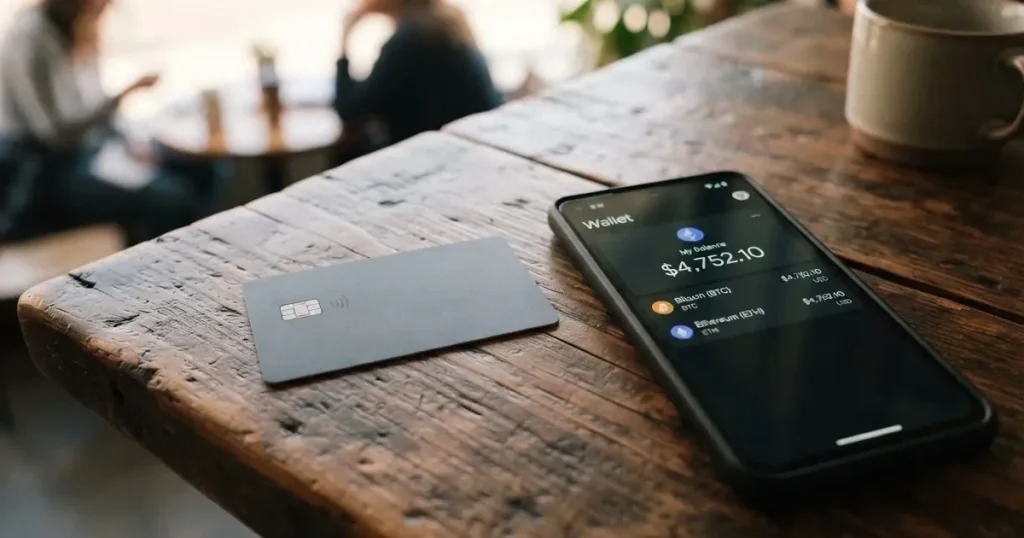
If you have been using a Tangem hardware wallet and assumed it was only ever a cold-storage device, that assumption is now out of date. The same brand has attached a payment card to its app, and the card is what most new users end up judging Tangem by. So I have taken the Tangem card and looked at it the way I would look at any bank card: who can get one, what it costs to keep, what a purchase really sets you back, what can go wrong, and whether there is a better-suited option elsewhere.
The short version is that this is an unusual card. It is genuinely good for people who already trust the Tangem hardware ecosystem and want a free virtual Visa that spends from a stablecoin balance they control. It is not a good fit if you need a long list of countries, deep banking integration, generous everyday fee-free spending, or the reassurance that comes with a regulated European e-money licence. I scored it 7.5 / 10 overall, and the reasons are laid out in the scorecard below.
The conditions described here are current as of October 28, 2026.
Verdict: 7.5 / 10, built for a specific kind of user
Before the details, here is the scorecard I worked from. Each criterion is out of 10, and the total is the average of them.
| Criterion | Mark | Why |
|---|---|---|
| Who can get it | 7 / 10 | Available in the US and select countries across LATAM, APAC, MEA and Africa; not every country or US state is eligible |
| Cost | 7 / 10 | Basic plan is $0, first virtual card is $0, FX is Visa Exchange Rate + 1.5%, transaction fee is $0, ATM is 4%; Plus costs $29.99 per month |
| Top-up options | 9 / 10 | USDC and USDT on Polygon, Base, Arbitrum and BNB Smart Chain, plus ACH or Fedwire bank transfers, and other tokens via swap |
| Reliability and complaints | 7 / 10 | Issuer is Rain (a Visa Principal Member) and the programme runs through Paera LLC; Tangem itself is not regulated as a financial services provider; unofficial sources point to a different issuer and there are complaints about network outages and support |
| Everyday use | 8 / 10 | Basic issues a virtual card and Plus issues plastic, Apple Pay and Google Pay are supported, ATM is 4% on Basic and 2% on Plus, though one help page says ATM withdrawal is not yet available |
| Total | 7.5 / 10 | — |
Who should read this and keep going? The card’s natural user is someone who already holds a Tangem Wallet, understands what a self-custody wallet is, and wants the wallet’s balance to be spendable at ordinary shops without giving up the keys. If that is you, the free virtual card on the Basic plan is one of the more interesting things in the crypto-card category, and the 9 out of 10 for top-up options is the reason. The card is also a credible second option for anyone who just wants a stablecoin Visa in a supported country and does not mind the specific quirks below.
Who should look elsewhere? If you live somewhere Tangem Pay does not yet operate, if you want a physical card in the post quickly outside the country you registered in, if you rely on cash from ATMs, or if you want the added protection that comes with an established European e-money licence, this is not the card for you. Nor is it for someone who wants to be casual about crypto — the card leans on you to understand networks and addresses.
Who will they give you the card
Availability is the first thing to check, because the honest answer is that the country list is not published in one place. The Tangem Pay page does not state a full country list, and neither does the tariff PDF. What the PDF does say is that eligibility of some features “is determined based on your country and region of residence”, which tells you the model is residence-based, and the result is shown to you inside the app during onboarding. So the practical answer to “is Tangem card available in my country” is: enter your residence country in the app, and it will tell you.
What is stated more openly is the shape of the rollout. Tangem Pay is available in the US and in selected countries across Latin America, APAC, the Middle East and Africa, but not in all countries and not in all US states. If the region is unsupported, your application is rejected during KYC. The requirements the card lists are being 18 or older and having a residence address in a supported country. Because US residents are asked for an SSN, and because eligibility is residence-based, the practical way to think about it is that you register where you actually live. That is not a trick or a workaround — it is simply what the rules require, and pretending otherwise will only get an application rejected.
| Where | What the card states |
|---|---|
| United States | Available; not every state, and US residents give an SSN |
| Latin America | Selected countries only |
| APAC | Selected countries only |
| Middle East and Africa | Selected countries only |
| Full country list | Not stated on the public pages; shown in the app at onboarding |
The KYC itself runs through Sumsub with a single pass: codes to your phone and email, a government ID, and your residence address. The programme is operated by Paera LLC, which is “responsible for your onboarding including performing KYC & AML verification”, and the page notes that “ID verification and eligibility checks applies to the card account only” — meaning the hardware wallet itself is not gated by this. Tangem cannot see why an application was rejected; common causes are an unsupported region or state, or reapplying with the same identity, which is auto-rejected. Because residence and nationality are different things in compliance terms, note that a supported residence with an ID from a restricted region may still fail checks — this is why you should register honestly.
How to get it
The application path is short. You create the Tangem Pay account inside the Tangem app on iOS or Android, pass the single Sumsub KYC, and the card is usually issued within 5 minutes, with a stated worst case of 48 hours after which you would contact [email protected]. There are three tiers, and they differ in more than price:
- Basic — a Visa Platinum, virtual only, up to 3 cards.
- Plus — a Visa Signature, issued as plastic, up to 5 cards.
- Prestige — a Visa Infinite, offered as virtual, plastic or metal, marked “coming soon”, up to 10 cards.
The card balance is in USD, and USDC and USDT deposited into it are combined into one balance which is then spent highest-balance-first. The form factor matters for what you actually receive: on Basic you get a virtual card straight away with no waiting, while a physical card takes shipping.
If you want plastic, a few things are worth knowing before you order, because they cost money and time. The plastic card ships only inside the country that was verified at KYC; the app shows the country list and an estimated time when you order. Addresses must be in Latin letters only. The order cannot be cancelled once placed. The delivery fee is deducted from your Tangem Pay balance, and the card arrives inactive — you activate it in the app. For a first Basic card the fee is quoted as $15.63–$63.45, while the tariff PDF dated 25 Aug 2026 gives a different official figure, $14.53–$82.10; the two official numbers differ, so treat the app’s figure as the one that will actually be charged. On Plus the first plastic card is free and later ones carry the same delivery fee. A reissue costs $5 (the tariff PDF says $1 for a replacement), and an additional virtual card costs $5 and is issued in about a minute, rarely taking as long as 48 hours.
Fees and what a payment actually costs you
The headline number is attractive: the Basic plan has a $0 monthly fee, there is no standard transaction fee, and the first virtual card is free. That is genuinely rare in this category. The catch is that “free” applies to holding and spending in dollars, not to the things that make card life slightly more expensive. Here is the full table as the card states it:

| Fee or limit | Basic | Plus | Prestige |
|---|---|---|---|
| Plan fee | $0 | $29.99 per month | $999 per year (coming soon) |
| First virtual card | $0 | $0 | $0 |
| Additional virtual card | $5 | $5 | $5 |
| Physical card delivery | $14.53–$82.10 | First card $0, then the same fee | — |
| Transaction fee | $0 | $0 | $0 |
| Foreign exchange | Visa Exchange Rate + 1.5% | Visa Exchange Rate + 1.5% | Visa Exchange Rate + 1.5% |
| ATM fee | 4% | 2% | 1% (per product page) |
| Bank transfer in (ACH) | $1 | $0 | $0 |
| Bank transfer in (Fedwire) | $11 | $0 | $0 |
| On-chain withdrawal | $0 | $0 | $0 |
| Dispute fee | $30 | $30 | $30 |
| Cashback | 1% (cap $100 per month) | 2% (cap $300 per month) | 4% (cap $1,000 per month) |
| Cards per user | 3 | 5 | 10 |
| Maximum card balance | $10,000 | $50,000 | $10,000 |
| Daily spend per card | $10,000 | $50,000 | $100,000 |
So what do two or three everyday payments cost in practice? The number that catches most people out is the foreign-exchange line. The card is denominated in USD, so any purchase in another currency is converted by Visa at Visa’s own exchange rate, and the tariff PDF adds a markup of 1.5% on top. That means paying for a coffee in euros on a Basic card costs you the price converted at the Visa rate plus one and a half percent — small in absolute terms, but it is the difference between a truly free everyday card and a cheap one. The card’s own help centre advises choosing to pay in the local currency at the terminal rather than letting the terminal convert, which avoids a second layer of markup.
- A $30 online subscription in dollars: $0 in fees, all but the base price.
- A €40 meal in Europe: the Visa rate plus 1.5%, and you should decline the terminal’s own conversion.
- Withdrawing $100 from an ATM: 4% on Basic, so $4, plus whatever the ATM operator adds.
Two costs the card does not quantify, and you should know about both. The crypto conversion fee or spread is “not stated” on the public pages — when you swap one token for another to top up, the swap provider’s own fee applies and it is not a Tangem number. On-chain network gas for a top-up is paid by the sender on the blockchain, not by the card, so a slow or expensive network quietly raises your cost. The plan fee is charged every 30 days, and if the balance cannot cover it you have 30 days to top up before any Signature cards close and you drop back to Basic — so an unused Plus plan does not idle for free, it quietly reverts.
Top up: how the balance gets filled
Topping up is the part I like most, and it is why the card scores 9 out of 10 here. The card states you can fund “with stablecoins or fiat directly from your bank account”, and the routes are: from your Tangem Wallet (with an automatic swap if the token you hold is not one the card takes), from another wallet or exchange using a deposit address for the right network, or by bank transfer via ACH or Fedwire where those are available. On bank transfers the deposit fee is deducted from the amount that arrives — send $1,001 to receive $1,000 by ACH, or $1,011 by Fedwire; on Plus the bank transfer is free. In some regions a bank transfer is converted into USDC for you. The loading limits are generous: a daily load of up to $100,000, 24 loads per day, and 150 per month, with no stated minimum top-up.
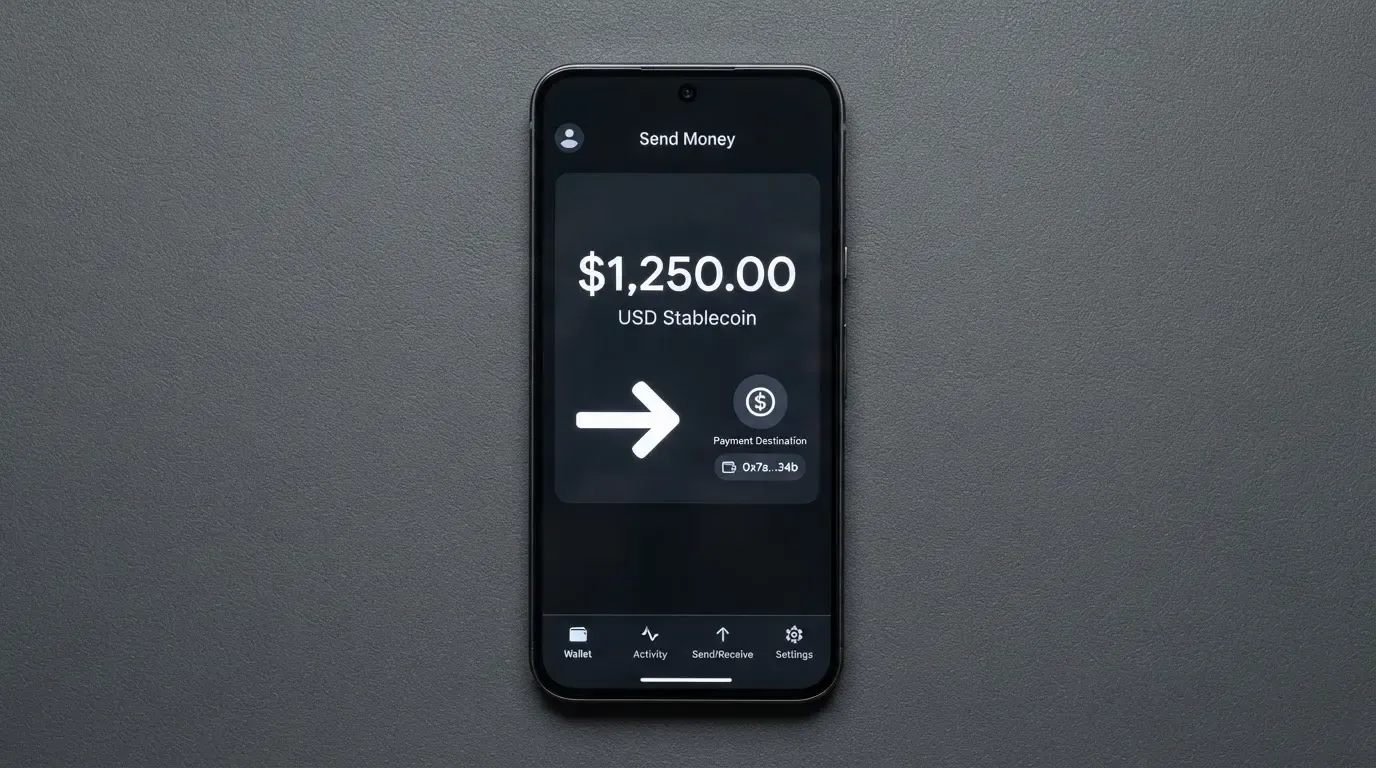
The specific coins and networks are stated clearly: USDC and USDT on Polygon, Base, Arbitrum and BNB Smart Chain. Other tokens are swapped, and the network gas is paid by the sender. There is one rule that deserves a warning label, and it is the same rule that catches everyone in crypto: sending the wrong token or on the wrong network means the funds are permanently lost. That is not a customer-service problem the provider can reverse — blockchain transfers are irreversible — so match the token and network to the deposit address before you confirm, every time.
| Method | Coins or rails | What to watch |
|---|---|---|
| From Tangem Wallet | USDC, USDT on Polygon, Base, Arbitrum, BNB Smart Chain; swap for others | Swap provider fee if your token is not one of the two |
| From another wallet or exchange | The same USDC and USDT networks, via a deposit address | Wrong network or wrong token = funds lost permanently |
| Bank transfer (ACH) | Fiat, converted to USDC in some regions | $1 fee deducted from the amount (free on Plus) |
| Bank transfer (Fedwire) | Fiat | $11 fee deducted from the amount (free on Plus) |
Paying with it every day
This is where the card is most at home. Tangem Pay lives inside the Tangem app on iOS and Android, and once you have the virtual card it can be pushed to Apple Pay and Google Pay — Apple Pay depends on your country, but both mobile wallets are listed as supported. Spending control is unusually good for a crypto card: you can freeze and unfreeze the card instantly in the app (it shows as Suspended in Apple and Google Wallet), set a four-digit PIN, and set your own daily spending limit, including down to $0. That last one is the feature I would point at first to anyone worried about a card tied to a crypto balance, because it lets you keep the card and stop the bleeding in one tap.
On the security side, card funds sit in separate Tangem Pay smart-contract accounts while your main assets stay in the non-custodial Tangem Wallet, and only one wallet can be linked per account. Apple Pay is the usual kind of tokenised setup: the card number is replaced by a device-specific number in the phone’s Secure Element and each payment uses a one-time code, so your actual card number is not floating around. Some merchants are off-limits, though. Rain restricts gambling and online casinos, liquor stores, and certain subscription services. Blocked merchant categories beyond those, and whether you can connect external wallets to spend from, are “not stated” on the public pages.
A note on cash. The card does state ATM support, with the fees in the table above, at contactless-enabled ATMs only, capped at 3 withdrawals per 24 hours and $250 each time, with no free allowance stated. But it also carries a catch that is easy to miss: one help article says “ATM cash withdrawals are not yet available”, and the availability is limited to cards issued after 10 March 2026 that show Platinum or Signature in Apple or Google Pay. So if you plan to live on ATM cash, read that section twice and test with a small amount first, because the card’s own pages disagree with each other.
If something goes wrong with a purchase, disputes go through [email protected] under the standard Visa chargeback procedure. You must report within 60 days of the transaction appearing on your statement, and there is a $30 fee when a formal dispute opens, with the possibility of being asked for extra documents. One thing to keep in mind: a merchant refund credits your card balance only and cannot be withdrawn out of it.
What can go wrong
Nothing about this card is shady in the way a fly-by-night operation would be, but there are real things to weigh. First, the structure. The card is issued by Rain, described as a Visa Principal Member, and the programme is operated by Paera LLC, which handles onboarding and KYC/AML. Tangem itself is the hardware-wallet brand and states in its own footer that it is not regulated as a financial services provider, with the programme running through Paera and Rain. Neither Paera’s nor Rain’s registration country is stated on the pages, and no licences are listed. That is normal for this category, but it means your everyday card is a product of companies you will have to accept on trust, sitting next to a wallet whose whole pitch is not having to trust anyone. There is also an unofficial account floating around — a January 2026 review names Third National as the issuing partner with Rain co-signing and handling compliance — which contradicts the official issuer information; treat that as unconfirmed third-party reporting, not fact.
Second, ATM withdrawals may not work the way the marketing implies, as covered above. Third, the network side is unforgiving: send the wrong token, to the wrong network, and it is gone. Fourth, withdrawal and account mechanics have a sharp edge. You can withdraw USDC or USDT to your Tangem Wallet at any time for $0 on-chain (paying the swap provider if the token is not one of the two), and you can withdraw to a US bank via ACH for $1 or Fedwire for $11, free on Plus, but only to US banks, capped at $10,000 per transaction with no daily or monthly limit stated. Merchant refunds are stuck in the card balance. To close the account you withdraw the balance and email [email protected]. And this is the one that should genuinely make you pause: a factory reset of the Tangem app, or deleting your Tangem account, loses your access to Tangem Pay and the funds in it, with no way to relink yet. If you are someone who resets apps without thinking, that is the real risk here — more than any fee.
On the regulatory side, the general rules are worth knowing. In the EU, e-money tokens like stablecoins may be issued only by a credit institution or an electronic money institution, and the MiCA transitional window runs until 1 July 2026 at the latest, so a European provider you are comparing against may already sit under a licence Tangem’s structure does not offer. In the US, FinCEN guidance treats administrators and exchangers of convertible virtual currency as money transmitters. Finally, on taxes: because the IRS treats digital assets as property, exchanging them for goods or dollars generally produces a taxable gain or loss measured at fair market value on the date of the transaction — so each card payment funded from crypto can be its own disposal. That is a general principle, not advice for your situation; a tax question this specific is worth taking to a professional in your own country.
What to take instead
The Tangem card is not the only stablecoin card, and the alternatives make different trade-offs. Here is how the main ones line up against it, drawn from what each of them publishes.
- MetaMask Card — score 7.1 / 10. Strong on convenience: a virtual Mastercard issued instantly, free with no annual fee, spending directly from the connected wallet on Linea, Base, Monad and Solana, with cashback of 1% on the virtual card. It signs up in 45 listed countries and requires proof of residency, but US and UK sign-ups are temporarily closed on the FAQ.
- KAST — score 6.1 / 10. The most transparent on fees: stablecoin top-up 0%, USD spend 0%, transaction fee 0%, Apple/Google Pay 0%, with the only notable charge being a 0.5%–1.75% FX fee depending on your country. Cashback is USD, from 1.5% to 3% depending on tier. Its catch is cost: Premium is $1,000 a year and Private $10,000, and residence eligibility is shown only at KYC.
- TokenPocket — score 5.8 / 10. The simplest and cheapest to try: a Mastercard/Visa debit on Arbitrum, where apart from a partly covered NFT creation fee the card “does not charge any additional fees”. The trade-off is a 1% fee on crypto deposits, refunded later through rewards, and a country list that is European plus a set of Asia-Pacific markets.
| Tangem | MetaMask | KAST | TokenPocket | |
|---|---|---|---|---|
| Score | 7.5 | 7.1 | 6.1 | 5.8 |
| Plan fee | $0 (Basic) | Free (virtual) | $0 (Standard) | No ongoing fees stated |
| Transaction fee | $0 | “Minimal”, not stated | $0 | No extra fees stated |
| Top-up fee | None stated for stablecoins; swap fees apply | — | 0% | 1% on crypto deposit |
| Cashback | 1% (Basic) | 1% (virtual) | 1.5%–3% | Not stated; 1% refunded via rewards |
| Physical card | Plus tier | Metal for $199/year | Yes, delivery $40 on Standard | Virtual |
| Best for | Self-custody wallet owners wanting a free virtual Visa | Instant virtual card in 45 countries | Fee-free spending and high cashback | Lowest-cost way to try a crypto card |
Which of these is right for you depends on which of Tangem’s compromises you can live with. If the deciding factor is that your crypto stays in a wallet you control and you want that balance spendable for nothing, Tangem is hard to beat. If instead you want the clearest published fee schedule and the highest cashback on everyday spending, KAST’s Standard tier is more transparent, at the price of a more complex eligibility check. And if you simply want a free virtual card issued in minutes without touching hardware wallets at all, MetaMask is the lighter option.
Who I would recommend it to
I would recommend the Tangem card to three kinds of person. The first is someone who already keeps their crypto on a Tangem Wallet and wants a second layer — a card that spends the stablecoin part while the main assets stay put and unencrypted by anyone but you. The second is anyone who needs a Visa in a supported country for ordinary spending and does not want to think about a monthly fee or a per-transaction charge; the Basic plan genuinely is $0 and the first virtual card is free. The third is someone who values the card controls — the instant freeze, the custom daily limit you can drop to $0, the PIN — more than they value an exhaustive country list.
I would not recommend it if you need cash from ATMs, if you are outside the covered regions, if you plan to reset or delete your Tangem app without thinking it through, or if you want a card backed by a licensed European e-money institution. The 7.5 is a good score for what this card is, and a fair warning that what it is, is specific.
Frequently asked questions
What is the Tangem card?
The Tangem card is a Visa payment card issued inside the Tangem app, which lets you spend a stablecoin balance at ordinary shops. It comes in three tiers — Basic, Plus and Prestige — and is a Visa Platinum, Signature or Infinite respectively depending on the tier. It is aimed at people who already hold crypto in a Tangem Wallet and want that value usable in daily life.
Is Tangem a bank?
No. Tangem is a hardware-wallet brand, and it states in its own footer that it is not regulated as a financial services provider. The card programme runs through Paera LLC, which handles onboarding and KYC, and the card itself is issued by Rain, described as a Visa Principal Member. The wallet side is non-custodial, but the card side depends on those partner companies.
Is Tangem card free?
The Basic plan is free, and so is the first virtual card. The plan fee is $0, the transaction fee is $0, and there is no standard account fee. Spending in another currency costs the Visa exchange rate plus 1.5%, and there are fees for ATM withdrawals, bank transfers and physical card delivery — so “free” applies to holding and spending in dollars, not to everything.
Does Tangem card require KYC?
Yes. The card account requires a single KYC pass through Sumsub: codes to your phone and email, a government ID, and your residence address, with an SSN also required for US residents. The check is residence-based, so you register where you actually live. Verification usually takes 5 minutes, with a worst case of 48 hours.
Which countries is the Tangem card available in?
The public pages do not publish a full country list. The card is available in the US and in selected countries across Latin America, APAC, the Middle East and Africa, but not every country or US state. The app tells you whether your region is supported when you enter your country of residence at onboarding, which is the only reliable way to check.
Can I use the Tangem card in my country?
If your country is one of the supported ones, yes, and the card works at normal shops wherever Visa is accepted, online and in person. If it is not supported, your application is rejected during KYC. Apple Pay and Google Pay are supported, with Apple Pay depending on your country, and some merchant categories are restricted, including gambling and online casinos, liquor stores and certain subscription services.
How do I top up the Tangem card?
You can top up from your Tangem Wallet, from another wallet or exchange using a deposit address for the right network, or by bank transfer via ACH or Fedwire where available. The stated coins are USDC and USDT on Polygon, Base, Arbitrum and BNB Smart Chain, with other tokens swapped in. Send only the token and network shown for your deposit address — a mismatch means the funds are lost permanently.
How do I withdraw money from Tangem?
You can withdraw USDC or USDT to your Tangem Wallet at any time, with the on-chain withdrawal itself free of charge. Bank withdrawals go to US banks only, via ACH for $1 or Fedwire for $11, free on the Plus plan, capped at $10,000 per transaction. To close the account you must withdraw the balance first and then email [email protected].
Is Tangem card safe?
The card funds sit in separate Tangem Pay smart-contract accounts while your main assets stay in the non-custodial Tangem Wallet, and only one wallet links per account. You can freeze the card instantly, set a four-digit PIN, and cap daily spending at any figure including $0. What to keep in mind is that a factory reset or deleting your Tangem account loses access to Tangem Pay and its funds, and that the card side runs through partner companies rather than a regulated bank.
How do I add Tangem card to Apple Wallet?
Once your card is issued in the Tangem app, you can add it to Apple Pay from within the app, and Google Pay works the same way. Freezing the card in the app also suspends the tokenised version, showing as Suspended in both mobile wallets. Apple Pay depends on your country, so if the add-to-wallet button is missing, that is a regional limitation rather than a fault.
Wallet cards put to the test – cryptocardtested
Content created by the «cryptocardtested» team