
The card with the cashback headline and the quiet fee sheet
 Available in US
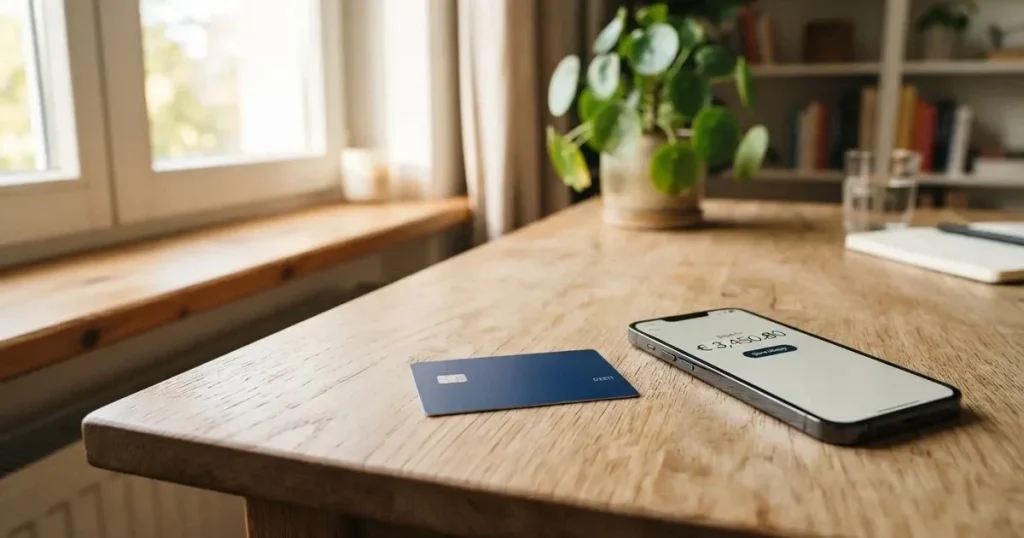
Tap is a crypto-linked payment card: you hold crypto or a currency balance in the app, you load money onto a Mastercard, and you spend it like an ordinary card in a shop or online. That idea is not new, and Tap is not the only card doing it. What makes Tap worth reading about is the gap between what the site says and what a third-party reviewer found on the ground — and the fact that the things you would most want to know (which countries, which coins, which networks, what it costs) are mostly not published.
The conditions described here are current as of October 28, 2026.
I gave Tap 5.6 out of 10. That is not a bad score for a card that works in many countries’ shops and pays cashback. It is a below-average score for one reason: you cannot check the terms before you commit. I have been through the card’s own pages, its news, its terms page and the user reviews behind it, and the honest summary is that this is a service that seems pleasant to use and is frustrating to verify. Read on if you are weighing it, because the sections below are ordered so you can stop when you have enough.
Score: 5.6 out of 10
| Criterion | Mark | Why |
|---|---|---|
| Who can get it | 6 / 10 | No country list on the site, only a “services may not be available in all jurisdictions” notice and an instruction to verify eligibility in your region; the number of countries is not disclosed |
| Cost | 6 / 10 | Not disclosed officially; unofficially a monthly fee, issuance, top-up and ATM reported free with FX at 1.5%, plus user reports of a $35 withdrawal fee and an inactivity fee |
| Top-up options | 5 / 10 | No coin list published; stablecoins, USDT, BTC and SOL mentioned along with a bank/crypto on-off ramp; unofficially the crypto has to be converted before loading the card |
| Reliability and complaints | 4 / 10 | Tap Global Limited (Gibraltar), Gibraltar FSC DLT licence No. 25532, Moorwand Ltd as issuer for the new card; Trustpilot 3.4 out of 5, accounts frozen for days and weeks, withdrawal delays |
| Everyday use | 7 / 10 | Physical and virtual Mastercard; unofficially Apple Pay and Google Pay noted as supported, though the same source lists “No Apple Pay” as a minus; ATM free |
| Total | 5.6 / 10 | Solid to use, poor to verify |
Who it suits, in one line: someone who already has crypto sitting in an exchange account, wants a euro card that spends it, and values the cashback and free ATM withdrawals more than reading a published fee schedule. Who it does not suit: anyone who needs to know the cost of a payment before they make it, anyone who cannot tolerate an account freeze without warning, and anyone who wants to hold the keys to their own money.
There is also a clear audience the company aims at — users who want crypto, currency accounts and cashback in one app — and if that is you, the pitch is coherent. The problem is not the pitch. It is the paperwork behind it.
Will they give you the card
Short answer: probably, but you cannot find out from the website whether you are eligible. Tap publishes no country list. What the site says instead is “Services May Not Be Available In All Jurisdictions” and an instruction to check eligibility in your own region. That is the whole of it. There is no page telling a reader in Lagos, Warsaw or Buenos Aires whether the card can be shipped there, or what happens if it cannot.
Why that matters, and it matters more than it first sounds, is that this card is issued from Europe and structured through Gibraltar. The company behind it is Tap Global Limited, registered in Gibraltar (No. 118724), Madison Building, Midtown, Line Wall Road, Gibraltar GX11 1AA, licensed by the Gibraltar Financial Services Commission under the DLT Regulatory Framework with licence No. 25532. A European issuer works inside a European system with a defined set of countries it can serve. So the absence of a list is not a marketing decision — it is a boundary that exists whether or not the site draws it.
Banking and e-money are handled by “Our Authorised Issuing Partners”. The specific provider is shown in the app and varies by region, currency and account type, and the issuer’s name is not stated on the site. That means the bank you are dealing with may not be the brand you signed up for, and which one you get may depend on where you live and what your account looks like.
What you can do as a reader: before you spend time on the app, check whether the app itself offers you an account, and only then invest in the rest. The site’s own instruction to “verify eligibility in your region” is the honest path — a card that takes twenty minutes to say no is better than one that takes twenty minutes to say yes and then declines your first payment abroad.
How to get it
You apply in the app: Tap is an app-first product, and the app is where the account lives. The specifics you would look for are the ones the site leaves quiet. The KYC requirements are not stated. Neither are the verification tiers, the delivery time for the physical card, or the card currency. The card itself is clear enough: a physical and a virtual card, on Mastercard, shown as a dark-finish Tap Mastercard. If you were told somewhere it is Visa, be careful — a third-party listing says Visa, and it contradicts the card’s own materials. Go with Mastercard.
Unofficially, and I want to flag this clearly because it is not confirmed by the card, one reviewer says identity verification runs on email, phone and an identity document, with no proof of address and no selfie required. That is a meaningfully lighter check than a bank applies, and for many readers it is the main draw. Take it as a third-party claim, not as a promise — third-party card reviews are written from documentation and user reports, and they drift out of date.
On the app itself, there is something concrete: the App Store listing shows 4.5 out of 5 from 25 ratings, version 3.8.8, requiring iOS 15.6 or later. Twenty-five ratings is a very small sample — it tells you almost nothing about reliability, but it does tell you the app is maintained. The Google Play listing for com.tapngo.tap exists; its rating was not read. Six app languages are listed: English, French, Greek, Italian, Spanish, Swedish.
Two things to know before you start. First, there is no published delivery promise, so do not plan around a card arriving for a trip. Second, support is described as “Available 24/7” with no channels named — so if you are someone who needs to know there is a live human, ask in the app before you commit.
Fees: what it really costs
Here is the honest problem with Tap. The card’s own pages state no costs. No monthly fee, no issuance fee, no conversion figure, no FX percentage, no ATM price, no daily or monthly limit. There are no “zero” claims to take apart either — the site simply does not publish numbers. That is unusual, and it puts the entire burden on you.

What exists is unofficially reported, and from a third-party reviewer: a monthly fee, issuance, top-up and ATM withdrawals all free, with FX at 1.5%. Another user report in the same material mentions a $35 withdrawal fee. Neither figure appears on Tap’s pages.
| Fee or limit | What Tap’s own pages say | What is reported elsewhere (unconfirmed by Tap) |
|---|---|---|
| Issuance | not stated | free |
| Monthly fee | not stated | free, but a monthly/inactivity fee is reported by users |
| Conversion | not stated | must convert crypto before loading the card |
| FX | not stated | 1.5% |
| ATM | not stated | free and unlimited |
| Daily spend | not stated | listed as “Unlimited”, with a 15,000 EUR daily cap cited in the same source’s cons |
| Withdrawal fee | not stated | $35 reported by users |
Three everyday payments, and what they cost under those unconfirmed figures:
Buying coffee abroad for 4 EUR. Your card is euro-denominated, so no conversion applies — Tap says other currencies are converted at the point of sale. If you pay in dollars, the 1.5% FX figure on an unconfirmed basis applies. A 4 EUR purchase at 1.5% is roughly 0.06 EUR. Trivial, and the clearest argument for this card.
A 200 EUR online subscription. Paid in euros, no FX, and the reported free monthly fee means no card cost. This is the case Tap is genuinely good at.
Paying 100 USD on a euro card, or converting 500 USD of crypto into euros first. The 1.5% FX lands, and — this is the part that actually stings — if the balance came from crypto, the crypto has to be converted before it can be loaded. That conversion is a second cost layer, and Tap publishes nothing about its size. On a large balance, this is where you should be most careful, because you are paying a spread you cannot see.
My advice: treat every number in that table as a working assumption, not a fact, and test with small amounts before you commit meaningful balance. If the app’s fee screen shows you real numbers at the point of conversion, that is the number to plan on, not the ones above.
Top up how it works
Tap does not publish a funding list or a list of networks. What it does publish: stablecoins, USDT, BTC and SOL mentioned alongside yield, and a Bitcoin on/off ramp. There are dedicated IBANs to hold seven national currencies, and a bank/wallet-to-crypto on-off ramp described as available “anytime”, between a bank account or a wallet and crypto. Fees and minimums are not stated, and neither is what happens to a balance at closure.
Unofficially, the crypto has to be converted before it goes onto the card — which is the practical shape of that on/off ramp. The same third-party source is internally inconsistent on coverage: it counts 48 supported cryptocurrencies in one place and 0 in another. Treat the coin list as unknown.
This is where the mechanics of the category matter, because most top-up mistakes happen at the network step rather than the app step. A card number starts with a six- or eight-digit issuer identification number, the BIN, that says which institution and country issued it. Merchants can look that up. That is why a card issued in one country can look foreign to a shop in another, and why some merchants treat prepaid or foreign-issued cards differently. Transfers, meanwhile, are typically irreversible: if you send on a network the provider does not support, or to an address belonging to a different network, the funds can be lost or need manual recovery with no guarantee. If a transfer goes to the wrong network, there is no customer service desk on the blockchain that can undo it.
So the practical order is: convert to the currency you want, use the IBAN or in-app method Tap gives you for that currency, and never copy an address from anywhere but the app screen. If you are moving crypto directly, check the network twice.
Paying with it every day
This is where Tap scores best, and the reason is the physical/virtual Mastercard plus a genuinely wide currency reach. The site says “Use 80+ currencies” and “Use the currency of your choice to load up your card”. The card you are being issued today is euro-denominated, with other currencies converted at point of sale — and on 5 October 2026 Tap announced a new multi-currency Mastercard that spends from app balances, with Moorwand Ltd as issuer and BIN sponsor, replacing the euro card. No launch date was given. The CEO cited 400,000 customers at the same announcement, which is the clearest scale number the company has published.
Mobile wallets are the one place where the third-party material contradicts itself. One source marks Apple Pay and Google Pay as supported; the same source lists “No Apple Pay support” as a minus. Tap’s own site does not state either way. If Apple Pay is the reason you want this card, ask in the app before you apply, because a card you have to hand over at the till is a different experience from one you tap.
Cashback is stated as “up to 8%” on qualified purchases. The payout asset, tiers and caps are not stated. Unofficially, there are VIP tiers with an entry level of 0.5%. “Up to” is doing a lot of work in that sentence — the number you care about is the rate at your own volume, and Tap will not publish it.
Two everyday-use details worth knowing from the category side. Merchant category codes: some issuers block whole categories, most often gambling (MCC 7995), by policy rather than law, and the blocked list varies by issuer — Tap’s blocked MCCs are not stated. Address verification: the AVS check compares the numeric parts of your billing address with the issuer’s records, is mainly a US, Canadian and UK thing, and is generally unavailable for foreign-issued cards, which causes declines at checkout. If you are ordering from a merchant that runs AVS strictly, that is a plausible reason a payment fails, and it is not a fault in your balance.
What can go wrong
This is the weakest part of the picture, and it is where I would want you to look hardest before depositing anything you cannot afford to lose.
First, the reviews. Trustpilot for tap.global shows 3.4 out of 5 from 321 reviews, 36 of them in the last twelve months (read 2026-10-20). A second set of Trustpilot UK figures shows 3.5 out of 5 from around 309 reviews, with individual reviews undated. Tap’s own site, I should say, has no complaints section. The user reports are specific and consistent: accounts frozen or locked for thirteen days without explanation; repeated KYC checks and long onboarding; deposits and withdrawals that did not arrive (January, June and September 2026); monthly or inactivity fees draining balances (April to June 2026); slow support at weekends; a revoked referral bonus; a high crypto withdrawal fee. Tap’s response is that fees are in its terms — which is true of the fees it publishes, and it publishes few.
Second, the regulatory position. Tap Global is explicitly “not a bank”. Accounts are held by authorised issuing partners. It holds a Gibraltar FSC DLT licence, which is a real licence, but a licence is not deposit insurance. Money at an e-money institution must be safeguarded, but such funds are not the same as bank deposits and may not be covered by deposit guarantee schemes. Budget for the possibility that access to your money depends on an issuer’s decision, not only on Tap’s.
Third, the card controls, which are genuinely good: you can freeze your card or lock your account instantly, reveal your card in-app, freeze it, and view your PIN. Two-factor authentication and insurance are not stated. On 3-D Secure, liability for a fraudulent online payment can shift from the merchant to your bank — or, critics say, to you — so do not treat the security code in an online payment as an inconvenience.
Fourth, the crypto side, which is where the real irreversibility lives. With a custodial wallet the provider holds the credentials, so you trust them completely. A seed phrase is typically 12 to 24 words in an unencrypted form; anyone who has it can restore the wallet and spend the funds. Transfers are irreversible and a stolen key has no recovery. Custodial platforms have a history: Mt. Gox (about US$350 million reported stolen, 2011–2014), Coincheck (about US$400 million, 2018), Ronin Network (US$625 million, 2022). Stablecoins are not censorship-proof either — Tether says it disables tokens in wallets on the OFAC sanctions list and has frozen funds tied to illicit activity — and they do not always hold their peg: TerraUSD collapsed in May 2022 and USDC temporarily lost its peg in March 2023.
And a last structural risk worth naming: programmes close. Visa terminated its global agreements with FTX on 13 November 2022 and the FTX US debit card was wound down; WaveCrest, a Visa issuer that supplied several crypto card brands, was suspended by Visa in Europe in 2018, closing all WaveCrest-issued programmes. Closures typically mean a notice period, then loading and spending stop, then you are asked to withdraw what is left. With Tap’s fees and closure treatment unpublished, that endgame is one of the things you cannot evaluate.
What to take instead
Three alternatives came up in the same research, and each fails or wins in a different place than Tap does. Here is how they compare.
| Tap | International Visa Card | UNi Card | Whop Cards | |
|---|---|---|---|---|
| Score | 5.6 / 10 | 6.7 / 10 | 6.1 / 10 | 5.2 / 10 |
| Network and form | Mastercard, physical and virtual | US-issued Platinum Visa, virtual; physical “coming soon” | Multicurrency Mastercard, spends from account balance | Visa, works online and in stores |
| Stated cost | not stated | $5 issuance, no maintenance; Classic free, Pro $9.00/month, Max $19.00/month | No annual fee; no foreign transaction fee | “No extra fees”; no amounts listed |
| FX | 1.5% (unconfirmed) | “Visa exchange rate + 2% FX fee” | Live OTC rates, “no hidden exchange fees” | not stated |
| Rewards | Up to 8% cashback (unconfirmed tiers) | no cashback stated | Spend-to-Earn up to 3% | 5% cashback at select merchants, currently Uber |
| Who can use it | no country list published | not for residents or registrants of Belarus, mainland China, North Korea, Cuba, India, Iraq, Iran, Israel, Myanmar, Nepal, Nicaragua, Russia, Syria, Turkey, Ukraine, Venezuela, Vietnam; purchases blocked in North Korea, Cuba, Iran, Russia, Syria, Ukraine, Venezuela | not stated | 31 US states for consumers, 41 for businesses; unsupported consumer countries include Belarus, China (mainland), Cuba, Hong Kong, India, Iran, Iraq, Israel, Myanmar, Nepal, Nicaragua, North Korea, Russia, Syria, Turkey, Ukraine, Venezuela, Vietnam |
| Funding | stablecoins, USDT/BTC/SOL, bank/crypto on-off ramp, 7-currency IBANs | USDC or USDT into the USD account free at 1:1; also USD, EUR, SEPA, SWIFT, FedNow | not stated | Whop balance; pending balance usable on arrival; stablecoin collateral from a linked wallet |
Read that table the way you would read any comparison where the interesting cells are the blank ones.
The International Visa Card is the clearest published offer: a $5 issuance fee, free card use in USD on every plan, a stated 2% FX fee on top of the Visa rate, deposits of any kind free, and plans from free to $19.00/month. What it buys you is clarity; what it costs you is a long exclusion list applied by residence or registration rather than citizenship — 16 named countries for the account, seven more where purchases are blocked outright, with FATF grey-list countries reviewed case by case. Its physical card is “coming soon”. It pays no cashback.
UNi Card is the middle ground, and for a reader who keeps assets in several currencies it is the one I would look at first. No annual fee, no foreign transaction fee, conversion at live over-the-counter rates with “no hidden exchange fees”, spend-to-earn up to 3%, multicurrency Mastercard spending from the account balance. But it publishes nothing about who can get one or how you fund it — two blanks where Tap has at least a partial answer.
Whop Cards suits a specific shape of life: US residents in the 31 listed states spending from a Whop balance, with 5% cashback at select merchants (Uber at present, more planned). It backs balances with stablecoin collateral from a linked wallet, and pending balances become usable as soon as a payment arrives while standard withdrawals use settled funds. Costs are “no extra fees” with no figures, and it is excluded from a long country list too. Also the lowest score of the four, and the least useful outside the US.
The honest summary: if the deciding factor for you is knowing what a payment will cost, the International Visa Card wins on published clarity. If it is multi-currency use without a foreign transaction fee, UNi Card’s stated terms are the cleanest of the three. If it is US-only cashback at one merchant, Whop. Tap sits behind all of them on disclosure and ahead of none of them on cost.
Who I would recommend it to
To be specific, in this order of confidence:
Recommend it if you already hold crypto or a euro balance on an exchange, you mostly spend in euros, you want the cashback headline and a free ATM, and you are comfortable treating an e-money account rather than a bank account as your home for that money. You will also want to keep a small buffer on the card, because freezing reports exist and a frozen account with money in it is the scenario people write reviews about.
Recommend it with caution if you travel and spend in several currencies. The 1.5% FX figure is unconfirmed, the old card converts at point of sale, and the multi-currency replacement was announced for 5 October 2026 with no launch date given — so which card you get and how it handles other currencies is, right now, unresolved.
Do not recommend it if your priority is a published fee schedule, if you are sending large balances in crypto and want to know the conversion spread in advance, if a surprise hold or freeze would be a serious problem for you, or if you want to hold your own keys — Tap is custodial by design, and there are self-custody-linked cards where funds stay in your wallet until the moment of payment, with the trade-off that key loss, phishing and address-swapping malware become your problem alone.
If you are in one of the excluded countries for any of the alternatives above, that is a harder blocker than anything in this review, and no fee or feature compensates for it.
Frequently asked questions
What is the Tap card?
Tap is a crypto-linked payment card issued by Tap Global Limited, a Gibraltar company (No. 118724) licensed by the Gibraltar Financial Services Commission under the DLT Regulatory Framework, licence No. 25532. It converts crypto or a currency balance into spendable fiat and loads it onto a Mastercard, physical or virtual. Tap is not a bank; accounts are held by authorised issuing partners. The euro-denominated card is being replaced by a multi-currency Mastercard announced on 5 October 2026, with Moorwand Ltd as issuer and BIN sponsor.
How does the Tap card work?
You convert or top up a balance, and the card spends only that balance, so it cannot overdraw. Payments are routed over Mastercard by an issuing partner, with the crypto brand acting as the app and programme front end. Tap says you can load in the currency of your choice across “80+ currencies” and mentions dedicated IBANs holding seven national currencies, plus a bank/wallet-to-crypto on-off ramp available “anytime”.
Is Tap a bank?
No. Tap says so itself: it is “not a bank”, and banking and e-money are provided by “Our Authorised Issuing Partners”. The specific issuer is shown in the app and varies by region, currency and account type, and is not named on the site. That distinction matters for your protection, because safeguarded e-money is not the same as a bank deposit and may not sit under a deposit guarantee scheme.
Does the Tap card require KYC?
The card’s own pages do not state the requirements, and it publishes no verification tiers. Unofficially, one reviewer says verification runs on email, phone and an identity document, with no proof of address and no selfie needed. Treat that as unconfirmed. User reviews repeatedly mention repeated KYC checks and long onboarding, which is why this is worth asking about in the app before you deposit.
How much does the Tap card cost?
Tap publishes no costs at all: no monthly fee, issuance fee, conversion figure, FX percentage or ATM price. Unofficially, a third-party reviewer reports monthly fee, issuance, top-up and ATM withdrawals free with FX at 1.5%, and users report a $35 withdrawal fee plus monthly or inactivity fees. Work from the app’s own fee screen, not from these figures.
Can I add the Tap card to Apple Wallet or Google Pay?
The card’s site does not say. One third-party source marks Apple Pay and Google Pay as supported, while the same source lists “No Apple Pay support” as a minus — a contradiction I would not resolve on your behalf. Ask in the app before applying, because a card you must hand over at the till is a materially different experience from one you tap.
How do I top up the Tap card?
Tap publishes no funding list and no networks. It mentions stablecoins, USDT, BTC and SOL alongside yield, a Bitcoin on-off ramp, dedicated IBANs for seven national currencies and a bank/wallet-to-crypto ramp. Unofficially, the crypto must be converted before it is loaded. Transfers are irreversible, so never use an address or network from outside the app.
Is the Tap card safe?
It has real controls — instant card freeze, account lock, in-app card reveal and PIN view — and a Gibraltar FSC DLT licence. But two-factor authentication and insurance are not stated, funds sit with an issuing partner rather than a bank, and crypto held by a custodial provider carries counterparty and hack risk. Trustpilot shows 3.4 out of 5 from 321 reviews, with reports of frozen accounts and delayed withdrawals.
What are the limits on the Tap card?
Neither the card’s pages nor its terms state daily or monthly limits. Unofficially, one source lists daily spend as “Unlimited” while the same source’s cons cite a 15,000 EUR daily cap, and reports ATM withdrawals as free and unlimited. Since both figures are unconfirmed, ask the app what limits apply to your account before you rely on the card for a large payment.
Is the Tap card worth it?
Worth it if you want a euro card funded from crypto, value the cashback headline and free ATM withdrawals, and can accept an e-money account as your home for that money with published costs unavailable. Not worth it if you need a readable fee schedule, plan to send large crypto balances, or would be seriously disrupted by an account freeze without warning. Tap scores 5.6 out of 10 — good to use, hard to verify.
App and neobank cards put to the test – cryptocardtested
Content created by the «cryptocardtested» team