
The card that works until the review starts
 Available in US

Most crypto card reviews are written as though the interesting question is which chain a card supports. For the Trustee card, that is not the interesting question. The interesting question is what happens to your money on a day when something looks unusual to the company’s compliance team — and what the card’s own pages say about that versus what its users report. I went through the card’s public pages, its help material and a large body of user reviews, and this is what I found. My score is 5.1 out of 10.
That number is not a insult to anybody’s crypto. It reflects a card that does one thing simply and honestly — virtual USD spending from a stablecoin balance — while leaving several ordinary banking functions switched off and carrying a visible complaint history around frozen funds. Whether that trade suits you depends almost entirely on why you are looking at a crypto card in the first place.
The conditions described here are current as of October 28, 2026.
Verdict: who this card is actually for
Trustee looks built for one specific reader: someone in the European Economic Area who wants a virtual US-dollar card for online subscriptions, ad platforms and websites that do not accept their home currency or their home bank. If that is you, the card does the job without ceremony — you load stablecoins, you spend dollars, and the app tells you what happened. If you want a card you can hold, use in shops, and take money out of at an ATM, this is not that card, because both of those things are currently unavailable.
Here is how I broke the score down. The marks come from the same criteria I use for any card: eligibility, what it costs to use, how you load it, how reliable it is when something goes wrong, and whether it survives an ordinary day.
| Criterion | Mark | Why |
|---|---|---|
| Who can get it | 5 / 10 | The card’s own pages name no countries — only “Issued in Great Britain” and “Worldwide Crypto Card”. Third-party sites describe it as available in the EEA plus Ukraine and Moldova, but that information may be out of date. |
| Cost | 7 / 10 | Virtual card listed at 10.00 $, and the page advertises “0% fees on transactions”. But the markup on currency exchange is not disclosed, and reviews cite conversion fees of up to 2% per transaction. |
| Top-up options | 5 / 10 | USDC or USDT, first into the Trustee Plus wallet and then across to the card balance — two steps rather than one. The networks are not named. Third-party sources mention 30+ assets in the wallet. |
| Reliability and complaints | 3 / 10 | The issuer is named as Wirex Limited. On Trustpilot, Trustee Plus sits at 2.2 out of 5 from 236 reviews, with 56% one-star. The recurring theme is funds frozen for AML review: one report cites 21,360 USDT held for 53 days. |
| Everyday use | 5 / 10 | The virtual card is available and works. The physical card is temporarily unavailable, and cash withdrawals at ATMs are not available at all. Apple Pay and Google Pay are supported. |
| Total | 5.1 / 10 |
Read the low marks carefully, because they are not all the same kind of low. The cost score is lowish for one specific reason: the card advertises zero and the users report something else. That gap is explained in the costs section below, and it is the single thing I would want you to understand before you load money.
The reliability score is low for a different reason. Nothing in what I read suggests the card is a scam in the sense of taking money and vanishing. The pattern in the reviews is narrower and more bureaucratic: money held pending a source-of-funds check, with no stated timeline, and support replies that repeat themselves. For someone who needs their balance to be spendable today, that is not a minor inconvenience. For someone who loads a fixed amount once a month and can wait, it may never come up.
Will they give you the card?
Yes, most likely — but the card does not tell you where it is available, and that is the first thing you need to resolve.
The official position is this: the card’s pages list no countries. What they say is “Issued in Great Britain” and call it a “Worldwide Crypto Card”. Neither statement is the same as an eligibility list. “Issued in” tells you where the card programme is registered, not who can open an account; “worldwide” is a marketing phrase that has no enforcement attached to it.
Here is what third parties say, and I want to be precise about the status of this. Unofficial sources — a crypto card comparison site and a guide published in the 2023–2025 period, neither showing a clear date — describe the card as available to residents of the EEA plus Ukraine and Moldova, usable wherever Mastercard is accepted. That may well be right. It may also be out of date, and it comes from people with an interest in you signing up. I am giving it to you because it is the only eligibility information that exists in public, not because it settles the question.
The practical answer, then: open the Trustee Plus app and run the sign-up with your real country and your real document. The app will tell you in minutes whether it will work. Everything else is inference. What I would not do is read “worldwide” and assume it means your country is fine.
One structural point matters here and is not Trustee-specific. Card numbers begin with an issuer identification number of six or eight digits, and merchants can look that up to see which institution and which country issued the card. Shops may apply extra scrutiny when the issuer country does not match the billing address. So even if you are accepted, a card issued in Great Britain can look foreign to a merchant elsewhere. That is normal for this category and is not a sign your application was wrong.
How to get it
The route is short and entirely inside one app: install Trustee Plus, complete identity verification, order the card, then fund it.
Verification is the gate. The card requires KYC before it will issue anything — the wording is “Complete KYC verification”. The documents the card states are an ID card (national passport) or an international passport, a selfie, your address, and the purpose of the account plus the source of your income. Proof of address is not named in the main flow, and reviews suggest additional documents may be requested later. That last point is the one to note: your first submission may not be the last.
The app’s verification runs as a single in-app step with sections for Profile, Identity, country selection, then “Other method”, where you state the account purpose and income source, followed by address, document and selfie. The card describes processing as usually taking little time. It does not state how long, it does not state the verification levels, and it does not state the grounds on which an application can be rejected.
On the card itself: two formats exist and neither is quite the “card” most people picture. The virtual card is orderable and, per the card, issued within a few minutes. The physical card is listed as temporarily unavailable, with a waitlist. The card network is not stated. The card currency is USD.
For the physical card, delivery countries, delivery time, delivery cost and replacement terms are simply not stated. I am not going to guess at them. If a physical card matters to you — and for a lot of people it does, because a virtual number cannot be shown at a restaurant counter — then you are waiting on a waitlist with no published timeline.
Worth knowing generally: KYC exists because regulated businesses are required to verify customers under anti-money-laundering law, and if due diligence cannot be completed, EU rules require the institution to hold off or end the relationship. Accounts closed or frozen pending documents are not a quirk of one company; they are the system working as designed. That does not make it acceptable treatment — but it does mean it is not, in itself, evidence of anything sinister.
Fees: what it really costs to spend with Trustee
This is where I would slow down and read twice, because the card advertises zero and its users report something else.
The stated position is generous on its face. The virtual card is listed at 10.00 $ — the page does not label it as an issuance fee, which leaves some room for interpretation. The page advertises “0% fees on transactions”. There is no monthly fee stated. Your balance is in US dollars, and when you pay in euros, złoty or pounds, the conversion happens automatically at the moment of payment.
What is not stated is where the money comes from on conversion. Automatic conversion means something is charged or something is lost, and the card’s pages do not disclose the exchange markup. The unofficial picture fills part of that gap: a 0.5% crypto-to-euro conversion fee is the most consistent figure across 2023–2025 sources, with 0% commission on card payments — while Trustpilot reviews cite conversion fees of up to 2% per transaction. Those two numbers are not compatible, and I cannot tell you which applies to your transaction today.
Here is what is known, in one table. Everything marked unofficial comes from third-party sites, not from the card.
| Item | What the card says | Status |
|---|---|---|
| Virtual card | 10.00 $ | Stated on the card’s page, not labelled as a fee |
| Physical card | Temporarily unavailable, waitlist | No price, delivery cost or timeline stated |
| Monthly fee | Not stated | Third-party sources say EUR 0 |
| Card transactions | “0% fees on transactions” | Advertised by the card |
| Crypto-to-fiat conversion | Not stated | Unofficial: 0.5%; reviews cite up to 2% |
| Currency conversion on payment | Automatic; markup not stated | — |
| ATM withdrawal | Not available at the moment | Card says cash withdrawals at ATMs are not available in Trustee Plus |
| Monthly transaction limit | 30,000 USDC | Stated; no daily limit stated |
| Cashback or tier limits | Not stated | No tiers, no cashback described |
Unofficial pricing that has circulated: virtual card issuance at EUR 10 and physical at EUR 25, monthly maintenance EUR 0, and one comparison site noting no virtual issuance charge during a promotion. The official page still lists the virtual card at 10.00 $, which is what I would take as current.
Now three ordinary payments, and what applies to each.
*Paying 30 € for a video subscription.* Your balance is in dollars, so the charge converts at payment time. Under the advertised terms, 0% commission applies. But the conversion itself is where the cost hides — potentially a fraction of a percent under the 0.5% unofficial figure, potentially 2% under what some users report. On 30 € that is the difference between a few cents and something you would notice.
*Paying 12 $ for a design tool.* Same currency as your balance, so this is the cleanest case: no conversion at all, and the card’s own advertising says 0%. This is the scenario the card is actually optimised for, and it is the one where I can tell you most confidently what you will pay.
*Taking 50 $ out of an ATM.* You cannot. The card states plainly that cash withdrawals from the card at ATMs are not available at the moment. Unofficial sources describe an ATM arrangement with a PIN at NFC-enabled terminals, up to EUR 2,000 per day and EUR 10,000 per month at 1.5% plus EUR 1 — but that comes from an older guide with no visible date, and it directly contradicts the card’s current position. Where a page and a third party disagree, I follow the page.
One more limit to keep in view: the monthly transaction limit is 30,000 USDC. No daily limit is stated. And note that a declined authorisation can leave a hold on funds that lingers for several days, sometimes up to seven — a small thing that matters if you are living off the balance.
Top up: how money gets onto the card
Two balances, two steps, and a detail the card leaves out.
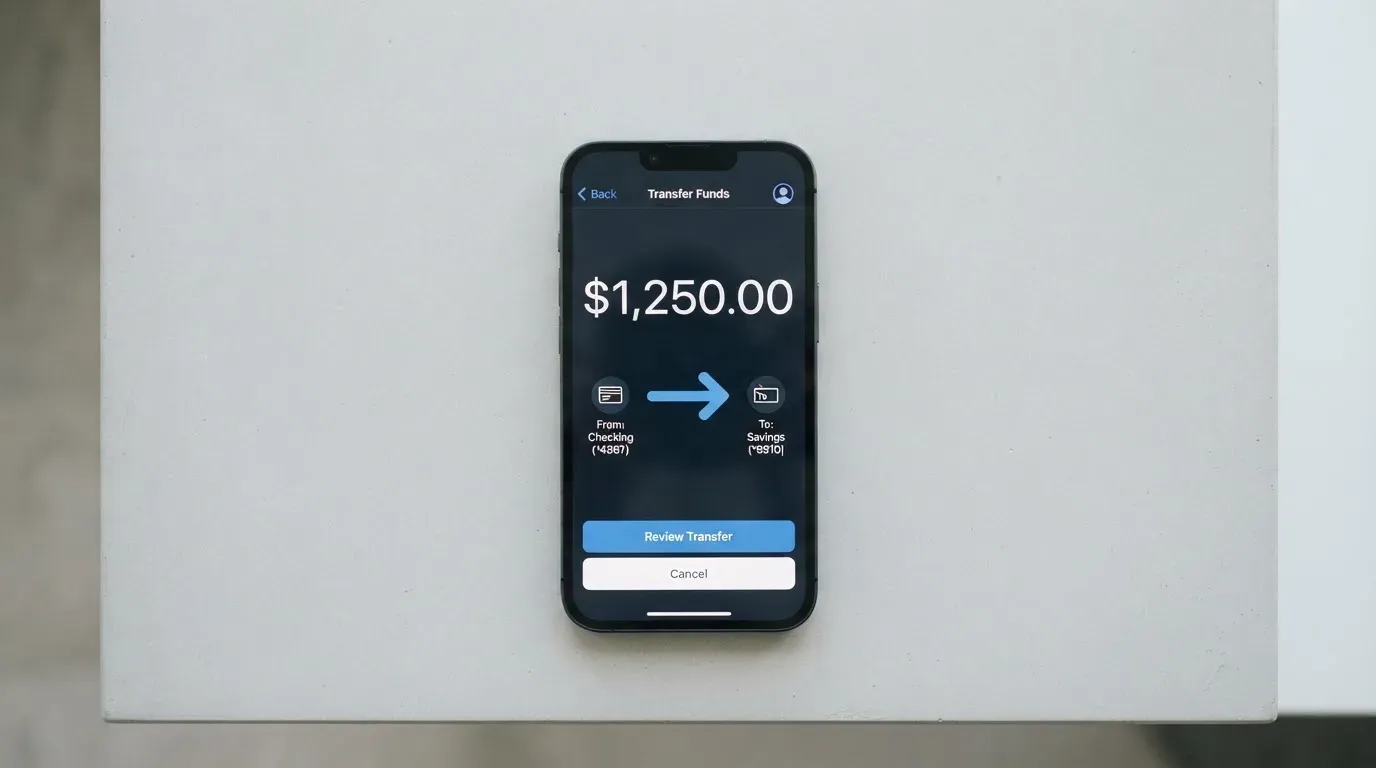
The official flow: send USDC or USDT to your Trustee Plus wallet, then move it from the wallet across to the card balance. The card credits this usually within up to 5 minutes. The two balances are separate — the crypto sits in the wallet, the spendable dollars sit on the card — so topping up is a transfer you initiate, not a payment you make. Top-up fee, minimum amount, and supported networks are not stated on the card’s pages.
That last omission is the one that catches people out. Getting a stablecoin onto the wrong network is one of the most common ways a transfer disappears, and blockchain transfers are irreversible: a deposit sent on a network the provider does not support, or to an address belonging to another network, can be lost or need manual support recovery with no guarantee. The card does not tell you which networks to use, so you would be inferring it. That is a reason to send a small test amount first, not a reason to send a large one first.
Some context on the coins themselves, since only two are offered here. USDT and USDC are dollar-pegged, and the BIS put about 90% of stablecoin market capitalisation in these two as of July 2025. Circle says USDC is redeemable 1:1 for USD and fully backed by cash and cash equivalents, mostly in a government money market fund, with monthly reserve attestations. Circle listed USDC as natively supported on 38 networks as of 16 September 2026, including Ethereum, Solana, Base, Polygon PoS, Avalanche, Arbitrum and Stellar. Tether describes USDT as a token built on multiple blockchains with reserves intended to back it one-to-one, issued on networks including Ethereum, Tron, Solana, Polygon and Avalanche.
Two practical warnings. First, USDC over TRC20 is not a native option — Circle stopped supporting USDC on Tron in February 2024. Second, sending a token on Ethereum requires ETH for gas: a wallet holding USDT with no ETH cannot send. Tron works differently, pricing through bandwidth and energy and often burning TRX. And neither stablecoin is censorship-proof: Tether says it disables tokens in wallets on the OFAC sanctions list and has frozen funds tied to illicit activity.
Getting money back off the card is where I would expect trouble, and the card says almost nothing. Its help material links to an article on withdrawing money to a bank card, which I did not read in full. The steps for moving a card balance back to crypto are not stated, nor are the fees, nor what happens to a leftover balance if you close the account. There is mention of a personal IBAN for SEPA transfers and an article on adding funds to a EUR balance, and a “Trustee Plus fees” article that could not be retrieved.
An unofficial detail worth flagging: third-party sources describe 30+ assets in the Trustee Plus wallet — BTC, ETH, TRX, USDT, USDC, SOL — and one of them says card spending is limited to BTC, ETH and USDT, with USDC for wallet top-ups. That contradicts the official page, which says USDC and USDT for the card. Where the wallet’s contents and the card’s funding options are described differently by different sources, the practical advice is the same: check what your app actually shows you before you plan around it.
Paying with it every day
The day-to-day experience is good in one direction and incomplete in another.
What works. The virtual card is available, issued in minutes, in US dollars, and it works where Mastercard is accepted. Apple Pay and Google Pay are both supported, which matters more than it sounds: adding the card to a phone wallet replaces the card number with a device-specific number stored in the phone’s secure hardware, never on Apple’s servers, and each payment uses a one-time dynamic code. In practice that is the smoothest way to use this card.
What does not work. There is no physical card, so there is nothing to hand over in a shop. There are no ATM withdrawals. There is no daily limit stated, so you cannot plan around one.
What I could not find out. Which merchants are blocked is not stated — and this is a real limitation for this category, because gambling merchants carry a merchant category code that many issuers block by policy rather than by law, with the list differing from issuer to issuer. There is no stated rewards programme of any kind: no cashback, no referral scheme, no tier structure. If a card rewards you, this one does not. Third-party sources contradict each other on whether cashback exists, is in development, or runs to some higher percentage via a sponsored piece; I would assume it is zero until your app shows otherwise.
The app. Trustee Plus is iPhone iOS 17.0 and up, version 2.1.6, with an Android APK offered on the site. The listed developer is MIKEPAY INC. The App Store listing I saw, on the Nepal storefront, showed no rating at all — “not enough ratings” — which means the app store is not telling you anything about reliability either. I did not read the Google Play rating.
Disputes. Not stated on either the card or the wiki pages I read. That is a gap, not a reassurance. A chargeback is a refund ordered by your issuer to settle a dispute, with reason codes for fraud, duplicate billing or goods not received; US debit card reversal rights come from Regulation E and prepaid-card coverage varies and should not be assumed. One review describes an account closed after a chargeback request. You may be dealing with a structure where the “issuer” is a third party rather than the brand you signed up with — and here the entity behind Trustee does not even appear on the card page.
What can go wrong
This is the section I would ask you to read twice, and the reason the score is 5.1 and not higher.
The issuer is named; the brand is not. The card states it is “Issued in Great Britain” by Wirex Limited. The Trustee entity itself does not appear on the card page. If something goes wrong, the parties you would deal with are a brand, a programme manager and a licensed issuer — and the card’s own pages do not explain how they relate. That ambiguity is not automatically bad; it is common in this category. But it means the answer to “who owns Trustee” is not on the card.
The complaint pattern is specific and repeated. On Trustpilot, the Trustee Plus listing (trusteeglobal.eu) sits at 2.2 out of 5 from 236 reviews, 97 of them in the last twelve months, with 56% one-star and 37% five-star. The company replies to 98% of negative reviews, and the replies are largely a template saying funds are safe. The user themes: funds frozen under AML review with no timeline (April to October 2026 — one case cites 21,360 USDT held on 1 October 2026, another 53 days, several 30-plus days); refunds sent back to the source that were never completed; copy-and-paste support replies; lost access or verification revoked; a card blocked in July 2026. A separate trustee.io Trustpilot page shows 2.5 out of 5 from five reviews, all one-star, covering AML holds, an account closed after a chargeback request on 22 September 2026, and five documents requested on 12 October 2026. That profile is unclaimed.
Where the balance sits. The card’s own security page says: “We safeguard, but we do not control” — and does not explain what that means. No insurance is mentioned. Funds are with a custodian, and custodial platforms have a history of failure: Mt. Gox (about US$350 million reported stolen, 2011–2014), Coincheck (about US$400 million, 2018), Ronin Network (US$625 million, 2022). Holding funds with a custodian carries counterparty and hack risk that self-custody does not, though self-custody replaces it with total responsibility for key loss and phishing.
What is actually well-defended. Sign-in by passkey or biometrics, advertised multi-level two-factor authentication, vulnerability testing by Hacken, a HackenProof bug bounty, and 24/7 reserve monitoring. Those are real and worth something. But an instant card freeze is not stated, and that is the single control I would most want in this situation.
Why the freezes happen. Under anti-money-laundering law, regulated businesses must assess risk, monitor transactions and report suspicious activity. In the EU, due diligence covers name, address, date of birth, nationality, identity documents, a sanctions check, the purpose of the relationship, and whether you are a politically exposed person. Nationality is screened separately from residence, because sanctions screening applies to citizenship and country of birth as well as address. So when a review describes “source of funds” questions or a request for five documents, that is the system operating — and it is also the reason a “return to source” refund can move your money backwards into a system you cannot see. If due diligence cannot be completed, EU rules require the institution to hold off and, where necessary, end the relationship.
Regulatory status is not the reassurance it might seem. A card is a payment service, regulated separately from the crypto side, so a crypto card often depends on two licences. ESMA keeps an interim register of authorised crypto-asset service providers, white papers and non-compliant entities, and you can check a provider there. The MiCA transitional period lets providers operating under national law continue only until 1 July 2026 or until they are authorised or refused, whichever comes first — a date that has now passed. I found no licence or fine news against this card, and I would read that as neutral rather than reassuring.
One live signal to watch. Reviews from January 2026 describe cards moving to a merged platform or a new provider, and the card itself currently lists the physical card as temporarily unavailable and ATM withdrawals as not available, with the team said to be working on it. Programme closures follow a pattern: a notice period, then spending and loading stop, then users are asked to withdraw remaining balances. If you hold a balance here, know your exit before you need it — and note again that the card does not state what happens to a remaining balance at closure.
Tax. I am not able to advise you on this, but you should know the shape of it: digital assets are generally treated as property, so exchanging them for goods, services or dollars produces a taxable gain or loss, measured in local currency at fair market value on the date of the transaction. Each card payment funded from crypto may be a separate disposal. Speak to a professional about your own position.
What to take instead
None of the alternatives below is a recommendation to switch, and I have not used any of them. They are here because the comparison is genuinely useful when a card leaves a core function switched off.
| Trustee | TokenPocket | MetaMask | KAST | |
|---|---|---|---|---|
| My score | 5.1 / 10 | 5.8 / 10 | 7.1 / 10 | 6.1 / 10 |
| Card | Virtual USD; physical temporarily unavailable | Visa or Mastercard debit, virtual | Mastercard; virtual free, Metal $199/year | Virtual and physical, Visa tiers |
| Availability | No countries named | Visa: list of European countries/territories; Mastercard: Australia, Canada, Hong Kong, Japan, Taiwan, New Zealand, Singapore, South Korea, UK and others | 45 listed countries/territories; other regions on a waitlist; US/UK sign-ups temporarily closed | Residence list shown at KYC; ID citizenship also matters |
| Stated fees | 10.00 $ virtual; “0% fees on transactions”; markup not stated | 1% on crypto deposit, refunded later via rewards; no other fees claimed | “Minimal fee” per transaction; no FX fee; no extra MetaMask fees | Non-USD FX 0.5%–1.75%; declined transaction 0.50 USD; under-25 USD non-USD transactions 0.10 USD |
| Funding | USDC/USDT, two balances | Crypto from TokenPocket wallet; Arbitrum | Directly from connected wallet; Linea, Base, Monad, Solana | USDT, USDC, PYUSD, RLUSD on Ethereum, Solana, Polygon, Arbitrum, Tron |
| Rewards | None stated | No cashback stated | 1% cashback in mUSD on Virtual; Metal headline 3% with a footnote capping the first $10,000 | 1.5%–3% USD cashback depending on tier, within monthly caps |
TokenPocket is the closest structural match and the least generous on fees as advertised: 1% is charged when depositing cryptocurrency into the card, to be refunded later through rewards or reduced transaction fees. Its advantage is that the country list is actually published, split by card network. An NFT creation fee is partly covered by TokenPocket with the user paying a small portion, and beyond that no additional fees are claimed.
MetaMask scores highest here, and the reason is visible in the table: a free virtual card with no annual or maintenance fee, no foreign transaction fee, and cashback paid in mUSD at 1% on Virtual. Its card is Mastercard, the issuer is Monovate, the provider is Crypto Life, and the Metal version is $199/year. The trade-offs are that it needs a connected self-custody wallet, supports a narrower token list, and sign-ups in the US and UK are temporarily closed. A Solana-only wallet cannot withdraw credit.
KAST is the most transparent about money, which for this reader may matter most: its fee table is public, down to a 0.50 USD charge on a declined payment for insufficient balance and a 1% inactivity fee after twelve months. Its tiers are expensive at the top — Standard at 0 USD/year, Premium at 1,000 USD/year, Private at 10,000 USD/year — but the Standard tier carries real cashback of 1.5% on the first 2,000 USD per month. Eligibility depends on both residence and the ID you hold: living in a supported country is not enough if your document is from a restricted region.
The honest summary of this comparison: Trustee is the cheapest to start and the vaguest to plan around. If your priority is knowing exactly what you pay and exactly where you are eligible, one of the three alternatives publishes more of both.
Who I would recommend it to
I would recommend this card to a person with a specific, narrow need: someone who earns or holds US dollars or dollar-pegged stablecoins, lives in the European Economic Area, and pays for online services in USD who currently has no card that works. For that person, this is a reasonable tool. Ten dollars for a virtual card, no monthly fee, no commission on the transaction itself, and Apple Pay if you want it — that is a fair deal for a problem that ordinary banking has not solved for you.
I would not recommend it to someone who needs a physical card, who needs cash, or who keeps a meaningful balance on it. Not because anything suggests the money is unsafe in the ordinary criminal sense, but because the combination of a temporarily unavailable physical card, no ATM access, an undisclosed conversion markup, and a documented pattern of long AML holds makes it a poor place to hold more than you need this month. Nor would I recommend it to anyone who cannot afford to lose access for weeks without notice, because that is exactly what the reviews describe.
Before you load anything, I would do three things. Check whether the app will accept your actual country and document. Send a small test amount on the network the app shows you, and confirm it arrives, before sending anything larger. And read the conversion figure that appears in your app at the moment of payment — that is the number the marketing does not print, and it is the one that will decide whether this card is cheap or expensive for you.
Frequently asked questions
What is the Trustee card?
Trustee is a crypto payment card that spends from a stablecoin balance rather than from a bank account. The card’s page says only “Issued in Great Britain” and calls it a “Worldwide Crypto Card”; the issuer is named as Wirex Limited. Its currency is USD, the virtual card is listed at 10.00 $, and the physical card is currently unavailable. Funds move in as USDC or USDT.
How does Trustee card work?
You install the Trustee Plus app, complete identity verification, and order a virtual card, which the card says is issued within a few minutes. You then send USDC or USDT to your Trustee Plus wallet and move it across to the card balance — two separate balances. The card spends that balance like a prepaid card. Payments in other currencies, such as euros or pounds, convert automatically at the moment of payment, at a markup the card does not disclose.
Is Trustee a bank?
No — it is not presented as one, and the card’s pages do not name a Trustee banking entity at all. What they say is that the card is issued in Great Britain by Wirex Limited. The general pattern in this category is that the crypto brand is often only a programme manager or front end, while a licensed bank or e-money institution holds the actual card programme. That distinction matters when something goes wrong: the party you complain to may not be the name on the app.
Who owns Trustee, and who actually runs it?
The card’s own page identifies the issuer as Wirex Limited and does not list the Trustee entity. Public sources do not fill this in reliably — a separate trustee.io review page exists with only five reviews, all one-star, and an unclaimed profile, and one reviewer noted that it may be a different entity altogether. I could not confirm ownership from the card’s pages, and I would not guess. Treat the issuer name as the only solid fact here.
Does Trustee require KYC, and what documents do I need?
Yes — the card states “Complete KYC verification” before it will issue. The stated documents are an ID card (national passport) or an international passport, a selfie, your address, and the account purpose plus source of income. Proof of address is not named in the main flow, and user reviews report that further documents were requested afterwards. The card does not state the processing time beyond “usually little time”, nor the grounds on which an application can be refused.
Is Trustee card available in my country, and where can I use it?
The card’s pages list no countries, saying only “Issued in Great Britain” and “Worldwide Crypto Card”. Unofficial sources describe it as open to EEA residents plus Ukraine and Moldova, but that information may be dated. Your only reliable test is the app: sign up with your real country and document and see. Once issued, it should work wherever Mastercard is accepted, though a foreign-issued card number can attract extra scrutiny from some merchants.
Can I use the Trustee card at an ATM?
Not at the moment. The card states plainly that cash withdrawals from the card in Trustee Plus at ATMs are not available, and says the team is working on it. Unofficial sources describe a past or proposed arrangement — NFC terminals, a PIN, up to EUR 2,000 a day and EUR 10,000 a month at 1.5% plus EUR 1 — but that comes from an undated older guide and contradicts the card’s current position. Plan on no cash.
How do I top up the Trustee card, and can I withdraw again?
Top up by sending USDC or USDT to your Trustee Plus wallet, then moving it to the card balance; the card credits this usually within up to 5 minutes. Supported networks, minimums and fees are not stated, so check what your app shows and send a small test transfer first — blockchain transfers are irreversible. Getting money back off is where the card is quiet: withdrawal steps, fees and what happens to a remaining balance at closure are not stated.
What are the fees, and is it really free to use?
The card advertises “0% fees on transactions” and lists the virtual card at 10.00 $, with no monthly fee stated. The catch is conversion: the markup on currency exchange is not disclosed. Third-party sources cite a 0.5% crypto-to-euro conversion fee, while Trustpilot reviews cite up to 2% per transaction. I could not reconcile those figures, so treat the true cost of a non-dollar payment as unknown until you see it in your app.
Is Trustee card safe, and is it worth it?
Worth it for a narrow need, and I would not say “safe” without qualification. Security touches are reasonable — passkey or biometric sign-in, two-factor authentication, Hacken testing and a bug bounty — but funds are custodial, no insurance is mentioned, and an instant card freeze is not stated. On Trustpilot the Trustee Plus listing sits at 2.2 from 236 reviews with 56% one-star, and the recurring theme is funds frozen for AML review with no timeline. Use it for what you need this month, not for savings.
Wallet cards put to the test – cryptocardtested
Content created by the «cryptocardtested» team