
A no-monthly-fee Mastercard that ships inside Peru and pays you back in Bitcoin
 Available in US
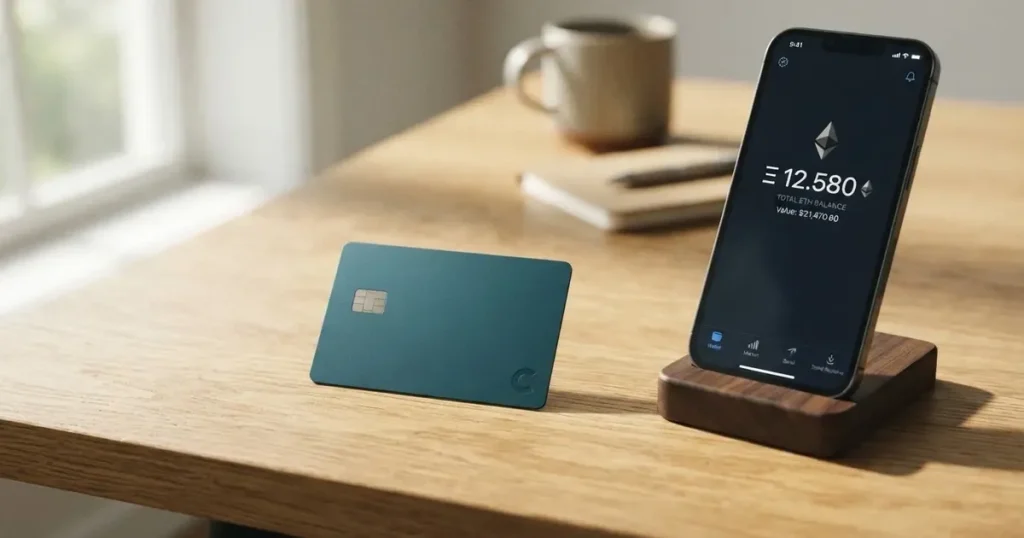
Tulkit is a prepaid Mastercard that draws on a balance you top up with soles through Yape, Plin or a bank transfer, or with crypto from your own wallet. There is no monthly fee, no annual fee, and no charge for opening the account or for asking for either a virtual or a plastic card. The virtual card arrives immediately and the physical one is shipped free anywhere in Peru. Every purchase can pay back up to 2% in Bitcoin.
Conditions are current as of October 28, 2026.
I gave it 5.5 out of 10, and the reason is easy to summarise: the pricing that is visible is unusually clean, while almost everything else you would need to plan a budget with is either one country wide or missing from the public pages. If you live in Peru and you already move money through Yape or Plin, this is a genuinely useful second card. If you are reading this somewhere else, the card is not built for you, and no amount of reading here will change that.
The conditions described here are current as of October 2026.
What score did the Tulkit card get?
I scored it 5.5 out of 10. That is not a rounding of something better or worse; it is the sum of six marks below, and it reflects a card that is cheap and narrow rather than bad.
| Criterion | Mark | Why |
|---|---|---|
| Who can get it | 1 / 10 | Peru is the only country named, and the plastic card is delivered within Peru |
| Cost | 8 / 10 | No monthly fee and no annual fee, the account and the cards are free; the rate is claimed as “one of the best on the market” with no number, and the crypto conversion fee is not disclosed |
| Top-up options | 5 / 10 | Topping up 24/7 via Yape, Plin, bank transfer or crypto; the coins and networks are not listed |
| Reliability and complaints | 7 / 10 | Tulkit Pay S.A.C., with e-money issued by GMoney S.A. under SBS supervision in Peru; no licence number given, and no complaints found |
| Everyday use | 7 / 10 | A virtual Mastercard immediately and a plastic one (12 designs) with free delivery in Peru; Apple Pay, Google Pay and ATM support are not disclosed |
| Total | 5.5 / 10 | A good price for the one market it actually serves |
The mark that sinks this is access, not safety. A card that only works in one country cannot score well for a reader standing anywhere else, however the fees look. The mark that lifts it is cost: no monthly fee is a real advantage in a country where many fintech cards charge one, and it is the kind of thing you feel every month rather than once at signup.
Who it suits: residents of Peru who want to pay with soles day to day, who already use Yape or Plin, and who like the idea of having crypto converted into a balance they can spend without touching the rest of their funds. Who it does not suit: anyone outside Peru, anyone who wants a physical card delivered abroad, anyone whose income arrives in dollars or another currency and who expects the card to convert it, and anyone who needs to check a fee figure before committing money, because two of the fees that matter are not on the public pages.
Who will they give you the card?
Peru is the only country named, and the physical card ships anywhere in Peru. The card’s own eligibility wording refers to foreigners holding a valid Peruvian immigration card, which suggests the intended audience includes non-Peruvian residents who have legal status in Peru — not tourists.
This is worth sitting with, because it is the single most common point of confusion about this card. People find the product, see a Mastercard and a clean fee structure, and assume it is internationally available in the way that many crypto cards are. It is not. The card settles only in soles, the plastic is delivered within Peru, and the local top-up rails it is built around — Yape and Plin — are Peruvian. There is no international card programme here, and no second market that has been announced.
So if you are outside Peru, the honest answer to “can I get this?” is no, and that is a structural fact rather than a temporary one.
Signup: how to get the card
The signup story is short, and short in a way that genuinely helps. Identity verification “takes a few photos”; registration takes minutes. The card states no paperwork and no credit check, and puts the whole thing at under 2 minutes.
What you get at the end is a Mastercard in two forms. The virtual card is issued instantly, so you can put it to work the moment registration finishes. The physical card comes in 12 designs and is shipped free within Peru. Registration time and delivery time are different numbers, and only the first one is published.
Here is what the public pages do not say, and I would want to know before I started:
- The document list. Which passports, national IDs or residence permits are accepted is not stated.
- Proof of address. Whether any is required is not stated.
- The minimum age. Card-issuing institutions in this category generally serve adults, and some set a higher floor, but the figure here is not stated.
- The KYC level, meaning how far the verification goes beyond photographs. Not stated.
- Delivery time for the plastic, and what a replacement costs if it is lost. Not stated.
None of that is a red flag on its own — plenty of small fintechs are simply terse in public. But it means the first few weeks of your relationship with this card will involve finding out things rather than reading them, and if you are the kind of person who needs to know the answer to “what will it cost to lose my card?” before you apply, you should ask support directly. Contact details are further down.
Fees: what it really costs
The visible pricing is the best part of this card, and it is genuinely better than most of what I have looked at in this category.
Tulkit states “sin costo mensual, ni anualidad” — no monthly fee and no annual fee. Opening an account is free, and requesting either the physical or the virtual card is free. Sending and receiving soles through Yape, Plin and banks is free. That is a short, clear list with no asterisks attached to it.
The card claims its exchange rate is “one of the best on the market”. That is a marketing phrase, not a rate. No figure is given, and there is nothing in the public material you could use to check it against a competitor. I am not going to fill that gap with an estimate, because an estimate here would be worse than the gap.
The detailed schedule of charges lives in a document the card calls the “Tarifario Tulkit Card” PDF. That is where the real answer lives, and you should read it before you start moving money at scale.
| Fee or limit | What is published |
|---|---|
| Account opening | Free |
| Monthly fee | None — “sin costo mensual” |
| Annual fee | None — “ni anualidad” |
| Virtual card request | Free |
| Physical card request | Free |
| Sending and receiving soles via Yape, Plin and banks | Free |
| Exchange rate | Claimed as “one of the best on the market”, no figure given |
| Crypto conversion fee | Not stated |
| Foreign exchange fee | Not stated |
| ATM withdrawal | Not stated |
| QR payments | Capped at S/5,150 per day |
| Card limits | Can be set in the app; no other figures published |
Three everyday payments show how much this matters. Take a coffee bought with the virtual card: the purchase itself carries no fee that is disclosed, and there is no conversion involved because the balance is already in soles. Take a supermarket run paid by QR: no card fee is disclosed, and the day’s total counts against the S/5,150 QR cap, so a large monthly shop spread across a day is fine but a busy day of several large payments is bounded. And take a weekend away priced in dollars: here the two undisclosed fees decide what you pay, because the page says you can pay in soles, dollars or crypto, but prepaid cards settle only in soles — so something has to convert, and the conversion fee and the FX fee are exactly the two numbers the public pages do not publish.
That third case is the one to test yourself before you rely on the card. There is no multicurrency FAQ answer on the site, and tiers are not detailed either; a “Tulkit+” name appears in connection with crypto withdrawals, but its content is not described.
Top up: four ways in, none of them fully specified
Topping up is available 24/7 through Yape, Plin, a bank transfer, or crypto. For soles, Yape, Plin and bank transfer are free of charge.
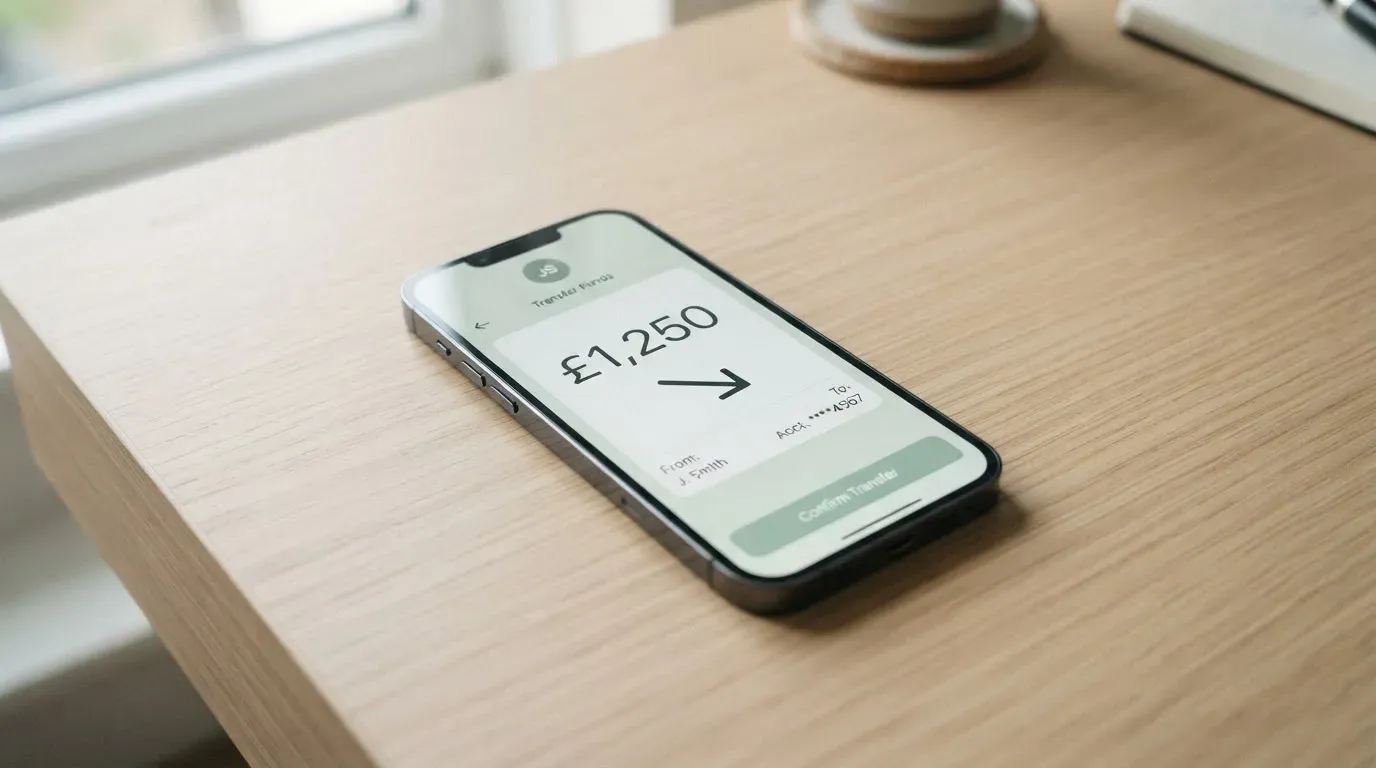
That is a strong practical offer if you are in Peru — Yape and Plin are how a large share of the country moves money day to day, so being able to sweep from either one straight into a card balance is convenient in a way that bank-transfer-only cards never are. Being able to do it at 24/7 matters too when you are trying to pay a bill late in the evening.
The crypto route is the part with less daylight. The card’s material names coins in a general way — BTC, ETH, USDT and similar — but the coins and networks it actually accepts are not listed. Deposit fees, minimum amounts and network fees are also not stated. Crypto itself stays available for withdrawal at any time, and transfers are described as instant, with no fees given.
Why does that last gap matter more than it looks? Because blockchain transfers are one-way in practical terms. If you send on a network the provider does not support, or to an address belonging to another network, the funds can be lost or need manual recovery with no guarantee. The fee is charged by the blockchain rather than by the card, but the choice of network is yours, and the card’s page does not tell you which choices are safe. Find the supported list before your first transfer, not after.
One more thing that is not stated: what happens to a remaining balance if you close the account. Since you may hold crypto in there, that is worth asking about directly.
Paying with it every day
The everyday experience is the strongest part of this card after the price. A virtual Mastercard you can start using the moment you register, a physical one that arrives free in Peru, and 12 designs to choose from for the plastic — a small thing that sounds trivial until you remember you will be looking at it every time you tap.
The reward is up to 2% back in Bitcoin on each purchase. Two things about that wording: “up to” is doing real work, because the conditions that decide whether a given purchase earns 2% are not stated, and it is Bitcoin rather than soles, so the value of your reward depends on a price you do not control and may not want to track. Treat it as a pleasant extra rather than as a reason to route your spending.
For everything else you would expect from a daily card, the answer is silence. Wallet support is not stated — so the very common question about adding this card to Apple Pay has no published answer to point at. ATM usage is not stated, which matters if you expect to use the card to get cash rather than only to pay for things. Support for Google Pay is not mentioned. The app exists for iOS and Android; I did not check its ratings.
There is one more piece missing that experienced card users will notice: how disputes work. Whether a chargeback is available for this card, how a purchase is disputed, and what happens when a merchant will not refund you are not stated. On a prepaid card, this is not a formality. The usual structure is that a chargeback is a refund ordered by the issuer, with reason codes such as fraud, duplicate billing or goods not received, and prepaid-card coverage varies by jurisdiction and issuer and should not be assumed. If you travel, or buy anything expensive, you are the one who absorbs the difference until you know the answer.
What can go wrong
I looked for official incidents and for third-party complaints, and found neither. I also found no Trustpilot page for the domain, so there is no settled public complaint record either way. Absence of complaints is not evidence of a clean record — it is evidence that I could not find one.
What I can tell you about the structure is more useful than an empty complaints file.
There are two companies here, and it helps to keep them apart. Tulkit Pay S.A.C. handles the fiat and crypto conversion. The e-money itself is issued by GMoney S.A., described as authorised and regulated by the SBS, which is Peru’s supervisor. No licence number is published. The e-money issuer being a separate licensed entity is a normal arrangement in this category and generally a good sign — but “regulator named, licence number absent” is a gap, and a number is the kind of thing that takes one message to support to obtain.
On safety, the card claims bank-level security and encryption, and says 90% of assets are held offline. That last part matters more than it first appears, because it tells you the model: this is custodial. Your balance sits with the provider, not with you in a wallet you control. The practical consequences of that are general to the category, not specific to Tulkit. If someone holds the credentials, they control the funds, and a seed phrase in the wrong hands can restore a wallet and spend from it with no built-in recovery — the network cannot freeze or return what has left. Custodial platforms have a real history of failure at scale, so treating any custodial balance as something you would not want to lose in one piece is the sensible default rather than a pessimistic one.
What the app does offer is the ordinary toolkit: lock and unlock the card, freeze it, set spending limits, and a form for reporting theft of the account. Whether customer funds are safeguarded — held in segregated accounts or insured — is not stated, and that is a materially different question from “90% offline”. Safeguarding is what makes an e-money balance closer to a deposit; its absence leaves you exposed to the provider’s own solvency. Ask.
On support: there is a published address for the card at [email protected] and one for GMoney at [email protected], plus a complaints book called “Consultas y Reclamos”. There is no phone number. The WhatsApp link is a placeholder. Hours are not stated. A placeholder contact link on a service you may depend on for your daily spending is worth noticing, and worth raising before you rely on it.
I found no dated news, announcements or incidents at all. For a card described as live, that is a thin public record rather than a reassuring one.
What to take instead
None of these are better than Tulkit for a person living in Peru and paying in soles — they are better fits for different situations, and each has things Tulkit does not. Scores are on the same ten-point scale.
International Visa Card — 6.7 / 10. The broadest option of the four. Its account and card are not available to residents or legal registrants of Belarus, mainland China, North Korea, Cuba, India, Iraq, Iran, Israel, Myanmar, Nepal, Nicaragua, Russia, Syria, Turkey, Ukraine, Venezuela and Vietnam; FATF grey-list countries are reviewed case by case with compliance approval. Purchases are blocked in North Korea, Cuba, Iran, Russia, Syria, Ukraine and Venezuela. Note that the rule follows residence or registration, not citizenship. It is a U.S.-issued Platinum Visa card, virtual, paying in USD, with the physical card listed as “Coming soon”. Issuance is $5 one-time with no maintenance fee; plans run Classic free, Pro $9.00/month and Max $19.00/month. Card use in USD is free on all plans, and foreign currency carries “Visa exchange rate + 2% FX fee”. Deposits of any kind are free: USDC or USDT into the USD account at 1:1 per an earlier check, with networks not stated, plus USD, EUR, SEPA, SWIFT and FedNow. No cashback is stated. The catch is the country list, which is long and includes places people actually live.
UNi Card — 6.1 / 10. A multicurrency UNi Card on the Mastercard network, spending from the UNi.Global account balance; whether physical or virtual is not stated, and so is who can get one. It charges no annual fee and no foreign transaction fee, converts assets at “live OTC (Over-the-Counter) rates” and claims “No hidden exchange fees”. Issuance fee and top-up routes are not stated. Rewards are “Spend-to-Earn” up to 3% with the card. The appeal is the explicit no-foreign-transaction-fee promise and the multicurrency balance; the problem is how much of the basics is simply missing from the page.
Whop Cards — 5.2 / 10. A Visa card that works anywhere Visa is accepted, online and in stores, spending from a Whop balance. For consumers it covers 31 US states — Alabama, Alaska, Arkansas, California, Colorado, Connecticut, Florida, Hawaii, Illinois, Indiana, Iowa, Kansas, Kentucky, Maine, Massachusetts, Michigan, Minnesota, Montana, Nebraska, New Hampshire, New Jersey, New York, North Carolina, Oklahoma, Pennsylvania, South Carolina, Texas, Utah, Virginia, West Virginia, Wyoming — and for businesses 41 states. Unsupported consumer countries include Belarus, mainland China, Cuba, Hong Kong, India, Iran, Iraq, Israel, Myanmar, Nepal, Nicaragua, North Korea, Russia, Syria, Turkey, Ukraine, Venezuela and Vietnam. Whether the test is citizenship or residence is not stated. The page says “No extra fees” with no issuance or monthly amounts listed, and no conversion or FX figures. A pending balance becomes usable as soon as a payment arrives, while standard withdrawals use settled funds; the backing is described as stablecoin collateral from a linked wallet with coins and networks not stated. Rewards are 5% cashback at select merchants, currently Uber, more planned, with payout currency and conditions not stated.
| Tulkit | International Visa Card | UNi Card | Whop Cards | |
|---|---|---|---|---|
| Score | 5.5 / 10 | 6.7 / 10 | 6.1 / 10 | 5.2 / 10 |
| Network | Mastercard | Visa | Mastercard | Visa |
| Where it works | Peru | Many countries, with a long exclusion list | Not stated | 31 US states for consumers |
| Monthly fee | None | Free to $19.00/month by plan | No annual fee | “No extra fees”, amounts not listed |
| FX / conversion | Rate claimed best on market, no figure; fee not stated | “Visa exchange rate + 2% FX fee” | Live OTC rates, no hidden exchange fees | Not stated |
| Rewards | Up to 2% back in Bitcoin | None stated | Up to 3% | 5% cashback at select merchants |
| Top up | Yape, Plin, bank transfer, crypto | USD, EUR, SEPA, SWIFT, FedNow, USDC/USDT | Not stated | Whop balance |
If you want the broad background rather than these four, it is worth knowing how any of this works before you commit money. A card number starts with a six- or eight-digit issuer identification number that tells the merchant which institution and country issued it, and a shop that sees a card from a different country than your billing address may look twice — which is the whole reason a card issued in one country can feel foreign in another. A prepaid card draws on a stored balance while a debit card asks your bank for money at the moment of purchase, and most crypto cards behave like the prepaid kind. Three parties are usually involved: the network routes the messages, the issuer holds the programme and is licensed, and the crypto brand is often only a front-end. Visa and Mastercard do not issue these cards themselves; they license issuers and can suspend a programme, as Visa did with FTX in November 2022. In the EU, e-money tokens may be issued only by a credit institution or an electronic money institution, and a card is regulated as a payment service separately from the crypto side, so a crypto card often depends on two licences. And because national fiat rails differ, stablecoins can depeg — TerraUSD collapsed in May 2022 and USDC briefly lost its peg in March 2023 — so “stable” is a target, not a guarantee.
Who I would recommend it to
I would recommend this card to three kinds of person, and be cautious about it for everyone else.
First, residents of Peru who already move money with Yape or Plin and want a second, low-cost Mastercard for spending without touching their main account. Free to open, free to keep, free to load from the apps they already use — for that person the missing fee figures barely matter, because the flows they will use are the ones that are documented as free.
Second, anyone in Peru who already holds crypto and wants a straightforward way to spend it without learning to navigate an exchange interface. The up-to-2% Bitcoin back is a nice extra rather than the reason, but the shape of the product — convert, load, tap — is the easy shape.
Third, people who treat a card as a convenience rather than a financial instrument: a secondary card for travel-adjacent spending, subscriptions, or splitting a purchase, kept separate from a main account so that freezing it costs nothing.
I would be cautious if you are outside Peru, since there is no path to the physical card and the soles-only settlement closes the door. I would be cautious if you spend in a foreign currency, because the two fees that determine that cost are not published. I would be cautious if you plan to keep a balance or crypto sitting in the account for long, because what happens on closure is not stated and safeguarding is not stated. And I would read the “Tarifario Tulkit Card” schedule before you move anything serious — the marketing claims on this page are genuinely better than most, and the ones they left out are the ones that would have mattered to you.
On taxes, one thing I will say plainly rather than advise on: because the card can be funded from crypto, and because digital assets are generally treated as property in the US by the IRS, each payment funded from crypto may be a separate taxable disposal measured at fair market value on the date of the transaction. I am not a tax adviser and this is not advice — but if crypto will fund this card, that question is worth putting to a professional who knows your situation.
Frequently asked questions
What is Tulkit card?
Tulkit is a prepaid Mastercard that spends a balance you load yourself, rather than a card that draws on your bank account directly. You can top it up from Yape, Plin, a bank transfer or crypto, and the page says you may pay in soles, dollars or crypto, though prepaid cards settle only in soles. The account and both the virtual and physical card are free to open, with no monthly or annual fee.
Is Tulkit a bank?
No. Two separate companies are involved: Tulkit Pay S.A.C. handles the fiat and crypto conversion, while the e-money itself is issued by GMoney S.A., described as authorised and regulated by Peru’s SBS. The card publishes no licence number. So the balance is e-money issued by a licensed institution, not a bank deposit, and it does not come with deposit guarantee protection.
Who can get the Tulkit card?
Peru is the only country named, and the physical card is shipped free anywhere inside Peru. The eligibility wording refers to foreigners who hold a valid Peruvian immigration card, which points to residents with legal Peruvian status rather than visitors. If you are reading this outside Peru, there is no route to the card as published, and the soles-only settlement rule closes it off independently of delivery.
How can I apply for the card?
Registration is described as taking minutes, under 2 minutes, with no paperwork and no credit check, and identity verification as “taking a few photos”. The virtual Mastercard is issued instantly. The physical card comes in 12 designs and is shipped free within Peru, though the delivery time and replacement cost are not stated. Documents accepted, proof of address and minimum age are also not stated.
How much does the Tulkit card cost to keep?
Opening the account and requesting either card is free, and there is no monthly fee and no annual fee — “sin costo mensual, ni anualidad”. Sending and receiving soles through Yape, Plin and banks is free as well. The exchange rate is claimed as “one of the best on the market” without a figure, and the crypto conversion fee and FX fee are not stated; the detailed schedule sits in the “Tarifario Tulkit Card” PDF.
How do I top up the Tulkit card, and what does it cost?
Top up is available 24/7 through Yape, Plin, bank transfer or crypto. For soles, all three of Yape, Plin and bank transfer are free of charge. Coins and networks accepted for crypto deposits are not listed, nor are deposit fees or minimum amounts, so find the supported networks before your first transfer — a deposit sent on an unsupported network or to a wrong-chain address can be lost, since blockchain transfers cannot be reversed.
Can I use the Tulkit card abroad and at ATMs?
What is published is that the card is a Mastercard and that prepaid cards settle only in soles. Foreign currency spending is where the two undisclosed fees, conversion and FX, would apply, and a multicurrency FAQ answer is missing from the site. ATM usage is not stated either, so do not assume you can withdraw cash. Everything about delivery and funding rails points to this being a Peru-first card.
Is the Tulkit card safe for my money?
The card claims bank-level security, encryption and 90% of assets held offline, and the app offers lock, unlock, freeze, spending limits and a theft-report form. That last figure tells you it is custodial: your balance sits with the provider rather than in a wallet you control. Whether customer funds are safeguarded in segregated accounts or insured is not stated, which is a materially different question. Support is email only, with a placeholder WhatsApp link.
Is Tulkit card free?
Free, in the sense that matters most: no monthly fee, no annual fee, no charge for the account or for either card, and free transfers of soles via Yape, Plin and banks. Two costs are missing rather than zero — the crypto conversion fee and the FX fee — so “free” describes the fixed charges, not the cost of every transaction. The exchange rate is also advertised rather than published.
How do I close my account and get my money out?
Crypto remains available for withdrawal at any time, and transfers are described as instant, with no fees stated. That much is documented. What is not stated is what happens to a remaining balance if you close the account, or how long any of it takes once you ask for support to act. If you are holding a balance you care about, ask support directly and get the answer in writing before you close anything.
App and neobank cards put to the test – cryptocardtested
Content created by the «cryptocardtested» team