
A multicurrency Mastercard from a small, lightly disclosed issuer — promising on costs, thin on the details
 Available in US
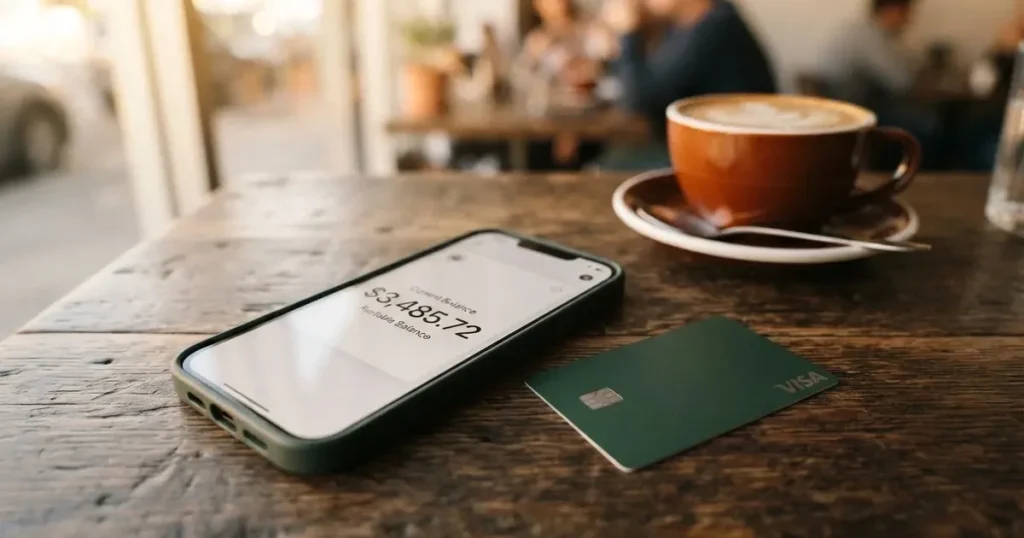
The UNi card is a multicurrency Mastercard that draws on a UNi.Global account balance, with the conversion done at live over-the-counter rates. The product is built around a “spend to earn” proposition of up to 3% rewards, no annual fee and no foreign transaction fee, and it pairs with a wallet covering more than a dozen currencies. On paper, that combination would put UNi close to the top of any list of crypto cards. In practice, the public information about the product is thin in places where readers normally need it most: supported countries, the way you fund the card, the ATM policy, daily and monthly limits and the identity of the issuing bank.
The conditions described here are current as of October 28, 2026.
I have gone through the card’s terms and reports, and what follows is my read on what is genuinely useful about the UNi card and where I would pause before applying. My score at the bottom of the verdict reflects that balance.
Verdict
UNi scores 6.1 out of 10 in my assessment. That is a middling grade, but the pieces of it matter more than the number. Cost is the strongest part — no annual fee, no foreign transaction fee, and a wallet that lets you hold and pay in more than one currency. Reliability sits in the middle: UNi.Global is an AUSTRAC-registered service provider with offices in Sydney, Auckland, Hong Kong and Taipei, and I could not find negative complaint patterns, but the actual card issuer is not named, which is a real gap for a product you would trust with daily spending. Top-up options, eligibility, and the details of everyday use are the weakest areas simply because the card’s own pages do not say much about them.
| Criterion | Mark | Why |
|---|---|---|
| Who can get it | 5/10 | Countries are not listed; the card says it is “subject to jurisdictional limitations” |
| Cost | 8/10 | No annual fee, no foreign transaction fee, conversion at live OTC rates; issuance fee undisclosed |
| Top-up options | 5/10 | Funding methods are not described; the card spends from a 12+ currency UNi.Global balance |
| Reliability and complaints | 6/10 | AUSTRAC-registered provider in Sydney, Auckland, Hong Kong and Taipei; issuer unnamed; no complaint pattern found |
| Everyday use | 6/10 | Multicurrency Mastercard with Apple Pay, Google Pay and in-app freeze; ATM use not stated |
| Total | 6.1 / 10 |
The audience this card speaks to is a multi-currency spender who cares about the spread between their crypto balance and the merchant’s currency more than about the brand on the front of the card, and who is comfortable with up to 3% in “spend to earn” rewards. If that description fits you, the cost side of the proposition is genuinely attractive. If you are someone who needs to see exactly which countries are supported, how to fund the card, what the ATM policy is, and which bank actually issues the card before you sign up, UNi will frustrate you: those answers are not in the public material.
Who they will give the card to
This is the section where I would normally lay out a country list and a citizenship list. For the UNi card, I cannot do that, because the public pages do not name the supported countries. The card is offered “subject to jurisdictional limitations”, which tells you the limitation exists without telling you what it is. If a country is not on an undisclosed list, you can apply; if it is, you will find out at the verification step rather than before. For anyone who needs to confirm eligibility before they sign up — which is most readers, in my experience — that is a meaningful gap.
What is known is the age requirement and the verification process, which is the same single step for fiat services and the UNi card. You have to be at least 18. The process asks for personal information, a scan of an ID document, a selfie, and a proof of address such as a bank statement or a utility bill. UNi.Global says verification usually completes in one to two business days. That is short, and it is the kind of turnaround that makes the card a plausible answer for someone who needs a card quickly, provided their country is one of the ones served.
Nationality is screened alongside residence as part of standard KYC, and sanctions screening is part of the picture regardless of where you live. Because the supported-country list is not published, the only way to know whether you qualify is to start the application and see whether the system accepts your address and ID. If you are in a country that crypto card programmes commonly exclude — and the alternatives below show the kind of list that is typical in this category — there is a non-trivial chance you will be turned away at this stage.
The one thing I would flag clearly is that the card sits behind a single KYC step rather than behind a tiered system where higher limits require more documents. That keeps the entry barrier low, and it means there is no second level of verification to graduate into later.
How to get it
The application flow itself is straightforward and is the same flow that opens a UNi.Global account. You complete identity verification with a government-issued ID, a selfie and a proof of address, wait one to two business days for approval, and then the card is provisioned against the UNi.Global balance. The card is a multicurrency Mastercard that spends from that balance, so there is no separate application step for the card once the account is verified.
The product page does not tell you whether the card is issued as a physical card, a virtual card or both, and it does not state a delivery time. Given that Apple Pay and Google Pay are supported, the underlying card number almost certainly exists as a tokenised wallet number at a minimum; whether a piece of plastic arrives in the post is something I could not confirm from the public material. If you are the kind of person who needs a physical card for a specific use case — for example, an ATM withdrawal or a tap-to-pay terminal that rejects mobile wallets in some markets — you should treat that as an open question and confirm it inside the app before you commit.
Activation is not described separately, which suggests it is automatic once the account is verified. The single-step flow means there is no second tier of verification to graduate into later if you want to lift limits.
Fees and what the card really costs
This is the part of the UNi story that I find most credible, and it is the part of the review where the card does best in my scoring. The headline is straightforward: no annual fee, no foreign transaction fee, no hidden exchange fees, and assets converted at “live OTC (Over-the-counter) rates”. OTC in this context means the rate you get is the rate at which UNi.Global is itself able to trade, rather than a retail mark-up layered on top of a card-network rate. Whether that ends up cheaper than a Visa-or-Mastercard network rate with a percentage fee layered on depends on the day, the currency pair and the size of the trade, but in principle an OTC rate is at least competitive, and the absence of a foreign transaction fee is a real saving on every cross-currency purchase.
The wallet behind the card supports more than a dozen currencies, and you can switch among them to pay. That matters in practice: if you are holding euros and the merchant charges in euros, no conversion happens, and you keep whatever spread sits inside the OTC rate rather than paying a percentage on top of a network rate. If you are holding USDC or another stablecoin, the question is what the conversion from that stablecoin into the currency of the merchant costs you, and the only public answer is that the rate is a live OTC rate.
| Fee or limit | What UNi says |
|---|---|
| Issuance | Not stated |
| Annual fee | None |
| Monthly fee | None |
| Foreign transaction fee | None |
| Conversion | “Live OTC rates” |
| ATM | Not stated |
| Daily limit | Not stated |
| Monthly limit | Not stated |
Three everyday payments illustrate how the cost structure plays out. First, paying for a coffee in a currency you hold in the wallet: there is no conversion, no foreign transaction fee, and the only cost is whatever the merchant themselves charges for card acceptance. Second, paying in a currency you do not hold but that is in the wallet: the system converts at a live OTC rate, and again there is no foreign transaction fee. Third, paying in a currency the wallet does not hold, with the balance funded by a stablecoin: the conversion runs stablecoin to the merchant’s currency at the same OTC rate, and you carry the spread inside that rate rather than a percentage fee on top.
What the table cannot tell you is what an ATM withdrawal costs. ATM fees, ATM limits, daily spending limits and monthly spending limits are all not stated in the public material, and the issuance fee for any physical version of the card is also not stated. Membership levels exist, but the published material does not say what each level gives. For a card that scores 8 out of 10 on cost, the silence on these points is the main thing that keeps the mark from being higher.
Top up the card
The funding side is where the UNi card is hardest to evaluate from the outside, because the public material is genuinely thin. The card spends from the UNi.Global account balance, and the wallet behind that balance supports more than a dozen currencies, but the specific way you move money in — which crypto networks, which stablecoins, which fiat rails, whether bank transfer is supported, whether card top-up is supported — is not described on the pages I checked.
What that means for you in practice is that the funding question has to be answered inside the app, after you have an account, rather than before you sign up. For a user who already holds a balance in UNi.Global, the card is a spending tool layered on top of an existing balance, and the experience of “topping up” is more like “choosing which currency in the wallet the card draws from” than wiring money in from outside. For a user who is new to UNi.Global, the question of how to get a first balance onto the platform is the one that matters, and it is the one the public pages do not answer.
A practical point worth raising here, because it cuts across every crypto card in this category: a blockchain transfer sent on the wrong network, or to an address for a network the provider does not support, can be lost. Transfers on public blockchains are irreversible, and the recovery path, if there is one, is a manual support case with no guarantee. Before you send anything to UNi from an external wallet, confirm in-app that the network you intend to use is the one they accept, and send a small test amount first if the value is meaningful. The same caution applies if you are funding the balance with a stablecoin such as USDC: check that the network is one the provider actually supports, because not every provider supports every network, and not every network supports every stablecoin.
Withdrawal — moving money back out of UNi.Global — is similarly not described in the public material, which means the practical question of whether the platform is mainly a card balance with a spend-side only model, or a full wallet that can also pay out, is something you can only confirm by opening the app.
Paying with the card every day
Where the card is more forthcoming is on the everyday experience. It is a multicurrency Mastercard, so it works at any merchant that accepts Mastercard, online or in person. The wallet that sits behind it lets you hold more than a dozen currencies, and the design intent is that you switch among them to pay, which in plain terms means the card pays in the currency the merchant charges in as long as you hold that currency.
Mobile wallet support is present: Apple Pay and Google Pay are both listed. The app is the “UNi.Global: Invest & Spend BTC” app on Apple’s App Store, and “uni.global.mcdc_client_app” on Google Play. I did not pull the app store ratings as part of this review, but the existence of the apps and the explicit listing of Apple Pay and Google Pay support on the product page are a good sign that the card is meant to live in your phone rather than only in your wallet.
The “spend to earn” rewards programme is the everyday-use hook. UNi advertises up to 3% in rewards on UNi Card spending, and that is the kind of headline that, in this category, often comes with conditions: caps, qualifying merchants, or minimum volumes. The product page describes the percentage but does not publish the conditions I would expect to see beside it. If the 3% is universal, it is competitive for a non-cashback card. If it is capped or restricted to certain merchant categories, the real number is lower, and the only way to find out which it is, again, is inside the app once you have an account.
Security controls for everyday use are at the level I would expect. You can freeze and unfreeze the card in the app without a limit on how often you do it, and you get a real-time alert for each transaction. A freeze is a soft block: the card number is suspended at the issuer, and you can lift the suspension as soon as you suspect the card is being misused or has been used somewhere you did not expect. For someone who travels, the freeze-and-real-time-alert combination is the minimum I would look for, and it is here.
What the public material does not say is whether there is a PIN, how disputes are handled, and what happens when a chargeback is needed. A chargeback is a refund ordered by the card issuer when something goes wrong — goods not received, a billing error, fraud — and the card’s dispute process is one of the practical things that distinguishes a card programme with a real issuer behind it from a programme that is mostly a marketing layer. Because UNi does not name the issuer in the public material, the dispute path is the kind of thing you should test with a small transaction before relying on the card for anything serious.
What can go wrong
There are four risks I would think about with this card, in order of how much weight I would put on each.
The first is the issuer. The product pages do not name which bank or e-money institution actually issues the Mastercard. The programme is operated by UNi.Global, an AUSTRAC-registered service provider with offices in Sydney, Auckland, Hong Kong and Taipei. AUSTRAC is Australia’s anti-money-laundering and counter-terrorism-financing regulator, and registration there is a meaningful signal, but it is not the same as a banking or e-money licence. In the EU, a card programme usually sits on top of an electronic money institution (EMI) licence, which holds the programme and safeguards customer funds. UNi does not name an issuer, which is a transparency gap. The company behind the card may well have a strong arrangement; the public pages just do not show it.
The second is custody. The card spends from a UNi.Global balance, which means the funds sit with UNi.Global until you spend them. With custodial wallets the provider holds the credentials, and the user has to trust the provider completely; if the provider is hacked, becomes insolvent, or freezes withdrawals, the user’s ability to access the balance is in the provider’s hands. The history of the crypto industry is not reassuring on this point: Mt. Gox, Coincheck and the Ronin Network hack are the largest examples, and even outside those incidents, programme closures happen. A card programme that depends on a custodian is exposed to whatever happens to that custodian.
The third is the silent areas in the product. Top-up method, ATM policy, daily and monthly limits, dispute process, the conditions on the up-to-3% rewards — these are all the things a careful reader would normally check before signing up, and on the UNi card they are either not published or published in a thin form. Some of these will be in the app; some of them may only become clear after you have funded the account. None of them are reasons not to consider the card, but they are reasons to start small and learn the product before relying on it.
The fourth is the category risk that affects every crypto card. The card network — Mastercard, in this case — does not issue cards directly to consumers; it licenses issuers, and it can suspend a programme. The most cited example is Visa’s termination of its global agreement with FTX in November 2022, which led to the FTX US debit card being wound down. The equivalent risk exists for any card programme on any network, and the practical lesson is that any balance you keep loaded on a card is exposed to the survival of the programme that issued it. Programme closures typically come with a notice period, then a stop on new loads, then a stop on spending, then a window to withdraw the remaining balance, and the orderly version of that is what you want if it ever happens.
On the complaints side, I ran the kind of search a careful reader would run — UNi, UNi Global, UNi card, Trustpilot, Reddit — and I could not find a Trustpilot page for uni.global or a complaint pattern that tied back to this card. The search did surface unrelated products, including Uni Cards in India and a separate product called UnCard, and the absence of a complaint pattern is mildly reassuring, but it is not the same as a clean record: a small product with thin public footprint simply has fewer public complaints to find.
Support is app-based: live chat and FAQ inside the app, available to registered customers, plus an email address at [email protected]. The in-app-only support is normal for this category, but it does mean that if you have a problem before you have an account, the email channel is the only option.
What to take instead
The UNi card sits in a category where the alternatives differ more on eligibility and structure than on headline features. Three that I think are worth comparing it to.
The International Visa Card is a virtual US-issued Platinum Visa that pays in USD, with a physical version listed as “coming soon”. It is blocked for residents or legal registrants of Belarus, mainland China, North Korea, Cuba, India, Iraq, Iran, Israel, Myanmar, Nepal, Nicaragua, Russia, Syria, Turkey, Ukraine, Venezuela and Vietnam, with FATF grey-list countries reviewed case by case. The fee structure is more transparent than UNi’s: a $5 one-time issuance for the virtual card, no maintenance fee, free card use in USD, and a “Visa exchange rate + 2% FX fee” for foreign currency. Plans are Classic (free), Pro ($9.00 a month) and Max ($19.00 a month). Deposits of any kind are free, and you can fund with USDC or USDT at 1:1, plus USD, EUR, SEPA, SWIFT and FedNow rails. There is no cashback. For a US-based user who can pass eligibility, the published numbers are easier to reason about than UNi’s, and the funding story is explicit. Its overall score is 6.7 out of 10.
Whop Cards is a Visa programme that works anywhere Visa is taken. On the consumer side, the supported US states are Alabama, Alaska, Arkansas, California, Colorado, Connecticut, Florida, Hawaii, Illinois, Indiana, Iowa, Kansas, Kentucky, Maine, Massachusetts, Michigan, Minnesota, Montana, Nebraska, New Hampshire, New Jersey, New York, North Carolina, Oklahoma, Pennsylvania, South Carolina, Texas, Utah, Virginia, West Virginia and Wyoming, with the unsupported consumer countries being Belarus, mainland China, Cuba, Hong Kong, India, Iran, Iraq, Israel, Myanmar, Nepal, Nicaragua, North Korea, Russia, Syria, Turkey, Ukraine, Venezuela and Vietnam. The card spends from a Whop balance, with the pending balance usable as soon as a payment arrives and standard withdrawals using settled funds. The starting data is backed by stablecoin collateral from a linked wallet, although the specific coins and networks are not stated. The card advertises 5% cashback at select merchants, currently Uber, with more planned. Cost-wise, the page says “no extra fees”, with no issuance or monthly amounts listed. Its overall score is 5.2 out of 10.
Stella is a virtual and physical Visa card that works at “over 40 million VISA merchants globally”. The official site does not state supported countries; the terms bar users under economic sanctions programmes and route US and European users through affiliates, which is a hint that the published footprint is narrower than the headline suggests. You deposit crypto into the account, and the card tops up automatically from an in-app custodial wallet. The fees are described in the user agreement and the app rather than on a fee page, and the card page does not advertise cashback (an Earn product is separate). Its overall score is 6.5 out of 10.
If I were choosing between these on the basis of transparency, the International Visa Card is the one with the clearest numbers and the most explicit funding story, at the cost of a published country blocklist. Whop Cards is the one with the most specific cashback proposition, with the cost of a US-state-by-state eligibility list. Stella is closer in feel to UNi — light on the published numbers, with the funding done inside the app — and the score is broadly in the same range. None of these alternatives gives you the multicurrency wallet with more than a dozen currencies that UNi advertises, and that is the genuine differentiator in UNi’s favour for someone whose day-to-day spending crosses currency borders.
Who I would recommend it to
If you already keep a balance in UNi.Global, the card is a low-friction way to spend it. The multicurrency wallet, the live OTC conversion, the absence of an annual fee and the absence of a foreign transaction fee are all real advantages, and if you are paying in a currency you already hold, the effective cost is the spread inside the OTC rate. The freeze control and the real-time alerts are the everyday-security basics, and Apple Pay and Google Pay support is the kind of thing that makes the card usable in a phone-first way.
If you do not already have a UNi.Global balance, the picture is more mixed. The product is at its strongest on the cost line and at its weakest on the disclosed details. I would not let the up-to-3% rewards headline drive the decision on its own until the conditions are clearer, and I would not treat the card as my primary card without confirming at least the funding method, the ATM policy, the dispute process and the identity of the issuer inside the app, with a small test transaction in each case. The card has a credible company behind it and a credible regulator (AUSTRAC) on the operator side, but the public material is not enough on its own to support a high-trust, high-volume use case.
The audience that fits the card best is a multi-currency spender who is comfortable doing a small amount of in-app discovery before they commit, who is not reliant on ATM access, and who values keeping more of the spread on cross-currency purchases. The audience that does not fit the card is someone who needs every fee, every limit, and every country rule published in advance, or someone whose country is in the kind of blocklist that crypto card programmes commonly apply and who needs confirmation of eligibility before they start.
Frequently asked questions
What is the UNi card?
The UNi card is a multicurrency Mastercard that draws on a UNi.Global account balance. The wallet behind the card supports more than a dozen currencies, and the card is intended for spending from a balance that already exists in UNi.Global rather than as a standalone banking product.
How does the UNi card work?
You complete KYC once for fiat services and the card, wait one to two business days, and the card is provisioned against the UNi.Global balance. At payment, the system converts the balance into the merchant’s currency at a live OTC rate, with no foreign transaction fee, and the card works at any merchant that accepts Mastercard.
Is UNi a bank?
UNi.Global is not a bank. It is an AUSTRAC-regulated operator with teams in Sydney, Auckland, Hong Kong and Taipei, and the card issuer is not named. The card programme therefore sits on top of an arrangement that is not fully disclosed.
Who owns UNi?
Ownership of UNi.Global is not stated. The operator is an AUSTRAC-regulated firm with teams in Sydney, Auckland, Hong Kong and Taipei, and the card is on the Mastercard network.
Is the UNi card available in my country?
The card’s supported countries are not published. The product page says the card is offered “subject to jurisdictional limitations”, which signals that some countries are excluded without saying which. The only practical way to check is to start the application and see whether your address and ID pass verification.
How do I get the UNi card?
You sign up for a UNi.Global account, complete identity verification with an ID document, a selfie and a proof of address, and once verification is approved the card is provisioned against the balance. The published material does not state whether the card is physical, virtual or both, or how long delivery takes.
Does the UNi card require KYC?
Yes. The same single verification step covers fiat services and the card, and it requires personal information, an ID document scan, a selfie and a proof of address such as a bank statement or a utility bill. Verification usually completes in one to two business days.
How do I top up the UNi card?
The card spends from the UNi.Global balance, and the public material does not describe the supported funding methods. The wallet behind the card supports more than a dozen currencies, but the specific way to move money in — which networks, which stablecoins, which fiat rails — is not detailed on the product page. The funding question has to be answered inside the app after the account is open.
Is the UNi card free?
There is no annual fee and no foreign transaction fee, and conversion is at live OTC rates. The issuance fee is not stated, ATM fees are not stated, and the conditions on the up-to-3% rewards are not published in full, so the total cost depends on details that are only visible inside the app.
Is the UNi card safe?
The card supports in-app freeze and unfreeze without a limit on how often, real-time transaction alerts, Apple Pay and Google Pay tokenisation, and 3-D Secure on online payments where the merchant requires it. The main risk areas are the unnamed card issuer, the custodial balance model, and the category risk that a card network can suspend a programme; using the card for a small portion of spending while the programme proves itself is the cautious approach.
App and neobank cards put to the test – cryptocardtested
Content created by the «cryptocardtested» team