
A prepaid virtual card on Visa and Mastercard rails, with a 5% top-up fee that only falls as you spend more
 Available in US
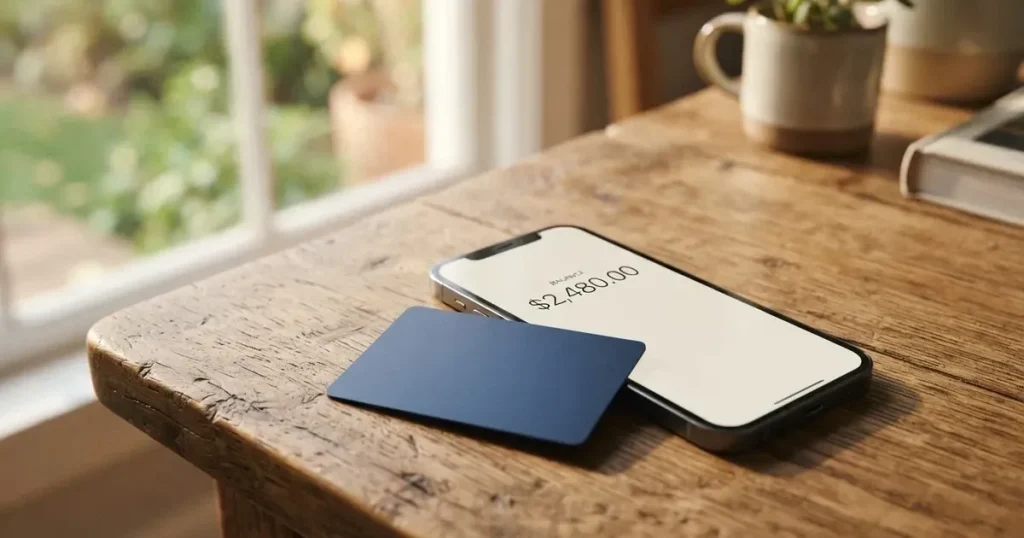
WaldenPay is a virtual prepaid card. You create it in a browser or a Telegram bot, load it with crypto, and then pay with the resulting US dollar balance as you would with any other Visa or Mastercard — online, in apps, and in shops that take contactless. There is no plastic, no bank account in your name, and no interest, because there is nothing here to earn interest on. What you are buying is access to ordinary payments for someone who cannot easily get an ordinary card: an unfrozen crypto balance spent through rails that merchants already accept. The trade is that you give up a bank relationship and accept a service built by a company that says outright it is not a bank.
My score for it is 6.3 out of 10. It scores full marks on the one thing that matters most to the people it targets — funding a virtual card with any of 135+ coins across 35+ networks — and it loses most of its points on cost, on the thinness of what the public pages disclose, and on everyday practicality, since there is no physical card.
Conditions are current as of October 28, 2026.
The short version: who this card suits
WaldenPay is built for one situation in particular: you hold crypto, you cannot get a normal bank card, or your existing card is not usable where you actually are, and you need a card number that works at regular merchants. Load it once, spend it. It is also a reasonable second card for spending in a currency you do not hold, because the card states it adds no foreign transaction markup of its own — the network’s standard rate is what applies.
It suits you less well if any of these are true:
- You want to keep money on the card for long stretches. This is a spending instrument, not a savings account.
- You need cash from an ATM. Whether cash withdrawal is possible, and at what cost, is not stated on the card’s public pages.
- You want a physical card. Only a virtual one is issued.
- You are sensitive to the fact that the issuing bank is never named. That is not a small thing to be sensitive about.
- You plan to send or receive money to and from other people rather than pay merchants. A friend-transfer feature exists, but with its own stated limits.
Let me lay out the score criterion by criterion, because the total of 6.3 hides a card that is excellent at one thing and unremarkable at several others.
| Criterion | Score | Why |
|---|---|---|
| Who can get it | 9 / 10 | Registration and loading are described as supported globally except a short restricted list: North Korea, Iran, Syria, Cuba, Russia, Belarus, Crimea/Donetsk/Luhansk regions, Afghanistan, Myanmar |
| Cost | 3 / 10 | $10 one-time issue fee, $0 monthly; but top-up is 5% base, falling to 4.75% at $2,000+ of 30-day spend and 3% at $100,000+; no currency markup from WaldenPay itself |
| Top-up options | 10 / 10 | “135+ cryptocurrencies” across “35+ networks”, examples USDT, USDC, BTC, ETH, SOL, TRX, LTC; $25 minimum; instant crediting |
| Reliability and complaints | 5 / 10 | Issuer entity BlueHouse Software B.V., Rotterdam; the site says WaldenPay “is not a bank”; bank and licences not named. Unofficial: sentiment on Reddit is split, with a reported risk of a partner-bank freeze; no Trustpilot page found |
| Everyday use | 5 / 10 | Virtual Visa/Mastercard in roughly 10 minutes, Apple Pay and Google Pay supported; no plastic, ATM terms not disclosed; web dashboard and Telegram bot |
That “not a bank” line is worth pausing on, and I will come back to it in the risks section. For now, note what it means for a reader deciding between this and a regular card: you are not opening a deposit relationship, and deposit-guarantee thinking does not apply to the balance sitting on the card.
Will they give you the card?
Short answer: almost certainly, unless you are in one of a short list of places, or until an eligibility check decides otherwise.
The card’s own pages describe sign-up and card loading as “supported globally except in the restricted jurisdictions”, and then name them: North Korea, Iran, Syria, Cuba, Russia, Belarus, Crimea/Donetsk/Luhansk regions, Afghanistan, and Myanmar. That is a genuinely narrow list, and it is not the same thing as “we work in 200 countries” — it is a list of places the company is saying it will not serve, which is the clearer and more honest way to phrase it.
Two of the entries carry a stated reason. The Russia entry cites “EU restrictions on providing crypto-asset and payment services (Reg. 833/2014)”, and the Belarus entry cites “EU sectoral sanctions (Reg. 765/2006)”. The others are named without explanation. If you are reading this from one of those jurisdictions, the card is telling you no.
And here is the part that trips people up: the page is framed by jurisdiction, and it does not say whether citizenship or residence is what decides your eligibility. Those are two different questions. A residency-based check and a citizenship-based check can give opposite answers for a person who lives in one country and holds a passport from another — and that matters here, because sanctions screening and issuer risk policy are commonly applied to citizenship and country of birth as well as to the country on your address. I am not going to guess which one WaldenPay uses. If your situation is at all cross-border, this is the first thing to check, and the honest way to check it is to ask them directly and get an answer before you send anything.
Availability also depends on “onboarding, eligibility checks”, which is the company’s way of saying approval is not automatic.
How to get it
The sign-up is described as “instant”, with “fast onboarding”. Registration is fast; the card takes about 10 minutes from sign-up to something usable. One of the card pages adds that the card is issued instantly after the first top-up, which is a slightly different flow — under that version you register first, fund, and the card appears.
The product itself is a virtual prepaid card on Visa or Mastercard rails, and the balance is held in US dollars. There is no physical card, no plastic, no option to have one posted to you. Everything you do with this card, you do through a card number in a browser or a phone wallet.
On identity checks, the pages are uneven and I would not take them at face value. Registration is described as “instant” and onboarding as fast; card purchases are “Subject to AML and regulatory requirements”; and some card pages say “no identity documents needed to get started”. At the same time, age requirements and which documents are required are not stated, and access depends on “onboarding, eligibility checks”. Any KYC tiers — a lower limit without full verification, higher limits after — are not stated either.
I am not going to spin that into “unlimited anonymity”, because nobody should. It means two different things at once. You may well get started without handing over a passport scan, and you may also be asked for documents later, because the same pages say purchases are subject to anti-money-laundering rules and eligibility is checked. Where that leaves your limits, the card does not publish. In the EU, customer due diligence covers name, address, date of birth, nationality and identity documentation, plus a sanctions check, the purpose of the relationship, and whether you are a politically exposed person — and if due diligence cannot be completed, the institution is required to refrain from the transaction or the relationship. Cards of this type are generally for adults, with some issuers setting higher limits. Treat “no documents to get started” as “no documents to get started”, not as a promise about what comes after your first payment.
Fees: what it really costs
Here is where this card stops being simple. The headline numbers are good; the base top-up fee is not.

The card is a $10 one-time issuance fee with a $0 monthly fee — the site puts it as “No recurring charges, ever”. So the fixed costs are genuinely light. The variable cost is the top-up fee, and that is a percentage of everything you load, taken every time you load.
The tiers run on your own card spend over a rolling 30-day period:
- Base top-up fee: 5%
- $2,000+ in 30-day spend: 4.75%
- $5,000+: 4.5%
- $10,000+: 4.25%
- $25,000+: 4%
- $50,000+: 3.5%
- $100,000+: 3%
- $250,000+: individual terms
I want to be straight with you about what those tiers mean in practice, because the marketing shape of them flatters the card. They are volume discounts, not ordinary discounts. If you spend a few hundred dollars a month, you are firmly in the 5% row and you will stay there. The 3% row requires $100,000 of card spend in 30 days, which is not a rounding error for the person who most needs this card — and someone who spends that much in 30 days can usually get a much better card from an exchange that does issue them. The tiers also cut the other way: they are a description of your last 30 days, not a promise, so a quiet month resets you to the worst rate.
What is not charged: WaldenPay adds no foreign transaction markup. When the network converts, the standard network rate applies. That is a real advantage over most cards for anyone spending in a currency they do not hold, and it is the single most quietly valuable thing on this list.
| Item | What it costs | Notes |
|---|---|---|
| Card issuance | $10 one-time | Virtual card |
| Monthly fee | $0 | “No recurring charges, ever” |
| Top-up fee | 5% base | Falls with 30-day spend: 4.75% at $2,000+, 4.5% at $5,000+, 4.25% at $10,000+, 4% at $25,000+, 3.5% at $50,000+, 3% at $100,000+, individual at $250,000+ |
| Foreign exchange | No markup from WaldenPay | Network standard rate applies |
| Network fee on deposit | Paid to the network, not to the card | TRON typically under $1 |
| ATM withdrawal | Not stated | No fee or limit published |
| Card spending limits | Not stated | No daily or monthly card caps published |
| Send to Friend | $1–$10,000 per transfer; $20,000 per rolling 24 hours | P2P feature |
| Collect Payments | $1–$10,000 | Incomplete collections are refunded automatically |
Now three everyday payments, so this stops being abstract.
You load $200 of USDT and pay for groceries. The top-up fee is $10. Your $200 becomes $190 of card balance, and you spend that. You have paid five percent to turn your crypto into groceries money. That is the base rate and it applies to nearly everyone.
You load $2,400 after a month of higher spending and pay a $300 hotel abroad. If your trailing 30-day spend is over $2,000, the top-up fee is 4.75%, so $114. Separately, the conversion from dollars to the hotel’s currency is done at the network’s standard rate with no WaldenPay markup — so the cost of the currency itself is the rate you would get anywhere, not a hidden spread. The hotel is also the kind of merchant that can look at your card’s issuing country and, since the BIN lookup reveals the issuer and country, decide to be careful. Prepaid and foreign-issued cards get declined for exactly that reason.
You try to take $100 out of an ATM. I cannot tell you what happens. The ATM fee and the card’s cash-withdrawal terms are not stated on the public pages. This is a real gap, not a formality — if cash is part of your plan, you are planning around an unknown.
Top up: how loading works
This is the strongest part of the card, and the reason it exists. You can fund with “135+ cryptocurrencies” across “35+ networks” — the examples given are USDT, USDC, BTC, ETH, SOL, TRX and LTC — and the crypto is converted into your card balance at the moment you load. The balance is denominated in US dollars, so the conversion happens once, on the way in, rather than silently at the till.
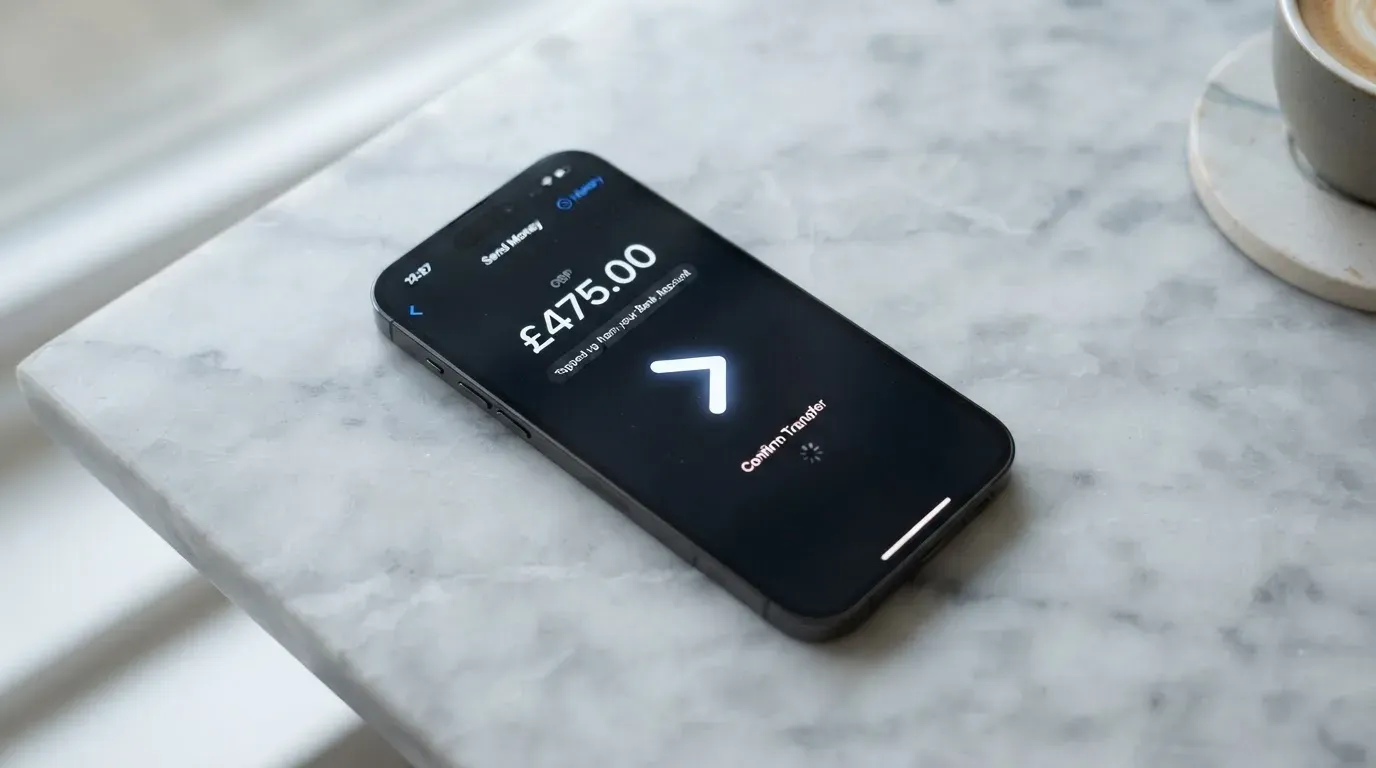
The minimum top-up is $25 USD equivalent. Crediting is described as instant. The top-up fee is the tiered percentage above, and on top of that you pay the blockchain’s own network fee, which is charged by the network rather than by WaldenPay — on TRON typically under $1. Fiat top-up is not stated.
Getting this right matters more than people expect, because blockchain transfers are irreversible. Send on a network the provider does not support, or to an address belonging to a different network, and the deposit can be lost or need manual support recovery with no guarantee. A few practical consequences of how the networks work:
- ERC-20 is the Ethereum token standard, and fees are paid only in ETH. A wallet holding USDT with no ETH in it cannot actually send.
- Tron prices its transactions with bandwidth and energy, often burning TRX.
- Circle stopped supporting USDC on Tron in February 2024, so USDC over TRC20 is not a native option — USDT is the one that lives there.
- Circle lists USDC as natively supported on 38 networks as of 16 September 2026, including Ethereum, Solana, Base, Polygon PoS, Avalanche, Arbitrum and Stellar.
And a caution that cuts against the “censorship-proof” image: Tether says it disables tokens in wallets on the OFAC sanctions list and has frozen funds tied to illicit activity. Whatever the blockchain guarantees, the token issuer retains levers.
Withdrawal of a balance is not stated. That is a question to ask before you load money you might want back out, because the balance is not a bank deposit and there is no published account you can withdraw from.
Paying with it every day
The daily experience is: a card number, a wallet app, and a dashboard. Apple Pay and Google Pay are both supported, for contactless and online payments, which is how you would realistically use a card with no plastic — once it is in your phone, the absence of a physical card stops mattering much.
The card sits on Visa or Mastercard rails, which means it is accepted anywhere those networks are accepted, with the usual caveats. Those caveats are worth knowing because they bite prepaid and foreign-issued cards harder than others:
- Merchants can look up the BIN and see which institution and which country issued the card, and may apply extra scrutiny if the issuer country differs from the billing address. That is why a card issued in one country can look foreign in another shop.
- Some merchants decline prepaid or foreign BINs precisely because the lookup reveals the card type and issuer country.
- Address Verification compares the numeric parts of the billing address against issuer records. It is mainly offered in the US, Canada and the UK and is generally unavailable for foreign-issued cards, which can cause declines.
- A declined authorisation can leave a hold on your funds for several days, typically up to seven.
- 3-D Secure is where online payments get an identity check — the issuer either approves frictionlessly or challenges you with a one-time code or biometrics. Visa’s brand is Visa Secure, Mastercard’s is Identity Check. Liability for fraudulent online payments can shift under it, which cuts both ways.
The software side is thin and unconventional. There is a web dashboard at app.waldenpay.com and a Telegram bot that handles cards, balances, deposits and notifications. I found no App Store or Google Play listing. That tells you where the company thinks its users are, and it has a practical consequence: your money sits in a browser session and a chat window rather than in an app with biometrics, and you should expect less tooling than a mainstream bank gives you.
Blocked merchant categories are not stated. That is not a small omission — MCC 7995 covers gambling, and issuers block it on many prepaid cards by policy rather than by law. If gambling, adult content, or fuel is something you need to know about in advance, ask. Rewards are also not stated; there is no cashback mentioned anywhere on the pages. And the terms for disputing a card payment are not stated, though incomplete Collect Payments are refunded automatically. Chargeback rights, which are a refund ordered by the issuer, are not the same as a customer service promise, and prepaid-card coverage varies and should not be assumed.
What can go wrong
I want to organise the risks by how likely they are to actually hurt you, rather than by category.
The counterparty risk is the big one, and the card does not resolve it. The issuer entity is BlueHouse Software B.V. (ID 000062404148), Bas Jungeriusstraat 200 A, 3081VP Rotterdam, Netherlands. The site states that WaldenPay “is not a bank” and that partners provide accounts, cards and conversion. The issuing bank is not named. The licences are not named. What that means practically: when you load money, your counterparty is a Dutch software company and unnamed partners, not a deposit-taking institution holding money under a deposit guarantee scheme. If the partner bank decides to freeze, the balance is exposed. If the programme is wound down, you are in the queue that gets a notice period, then loses spending and loading, then has to withdraw what is left.
This is not hypothetical for this category. Visa terminated its global agreements with FTX in November 2022, saying it had “terminated our global agreements with FTX”, and the FTX US debit card programme was wound down by its issuer. WaveCrest, a Visa issuer that supplied crypto card brands, was suspended by Visa in Europe in 2018, closing all WaveCrest-issued Visa programmes. And the networks themselves hold that lever: Visa and Mastercard do not issue crypto cards to consumers — they license issuers and can suspend a programme.
On complaints, the honest position is that there is very little to go on. I found no Trustpilot page for WaldenPay. Unofficial and unconfirmed: an aggregator, cryptocards.so, reports that Reddit sentiment is split — some people find it works for low-value privacy use, others warn about non-KYC risk — and it flags both the flat 5% top-up fee and a partner-bank freeze risk. I could not check that against the original threads, so treat it as a signal about what people ask, not as verified reporting. A card with no independent review footprint is a card you are evaluating entirely on the company’s own words.
On security, the stated safeguards are standard and the unstated ones are the ones that matter. The card advertises 256-bit AES encryption, PCI DSS-compliant partners, no storage of full card numbers, and 24/7 monitoring. Custody arrangements, safeguarding, and whether you can freeze the card yourself in the app are not stated. For reference, the usual toolkit in this category is app-based 2FA, instant card freeze, spending limits, 3-D Secure confirmation and tokenised mobile wallets — and since you cannot download a mobile app here, at least some of that is likely web-based.
Regulation is in flux around it, and a licence is not a bank licence. MiCA, the EU’s markets-in-crypto-assets regulation, took legal effect in June 2023 under ESMA’s account of it; its rules on asset-referenced tokens and e-money tokens applied from 30 June 2024, and the remaining provisions including crypto-asset service provider rules from 30 December 2024. E-money tokens may be issued only by a credit institution or an electronic money institution (Article 48). The transitional grandfathering period lets providers already operating under national law continue only until 1 July 2026 or until they receive or are refused a MiCA authorisation, whichever comes first — which is right about now, and means the regulatory ground under any provider can change while you hold a balance. ESMA keeps an interim register of authorised CASPs, white papers and non-compliant entities that you can check a provider against. A card, meanwhile, is a payment service regulated separately from MiCA’s crypto side, so a card like this often rests on two licences at once. Note too that EMI customer funds must be safeguarded — segregated or insured — but such funds are not bank deposits and may not be covered by deposit guarantee schemes. In the US, FinCEN guidance FIN-2013-G001 treats administrators and exchangers of convertible virtual currency as money transmitters, while mere users buying goods are not.
Stablecoins can and do move. A stablecoin aims to hold a stable value against a fiat currency, but “despite the name, stablecoins are not necessarily stable”. About 90% of stablecoin market capitalisation sits in Tether’s USDT and Circle’s USDC, per the BIS in July 2025. Circle says USDC is redeemable 1:1 for USD and 100% backed by cash and cash equivalents, mostly in an SEC-registered government money market fund, with monthly reserve attestations by a Big Four firm; Tether describes USDT as a token on multiple blockchains with reserves intended to back it 1-to-1. TerraUSD collapsed in May 2022 and USDC temporarily lost its peg in March 2023 during the US banking crisis. Since your balance is created by converting your crypto at the moment you load, a depeg turns into a visible loss right there.
And the tax point, stated plainly because nobody puts it on the card’s page. The IRS treats digital assets as property, so exchanging them for goods, services, dollars or other digital assets generally produces a taxable gain or loss; for personal or investment holdings the result is a capital gain or loss, short-term if held a year or less, measured in local fiat currency at fair market value on the date of the transaction. That can make each card payment funded from crypto its own disposal event. I am not giving you tax advice and I am not in a position to tell you what your obligations are where you live — but if you load this card regularly, take that to someone who can advise on your jurisdiction.
Support is free but thin. Contact via the Contact Support page, email, or Telegram @WaldenPay. Hours and languages are not stated.
What to take instead
If WaldenPay’s shape — many coins, no plastic, load and spend — is what you want, there are three comparable products I looked at, and each trades one of WaldenPay’s strengths away.
Cardex scores 5.6 out of 10. It is a crypto card for “200+ countries” with no country list or exclusions given, though its App Store listing is Naira-focused and pays in Naira. The card runs on VERVE, Visa, Mastercard and UnionPay, with virtual and physical variants. The interesting part is the conversion: it converts crypto to fiat at the moment of payment using an “AI-Powered Conversion Rate” that scans global exchange rates and picks the best one, with no fee percentage stated on the site. Funding is from USDT, USDC and BTC wallets, networks not stated. Its costs are not stated, and rewards are not stated. Choose it over WaldenPay if you want a physical card and a wider network choice; choose WaldenPay if you want the deposit side, which is far better documented, rather than the conversion side.
CardFlow scores 4.9 out of 10. It aims at Nigeria — “Nigeria’s smartest fintech card platform” and “Nigerians and global users” — with no exclusions published. It is a virtual USD Mastercard created in about 3 minutes, and creating a virtual card is “completely free” per its FAQ. Fees are not stated, and so are networks, limits and rewards. Funding accepts Bitcoin, USDT, ETH or a Naira bank transfer. Its advantage over WaldenPay is the free creation and the fiat on-ramp; its disadvantage is that you are funding from three coins or a Naira transfer rather than 135+.
HyperCard scores 4.7 out of 10. Its official pages give no country list, and its App Store page says the card works in “more than 176 countries” — which is a statement about acceptance, not about your eligibility, and those are different things. It is a prepaid card with the network not stated on the App Store page, a balance in USD or EUR, and deposit in crypto such as USDT, BTC or ETH converted to USD or EUR on the card. No fees are listed on the pages I could read, which is not the same as no fees. Rewards are not stated.
| WaldenPay | Cardex | CardFlow | HyperCard | |
|---|---|---|---|---|
| Score | 6.3 / 10 | 5.6 / 10 | 4.9 / 10 | 4.7 / 10 |
| Where it points | Global, minus a named restricted list | “200+ countries”, no exclusions given | Nigeria-focused | No country list; 176+ acceptance claimed |
| Card | Virtual prepaid, Visa/Mastercard, USD balance | Debit, VERVE/Visa/Mastercard/UnionPay, virtual and physical, Naira per listing | Virtual USD Mastercard | Prepaid, network not stated, USD or EUR |
| Getting it | ~10 minutes from sign-up | Not stated | About 3 minutes | Not stated |
| Issue fee | $10 one-time | Not stated | Free for virtual cards | Not stated |
| Top-up fee | 5% base, tiers to 3% and individual | No percentage stated | Not stated | Not stated |
| Funding | 135+ coins, 35+ networks | USDT, USDC, BTC wallets | BTC, USDT, ETH or Naira transfer | USDT, BTC, ETH |
| Physical card | No | Yes | Not stated | Not stated |
The pattern in that table is worth naming: none of these publish enough for you to compute your real annual cost with confidence. WaldenPay publishes the most, which is partly why it scores higher and partly why the 5% base fee is so visible. That is not an argument for it — it is an argument for going in with your eyes open, or for keeping a small balance you are willing to lose.
There is a fourth option that is not a crypto card and that I would put at the top of most people’s list: an exchange that issues its own card directly, if you can use one. Those issuers are typically licensed, disclose their fees, and give you a card that is not a front-end on top of someone else’s bank account. The trade is that you give up the 135+ coins and the no-KYC-to-start framing.
Who I would recommend it to
I would recommend WaldenPay to exactly three kinds of person.
The first is someone who has crypto, no usable bank card, and a specific purchase to make — a subscription, a travel booking, an account that only takes card payments. For that person this card is a good tool: it works, it is fast, it accepts almost any coin, and it will not sit unused gathering a monthly fee.
The second is someone travelling or spending in a currency they do not hold, who has found that their existing card charges a foreign transaction markup. The absence of a WaldenPay markup is a direct saving on every transaction, and that is a concrete, calculable benefit rather than a vibe.
The third is someone testing whether crypto funding suits them at all, with a small balance and a short window. The low fixed cost makes this a cheap experiment.
I would not recommend it to anyone who is their own bank, storing meaningful sums, planning to rely on ATM cash, needing dispute and chargeback protection, or in a jurisdiction where the citizenship-versus-residence question is unresolved for them.
The thing to do before you send anything is simple, and it is the same three questions for every card in this category: who is the issuing bank and what licence are they operating under; what happens to my balance if that partner freezes or the programme ends; and what do I do to get money off the card if I need to. WaldenPay does not answer the first two on its public pages. That does not settle it for you — plenty of honest companies publish less than they’d like to — but it does mean that if you proceed, you are proceeding on your own judgement, with a small balance, rather than on documented protections. Given a 6.3, that feels like the correct posture.
Frequently asked questions
What is the WaldenPay card?
WaldenPay is a virtual prepaid payment card running on Visa and Mastercard rails, with the balance held in US dollars. You register, load it with crypto, and spend the resulting balance like any other card. There is no physical plastic version, no monthly fee, and a $10 one-time issuance fee. It is aimed at people who hold crypto but cannot get an ordinary bank card.
Is WaldenPay a bank?
No, and it says so itself. The site states that WaldenPay “is not a bank” and that partners provide accounts, cards and conversion. The issuer entity named is BlueHouse Software B.V., a company in Rotterdam, Netherlands. The issuing bank and the licences are not named on the public pages, so your balance is not a bank deposit and deposit-guarantee thinking does not apply to it.
Does the WaldenPay card require KYC?
The pages are inconsistent, and you should read them as an opening rather than an answer. Some card pages say no identity documents are needed to get started; card purchases are stated to be subject to AML and regulatory requirements; and availability depends on onboarding and eligibility checks. Age requirements and KYC tiers are not stated. Assume you may be asked for documents later, and that limits may depend on verification.
How do I get a WaldenPay card?
Registration is described as “instant” with “fast onboarding”, and the card takes about 10 minutes from sign-up to a working one. One card page says the card is issued instantly after the first top-up instead. Availability depends on onboarding and eligibility checks. Sign-up and loading are described as supported globally except in the restricted jurisdictions listed below.
Which countries are restricted?
The restricted jurisdictions named are North Korea, Iran, Syria, Cuba, Russia, Belarus, Crimea/Donetsk/Luhansk regions, Afghanistan and Myanmar. The Russia entry cites EU restrictions on crypto-asset and payment services (Reg. 833/2014) and the Belarus entry cites EU sectoral sanctions (Reg. 765/2006). The pages are framed by jurisdiction but do not say whether citizenship or residence decides eligibility.
How much does the WaldenPay card cost?
Issuance is $10 once and the monthly fee is $0. The real cost is the top-up fee: 5% at base, falling to 4.75% at $2,000+ of 30-day spend, 4.5% at $5,000+, 4.25% at $10,000+, 4% at $25,000+, 3.5% at $50,000+, 3% at $100,000+, with individual terms at $250,000+. WaldenPay adds no foreign transaction markup, so the network’s standard rate applies on conversion.
Can I top up with any cryptocurrency?
You can fund with “135+ cryptocurrencies” across “35+ networks”, with USDT, USDC, BTC, ETH, SOL, TRX and LTC given as examples. The crypto is converted into your US dollar card balance at the moment you load. The minimum top-up is $25 USD equivalent, crediting is described as instant, and the blockchain’s own network fee applies on top, typically under $1 on TRON.
Is the WaldenPay card safe?
The card advertises 256-bit AES encryption, PCI DSS-compliant partners, no storage of full card numbers and 24/7 monitoring, and free support by page, email or Telegram. It does not state custody and safeguarding arrangements or whether you can freeze the card yourself. No Trustpilot page was found, and unofficial reports split on Reddit include warnings about a partner-bank freeze. Treat the balance as money exposed to one company and unnamed partners.
Can I use a WaldenPay card in my country?
You can spend it wherever Visa and Mastercard are accepted, since it runs on those rails, and Apple Pay and Google Pay are both supported for contactless and online payments. Eligibility to hold one is separate, and follows the restricted-jurisdiction list. Note that some merchants decline prepaid or foreign-issued cards, and address verification is generally unavailable on foreign-issued cards.
Can I withdraw money from a WaldenPay card?
Withdrawal terms are not stated on the card’s public pages, and neither are ATM fees or cash withdrawal limits — treat those as open questions before you rely on cash. Card spending limits are also not stated, though the person-to-person feature has published caps: $1–$10,000 per transfer and $20,000 per rolling 24 hours for Send to Friend, and $1–$10,000 for Collect Payments. Ask about exit routes before loading a large balance.
Virtual cards put to the test – cryptocardtested
Content created by the «cryptocardtested» team