
What the XHYPE card actually does with your money, in and out
 Available in US
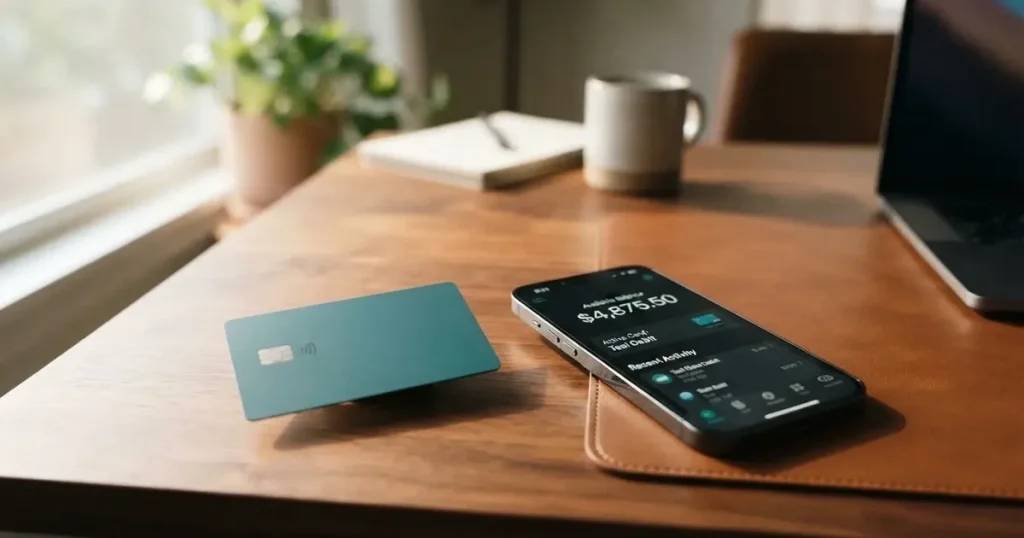
Some cards advertise a wallet, a card and a travel app in one breath, and you spend an afternoon trying to work out which of the three you are actually signing up for. XHYPE is one of those. The Superwallet is the product; the card is the way you spend what sits in it. Once you accept that, the questions get simpler: who can get one, what it costs to keep, how money goes in, and what happens when a payment does not go through.
I went through the public pages — the site, the terms, the app description — and compared them against what third-party reviewers report. I have not applied for a card or moved money through one, so treat everything here as a reading of documents and public reports, not as a personal account.
The score below is my own, out of ten, with the reasoning behind each part.
The terms and figures are current as of October 28, 2026.
| Criterion | Mark | Why |
|---|---|---|
| Who can get it | 9 / 10 | Orderable from 203 countries and territories, with eligibility decided by residence and citizenship |
| Cost | 5 / 10 | $10 to $70 a year depending on plan, top-up fees from 2.1% down to 1.2%, FX fee not disclosed |
| Top-up options | 9 / 10 | USDT, USDC or the native coin on BNB Smart Chain, Ethereum, Base, Polygon and Arbitrum |
| Reliability and complaints | 4 / 10 | An unnamed issuer, an explicit “we are not a card issuer” line, and thin public complaint data |
| Everyday use | 9 / 10 | Virtual card on every plan, Apple Pay and Google Pay everywhere, ATMs up to $1,500 a day |
| Total | 7.0 / 10 | Strong on reach, networks and mobile wallets; weak on published cost detail and on how little the terms say about the issuer |
Who this suits. You already hold crypto in stablecoins, you are comfortable moving it on-chain yourself, and an ordinary bank card has been awkward or unavailable to you. You want a virtual card in seconds for subscriptions and travel, and a physical one is a bonus rather than the point. You will not be shocked by a percentage fee on every top-up.
Who it does not suit. Anyone who wants a normal bank card with predictable statements and a named bank behind it. Anyone who plans to hold a large balance on it. Anyone who expects to know, before they start, exactly what a currency conversion costs — that number is not published.
Will they give you the card
Yes, broadly. XHYPE says cards can be ordered from 203 countries and territories, and that eligibility depends on your country of residence and your nationality at the moment you apply. That second part is the one people miss: residence alone does not decide it. The terms also state that use is prohibited in jurisdictions where such services are restricted, without naming them.
The narrower unofficial picture, taken from a third-party profile published in August 2026 rather than from the terms themselves, is 184 countries available and 9 restricted — Afghanistan, Cuba, Iran, North Korea, Somalia, South Sudan, Sudan, Syria and Yemen. Treat that list as a rough orientation rather than the rule that will be applied to your application; the card’s own wording is what governs, and it deliberately does not enumerate.
There is no citizenship-by-citizenship breakdown to check beforehand. What you can do is look at your own two answers — where you live, and what passport you hold — and assume that if either is unusual for a crypto service, the application may stall at verification rather than at signup.
How to get it
The route is short. You sign up in the web app at superwallet.xhype.io — the site stresses that there is nothing to download, and there is no App Store or Google Play listing with a public rating to read. You verify your identity, pick a plan, deposit crypto, and load the card.
Verification is described as “Private KYC” handled by Verinex, with XHYPE receiving only the result of the check rather than the documents themselves. Minimum age is 18. What is not stated: the list of accepted documents, whether proof of address is required, how many identity levels exist, how long processing takes, and what would make a check fail. Those gaps matter if you are in a hurry or if your documents are unusual.
There is a contradiction in the public material here, and you should hold both halves. One third-party site, cryptocards.so (2026), advertises “No KYC”. Another, CryptoCardHub in August 2026, says routine ID checks are not advertised at signup but that every deposit is screened against anti-money-laundering rules and that flagged funds may be rejected. The official pages describe an identity check by a named provider, which is not the same as no KYC at all. My reading: you will be asked to identify yourself, and your money will be screened whatever the marketing line says.
One more unofficial claim to discount: a third-party profile from August 2026 advertises Visa and Mastercard programmes with virtual cards only and no physical card. That conflicts directly with the official page, which offers a physical card on the Premium and Whale plans. Where a third-party source and the card’s own page disagree, the card’s page is the one I would rely on.
Fees: what it really costs
Three charges exist that you can see, and one that you cannot. That missing one is the reason this section is the weakest part of the card.

| Fee or limit | Essential | Premium | Whale |
|---|---|---|---|
| Plan price | $10/year | $58 for 1 year, $118 for 3 years | $70 for 1 year, $148 for 3 years |
| Cards included | 1 virtual | 1 virtual + 1 physical | 2 virtual + 1 physical |
| Top-up fee | 2.1% | 1.8% | 1.2% |
| Foreign exchange fee | not stated | not stated | not stated |
| ATM fee | not stated | not stated | not stated |
| ATM limits | $1,500 per transaction and per day, 30 operations a day, $15,000 a month | $1,500 per transaction and per day, 30 operations a day, $15,000 a month | $1,500 per transaction and per day, 30 operations a day, $15,000 a month |
| Annual limit | $50,000 | $250,000 | $1,000,000 |
So the cheapest plan costs $10 a year and 2.1% on every top-up. The most expensive costs $70 and 1.2%. Neither number is small on its own, but both scale with how much you actually use the card — the fee is a percentage, not a flat monthly charge.
The unofficial picture for the same charges is much worse: an August 2026 third-party profile lists $108, $228 and $588 a year (with $9, $19 and $49 monthly equivalents, auto-renewed) and reload fees of 4.5%, 3.5% and 2.3%. The official page says the app shows current prices, which suggests the public figures I have are not the whole story or have moved. Either way, the sensible thing before you commit is to open the app and read the price of your own plan there rather than trusting a review — including mine.
The FX fee is the one I would press hardest about. A third-party source describes it only as a “standard fee” with no percentage published, and the official pages do not say what it is. If you will spend in a currency other than the card’s own, you are buying an unknown number, and no table above can tell you what a coffee costs.
Three ordinary payments, to make the arithmetic concrete:
- A $30 subscription topped up from USDT on Essential: 2.1% of the top-up is the fee. On the physical plans the same top-up costs 1.8% or 1.2%. The FX fee, if one applies to your spending currency, is unknown and additional.
- A $200 card purchase on the Premium card, drawn from a balance you loaded earlier: the top-up fee was already charged when you loaded, at 1.8%. Whether anything further applies at the point of sale depends on the unstated FX fee and on the currency the card converts to, which the official pages do not name.
- A $120 ATM withdrawal on Premium or Whale, within the $1,500 daily cap: the ATM fee itself is not stated. Withdrawing is therefore the operation where you are least able to predict the cost.
One thing worth knowing about the category in general: the network fee for putting your crypto on-chain is charged by the blockchain, not by the card company. If you are on Ethereum and the network is busy, the cost of moving your own USDT to the Superwallet is yours and is separate from everything above.
How to Top up the card
Top-up is where XHYPE is strongest, and the official list is long: USDT, USDC or the native coin, on BNB Smart Chain, Ethereum, Base, Polygon and Arbitrum. You send to the XHYPE Superwallet and load the card from the balance. Five networks and three asset types is more than most comparable products offer.
There is a flat conflict here, and it is worth resolving before you send anything. The unofficial August 2026 profile says USDT only, on Tron (TRC20) and BNB Chain (BEP20). That is a much narrower list, and Tron is not on the official list at all. If you follow the third-party version and send USDT over TRC20, you may be sending to a network the card does not support — and blockchain transfers are irreversible, so a wrong-network deposit can be lost or need manual support recovery with no guarantee. Read the deposit screen in the app for the current network list and treat that as authoritative.
Still not stated: the minimum top-up, who pays the network fee, and whether fiat top-ups exist at all. One unofficial source points to a $15 minimum deposit per the user guide. Also not stated: withdrawing. The terms are silent on refunds, account closure and what happens to a remaining balance — which is a significant thing to be unable to find.
There is one non-standard top-up route the card does advertise: gift cards and eSIMs payable in crypto.
Paying with it every day
Daily use is straightforward and mostly done through your phone. Apple Pay and Google Pay work with all virtual and physical cards, which means you rarely touch the card number. Which merchant categories are blocked is not stated.
The card itself is prepaid, not credit. It draws on a stored balance, so it cannot overdraw — you spend what is loaded and nothing more. That also means a declined payment is not a debt, just an empty balance.
Two structural facts about this category are worth carrying in your head while you use any card like this. First, prepaid and foreign-issued cards get declined more often than people expect: a merchant can look up the card’s issuing country and apply extra scrutiny, and address-verification checks that work for locally issued cards are generally unavailable for foreign ones. Second, a declined authorisation can leave a hold on your funds for several days. If a hotel or a car hire company takes a deposit you then have to release, the money may be frozen even though you never spent it.
Rewards are not mentioned on the official page — there is no cashback claim. An unofficial August 2026 profile lists no cashback but does mention a welcome credit of $5, $10 or $40 by plan, XTraveler points of 290, 690 or 2,490, and a referral commission of 15% of referred users’ reload fees paid in USDT. Referral structures pay for spread, so read what you are signing up for before you use your link.
Also unstated: what happens when you dispute a payment. The terms do not specify refunds, disputes or chargebacks. And support is 24/7, in English and Spanish, on Telegram only — @xhype_support. That is not a criticism of responsiveness; it is a fact about where you would be asking, and Telegram-only support is worth knowing before you have a problem.
What can go wrong
Start with the company. XHYPE FZCO is based in Dubai Silicon Oasis, United Arab Emirates. The terms say plainly: “We are not a card issuer”. The cards come from an unnamed independent third-party issuer. The terms were last updated on 04-Jun-2025. Licences are not stated. Governing law is UAE law and the forum is Dubai courts. One unofficial source says the issuer is a licensed provider in jurisdictions including Hong Kong — that is a third-party claim, not something the card’s own pages confirm.
That sentence — we are not a card issuer — is the most important line in the whole document for you. It means the entity you are dealing with is a marketing and programme-management front end. The party whose name is on your card, the party that holds your card balance, and the party you would complain to may not be the same, and you are not told which company that is.
The wallet side is better. The Superwallet is self-custody: you control your authentication factors and can export your private key to wallets such as MetaMask or Trust Wallet. The card describes a “Zero Data model” for privacy. Card balances, however, are held by the independent card issuer — so the crypto sits with you and the fiat balance sits with someone you cannot name. Whether two-factor authentication, card freeze and spending controls exist is not stated.
Then the record. I found no official incident reported on the site’s own pages. What third parties report is thinner and less comfortable: a June–July 2025 disruption affected HKD Visa recharge and spending, later marked resolved with balances reportedly refunded; user themes include high combined costs, AML-related restrictions, refunds missing for months and slow support. On KYCnot.me, 7 ratings average about 2.9 out of 5. I looked for a Trustpilot page for the card and found none — the Trustpilot hit that comes up is xkode.io, a different service — and I found no Reddit thread either. Seven ratings is a very small sample and I would not treat 2.9 as a measurement of anything except bad feeling.
Two practical warnings. Refunds going missing for months is the failure mode to plan around, which means hold balances on the card that you could survive losing for a quarter. And since the terms do not describe withdrawal, closure or leftover balances, ask support directly what happens to your money if you close the account, in writing, before you need to know.
What to take instead
The honest comparison is with three other cards I looked at, scored on the same ten-point basis.
TokenPocket — 5.8 / 10. A Mastercard/Visa debit card running on Arbitrum, with Visa debit for a list of European countries including Germany, France, Spain and Switzerland, and Mastercard debit for Australia, Canada, Hong Kong, Japan, Taiwan, New Zealand, Singapore, South Korea and the UK; the Americas were described as planned. Fees: NFT creation partly covered by TokenPocket with the user paying “a small portion”, otherwise no additional fees, but a 1% fee on depositing cryptocurrency into the card, refunded later via rewards or reduced transaction fees. Balances in EUR24 and USD24. The 1% deposit fee and the narrower region list make this the weakest of the four on both counts that matter here.
MetaMask — 7.1 / 10. Mastercard, virtual card issued instantly, metal at $199 a year, virtual free with no annual or maintenance fee. Spending draws directly from the connected wallet on Linea, Base, Monad and Solana, which is a genuinely different model: no top-up step, so no top-up fee. Cashback is real — 1% on Virtual, up to 3% on Metal capped at the first $10,000 spent — and there is no foreign transaction fee, with the Mastercard rate used. The catch: sign-up is open in 45 listed countries with proof of residency required, other regions waitlisted, and US and UK sign-ups were temporarily closed. If you are outside those 45, this is not an option. Citizenship rule not stated.
KAST — 6.1 / 10. Virtual and physical, up to 10 cards per user, Visa Platinum, Visa Infinite metal and gold-plated at Private tier, with balances in USD and stablecoins converted 1:1 at 0% spread. Its fee schedule is the most complete of the four: stablecoin top-up 0%, card spend in USD 0%, transaction fee 0%, Apple and Google Pay 0%, FX 0.5% to 1.75% depending on your country and the card programme, 0.10 USD on non-USD transactions under $25, 0.50 USD for a declined transaction, and an inactivity fee of $1 a month after 12 months. Cashback is 1.5%, 2% or 3% with monthly caps. What stops it: the membership tiers run from Standard at 0 USD to Premium at 1,000 USD a year and Private at 10,000 USD a year, billed annually upfront — not a casual purchase for a card.
Against those three, XHYPE’s pitch is reach and flexibility at a low price. Its weakness is that it publishes less. KAST tells you its FX band; MetaMask tells you there is no FX fee; XHYPE tells you there is one and not what it is.
| XHYPE | MetaMask | KAST | TokenPocket | |
|---|---|---|---|---|
| Score | 7.0 / 10 | 7.1 / 10 | 6.1 / 10 | 5.8 / 10 |
| Plans | 3 (Essential, Premium, Whale) | 2 (Virtual free, Metal $199/yr) | 3 (Standard, Premium $1,000/yr, Private $10,000/yr) | not stated |
| FX fee | not stated | none, Mastercard rate | 0.5%–1.75% | not stated |
| Top-up fee | 2.1% / 1.8% / 1.2% | no top-up step | 0% on stablecoins | 1%, refunded later |
| Cashback | not stated on official page | 1% Virtual, up to 3% Metal | 1.5% / 2% / 3% with caps | not stated |
| Physical card | Premium and Whale | Metal version | yes, with delivery fee on Standard | not stated |
Who I would recommend it to
If you are trying to get a normal bank card and the ordinary route is closed to you — because of where you live, what you hold, or a banking history that works against you — then the appeal of XHYPE is straightforward: 203 countries and territories, a virtual card you can hold seconds after signing up, Apple Pay and Google Pay on everything, and a $10 entry point that does not ask you to commit to a year of anything more expensive.
I would also suggest it to anyone who already runs a self-custody wallet and wants a second, disposable spending surface. The Superwallet lets you export your key elsewhere, so your main holdings need not live here, and the prepaid structure means a card that gets declined or stolen is a nuisance rather than an account opening.
What I would not do is put meaningful savings on it, run a business through it, or sign up expecting to withdraw at will. The issuer is unnamed, the FX fee is unpublished, the withdrawal rules are missing from the terms, and the complaint record is thin and unpleasant where it exists. Those four together are why this lands at 7.0 and not higher — the card is capable, and the paperwork around it is unfinished.
Frequently asked questions
What is the XHYPE card?
The XHYPE card is a prepaid payment card tied to the XHYPE Superwallet, a self-custody crypto wallet run by XHYPE FZCO of Dubai. You load crypto into the wallet, convert or hold it as card balance, and spend from that balance. Virtual cards are available on every plan; physical cards come with the Premium and Whale plans. The card is not itself issued by XHYPE — the terms say so explicitly.
Is XHYPE a bank?
No. XHYPE’s terms state “We are not a card issuer”, and that the cards come from an unnamed independent third-party issuer. XHYPE is the programme front end; the card balance is held by that separate issuer. So your card is not a bank deposit and should not be treated as one.
Who owns XHYPE?
XHYPE FZCO is registered in Dubai Silicon Oasis, United Arab Emirates, and the terms place it under UAE law with the Dubai courts as forum. The company says it was founded by people with experience in traditional payments, fintech and blockchain. It also says the card programme comes from an independent third-party issuer, which it does not name.
How do I apply for an XHYPE card?
Sign up in the web app at superwallet.xhype.io — there is nothing to download, and no app store listing with a public rating. Verify your identity through the “Private KYC” process handled by Verinex, pick a plan, deposit crypto and load the card. You must be 18 or over. The accepted document list, processing time and rejection reasons are not stated.
Does the XHYPE card require KYC?
Yes, identity verification is part of signing up, through Verinex, with XHYPE receiving only the result. One third-party site advertises “No KYC”, but the same source family notes every deposit is AML-screened and flagged funds may be rejected. Treat “no KYC” claims as marketing shorthand for “no check visible at signup”, not as the absence of checks.
How do I top up the XHYPE card?
Send USDT, USDC or the native coin on BNB Smart Chain, Ethereum, Base, Polygon or Arbitrum to the XHYPE Superwallet, then load the card. The top-up fee is 2.1% on Essential, 1.8% on Premium and 1.2% on Whale. Minimums, who pays the network fee and whether fiat top-ups exist are not stated, so check the networks shown in-app before sending — transfers are irreversible.
Is the XHYPE card free?
Not quite. Essential costs $10 a year, Premium $58 for one year or $118 for three, and Whale $70 for one year or $148 for three. A third-party profile lists much higher prices of $108, $228 and $588, and the app is said to show current prices — so read your own plan’s price in the app rather than trusting either figure. Even the free-feeling use of it costs you 1.2% to 2.1% on every top-up.
Can I add the XHYPE card to Apple Wallet?
Yes, Apple Pay and Google Pay work with all virtual and physical cards, which is the easiest way to pay day to day. Tokenised mobile payments store a device-specific number rather than your card number. Whether any merchant categories are blocked is not stated, and gambling in particular is commonly restricted on cards like this by issuer policy rather than by law.
Where can I use the XHYPE card?
Cards can be ordered from 203 countries and territories, with eligibility depending on residence and citizenship. A third-party profile puts it more narrowly at 184 available and 9 restricted — Afghanistan, Cuba, Iran, North Korea, Somalia, South Sudan, Sudan, Syria and Yemen. Once you have it, you can spend wherever prepaid cards are accepted, though foreign-issued BINs and prepaid status mean more declines than a local bank card.
Is the XHYPE card safe?
Your crypto side is self-custody: you control authentication and can export your private key to MetaMask or Trust Wallet. Your card balance is not — it is held by an unnamed third-party issuer, and the terms say nothing about two-factor authentication, card freeze or spending controls. Support is 24/7 on Telegram only. Safety here is a judgement, not a guarantee.
How do I withdraw money from XHYPE?
The public terms are silent on refunds, account closure and what happens to a remaining balance, and no withdrawal method is stated. That is not a small gap: it means nobody has published how you get money back out or what you are owed if you leave. Ask support in writing what the process is before you load anything you would not want to leave there.
Wallet cards put to the test – cryptocardtested
Content created by the «cryptocardtested» team