
Zerocard reviewed: a USDC card that works in 150+ countries, published almost nothing
 Available in US
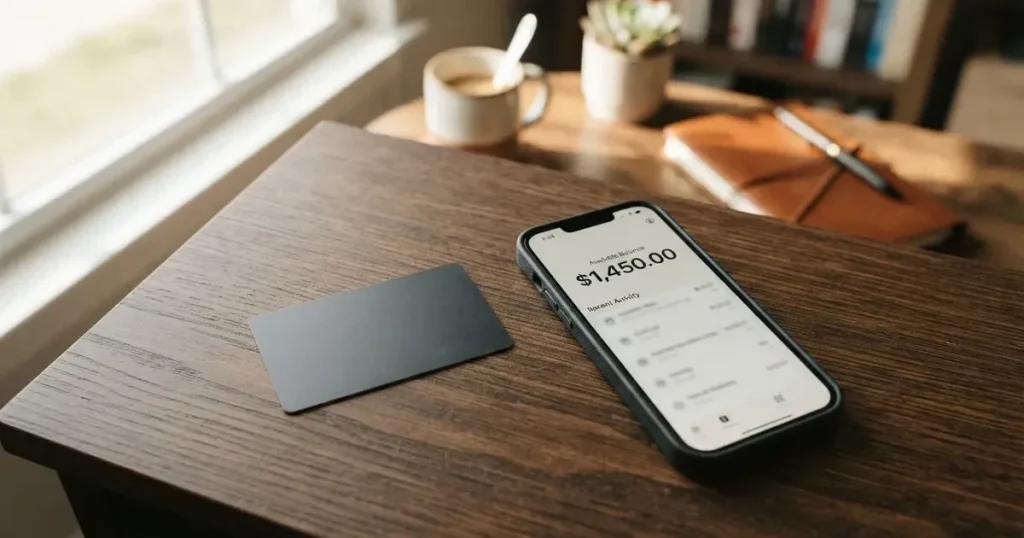
Zerocard is a debit card you spend from a crypto balance. You hold stablecoins — USDC or USDT on the Base or Ethereum networks — and when you pay, the crypto is converted to local fiat at the point of sale and the merchant receives ordinary money. In that sense it is not a new kind of money; it is an old kind of card with a new fuel line under it. The card works in 150+ countries, asks for a full KYC before you can request it, and comes as a virtual or physical debit card. The promise is a zero-fee core experience. The catch is that the interesting numbers — conversion rates, foreign-exchange costs, ATM charges, daily limits — are not published on the card’s public pages. I went through the terms, the policies and the available reporting, and this is what I could and could not confirm.
The conditions described here are current as of October 28, 2026.
Verdict: 6.3 out of 10
A card that works almost anywhere, draws on your own crypto, and advertises a zero-fee core is genuinely useful — for the reader who already holds USDC and cannot get an ordinary bank card, or who simply prefers spending stablecoins. What holds it back is disclosure. This is a young product, launched first in Nigeria in 2025, and its own public pages leave the money side largely unstated: no conversion rate, no FX fee, no ATM fee amount, no daily or monthly limit, no named card network, no named issuer. You are asked to pass KYC and hand over identity documents before most of that is settled.
Here is how the score breaks down, criterion by criterion.
| Criterion | Mark | Why |
|---|---|---|
| Who can get it | 7 / 10 | The card “works in 150+ countries”, but no eligible-country list is published; restricted jurisdictions are named |
| Cost | 7 / 10 | Core services are a “zero-fee experience”; issuance, conversion and express processing may carry fees, amounts not published |
| Top-up options | 6 / 10 | USDC or USDT on Base and Ethereum; unofficial reporting says the app accepts only USDC on Base and the wallet is non-custodial |
| Reliability and complaints | 5 / 10 | Provider is Notzero Technologies Limited, the issuer is not named, it launched in beta in Nigeria, accounts can be frozen without notice, and no complaint record was found |
| Everyday use | 6 / 10 | Virtual or physical debit card after KYC; unofficial reporting notes an ATM fee, and which wallets are supported is not stated |
| Total | 6.3 / 10 | A workable card held back by how little it publishes |
Who it suits: the reader who wants to spend a stablecoin balance through a normal Visa- or Mastercard-style debit experience without opening a bank account, who is comfortable with crypto rails, and who treats the published gaps — not the marketing — as the real decision. Who it does not suit: the reader who needs to know the exact cost of a purchase before making it, who needs published daily limits to plan around, or who wants to be certain their money sits in their own hands rather than with a provider. The good news for that second group is that unofficial reporting describes the wallet as non-custodial on Base, but it is reporting, not a term.
Will they give you the card?
The short answer is: probably, if you are not in one of the named restricted places — but the card publishes its restricted list and not its accepted one, so you cannot fully know your eligibility before you try.
The site’s headline claim is that the card “works in 150+ countries”. That is a coverage-of-travel figure, not an eligibility list. Nowhere do the public pages publish the countries where you can actually open an account. What they do publish is the other list: the Terms name restricted jurisdictions including Belarus, Burundi, Central African Republic, Cuba, Iran, Libya, Myanmar (Burma), North Korea, Russia, Somalia, South Sudan, Sudan, Syrian Arab Republic, Ukraine, Venezuela and Zimbabwe, and note that the third-party verification provider can add others to that list. Whether the card cares about your citizenship, your residence, or both is not stated, which for a reader in a sanctioned or high-risk jurisdiction is exactly the question that decides the outcome — and it is left open.
The practical implication is this: the “150+ countries” line tells you where the card might work once you hold it. The restricted list tells you where it definitely will not open. The gap between them is yours to resolve by applying and finding out. If your country’s status is unclear to you and you have any reason to suspect you sit near the restricted list, that uncertainty is the single biggest reason a reader like you might decline this card rather than start the process.
How to get it
The route is short and standard, because almost every card in this category runs the same three steps, and Zerocard is no exception. First you register. Then you pass KYC. Then you request either a virtual or a physical Zerocard debit card.
What KYC requires is spelled out, which is more than many cards in this category manage. You need one of three accepted identity documents: a valid International Passport, a Driver’s License or a National Identity Card. You need a residential address plus proof of address, with a utility bill named as an example and a freshness of not older than three months. You must be 18 or older. KYC is required before you can withdraw funds and before you can request the card — so it is not a formality you can defer; you cannot even empty the account until it is done.
A few things that are not stated and that you should not assume. There are no account tiers — the policy defines only risk categories (High, Medium and Low), not user levels. The processing time for verification is not stated. And the failure modes are severe in tone: if you fail to provide the requested information, transactions are blocked for new users or your account is suspended, and sanctioned persons cannot open accounts at all. The card network and the card currency behind the virtual and physical cards are not stated either, so you cannot confirm in advance which rails your money travels on.
One practical note: delivery timing for the physical card is not stated, so if you need a card in hand quickly, plan on the virtual one and ask support about shipping rather than assuming.
Fees and what a payment really costs
Here is the honest summary: the core services are described as a “zero-fee experience”, and the optional extras — card issuance, express processing, currency conversion and cross-border transactions — may carry fees, but not one of those amounts is published. That means you cannot calculate, in advance, what a specific purchase will cost you. This is the honest core of the review, and it is why the cost score is not higher despite the appealing headline.

The table below sets out everything the card’s own pages actually say about money, with the gaps marked plainly.
| Fee or limit | What the card states |
|---|---|
| Core services | Described as a “zero-fee experience”; no amounts published |
| Card issuance | May be charged as an optional service; amount not stated |
| Express processing | May be charged as an optional service; amount not stated |
| Currency conversion | Listed as a possible optional-service fee; no rate stated |
| Cross-border transactions | Listed as a possible optional-service fee; no rate stated |
| ATM | Not stated on the official pages; unofficial reporting says an ATM fee exists, separate from a ₦5 per-transaction charge, amount not visible in that summary |
| Card currency | Not named |
| Daily limit | Not stated |
| Monthly limit | Not stated |
| Conversion behaviour | Crypto converted to local fiat at the point of sale |
| Account tiers | None published |
Let me walk through three everyday payments, because “zero-fee” only means something once you know which part of a payment it refers to.
Paying for coffee in your own country with the crypto already converted is the simplest case: the card spends a local balance, and the conversion that loaded that balance already happened at the point of sale. Nothing here implies a fee on the purchase itself, but note that the conversion is where the cost sits, and that conversion is precisely the number the card does not publish.
Paying online in a subscription denominated in dollars is the case most likely to surprise you, because a dollar-denominated charge from a card that converts to local fiat is a cross-border transaction — and cross-border and currency conversion are both listed as possible optional-service fees. Two separate cost layers can apply to one purchase, and neither rate is given.
Paying abroad, or drawing cash from an ATM, adds the most uncertainty. Cross-border fees are flagged as possible, ATM fees are not officially stated at all, and unofficial reporting describes ATM fees as existing and being separate from a ₦5 per-transaction charge without showing the amount. For a reader planning to use this card as a travel card, that is the part to interrogate support about before you rely on it — not because the fee is unusual, but because here it is invisible.
The background principle behind the design is worth understanding, because it explains why a “zero-fee” card can still cost you. On-chain network fees — the gas or bandwidth a blockchain charges for your deposit — are paid to the blockchain, not to the card provider. So a card can honestly call its own fees zero while a top-up transaction still costs you a network fee. The same logic extends to conversion: if the provider absorbs nothing and takes a spread, that spread is a fee even when no line item is labelled.
Top up options
Topping up means getting stablecoins into the card’s balance, and this is the part of Zerocard that is more concrete — with one important caveat.
The card’s own account of how funding works is that you fund the wallet with USDC or USDT on the Base or Ethereum networks, and crypto is automatically converted to local fiat at the point of sale. That gives you two stablecoin choices and two networks. It is a real option for anyone already holding USDC on Base, which is the audience this card is quietly built for: spending USDC from a non-custodial Base wallet.
The caveat is that third-party reporting from July 2025 says the app in practice supports only USDC on Base, not USDT, and that each user receives a non-custodial wallet on Base. If that is accurate, the official description is broader than the shipped product, and you should plan around the narrower reality: USDC on Base. I would treat the wider claim as unofficial until you see it in your own app.
Two funding questions are not addressed by the card at all. The details of the top-up flow — minimums, processing time, whether there is a deposit address or an in-app purchase — are not stated. And fees, and what happens to any balance left when you close the account, are not addressed either. You do have to complete KYC before you can withdraw funds, so a clean exit requires that check to be done first.
One more thing to know, because it is a category-wide risk and it is not this card’s fault: blockchain transfers are irreversible. If you send a deposit on a network the provider does not support, or to an address belonging to a different network, the funds can be lost or need manual recovery with no guarantee. Sending the right coin on the right network to the right address is entirely on you.
Paying with it every day
Everyday use is where a crypto card either becomes ordinary or stays awkward, and with Zerocard the answer is mostly ordinary, provided you have passed KYC.
You get a virtual or physical Zerocard debit card after verification. The card converts crypto to local fiat at the point of sale, so from the shop’s point of view it is a debit card. Beyond that, the card’s own pages are quiet about the details you would use daily: which wallets are supported is not stated, there is a “Download app” button on the site but no store link or ratings I could find, and the card network behind the card is not named. If having a specific network or a physical card in your wallet matters to you, these are things to ask rather than assume.
On rewards, there is nothing concrete. A founder post claims “zero fees” and free transactions, but no cashback is stated anywhere. Set your expectation at zero until you see otherwise in the app.
If a payment goes wrong, the stated route is customer support: contact them with the transaction reference and the date. What is not stated is a timeline for a resolution, and there is no refund policy published. Support is reachable through an in-app support channel or an email address that is obscured on the page; the languages it covers and its hours are not stated, which matters if English is not your first language and you are relying on it for a time-critical dispute.
Two everyday realities apply to every card in this category, so I would not treat them as surprises specific to Zerocard. A declined online payment can leave a hold on your funds that lingers for several days, sometimes up to a week. And address verification, which many online shops use to check your billing address, is mainly offered in the US, Canada and the UK and is generally unavailable for foreign-issued cards — which can cause declines that look like fraud but are just a mismatch. Ineligible regions limit sign-ups, not spending, which is the mirror image of your problem: you may hold the card and be refused the top-up.
What can go wrong
This is the section I would read twice, because Zerocard’s risk profile is unusual in a specific way: the risks are less about losing your money to a hack and more about your account being frozen and about the numbers simply not being there.
The first thing to sit with is the suspension clause. The Terms allow accounts to be suspended or restricted at the provider’s sole discretion and without prior notice. There is no stated cooling-off period, no stated appeal route, and no stated notice requirement. Whether or not the provider exercises that discretion fairly, the clause means your access to your balance is, contractually, something that can change without warning. Ask yourself honestly whether you would be comfortable holding a month of spending money behind that clause — because that is the honest test.
The second is the identity of the issuer. The provider is named as Notzero Technologies Limited, but the Terms name only “Zerocard”, the registration is not stated, and the issuer is not named. A founder post refers to a “card infra partner” in Nigeria. In practice this means the institution that actually holds your card programme is not identified on the public pages. You are being asked to pass KYC and load funds in front of a provider whose issuing partner you cannot name from its own documentation.
The third is the age of the product and the thin complaint record. The card launched first in Nigeria, per a founder post of 17 May 2025 that also spoke of a global plan, and a beta review followed in July 2025. I found no official incidents, and no Trustpilot or Reddit page — note that the search results that did surface were about an unrelated US “Zero” card, not this one. The honest reading is that there is no complaint history yet, which is not the same as there being no problems; it is a young product with a thin public track record.
Fourth, custody. Which wallets are supported is not stated on the official pages. The non-custodial Base wallet claim comes from third-party reporting, not from the terms, and it matters enormously — a self-custody wallet means you hold the keys and bear the risk of losing them; a custodial one means you trust the provider completely. Since crypto transfers are irreversible and a stolen private key has no built-in recovery, this one question deserves a direct answer from support before you deposit more than you would mind losing.
Fifth, the regulatory environment. Zerocard is a young crypto product launching into a tightening framework, and a card like this typically depends on two licences rather than one — the payment side under e-money or payments law, and the crypto side under crypto-asset regulation. It launched into a beta in Nigeria rather than under a named EU or US regime, so the usual protections you might assume from a European e-money institution — safeguarded funds, deposit-style clarity — do not automatically attach. If you are in the EU, note that MiCA took legal effect in June 2023, its stablecoin rules applied from 30 June 2024, and provider service-provider rules from 30 December 2024, with a transitional period running to 1 July 2026; the card’s own pages do not tell you which regime it sits under.
Sixth, and quietly the most consequential: the missing numbers. No conversion rate, no FX fee, no ATM fee amount, no daily or monthly limit, no tiers. You will be spending real money on a card whose cost per purchase you cannot calculate in advance. For a reader whose decision hinges on “what will this actually cost me”, that is not a footnote; it is the answer.
What to take instead
If any of the above gives you pause, the honest move is not to force this card but to compare. Here are three alternatives I looked at against the same questions, so you can see where Zerocard’s gaps sit relative to cards that publish their numbers.
| Card | Score | Who it suits | Cost picture |
|---|---|---|---|
| Zerocard | 6.3 / 10 | USDC holders who want a debit card working in 150+ countries | Core “zero-fee”; optional fees exist, none published |
| TokenPocket | 5.8 / 10 | European and Asia-Pacific residents wanting a Visa/Mastercard debit | 1% fee on crypto deposits, refunded later via rewards; no other fees |
| MetaMask | 7.1 / 10 | Wallet-native spenders in 45 listed countries with named cashback | Virtual free; Metal $199/year; “minimal” transaction fee; no FX fee |
| KAST | 6.1 / 10 | Residents of supported countries wanting tiered cashback in USD | Free to $10,000/year tiers; FX 0.5%–1.75%; small fixed fees |
TokenPocket, at 5.8, is the closest in spirit: a Visa debit for a list of European countries and territories, a Mastercard debit for Australia, Canada, Hong Kong, Japan, Taiwan, New Zealand, Singapore, South Korea and the UK, with the Americas planned. It runs on Arbitrum, its Fiat24 cards are virtual, and balances sit in EUR24 and USD24. Its costs are more candid than Zerocard’s in one way — it charges a 1% fee on crypto deposits, to be refunded later via rewards — and TokenPocket partly covers the NFT creation fee. But its country list is a list you can actually see, and its fee is a fee you can actually compute, which is exactly what Zerocard withholds.
MetaMask, at 7.1, is the most fully published of the three, and the closest in spirit to spending straight from your own wallet. It is a Mastercard; a virtual card is issued instantly and free, with a Metal version that costs $199/year; it runs on Linea, Base, Monad and Solana; and it names its tokens — mUSD, wETH, EURe, GBPe, USDC and USDT. Sign-up is open in 45 listed countries with proof of residency, other regions join a waitlist, and US and UK sign-ups are temporarily closed. Crucially for a cost-conscious reader, it states no foreign transaction fee and uses the Mastercard rate, and it publishes cashback: 1% on Virtual, 3% headline on Metal but capped at 3% on the first $10,000 spent and 1% after, paid in mUSD. If your objection to Zerocard is “I cannot see the numbers”, MetaMask is where the numbers are.
KAST, at 6.1, is the one to look at if you want published tiered pricing and a rewards structure you can plan around. It offers virtual and physical cards, up to ten per user, on Visa Platinum, Visa Infinite metal and Visa Infinite gold, with account balance in USD. Its costs are the most explicit of any card here: Standard membership is free, Premium is 1,000 USD/year, Private is 10,000 USD/year; stablecoin top-up is 0%, USD card spend 0%, transaction fee 0%, Apple and Google Pay 0%; the non-USD FX fee is 0.5%–1.75% depending on your country and the transaction’s country; non-USD transactions under 25 USD cost 0.10 USD, and a declined transaction costs 0.50 USD. It funds from USDT, USDC, PYUSD and RLUSD on Ethereum, Solana, Polygon, Arbitrum and TRON, and pays cashback of 1.5% to 3% depending on tier, up to monthly spend caps. Its eligibility is residence-based, and it is explicit that living in a supported country while holding an ID from a restricted region can still make you ineligible — a clarity Zerocard does not offer.
Who I would recommend it to
I would recommend Zerocard to a specific person and be honest that I would not recommend it to most others. The person I would point it to is someone who already holds USDC, ideally on Base, and who cannot get or does not want an ordinary bank card — the reader whose alternative is having no card at all. For them, a card that works in 150+ countries, converts at the point of sale and advertises a zero-fee core is a real improvement, and the fact that it started in Nigeria means it may be reachable in places where mainstream banking is not. If that is you, the next step is to ask support the four questions the pages leave open — the conversion rate, the FX fee, the ATM fee, and the daily and monthly limits — and to fund it first with a small amount you would be willing to have frozen.
To everyone else I would say: not yet. Not because Zerocard looks dishonest, but because it asks for your identity documents and your money before it tells you what a payment costs. A card whose core is genuinely free is a good thing; a card whose optional fees are all undisclosed is a card you cannot budget with. If your deciding factor is cost certainty — and for most readers it is — then MetaMask or KAST, which publish their fee tables, will serve you better today, and TokenPocket is a reasonable middle path if your country is on its visible list. Zerocard’s bet is that broad reach and a non-custodial Base experience will matter more than published transparency. That bet may well pay off. Right now, you are being asked to take it on trust.
Frequently asked questions
What is Zerocard?
Zerocard is a debit card you spend from a crypto balance. You fund it with USDC or USDT on Base or Ethereum, and the crypto is converted to local fiat at the point of sale, so the shop receives ordinary money. It works in 150+ countries and comes as a virtual or physical card. The provider is named as Notzero Technologies Limited, but the card’s own pages do not name the issuing institution behind the card programme.
How does Zerocard card work?
You register, pass KYC, then request a virtual or physical card. When you pay, crypto in your balance is automatically exchanged for fiat and the card is charged like an ordinary debit card. The card says core services are a “zero-fee experience”, while issuance, express processing, currency conversion and cross-border transactions may carry optional fees. No amounts for those optional fees are published.
Is Zerocard a bank?
Not on the evidence of its public pages. The provider is named as Notzero Technologies Limited, but the Terms name only “Zerocard”, the registration is not stated, and the issuer is not named — a founder post refers to a “card infra partner” in Nigeria. So I could not confirm a banking partner from the card’s own documentation. Ask support directly which institution issues the card.
Who owns Zerocard?
The card’s materials point to Notzero Technologies Limited as the provider, and a founder blog and founder social post run alongside the product. However, the Terms name only the brand “Zerocard” and do not state a registration, and the issuer of the card itself is not named anywhere I could find. Ownership is reasonably attributable; the issuing institution is not.
Does Zerocard require KYC, and what documents do I need?
Yes, KYC is required before you can withdraw funds or request the card. You need a valid International Passport, a Driver’s License or a National Identity Card, plus a residential address and proof of address — a utility bill not older than three months is the example given — and you must be 18 or older. There are no account tiers; the policy only defines risk categories of High, Medium and Low.
Can I use Zerocard in my country?
The card says it works in 150+ countries, but it publishes no eligible-country list. What it does publish is the restricted list: Belarus, Burundi, Central African Republic, Cuba, Iran, Libya, Myanmar, North Korea, Russia, Somalia, South Sudan, Sudan, Syria, Ukraine, Venezuela and Zimbabwe, plus others the verification provider may add. Whether eligibility follows your citizenship or your residence is not stated, so you cannot fully resolve this before applying.
How do I top up the Zerocard card?
The card’s account is that you fund the wallet with USDC or USDT on Base or Ethereum, and the crypto is converted to local fiat when you spend. Third-party reporting from July 2025 says the app in practice accepts only USDC on Base and gives each user a non-custodial Base wallet — treat that as unofficial until you see it in your own app. Minimums and processing times are not stated, and remember network fees are paid to the blockchain, not the card.
Is Zerocard free, and what are the fees?
Core services are described as a “zero-fee experience”. Optional services may charge for card issuance, express processing, currency conversion and cross-border transactions, and none of those amounts are published. ATM fees are not stated on the official pages either, though unofficial reporting says an ATM fee exists alongside a ₦5 per-transaction charge. Daily and monthly limits are also not stated, so you cannot calculate the cost of a purchase in advance.
Is Zerocard safe for my money?
It depends on custody and on the account terms. Accounts may be suspended or restricted at the provider’s sole discretion and without prior notice, and no appeal route is stated. Custody itself is unclear on the official pages; unofficial reporting describes a non-custodial Base wallet. I found no official incidents and no Trustpilot or Reddit page, but this is a young product — first launched in Nigeria in 2025 — so a thin complaint record is not the same as a clean one.
Is Zerocard worth it?
Worth it if you already hold USDC, prefer spending straight from crypto, and cannot or do not want an ordinary bank card — then the 150+ country reach and zero-fee core are real benefits. Not worth committing to if you need cost certainty before each purchase, because the conversion rate, FX fee, ATM fee and limits are all unpublished. On published transparency today, MetaMask or KAST give you more to work with.
Wallet cards put to the test – cryptocardtested
Content created by the «cryptocardtested» team