
ZexoCard reviewed: virtual, cheap to open, easy to load with crypto, but no card numbers to look up and no named issuer
 Available in US
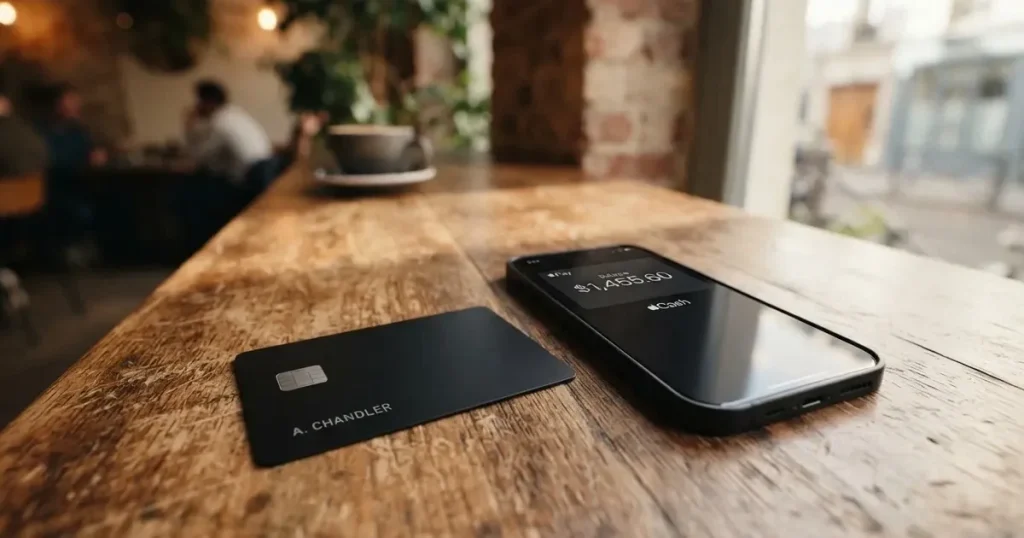
ZexoCard is not a piece of plastic you carry. It is a virtual card you add to your phone’s wallet and spend from a balance you load with crypto. That single fact explains almost everything about it — why it is cheap, why it is quick to open, why it cannot be used at an ATM, and why you should read the small print about who is actually behind it. I went through the card’s own pages and its public documents to see who it is for, what it costs in practice, and where it might let you down. My verdict: it scores 7.3 out of 10. It is a good fit for someone who wants a card number for software subscriptions and advertising spend and is happy to fund it in USDT or USDC. It is a poor fit if you need a bank card that a shop will recognise, cash from a machine, or a named issuer on the paperwork.
Conditions are current as of October 28, 2026.
Verdict: 7.3 out of 10, with two clear winners and two clear losers
The score breaks into six criteria, and the shape of it matters more than the total. Access is excellent. Cost is good. Top-up options are excellent. Reliability is the weak point. Everyday use is limited. Here is the whole picture at a glance.
| Criterion | Mark | Why |
|---|---|---|
| Who can get it | 9 / 10 | Open from anywhere outside North Korea, Iran, Syria, Cuba, Belarus, Afghanistan, Myanmar and Crimea/Donetsk/Luhansk |
| Cost | 7 / 10 | $10 issuance once, no monthly fee; Everyday charges $0.25 per transaction, Subscriptions and Campaigns none, top-up fee in the final quote |
| Top-up options | 9 / 10 | Bitcoin, Ethereum, USDT, USDC, Solana and more; pay from MetaMask, Phantom, TronLink |
| Reliability and complaints | 5 / 10 | Issuer, legal entity and licences not named, partners are licensed; no complaints found; 2FA via authenticator app |
| Everyday use | 6 / 10 | Virtual only, works with Apple Pay, Google Pay and Samsung Pay; no plastic, no ATM |
| Total | 7.3 / 10 | A capable subscription card that stays inside the crypto rails it was built for |
Who this suits: someone who needs a working card number for ad platforms, SaaS tools and recurring crypto-friendly subscriptions, who already holds USDT or USDC, and who will not be caught out by a card that a merchant’s fraud system might decline. Who it does not suit: anyone who needs a physical card, an ATM, a named European issuer on the paperwork, or a card whose country of issue matches their billing address. More on both of those in the sections below.
The audience note deserves saying plainly, because it explains the design. ZexoCard positions itself as a virtual card for subscriptions and advertising campaigns, paid with crypto. That is a narrow job, and it is the job the three card types are built around. If your life needs look like that, the card is pointed at you. If it does not, you are reading about a tool that will always be slightly out of step.
Who will they give you the card
ZexoCard opens its doors wide. Registration is by email from any location outside a list of restricted jurisdictions: North Korea, Iran, Syria, Cuba, Belarus, Afghanistan, Myanmar, and the Crimea, Donetsk and Luhansk regions of Ukraine. In those places the card says it offers no account opening, no card issuance and no loading. That is the whole exclusion list — eight countries and three Ukrainian regions.
Two details in that sentence matter more than they first look. First, the restriction is location-based. Your citizenship is not mentioned anywhere; it is where you are that the card checks. Second, the site carries a warning: do not use false location details to get around the restrictions. That is not a challenge, it is a condition of using the service, and I would treat it as one.
On the question of age, prepaid and debit cards in this category generally go to adults of 18 and over. ZexoCard itself states 18+ at registration. There are no tiers of approval, no levels of verification and no stated processing time — where the card’s pages do not say something, this review says so rather than guessing.
If you are in a country not on the list, the practical answer is: yes, you can probably register. The harder question is whether the card you get will work where you shop, and that is a different matter. A card’s BIN, the first six or eight digits of the number, tells any merchant which institution and which country issued it. Shops do look at it, and a card whose issuing country differs from the billing address you type can be declined or flagged for extra checks. This is not a ZexoCard-specific rule; it is how card payments work everywhere. But because ZexoCard does not tell you which country its partner issues from, you cannot predict it in advance.
How to get it
Getting a ZexoCard takes four steps, and the first one is the shortest. You register with an email address. You fund your wallet in crypto. You create a card. You load it. There is no application form, no document upload in the ordinary path, and no waiting period described.
The absence of routine identity-document submission is the headline fact about signup, and it is the reason the card appeals to people who have been refused an ordinary bank card. But it deserves a careful reading rather than a triumphant one. The card says no routine identity-document submission is required for standard onboarding. Routine is doing quiet work in that sentence: it implies that non-routine checks exist, that they can be triggered, and that the person who triggers them learns why only afterwards. You should also remember that the crypto exchange or wallet where you buy your USDT may well ask you for documents, and that the licensed partners behind the card may have their own requirements. ZexoCard’s light-touch onboarding does not exempt the rest of the chain.
Then there is the card itself. There are three types, all virtual, all reloadable: Everyday, Subscriptions and Campaigns. Subscriptions and Campaigns are Visa cards; the Everyday card’s network is not stated. The card currency is not stated either — amounts are shown in dollars throughout, which is not the same as saying the card is denominated in dollars. There are no tiers of card, no metal, no higher-spending product to upgrade to. Delivery does not apply: the card is virtual only, and no physical cards exist.
One thing the card does not publish is any information on processing time or the reasons a registration might be refused. If either matters to you — and if you are trying to fund the card the same afternoon — you are looking at a gap, not at a policy.
What it really costs: Fees
The headline price is friendly. Issuing any of the three cards costs $10 once. Registration is free, monthly maintenance is free, checking your balance is free, and support is free. That is already better than most cards that charge a monthly fee to hold an account open. Pricing is shaped by account groups called Free, Silver and Gold, though what each group actually buys is not set out in detail — worth asking about if you are invited up from Free.
The costs that matter are the ones you pay per payment, and here the three card types diverge sharply.
| Fee or limit | Amount |
|---|---|
| Issuance, each card | $10 one-time |
| Monthly fee | Free |
| Registration, balance checks, support | Free |
| Everyday card, per merchant transaction | $0.25 |
| Subscriptions card, per merchant transaction | No merchant transaction fee |
| Campaigns card, per merchant transaction | No merchant transaction fee |
| Funding fee | Shown in the final quote |
| Network and conversion costs | May apply |
| Foreign-exchange fee | Not stated |
| ATM | Not stated — no physical card, so no ATM |
| Purchase limit, per card | Up to $100,000 |
| Monthly limit, per calendar month, per card | Up to $500,000 |
| Daily cap | None separate from the above |
Now the everyday arithmetic. Buying a $12 design tool with the Subscriptions card costs you nothing at the merchant line, but you still fund it from crypto, so the funding fee in the final quote, any network cost of moving the token, and any conversion cost between the token and dollars are all still there. Buying with the Everyday card costs you an extra $0.25 per transaction. That fixed fee is why the card’s own marketing puts it behind subscriptions, and why the recurring small charges are the ones to route to the fee-free Subscriptions card.
Spending the whole $100,000 in a month on one card is permitted by the stated limit, and there is no separate daily cap. Treat that as a ceiling rather than a target: a card that can move very large sums is a card that, if compromised, loses very large sums.
The foreign-exchange line is the honest gap. The card does not say what it charges when you spend in a currency other than dollars, and no ATM fee is stated because there is no ATM to use. If you will be spending abroad regularly, that missing number is worth resolving before you load the balance.
How to top it up
Topping up is where ZexoCard is strongest, and the score of 9 out of 10 reflects that. You can load from Bitcoin, Ethereum, USDT, USDC, Solana and other supported cryptocurrencies — an earlier check of the card’s material also listed LTC and around 95 tokens. Where available, you can pay straight from a wallet using MetaMask, Phantom or TronLink. The sequence the card gives is deposit first, then load the card.
That last point is the practical heart of it, and it is also where beginners lose money. You must send the deposit on the network the card’s deposit instructions specify. Send it on a different network, or to an address belonging to a different network, and the transfer is gone — blockchain transfers are irreversible by design. The card cannot freeze or claw back a deposit that arrived on the wrong rail; recovery, if it happens at all, is a manual support conversation with no guarantee. Get the network right, or lose the balance.
The costs of topping up are spread across several places, and only some of them belong to ZexoCard. The card’s own funding fee is shown in the final quote rather than published as a rate. Network and conversion costs may apply. Charges for sending on the sending network are separate again, and those are set by the blockchain, not by the card. There is no fiat top-up stated, and no minimum top-up stated. For anyone who wants to know the cost of a specific deposit before making it, the quote is the only number available, so read it carefully.
The two stablecoins people actually use here — USDT and USDC — have a wrinkle worth knowing. USDC over TRC20 is not a native option: Circle stopped supporting USDC on Tron in February 2024. If you plan to hold USDC, check which networks the card expects before you buy. Also note the general warning that applies to every stablecoin, including these two: they aim to hold a steady value but are not guaranteed to. TerraUSD collapsed in May 2022 and USDC briefly lost its peg in March 2023 during the US banking crisis.
Paying with it every day
Everyday use is the score of 6 out of 10, and this is where the card’s design shows its hand. There is no plastic. There is no ATM. What there is, is the phone: add the card to Apple Pay, Google Pay or Samsung Pay on a supported device and pay by tapping. The security model of those mobile wallets is good — the card number is replaced with a device-specific number stored in the Secure Element, never on Apple’s servers, and each payment uses a one-time dynamic code — so the virtual card’s biggest weakness, that its number exists as digits somewhere, is partly answered once it’s in your phone.
One card-type detail that will save you a headache: the Everyday card does not support subscriptions or recurring payments. If you set up a monthly subscription on that card, expect it to fail. Use the Subscriptions card for anything that bills you monthly, and the Campaigns card for advertising platforms, which is what it is named for.
There is no app to download, as far as the card lists. You manage the account through a web panel and a Telegram bot. No cashback or rewards programme is described. Support lives on Telegram at @zexocard, plus an email address and a help centre and knowledge base, open seven days a week, usually replying within 24 hours. That is a generous commitment for a small operation, and it is the kind of promise worth holding them to gently.
If a payment goes wrong, the card’s guidance is: contact support with a description and the transaction reference, and approach the merchant first for problems with goods or services. It also warns that crypto transfers cannot always be reversed — that is not an inconvenience of this card, it is how the underlying network works. No chargeback process is described, and “chargeback abuse” is prohibited, so do not expect the friendly consumer protection you might get from a bank card in your country.
What can go wrong
Risk is the honest weak spot here, and the score of 5 out of 10 is where I would push a reader to think hardest.
The central problem is that the card does not name its own issuer. It describes itself as a platform connecting customers with financial and digital-asset services, with licensed external partners providing the cards, the custody and the conversion. That is a real model — many crypto cards work exactly this way — but it means the entity whose name would appear on your statement is not the entity whose name appears on the website. The registered entity and its licences are not named on the pages I read. You are being asked to trust a chain of partners you cannot inspect.
This matters because of how the category has behaved. Visa and Mastercard do not issue crypto cards to consumers themselves; they license issuers, and they can suspend a programme. Visa terminated its global agreements with FTX on 13 November 2022, and the FTX US debit card was wound down by its issuer. WaveCrest, a Visa issuer that supplied several crypto card brands, was suspended by Visa in Europe in 2018, closing all its Visa programmes. When a programme closes, the usual sequence is a notice period, then spending and loading stop, then users are asked to withdraw what remains. ZexoCard does not describe a withdrawal procedure at all, and says only that funds left on closure depend on applicable law and account circumstances. That is not a reassuring sentence to read in the week a programme dies.
Custody is the second exposure. When a provider holds your crypto, they hold the keys, and you must trust them completely — for a seed phrase, typically 12 to 24 words, anyone who has it can restore the wallet and spend the money, and no recovery exists. The history is not gentle: Mt. Gox (about US$350 million reported stolen, 2011-2014), Coincheck (about US$400 million, 2018), Ronin Network (US$625 million, 2022). The card says custody is handled by partners and does not detail it.
What the card does do well on security is two-factor authentication through an authenticator app, with a PIN as the alternative. Card details show only the last four digits until you enter the PIN. Passwords and PINs are hashed and login is rate-limited. Those are sensible defaults. Instant freeze is not described, and spending limits you control yourself are not described either, so the $100,000-a-purchase ceiling is a card-level limit, not a personal safety rail.
On complaints and reputation, I found no official incidents on the site and no Trustpilot or Reddit results for the name — but absence of complaints from a young service with a small footprint is not evidence of a clean record, only of a thin one. And in the wider category, several things can quietly block your payments: some merchants decline prepaid or foreign-issued cards because the BIN lookup reveals the type and country; address verification is mainly offered in the US, Canada and the UK and is generally unavailable for foreign-issued cards, which causes declines; gambling merchant code 7995 is blocked by many issuers as a matter of policy; and a declined authorisation can leave a hold on your funds for several days, typically up to seven.
One last thing nobody mentions enough: in the US the IRS treats digital assets as property, so exchanging them for goods or dollars generally produces a taxable gain or loss, measured in local currency at the value on the transaction date. Every card payment funded from crypto can therefore be a separate taxable disposal. I am not giving you tax advice — I am telling you that this is a real consequence you should take to a professional in your own country before you spend a large balance through a card.
What to take instead
If ZexoCard’s shape does not fit you, the alternatives below are the ones I looked at. Read the comparison the way I did: all three are also small, virtual-first products, and the honest reason none of them scores higher is the same reason ZexoCard does not score higher — thin public detail about issuers and fees.
Cardex scores 5.6 out of 10. It advertises one crypto card in 200-plus countries with no published exclusion list, though its App Store listing is Naira-focused and pays in naira. It is a debit crypto card on the VERVE, Visa, Mastercard and UnionPay networks, virtual and physical, with naira as the listing currency. Conversion happens in real time at the moment of payment, using what the site calls an AI-Powered Conversion Rate to scan global exchange rates and pick a good one; no fee percentage is published. You fund it from USDT, USDC and BTC wallets, networks not stated. Issuance and rewards are not stated.
CardFlow scores 4.9 out of 10. It aims at Nigeria — “Nigeria’s smartest fintech card platform” — and at Nigerians and global users, with no country list or exclusions given. It is a virtual USD Mastercard created quickly, free to create per its FAQ, with the monthly fee not stated, other fees not stated. You can fund it with Bitcoin, USDT, ETH or a naira bank transfer, networks not stated. Rewards not stated.
HyperCard scores 4.7 out of 10. Its official pages state no country list, and its App Store listing says the card works in more than 176 countries — which is acceptance, not eligibility, and worth not confusing. It is a prepaid card with the network not stated on the App Store page, holding a balance in USD or EUR. You deposit crypto such as USDT, BTC or ETH in the app and it is converted to dollars or euros on the card, networks not stated. No fees are listed on the pages I could read, and rewards are not stated.
| ZexoCard | Cardex | CardFlow | HyperCard | |
|---|---|---|---|---|
| Score | 7.3 / 10 | 5.6 / 10 | 4.9 / 10 | 4.7 / 10 |
| Card type | Virtual only, three types | Virtual and physical | Virtual | Prepaid, virtual |
| Networks | Subscriptions/Campaigns Visa; Everyday not stated | VERVE, Visa, Mastercard, UnionPay | Mastercard | Not stated |
| Funding | BTC, ETH, USDT, USDC, Solana and more | USDT, USDC, BTC | BTC, USDT, ETH, naira transfer | USDT, BTC, ETH in app |
| Issuance | $10 one-time | Not stated | Free | Not stated |
| Per-payment fee | $0.25 on Everyday, none on Subscriptions and Campaigns | Not stated | Not stated | Not stated |
| Licence named | No | No | No | No |
The pattern is clear and it is the real story of this corner of the market: every one of these cards is strong on access and quiet on the details you would want before trusting it with money. ZexoCard leads the group on how plainly it tells you what it charges per transaction, which is more than the others tell you at all. None of them, however, is a regulated bank you can hold to a deposit guarantee scheme. If what you actually need is the last of those things, keep looking, and if you can get an ordinary bank account, that remains the safest place for a balance you cannot afford to think about.
Who I would recommend it to
I would recommend ZexoCard to three kinds of person, and only those. First, if you are trying to pay for software subscriptions, hosting, or advertising platforms with crypto and you have found that a normal card either will not work for you or will not let you fund it that way. Second, if you are comfortable sending a deposit on a specific network and reading a quote rather than a published rate, and you understand that this is the price of the convenience. Third, if you are an adult who cannot open an ordinary card for reasons of address, documentation or banking history, and this is a genuine step up rather than a step sideways.
I would not recommend it for your rent, your salary, your savings or anything else you cannot afford to have frozen while a support conversation plays out. I would not recommend it if you plan to travel and spend in several currencies, because the foreign-exchange cost is not stated. I would not recommend it if you need cash, because there is no card in your hand and no ATM. And if you are considering it as a way to hold a balance between deposits rather than to spend, I would think twice: no withdrawal procedure is described, and the funds on closure depend on “applicable law and account circumstances”.
The card has $10 in it for you, an open door from almost anywhere, a good set of coins and networks, and a per-transaction price it actually tells you. What it does not have is a name on the paperwork, a plastic in your wallet, or a large body of evidence that it works when things go wrong. For subscriptions and ad spend, that is a trade most people would happily make. For anything else, I would keep looking.
Frequently asked questions
What is ZexoCard card?
ZexoCard is a virtual payment card you add to your phone’s wallet and spend from a balance loaded with cryptocurrency. There is no physical card and no ATM access. It comes in three reloadable types — Everyday, Subscriptions and Campaigns — the latter two on Visa. It is aimed squarely at people who want to pay software subscriptions and advertising platforms using crypto, which is why it skips routine identity-document checks.
How does ZexoCard card work?
You register by email, fund your crypto wallet, create a card, and load it. Payments are made by tapping the phone through Apple Pay, Google Pay or Samsung Pay. Because the balance is pre-loaded rather than drawn on a bank account, the card cannot overdraw. Crypto is converted into a fiat balance that the card then spends, so your risk is mostly about which network you deposit on and who holds the keys.
Is ZexoCard a bank?
No. It describes itself as a card platform connecting customers with financial and digital-asset services, with licensed external partners providing the cards, custody and conversion. The registered entity, its issuer and its licences are not named on the pages I read, so it is not a bank and it is not a deposit-taking institution you can hold to a bank’s protections.
Does ZexoCard require KYC?
The card says no routine identity-document submission is required for standard onboarding, and registration is by email with an age requirement of 18+. “Routine” leaves room for checks that are triggered, and the exchange or wallet where you buy your crypto may well ask you for documents. Treat the light-touch signup as the front door, not a promise that nothing further will ever be asked.
What are the ZexoCard fees?
Issuance is $10 once per card, and registration, monthly maintenance, balance checks and support are free. The Everyday card charges $0.25 per merchant transaction; Subscriptions and Campaigns charge no merchant transaction fee. The funding fee is shown in the final quote, and network and conversion costs may apply. The foreign-exchange fee is not stated.
How do I top up ZexoCard card?
You deposit crypto — Bitcoin, Ethereum, USDT, USDC, Solana and others — and then load the card. You can pay from MetaMask, Phantom or TronLink where available. The critical step is sending on the network the deposit instructions specify: a transfer on the wrong network is irreversible and may simply be lost.
Is ZexoCard card free?
Not quite. Opening the account is free, and holding it is free, but creating a card costs $10. After that, the Everyday card takes $0.25 on every merchant payment, while the Subscriptions and Campaigns cards take no merchant transaction fee. Top-up costs appear in the final quote at the time you deposit.
Can I use ZexoCard in my country?
Probably, if you are not in North Korea, Iran, Syria, Cuba, Belarus, Afghanistan, Myanmar, or the Crimea, Donetsk and Luhansk regions of Ukraine, where the card offers no opening, issuance or loading. The restriction is on where you are, not your citizenship. Whether the card then works at a particular shop is separate, and depends on how the merchant’s systems read a foreign or prepaid BIN.
How do I add ZexoCard to Apple Wallet?
You create the card in your ZexoCard account and add it to Apple Pay on a supported device, then pay by tapping the phone. The same applies for Google Pay and Samsung Pay. Note that the Everyday card does not support subscriptions or recurring payments, so use the Subscriptions card for anything that bills you monthly.
Is ZexoCard card safe?
It uses sensible defaults — two-factor authentication through an authenticator app, a PIN fallback, card details hidden behind that PIN, hashed passwords and rate-limited login. But the issuer and legal entity are not named, custody sits with unnamed partners, no withdrawal procedure is described, and crypto transfers cannot be reversed. I found no complaints on Trustpilot or Reddit, which for a small service means a thin record, not a clean one.
Virtual cards put to the test – cryptocardtested
Content created by the «cryptocardtested» team