
French residents, bitcoin savings, one Visa debit card
 Available in US

The Bitstack card is a physical Visa Classic debit card that draws on the euro balance sitting in your Bitstack cash account. You fund it by selling bitcoin in the Bitstack app, then spend euros like you would from any bank account — with a cash-back paid in bitcoin once the purchase settles. On paper that is a tidy arrangement for one specific person: a resident of France who already saves in bitcoin and wants to spend it in euros without touching an exchange every time. That is who the card is built for, and largely the only person it is currently built to serve.
The conditions described below are current as of October 28, 2026.
My overall score is 5.5 out of 10 — not because the card is badly run, but because it solves a narrow problem very cleanly and leaves most other questions (other coins, other networks, other countries) on the table.
Verdict: 5.5 / 10, and the reason is eligibility
If you are a French resident holding bitcoin, this card does one job cleanly: it turns bitcoin into spendable euros and gives a small bitcoin reward back on what you spend. No monthly subscription, free currency exchange on the first 1,000 EUR a month, and a regulated French company behind it with a real banking partner. That is more than most crypto cards bother with.
If you are anywhere else, or you hold anything other than bitcoin, this is not your card. It is offered exclusively to residents of France, the rollout is gradual, and other EU countries are on a waitlist. The top-up story is also narrow: you fund it by selling bitcoin in the app. Other coins and networks are not named.
Here is the score broken down, criterion by criterion.
| Criterion | Mark | Why |
|---|---|---|
| Who can get it | 2 / 10 | France only (including overseas territories); gradual rollout, other EU countries on a waitlist |
| Cost | 8 / 10 | Card 9,99 EUR plus delivery, no monthly subscription; FX free on first 1,000 EUR/month; ATM free to 200 EUR or 5 withdrawals; Apple Pay / Google Pay top-up 0,70 % |
| Top-up options | 3 / 10 | Card spends euros from the Bitstack cash account; bitcoin sold in the app; other coins and networks not named |
| Reliability and complaints | 9 / 10 | Bitstack Digital Assets SAS, AMF registration A2025-003, agent of Xpollens (ACPR-supervised e-money institution); card issued by BPCE; Trustpilot 4.3/5 from 1,417 reviews, complaints typical: timing |
| Everyday use | 5 / 10 | Physical Visa Classic, Apple Pay from 30 June 2026, ATMs; Google Pay in development, virtual card planned |
| Total | 5.5 / 10 |
Two things lift this above the crypto-card average. The company behind it is a registered French crypto-asset service provider (AMF no. A2025-003) acting as an agent of Xpollens, an electronic money institution supervised by ACPR, and the card itself is issued by BPCE. That is a regulated chain, not a shell. And the everyday costs are honest: no monthly fee, free FX inside a sensible monthly allowance, free small ATM withdrawals.
Two things hold it down. Eligibility is essentially limited to one country, and top-up is essentially limited to one coin. This is a card for French bitcoin holders — a real group, but a narrow one.
Who will they give you the card?
France only. The card is described as “available exclusively to residents of France,” and that includes France’s overseas territories. Access is based on residence, not citizenship. The rollout is gradual: the order option appears in the Cash tab once your account qualifies, so even in France you may not be able to order on day one. Other EU countries are on a waitlist.
So if you are reading this in Germany, Spain, Italy, or anywhere outside France, the short answer is: not yet. If you are a French resident anywhere in France, including the overseas territories, you are in the intended audience. If you moved to France and now live there, residence is what the card measures.
That is the whole eligibility story. The card’s public pages do not state which documents are required for the identity check, what proof of address or age is needed, or whether limits differ by verification level — those details are not stated. What you will find on the official pages is the order flow itself; the verification story comes mostly from how users describe their experience.
How to get it
Getting the card is done inside the app. In the Cash tab you choose to order the card, pick a PIN, enter your delivery address, check the total (the card at EUR 9.99 plus a delivery fee), and pay — from your Bitstack cash account, by bank card, Apple Pay, or Google Pay.
What you get is a physical Visa Classic debit card that spends your Bitstack cash balance. A virtual card is planned but not yet available. Whether a metal version exists is not stated. The card currency is euros.
The card’s public pages do not state which documents you’ll need for identity verification, whether there’s a proof of address, or an age requirement — none of that is listed officially. What people report is more informative: in July 2026 a Trustpilot user described a slow identity check that ended in rejection. Bitstack replied that decisions follow regulatory requirements and that specifics are not shared publicly. So expect verification to be a real gate, and expect it to be a gate whose workings are not on the page.
Fees: what it really costs
The cost picture is one of this card’s real strengths. There is no monthly subscription, currency exchange is free within a monthly allowance, and small ATM withdrawals are free. The one genuine friction is the card purchase price itself plus delivery, and — if you fund with Apple Pay or Google Pay — a small top-up fee.
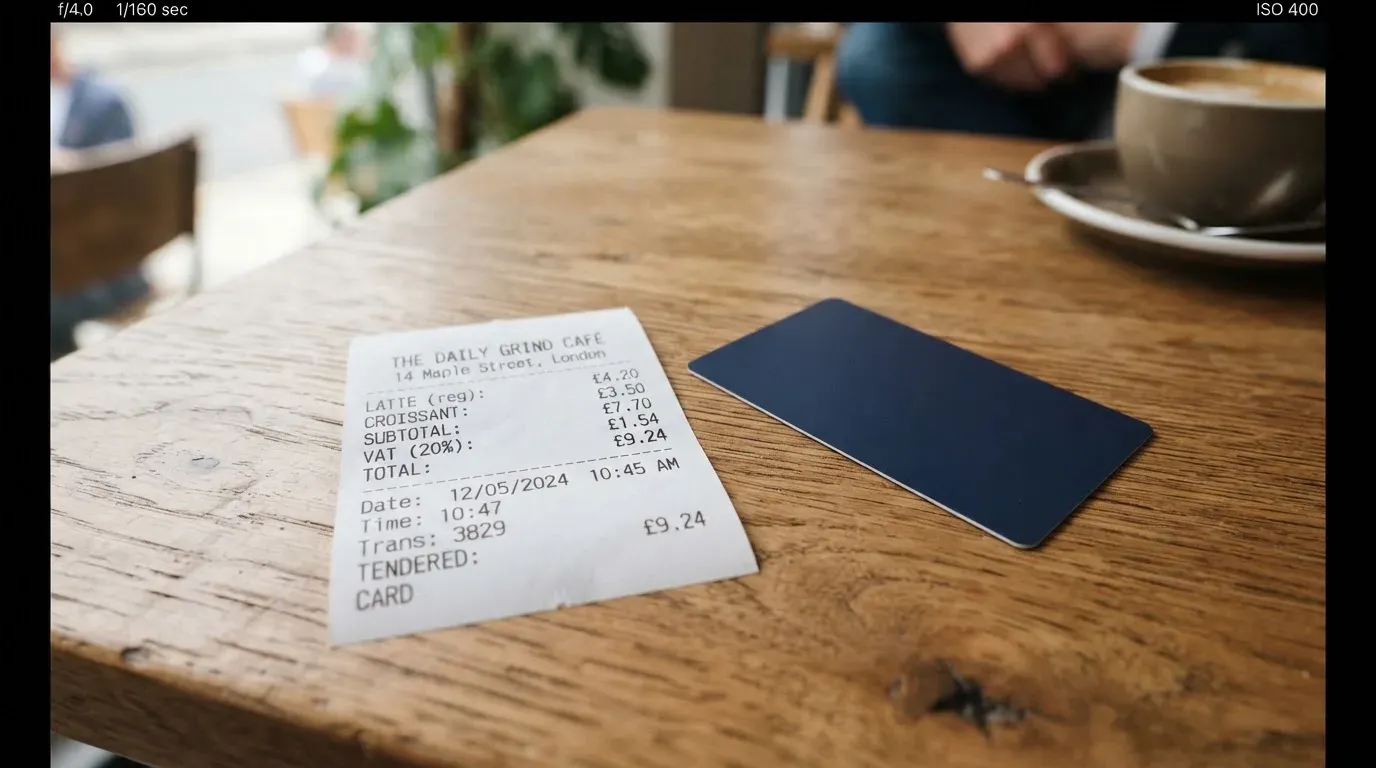
Here is every fee and limit the card publishes.
| Fee or limit | Value |
|---|---|
| Card purchase | EUR 9.99 (help article) plus a variable delivery fee; pricing page shows Standard at EUR 14.97 or 14.98 with delivery included |
| Monthly subscription | None — “The Bitstack card has no monthly subscription” |
| Plus monthly plan | EUR 9.99/month, free shipping |
| Plus annual plan | Includes card and delivery at no extra cost |
| FX fee | First 1,000 EUR/month of foreign-currency spend free; above that about 1% on the excess, at the Visa rate at the time of transaction |
| Card top-up via Apple Pay / Google Pay | 0.70 % on all plans |
| Bitcoin purchase fee (Standard) | 1.5% under EUR 250; 1.25% from EUR 250 to 1,000; 1% over EUR 1,000 |
| Bitcoin purchase fee (Plus) | 0.75% flat |
| Bitcoin purchase not funded from cash account | Extra 0.70% (Plus treatment inconsistent on the page) |
| ATM withdrawal | Free up to EUR 200/month or 5 withdrawals, whichever first; beyond that the higher of EUR 1 or 1% per withdrawal (France and abroad); third-party ATM operators may charge their own fees, shown before confirming |
| Card payment cap | EUR 5,000/month |
| ATM limits | EUR 200/week, EUR 1,000/month total |
| International payment cap (pricing page) | EUR 1,000/month Standard; EUR 3,000/month Plus |
| Other limits | No daily limits and no per-KYC-level limits listed; limits “cannot be changed” |
Two pages disagree slightly: the help article quotes EUR 9.99 for the card plus delivery, while the pricing page shows Standard at EUR 14.97 or 14.98 with delivery included. Plus is quoted at EUR 9.99/month with free shipping, and the Plus annual plan folds the card and delivery in at no extra cost. The pages are internally inconsistent on price; treat the pricing page as the more complete picture but expect the final figure at checkout to be what you are actually charged.
There are two plans. Standard and Plus. Plus raises the international payment cap (EUR 3,000/month vs 1,000), raises Stackback (up to 1.5% vs 1%), and lowers the bitcoin purchase fee (0.75% flat). The card works on both.
Now the everyday question: what does a payment actually cost? Walk through a few ordinary situations.
A EUR 30 grocery shop in France, paid by card, in euros, from the cash account: you pay EUR 30. No conversion, no fee. That is the case this card is best at.
A EUR 30 online subscription priced in dollars. It falls inside the 1,000 EUR/month free allowance, so no extra FX fee — you pay EUR 30 equivalent at the Visa rate. Once your foreign-currency spending crosses 1,000 EUR in a month, roughly 1% applies on the excess, on top of the Visa rate.
A EUR 40 cash withdrawal from a bank ATM. Inside the allowance (up to EUR 200/month or 5 withdrawals), it is free. Beyond that, you pay the higher of EUR 1 or 1% per withdrawal, and a third-party ATM operator may add its own fee, which the app shows before you confirm.
A EUR 50 purchase where you top up via Apple Pay first: you pay 0.70% on the top-up, on top of any bitcoin purchase fee if you are converting. That 0.70% is the quiet cost of funding by card rather than from an existing balance.
Top up: how the card gets euros
The card spends euros that sit in your Bitstack cash account. It is a debit card with no overdraft — it draws down a stored balance, it does not go negative. The way you fill that balance, per the card, is by selling bitcoin in the app. The card converts your crypto to euros and the euros become spendable.
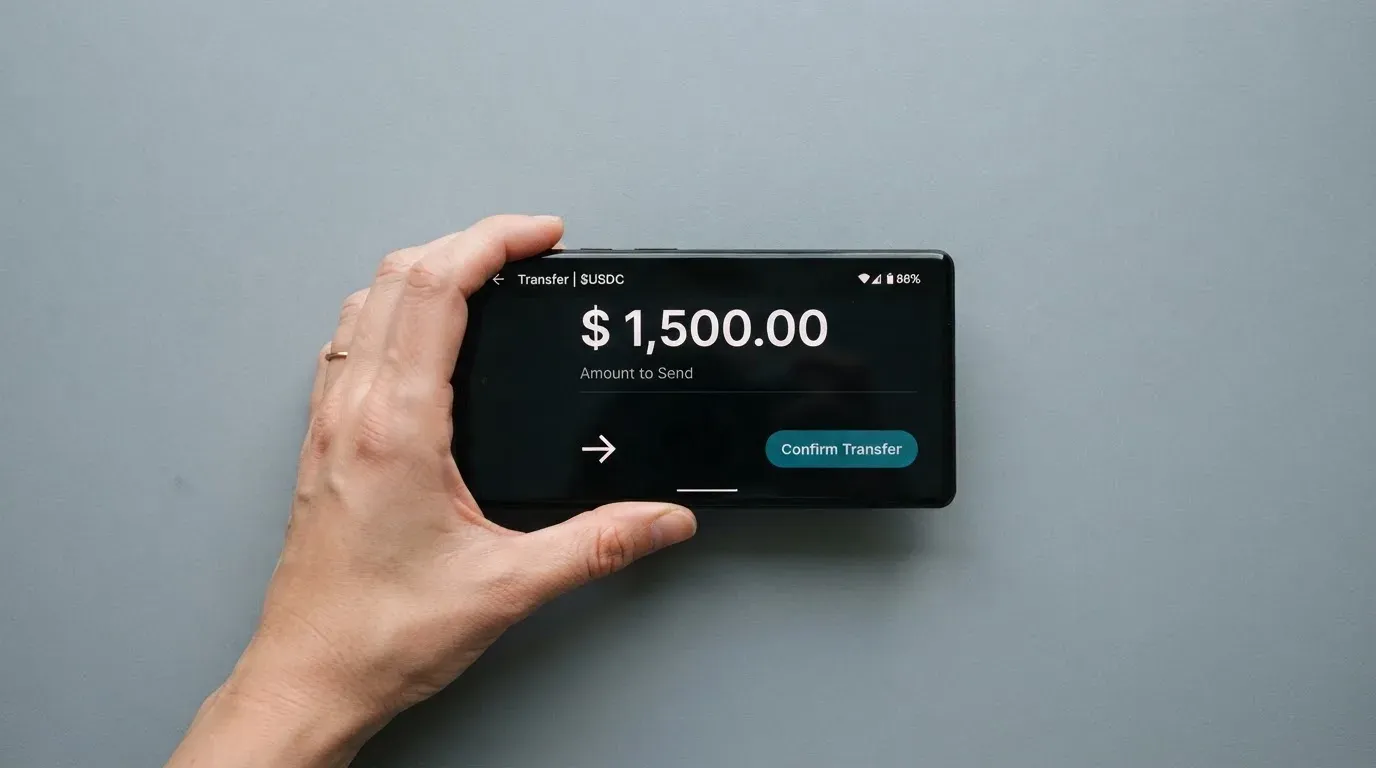
So the top-up flow that the card documents is: sell bitcoin → euros land in the cash account → the Visa card spends those euros. Deposit of coins or networks directly is not stated on the card pages. Which coins besides bitcoin you can sell, and on what networks, is not stated either. That is the honest shape of it: this is a bitcoin-to-euro spending card, not a multi-asset wallet card.
If you would rather not sell at the moment of spending, you can hold euros in the cash account and spend them any time. Two costs to watch: funding by card via Apple Pay or Google Pay carries a 0.70% fee on all plans, and a bitcoin purchase not funded from the cash account carries an extra 0.70% (the Plus treatment of this is inconsistent on the page). The minimum top-up amount and who pays network fees are not stated on the card pages.
One more thing people ask about: getting money back off the card. The card pages do not state withdrawal details. Trustpilot users mention bank-transfer withdrawals arranged through support; no fee or rule about the balance at closure was found. If cashing out matters to you, ask support before you commit.
Paying with it every day
In the hand it is a Visa Classic debit card, so it works wherever Visa is accepted, in stores and online. You can add it to Apple Pay — that has been available since 30 June 2026 (app v3.10.0). Google Pay is “in development, not yet available.” Whether any merchant categories are blocked for spending is not stated.
The reward is called Stackback, and it is paid in bitcoin once a purchase fully settles. The base rate without activation is Standard 0.1% and Plus 0.15%, with a minimum of 1 satoshi. Boost it with automatic savings (recurring buys or round-ups) and Stackback rises to as much as Standard 1% or Plus 1.5%, capped by the previous month’s savings volume, then falling back to the base rate. Some spending does not earn: peer-to-peer transfers and top-ups, ATM withdrawals, gambling and cash equivalents, loan repayments, government payments, and some securities purchases. From 10 August 2026, round-ups count toward the Stackback tier.
The app is well rated on the French iOS App Store: 4.79 from 11,152 ratings (read 2026-10-21). The Google Play rating was not read.
If something goes wrong with a payment, the dispute path is laid out. You can optionally freeze the card in the app first. Then a formal opposition by phone at +33 9 69 32 00 61 (you state the card was issued by BPCE), then a call to +33 9 69 39 03 49 to open a contestation case, handled by BPCE. The time frame is 13 months from the date the payment settled.
What can go wrong
The honest risks, in order of how likely they are to matter to you.
Identity verification that rejects you. This is the most reported frustration. A July 2026 user described slow verification ending in rejection with no explanation; Bitstack said decisions follow regulatory requirements and specifics are not shared. The card’s pages do not state the documents required, so you are applying somewhat blind.
Timing and support delays. July 2026 reports mention slow withdrawals and slow support responses; June 2026 reports mention card delivery delays. Nothing here is scandalous — it is the ordinary friction of a young company scaling a new product — but if you are in a hurry, know that the complaints cluster around waiting.
Limits that are fixed and lowish. Card payments cap at EUR 5,000/month; ATM withdrawals at EUR 200/week and EUR 1,000/month. The limits “cannot be changed,” and no per-KYC-level tiers are listed. If you need to spend more in a month, this card will not flex.
Some merchants and some apps. June 2026 user reports mention low limits and Apple Pay not working at some merchants. This is the classic crypto-card friction: a card issued in France can look foreign to a shop elsewhere, and some services decline foreign or prepaid BINs outright.
The company behind it. The good news: Bitstack Digital Assets SAS is a real, registered French company — trade register no. 899 125 090, office in Meyreuil — licensed as an agent of Xpollens (an electronic money institution authorised by ACPR) and AMF-registered as a crypto-asset service provider (no. A2025-003). The card is issued by BPCE. So the custody and e-money side runs on regulated French infrastructure, not offshore.
The trade-off: the account is custodial. Bitstack holds your credentials, so you are trusting the provider with your funds, and there is no built-in insurance. Transfers are typically irreversible, and a stolen key has no recovery. Funds are held via regulated payment infrastructure (the Xpollens e-money partner), which is reassuring, but e-money balances are not the same as insured bank deposits. Official incidents at Bitstack: none found. The complaints are about timing and verification, not about missing money.
One more thing that is simply not stated: on-chain network fees for your deposit are charged by the blockchain, not by the card provider, and who pays them is not spelled out on the card pages.
What to take instead
Three alternatives from the same shortlist, compared side by side. None of them is a like-for-like substitute — they all widen what the Bitstack card does not do.
| International Visa Card | UNi Card | Whop Cards | |
|---|---|---|---|
| Score | 6.7 / 10 | 6.1 / 10 | 5.2 / 10 |
| Who can get it | Not residents of a long exclusion list (Belarus, mainland China, North Korea, Cuba, India, Iraq, Iran, Israel, Myanmar, Nepal, Nicaragua, Russia, Syria, Turkey, Ukraine, Venezuela, Vietnam); FATF grey-list reviewed case by case. By residence/registration, not citizenship | Not stated | Consumers: 31 US states; businesses: 41 states. Unsupported: Belarus, mainland China, Cuba, Hong Kong, India, Iran, Iraq, Israel, Myanmar, Nepal, Nicaragua, North Korea, Russia, Syria, Turkey, Ukraine, Venezuela, Vietnam |
| Card | U.S.-issued Platinum Visa, virtual (physical “coming soon”); pays in USD | Multicurrency on Mastercard network; spends from the UNi.Global balance | Visa, works anywhere Visa is accepted |
| Cost | $5 issuance, no maintenance; plans Classic free / Pro $9.00 / Max $19.00 per month | No annual fee; issuance not stated | “No extra fees”; no amounts listed |
| Fees | USD use free; foreign currency at “Visa exchange rate + 2% FX fee”; deposits free | No annual or foreign transaction fee; converted at live OTC rates, “no hidden exchange fees” | Not stated |
| Top-up | USDC or USDT into the USD account at 1:1 (networks not stated); also USD, EUR, SEPA, SWIFT, FedNow | Not stated | Spends from a Whop balance; backed by stablecoin collateral from a linked wallet; coins/networks not stated |
| Rewards | No cashback stated | Spend-to-Earn up to 3% | 5% cashback at select merchants (Uber currently) |
Read across the rows and the trade-offs become clear.
The International Visa Card is the broadest on geography — it excludes a list of countries but welcomes most of the world — and the most flexible on funding, since you deposit USDC or USDT. But it charges a 2% FX fee and is virtual-only for now, and its plans go up to $19/month. It scores highest of the four at 6.7.
UNi Card is the cleanest on fees: no annual fee, no foreign transaction fee, converted at live rates, and up to 3% spend-to-earn. But its eligibility and top-up are not stated, so you cannot fully judge it from the public pages. It scores 6.1.
Whop Cards is the odd one out — a balance-funded Visa for a specific set of US states, with 5% cashback at select merchants. Coins and networks are not stated. It scores 5.2.
Against all three, Bitstack (5.5) is the most Bitcoin-native and the most regionally narrow. If your problem is “spend euros in France from bitcoin,” Bitstack is the only one of these that does it. If your problem is “spend a stablecoin from anywhere,” the International Visa Card is the more direct answer.
Who I would recommend it to
I would recommend this card to a specific person: someone living in France, including the overseas territories, who holds bitcoin, wants to spend euros day to day without constantly converting, and is comfortable leaving their balance in a custodial French account to get a Visa card and a small bitcoin reward back on spending. For that person it is a genuinely good deal — no monthly fee, free FX inside a sensible allowance, free small ATM withdrawals, Apple Pay, and a regulated French operator behind it.
I would not recommend it to several other people, and it is worth being blunt about who they are. If you are not a French resident, this is not your card yet — other EU countries are on a waitlist. If you hold anything other than bitcoin and want to deposit coins directly, the card pages do not say that is supported. If you need to spend more than 5,000 EUR a month or move large sums through ATMs, the fixed limits will block you. If you want a virtual card, Google Pay, or a metal card today, none of those are available yet. And if you need to withdraw funds frequently, check the withdrawal terms with support first, because they are not stated on the card pages.
One last piece of background that shapes how I read all of this. A crypto card is not one thing but a stack: a card network (Visa or Mastercard) routes the payment, a licensed issuer holds the card programme, and the crypto brand is often just the front end. Behind Bitstack that stack is real — an e-money institution (Xpollens) supervised by ACPR, an issuer (BPCE), and a French crypto-asset service provider registered with the AMF (A2025-003). In the EU, e-money tokens can only be issued by a credit institution or an e-money institution, and MiCA — the EU’s crypto regulation — took effect for stablecoin rules in June 2024 and for the rest, including crypto-asset service providers, in December 2024. So a card like this rests on two licences at once: one for the payment side and one for the crypto side.
The safety rules for crypto cards in general also matter to your expectations. Most crypto cards behave like prepaid cards: crypto is converted and loaded as a fiat balance, so the card draws on a stored balance rather than an overdraft. That is exactly what Bitstack’s cash account is. When you pay online, 3-D Secure adds an identity step, and some merchants decline foreign-issued or prepaid cards because the BIN lookup reveals the issuer country. That is not a Bitstack bug; it is the category. But it explains the “works at some merchants, not others” complaints.
And the honest caution: custodial means trusting the provider. Transfers are typically irreversible, a stolen key has no recovery path, and the platforms that have lost the most — Mt. Gox, Coincheck, Ronin — are a reminder of what custody can cost. Bitstack’s funds sit with regulated French infrastructure and there are no known incidents at the company, but e-money balances are not the same as insured bank deposits, and there is no built-in insurance on this card.
Frequently asked questions
What is the Bitstack card?
It is a physical Visa Classic debit card that spends euros from your Bitstack cash account. You fund that balance by selling bitcoin in the app, then use the card like an ordinary Visa debit — in stores, online, and at ATMs — and earn a small bitcoin reward called Stackback on settled purchases. It is offered exclusively to residents of France, including the overseas territories.
How does the Bitstack card work?
The card draws on a euro balance held in your Bitstack cash account, with no overdraft. In the app you sell bitcoin to convert crypto into euros; those euros become spendable by the card. You can also hold euros in the balance and spend them later. It behaves like a prepaid card rather than a bank debit linked to an account, so it cannot go negative.
Is Bitstack a bank?
No — Bitstack is a French crypto company, not a bank. The company is Bitstack Digital Assets SAS, registered in Aix-en-Provence (trade register no. 899 125 090), licensed as an agent of Xpollens, an electronic money institution authorised by ACPR, and registered with the AMF as a crypto-asset service provider (no. A2025-003). The card itself is issued by BPCE. So it runs on regulated e-money and banking rails, but the account is not a bank deposit.
Who owns Bitstack?
Bitstack is a French company registered as Bitstack Digital Assets SAS, with an office in Meyreuil, France. It is not a branch of a large international exchange — it is its own company, regulated on the French and EU side (ACPR-supervised e-money agency, AMF-registered crypto-asset provider), and it partners with Xpollens for e-money and with BPCE for issuing the card.
Is the Bitstack card available in my country?
Only in France, including the overseas territories, and only for residents there — the card is “available exclusively to residents of France.” The rollout is gradual: the order option appears in the Cash tab once your account qualifies. Other EU countries are on a waitlist based on starting data. If you are not a French resident, you cannot order it today.
How do I get the Bitstack card?
Inside the app: open the Cash tab, choose to order the card, pick a PIN, enter your delivery address, check the total (EUR 9.99 for the card plus a variable delivery fee), and pay from your cash account, a bank card, Apple Pay, or Google Pay. The card’s public pages do not state which identity documents are required, so expect a verification step whose details are not published.
Does the Bitstack card require KYC?
Identity verification is a real step, but the specifics are not stated on the official pages — no list of documents, proof of address, or age requirement is published. Users report slow checks that sometimes end in rejection; in July 2026 a Trustpilot user described exactly that, and Bitstack replied that decisions follow regulatory requirements and specifics are not shared publicly. Treat the verification as a genuine gate, not a formality.
How much does the Bitstack card cost to open?
The help article quotes EUR 9.99 for the card plus a variable delivery fee, while the pricing page shows Standard at EUR 14.97 or 14.98 with delivery included — the pages are internally inconsistent. There is no monthly subscription on the card itself. The Plus plan is EUR 9.99/month with free shipping, and the Plus annual plan includes the card and delivery at no extra cost. Check the checkout total for the figure actually charged.
What fees do I pay when I spend?
Spending euros in France costs nothing extra. Foreign-currency spending is free up to 1,000 EUR per month; above that about 1% applies on the excess, on top of the Visa rate. ATM withdrawals are free up to EUR 200 per month or five withdrawals, then the higher of EUR 1 or 1% each, plus any fee a third-party ATM operator charges. Funding by card via Apple Pay or Google Pay costs 0.70%.
Can I use the Bitstack card with Apple Pay and Google Pay?
Apple Pay yes — it has been available since 30 June 2026, in app version 3.10.0. Google Pay is described as “in development, not yet available,” so you cannot add the card to Google Pay today. A virtual card is also planned but not yet offered. Some users report Apple Pay not working at certain merchants, which is a common friction for foreign-issued and prepaid cards generally.
How do I top up the Bitstack card?
The card spends euros from your Bitstack cash account, and the documented way to fill that balance is to sell bitcoin in the app. Depositing coins or choosing networks directly is not stated on the card pages, and neither are the minimum top-up amount or who pays network fees. Funding the top-up itself by card via Apple Pay or Google Pay carries a 0.70% fee, and a bitcoin purchase not funded from the cash account adds another 0.70%.
What are the Bitstack card’s limits?
Card payments are capped at EUR 5,000 per month. ATM withdrawals are limited to EUR 200 per week and EUR 1,000 per month in total. The pricing page separately shows international payment caps of EUR 1,000 per month on Standard and EUR 3,000 on Plus. The card states its limits cannot be changed, and no daily limits or per-KYC-level tiers are listed.
Is the Bitstack card safe?
The company behind it is a registered French crypto-asset service provider (AMF no. A2025-003) acting as an agent of Xpollens, an ACPR-supervised e-money institution, and the card is issued by BPCE — so the e-money and payment side sits on regulated French infrastructure, with no known official incidents at the company. But the account is custodial: Bitstack holds the keys, transfers are typically irreversible, and there is no built-in insurance. E-money balances are not the same as insured bank deposits.
How do I withdraw money or delete my account?
Withdrawal details are not stated on the card pages. Trustpilot users mention arranging bank-transfer withdrawals through support, and no fee or rule about the balance left at closure was found. If cashing out matters to you, ask support directly before you commit. For deleting an account there is a contact page and support channels, but the specific process is not laid out on the pages I reviewed.
App and neobank cards put to the test – cryptocardtested
Content created by the «cryptocardtested» team