
Bitwala card review for anyone weighing a crypto-linked euro account
 Available in US
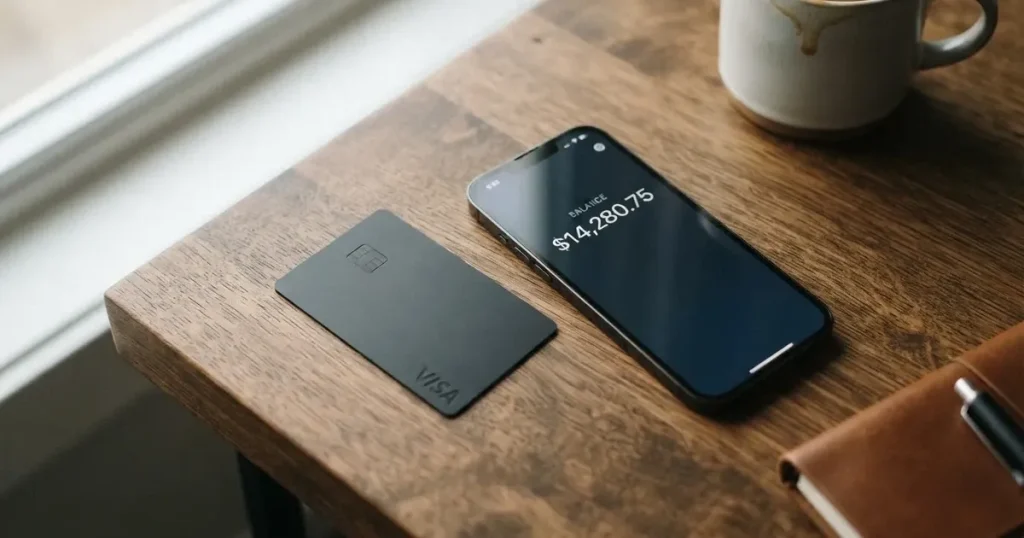
The Bitwala card sits in an unusual corner of the market. It is a Visa debit tied to a euro account, the balance of which you can top up from Bitcoin, Ether, USDC or euros. If that combination sounds useful, the rest of this review walks through who can actually get one, what it costs day to day, and what the recent history of the brand tells you about the risk you would be taking on. If the combination does not sound useful, the short version is that this card is built for people who live in the EEA, already want euros in a German IBAN, and treat the crypto link as a convenience rather than a reason to sign up.
The conditions described here are current as of October 28, 2026.
Verdict
Bitwala earns 6.1 out of 10 in this review. That score is not a verdict on whether the product is bad; it reflects a card that does a small number of things competently, refuses to compete on breadth, and carries a corporate history that any prospective customer should read before signing up. The cost of using the card is reasonable: the account and the subscription are free, payments in euros are free, and the crypto conversion fee is published and modest. Where the card loses marks is in availability (EEA-only), in the lack of detail on the public page (issuer, FX, networks, support hours), and in the company’s recent past, which a reader should not have to discover after they have already moved money in.
| Criterion | Mark | Why it matters |
|---|---|---|
| Who can get it | 5 / 10 | Verified account and EEA residency required; details on documents not published |
| Cost | 7 / 10 | Free account, free euro payments; crypto payments €0.20 + 1%; ATM €2 + 1% |
| Top-up options | 6 / 10 | BTC, ETH, USDC, and euros; conversion happens in-app; networks not stated |
| Reliability and complaints | 5 / 10 | German company, IBAN via Solarisbank; card issuer not named; 2022 insolvency and 2022 complaint patterns |
| Everyday use | 8 / 10 | Visa debit in virtual and physical form; Google Pay works; Apple Pay via Curve |
The card suits EEA residents who want a crypto-linked euro account with a Visa debit. It does not suit non-EEA residents, people who need a published FX rate and FX fee up front, or anyone uncomfortable holding funds with a brand that has already been through one wind-down.
Who they will give the card to
Bitwala’s own page says the card is available to “anyone with a verified Bitwala account and residency in the EEA.” That sentence is the entire eligibility rule, and it is also the first place a reader outside the EEA has to stop. The rule is by residence, not by citizenship, so the country on your proof of address is what counts. A US citizen living in Berlin qualifies on the address; a German citizen living in Dubai does not.
The verification piece refers to a standard KYC process that the public page describes only as “instant” registration. The specific documents, the proof of address, the minimum age, and any tiered limits are not stated on the card page. Given that the euro account is provided through Solarisbank, a licensed German bank, the underlying checks are likely to be the usual EU customer due diligence: identity document, address confirmation, date of birth, nationality, a sanctions screen, and a politically exposed person check. The card page simply does not publish that detail. If you want to know what you will be asked to upload before you start, you have to begin the sign-up.
What this means in practice: if you live in the EEA, expect a normal EU onboarding flow and a Visa debit on the other side. If you live anywhere else, do not waste time applying, because the residence requirement is structural, not a per-country setting. The single piece of eligibility that is spelled out — EEA residency plus a verified account — is also the only piece you can rely on without contacting support.
How to get it
The card is a Visa debit in two forms: virtual and physical. The euro account is what you open first, and the card is provisioned against that account. Registration is described as instant, which in practice means the app lets you create an account quickly, after which the verification step runs in the background. The card becomes available once that verification clears.
A physical card costs €9.99 one-time, plus shipping. The virtual card costs €0.99 one-time. Countries where the physical card is delivered, and the delivery time, are not stated on the public page. The card currency is not published either, though the account is in euros, so the card is effectively a euro card. If you lose the card, the app lets you freeze it; a replacement can be ordered, but the price for a replacement is not stated.
A reader weighing this against other cards should note that the issuance pricing is transparent, the ordering path is straightforward, and the gap left by the missing details is operational rather than structural. You will not be surprised by a monthly fee or a maintenance charge, because the public page is clear that there are none. You may be surprised, however, by how little the page tells you about what happens after the card lands in your hand.
Fees: what it really costs
The cost story is the cleanest part of the Bitwala offer. The account is free. There is no monthly subscription. Payments in euros are free. The crypto payments fee is published: €0.20 plus 1% per transaction, which is the rate you pay each time you spend from a crypto balance that has just been converted to euros at the point of sale. The ATM fee is €2 plus 1%, and there is no free allowance stated.
| Fee or limit | What Bitwala charges |
|---|---|
| Account | Free |
| Monthly subscription | None |
| Virtual card | €0.99 one-time |
| Physical card | €9.99 one-time + shipping |
| Euro payments | Free |
| Crypto payments | €0.20 + 1% per transaction |
| Foreign exchange | Not stated separately |
| ATM withdrawal | €2 + 1% |
| ATM free allowance | Not stated |
| Daily and monthly limits | Amounts not published; limits can be set in the app |
The line that requires the most attention is the FX fee, or rather its absence from the public page. The card is a euro card tied to a euro account, so spending in euros is straightforward. Spending in a currency other than euros goes through Visa’s exchange rate, and what Bitwala adds on top of that rate is not stated. For a card that may be carried abroad, that gap is worth raising with support before you rely on it.
Three everyday situations, worked out from the published fees:
- A €40 grocery shop paid from a euro balance: zero in card fees, because euro payments are free. The only cost is the price of the goods.
- A €40 grocery shop paid from a Bitcoin balance that converts to euros at the till: €0.20 + 1% of €40 = €0.60, on top of any difference between the Bitcoin price at conversion and the price you originally paid for it. The 1% is the conversion fee, not a market spread.
- A €100 ATM withdrawal in a country that uses euros: €2 + 1% of €100 = €3. The 1% applies to the euro amount, and there is no free allowance, so the fee is the same whether it is your first or your tenth withdrawal of the month.
The clean way to use this card, on the fees the page actually publishes, is to keep a euro balance topped up from crypto when the rate works in your favour, and to spend from that euro balance. The expensive way to use it is to let the card convert crypto to euros at the point of sale every time, because the €0.20 + 1% compounds with the spread between the conversion rate and the rate you would have got in the app.
How to top it up
Top-up is what makes Bitwala different from a plain euro debit. The assets listed on the card page are Bitcoin, Ether, USDC and euros. Crypto is swapped to euros in the app, so by the time the money reaches the card balance it is in euros and the conversion has already happened. The networks the provider supports for each crypto asset are not stated on the public page.
For a reader who has used other crypto cards, that last gap matters more than it sounds. Different stablecoins live on different networks, and a transfer sent on the wrong network can be lost or stranded. The page does not tell you whether USDC arrives on Ethereum, on a layer-2, or on another chain. A USDC transfer from a wallet that defaults to a different network from what Bitwala expects is the kind of mistake that costs the full amount, because blockchain transfers are irreversible. The same caveat applies to Bitcoin and Ether: the page does not say which network counts as a valid deposit, and a deposit to an unsupported address is unlikely to be recoverable by support.
What the page does say is that the home page mentions SEPA funding without fees, which gives you a euro top-up path that does not depend on crypto networks at all. That path is the one to use if you want to side-step the missing network information. The crypto top-up is the one to use only after you have confirmed, in the app or with support, which network your deposit address belongs to.
Withdrawal of euros is not described in detail on the card page. The only public date is from the 2022 wind-down, when customers were told to withdraw by 18 December 2022. The current withdrawal process for a live account is not stated.
Paying with it every day
In daily use, the card behaves like a standard Visa debit. It works online and in shops wherever Visa is accepted. Google Pay is listed as supported. Apple Pay is listed as available “if you sign up with Curve,” which means the Apple Pay path is not native but goes through a third-party wrapper card. Whether that is acceptable depends on whether you already use Curve and whether the extra hop introduces issues at the till.
Blocked merchant categories are not stated. Rewards are not stated. The dispute and chargeback process is not stated. The mobile app’s full feature set is not stated either, though the bits that are confirmed include the ability to freeze and unfreeze the card and to set spending limits. For someone who treats a payment card as a payment card, that is enough to function. For someone who is choosing between cards on the strength of category-level controls or a published rewards rate, this card does not give you anything to compare against.
The combination of a euro account, a Visa debit, and an in-app freeze is the working baseline. The published details end there, so the everyday experience is one where the basics are in place and the polish (rewards, categories, dispute flow) is not advertised.
What can go wrong
The risk picture has two layers: the company that runs the card, and the wider pattern of crypto card programmes.
On the company side, Bitwala today is a German GmbH. The euro account and IBAN are provided through Solarisbank, a licensed German bank. The card issuer is not named on the public page, which is unusual and worth noting: a card’s issuer is the entity whose licence backs the card, and readers who care about that licence have to look beyond the card page. The card programme sits inside Bitwala, but the BIN on the card belongs to whoever issues it, and the page does not say who that is.
The second layer is history. The card was originally launched under the brand Nuri, which was the consumer-facing name of the same product. In August 2022 the company filed for insolvency. In October 2022 the wind-down was announced, with trading ending on 30 November 2022 and customers asked to withdraw by 18 December 2022. The brand later re-emerged as Bitwala, with a new corporate structure. That sequence is not a reason on its own to avoid the card, because the company that operates it today is a different legal entity. It is a reason, however, to take the possibility of programme change seriously, and to keep balances low enough that a sudden closure would not be a personal financial event.
On the operational side, the 2022 complaint pattern that shows up in user reports includes SMS and card functions failing, accounts suspended without explanation, and support being unreachable. The 2022 complaints are not the same as a 2026 experience, and the underlying cause was the insolvency itself rather than the product, but the pattern is a reminder that when a card programme is in trouble, the support channel is usually the first thing to degrade.
Two safety features are stated on the public page: cards can be frozen and unfrozen in the app, and spending limits can be set in the app. Two-factor authentication, 3-D Secure, and tokenised mobile wallets are not described on the card page, though the standard EU strong customer authentication rules would apply to any regulated payment account. The complaint patterns from 2022 are part of the public record, so they belong in the risk section rather than buried in a footnote.
What to take instead
If the EEA-only requirement rules Bitwala out, or if you want a card with a published FX rate and a cashback rate, three alternatives are worth a look. Each is described here from the same research lens: who can get it, what it costs, how it funds, what it pays back.
| Card | Score | Who can get it | What it costs | Funding | Rewards |
|---|---|---|---|---|---|
| Bitwala (this review) | 6.1 / 10 | EEA residents with a verified account | Free account, virtual €0.99, physical €9.99 + shipping, crypto pay €0.20 + 1%, ATM €2 + 1% | BTC, ETH, USDC, EUR; networks not stated | Not stated |
| International Visa Card | 6.7 / 10 | Excludes residents or registrants of Belarus, mainland China, North Korea, Cuba, India, Iraq, Iran, Israel, Myanmar, Nepal, Nicaragua, Russia, Syria, Turkey, Ukraine, Venezuela, Vietnam; FATF grey-list reviewed case by case; purchases blocked in North Korea, Cuba, Iran, Russia, Syria, Ukraine, Venezuela | Virtual card $5 one-time, no maintenance; plans Classic free, Pro $9.00/mo, Max $19.00/mo; USD use free; FX: Visa rate + 2% | USDC, USDT to USD account at 1:1; also USD, EUR, SEPA, SWIFT, FedNow | None stated |
| UNi Card | 6.1 / 10 | Not stated | No annual fee, no FX fee; issuance fee not stated | Not stated | Spend-to-Earn up to 3% |
| Whop Cards | 5.2 / 10 | 31 US states for consumers, 41 for businesses; excluded countries include Belarus, mainland China, Cuba, Hong Kong, India, Iran, Iraq, Israel, Myanmar, Nepal, Nicaragua, North Korea, Russia, Syria, Turkey, Ukraine, Venezuela, Vietnam | “No extra fees”; no issuance or monthly amounts listed | Spends from a Whop balance backed by stablecoin collateral; networks not stated | 5% cashback at select merchants (currently Uber) |
The International Visa Card is the comparison to make if you live outside the EEA and want a US-issued card. It excludes a long list of countries and runs a 2% FX fee on top of Visa’s rate, but it pays in USD, supports USDC and USDT top-ups, and is virtual. The UNi Card is a multicurrency Mastercard with a published “no annual fee, no foreign transaction fee” stance and a spend-to-earn rate of up to 3%, with the usual caveat that the headline number is the ceiling, not the default. Whop Cards are US-state-restricted, spend from a stablecoin-backed Whop balance, and run a 5% cashback at named merchants, which is more concrete than a generic “rewards” claim.
Bitwala sits in the middle of this group on score. What separates it from the alternatives is the combination of a euro account with an IBAN and a Visa debit, all in one EEA-regulated package. None of the alternatives offer that combination, and that is the reason to look at Bitwala first if you live in the EEA and want euros in a German account. Outside the EEA, or if the lack of a published FX rate and rewards rate is a deal-breaker, the alternatives are stronger.
Who I would recommend it to
I would recommend the Bitwala card to an EEA resident who already wants a euro account with a German IBAN, treats crypto as a funding source rather than a reason to sign up, and is comfortable with the published fees without needing a published FX rate or a rewards programme. The card does the basics well, the costs are transparent where they are stated, and the corporate structure (a German GmbH, with a licensed bank behind the account) is the right shape for an EU payment product.
I would not recommend it to anyone outside the EEA, because the residency requirement is the first filter. I would not recommend it to anyone whose decision hinges on the FX fee, the dispute process, or the rewards rate, because none of those are published. And I would not recommend it to anyone uncomfortable with the company’s recent history: the brand survived a 2022 insolvency under a new structure, and a reader who needs that history to feel settled should look elsewhere or keep balances low enough to feel settled anyway.
If you fall into the first group, the next step is to start the sign-up, confirm the network for whichever crypto you plan to top up with, and ask support about the FX fee before you travel. The card itself is a competent euro Visa debit. The rest is whether the missing details on the public page are gaps you can live with.
Frequently asked questions
What is the Bitwala card?
The Bitwala card is a Visa debit card, available in virtual and physical form, that spends from a euro account held at Solarisbank. The account can be funded in euros or with Bitcoin, Ether, or USDC, with the crypto converted to euros in the Bitwala app. It is offered by Bitwala GmbH, a German company.
How does the Bitwala card work?
You open a Bitwala account, complete the verification, and order a virtual or physical Visa debit. When you pay, the card draws on your euro balance. If you top up with crypto, Bitwala converts it to euros inside the app, so the card itself is a euro card. The published crypto payment fee is €0.20 plus 1% per transaction, on top of any spread between the conversion rate and the rate you originally paid for the asset.
Is Bitwala a bank?
Bitwala is not a bank. Bitwala GmbH is a German company that operates the card and the app. The euro account and the IBAN are provided through Solarisbank, which is a licensed German bank. The card issuer is not named on the public card page, so the specific licence behind the card itself is not stated there.
Who owns Bitwala?
The card page identifies the operator as Bitwala GmbH, a company registered in Germany. Ownership details, parent companies, and investor names are not stated on the card page itself.
Is the Bitwala card available in my country?
The card is available to residents of the EEA. The rule is by residence, not by citizenship, so the country on your proof of address is what counts. If you live outside the EEA, the card is not available. The page does not list individual EEA countries, because EEA residency is the single stated criterion.
How do I get the Bitwala card?
You register on the Bitwala app, complete the verification step, and order a virtual card for €0.99 or a physical card for €9.99 plus shipping. The physical card is delivered to an address in the EEA, with the specific countries and delivery times not stated on the card page.
Does the Bitwala card require KYC?
Yes. The card page requires a verified account, which means the standard EU customer due diligence applies. The page describes registration as instant but does not list the specific documents, proof of address, or age requirement. In practice, expect an identity document, a proof of address, and a sanctions screen, in line with EU rules.
How do I top up the Bitwala card?
You can top up with euros via SEPA, or with Bitcoin, Ether, or USDC, which Bitwala converts to euros inside the app. The networks supported for each crypto asset are not stated on the public page, so confirm the network in the app or with support before sending a crypto deposit, because transfers on the wrong network are typically irreversible.
Is the Bitwala card free?
The account is free, and there is no monthly subscription. The virtual card costs €0.99 one-time and the physical card costs €9.99 one-time plus shipping. Euro payments are free. Crypto payments cost €0.20 plus 1% per transaction. ATM withdrawals cost €2 plus 1%, with no free allowance stated.
Is the Bitwala card safe to use?
The card has the basics in place: it sits inside a German GmbH, the euro account is provided by a licensed German bank, and the app lets you freeze and unfreeze the card and set spending limits. The card issuer is not named on the public page, and the brand’s previous incarnation (Nuri) entered insolvency in 2022 before the current Bitwala structure emerged. Keep balances low enough that a programme change would not be a personal financial event.
App and neobank cards put to the test – cryptocardtested
Content created by the «cryptocardtested» team