
The card works as advertised in Kazakhstan and nowhere else, and its public pages leave the FX fee unsaid
 Available in US
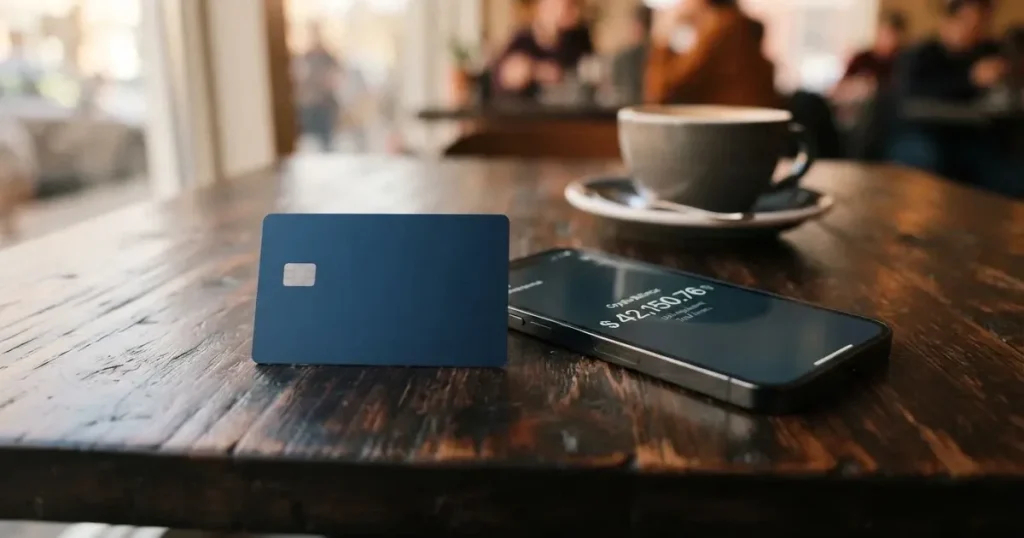
If you live in Kazakhstan and want to spend stablecoins in tenge at an ordinary shop till, the CryptoPay card does exactly that, and on its own terms it is a tidy, low-friction instrument: a digital Mastercard World Black Edition debit card, issued by Bank CenterCredit, funded only from USDT, with no crypto-to-fiat exchange fee and no fee on the top-up itself. If you are anywhere else, or you need cash from an ATM, or you want to pay online, this is not your card. Those are not quibbles; they are stated features. My score is 5.0 out of 10.
The conditions described on this page are current as of October 28, 2026.
Verdict: 5.0 out of 10, built for one specific reader
Here is how the score breaks down, criterion by criterion, with my reasoning in the last column. The marks are mine, and the reasons are in my words.
| Criterion | Mark | Why I gave it this mark |
|---|---|---|
| Who can get it | 2 / 10 | Card issue is priced at 10 000 ₸ and limited to Kazakhstan residents, and opening it depends on holding an ATAIX Eurasia account with Investor or Premium status. That is a narrow gate. |
| Cost | 4 / 10 | Issuance 10,000 ₸ and servicing 5,000 ₸ are real up-front and monthly numbers; crypto-to-fiat exchange 0% and no top-up fee are genuinely attractive. But the foreign-exchange fee is not stated, which is the one number most people need. |
| Top-up options | 6 / 10 | Only USDT, on the BSC, ETH and TRON networks, with a deposit fee of 0.00 and a small 0.01 USDT minimum. Cheap and simple, but single-asset and single-chain-family. |
| Reliability and complaints | 9 / 10 | The issuer is Bank CenterCredit on banking licence No. 1.1.856.145, the exchange is ATAIX Eurasia on AFSA licence AFSA-A-LA-2025-0022, and I found no complaint pages. Regulated on both sides, and nothing has gone publicly wrong that I can find. |
| Everyday use | 5 / 10 | Digital-only Mastercard World Black with Apple Pay, Google Pay and Samsung Pay, but no ATM cash and no online payments, terminals only. It is a POS card, nothing wider. |
| Total | 5.0 / 10 |
The audience this card genuinely serves is narrow and specific: Kazakhstan residents paying offline in tenge from USDT. For that person, the everyday mechanics work, the fees on the crypto side are zero, and the money sits behind two real licences. For anyone else, the same features read as walls.
Before I take it apart, the honest summary: this is a well-regulated, well-built instrument inside one country, not a general-purpose crypto card. The bank and the exchange behind it are licensed, which is more than most cards in this category can say. But the card is digital-only, cash-free, online-free, USDT-only, and its foreign-exchange fee is simply not published. A 5.0 is not a verdict of “avoid”. It is “excellent for one use case, poor fit for everyone else”.
Who will they give you the card to?
They will give it to residents of Kazakhstan. The bank tariff table states card issue as 10 000 ₸ for Kazakhstan residents, so the price itself is tied to the residency. On top of that, you need an account with ATAIX Eurasia, the exchange, and it must carry Investor or Premium status. The card is opened inside the bcc.kz app, the bank’s app. Citizenship rules are not stated on the public pages; it is residency that is named.
That distinction matters more than it might look. Residency and citizenship are not the same test, and banks screen them separately because sanctions and issuer risk policy attach to citizenship and country of birth, not just to where you live. So a non-citizen resident of Kazakhstan is, on the published wording, inside the target group; a Kazakh citizen living elsewhere is not covered by the fee line at all. The public pages simply do not tell you more than that.
There is also history here that a reader with a Russian or Belarusian background will want to know about, because it bears directly on who gets served. On 5 December 2023, per Snob, ATAIX Eurasia asked Russian citizens resident in Russia, and companies registered there, to close their accounts, saying the exchange follows EU sanctions on Russia. A later report, via Forklog and Snob in December 2023, said Russian new users could no longer register. These are unofficial reports, from third parties citing the exchange’s support, not statements from the exchange’s own published pages. I am giving them to you as such, and they are the reason I would not treat “I hold USDT” as sufficient to assume you can open the exchange account this card depends on. Ask the exchange directly, in writing, before you pay the 10 000 ₸.
How to get it
The path is four steps, and the first one is the hard one.
- Register on ATAIX Eurasia and pass identification (KYC) to reach Investor or Premium status.
- Install the bcc.kz app and go to “New product or account”, then #CryptoPay, then “Open card”.
- Confirm the card by the e-mail sent to the address you used at ATAIX. The ATAIX page says to expect that within 2 hours.
- Add the card to Apple Pay, Google Pay or Samsung Pay.
What you will be handed is a digital, virtual card: a “Mastercard World Black Edition debit card”. The account currency is tenge (KZT) and the card’s stated validity is 8 years. Digital is the default, but a plastic card that the client ordered in advance can be collected, or reissued, by power of attorney that is notarised and valid up to 3 years. How long delivery takes, what it costs, and what a replacement costs are not stated.
Two things are worth pausing on. First, the Investor status is not decorative. Confirming the Investor qualification is what raises the card’s monthly limit from 500,000 ₸ to 45,000,000 ₸. What each ATAIX status requires, how long approval takes, and on what grounds you might be refused are not stated, so you are applying to a criteria set you cannot read. Second, identification documents, proof of address and any age requirement are not stated for this card. KYC is normal and legal, and in the EU it covers name, address, date of birth, nationality and identity documentation, a sanctions check and a politically-exposed-person check; in the US the customer identification programme requires name, date of birth, address and an identification number. I am not telling you how to get around any of that. I am telling you that the specific documents this card wants are not published, and that the rules I just described are the general background, not the card’s own stated requirement.
One unofficial number you may encounter while researching: a 2023 news summary put ATAIX withdrawal limits at 20,000 USDT per day and 100,000 USDT per month without KYC, rising to 1 million USDT per day at level 1 and 2 million USDT per day at level 2. That is a third-party figure of uncertain date, not a published ATAIX term. Do not plan around it; check the exchange’s current limits page.
Fees: what it really costs
Here is every fee and limit the public pages state. The gaps in this table are as informative as the entries.

| Item | Value |
|---|---|
| Card issue | 10 000 ₸ (for Kazakhstan residents) |
| Card servicing | 5,000 ₸ (per month, per the ATAIX page) |
| Crypto-to-fiat exchange fee | 0% |
| Top-up of the crypto wallet | No fee |
| Payment | No fee |
| FX fee | Not stated |
| Cash withdrawal at ATMs | Not available |
| Base monthly limit | 500,000 ₸ |
| Monthly limit after Investor confirmation | 45,000,000 ₸ |
| Transfers inside the bank and to other banks | Unavailable |
| Card tiers | Single card; limits follow ATAIX status, not card tiers |
| Account currency | KZT; debits happen in tenge |
Read that as a whole and one fact dominates: you spend tenge, your funds are USDT, and the conversion between them is free, but the fee on the other side, the one that applies when you cross into another currency, is not published. On a card that only converts USDT to KZT and only works offline in its home country, you may never touch that fee. That is the fair reading. It is also a published gap, and a reader who plans to travel with the card would be guessing.
Let me walk three ordinary payments through, because fees behave differently depending on what you are actually doing.
Buying coffee in Almaty. Your USDT is converted to KZT at the exchange rate at the moment of payment, the crypto-to-fiat exchange fee is 0%, and the payment itself is charged no fee. This is the case the card is built for.
Paying a shop that asks for a foreign currency while you are in Kazakhstan, or one where the terminal’s acquirer treats the card as cross-border. Here the card’s own published numbers say nothing, because the FX fee is not stated. The network’s own rate would apply, and the issuer’s spread, if any, is unknown to you. This is the purchase I would not make without asking the bank first.
Pulling cash from an ATM in tenge. Not possible. The bank is explicit: cash withdrawal at ATMs is unavailable. There is no fee to compare, because there is no withdrawal.
Two everyday practicalities sit under all of this. Refunds on purchases go to the crypto wallet, from where you convert to USDT in the ATAIX app or site; withdrawal to a bank account or ATM is not available. And a declined authorisation can still leave a hold on your funds, sometimes for several days, typically up to 7, which is standard card-network behaviour rather than anything specific to this card.
How to top it up
Top-up is where this card is simplest, because there is only one thing to top up from and only one asset to top up with. Only USDT is available for card payment at present. You fund it through your ATAIX wallet balance: crypto, or a fiat transfer to the exchange that you then convert to USDT, or through the “Cryptocurrency” section of the bcc.kz app. ATAIX lists USDT on the BSC, ETH and TRON networks, with a deposit fee of 0.00 and a minimum deposit of 0.01 USDT.
So the sequence is: get USDT to the right network, deposit it to ATAIX, spend the KZT it converts into. The wallet top-up and the payment are both fee-free on ATAIX’s side, confirmed in a bank statement.
Two warnings about the deposit leg, neither of which is a card term but both of which will hit your balance. The network fee, or gas, on the transfer is charged by the blockchain, not by the card or the exchange, and for your deposit it is not stated on these pages. If you are sending on Ethereum and hold no ETH, your USDT cannot move; Ethereum token fees are paid only in ETH, so a wallet with USDT and no ETH cannot send. Tron works differently, pricing through bandwidth and energy resources, often burning TRX, which is why TRON tends to be the cheap network for a USDT transfer. And the mistake that costs real money is sending on a network or to an address the provider does not support: blockchain transfers are irreversible, so a deposit to an unsupported network or a mismatched address can be lost, or need manual recovery through support with no guarantee. Check the network, and check it twice. I am not going to walk you through how to send funds in a way that tries to avoid the provider’s controls; I am telling you the transfer has one way and mistakes are not refundable by anyone.
Paying with it every day
The daily experience is deliberately narrow and, within that narrowness, good.
The card works at physical POS terminals. It does not work online. That is not a temporary limitation in the wording I read; online payment is simply not available, only offline purchases at POS terminals. Blocked merchant categories are not stated, so I cannot tell you which spending codes will or will not pass at the till. For comparison, and this matters for expectations, many issuers block gambling (MCC 7995) on specific cards by policy rather than by law, and the blocked list varies by issuer. CryptoPay’s list, if it has one, is not published.
Mobile wallets are the intended way to hold the card, since it is digital-only: Apple Pay, Google Pay and Samsung Pay are all supported. This is a genuine convenience. Tokenised numbers like Apple Pay’s never touch Apple’s servers; the card number is replaced by a device-specific number in the Secure Element, and each payment carries a one-time code. It also means a shop that would refuse an unfamiliar card number will usually accept the phone.
The rewards are modest but real. Basic cashback is 0.5% on all purchases, capped at 20,000 ₸ per month, according to the ATAIX page. What currency the cashback is paid in is not stated, which for a user thinking in tenge is a question worth asking. The Mastercard World Black tier brings the perks that come with the name: up to 10 Lounge Key visits per year, up to 10 Fast Track passes, and travel insurance up to $1.5 million, per the bank page.
For travel insurance and lounge access to be worth anything to you, you have to be able to use the card abroad, and I found no statement saying you can. Treat that as an open question for the bank, not as a feature.
Two things you will be doing instead of other things. There is no online payment, so subscriptions, utility bills and anything else charged to a card number on a website are out. And disputes: refunds go to the crypto wallet, but the dispute and chargeback procedure and its time frames are not stated for this product. A chargeback is a refund ordered by the issuer to settle a dispute, with reason codes such as fraud, duplicate billing or goods not received; prepaid-card coverage varies by scheme and jurisdiction and should not be assumed. If you cannot see how to contest a transaction, that is a real gap to weigh.
What can go wrong
The two licensed companies behind this card are the strongest part of the story, and they are the reason the reliability score is 9.
The card is issued by Bank CenterCredit in Kazakhstan, which holds a general banking licence, No. 1.1.856.145 dated 05.08.2026, from the Agency of the Republic of Kazakhstan for Regulation and Development of the Financial Market. The exchange side is ATAIX Eurasia Ltd. in Astana, at Mangilik El 55/17, holding AFSA licence AFSA-A-LA-2025-0022 dated 15 October 2025, for a digital asset trading facility, custody, and dealing in digital assets as principal and agent. In October 2025 the AFSA granted ATAIX a full licence out of the regulatory sandbox, and Forbes Kazakhstan reported on 3 March 2026 that BCC had launched a premium crypto card with ATAIX, the Mastercard World Black Edition digital card this review covers. A card with a full banking licence on one side and a full AFSA licence on the other is unusual in this category, and it is the honest reason I am not writing a horror story.
Against that, the operational risks are real but ordinary.
Your crypto is custodial. It stays in your ATAIX Eurasia wallet, and ATAIX is licensed to provide custody, meaning it holds the credentials. Control of a wallet belongs to whoever holds the private key or seed phrase, and a seed phrase of typically 12 to 24 words is an unencrypted key: anyone who has it can restore the wallet and spend the money. Transfers are typically irreversible, and a stolen key has no built-in recovery, because the network cannot freeze or return funds. Custodial platforms have a real history of failure, from Mt. Gox and Coincheck to the $625 million Ronin Network loss in 2022. I am not predicting any of that here; I am saying that when your funds sit with a custodian, you are accepting counterparty and hack risk in exchange for convenience. Card freeze, two-factor authentication and the specific safeguarding for this product are not stated on the pages I read.
The other risk is more prosaic and more likely: the programme itself. Crypto cards sit on top of issuing arrangements that can be withdrawn. Visa and Mastercard do not issue crypto cards to consumers themselves; they license issuers, and they can suspend a programme. Visa terminated its global agreements with FTX in November 2022 and the FTX US debit card was wound down. WaveCrest, a Visa issuer that supplied crypto card brands, was suspended by Visa in Europe in 2018, closing all its programmes. Closures typically run in a fixed order: a notice period, then loading and spending stop, then users are asked to withdraw remaining balances. A 2026 closure reported by a secondary source ended new loads on 8 July 2026 and spending on 8 August 2026; that is a single unconfirmed source, and I give it to you only to show the shape such an event takes, not as fact. The lesson is to keep only what you need on the card and to hold the rest in the exchange, not loaded.
Finally, the sanctions history I described earlier is a live operational risk rather than a historic one, and it cuts both ways: it shows the exchange applies policy strictly, which is reassuring for compliance and unhelpful for anyone who hoped the card would be reachable regardless of citizenship.
Support is where the card is more reassuring. The bank runs a 24-hour line, 505 for individuals, a chat in Telegram, the address [email protected], and branches. ATAIX has a support page, a Telegram channel at t.me/ataixeurasia, and the phone +7 (727) 356 11 70. The bank’s site is in Russian, Kazakh and English, and Russian is supported.
What to take instead
I want to be precise here: all three alternatives below scored higher on my scale, but on different criteria, and each has costs of its own. I could not find official pages stating several basics for them, which is itself information.
| Card | Score | What it does better | What I could not confirm officially |
|---|---|---|---|
| MSX | 6.4 / 10 | Highest score of the three, and the most geography in the help centre. | Card type, cost, fees and funding not stated officially. |
| Bybit Card | 6.0 / 10 | Available in many regions, virtual and physical, richer cashback tiers. | Some fee and eligibility details are region-specific rather than absent. |
| Young Card | 5.7 / 10 | Cashback in YNG tokens at tier rates from 0.1% to 3.6%. | Who can get it, card type, cost and card funding not stated. |
| CryptoPay | 5.0 / 10 | — | — |
Bybit Card is the serious alternative if you are outside Kazakhstan or need to pay online. Its official help centre lists Argentina, AIFC (Kazakhstan), Georgia, Kazakhstan, Australia, Mexico, Brazil, Peru and Asia Pacific. The application asks for your country of residence, and if the country is unsupported, Bybit “will register your interest”. The cards page is explicit that the product is not meant for European Economic Area customers and that participation is strictly prohibited. Its fiat-service restricted list, covering deposits, withdrawals and One-Click Buy rather than the card itself, includes Belarus, the Russian Federation, Serbia, China and the United States, and it says Russian users can only make RUB transactions in fiat. On the trade-offs: virtual card issuance is free in all regions “until further notice” with no annual or cancellation fee, but physical issuance is 29.99 USD in Australia, 5 USD or USDT in Argentina, 29,99 USDT in Georgia and in Kazakhstan (AIFC), and 5 USDT in Asia Pacific, while Brazil and Mexico charge none, and VIPs holding an Australia, Kazakhstan (AIFC), Georgia or Asia Pacific physical card pay no issuance or replacement fee. The conversion fee is 0.9% over the One-Click Sell rate in Australia, Asia Pacific, Georgia, Kazakhstan, Brazil and Mexico, and 0.5% in Argentina; the FX fee is 2% on top of the network rate in several markets, 2% as an “International Fee” for Kazakhstan (AIFC) on purchases outside Kazakhstan even in USD, 7% in Argentina, 1.5% in Brazil and 1% in Peru. The rewards are the best of the three: from 5 October 2026 at 10:00 UTC only crypto-funded transactions earn points or cashback, on tiers from Base at 2.00% to Infinite at 10%. Its card draws on a Funding Account rather than holding its own balance, so it spends fiat first and sells crypto only when needed.
MSX scored highest and would be my first stop if CryptoPay were unavailable, but I want to be honest about why: the official material I could read left the card type, cost, fees and funding unstated, so its higher score rests on the overall offer rather than on specifics I can quote. Young Card’s differentiator is token cashback, paid in YNG at 0.1% on Essential, 1.8% on Gold and 3.6% on Platinum, with Bronze and Silver not stated. If you are in Kazakhstan and want plain tenge spending from USDT with zero conversion fee and no network fuss, though, none of these three beats CryptoPay on its own terms. The honest summary is that if CryptoPay does not fit you, the best-known alternative is Bybit Card, and if you are in Kazakhstan with an ATAIX account you will probably keep it.
Who I would recommend it to
I would recommend this card to one person: a resident of Kazakhstan who already has USDT, already holds or can get ATAIX Investor status, pays at physical tills in tenge, and has no need for cash or online payments. For that person it is a good card. Zero conversion fee, no top-up fee, a real banking licence behind the card, a real AFSA licence behind the wallet, cashback that adds up if you spend enough, and mobile wallets for the shops that would rather see a phone than an unfamiliar card number.
I would not recommend it to you if any of the following is true. You need cash from an ATM, because there is none. You need to pay online, because you cannot. You hold assets other than USDT, because USDT is the only option. You want to know what a foreign-exchange fee will cost you before you travel, because it is not published. You are a Russian or Belarusian citizen resident in Russia, because the exchange asked people in that position to close accounts in December 2023 and the pages do not say the policy has changed. Or you want a card that rewards you richly, because 0.5% cashback is ordinary at best.
And one piece of general advice that belongs on this page rather than only in the FAQ. A crypto card is not a bank account. The money behind it is crypto held by a custodian, and the card is a payment front-end on top of a licensed bank relationship. Visa and Mastercard do not issue these cards themselves; they license issuers, and they can pull a programme out from under you, as they did with FTX in November 2022 and WaveCrest in Europe in 2018. Keep the loaded balance to what you need this week, and understand that when you pay with the card, the transaction may be a taxable disposal of crypto in your jurisdiction. Neither of these is a reason to avoid the card. They are reasons to use it with the same attention you would give any prepaid balance.
Frequently asked questions
What is the CryptoPay card?
The CryptoPay card is a digital Mastercard World Black Edition debit card issued by Bank CenterCredit in Kazakhstan, used together with the ATAIX Eurasia exchange. You fund it with USDT and spend in tenge at physical shops. It is virtual by default, though a pre-ordered plastic card can also be collected. It is a payment front-end on a bank card, not a bank account, and its balance comes from a crypto wallet held by the exchange.
Who can get the CryptoPay card?
The published rule is residency, not citizenship: card issue is priced at 10 000 ₸ for Kazakhstan residents. You also need an ATAIX Eurasia account with Investor or Premium status, and you open the card inside the bcc.kz bank app. Citizenship rules are not stated on the public pages. Separately, ATAIX asked Russian citizens resident in Russia to close accounts in December 2023; that is reported by third parties, not confirmed on the exchange’s own pages.
How do I apply for the CryptoPay card?
Four steps. Register on ATAIX Eurasia and complete identification to reach Investor or Premium status; install the bcc.kz app; choose “New product or account” then #CryptoPay then “Open card”; and confirm by the e-mail sent to your ATAIX address, which the ATAIX page says arrives within 2 hours. Then add the card to Apple Pay, Google Pay or Samsung Pay. Confirming Investor status is what raises the monthly limit from 500,000 ₸ to 45,000,000 ₸.
Does the CryptoPay card require KYC?
Yes, in substance, because you cannot open the ATAIX account without passing identification, and the card requires that account. The specific documents, proof of address and age requirement for this card are not stated on the public pages. The general background: KYC rules require regulated businesses to verify customers and monitor transactions, and where due diligence cannot be completed, rules require the institution to decline the transaction or relationship. That is the system, not a hurdle to be evaded.
How much does the CryptoPay card cost?
Card issue is 10 000 ₸ for Kazakhstan residents, and card servicing is 5,000 ₸ per month. There is a single card with no tiers. On the spending side the crypto-to-fiat exchange fee is 0%, the wallet top-up is free, and the payment itself is free. The foreign-exchange fee is not stated, which is the one number that would matter if you used the card outside Kazakhstan or against a non-tenge transaction.
Can I use the CryptoPay card at an ATM?
No. The bank states plainly that cash withdrawal at ATMs is unavailable, so there is no cash function to price or rank. Refunds on purchases go back to the crypto wallet, and you can then convert to USDT in the ATAIX app. Withdrawal to a bank account or ATM is also not available, and what happens to any remaining balance on closure is not stated.
Can I pay online with the CryptoPay card?
Not according to the pages I read: online payment is unavailable, and the card works at physical POS terminals only. Mobile wallets are supported, so Apple Pay, Google Pay and Samsung Pay all work at contactless terminals. Blocked merchant categories are not stated. Note also that online payments are where identity checks like 3-D Secure normally apply, and this card does not get you there.
How do I top up the CryptoPay card?
Only with USDT, through your ATAIX wallet balance. You can deposit crypto, or send fiat to the exchange and convert it to USDT, or use the Cryptocurrency section of the bcc.kz app. ATAIX lists USDT on the BSC, ETH and TRON networks, with a deposit fee of 0.00 and a minimum deposit of 0.01 USDT. The wallet top-up and the payment carry no fee; the blockchain’s own network fee on your transfer is separate and not stated here.
Is the CryptoPay card safe?
The two parties are licensed: the issuer is Bank CenterCredit on banking licence No. 1.1.856.145, and the exchange is ATAIX Eurasia on AFSA licence AFSA-A-LA-2025-0022, granted 15 October 2025. That is a genuine strength. But your crypto is held custodially at the exchange, transfers are irreversible, and card freeze, two-factor authentication and safeguarding for this product are not stated on the pages I read. Safety here means licensed counterparties plus ordinary caution, not anonymity and not immunity from loss.
Is the CryptoPay card worth it?
Worth it if you are a Kazakhstan resident paying in tenge at shops from USDT, because the conversion and top-up fees are zero and the card is issued by a licensed bank. Not worth it if you need cash, online payments, or assets other than USDT, or if you need a published foreign-exchange fee before travelling. I scored it 5.0 out of 10: an excellent answer to one narrow question, and not a general-purpose crypto card.
Exchange cards put to the test – cryptocardtested
Content created by the «cryptocardtested» team