
Dantown is cheap, virtual and built for one country — and thin on the details that matter
 Available in US
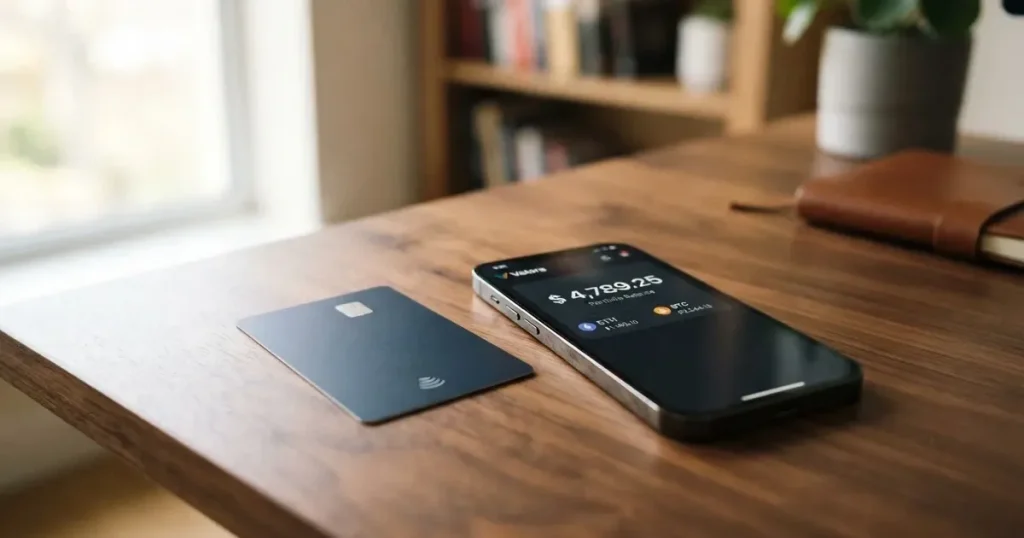
Dantown is a virtual dollar card marketed to people in Nigeria. It costs a dollar to create, the card details live in an app, and the marketing line is blunt: a secure, cheap dollar card for paying online. If that sentence describes your problem — you need a US dollar virtual card for subscriptions, ads or websites that bill in dollars, and you are working from Nigeria — this page is for you. If you are anywhere else, or you need a physical card to tap in a shop, keep reading but lower your expectations before you start.
The conditions described below are current as of October 28, 2026.
The verdict: 4.2 out of 10
Here is the mark, broken into the parts it is made of. I have not adjusted a single number; this is the score the card earns as it stands.
| Criterion | Mark | Why |
|---|---|---|
| Who can get it | 2 / 10 | Sold as “Virtual Dollar Card in Nigeria”; other countries and any exclusion list are not named |
| Cost | 8 / 10 | Card creation $1.00, funding $0; unofficial: another $1 for maintenance; conversion fee amounts not given |
| Top-up options | 3 / 10 | Official: Naira deposit via Pay-bridge; coins and networks not named; unofficial: top-up by bank transfer and crypto |
| Reliability and complaints | 4 / 10 | Issuer and licences not found; Trustpilot TrustScore 0 with no reviews and a “high-risk investments” notice; no official incidents |
| Everyday use | 3 / 10 | Virtual card only, in USD; Apple Pay and Google Pay not indicated; no ATM |
| Total | 4.2 / 10 | A cheap entry point for a narrow need, with a lot of unanswered questions |
Two things explain that total. The high mark is cost: a dollar to create and zero to fund is genuinely cheap, and I have not seen that beaten for a dollar card aimed at Nigerian users. The low marks are everywhere else — eligibility, top-up routes, issuer identity and day-to-day usability are all described thinly or not at all on the pages I could read. The card is not a bad card so much as an unfinished public description of one.
Who it suits: a Nigerian user who needs a cheap virtual dollar card for online payments, can top up in naira through the app’s wallet, and is comfortable with a card that exists only as numbers on a screen. Who it does not suit: anyone outside Nigeria looking for a general payment card, anyone who needs to tap a card in a physical shop, and anyone who wants to read the fee schedule, the licence and the dispute process before they load money.
Will they give you the card?
Short answer: the marketing points at one country, and it is Nigeria.
The product is marketed for Nigeria. The page title reads “Get a Secure & Cheap Virtual Dollar Card in Nigeria for $1,” and the FAQ answers “How can I create a virtual dollar card in Nigeria?” That is the whole of the official position on who qualifies. Other countries are not named, and there is no list of countries on a block or an exclusion list. If you are not in Nigeria, the honest reading is that this card was not built with you in mind.
There is a deeper gap here worth naming. The signup flow says “verify your account,” but the card’s public pages never say what verification actually means: which documents are accepted, whether proof of address is required, what the minimum age is, or how many identity checks a customer goes through. The card’s pages do not state the KYC level or what it unlocks. You would be approving a wallet and a card without knowing what is being asked of you and what your limit will be once you have answered.
So the answer to “will they give you the card” is: probably, if you are a Nigerian adult who can install the app, but the card does not publish the terms on which it decides. That uncertainty is not unique to Dantown — see the alternatives later — but it is one of the things pushing its score down.
How to get it
Three steps, as the card’s own page lays them out:
- Download the Dantown Mobile app.
- Sign up and verify your account.
- Create and personalise your card.
That is genuinely the whole process on paper. What arrives once you finish is a virtual card only — no physical delivery, so nothing is posted to you, and a replacement fee is not stated if you ever lose access to the app.
The card details — the name on the card, the number, the expiry date and the CVC — are shown inside the app for online payments. That is what you type into a checkout page; there is no plastic to carry. The card currency is US dollars, not naira, so you are spending dollars even if you live and earn in naira.
One thing to be aware of: the page images are labelled “visacard,” but the card’s text never names the card network. Treat the network as unconfirmed unless the app tells you at the point of card creation. An unofficial source (a 2026 Adomonline comparison) names it as a Mastercard virtual dollar card; the card itself does not confirm that, and I would not rely on it.
Fees: what it really costs
The headline price is a dollar to create. The fee picture beyond that is thin, so I have separated what the card publishes from what it does not.
| Fee or limit | What the card says |
|---|---|
| Card creation fee | $1.00 |
| Monthly or annual fee | Not stated on the official page; unofficial: $1 maintenance on top of the $1 creation (Dantown announcement via TechCabal, 9 December 2024; Adomonline 2026 also lists $1 / $1) |
| Funding fee | $0 |
| Deposit fee | $0 per the company’s announcement |
| Decline fee | $0 per the company’s announcement |
| Conversion fee (international transactions) | “Specific transaction fees and conversion fees” apply; amounts not given |
| Naira-to-dollar rate and FX fee | Not stated |
| ATM | Not stated (virtual card) |
| Daily spending limit | Marketing claims “No transaction limit” and “Your spending should have no limit”; no per-KYC figures published |
| Monthly spending limit | Same marketing claim; no figures published |
| Replacement card fee | Not stated (virtual only) |
Let me walk two or three everyday payments through that table, because the published fees do not tell you what a purchase costs.
Paying $10 for a monthly subscription. The card balance is in dollars, so if you have topped up dollars there is no currency conversion on the purchase itself. The cost is whatever you paid to get those dollars in — and the route the card officially names is a naira deposit through Pay-bridge, whose rate and any FX fee are not stated. So the true cost of a $10 subscription is the $10 plus an unstated cost of moving naira into dollars, and you cannot calculate it from the public pages. That is the practical weakness of the strong cost score.
Paying a European or US website that bills in another currency. Here the “specific transaction fees and conversion fees” line applies. The card says international transactions are allowed, with conversion fees. It does not say how much they are, so you cannot predict what a $20 charge will actually cost. On an unofficial source, the marketing claim is that there is no transaction limit; a separate guide says there are no official spending limits, while a TechCabal piece says Dantown has some funding limits, without a figure. Sources disagree, and no number is published. Keep a buffer in your head rather than spending to the last dollar.
Paying a small daily purchase. For the small, routine payments a virtual dollar card is made for, the one-dollar creation and zero funding fee dominate: the setup cost is trivial. It is the currency leg and the international-transaction leg where the unpublished numbers live, and that is where your money quietly goes.
The verdict on cost: cheap to open, cheap to fund, and then genuinely uncertain. A card that publishes its conversion fee would earn more of that 8.
How to top it up
The official route runs through the app’s wallet, in naira. The Google Play description of the app states “Naira deposit via Pay-bridge,” “Naira withdrawal via Pay-bridge” and a “Secure wallet.” That is the card’s own account of how money moves in and out of the wallet.
What that means for you: your funding source is a naira bank payment into the app’s wallet, and your card then spends dollars from that balance. Minimum top-up is not stated, and who pays the underlying network fee on a transfer is not stated either. The published top-up fee is $0, and the company’s announcement says deposit and decline fees are $0 as well.
What the official pages do not tell you is the thing most crypto card users came for: which coins and which networks fund the card. That is not stated. An unofficial 2026 comparison (Adomonline) says you can also top up by local bank transfer and by crypto. If crypto funding matters to you, treat it as unconfirmed and check inside the app before you rely on it.
On the way back out, the wallet supports naira withdrawal via Pay-bridge. Withdrawing the card balance itself, any fee on that, and what happens to a leftover balance if you close the account are all not stated. Ask before you load more than you plan to spend.
Paying with it every day
Everyday use is where this card scores lowest, at 3 out of 10, and the reasons are structural.
It is a virtual card. There is no physical card, so nothing to tap, nothing to hand over in a shop, and no ATM — the card’s pages do not state one, and a virtual card does not have one to draw cash from. If your daily spending is coffee, groceries and transport, this is not your card. If your daily spending is software subscriptions, hosting, ad platforms, or any website that bills in dollars and takes a card number, it is exactly the shape of tool you need.
Apple Pay and Google Pay are not indicated. Apple Pay works by replacing your card number with a device-specific number and generating a fresh security code per payment; if Dantown’s virtual number cannot be added to your wallet, you will be typing the number in at every checkout. The card does not say either way.
The app itself: on Google Play (Android, developer Dantown) it shows 50K+ downloads and was updated on 20 August 2026. The star rating on the page was not read. Unofficial app-store aggregators put the rating higher and the reach lower — AppBrain shows an average of 4.10 from about 1.1 thousand ratings and about 80 thousand downloads on Google Play, while Adomonline lists 4.7 from 1.12K reviews — so treat those as third-party figures, not the card’s own. An iOS app is described as “available on your Appstore or Playstore” in the company’s announcement, but the App Store page was not read, so I cannot confirm the current state of the iOS app.
Nothing is stated about cashback or rewards, nothing about which wallets the card supports, and nothing about how disputes are handled. That last one matters more than it sounds: a declined online payment can leave a hold on your funds for several days, and if you cannot get a human to explain a charge, a dispute, or a block, a small problem can sit there.
One concrete warning to carry with you: merchants can look at the card’s first six digits and see which institution and country issued it, and if that issuer country differs from your billing address, some merchants apply extra scrutiny or decline the payment outright. A dollar card issued for Nigeria can look “foreign” at a US or European checkout. Address Verification Service, which compares the numeric parts of the billing address you type against the issuer’s records, is generally unavailable for foreign-issued cards and can cause declines. If a purchase keeps failing, that is often why — and it is a property of the card, not of you.
What can go wrong
The risks here are less about dramatic failures and more about thin disclosure, so I have sorted them by what they would actually cost you.
Blocking. The card’s own security notes are candid: “When a virtual card is blocked, all functionalities are disabled,” and it can be blocked repeatedly. The app notifies you by e-mail, and there are transaction logs and push messages. So a block is recoverable in principle — but if your only income channel is that card, a repeated block is a serious event. Whether the wallet is custodial or self-custody, and whether two-factor authentication is available, are not stated, so I cannot tell you what stands between your money and someone else.
The issuer behind the card. Not stated on the official pages I could read. An unofficial Trustpilot listing describes Dantown as a cryptocurrency buying, selling and spending service based in Port Harcourt, Nigeria (read 21 October 2026); the issuing partner or bank and any licences were not found. That matters because a crypto card usually rests on two licences — one for the crypto side, one for the payment card itself — and the network (Visa or Mastercard) licenses the issuer and can suspend a programme. You are being asked to trust a company whose regulatory identity the public pages do not name.
Programmes closing. It has happened to cards in this category. Visa terminated its global agreements with FTX on 13 November 2022 and the FTX US debit card was wound down by its issuer; WaveCrest, a Visa issuer that supplied crypto card brands, was suspended by Visa in Europe in 2018, closing all of its Visa programmes. Closures typically follow a pattern: a notice period, then spending and loading stop, then you are asked to withdraw what is left. A 2026 closure reported by a secondary source ended new loads on 8 July 2026 and spending on 8 August 2026 — single source, unconfirmed. Nobody is saying Dantown is heading there. The point is that this risk lives in the category, not in one company.
Forex scarcity in Nigeria. Nairametrics reported in 2024 that forex scarcity had led some virtual dollar card providers in Nigeria to suspend service. That report was not about Dantown specifically, but it describes the environment this card operates in, and it is a reason to keep your balance on the card small.
Complaints. Almost nothing either way. No official incident notices from Dantown were found. A search for reviews and complaints on Reddit and Nairaland returned no relevant threads. Trustpilot shows a TrustScore of 0 with no reviews yet, and the page carries a notice that the company “may be associated with high-risk investments” (read 21 October 2026) — a notice about a risk category, not an accusation, but worth knowing. With no reviews to analyse, there are no recurring themes to warn you about; equally, there is no track record to lean on.
Support. “24/7 Customer Service” is listed on Google Play, and there is an e-mail, [email protected]. Whether that support can actually resolve a stuck top-up or a block, in practice, I cannot tell you.
If it goes wrong, what recourse? A chargeback is a refund ordered by the card issuer to settle a dispute, with reason codes such as fraud, duplicate billing or goods not received. US debit-card reversal rights come from Regulation E and credit-card rights from Regulation Z; prepaid-card coverage varies and should not be assumed. Under 3-D Secure, liability for fraudulent online payments can shift from the merchant to your bank, or, per critics, to you. None of this is spelled out for Dantown’s card, and that is a real gap.
What to take instead
If any of that bothers you — and it should bother any careful reader — the honest move is to compare, not to commit. Here are three alternatives that overlap with Dantown on the “virtual dollar card” idea, with the same questions asked of each.
| Dantown | Cardex | CardFlow | HyperCard | |
|---|---|---|---|---|
| Score out of 10 | 4.2 | 5.6 | 4.9 | 4.7 |
| Who it is for | Marketed for Nigeria | “One crypto card, 200+ countries”; App Store listing is Naira-focused | Aimed at Nigeria and “Nigerians and global users” | No country list; works in “more than 176 countries” (acceptance, not eligibility) |
| Card | Virtual dollar card | Debit crypto card on VERVE, VISA, Mastercard and UnionPay; virtual and physical | Virtual USD Mastercard, created in about 3 minutes | Prepaid; balance in USD or EUR |
| Creation cost | $1.00 | Not stated | Free (“Create Free Card”) | Not stated |
| Top-up | Naira via Pay-bridge; coins and networks not named | USDT, USDC and BTC; networks not stated | Bitcoin, USDT, ETH or naira bank transfer; networks not stated | Crypto such as USDT, BTC, ETH in the app; networks not stated |
| Conversion | Fees apply; amounts not given | Real-time crypto-to-fiat conversion; “AI-Powered Conversion Rate” picks the best rate; no percentage stated | Not stated | Converted to USD or EUR on the card |
| Rewards | Not stated | Not stated | Not stated | Not stated |
Reading across the row for Dantown: it wins on nothing except a clear, stated, low creation fee ($1.00 against CardFlow’s free). It ties with Cardex and CardFlow for thinness — none of the four publishes a full fee schedule, and none of the four names its networks for funding. Where Dantown is genuinely weaker is reach and hardware: Cardex offers a physical card on four networks including Visa and Mastercard, and HyperCard accepts in more than 176 countries. Where it is genuinely stronger is audience fit — for a Nigerian user who just wants a dollar card, Dantown is built for exactly that and says so on its front page, where Cardex’s and HyperCard’s country claims are broader but vaguer.
My read: if you are in Nigeria and only need online dollar payments, Dantown is a reasonable candidate to compare against CardFlow, which is free to create and also takes naira. If you are anywhere else, or you need a physical card, or you want to top up in crypto, Cardex is the one that at least names four networks and offers a physical option — at the cost of a fee schedule that is equally unpublished. None of these cards is transparent enough to trust blindly; pick the one whose gaps you can live with.
Who I would recommend it to
I would recommend Dantown to one specific person: someone in Nigeria who needs a virtual US dollar card for recurring online payments, has a naira bank account they can fund the app wallet from, and has accepted that they are loading small amounts at a time because the conversion rate and the funding limits are not published. For that person, at a dollar to create and zero to fund, it is a sensible low-cost tool.
I would not recommend it to you if any of the following is true. You are outside Nigeria — the card is not built for you. You need a physical card, a contactless tap, or cash from an ATM. You need Apple Pay or Google Pay and have not confirmed the card works in your wallet. You plan to hold a large balance on it, because the limits are a marketing claim and the issuer behind it is not named. You need a clear dispute process, a named regulator, or a fee schedule you can read before you commit. Or you need cashback — nobody publishes anything about it.
The score is 4.2 out of 10, and the shape of that score tells the story: the economics are attractive (8) and almost everything around them is under-published (2 for eligibility, 3 for top-up, 3 for everyday use, 4 for reliability). That is not a warning so much as a description. Test it small. Load the minimum, make one payment you would have made anyway, and see how the block, the conversion and the support behave before you trust it with anything more. And if you are ever choosing between cards, the one that publishes its issuer and its conversion fee is worth a longer look than the one that publishes a low creation price.
Frequently asked questions
What is Dantown card?
Dantown is a virtual US dollar payment card marketed to people in Nigeria. It costs $1.00 to create, exists only as card details inside an app — name, number, expiry and CVC for online payments — and is funded through the app’s wallet. There is no physical card. It is a dollar card for paying websites, not for tapping in shops.
How does Dantown card work?
You download the app, sign up and verify your account, then create and personalise your card. You deposit naira into the app’s wallet through Pay-bridge, and the card spends a US dollar balance from that wallet. Payments are online card payments, so you type the card details at checkout. International transactions are allowed and incur conversion fees.
Is Dantown a bank?
The card’s public pages do not say, and that is the honest answer. An unofficial Trustpilot listing describes Dantown as a cryptocurrency buying, selling and spending service based in Port Harcourt, Nigeria, but no issuing bank, partner institution or licence was found on the official pages. Treat Dantown as a fintech service, not a bank, until it names its regulator.
Who owns Dantown?
This is not stated on the official pages I could read. The company announced its $1 virtual dollar card on 9 December 2024 in a press release published on TechCabal, and its app is listed on Google Play under the developer name Dantown. But the public pages name no parent company, no founders and no licence, so the ownership picture is one of the card’s real gaps.
Is Dantown card available in my country?
Only Nigeria is named officially — the page title and FAQ both say “in Nigeria.” No other countries are listed, and no exclusion list is published. If you are not in Nigeria, assume this card is not for you, and if you are, assume the card’s public pages will not tell you in advance whether you pass its checks.
How do I apply and does it need KYC?
Three steps: download the Dantown Mobile app, sign up and verify your account, create and personalise your card. Verification is referred to only as “verify your account.” Which documents are accepted, whether proof of address or an age check is required, and what KYC level you reach are all not stated, so you cannot tell in advance what you will be asked for.
How do I top up the Dantown card?
The official route is naira: the app’s wallet takes a “Naira deposit via Pay-bridge,” and the top-up fee is $0 (deposit and decline fees are $0 per the company’s announcement). Which coins or networks can fund the card is not stated officially; an unofficial 2026 comparison says local bank transfer and crypto also work. Minimum top-up and who pays the network fee are not stated.
How do I withdraw money from Dantown?
From the wallet, the Google Play description says “Naira withdrawal via Pay-bridge.” Withdrawing the card’s own balance, any fee on it, and what happens to a remaining balance if you close the account are not stated. If you hold money on the card, ask before you close anything, and withdraw in small amounts rather than relying on an unpublished rule.
Is Dantown card safe, and can I add it to Apple Wallet?
Safety is not something I can promise. The app lists “Secure wallet,” encrypts data in transit, and blocks a card with notifications, but whether the wallet is custodial or self-custody, and whether 2FA is offered, are not stated; the issuer and licences were not found. Apple Pay and Google Pay are not indicated on the card’s pages. In general Apple Pay replaces your card number with a device-specific one — but confirm Dantown supports it first.
Is Dantown card free or worth it?
Creating the card costs $1.00 and funding it is $0, so the entry is cheap. Whether it is worth it depends on what you need: for a Nigerian user paying recurring dollar subscriptions, the low cost is a genuine plus. But conversion fee amounts, FX rates, and real spending limits are not published, and Trustpilot shows a TrustScore of 0 with no reviews. Load small and test it before trusting it.
Virtual cards put to the test – cryptocardtested
Content created by the «cryptocardtested» team