
Decard Luminaries, a credit card you settle with stablecoins
 Available in US
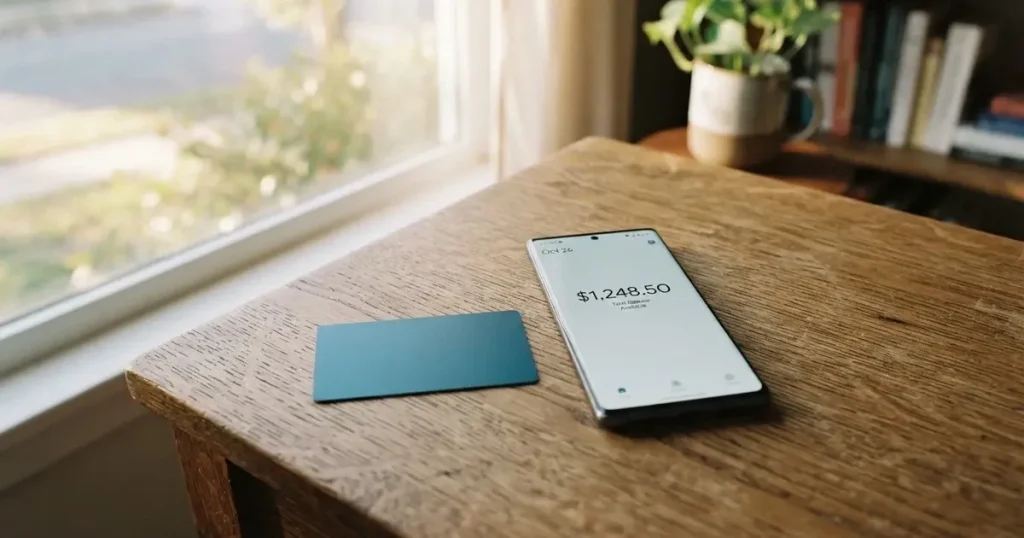
Decard is a credit card, not a prepaid debit. That single line determines almost everything about how it works. You do not load crypto onto it and spend it. Instead, the card extends you a credit line in Singapore dollars, and you settle that line later with USDT or USDC, or with cash. That structure shapes who the card is for, what it costs, and what the everyday experience actually feels like. If you are looking for a card that simply converts your crypto at the till and lets you pay, this is not quite that product. If you are looking for a premium metal Visa with a stablecoin repayment option, the picture looks different.
The card I am reviewing here is DeCard Luminaries, the current version of the programme. It is issued through DCS Card Centre Pte. Ltd., a Singapore entity, and runs on the Visa network. The annual fee is US$388, the physical card is metal, and a virtual card is issued once the fee is paid. A second, separate review of the older DeCard programme also exists, but the live product today is Luminaries.
Conditions on this page are current as of October 28, 2026.
Verdict
Decard scores 4.8 out of 10. That is a low average, but the score is not flat: the card is strong on its reliability and on the mechanics of everyday spending, and it is weak on cost. The reason the average lands where it does is the US$388 annual fee, which you cannot waive, on a card whose foreign exchange and other everyday charges are not always transparently priced.

| Criterion | Score | Why it lands there |
|---|---|---|
| Who can get it | 5 / 10 | Eligible ages 21 to 65, but the official pages do not list countries; access is by invitation or application with internal review |
| Cost | 2 / 10 | US$388 annual fee, cannot be waived, charged in SGD; the marketing page says 0% FX while the terms reserve a Foreign Exchange Conversion Charge |
| Top-up options | 4 / 10 | This is a credit line; crypto only repays it, via USDT or USDC through D-Vault, networks not stated |
| Reliability and complaints | 7 / 10 | Issued by DCS Card Centre Pte. Ltd. in Singapore, terms aligned with MAS guidance; no public complaint themes found |
| Everyday use | 7 / 10 | Metal Visa with a virtual card; cash advance from ATMs only outside Singapore; Apple Pay and Google Pay not confirmed |
| Total | 4.8 / 10 | Held back by the annual fee and the gap between marketing and terms |
I would steer this card towards people who specifically want a premium metal credit card that they can settle in USDT, and who are comfortable paying for the privilege. I would not steer it towards someone who is mainly looking for a cheap way to spend stablecoins day to day, or towards anyone who needs transparent, all-in pricing for travel spending.
Who they will issue the card to
The official Decard pages do not publish a list of eligible countries. What they do say is that applicants must be between 21 and 65, that there is no stated minimum income, and that access is by invitation or by application, with each case reviewed by the issuer. Singapore citizens and permanent residents verify themselves through Singpass. Everyone else uploads identity and proof-of-address documents, and a passport is given as an example.
In practice, that means two things. First, your country of residence and your citizenship are part of the review, but you will not find a country list to check in advance. Second, the burden of proof sits with you, not with the website, until the point at which you actually apply. If you live in a country that most card issuers quietly exclude, the only way to find out whether Decard will accept you is to try.
The terms are dated 2 October 2026, and they govern Luminaries. The card launched on the Visa network in Singapore in September 2025 according to a Visa Singapore press release, and the IDEMIA metal card partnership is dated 15 December 2025. The legal framework referenced in the terms is Singapore law, and the terms follow the Monetary Authority of Singapore’s E-Payments User Protection Guidelines.
A note on the issuer: the copyright on the website is held by DCS Card Centre Pte. Ltd., and the brand is described as “Powered by DCS Group”. A second entity, DCS SERV PTE. LTD., also appears in the corporate listings. The issuing bank and the precise licensing chain behind the Visa programme are not named on the pages I read. The product is presented as a credit card, not as an e-money or prepaid product.
How to get it
The signup path is straightforward on paper, even if the country question is left open. You start an application, and Singapore citizens or permanent residents go through Singpass. Other applicants upload documents, with a passport as the worked example, plus a proof of address. Applications are reviewed before approval; the official pages do not give processing times, levels, or reasons a file might be rejected.
Once you are approved, the virtual card is issued. It is activated once the US$388 annual fee is paid. The physical metal card is shipped after the fee is paid as well. The card itself is described as a 22-gram alloy with laser engraving, and a virtual card sits alongside it. Both are Visa-branded, and the account is denominated in Singapore dollars.
Replacement cards are handled under clause 15.6 of the terms, on conditions the issuer “stipulates”, and the fee is not stated. Delivery time, shipping cost, and the list of countries the physical card can actually be sent to are also not stated on the official pages. If any of these matter to you, raise them with support before paying the annual fee.
What it really costs
The pricing story is where this card loses the most points. The headline figure is the US$388 annual fee, charged in Singapore dollars, and the website is explicit that it “cannot be waived”. The metal card is included with that membership, valued at US$100 in the marketing copy, so the net cost of the metal piece is US$288, but the headline number is the US$388. A separate issuance fee is not stated.
| Fee or limit | What the official sources say |
|---|---|
| Annual fee | US$388, charged in SGD, cannot be waived |
| Card issuance | Not stated; metal card included with the membership |
| FX on overseas spend | 0% on the product page; terms reserve a Foreign Exchange Conversion Charge (clause 1.5.3) |
| Crypto conversion fee | Not stated |
| ATM withdrawal | Cash advance only outside Singapore, service fee per advance, rate not stated |
| Starting credit limit | Set by DCS at its discretion, amount not stated |
| Daily and monthly spend limits | Not stated |
The FX line is the one that requires the most care. The product page says “No foreign transaction fees on any overseas spending”. The terms, by contrast, say that other-currency transactions are converted at the “DCS retail rate of exchange” plus a “Foreign Exchange Conversion Charge” (clause 1.5.3). The two statements are not the same. If you spend in a currency other than SGD, the rate you actually get will depend on the conversion rate and the conversion charge, both set by the issuer, even though the marketing says 0%. Until the issuer publishes the conversion charge in a place you can quote, treat “0% FX” as a marketing line and not a contractual one.
The terms also list several other charges without quoting amounts: late payment charges, interest after the Due Date, an inactivity fee that starts after 90 days without transactions, an early termination fee that can apply within 180 days of approval, the cash advance service fee, and the foreign exchange conversion charge. The product team says these amounts are published in the website FAQ rather than in the PDF terms, but they are not on the page I read. A practical move is to ask support for a current schedule of all charges before you pay the annual fee, and to keep that reply somewhere you can find it.
A worked example is useful here. Imagine you spend SGD 100 in a shop in Tokyo. The card converts that JPY charge into SGD at the DCS retail rate and adds the conversion charge. The product page suggests you pay 0% on top, but the terms reserve a charge, so the actual figure could be different. The same SGD 100 paid for at an online store in euros would be converted at the same rate, with the same charge. If the merchant’s bank then adds its own cross-border fee, that is between you and the merchant. The only fee you control here is the card’s own conversion charge, and that is the one whose number is missing.
A second worked example: you withdraw cash from an ATM in Bangkok. The terms say the cash advance is “at any automated teller machine outside Singapore”, up to a limit set by DCS, with a service fee per advance, the rate of which is not stated. ATM disbursements do not earn rewards. If you withdraw cash, you will pay the ATM operator’s fee, the card’s service fee, and interest from the date of withdrawal, because that is how cash advances on credit cards typically work. The same withdrawal inside Singapore is not part of the product.
A third: you carry a balance past the Due Date. The terms list a late payment charge and interest after the Due Date, with the rates in the website FAQ rather than the PDF. Even if the rates are modest, the combination of a US$388 annual fee, an inactivity fee after 90 days, and a 180-day early-termination window means the card is unforgiving if your usage pattern is light or short.
How to top it up
This is the part most often misunderstood. Decard is a credit line, not a stored-balance card. You do not top it up with crypto in the way you would top up a prepaid card. The flow is closer to a conventional credit card, with one extra option: you can repay the outstanding balance in stablecoins.
In practical terms, you spend on the card, a bill is generated in Singapore dollars, and you settle that bill from your bank account, or you use the D-Vault page in the app or on the website. The D-Vault “Pay to card” flow accepts USDT and USDC, and that is the official stablecoin repayment path. The networks the issuer supports for those transfers are not stated on the official pages I read; a third-party aggregator mentions Polygon, but I have not used that as a source, so treat it as unofficial and unconfirmed.
Two consequences follow. First, there is no “balance” on the card in the way there is on a prepaid product. You cannot withdraw the card’s balance back to your bank, because there is no stored balance to withdraw. What you can do is overpay the credit line, and the terms treat that as a prepayment. Second, if the full Outstanding Balance is not paid by the Due Date, late payment charges and interest apply. Repayment fee and minimum amounts are not stated on the pages I read.
Termination works through DeCard Live Chat or in the app. You cannot terminate within 90 days of issuance unless the issuer agrees, and an early-termination fee is possible within 180 days of approval. On termination, the annual fee and any other fees are not refunded, and outstanding liabilities have to be repaid immediately. An inactivity fee can also kick in after 90 days without transactions.
Paying with it every day
The everyday experience is the card’s stronger side. The physical card is a 22-gram metal Visa, and a virtual card sits in the app for online use. The card account is in Singapore dollars, so any non-SGD spend goes through the conversion flow described above. Acceptance is wherever Visa is accepted.
Rewards are the main sweetener. The product page advertises cashback of up to 10%, capped at up to US$200 per month, plus 1 DePoints per US$1 spent. The payout currency is not stated on the official pages I read. The membership also includes two complimentary DragonPass lounge visits per year and travel accident cover of up to US$1,000,000, both of which are part of the Luminaries package rather than a separate add-on.
The mobile app is “DCS DeCard” on iOS and com.dcs.decard.android on Android. I did not pull store ratings, so I cannot tell you what the reviews are like today. What I can tell you is that the app is where the virtual card lives, where the D-Vault repayment flow sits, and where the Live Chat support channel is exposed. Apple Pay and Google Pay support is not stated on the official pages I read. Blocked merchant categories are also not stated, which means I cannot tell you whether MCC 7995 gambling transactions will go through, and the only way to know is to test it.
Disputes follow a familiar pattern. The terms tell you to raise problems with the merchant directly and not to withhold payment, which is the conservative advice that credit card terms have carried for decades. Disputed charges that are unresolved by the statement date do not qualify for promotional benefits. No chargeback time frames are stated, and the governing law is Singapore.
A few practical things worth noting. 3-D Secure applies to online card payments under the Visa Secure brand, so for online shopping you should expect an authentication step on some merchants. Address Verification Service, used by many US, Canadian and UK merchants, can decline foreign-issued cards, so some online checkouts may reject the card even when the balance is fine. Authorization holds on declined transactions can stay on the card for several days, which is normal across the industry and not specific to Decard.
What can go wrong
The risk picture for this card has three layers. The first is the cost layer, which the costs section covers. The second is the issuer and regulatory layer, and the third is the operational layer.
On the regulatory layer, the terms follow the Monetary Authority of Singapore’s E-Payments User Protection Guidelines, which is a useful baseline. The card is presented as backed by “regulated issuing infrastructure”, and the corporate entity is DCS Card Centre Pte. Ltd., a Singapore-incorporated company. The issuing bank and the specific licences behind the Visa programme are not named on the pages I read, and that is the kind of detail I would want to know before paying US$388. The brand describes itself as a premium credit card, and it sits in the same family of products as other Singapore-issued Visa credit cards, but I cannot point to a specific licence number on the website.
On complaints, I searched for “Decard DCS Card Centre card complaints review reddit trustpilot” and a follow-up search on 2026-10-20. I did not find a Trustpilot page for Decard or DCS Card Centre, and I did not find Reddit threads or news stories that discussed complaint themes for the card. The results were about unrelated sellers. That is not the same as a clean record, but it does mean there is no public pattern of complaints to warn you about.
On security, the terms limit the cardholder’s liability for a lost or stolen card only if the holder notifies the issuer immediately and files a police report or a statutory declaration. The card sends transaction alerts with a notification threshold, which is the kind of detail that helps if a card is used without your knowledge. In-app freeze and insurance of funds are not stated, and “insurance of funds” is an unusual phrase for a credit product anyway, because the funds in question are the issuer’s credit line, not your stored balance.
A broader category of risk to keep in mind: Visa and Mastercard themselves do not issue crypto cards to consumers. They license issuers, and they can suspend a programme. Visa’s 2022 termination of its global agreements with FTX, and the earlier 2018 suspension of WaveCrest in Europe, are the historical examples. A programme closure typically means a notice period, then a stop on spending and loading, then a window to withdraw balances where balances exist. With Decard there is no balance to withdraw, but the same kind of closure would still leave you with a card that does not work and a credit line that has to be settled.
On the stablecoin side, transfers are typically irreversible, so a USDT or USDC repayment sent on a network the issuer does not support, or to an address of another network, can be lost or need manual support recovery with no guarantee. Circle stopped supporting USDC on Tron in February 2024, so USDC on TRC20 is not a native option. If the issuer tells you to send USDT on a specific chain, send on that chain, and double-check the address.
What to take instead
Three cards make for a useful comparison because each one takes a different approach to the same problem. None of them is a drop-in replacement for Decard, but each one is a real alternative depending on what you actually need.
Sponge is a virtual card created by createSpongeCard and described on the homepage as a credit card issued by Rain, a Visa Principal Member, accepted wherever Visa is accepted. It is a collateral-backed product: USDC is moved from the Sponge wallet with the card fund command, with base listed as an example chain and the SDK mentioning base or solana as optional chains. Country eligibility, fees, and rewards are not stated on the card pages I read. Sponge’s overall score is 4.9 out of 10, just a notch above Decard. If you want a virtual card and you already hold USDC on base or solana, Sponge is closer to the “spend your stablecoin” model than Decard is.
Nexo offers a virtual card that activates in the app and a physical card, issued by DiPocket UAB. The Mastercard trademark notice is on the page but the network is not stated explicitly. The product has no monthly, annual, or inactivity fee, which is the most obvious contrast with Decard’s US$388. There is a catch: the virtual card needs at least US$50 in the account to activate, and the physical card requires a balance above US$5,000 in digital assets and at least the Gold tier. Foreign exchange is 0.2% on weekdays in the EEA, UK, and Switzerland, 2% elsewhere, with higher rates on weekends. The card spends from the Nexo account, supports over 100 digital assets, and offers cashback in NEXO tokens or Bitcoin in Credit Mode, with the rate depending on the loyalty tier. Nexo’s overall score is 6.3 out of 10. If your main complaint about Decard is the annual fee, Nexo is the alternative that addresses it most directly, but the US$5,000 threshold and the EEA/UK residency rule will rule out a lot of readers.
Xplace is a Visa product with virtual cards issued instantly and physical cards (Silver live, Gold and Platinum “coming soon”, with delivery in 7 to 14 business days). It runs two modes: Cash mode spends a stablecoin balance, Credit mode borrows against holdings. The annual fee structure is tiered: Basic is free, Silver US$99, Gold US$249, Platinum US$999. Borrowing has no origination fee. Platinum advertises 0% FX, and the other tiers do not give a figure; stablecoin spending is described as having “no hidden spread”. Funding accepts BTC (cbBTC), ETH (wETH), SOL, JitoSOL, USDC, USDT, and xStocks on Solana. Credit-mode cashback is tier-based and paid in USDC. Xplace’s overall score is 7.7 out of 10. If you want the closest thing to a tiered metal-card experience with stablecoin mechanics, Xplace is the most developed alternative in this list.
| Card | Score | Annual fee | Crypto model | Where it lands |
|---|---|---|---|---|
| Decard Luminaries | 4.8 | US$388, cannot be waived | Credit line repaid in USDT/USDC | Premium metal Visa, premium price |
| Sponge | 4.9 | Not stated | USDC collateral, base or solana | Virtual card, no stated fees |
| Nexo | 6.3 | None | Spends from Nexo account, 100+ assets | No annual fee, US$5,000 physical-card threshold |
| Xplace | 7.7 | Basic free, Silver US$99, Gold US$249, Platinum US$999 | Cash mode or Credit mode, USDC cashback | Tiered metal-style card, broadest stablecoin support |
A note on country availability: none of the three alternatives publishes a clean country list on the pages I read, which is the same situation you find with Decard. The honest answer is that you only know whether a given card will work in your country by starting an application or by asking support.
Who I would recommend it to
The case for Decard is narrow, and I would make it in three steps. The first step is the most important: this card is for someone who already wants a premium metal Visa credit card, who is happy with the US$388 annual fee, and who sees the stablecoin repayment as a useful add-on rather than as the main reason to apply. If the metal Visa is the goal and the stablecoin settlement is the cherry on top, the card starts to make sense. If the stablecoin settlement is the goal and the metal Visa is incidental, the card is the wrong shape.
The second step is geography and identity. The card’s onboarding is built around Singapore citizens and permanent residents, who verify through Singpass. For everyone else, the path is a document upload, an internal review, and the absence of a published country list. If you are in a country that most card issuers exclude, the only way to find out is to try, and the US$388 is on the line if the answer is no.
The third step is pricing discipline. The card’s product page says 0% FX. The terms reserve a Foreign Exchange Conversion Charge. The annual fee is non-waivable. The inactivity fee starts after 90 days. The early-termination fee can apply within 180 days. If you are going to apply, get the full schedule of charges in writing, decide which features you will actually use, and only then decide whether the US$388 is worth it. The cashback cap of US$200 a month is generous by industry standards, but it has to clear that annual fee to come out ahead, and the 1 DePoints per US$1 mechanic is a separate tally whose value the official pages do not state.
If your situation is “I want to spend stablecoins in shops without thinking about it”, there are cheaper and more direct ways to do that, including the alternatives above. If your situation is “I want a premium metal credit card and I would like the option to settle the bill in USDT or USDC”, Decard is one of the few products that does exactly that, and the cost is the price of admission.
Frequently asked questions
What is Decard?
Decard is the consumer brand for a Singapore-issued Visa credit card, currently marketed as DeCard Luminaries. It is run by DCS Card Centre Pte. Ltd., and the legal terms are Singapore law. The product is a credit line, not a prepaid card, and the headline feature is a metal physical card plus a virtual card.
How does the Decard card work?
You apply, complete identity verification, pay the US$388 annual fee, and receive a virtual card immediately and a physical metal card after the fee is paid. You spend on the card, a bill is generated in Singapore dollars, and you can settle the bill through D-Vault using USDT or USDC, or through a normal bank transfer. It is a credit card with a stablecoin repayment option.
Is Decard a bank?
The brand is run by DCS Card Centre Pte. Ltd., which is a Singapore company in the DCS Group. The pages I read describe the product as “backed by regulated issuing infrastructure”, and the issuing bank and specific licences are not named on the public site, so I cannot confirm that Decard itself is a bank.
Who owns Decard?
The copyright is held by DCS Card Centre Pte. Ltd., with DCS SERV PTE. LTD. also listed in the corporate pages, and the brand described as “Powered by DCS Group”. Specific ownership behind the DCS Group is not stated on the official pages I read.
Is Decard available in my country?
The official pages do not publish a country list. Singapore citizens and permanent residents use Singpass; other applicants upload passport and proof of address and are reviewed case by case. The only way to confirm eligibility is to start an application or contact support.
How do I get a Decard card?
You apply on the official site, complete the identity check, wait for approval, pay the US$388 annual fee, and you receive the virtual card immediately and the physical metal card after the fee clears. Processing time, country restrictions, and rejection criteria are not stated on the public pages.
Does Decard require KYC?
Yes. Singapore citizens and permanent residents verify through Singpass. Other applicants upload identity and proof-of-address documents, with a passport as the worked example. Applications are reviewed before approval.
How do I add Decard to Apple Wallet or Google Pay?
The official pages I read do not state whether Apple Pay or Google Pay are supported. The only safe route is to test it in the app once you have the card, or to ask the in-app Live Chat before relying on it for a specific payment.
How do I repay Decard with crypto?
You use the D-Vault “Pay to card” flow in the app or on the website, which accepts USDT and USDC. The supported networks are not stated on the official pages I read, so confirm the network in the app before sending. Transfers are typically irreversible, and a deposit sent on the wrong network can be lost.
How do I close my Decard account?
You terminate through DeCard Live Chat or in the app. The terms do not allow termination within 90 days of issuance unless the issuer agrees, and an early-termination fee is possible within 180 days of approval. On termination, the annual fee and other fees are not refunded, and outstanding liabilities are due immediately.
Credit and cashback cards put to the test – cryptocardtested
Content created by the «cryptocardtested» team