
What the Ethena Pay card actually does with your crypto
 Available in US
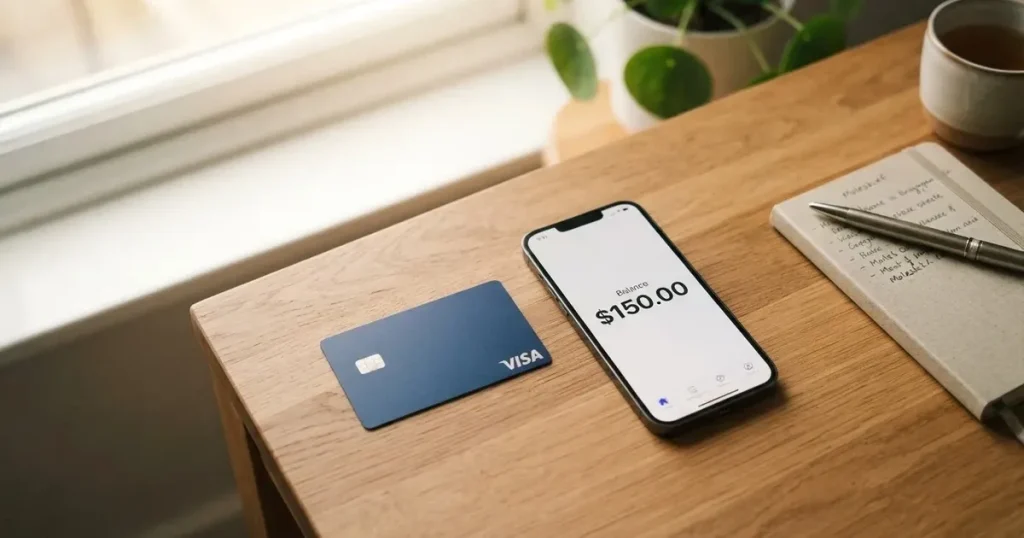
Ethena Pay is not a bank account with a card attached. It is a payment card that spends the USDe sitting as collateral in your own self-custodial wallet, and right now it is an invite-gated beta product rather than a service you can simply walk up and open. That single fact shapes almost everything else in this review: the low headline fees, the reward tiers, and the very real ways it can go wrong. I scored it 6.7 out of 10 — good where it charges you almost nothing, thin where it tells you almost nothing.
The conditions described here are current as of October 28, 2026.
Verdict: 6.7 out of 10, built for people already holding USDe
The card suits one reader above all others: someone who already holds USDe, or other digital assets they are willing to use as collateral, and who wants to spend that balance at ordinary shops without first selling it for fiat. In 48 countries across Latin America, the Caribbean, Asia and the Middle East, Africa and Oceania, that is a genuinely useful thing to have. For someone who has no crypto at all, the card does very little for you — the reward structure is what carries it, and the reward structure is thinner than the marketing suggests.
Where I would not push it: if your priority is a predictable, insured deposit with a familiar name on the statement. Ethena Pay Ltd. itself states it is “not licensed, registered, authorized, or otherwise approved” by financial regulators, the official terms name no card issuer, and the whole thing runs on an iPhone beta with an invite. That is not disqualifying on its own, but it is a different category of risk from a mainstream bank card, and you should decide with that in your head rather than discovering it later.
| Criterion | Mark | Why |
|---|---|---|
| Who can get it | 7 / 10 | Invite-only beta across 48 countries in Latin America, the Caribbean, Asia and the Middle East, Africa and Oceania; not offered to U.S. persons |
| Cost | 8 / 10 | Virtual card, account opening and maintenance are free; FX on non-USD spend “typically around 1.0%” at the network rate; ATM withdrawal $1.00 plus 0.65% |
| Top-up options | 5 / 10 | Self-custody wallet with USDe and other assets as collateral, spending debits USDe; MoonPay and Iron named as partners; coins and networks not named |
| Reliability and complaints | 5 / 10 | Ethena Pay Ltd., Malta, number C114576, states it is not licensed; issuer not named in the terms; unofficial: Third National, Signify (Rain); beta of 400 users, no complaints found |
| Everyday use | 8 / 10 | Virtual card in about a minute with Apple Pay; physical cards in the Standard, Pro and VIP tiers; an ATM exists; Google Pay “available soon”; unofficial: virtual only |
| Total | 6.7 / 10 | Cheap to hold and spend from, thin on disclosure and on top-up options |
Two of those rows deserve more than a table cell. The cost mark is high because the card charges nothing to issue, nothing to keep open and nothing to spend in USD, and its one unavoidable cost — the roughly 1.0% FX passed through from the network — is smaller than most rivals charge. The reliability mark is low because the company tells you plainly that it is unregulated, and because the terms you would read to find out who stands behind the card do not say.
Will they give you the card to someone in 48 countries
Yes, if you are in one of 48 listed countries and you have an invite. The list is regional rather than a strict ranking of who gets approved, so read your own country in it rather than guessing.
Broken out, Latin America has 17: Argentina, Belize, Bolivia, Brazil, Colombia, Costa Rica, Ecuador, El Salvador, Guatemala, Guyana, Honduras, Mexico, Panama, Paraguay, Peru, Suriname and Uruguay. The Caribbean adds 12 countries, unnamed on the card’s own pages. Asia and the Middle East account for 8: Hong Kong, Japan, Malaysia, Pakistan, Philippines, Singapore, Thailand and the UAE. Africa has 9: Cote d’Ivoire, Egypt, Ghana, Kenya, Morocco, Senegal, South Africa, Uganda and Zambia. Oceania has 2: Australia and New Zealand.
The United States is excluded — the card is not offered to U.S. persons. Elsewhere, the terms list restricted jurisdictions under section 4.6, including Belarus and Russia: access is restricted for anyone “located in, ordinarily resident in, established in, or accessing the Services from” them. Notice what that phrasing actually turns on. It is residence and location, not citizenship. A Russian citizen living in, say, Mexico is not caught by this clause as written; a Russian citizen living in Moscow is. The reverse also holds: being in an approved country does not help if you are ordinarily resident somewhere restricted.
Where the US, EU, UK, Canada, Switzerland, Taiwan and South Korea fit, the card’s own news pages say “coming soon,” which in practice means not available now.
How to get the card, and what the checks involve
The process is short on paper: register, pass verification, and generate a virtual card, which takes about a minute. The virtual card runs on the Visa network, is denominated in USD, and can be added to Apple Pay straight away. Physical cards exist in the Standard, Pro and VIP tiers. What the card’s public pages do not say is anything about physical card delivery — not which countries it ships to, not how long it takes, not what it costs.
The verification step is the substantive part. Under section 4.8 of the terms, Ethena Pay may verify you itself or through third parties including Sumsub, and may ask for “government-issued photo identification, proof of address, source of funds information”, tax data and biometric or liveness data. You must be 18 or older, and one account per person is allowed.
Two honest warnings about this. First, “source of funds information” and tax data are not trivial asks, and they are asked of crypto holders, who tend to hold funds in ways that are awkward to document neatly. Second, passing the checks is not the same as being approved — that specific point comes from a third-party report rather than the card’s own pages, and it is the sort of thing worth assuming anyway. No tiered KYC levels are described beyond that single verification step.
You will also need to be able to receive money in the form the card expects, which brings us to the part that trips people up most often.
Fees: what it really costs to spend from USDe
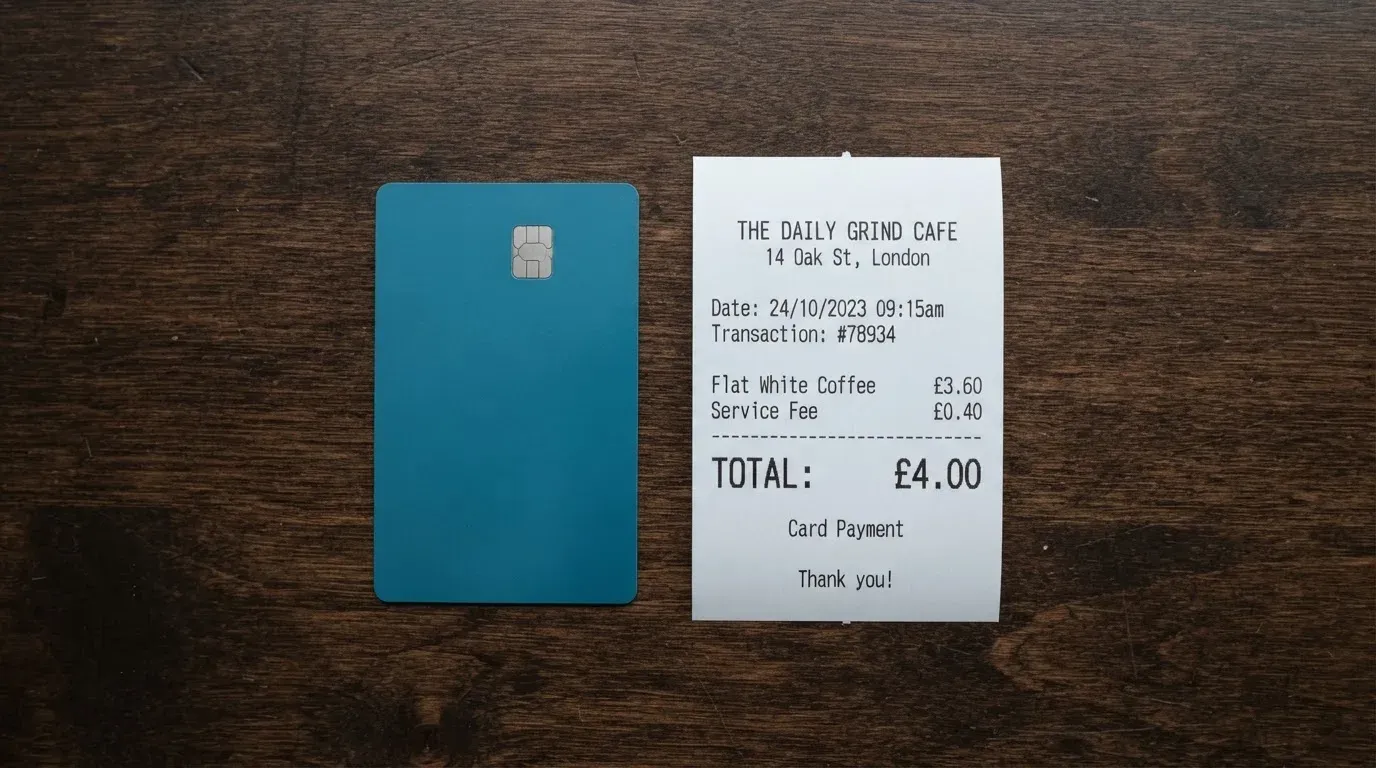
The ordinary case is cheap. Issuing, replacing and activating the virtual card are free, as is opening the account and keeping it open monthly. There is no minimum balance and no inactivity fee. Spending in USD carries no purchase fee and 0.00% interest. There is no cross-border fee and no separate fee on domestic USD purchases.
| Fee or limit | What the card states |
|---|---|
| Virtual card issuance | Free |
| Replacement and activation | Free |
| Account opening and monthly maintenance | Free |
| Minimum balance or inactivity fee | None |
| Physical card fees by tier | Not listed |
| FX on non-USD transactions | “Typically around 1.0%”, passed through from the card network at cost — not a cap or a guarantee |
| Domestic USD purchase | No fee |
| Cross-border fee | None |
| Interest on purchases | 0.00% |
| Crypto conversion fee | Not stated |
| ATM cash withdrawal | $1.00 plus 0.65% of the amount, plus any ATM operator surcharge |
| Late payment fee | Up to $40 |
| Returned payment fee | Up to $29 |
| Third-party fees | Gas and funding partner fees charged separately |
| Spending limits | None listed; transaction limits may be imposed and changed without notice |
| Daily Boost balance cap | Standard $5,000, Pro $100,000, VIP $1,000,000 |
Three everyday payments, and which of those lines actually bites:
Coffee in your own country for $4. Nothing but the purchase itself. No fee, no interest, and since it is USD there is no FX line either. Cashback is where it goes wrong for you: transactions under $1.00 earn nothing, and a $4 purchase sits in the lowest reward band.
A $30 subscription charged in EUR. This is the line most people will meet first. You pay $30, and the network converts at its own rate with roughly 1.0% passed through on top — call it about $0.30 on that purchase. The rate is described as “typically around 1.0%” rather than a fixed percentage, so it is a market price, not a promise. Also check whether the merchant counts as an excluded category: cash advances, ATM withdrawals, crypto, stablecoin, NFT and securities purchases, gambling, gift cards, peer-to-peer transfers and account funding all earn no cashback.
Withdrawing $200 cash at an ATM. $1.00 plus 0.65% of $200, so $2.30 before the ATM operator adds whatever surcharge it likes, and availability itself depends on your eligibility rather than being guaranteed. If the aim is simply to get money out of your own wallet, this is the most expensive of the three routes by a wide margin.
Two limits are worth internalising. There are no published spending limits, but the terms reserve the right to impose transaction limits and change them without notice. Separately, the Daily Boost reward has balance caps — $5,000 on Standard, $100,000 on Pro, $1,000,000 on VIP — and to earn it you need one card transaction per month. An unofficial third-party report adds something that matches the spirit of those terms: that spending capacity is dynamic, tied to your collateral value, and can be cut even to zero. I could not confirm that from the card itself, but if your collateral is volatile, treat your spending limit as variable whether or not you believe that report.
How to Top up the wallet behind the card
The model is the interesting part and it is also the source of the score’s weakness here. Your crypto sits in a self-custodial wallet; Ethena Pay holds USDe and supported digital assets there as collateral; when you tap the card, the spend debits your USDe balance. Keys and funds stay with you.
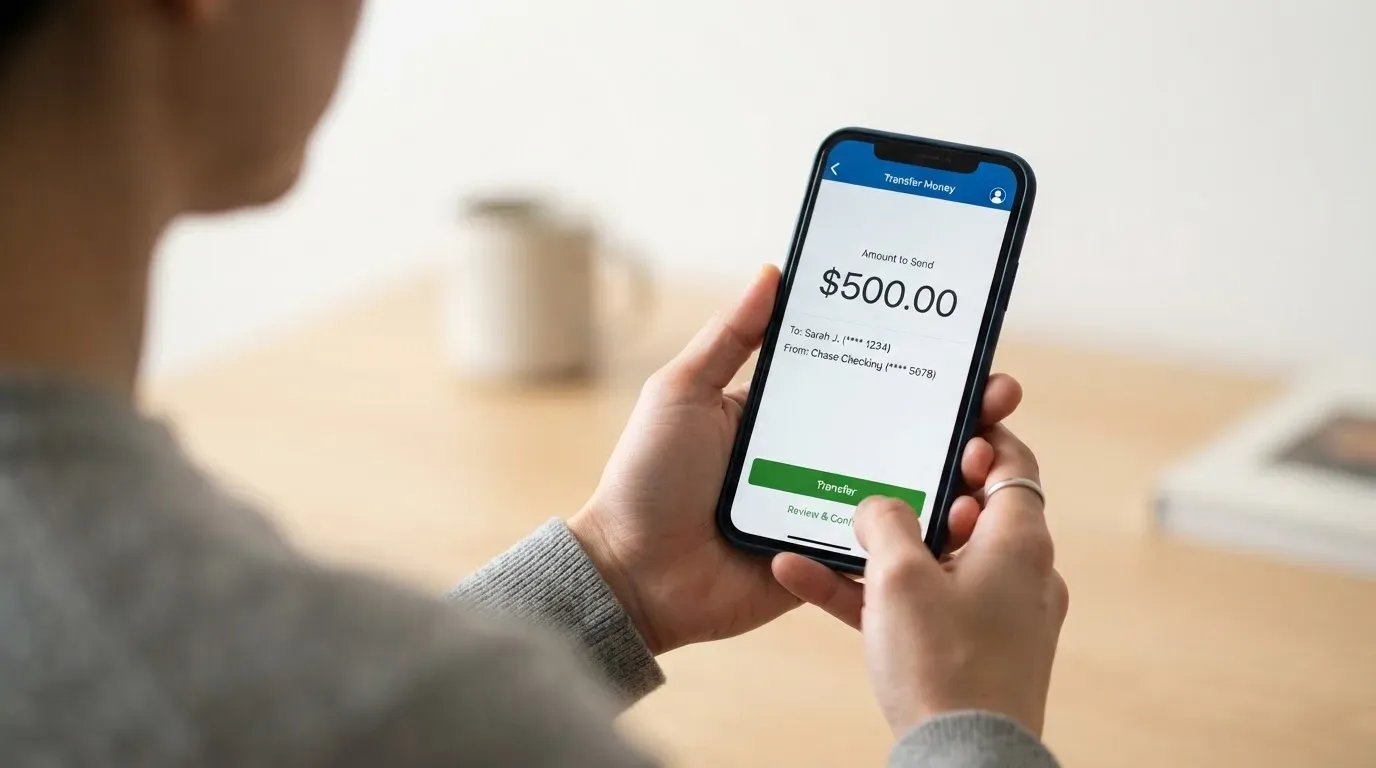
Alongside that, the card names funding partners MoonPay and Iron. What it does not publish is the thing you actually need on the day: which coins and which networks are supported. One report describes the app launching on Avalanche, which is a hint rather than a specification. If you send on the wrong network, the transfer is irreversible — the blockchain cannot undo it, and recovery through support is manual with no guarantee attached.
So the honest procedure is: work out which asset and network your card expects before you send anything, get that right once, and treat the first top-up as an amount you would not mind losing. Sending to another Ethena Pay user is free. No deposit fee is published, and the minimum top-up is not stated. Third-party funding fees — MoonPay, Iron, on-chain gas — are charged on top and are not the card’s to control.
Paying with it every day
Where it is strong: the virtual card arrives in about a minute, works on Visa, and drops into Apple Pay, which is where most contactless spending actually happens. Google Pay is listed as “available soon.” There is an ATM function. The app is an iPhone beta; the Android version is described as planned. An unofficial note says the app is English-only, which is worth weighing if you would rather not run your money through an English interface.
Blocked merchant categories are not stated on the card’s pages, so I cannot tell you which shops will refuse it. That matters more than usual for this kind of card, because a merchant can look up the card’s issuing institution and country from the number itself, and some will treat an unfamiliar or foreign-issued card with extra caution. A declined payment can also leave a hold on your funds for several days.
The rewards are the strongest argument for the card, and they are structured in a way that rewards larger balances more than frequent spending. Cashback is paid in AVAX daily after settlement.
| Tier | Cashback bands | Daily Boost |
|---|---|---|
| Standard | 4% on the first $2,500 monthly, 1% on $2,500–$4,000, 0% above | 5% p.a. up to $5,000 |
| Pro | 4.5% up to $8,000, then 2%, then 1%, then 0.5% | 6% p.a. up to $100,000 |
| VIP | 5% up to $20,000, then 2%, then 1%, then 0.5% | 6% p.a. up to $1,000,000 |
Three rules cut into those numbers. Anything under $1.00 earns nothing, so the card works against small everyday purchases. The reward is in AVAX, not dollars, so your cashback follows that token’s price. And refunded, charged-back or otherwise ineligible purchases reverse their cashback and drop out of your monthly spend total, which is how the top bands get reclaimed. Pro tier access comes through a subscription or referrals.
If something goes wrong, the process is stated: email [email protected], acknowledged within five business days, with a final response targeted within fifteen. Refunded and charged-back purchases can be deducted from your balance, and a negative balance remains your liability. No chargeback time frames are stated. Support is by email at [email protected], phone 1-844-ETHA-PAY, a contact page and in-app help.
What can go wrong
Start with the entity. Ethena Pay Ltd. is a Maltese limited company, number C114576, registered at Ta’ Xbiex, Malta. It states plainly that it is “not licensed, registered, authorized, or otherwise approved” by financial regulators and works through Third-Party Providers. The official terms name no card issuer. Third-party sources report the card being issued by Puerto Rico-chartered Third National and managed by Signify Holdings, known as Rain — but that is unofficial and not confirmed by the card.
Then the product’s age. It launched on Avalanche as an iOS beta with 400 early users. The invite-gated beta opened on 1 September 2026 in 49 countries according to one third-party source, whose page was updated in late September; version 1.3.0 later improved notifications, limits, cashback and verification. A 400-user beta is how you find bugs, not how you find a track record. If the programme stalls, you are dependent on a small company’s priorities.
Then the custody question, which cuts both ways and is where most commentary gets it wrong. Because this is self-custody, Ethena Pay says it “doesn’t hold your funds, keys, or seed phrases” and offers no custodial or safeguarding service. That is a real protection against a provider being compromised — but it also means your keys are yours alone. Lost keys cannot be recovered, and the network has no mechanism to freeze or return funds sent to the wrong place. Copy-paste malware that swaps a destination address is a live and unremarkable attack. Two-factor authentication and card freeze are not stated.
Then the evidence base, which is thin rather than damning. No official incidents surfaced. No Trustpilot or Reddit pages appeared in a single search. What exists is editorial ratings — SpendNode at 3.9 out of 5 in September 2026 — and one user report, from a Philippines user who said the app quoted a $10 charge for a first card. That single charge appears isolated, and it contradicts the free-issuance line in the official fees. If you are comparing that against the mainstream history of this category, it is a small company with no public complaint record yet, which is not the same as a company with a good one.
Finally, the tax side, flagged as a matter to raise with a qualified adviser rather than answered here. If you fund a payment from digital assets, that is generally treated as a disposal, and each card payment can be one. How much you owe depends on your situation and your jurisdiction, and this review is not tax advice.
What to take instead
Three comparators, all of them also young. The pattern worth noticing is how much more each of them publishes about cost and funding — which is exactly the gap that holds Ethena Pay back.
| Ethena Pay | Sponge | Nexo | Xplace | |
|---|---|---|---|---|
| Score | 6.7 / 10 | 4.9 / 10 | 6.3 / 10 | 7.7 / 10 |
| Card | Virtual, about a minute; physical in three tiers; Visa | Virtual only | Virtual and physical; Mastercard trademark shown | Virtual instantly; physical Silver live |
| Issuing entity | Not named in terms | Rain, a Visa Principal Member | DiPocket UAB | Not stated |
| Annual or monthly fee | None for the virtual card | Not stated | No monthly, annual or inactivity fee | Basic free, Silver $99, Gold $249, Platinum $999 |
| FX fee | “Typically around 1.0%”, passed through | Not stated | 0.2% weekdays / 0.7% weekends (EEA, UK, CH); 2% / 2.5% rest of world | 0% on Platinum; other tiers not stated |
| Collateral model | USDe in a self-custodial wallet | USDC from the Sponge wallet | Nexo account, over 100 digital assets | cbBTC, wETH, SOL, JitoSOL, USDC, USDT, xStocks on Solana |
| Cashback | AVAX, up to 5% by tier | Not stated | NEXO or BTC, Credit Mode only, over $5,000 held | USDC, 0.5% to 2% by tier |
| Who it is for | USDe holders in 48 countries | Not stated on card pages | Residents and citizens of selected European countries, EEA and UK | Not stated; services not available in all jurisdictions |
Sponge is the thinnest of the four: on a 4.9 out of 10, with no country list, no stated fees and no stated rewards. Nexo publishes the most complete fee schedule of the group, with clearly differentiated weekday, weekend and regional FX rates, but restricts itself to residents and citizens of selected European countries including the EEA and the UK — citizenship and residence both, which is a wider gate than Ethena Pay’s. Xplace scores highest at 7.7 out of 10, publishes its annual fees plainly from free to $999, and names its supported assets and network, but its highest score is partly bought with the clearest terms in the comparison.
Where that leaves you: if you are in Ethena Pay’s 48 countries, hold USDe, and want a card this month without a subscription, the alternative set is thinner than the score comparison suggests. If you are in Europe, the field is more crowded and Nexo’s disclosed FX rates are the thing to weigh against Ethena Pay’s “typically around 1.0%”. If you are in the US, the UK, Canada, Switzerland, Taiwan or South Korea, all of this is still “coming soon” and none of it is available to you today.
Who I would recommend it to
Yes, if you already hold USDe, you are in one of the 48 countries, you have an invite, and you are comfortable being your own custodian — comfortable writing down a seed phrase and accepting that nobody can recover it for you. The free virtual card, the 0.00% on purchases and cashback in AVAX make this a good fit for someone whose money is already in that shape.
Yes, with eyes open, if you are an existing crypto user in one of those countries who wants a second, low-cost card for spending and is not putting your rent on it. Check the top-up network before your first transfer and keep early balances small.
No, if you have no crypto holdings and are only interested in the cashback. The reward bands cap out quickly, small purchases earn nothing, the reward is paid in AVAX, and you are taking on self-custody risk for a marketing number.
No, if you are in the US, the EU, UK, Canada, Switzerland, Taiwan or South Korea, or if you ordinarily reside in Belarus or Russia.
No, if a deposit insured by a bank matters more to you than the fee level. This is an invite-only beta from a company that says it is not licensed, whose terms name no card issuer, and whose app is 400 users old. That does not make it unsafe. It makes it early, and early things should be sized accordingly.
Frequently asked questions
What is the Ethena Pay card?
It is a Visa payment card that spends the USDe you hold as collateral in your own self-custodial wallet, rather than money sitting in a bank account. Spending debits your USDe balance directly. The virtual version is generated in about a minute, works with Apple Pay, and physical cards exist in the Standard, Pro and VIP tiers. Keys and funds stay with you, so nobody at the company can move them.
How does Ethena Pay card work?
You hold supported digital assets in a self-custodial wallet, with USDe as the spendable balance. When you pay, the card debits that USDe balance and the merchant receives ordinary card payment. In the background, crypto is converted and presented as a card balance — which is why the card behaves like a prepaid card. Your collateral stays yours; the card only draws down what you have.
Is Ethena Pay a bank?
No. The company states plainly that it is “not licensed, registered, authorized, or otherwise approved” by financial regulators and works through Third-Party Providers. Ethena Pay Ltd. is a Maltese limited company, number C114576, and the official terms name no card issuer. So it is a crypto brand and programme front-end, not a bank, and your balance is not a bank deposit.
Who owns Ethena Pay?
Ethena Pay Ltd. is a Maltese limited company registered at Ta’ Xbiex, Malta. Third-party sources report the card being issued by Puerto Rico-chartered Third National and managed by Signify Holdings, known as Rain — but that is unofficial and not confirmed by the card itself. It launched on Avalanche as an iOS beta with 400 early users.
Which countries is the card available in?
48 countries: 17 in Latin America, 12 in the Caribbean, 8 in Asia and the Middle East, 9 in Africa and 2 in Oceania. Australia and New Zealand are the two Oceanian entries. The United States is excluded. It is an invite-only beta, so being in a listed country is necessary but not sufficient — and the US, EU, UK, Canada, Switzerland, Taiwan and South Korea are all described as coming soon.
Does Ethena Pay require KYC, and what does it ask for?
Yes. Under section 4.8, verification is done by Ethena Pay or third parties including Sumsub, and may include “government-issued photo identification, proof of address, source of funds information”, tax data and biometric or liveness data. You must be 18 or older and hold one account per person. No tiered verification levels are published beyond that, and passing the checks does not guarantee approval.
How do I top up the card, and which network do I use?
You send crypto to the self-custodial wallet that backs the card, with USDe as the spendable balance; funding partners MoonPay and Iron are mentioned. The card’s own pages do not list which coins or networks are supported, which is the single biggest practical gap — one report describes an Avalanche launch. Sending on an unsupported network is irreversible. Check before you send, and keep your first transfer small.
Is the Ethena Pay card free?
The virtual card is: issuance, replacement, activation, account opening and monthly maintenance all cost nothing, with no minimum balance and no inactivity fee. USD purchases carry no fee and 0.00% interest. What costs money is FX on non-USD spend, “typically around 1.0%” passed through from the network, and ATM withdrawals at $1.00 plus 0.65%. Physical card fees by tier are not listed.
Is it safe, and what happens if I lose my keys?
Because the wallet is self-custody, Ethena Pay says it “doesn’t hold your funds, keys, or seed phrases” — so the company cannot lose them, and you are protected from a provider hack. The other side of that coin is that you carry the whole risk: lost keys cannot be recovered, blockchain transfers are irreversible, and address-swapping malware is a routine threat. Two-factor authentication and card freeze are not stated on the public pages.
Is the Ethena Pay card worth it?
For someone who already holds USDe in one of the 48 countries, yes: no monthly fee, no USD purchase fee, and cashback in AVAX paying up to 5% by tier after settlement. For everyone else, weigh it against the gaps — no published spending limits, no named coins or networks for funding, no named issuer in the terms, an English-only app by one unofficial account, and an invite-gated beta with 400 users and no public complaint record either way.
Credit and cashback cards put to the test – cryptocardtested
Content created by the «cryptocardtested» team