
A crypto-balance Mastercard that is free to hold, Brazil-only, and thin on published numbers
 Available in US

The Foxbit card is a Mastercard that spends the crypto balance sitting in your Foxbit account. There is no monthly fee and no annual fee, the card currency is the Brazilian real, and you can push it into Apple Pay or Google Pay. That is the good part. The part that decides whether it is any use to you is narrower: Foxbit says the card is released only to individuals who are already clients of the Brazilian exchange, and no other country is named. If you are not a Foxbit client with a Brazilian account, this card is not for you, and no amount of reading will change that.
I gave it 5.6 out of 10. It is a competent Brazilian crypto exchange card that has not yet grown into a well-documented payment product: the pages name a lot of what the card does and very little of what it costs to actually use it.
The conditions described below are current as of October 28, 2026.
Verdict: 5.6 / 10
Here is the score broken down, criterion by criterion, with the reason I gave for each mark.
| Criterion | Mark | Why |
|---|---|---|
| Who can get it | 2 / 10 | Card is for individual clients of the Brazilian Foxbit exchange; no other country named |
| Cost | 7 / 10 | Issuance free, annual and monthly fee R$ 0.00; crypto transactions 0.0%; “IOF + taxa de câmbio” 6% (what it applies to is not disclosed); ATM R$ 6.90 |
| Top-up options | 6 / 10 | Top up BRL via Pix, then buy BTC, ETH, USDT, XRP, ADA; networks not named |
| Reliability and complaints | 6 / 10 | Foxbit PSAV Ltda., CNPJ 21.246.584/0001-50, Central Bank authorisation still planned, issuer not named; Reclame Aqui 7.9 out of 10, 250 complaints January–June 2026, 88.1% resolved; unofficial: issuer Pomelo |
| Everyday use | 8 / 10 | Mastercard, Apple Pay and Google Pay, ATM R$ 6.90; virtual or plastic not clarified |
| Total | 5.6 / 10 |
The audience for this card is narrow and worth saying out loud: Foxbit clients in Brazil who are spending crypto in reais. If that is you, the card does one thing reasonably well and gives it away to do it. If you are anywhere else, or you want a card that works as an ordinary everyday bank card with predictable statements, this is not the thing to look at.
The lowest score on the sheet belongs to eligibility, and that is not a mark against quality so much as a mark against reach. A 2 out of 10 on who-can-get-it means the pool of people for whom this is even a candidate is very small. No amount of low fees rescues that.
Who can get the card
The answer is short and I will not dress it up: you must already be a Foxbit client, and the page says the card is “liberado apenas para pessoas físicas” — released only to individuals. Not companies, not entities, not a business account holder. Individuals only.
That is the whole stated eligibility rule. Foxbit does not publish a nationality or country-of-residence list beyond the Brazilian context the exchange itself operates in, and the fact that the card currency is BRL and top-ups run through Pix tells you where it is meant to be used.
If you read this and the answer to “is this me?” is no, stop here. The rest of the review is still worth a skim for the mechanics, because the same structure of crypto-funded prepaid card appears in other products, but I will not pretend this one is a general-purpose travel card.
Two account levels exist on the exchange side, and they shape what you can do with money once you are in:
- Simplified account — a monthly BRL limit of R$ 5,000, and no crypto transfers.
- Verified account — up to R$ 75,000 in monthly deposits and R$ 300,000 in monthly BRL withdrawals, with crypto withdrawal limits personalised per account.
Documents required and processing times are not stated on the public pages. I want to be honest about what that means for you: you cannot plan around a verification timetable you cannot read, so treat the time from signing up to verified status as unknown.
How to get it
The route Foxbit itself describes is: register free at app.foxbit.com.br, then choose “Solicitar meu cartão”. The KYC process is not described on the page — what documents you need, in what order, how long each step takes — and the minimum age is not stated.
The card is a Mastercard, in BRL. The page mentions tap, insert, swipe and online use. Whether the card you get first is virtual or physical is not specified, and delivery terms are not stated, so “how long until it arrives, and in what form” is a question for Foxbit rather than one this page can answer.
One inconsistency you should notice while you read: the page describes the product in prepaid terms in some places and in credit-function terms in others. That is not a small editorial detail. A prepaid card draws on a stored balance and cannot overdraw; a credit function means the issuer extends a line. Those behave very differently when money runs short. Foxbit does not resolve which one you are getting.
Fees: what it really costs
Free to hold, less free to use. Issuance is free, the annual fee is R$ 0.00 and the monthly fee is R$ 0.00. There are no paid tiers — a single card, with cashback bands rather than subscription levels.

The costs table below is everything the public pages actually state:
| Fee or limit | What the card states |
|---|---|
| Issuance | Free |
| Annual fee | R$ 0.00 |
| Monthly fee | R$ 0.00 |
| Crypto transactions | 0.0% (final price may vary with liquidity) |
| “IOF + taxa de câmbio” | 6% — what it applies to is not stated |
| Crypto-to-BRL conversion | Applies; values not on the page, see the fee table at /taxas-e-limites |
| Foreign exchange fee | Not stated |
| ATM, domestic | R$ 6.90 (Cirrus, Caixa 24hrs) |
| Spending or transaction limits | Not stated beyond cashback tiers |
| Card currency | BRL |
Two lines in that table need care from you specifically.
The 6% line reads “IOF + taxa de câmbio” and is the single largest percentage I found anywhere on the card’s pages. IOF is a Brazilian tax on foreign currency transactions; the fee page does not say what this line is applied to. It may sit on the conversion, it may sit on a specific payment type. I am not going to guess for you, and I would not build a spending plan around it either. Before you rely on this card for anything, go and read the fee table at /taxas-e-limites and find out what that 6% is charged on. That is the first thing to check.
The second is the conversion fee for turning crypto into reais. It applies — the page says so plainly — and the values sit on a separate fee table rather than the card page. Conversion fees are where crypto cards usually earn their money, so treat this as a live cost, not a footnote.
Now, three everyday payments, walked through so you can see which lines bite:
Coffee, R$ 20, paid in reais. The card is in BRL, so paying in reais is possible — but Foxbit states that paying in BRL earns no cashback. Whether a 6% line applies to a BRL-domestic purchase is exactly the question I flagged above; the card page does not say. This is the payment most likely to be cheap and the one I would test first with a small amount to see what your statement actually shows.
Supermarket, R$ 300, paid from your crypto. Here the crypto-to-BRL conversion happens first, so the conversion fee applies, plus whatever the 6% line turns out to cover. Above R$ 1,000 of monthly crypto spend you would also cross into the 1% cashback band if the purchase is crypto-funded.
Cash from a Cirrus or Caixa 24hrs ATM, R$ 100. R$ 6.90 flat for a domestic withdrawal, and any conversion cost if the money came out of crypto rather than a reais balance.
If you take one habit from this section: make one small real payment, then read the line items on the statement before you make the next one. The card’s own pages will not hand you this arithmetic.
Top up: how the balance gets there
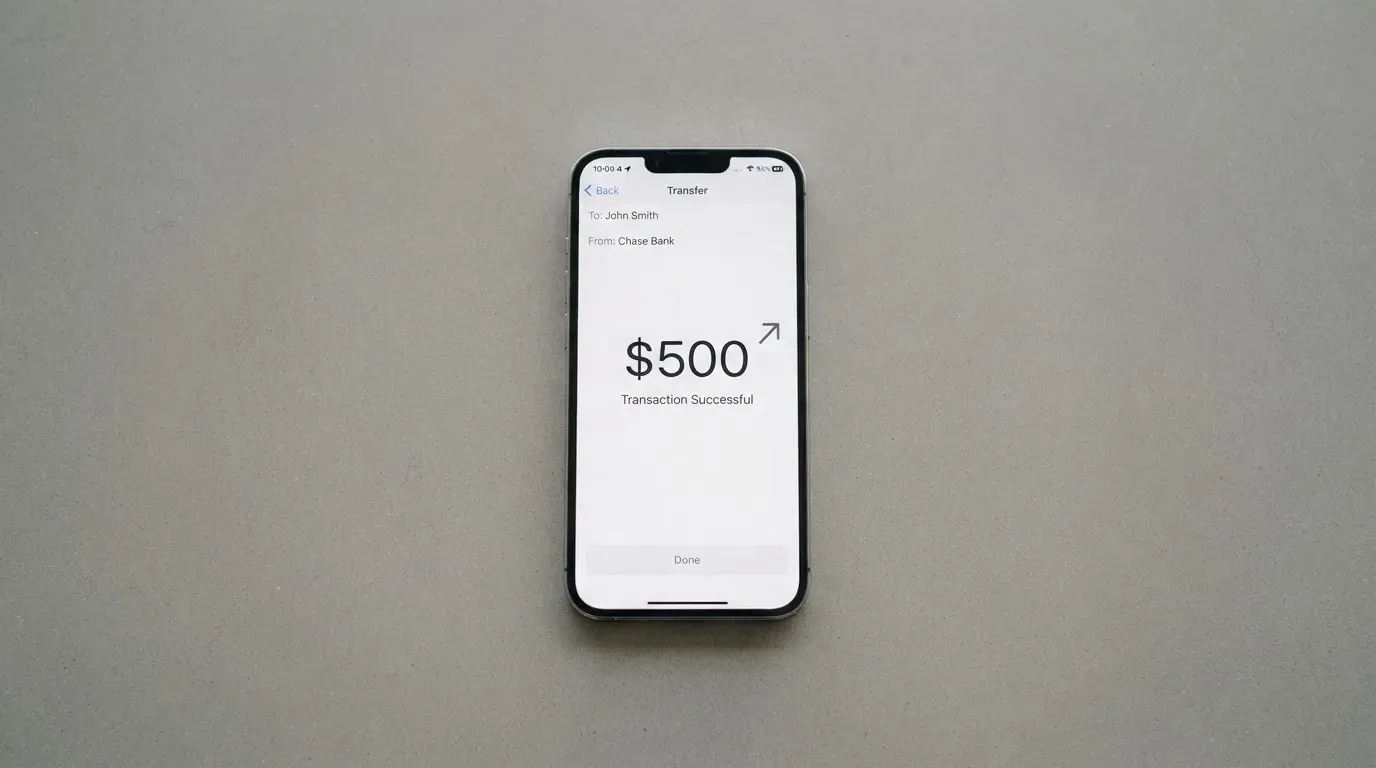
Topping up is a two-step process, and the second step matters. You deposit Brazilian reais via Pix, then you buy crypto with that money, and the crypto balance in your Foxbit account is what the card spends.
Accepted coins are BTC, ETH, USDT, XRP and ADA. Your default crypto is set in the app. You can pay in BRL directly, but Foxbit states that doing so forgoes cashback.
Account-level limits apply to the deposit side, and these are the same simplified and verified numbers from the eligibility section:
- Simplified: R$ 5,000 monthly for BRL deposits and withdrawals, no crypto deposits or withdrawals at all.
- Verified: up to R$ 75,000 monthly deposits, up to R$ 300,000 monthly BRL withdrawals, crypto withdrawal limits personalised.
One detail that will bite if you plan to fund by stablecoin: the deposit and withdrawal fee table rendered “Carregando taxas…” — loading rates — and showed no values when the page was checked. So the cost of moving crypto in or out of Foxbit was not readable. For USDT or XRP transfers that is not a rounding matter, because network choice affects whether a transfer arrives cheaply at all. Foxbit does not name the supported networks for this card flow, so do not assume a transfer on the network you are used to will land.
Withdrawing the card’s balance: the menu links to a Pix deposit and withdrawal page without giving details, and account closure terms are not stated. If you are planning to move money out at short notice, confirm those mechanics with the exchange first.
Paying with it every day
Everyday use is this card’s strongest suit, and it is why the score sits at 8 out of 10 rather than lower. It is a Mastercard, so it works at ordinary terminals and online, and it adds cleanly to Apple Pay and Google Pay. Cash at a domestic ATM costs R$ 6.90.
Cashback is the part worth planning around, because it is not a flat rate — it is banded by how much you spend in crypto in a month, and it only pays on purchases paid in crypto:
- Up to R$ 999.99 monthly crypto spend — 0%.
- R$ 1,000 to R$ 2,999.99 — 0.5%.
- Over R$ 3,000 — 1%.
Cashback is credited in the same crypto to your Foxbit wallet, not as reais in your pocket.
What I would not promise you about daily use, because the pages are silent: blocked merchant categories are not stated, disputes and chargeback handling are not stated, and card freeze and spending controls are not described on the page. Those three are the features you would reach for on a card you depend on, and here you are relying on the exchange’s general support rather than on documented card controls.
The app is iOS and Android. On the Brazilian App Store listing, the Foxbit app reads 4.4 out of 5 from about 5.6 thousand ratings, with iPhone iOS 16.0+ and Apple Watch support. The Google Play rating I did not read.
What can go wrong
This is the section I would read twice.
Who stands behind the card is not fully clear on the official pages. Foxbit’s operating entity is Foxbit Sociedade Prestadora de Serviços de Ativos Virtuais Ltda., CNPJ 21.246.584/0001-50, in Brazil. The card issuer or BIN sponsor is not named on the official page. Foxbit says it will file for Central Bank authorisation as a PSAV — that filing is planned, not granted. An unofficial report (from Startups.com.br and a LatamFintech article on Pomelo and the Foxbit Card, with no dates shown) names Argentine Pomelo as the issuer. Treat that as third-party reporting, not as something the card confirms.
Crypto balances are not covered by FGC. Brazil’s deposit guarantee scheme does not cover what is sitting in your Foxbit wallet. Card safety is a separate matter from balance safety, and this is where people get confused: your card being a Mastercard says nothing about protection of the coins behind it.
Complaint themes are about withdrawals, not the card. On Reclame Aqui a user report gives 7.9 out of 10, with 250 complaints between January and June 2026 and 88.1% resolved. The themes: held Pix and BRL withdrawals, difficulty withdrawing bitcoin, account email-change delays and lost account access. No card-specific complaints were found, and no official incidents were found either. Separately, a Trustpilot user report read on the same date shows 2.8 out of 5 from only 3 reviews, none in the last 12 months — an ETH withdrawal refused in October 2025, and an RG not accepted for KYC in February 2022. Three reviews is too small a sample to weigh, but the pattern matches the Reclame Aqui themes: the friction is on getting money out, not on paying with the card.
The controls you want are not documented. The page states that “A Foxbit nunca pede senha ou código 2FA” — Foxbit never asks for your password or 2FA code. That is a useful warning about phishing, and it is the only security control the card pages describe. Freeze, spending caps, 3-D Secure handling: not documented.
You are trusting a custodian. Whoever holds the credentials to your crypto controls it. Crypto transfers are typically irreversible, and there is no built-in recovery for a stolen key — the network cannot freeze or return funds. Exchanges have failed before, in large amounts: Mt. Gox (about US$350 million reported stolen, 2011–2014), Coincheck (about US$400 million, 2018), Ronin Network (US$625 million, 2022). Reading your balance on an exchange is not the same as holding it.
A card programme can simply end. Card issuers can wind programmes down, stop spending and loading, then ask users to withdraw remaining balances. Visa terminated its global agreements with FTX on 13 November 2022, and the FTX US debit card was wound down by its issuer. WaveCrest, a Visa issuer that supplied crypto card brands, was suspended by Visa in Europe in 2018, closing all WaveCrest-issued Visa programmes. None of that is a prediction about Foxbit. It is the reason to keep withdrawals somewhere you control, and to check the fee and closure terms before you scale up.
What to take instead
I looked at three other crypto cards so the comparison is not a guess. The important caveat first: for Young Card and MSX, eligibility, card type, issuance cost and fees are not stated officially, and I am not going to fill those gaps with estimates.
| Card | Score | What is actually stated |
|---|---|---|
| Foxbit | 5.6 / 10 | Mastercard, BRL, free to hold, Brazilian individuals with a Foxbit account |
| Young Card | 5.7 / 10 | Cashback paid in YNG tokens at Club tier rates: Essential 0.1%, Gold 1.8%, Platinum 3.6%; Bronze and Silver not stated. Card details not stated officially |
| MSX | 6.4 / 10 | Card details, eligibility, costs and funding not stated on an official page I could read |
| Bybit Card | 6.0 / 10 | Broadest regional coverage of the four; full fee and tier schedule published |
Bybit Card is the one to look at if your problem is that Foxbit does not serve you. Its official help centre lists Argentina, AIFC (Kazakhstan), Georgia, Kazakhstan, Australia, Mexico, Brazil, Peru and Asia Pacific; if your country of residence is not supported, Bybit says it will register your interest. Its cards page states: “This product is not meant for European Economic Area customers. All European Economic Area customer participation is strictly prohibited.”
Bybit publishes far more than Foxbit does, which is why it is the more useful comparison. Virtual and physical cards, with a virtual card obtained first and physical not available in Peru. Networks differ by region: Mastercard prepaid in Argentina; Mastercard credit card as written in the table for AIFC, Georgia, Kazakhstan, Australia and Mexico; Visa prepaid in Brazil and Peru; Visa credit in Asia Pacific. Card currency is USD for AIFC, Georgia, Kazakhstan, Australia and Asia Pacific, ARS in Argentina, MXN in Mexico, BRL in Brazil, PEN or USD in Peru. Validity ranges from 3 years (AIFC, Georgia, Kazakhstan, Asia Pacific, Australia) to 6 years (Argentina), 5 years in Brazil, Mexico and Peru.
Costs are stated region by region. Virtual card issuance is free in all regions “until further notice”. Physical issuance and replacement: Australia 29.99 USD; Argentina 5 USD/USDT; Georgia 29.99 USDT; Kazakhstan (AIFC) 29.99 USDT; Asia Pacific 5 USDT; Brazil and Mexico none; VIPs holding a physical card in Australia, Kazakhstan (AIFC), Georgia or Asia Pacific pay no issuance or replacement fee. The cards page says “Auto interest, no annual fees”.
The fee lines are the ones worth reading twice. Crypto conversion 0.9% over the One-Click Sell rate for Australia, Asia Pacific, Georgia, Kazakhstan, Brazil and Mexico; 0.5% in Argentina; Peru not supported. FX fee 2% on top of the network rate for Australia, Asia Pacific, Georgia and Mexico; Kazakhstan (AIFC) 2% “International Fee” on purchases outside Kazakhstan even in USD; Argentina 7%; Brazil 1.5%; Peru 1%. FX padding is 0% for the Australia group and Mexico, 5% in Argentina, 1% in Brazil, with the excess refunded. Argentina adds VAT 21% on foreign digital services, a 30% tax on foreign transactions and provincial gross-income tax of 1%–13.2%.
So in Brazil, Bybit’s numbers are 0.9% crypto conversion and 1.5% FX, against Foxbit’s unstated conversion fee plus an unexplained 6% line. That is not a verdict — Foxbit’s missing numbers may be better or worse — but it does mean Bybit is the card where you can actually do the arithmetic in advance.
How it funds is also different in a way that matters. The Bybit card has no balance of its own: it draws on the Funding Account and the Flexible Easy Earn balance, fiat first, and if fiat is insufficient crypto is sold at the One-Click Sell rate plus the card’s conversion fee. Supported coins are BTC, ETH, XRP, USDT, USDC and GRAM, with default priority USDT over USDC over GRAM over BTC over ETH over XRP, reorderable in the Card Dashboard. The Funding Account is topped up with Buy Crypto or by depositing crypto from another wallet.
Bybit’s cashback is the most generous structure of the three — and the strictest condition. From 2026-10-05 10:00 UTC, only crypto-funded transactions earn points or cashback; fiat-funded spending earns nothing. Tiers by rate, monthly cashback cap and monthly spend to unlock: Base 2.00% / 5 USD / 0; Beta 2% / 50 USD / 500 USD; Alpha 4% / 150 USD / 3,500 USD; Apex 6% / 250 USD / 9,500 USD; Omega 8% / 400 USD / 12,500 USD; Infinite 10% / 600 USD / 25,000 USD. Points pend for 4 calendar days, cashback in USDT equals points times 0.002, and Auto Cashback must be on.
Young Card scores 5.7 and MSX 6.4 — both marginally above Foxbit — but with most of the card facts unstated on official pages, I cannot tell you what you would actually pay with either. A higher number built on unpublished details is not something I will pass on as a recommendation.
Who I would recommend it to
I would recommend the Foxbit card to someone who is already a Foxbit client in Brazil, holds crypto they actually want to spend, and is comfortable with a Mastercard-funded prepaid balance rather than a bank card. Someone who wants to push crypto into Apple Pay each month and earn 0.5% or 1% back in the same coin, and who has already read the fee table at /taxas-e-limites and can tell me what the 6% line actually applies to.
I would not recommend it to anyone outside Brazil, or to a Brazilian who does not want to open an exchange account purely to get a card. I would not recommend it to someone who wants a physical card in the post, wants documented freeze and spending controls, or wants to know how a dispute is handled — none of that is published. And I would not recommend it as a primary everyday card, given that the issuer is not named on the official page, the Central Bank authorisation is planned rather than granted, and crypto balances are not covered by FGC.
If your priority is a card that is predictable rather than cheap, go and read the Bybit terms. If your priority is spending crypto in Brazil with no monthly fee, Foxbit is a fair option — just do the arithmetic on one small payment before you commit to it.
Frequently asked questions
What is the Foxbit card?
The Foxbit card is a Mastercard that spends the crypto balance in your Foxbit exchange account, in Brazilian reais. Issuance is free, with an annual fee of R$ 0.00 and a monthly fee of R$ 0.00. Foxbit says it is released only to individuals who are already Foxbit clients, and it names no other country. It works at ordinary terminals and online, and adds to Apple Pay and Google Pay.
Is Foxbit a bank?
No. Foxbit operates as Foxbit Sociedade Prestadora de Serviços de Ativos Virtuais Ltda., CNPJ 21.246.584/0001-50, in Brazil, and it says it will file for Central Bank authorisation as a PSAV — a filing still in the future, not a licence held. The card issuer or BIN sponsor is not named on the official page. Crypto balances are not covered by FGC, Brazil’s deposit guarantee scheme.
Is the Foxbit card free?
Free to hold: issuance, annual fee and monthly fee are all free or R$ 0.00. Using it is a different question. Crypto transactions are 0.0%, the fee page shows an “IOF + taxa de câmbio” line of 6% without saying what it applies to, a domestic ATM withdrawal costs R$ 6.90, and crypto-to-BRL conversion fees apply at values published only on a separate fee table.
Do I need KYC to get it?
You must be a Foxbit client, and the card is limited to individuals. Foxbit does not describe its KYC process on the card pages: which documents, in what order, how long each step takes. Two account levels exist — simplified at R$ 5,000 monthly with no crypto transfers, and verified at up to R$ 75,000 in monthly deposits and R$ 300,000 monthly BRL withdrawals. Minimum age is not stated.
How do I top up the Foxbit card?
Deposit Brazilian reais via Pix, then buy crypto with that money; the crypto balance is what the card spends. Accepted coins are BTC, ETH, USDT, XRP and ADA, with your default set in the app. You can pay in BRL directly, but Foxbit states that BRL-funded spending earns no cashback. Networks are not named, so do not assume a transfer on your usual chain will arrive.
Where can I use the Foxbit card?
It is a Mastercard, so it works at ordinary card terminals, online and at contactless readers, and it is compatible with Apple Pay and Google Pay. Cash withdrawals cost R$ 6.90 at domestic Cirrus and Caixa 24hrs ATMs. Because the card currency is BRL and it is aimed at Brazilian spending, using it abroad would run into the foreign-exchange line the card pages do not explain.
Is the Foxbit card safe?
The card pages state one thing clearly: “A Foxbit nunca pede senha ou código 2FA” — Foxbit never asks for your password or 2FA code. Beyond that, card freeze and spending controls are not described, disputes are not addressed, and crypto balances are not covered by FGC. Holding crypto on an exchange also means trusting a custodian, and crypto transfers are typically irreversible with no built-in recovery.
Is the Foxbit card worth it?
Worth it if you are a Brazilian Foxbit client who spends crypto regularly and reads the fee table before committing. You get cashback of up to 1% on crypto-funded purchases above R$ 3,000 a month, credited in the same coin, with no monthly fee. Less worth it if you need published conversion rates, a physical card in the post, documented spending controls, or a named issuer — the conversion fee values sit on a separate page and the 6% line is unexplained.
How do I withdraw money from Foxbit?
The menu links to a Pix deposit and withdrawal page without details, and card-balance withdrawal terms are not stated. Account deposit and withdrawal limits depend on your level: simplified at R$ 5,000 monthly with no crypto transfers, verified at up to R$ 75,000 monthly deposits and R$ 300,000 monthly BRL withdrawals, with crypto withdrawal limits personalised. The fee table showed “Carregando taxas…” and no values.
How do I delete my Foxbit account?
Account closure terms are not stated on the public pages. What the complaint record does show is where users get stuck: on Reclame Aqui, with 250 complaints between January and June 2026 and 88.1% resolved, the recurring themes were held Pix and BRL withdrawals, difficulty withdrawing bitcoin, and email-change delays leading to lost account access. Get your money out and keep your own records before you close anything.
Exchange cards put to the test – cryptocardtested
Content created by the «cryptocardtested» team