
The euro account and prepaid card that leaves too much unanswered
 Available in US
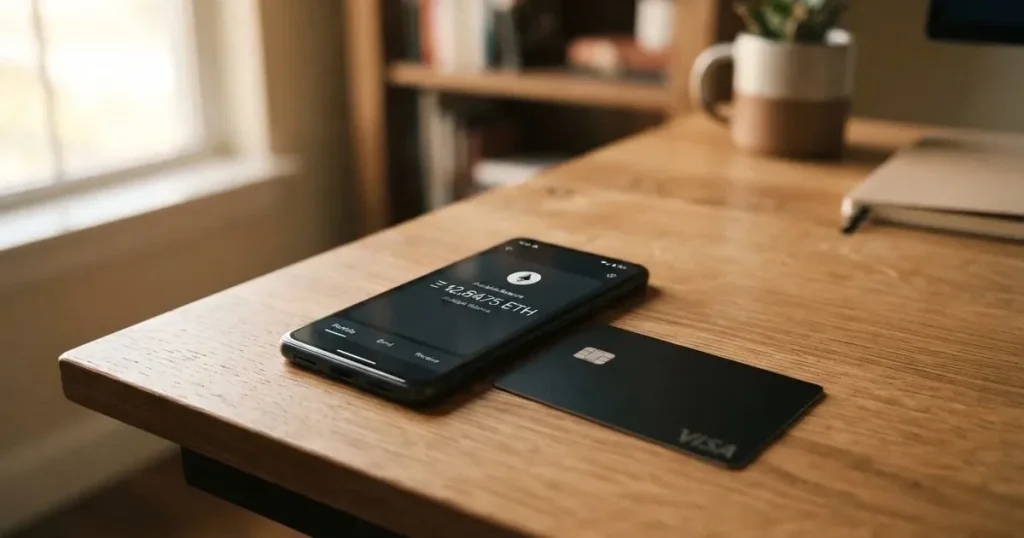
Gekkard is a prepaid Mastercard paired with a euro IBAN account, aimed at people who want a euro-denominated payment card without going through a traditional bank. On paper that sounds useful. In practice, checking it out raised a simple problem: the card’s own public pages could not be read when we looked, and many of the numbers you would want to compare — fees, identity checks, ATM access, wallet support — simply are not stated anywhere the card publishes.
That matters more than it might sound. A prepaid card is a product you would use every week, and the whole point of the card is that it is boring and predictable. If the price of using it abroad is not published, you cannot know what a coffee costs in another currency. That uncertainty, more than any single number, is what pulls the score down.
Who I think this is for: Europeans who want a euro IBAN with a prepaid card attached, and who are comfortable researching costs themselves. Who I would point elsewhere: anyone who needs a card with clearly published fees, obvious ATM access, or a long public track record.
Conditions below are current as of October 28, 2026.
The score: 4.7 out of 10
| Criterion | Mark | Why |
|---|---|---|
| Who can get it | 5 / 10 | Offered to residents of EEA countries and Switzerland; version 1.0.6 added registration for clients outside the EEA, and the plastic card can be mailed “to any address worldwide” |
| Cost | 5 / 10 | Fees are not disclosed — the website could not be read due to a certificate error; the app advertises 3 % on EURG and a 1 % bonus on purchases |
| Top-up options | 4 / 10 | SEPA, Gekkoin Europe (EURG), and access to Bitcoin, Ethereum and Monero via partner AtlantEX OÜ; no stablecoins or networks mentioned, and onboarding of new clients is paused |
| Reliability and complaints | 4 / 10 | Papaya Ltd is the developer, but the issuer and licences could not be read; the app is custodial per WalletScrutiny; it scores 3.0 out of 4 ratings on one App Store listing and 2.6 out of 15 on another storefront |
| Everyday use | 5 / 10 | Prepaid Mastercard, plastic or virtual, with limits and a freeze function in the app; wallets and ATM access are not disclosed |
Total: 4.7 out of 10.
A 4.7 is not a verdict of “avoid at all costs.” It is a verdict of “there is a real product here, and not enough published information to know what it costs you.” That distinction matters when you are choosing.
Who will they give you the card
The card is offered to residents of EEA countries and Switzerland. Version 1.0.6 added registration for clients outside the EEA, and the physical card can be mailed “to any address worldwide.” So the footprint has widened over time, from a euro-centric base toward something more open.
That is the eligibility picture the card itself presents. What it does not present is the identity-checking picture. The card’s public pages do not state what verification is required — whether there is a KYC level, what documents are asked for, or how a decision is made. That is not stated by the card, and for a regulated euro product it is a notable silence.
How to get it
The card is a prepaid Mastercard, available as plastic or virtual (per the FAQ). The physical card is delivered by international mail to any address worldwide; the delivery time and cost are not stated. Additional card orders are possible. You also get a European IBAN account in EUR.
So the shape of the account is clear: a euro IBAN, a Mastercard that can be physical or virtual, shipped internationally. What is missing is the practical middle — how long you wait, what it costs to have the plastic sent, and what you have to prove before any of it arrives.
Fees: what it really costs
Here is the blunt version: the card’s own cost and fee details are not stated. The site could not be read because of a certificate error, and the pricing is not reproduced anywhere else in a form we could verify. The app advertises 3 % on EURG and a 1 % bonus on card purchases, but those are earning rates, not the fees you pay to use the card.
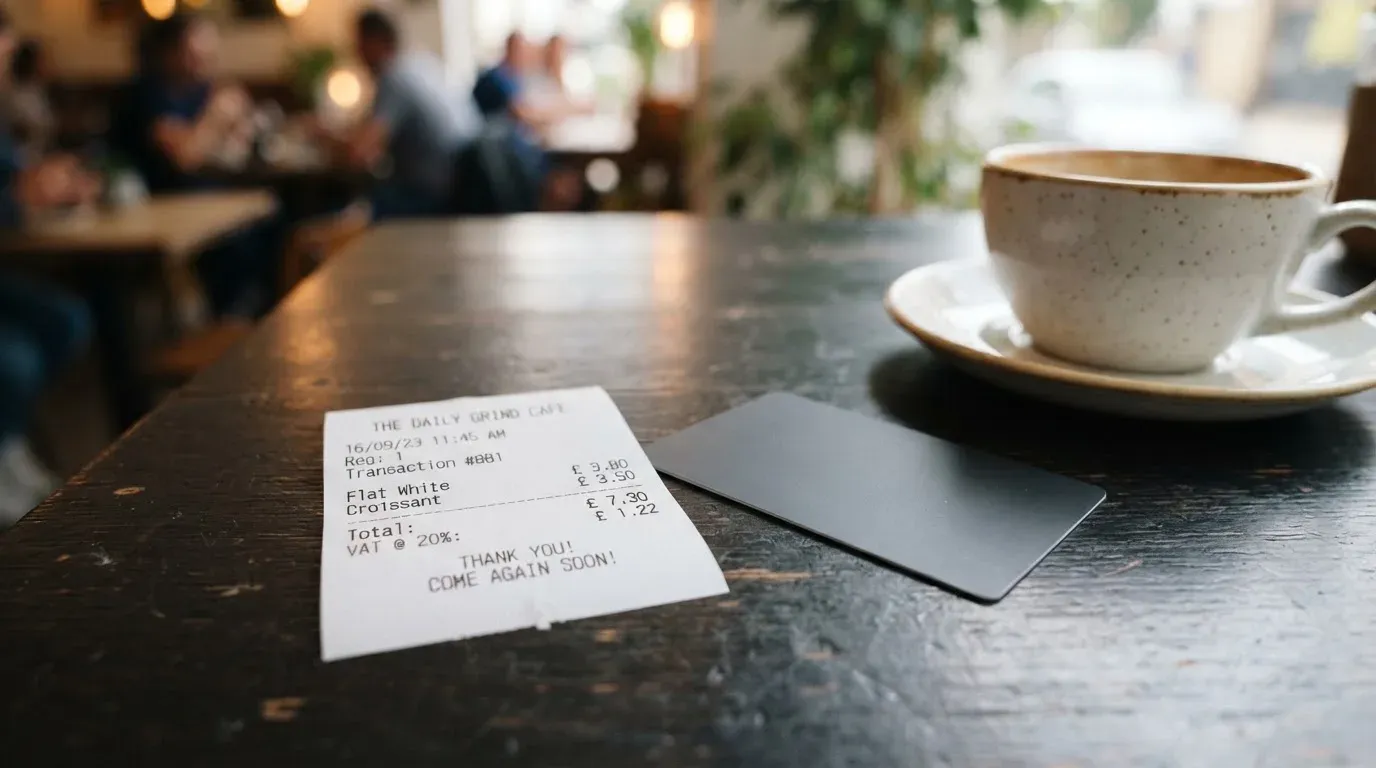
| Item | What the card publishes |
|---|---|
| Issuance fee | Not stated |
| Monthly fee | Not stated |
| Conversion fee | Not stated |
| Foreign-exchange fee | Not stated |
| ATM withdrawal fee | Not stated (cash top-up locations appear in the version history) |
| Daily spending limit | Not stated; spending limits are settable in the app |
| Monthly spending limit | Not stated |
| Card currency | Not stated; the account is a EUR IBAN and multi-currency transfers appear in the version history |
| Tiers | Not stated |
Run a few payments through your head against that table.
Buying coffee in your own country. You tap the Mastercard and the balance drops. The obvious question — does a fee apply on top? — has no published answer here. With a prepaid card there may be no per-transaction charge at all, but the card does not say so, so you are relying on an absence of evidence rather than a statement.
Paying in a shop that prices in dollars or pounds. Here you would expect two components: a network exchange rate and, often, a card-level foreign-exchange fee on top. Neither is published for Gekkard. So you genuinely do not know whether a foreign purchase costs 1 % extra, 3 % extra, or nothing.
Withdrawing cash at an ATM. The ATM fee is not stated, and it is not even clear how many free withdrawals you get per month, or whether the card works in ATMs at all. Cash-handling is also where prepaid cards most often surprise people.
This is the section where the 4.7 on cost hurts you most. A card that does not publish its fees is not cheaper; it is simply harder to predict, and for something you would carry in your wallet every day, hard to predict is its own cost.
Top up
The funding routes the card states are: SEPA payments; buying or selling Gekkoin Europe (EURG, pegged 1:1 to the euro); and access to Bitcoin, Ethereum and Monero via partner Gekkoin, with the crypto services provided by AtlantEX OÜ, described as a licensed exchange.
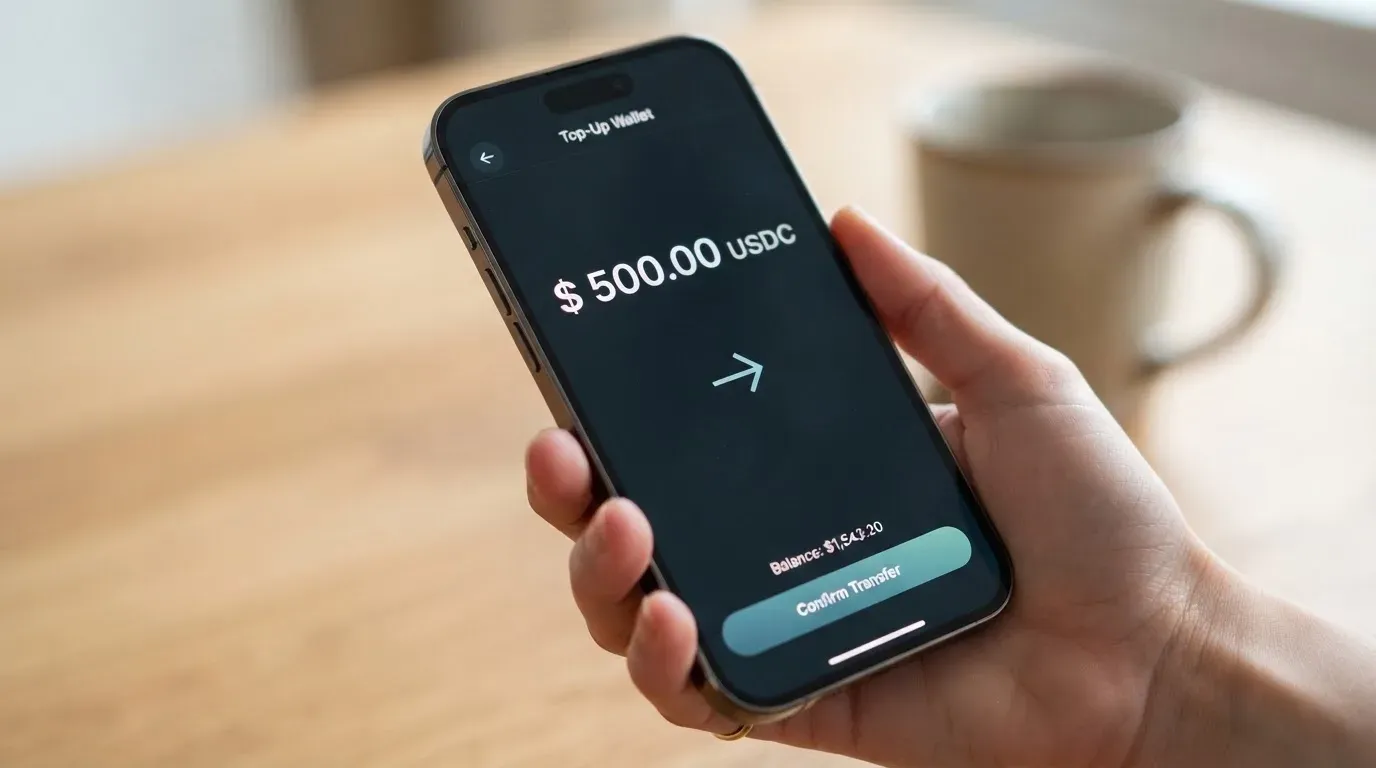
There is also cash top-up locations, mentioned in the version history. Fees and minimum amounts are not stated for any of these routes.
Notice what is absent. No stablecoins are named, and no networks are named. In a category where most people now hold USDC or USDT, a top-up path that stops at EURG and three coins is narrower than you may expect. EURG pegged 1:1 to the euro means your balance tracks the euro, not the dollar or the crypto market — so if you were hoping to spend a stablecoin you already hold, this card is not the route.
One more thing to weigh: AtlantEX paused onboarding of new clients from 1 July 2026. If the crypto side is paused, the euro side (SEPA, EURG) is presumably unaffected, but it does mean the crypto access this card advertises is not in an open state right now.
Paying with it every day
The card is a prepaid Mastercard, plastic or virtual, with spending limits you can set in the app. The app also offers transaction tracking and a temporary freeze. The iPhone app “Gekkard: Prepaid Card & Wallet” scored 3.0 out of 5 from 4 ratings (US App Store, read 2026-10-21, version 1.0.9). A Google Play app under the name “Gekkard: Banking Alternative” exists, but its rating was not readable.
The controls in the app are the right ones to have — limits, tracking, a freeze button. Those are the everyday safety rails. Biometric confirmation for online purchases is listed in the version history.
What is missing from the everyday picture is the connective tissue. Wallets are not stated: whether the card can be added to Apple Pay or Google Pay is not disclosed. ATM access is not disclosed. Merchant category restrictions — gambling blocks and similar — are not described. And the dispute process, if a charge goes wrong, is not stated.
On rewards: the listing claims 3 % interest on EURG holdings and, in the version history, a 1 % card purchase bonus. The official site reportedly says the service is not an investment product. The conditions were not read. Treat the 3 % figure as something to verify before you rely on it, not as a promise.
What can go wrong
Several things are worth putting side by side here.
No official incidents could be read — but that is not the same as a clean record. The card is custodial per WalletScrutiny, meaning the provider holds the credentials rather than you. That is the single biggest structural risk: with a custodial wallet you must trust the provider completely, and blockchain transfers are typically irreversible with no built-in recovery if something goes wrong. A self-custody-linked card, by contrast, keeps the funds in your own wallet until the moment of payment.
The provider behind it. Papaya Ltd is the developer on the App Store, under the Gekkard brand. The crypto partner is AtlantEX OÜ. The card issuer and its licences are not publicly stated, which leaves it unclear which institution is regulated to hold balances for this euro-denominated product.
Complaints. No Trustpilot page was found. Another App Store storefront listing shows 2.6 out of 5 from 15 ratings, which is a meaningfully weaker signal than the 3.0-from-4 on the US storefront — though that second listing was not opened in detail.
Support. How to reach support, and what happens when a payment is declined or funds are stuck, is not stated.
The regulatory backdrop explains why the crypto pause matters. Under EU markets regulation (MiCA), the transitional period lets providers operating under national law continue only until 1 July 2026 or until they receive or are refused an authorisation. AtlantEX pausing new-client onboarding from 1 July 2026 sits right on that line. Whether a card’s crypto partner is in a stable licensing position is something you can and should check yourself — ESMA keeps a public interim register of authorised crypto-asset service providers.
None of this means something bad is about to happen. It means the things that would tell you it is going well are not published.
What to take instead
If the Gekkard idea — a euro account with a card attached — is what appeals, these are the alternatives I compared it against, with their own scores.
International Visa Card — 6.7 out of 10
The clearest documentation of the three. It is a U.S.-issued Platinum Visa card, virtual (physical “coming soon”), paying in USD. Issuance is $5 one-time with no maintenance fee; plans run Classic free, Pro $9.00/month, Max $19.00/month. Card use in USD is free on all plans; foreign currency is “Visa exchange rate + 2% FX fee”; deposits of any kind are free. You can fund with USD, EUR, SEPA, SWIFT or FedNow, and USDC or USDT into the USD account at 1:1.
The catch is eligibility: it is not available to residents or legal registrants of Belarus, mainland China, North Korea, Cuba, India, Iraq, Iran, Israel, Myanmar, Nepal, Nicaragua, Russia, Syria, Turkey, Ukraine, Venezuela or Vietnam, with FATF grey-list countries reviewed case by case. Purchases are blocked in a similar set of countries. The rule is by residence or registration, not citizenship.
UNi Card — 6.1 out of 10
A multicurrency card on the Mastercard network, spending from the UNi.Global account balance. Its pricing is unusually clean: “no annual fee or foreign transaction fee,” assets converted at live OTC rates, “no hidden exchange fees.” Rewards are “spend-to-earn” up to 3%. What is not stated: eligibility, the issuance fee, and how you fund the account.
Whop Cards — 5.2 out of 10
A Visa card that works anywhere Visa is accepted, spending from a Whop balance (pending balance usable as soon as a payment arrives; standard withdrawals use settled funds). The balance is backed by stablecoin collateral from a linked wallet. Rewards are 5 % cashback at select merchants, currently Uber. Coverage is US-centric: 31 states for consumers, 41 for businesses, with a list of unsupported countries. The page says “no extra fees” but lists no amounts, and virtual/physical type, card currency and coins are not stated.
Drawing the comparison honestly: the alternatives mostly trade Gekkard’s euro-native positioning for clearer published pricing or broader eligibility. UNi and International publish their fees; Whop publishes none. None of the three is a euro IBAN account like Gekkard’s. If the euro IBAN is the point, your comparison is thinner than the scores suggest.
Who I would recommend it to
I would recommend Gekkard to someone who: lives in or is resident in the EEA or Switzerland, or now also outside the EEA since version 1.0.6; wants a euro IBAN with a prepaid Mastercard attached; is comfortable topping up over SEPA or via EURG; does not need ATM cash or mobile wallets as a given; and is willing to accept that they will not find published fees and will have to judge the pricing themselves.
I would point elsewhere if: you spend abroad regularly and need a known foreign-exchange cost; you rely on Apple Pay or Google Pay; you withdraw cash often; or you want a provider whose issuer, licences and fee schedule you can read before you commit.
The 4.7 is not a judgement that the product is bad. It is a judgement that it is under-documented for something you’d use daily. If you are the person who reads the terms anyway and can live with the unknowns, it may serve. If you are the person who wants the price on the page before you start, it will frustrate you.
Frequently asked questions
What is the Gekkard card?
Gekkard is a prepaid Mastercard offered alongside a European IBAN account in EUR. You get either a plastic or a virtual card, and you can set spending limits and freeze the card in the app. The plastic card ships by international mail to any address worldwide. It sits between a traditional bank account and a crypto wallet: euro-denominated, with crypto access offered through a partner.
Is Gekkard a bank?
It does not present itself as one. It is a prepaid card plus a euro IBAN account, provided by Papaya Ltd as the app developer, with crypto services from partner AtlantEX OÜ. The actual card issuer and its licences could not be read from the card’s public pages, so I cannot confirm which regulated institution holds your balance. That is different from a bank, and worth verifying yourself.
Who can get the Gekkard card?
Originally residents of EEA countries and Switzerland. Version 1.0.6 added registration for clients outside the EEA, and the physical card can be mailed “to any address worldwide.” So the geographic gate is now open more widely than it was. What identity checks apply at signup is not stated by the card, which is a gap for a regulated euro product.
Does the Gekkard card require KYC?
The card does not state its identity-check requirements — neither whether KYC is required nor at what level. For context, EU customer due diligence normally covers name, address, date of birth, nationality and identity documents, a sanctions check, and whether you are a politically exposed person. If that cannot be completed, EU rules require the institution to hold off. So expect some verification; just do not expect the card to have told you what.
How do I top up the Gekkard card?
The stated routes are SEPA payments, buying or selling Gekkoin Europe (EURG, pegged 1:1 to the euro), and access to Bitcoin, Ethereum and Monero through partner Gekkoin, with crypto services by AtlantEX OÜ. Cash top-up locations also appear in the version history. Fees and minimums are not stated for any route. No stablecoins or networks are named.
Is the Gekkard card free?
Nobody can tell you from what the card publishes. Issuance fee, monthly fee, conversion fee and FX fee are all not stated — the site could not be read due to a certificate error. The app advertises 3 % on EURG and a 1 % purchase bonus, but those are earning rates, not fees. If the price of a foreign purchase matters to you, ask the provider directly before you commit.
Can I use the Gekkard card abroad and at ATMs?
Foreign use depends on fees that are not published, and ATM support is not stated at all — neither the withdrawal fee nor how many free withdrawals you might get. Some merchants also decline prepaid or foreign-issued cards because the BIN lookup reveals the card type and issuer country. Treat abroad use and cash withdrawal as unconfirmed until you have tested them.
Is the Gekkard card safe?
It depends on your tolerance for custodial risk. The app is custodial per WalletScrutiny, meaning the provider holds the credentials and you must trust it completely. Crypto transfers are typically irreversible with no built-in recovery. On the plus side, the app offers spending limits, transaction tracking, a temporary freeze, and biometric confirmation for online purchases.
Can I add the Gekkard card to Apple Wallet?
The card does not say. Wallet support is not stated, so whether the card can be added to Apple Pay or Google Pay is simply unknown from the public pages. This matters because mobile wallets are how many people pay day to day, and tokenised mobile wallets are also one of the standard safeguards listed for crypto cards generally.
What happened with AtlantEX and the crypto side?
AtlantEX paused onboarding of new clients from 1 July 2026, during its MiCA licensing process. The card’s crypto services are provided by AtlantEX OÜ, so the crypto access it advertises is currently not open to new clients. Your euro routes — SEPA and EURG — should be unaffected. You can check any provider’s licensing status on ESMA’s public register of authorised crypto-asset service providers.
App and neobank cards put to the test – cryptocardtested
Content created by the «cryptocardtested» team