
Is HexaCard worth it? A review for anyone who has trouble getting a normal bank card
 Available in US
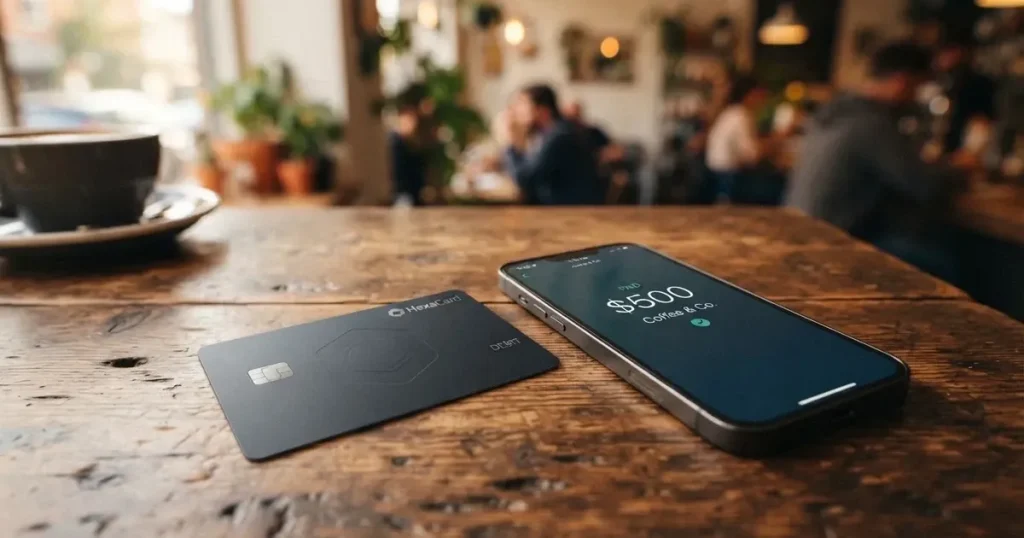
HexaCard sells itself to people who cannot easily get a normal bank card, or who want a card that draws on a crypto balance instead of a bank account. It is a prepaid Visa or Mastercard-style product, available as a virtual or physical card, that you load with crypto and then spend at point of sale, online, or in some cases at an ATM. The marketing is simple. The published details are thin, and the third-party review record is bad enough that I want to walk you through what I found before you decide.
Conditions are current as of October 28, 2026.
Verdict
HexaCard scores 4.6 out of 10 in my review. That score reflects a card that is real, ships in two product forms, accepts a reasonable range of crypto, and works in a handful of well-defined countries, but also one that hides basic facts about its company, its issuer, and its fee schedule, and that has accumulated a striking number of one-star reviews describing closed cards, vanished balances, and silent support.
Here is the score broken down, with the marks the card earned in each area and a short reason for each. The total is the same 4.6 shown above.
| Criterion | Mark | Why it scored where it did |
|---|---|---|
| Who can get it | 4 / 10 | Eligibility is limited to a small set of named countries, and the list itself is loosely written |
| Cost | 5 / 10 | Card prices are stated, but conversion, FX, ATM and monthly fees are not |
| Top-up options | 7 / 10 | A reasonable crypto and fiat spread, but networks and fees are not named |
| Reliability and complaints | 2 / 10 | Trustpilot is overwhelmingly negative, the company is hard to identify, and users report lost funds |
| Everyday use | 6 / 10 | Virtual and physical cards exist, mobile wallets appear as funding methods rather than as a place to store the card |
| Total | 4.6 / 10 |
The audience that HexaCard seems to fit best, based on its own materials, is people living in Georgia, Turkey, or Canada who need a card quickly and who are comfortable with crypto. The audience it fits least well is anyone outside the named countries, anyone who needs to know exactly what they will pay per transaction, and anyone who cannot afford to lose a small balance if the programme is restricted.
Will they give you the card
The card’s official FAQ names six countries where HexaCard says it operates: Georgia (the FAQ spells it “Gerogia”), Canada, Germany, the United Kingdom, Turkey, and the United States. The same page also says “we have over 25 BINs in various GEOs”, which suggests the actual footprint is broader than those six names, but the only countries a prospective user can point to as confirmed are those six. Everything outside this list is, for the purposes of this review, not stated.
There is no public list of excluded countries, no stated minimum age, and no statement about whether you need to be a citizen, a resident, or simply passing through. The official card agreement, which I treat as the most detailed document the company publishes, says HexaCard asks for your name, street address, date of birth, and other identifying information, and may ask for a driver’s licence or other ID documents. What it does not say is how long the check takes, what the rejection criteria are, or whether a non-resident of one of the named countries can be approved at all.
The deeper problem here is the company itself. HexaCard’s pages do not name the legal entity behind the product. The user agreement mentions “Hexacard Business Corporation” and is governed by New York law; the card agreement refers to a “Celtic Bank Privacy Policy” for the issuer’s data, which implies Celtic Bank may be the issuer, but the issuer is not named directly anywhere I could read. The help centre lists a contact address in Manchester, UK. None of this is unusual for a programme manager that resells a card programme, but it does mean that if something goes wrong, the company you took money from and the company that actually issued the card may not be the same company, and your options depend on which one responds.
If you are a citizen or resident of one of the six named countries, the card is, on paper, available to you. If you are not, the answer is genuinely unknown. The combination of a thin eligibility statement and an even thinner company disclosure is the reason the “who can get it” score sits at 4 out of 10.
How to get it
There is no public step-by-step application guide. The card agreement describes what HexaCard will ask of you during the process: the four standard identifying fields above, plus the right to demand a driver’s licence or other ID document. That is the entire description of sign-up that I could find.
What the public materials do tell you is what you would be applying for. HexaCard offers two products. The virtual card is described as living inside the app; the physical card is a tangible plastic card you can hold. The site references “Visa and MasterCard or American Express networks” in a way that does not commit to a single network, and then claims the card supports “28 currencies” in one place and “32 different currency units” in another. The two numbers are not reconciled, and the card’s own settlement currency is not named. I treat both currency counts as marketing language rather than a clear feature.
The application form itself, the required document format, the review timeline, the delivery times for the physical card, and the replacement cost for a lost or stolen card are all not stated. Public reporting from users describes a replacement fee of $15 or $25 in 2025 and 2026, but I have not been able to confirm that figure on HexaCard’s own pages, so treat it as a user-reported amount rather than a published fee.
In short: the public-facing sign-up journey is two products, an ID check of unspecified depth, and a lot of silence. Anyone who needs a card in a week, or who needs to know in advance what the application will demand, should assume they will be making that discovery inside the app.
Fees: what it really costs
HexaCard is unusual in how little of its fee schedule it actually publishes. The card price and the initial top-up requirement are stated; almost everything else is either “various and low” or simply absent.
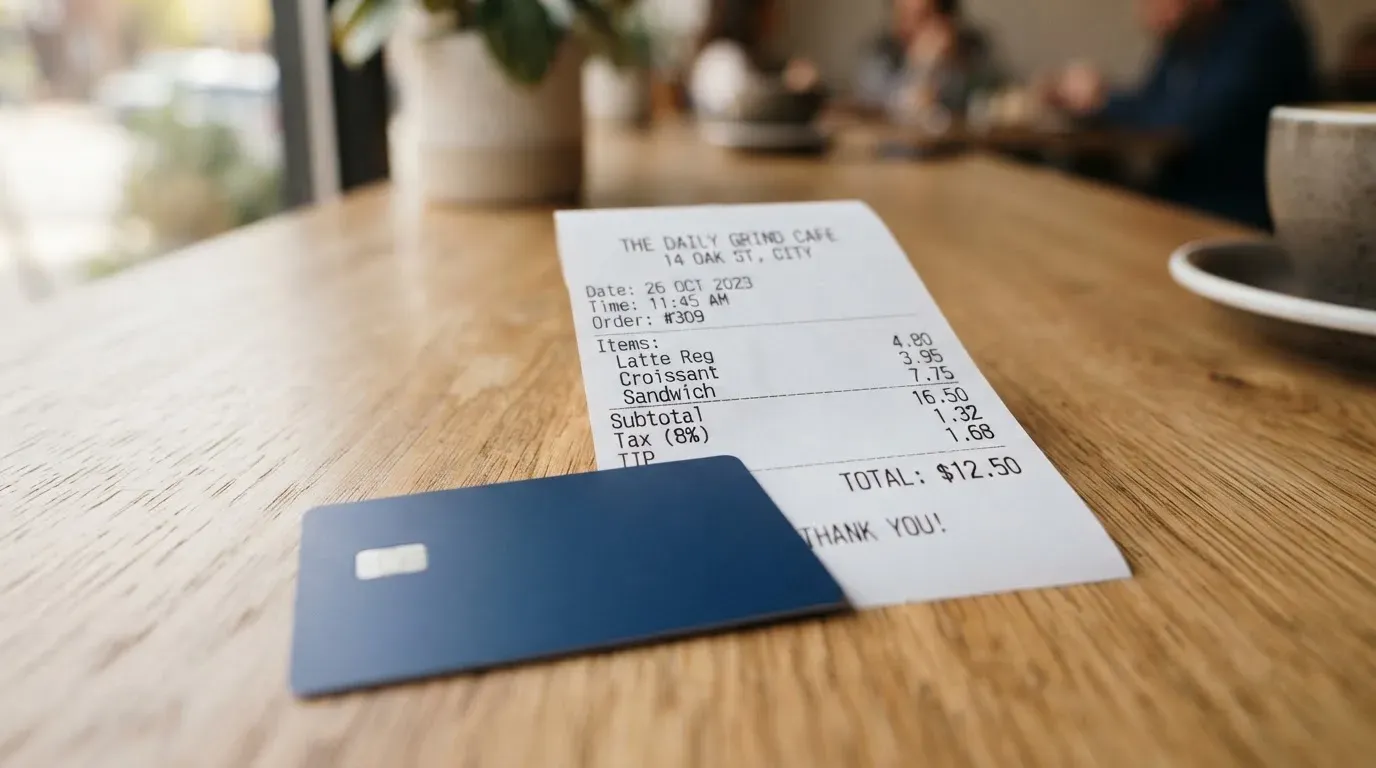
The costs table below covers every figure I could find in the official materials. Anything left blank means HexaCard has not published it.
| Fee or limit | Virtual card | Physical card |
|---|---|---|
| Card purchase | $14.99 | $29.99 |
| Required first top-up | $10 | $10 |
| Total to get going | $24.99 | $39.99 |
| Monthly fee | not stated | not stated |
| Conversion fee | not stated | not stated |
| Foreign-exchange (FX) fee | not stated | not stated |
| ATM withdrawal fee | not stated | not stated |
| ATM allowance | not stated | not stated |
| Daily spending limit | not stated | not stated |
| Monthly spending limit | not stated | not stated |
| Replacement card fee | user reports $15 or $25 (unconfirmed) | user reports $15 or $25 (unconfirmed) |
| Card fee refundable | No, per the card agreement | No, per the card agreement |
Two everyday examples show why the gap matters. First, paying for a lunch in Paris with the virtual card loaded from USDT. HexaCard says the conversion fee is “various and low” without giving a number; the foreign-exchange fee is also not stated, and the card’s claim of “28 currencies” or “32 currency units” does not tell you which of those fees apply when. Second, withdrawing from an ATM with the physical card. ATM access exists, but the per-transaction fee, the daily allowance, and any cap on the number of free withdrawals are all not stated.
The card agreement does add two concrete points. It says the card fee cannot be refunded after purchase, and it says HexaCard can cancel or restrict a card at any time, with some cancellations “automatic and irreversible”. The same agreement says the card will auto-cancel after six consecutive failed transactions or three consecutive failed withdrawals, and does not explain what happens to any balance on the card at that point. Combined with the “various and low” language, the costs section is the reason the cost score sits at 5 out of 10: the headline prices are clear, the running costs are not.
A note on top-up fees, since they sit close to the cost question. The home page says a $10 initial top-up is required, while the FAQ says the minimum top-up is $20. The two numbers contradict each other on the company’s own pages. Top-up fees are described as “various and low”, with no amounts given. Network fees on the blockchain side are paid to the network, not to HexaCard, but who pays them, the user or the platform, is not stated.
Top up: how to load the card
The good part of HexaCard’s offering is the funding side, at least at the level of “what you can use”. The official materials list a reasonable range of crypto assets (USDT, ETH, BTC, LTC, SOL, and others) and a set of fiat options (Apple Pay, Google Pay, Visa, and Mastercard). The FAQ adds a regional list (bank cards, direct transfer, wire transfer, or cryptocurrency, depending on region) without committing to a specific menu in any given country.
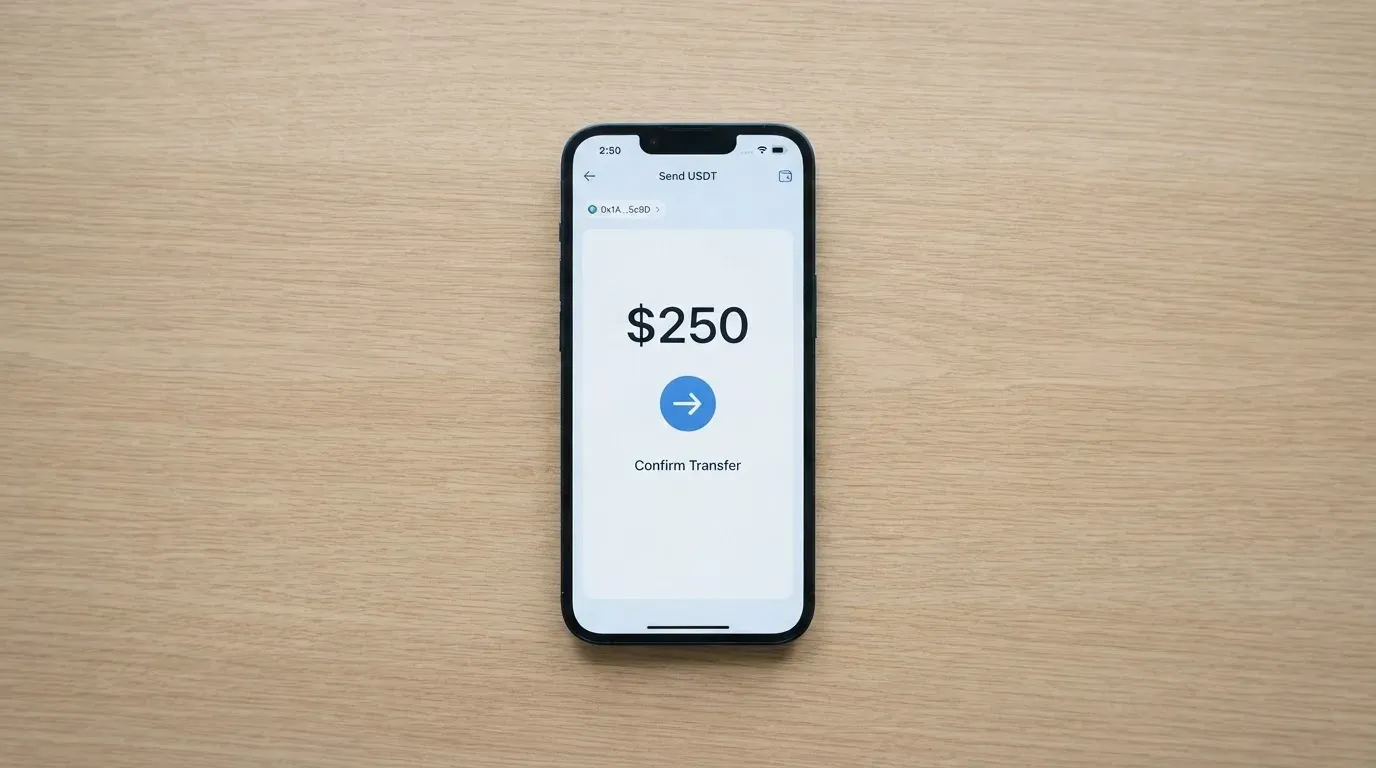
The bad part is the operational detail you would want before sending anything. HexaCard does not publish the networks on which it accepts each token, so a user holding USDT has to know whether to send over Ethereum, Tron, Solana, or another chain, and a wrong choice can mean lost funds. The page does not explain who pays the network fee on the deposit. The $10 / $20 minimum-top-up contradiction sits in this section because it determines the smallest first load, and the fee amount is again “various and low” with no numbers.
A practical consequence: if you choose to top up with crypto, treat the deposit as the kind of transfer you would only send once you have confirmed the receiving network inside the app. Crypto transfers are irreversible, and a deposit on the wrong network or to the wrong address is, in the general case, lost or recoverable only through manual support intervention that is not promised in the public materials.
For fiat top-ups, the Apple Pay, Google Pay, Visa, and Mastercard routes follow the normal card-presentment model and should feel familiar; the fees and minimums on these routes are not stated. Withdrawing the balance back out, whether to crypto or to a bank account, is also not stated on the public pages. If you need to be able to move money off the card reliably, this is a gap.
The top-up score of 7 out of 10 reflects that the funding menu itself is real, while the missing details around networks, fees, and withdrawals are real gaps.
Paying with it every day
HexaCard’s everyday-use story is short on specifics. There is a virtual card, there is a physical card, and the physical card can withdraw at ATMs. Beyond that, the official pages say very little.
Mobile wallets are a useful illustration. Apple Pay and Google Pay appear in HexaCard’s materials as ways to top up the card, not as places to put the card. The site does not describe provisioning the card to Apple Wallet or Google Wallet for in-store tap-to-pay, and it does not describe which merchant categories are blocked. The card agreement references 3-D Secure, with codes sent through the app or via SIM, which is the standard friction for online card payments; the same agreement refers to a “Device Account Number” only in the sense of 3-D Secure, not in the sense of a tokenised mobile-wallet card. If you need to tap your phone to pay, the public materials do not confirm that the card can do this.
Cashback is a real feature, but only on the physical card, and only at three named merchants: Spotify, Steam, and Google Play Store. The rate is not stated. The virtual card, which is the cheaper product, earns no cashback under the public materials.
On the reliability side, the user agreement (last updated 4 January 2024) says disputes go first to informal resolution with a 30-day window, then to binding individual arbitration under the American Arbitration Association in New York, with no class actions and a 30-day opt-out from acceptance. The same section says that during third-party provider disruptions “refunds cannot be processed”, and it does not state the chargeback time frames that consumer debit cards usually have. If you buy something that does not arrive, the route to a refund is narrower than for a regulated debit card.
The app itself is available for iOS and Android, with an App Store rating of 3.6 out of 5 from 17 ratings (per a third-party read on 20 October 2026; this is an unofficial figure, not published by HexaCard), and a first release of 13 December 2023. The day-to-day usefulness of the card is therefore mostly the card’s own behaviour, not the app’s quality.
The everyday-use score of 6 out of 10 reflects the two-product offering and the cashback feature, balanced against the absence of confirmed mobile-wallet provisioning, the unstated blocked categories, and the dispute-resolution terms that are not as protective as a regulated debit card.
What can go wrong
The reliability picture is the most important part of this review, and it is the part that dragged the overall score down.
The user-reported complaints I could find concentrate on five themes. First, cards and balances blocked or closed, with top-ups failing, between November 2025 and July 2026. Second, support silent for weeks over the same period. Third, funds tied to a Turkish issuer and the Papara dispute, between November 2025 and October 2026, with reported losses in the $60 to $100 range. Fourth, a $15 or $25 fee for a replacement card, reported in November 2025 and June 2026. Fifth, suspected bursts of fake five-star reviews, reported in November 2025. The Trustpilot page, read on 20 October 2026, sits at 2.0 out of 5 from 17 reviews, with 82 percent of those reviews at one star; the company replies to about 61 percent of the negative reviews.
HexaCard’s own replies on Trustpilot (which is a third-party site, so this is the company’s public statements, not a confirmed fact about its operations) are consistent across three dates. On 2 November 2025 the company said services were “fully active” and described the restrictions as compliance updates. On 26 February 2026 it said the Turkey and Papara disruption is on the provider’s side and that restoration depends on the provider. On 3 July 2026 it said some top-up methods may be limited depending on region. The trust signal here is mixed: the company is replying, but it is also describing issues as outside its control.
The deeper risk is structural. The user agreement gives Hexacard Business Corporation broad rights to cancel or restrict cards at any time, with some cancellations described as automatic and irreversible. The card agreement says balances can be affected by holds and by the auto-cancellation rules. The custodial question is not addressed: HexaCard does not say whether your crypto sits in your own wallet or in the company’s custody while it is on the card, and that distinction is the difference between being able to move your funds at will and having to ask the company to release them.
Security features that are stated are mostly the standard set: 24/7 transaction monitoring, 3-D Secure codes through the app or by SIM, a testimonial that says a card can be deactivated in the app, and a hold mechanism that reduces the card limit until released. The card agreement also says limits are set by the Accountholder’s Administrator or by Hexacard, without amounts. Insurance or formal safeguarding of customer funds is not stated.
Finally, no regulator warning or news article naming HexaCard was retrievable in my research. The company’s own materials do not claim any licence. The combination of an unnamed issuer, an unnamed programme manager, no public licence claim, and a heavily negative Trustpilot record is the reason the reliability score is 2 out of 10.
What to take instead
The three alternatives below are the closest fits I could find for the same job: a prepaid card that loads from crypto and is positioned at users who have trouble with a normal bank card. None of them is a perfect substitute, and the scores reflect that they share some of the same gaps as HexaCard.
| Card | Score | What it does well | Where it is thin |
|---|---|---|---|
| Cardex | 5.6 / 10 | One crypto card across 200+ countries; supports Verve, Visa, Mastercard and UnionPay; conversion uses an “AI-powered” exchange-rate scan | Fees not stated; networks for top-up not stated; the app is positioned around Naira |
| CardFlow | 4.9 / 10 | Free virtual USD Mastercard in a few minutes; takes BTC, USDT, ETH, or Naira bank transfer | Aimed at Nigeria; global-eligibility statement is vague; fees not stated |
| HyperCard | 4.7 / 10 | Prepaid card with USD or EUR balance; top up with USDT, BTC, ETH; “more than 176 countries” acceptance | No country list for eligibility; networks and fees not stated |
Cardex is the broadest in geographic terms, and the conversion mechanism is more openly described than HexaCard’s, but the cost picture is similarly empty. CardFlow is the cheapest to start, with a free virtual card, but the targeting at Nigeria limits its usefulness elsewhere. HyperCard is the cleanest in card-design terms (prepaid, with a clear USD or EUR balance) but is the most opaque on the eligibility and fee questions.
A few practical notes if you are choosing between these. First, all three of them, like HexaCard, are thin on published fees, so any decision involves a small amount of “try and see”. Second, none of them names a single, clear regulatory licence in the materials I could read. Third, the differences between them are mostly about which countries they name, which tokens they accept, and which network the card runs on. If a merchant in your country routinely declines foreign-issued prepaid cards, the network and BIN matter more than the brand on the front.
Who I would recommend it to
HexaCard is a real product with two card types, a real funding menu, and a published price for the cards themselves. The people it is most likely to suit are those who live in one of the six named countries, who already hold USDT, ETH, BTC, LTC, or SOL, and who need a low-effort way to turn that balance into a card number. The Georgia, Turkey, and Canada residents the audience note points to are the most natural fit, because the published list and the active top-up methods line up with those markets. If you are buying small things online, want cashback at Spotify, Steam, or Google Play on the physical card, and do not need the balance to be portable, the product does what it says on the box.
HexaCard is not a good fit for you if any of the following apply. You are outside the six named countries. You need to know the per-transaction cost before you spend. You plan to hold a meaningful balance on the card, because the cancellation and restriction rights in the user agreement are unusually broad. You need a card that can be tokenised into Apple Wallet or Google Wallet, because the materials describe Apple Pay and Google Pay as funding routes rather than as wallet targets. You need a refund or chargeback path, because the dispute terms default to arbitration and exclude class actions. Or you simply do not have a tolerance for a card whose issuer is not publicly named and whose third-party review record is dominated by one-star complaints about lost funds.
The honest summary: HexaCard can be the right tool for a narrow, well-informed use case, and a costly mistake for anyone who assumes the safety net of a regulated debit card. Read the card agreement, look up the licence position yourself, and keep the balance small enough that the worst case is not a financial problem.
Frequently asked questions
What is HexaCard?
HexaCard is a prepaid card product that you load with cryptocurrency, and in some regions with fiat, and then spend with a virtual or physical card. The card runs on Visa, Mastercard, or American Express networks according to the marketing, and is offered in two product forms: a virtual card for online use and a physical card for in-person spending and ATM withdrawals.
How does HexaCard work?
You top up the card with USDT, ETH, BTC, LTC, SOL, or other listed tokens, or via Apple Pay, Google Pay, Visa, or Mastercard, and the balance is held as the card’s spendable amount. When you pay, the card draws on that stored balance, the same way a prepaid phone card draws on its stored credit, and the merchant sees a normal card transaction.
Is HexaCard a bank?
No. The public materials describe a prepaid card product and reference a card agreement with an unnamed issuer whose privacy policy is published by Celtic Bank. HexaCard itself does not call itself a bank on the pages I could read, and it does not publish any deposit-taking or banking licence.
Who owns HexaCard?
The user agreement names “Hexacard Business Corporation” and applies New York law; the help centre lists a contact address in Manchester, UK; the App Store seller is shown as TransferEasy Limited. The actual ownership chain between these names is not stated in the public materials.
Is HexaCard available in my country?
The FAQ names six countries: Georgia, Canada, Germany, the United Kingdom, Turkey, and the United States. The same page mentions “over 25 BINs in various GEOs”, which suggests broader coverage in practice, but no public list of additional eligible countries is provided. If your country is not on the named list, eligibility is not stated.
Does HexaCard require KYC?
The card agreement says HexaCard asks for name, street address, date of birth, and other identifying information, and may ask for a driver’s licence or other ID documents. The exact KYC levels, the document formats it accepts, the review timeline, and the rejection criteria are not stated on the public pages.
How do I top up HexaCard?
You can top up with crypto (USDT, ETH, BTC, LTC, SOL, and others) or with fiat through Apple Pay, Google Pay, Visa, or Mastercard. The FAQ adds bank cards, direct transfer, wire transfer, and cryptocurrency as regional options. The networks on which each token is accepted and the fees on each route are not stated in the public materials.
Is HexaCard safe?
The card uses 24/7 transaction monitoring and 3-D Secure, and the app can deactivate the card. The trade-off is that the company is not clearly identified, the user agreement gives HexaCard broad rights to cancel or restrict cards, the issuer is not named on the product pages, and the public review record is dominated by complaints about closed cards and unreachable support. Safety depends on your tolerance for those gaps.
Can I add HexaCard to Apple Wallet or Google Wallet?
The public materials describe Apple Pay and Google Pay as ways to top up the card, not as places to store the card. Provisioning the card itself to a mobile wallet for tap-to-pay is not described in the materials I could read, so this is not stated.
How do I get my money off HexaCard?
The card agreement covers the card being used to spend, but the public materials do not describe a withdrawal flow for moving a balance back out to crypto or to a bank account. If you need to be able to cash out, the absence of a published withdrawal process is itself the answer: ask inside the app before you load a balance you cannot easily retrieve.
Virtual cards put to the test – cryptocardtested
Content created by the «cryptocardtested» team