
The hi card, read closely
 Available in US
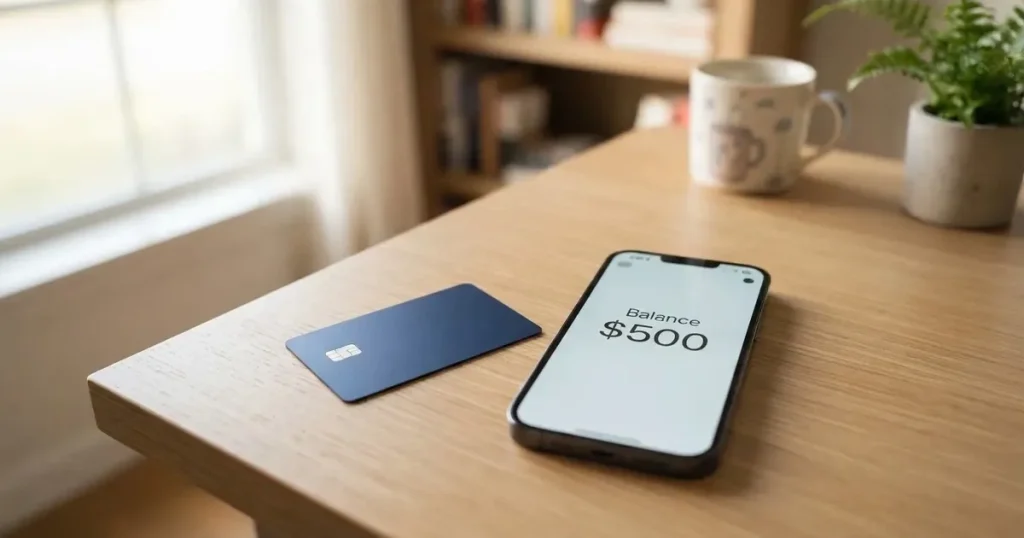
The hi card is a virtual Mastercard debit card that spends from an IBAN account or from crypto you hold on the hi platform. That is the whole product in one sentence, and the reason both the appeal and the problem sit in that sentence. If you already bank in euros or pounds, already hold funds with hi, and want a spare virtual card number for subscriptions and online spending, the idea is sensible. If you are hoping for a card that works anywhere, costs nothing, and stays put when the company changes its mind about which country you live in, the hi card is not that.
I scored it 4.9 out of 10. Not because the idea is bad, but because the card’s own public pages leave out exactly the things you need in order to decide: the fee schedule, the limits, the supported countries, the card networks for funding, and what happens to your balance if the service winds down. Add a thin public complaint record and a story of a market that shrank, and you end up with a product where you cannot price the risk before you commit money to it.
The conditions described here are current as of October 28, 2026.
The score at a glance
Here is the full breakdown, criterion by criterion, with the reasoning behind each mark.
| Criterion | Mark | Why |
|---|---|---|
| Who can get it | 5 / 10 | Countries are not named on the official page; unofficial accounts point to 25+ EEA countries and the UK at launch, with the UK later withdrawn |
| Cost | 8 / 10 | Fees are not disclosed officially; unofficial sources describe no transaction, FX or issuance fees, with issuance free after KYC — and later fees possible |
| Top-up options | 5 / 10 | Tied to a EUR or GBP IBAN, or paid from crypto held on hi with one secondary currency; coins and networks not named |
| Reliability and complaints | 2 / 10 | Trustpilot 1.8 from 587 reviews: withdrawal problems, the UK exit, blocked cards, losses on the HI token, fraud allegations |
| Everyday use | 3 / 10 | Virtual only; Apple Pay and Google Pay not named officially, with Google Pay reported broken in reviews; cash machine terms not disclosed |
That middle column is worth reading twice. Every strong mark rests on something unofficial, and the one mark that comes from the card’s own pages — everyday use — is the lowest of the mid-range scores because the essentials simply are not written down.
The audience that fits, in my reading, is narrower than the marketing suggests: existing hi app members in Europe who already pay from an IBAN and want a virtual card as a companion to that balance. For them the missing fee numbers matter less, because the money is already sitting in an ordinary account. For anyone arriving fresh, the same omissions are the whole decision.
Who gets the card, and who gets refused
Here is the honest answer: the official page does not name a single country. The starting data attached to the card is the EEA. Unofficial reporting, from Mastercard and press coverage around the 2022 launch, described the card as offered to members in 25+ EEA countries and the UK. Those same unofficial sources, plus user reviews, indicate the UK later left the picture.
If you live somewhere outside Europe, or in Europe but outside the EEA, you have no official statement telling you whether you are eligible. The support help centre carries an “Identity verification (KYC)” collection, which tells you the checks exist but not who passes them, what documents you need, or at what age. Documents and age requirements are not stated on the pages I read.
That last point is not a formality. Under anti-money-laundering law, regulated businesses must verify customers and assess risk, keep monitoring transactions and report suspicious activity. In the EU, customer due diligence covers name, address, date of birth, nationality and identity documentation, a sanctions check, the purpose of the relationship, and whether you are a politically exposed person. Nationality is screened separately from residence, because sanctions lists and issuer risk policy are applied to citizenship and country of birth as well as to your address. And if due diligence cannot be completed, EU rules require the institution to decline the relationship — which is why accounts get frozen pending documents rather than politely delayed.
So the answer to “can I get this card” is: probably if you are an adult in the EEA with a verifiable address, but the card never says so. Compare that with a competitor whose page does list exactly who it refuses, country by country.
Getting hold of it
The sign-up path is short, and short is good here. The card’s own text says: once your address has been verified, you can activate the card, and activation happens in the app, in the Card section. That is the entire published procedure — one address check, then a switch in the app.
What you get is a virtual debit card. The page announces that virtual debit cards are “now available”, with that wording dated to 30 June 2026. It works wherever Mastercard is accepted, which the card puts at more than 90 million merchants. Currency is EUR or GBP, matching the IBAN behind it. Whether a physical card exists is not stated on this page, so plan on not getting one.
The Identity verification collection in the help centre was not opened, so I cannot tell you the document list. What I can tell you is what the rule requires at minimum: proof of identity, proof of address, and a sanctions screen against your nationality. Prepaid and debit cards are generally available to adults aged 18 or over, and some issuers set higher limits on top of that.
One practical thing to check before you start: whether the app listing you use to sign up is the one the card actually points to. I could not identify the hi app listing through an App Store search, so I have no store ratings to report and no basis to compare it against anything.
Fees, limits and what a payment really costs
The blunt answer: the card does not publish its fees. Issuance fees are not stated, transaction fees are not stated, cash machine terms are not stated, and neither are daily or monthly limits. Any number I gave you here would be my invention, and that is precisely the problem.

Unofficial sources — a blog review, undated — describe no transaction fees, no FX fees and no issuance fee, with issuance free for eligible users who complete KYC, while noting that fees may apply later. Read that as a description of the past, not a schedule for the future. When a provider’s official page is silent and a third-party blog says fees are zero but might appear, the honest reading is: you do not yet know what this card costs.
Here is what the card does tell you about money:
| Item | What the card states |
|---|---|
| Issuance fee | not stated |
| Monthly or maintenance fee | not stated |
| Transaction fee | not stated |
| Currency conversion fee | not stated |
| Cash machine withdrawal terms | not stated |
| Daily spending limit | not stated |
| Monthly spending limit | not stated |
| Currency of the account | EUR or GBP, via IBAN |
| Tier or membership benefits | a “hi Benefits” collection exists in the help centre, based on HI held; not opened |
The benefits collection matters more than it looks. If limits or fees are tier-linked and your tier is set by how much HI you hold, then your costs depend on holding a token the card’s own users have reported losing value — which is a risk, not a discount.
Now let me walk through three ordinary payments, because that is where abstract fee gaps turn into real money.
A coffee in Berlin, EUR. Your IBAN is in euros, so the merchant bills in euros and the money leaves the euro balance directly. This is the cleanest case, and it is the case the card is genuinely built for. Unstated but almost certainly absent is any euro-to-euro conversion. What is not disclosed is whether the merchant’s terminal triggers anything else — a tipping prompt can become a separate authorisation, and a declined authorisation can leave a hold on your money for days, typically up to seven.
A subscription billed in dollars while your IBAN is in euros. This is where the missing FX line hurts. You pay in dollars, your account holds euros, and something has to convert. Every mainstream card either adds a fixed percentage on top of the network’s exchange rate or converts at the network rate and charges separately. The card states neither approach. There is also a second, subtler cost: the issuer’s country shows up in the merchant’s systems through the card’s identification number, and a shop may apply extra scrutiny — or decline outright — when that country differs from your billing address. This is common to prepaid and foreign-issued cards generally, not a hi-specific failing, but it lands on the same transaction.
A cash withdrawal at a machine abroad. Not stated, full stop. You do not know the fee, you do not know whether the machine operator charges on top, and you do not know whether the card works in machines at all. Since there is no physical card mentioned on this page, treat this as a question to ask support before you assume the answer is yes.
Two category-level costs are worth keeping in mind for the funding side. Network fees — gas, or bandwidth on networks that price that way — are charged by the blockchain for your deposit, not by the card provider, so they are unavoidable and outside anyone’s fee table. And address verification, which compares the numeric parts of the billing address a buyer types against the issuer’s records, is mainly offered in the US, Canada and the UK and is generally unavailable for foreign-issued cards, which can cause declines on online checkouts.
Top up options
The funding model is simple, and this is the section I can explain most cleanly, because the card states the mechanism rather than the numbers.
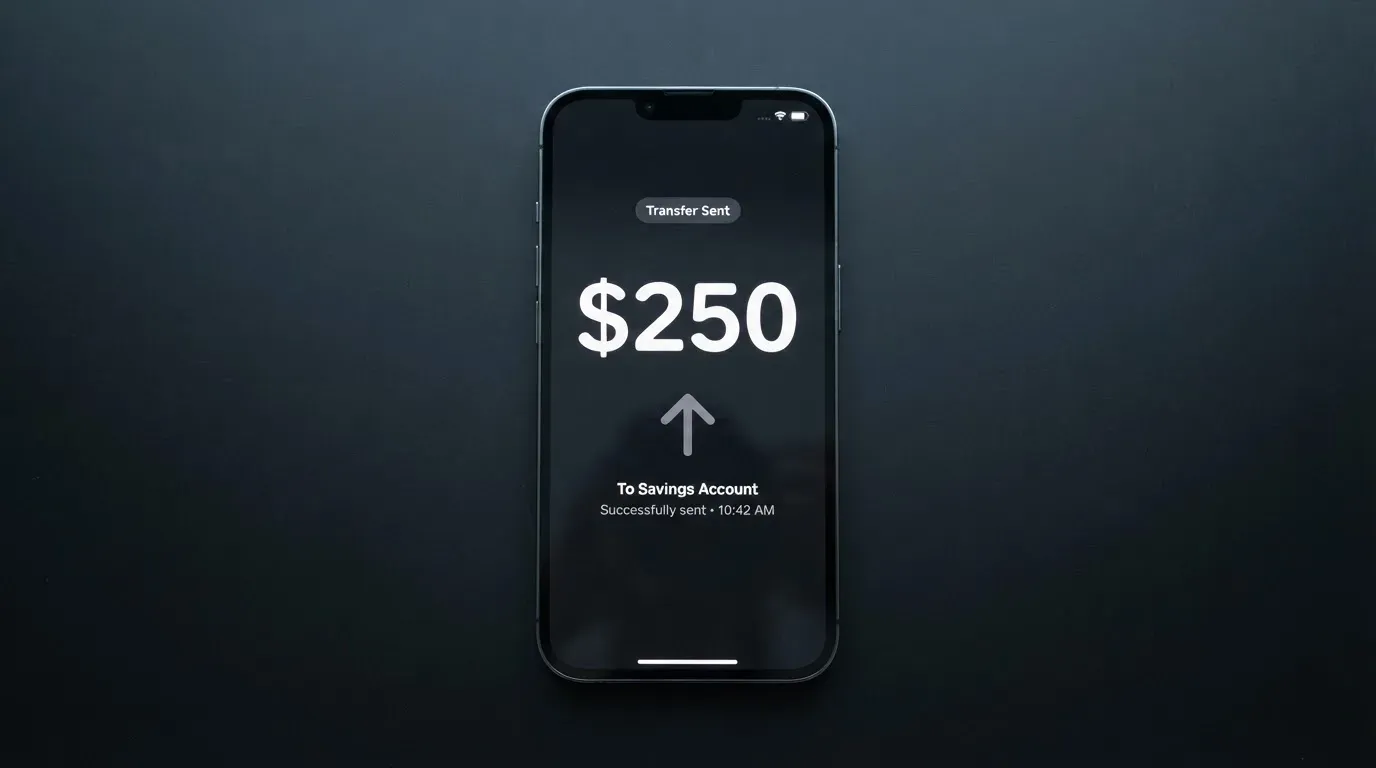
By default the card is linked to your personal IBAN and its currency — EUR or GBP. Transactions are covered by the funds in that IBAN. You can also pay with crypto you hold on hi, with one secondary currency at a time, set in the app under secondary payment currency. If your balance runs out, you top up, or you switch the secondary currency.
What is not stated: which coins, which networks, whether stablecoins are supported, what the minimum top-up is, how long a top-up takes, and how to withdraw money from the balance. That last one is the omission I would push hardest on, for reasons the next-but-one section explains.
This is worth comparing against what the rules of the category require in the background. Circle, for example, lists USDC as natively supported on 38 networks as of 16 September 2026, including Ethereum, Solana, Base, Polygon PoS, Avalanche, Arbitrum and Stellar, and says USDC is redeemable 1:1 for USD and fully backed by cash and cash equivalents, mostly in a government money market fund, with monthly reserve attestations. Tether describes USDT as a token built on multiple blockchains with reserves intended to back it one-to-one, issued on networks including Ethereum, Tron, Solana, Polygon and Avalanche. Neither of those statements tells you what hi supports. They tell you what a well-documented provider looks like.
One technical trap belongs here, because it is the single most common way people lose money on this kind of card. ERC-20 is the Ethereum token standard, and gas on Ethereum is paid only in ETH — so a wallet holding USDT but no ETH cannot send it. Tron prices internally with bandwidth and energy, often burning TRX. Circle stopped supporting USDC on Tron in February 2024, so “USDC over TRC20” is not a native option anywhere. And transfers are irreversible: a deposit sent on a network the provider does not support, or to an address belonging to a different network, can be lost or need manual support recovery with no guarantee of outcome. Ask which network to send on before you send, every time.
Paying with it day to day
Day to day, the hi card is a virtual Mastercard number that spends a balance. That is genuinely useful for subscriptions, for merchants you do not want to hand your main card number to, and for keeping spend separate. The card also says you can earn crypto rewards — with no rates or conditions given. Unofficial 2022 launch coverage describes 1–10% back on spending depending on tier.
Hold that reward figure loosely. User reports describe the cashback being cut, for example from 8% to 1% in July 2023, alongside tier changes in 2022–23. A variable, tier-dependent reward that has already been cut is an estimate of future spending, not a benefit you can bank on.
The everyday gaps are more concrete:
- Virtual only, on this page. No physical card is described, so it is a phone-and-browser tool rather than something you can hand over in a shop.
- Apple Pay and Google Pay are not named officially. In reviews, Google Pay reportedly did not work, during the same period users reported a card blocked for two months (August–September 2023). Apple Pay works differently from a stored number — it replaces the card number with a device-specific number kept in the phone’s Secure Element, with a one-time dynamic code per payment — so its absence matters more than it sounds, and so does the fact that an issuer can restrict a tokenised number by channel.
- No cash machine terms. Assume none until told otherwise.
- No dispute process published. Whether you can contest a charge, and how, is not stated. This matters: a chargeback is a refund ordered by the issuer, and in the US the reversal rights that protect ordinary debit card users come from Regulation E — with prepaid-card coverage varying and not something to assume. If your money sits behind a prepaid-style balance rather than a bank account, your protection may be thinner.
- Gambling and similar categories. The four-digit merchant category code 7995 covers casinos, betting and lotteries. Issuers block it by policy rather than by law, and the list varies by issuer. Hi does not publish one, so you cannot know in advance.
What can go wrong
This is where the review turns, and I want to be precise about what is a verified figure and what is a user report.
The Trustpilot picture, as of 21 October 2026, is 1.8 out of 5 from 587 reviews — with one review in the last twelve months. That single new review against a large historical body tells you the score is not being lifted by recent happy customers. The reported themes run from 2022 to 2025:
- Withdrawals and the UK exit (2023–24). UK members were reportedly told to withdraw by January, according to user reports in December 2023. Withdrawal problems and the exit feature repeatedly.
- Rewards cut and tier changes (2022–23). The cashback reduction mentioned above.
- Card blocked and Google Pay problems (2023). Two months of a card that would not work.
- Losses on the HI token and fraud or rug-pull allegations (2023–25). If the tier or the rewards are denominated in HI, this is the same bet twice.
I am treating all of that as user report, not as established fact — but a pattern repeated across 587 reviews is a pattern, and the card’s own pages do not contradict any of it.
The company question. The starting data names hi Technology Limited. Press coverage from 2022 says the card was issued by Moorwand Ltd, a Mastercard principal member, with a Contis partnership announced for the debit card and fiat accounts. The official page is silent on all of it. That gap matters more than it would for most companies, because of how this category is structured — the card network routes messages and sets rules, the licensed issuer holds the programme, and the crypto brand is often just the programme manager or marketing front end. The entity you have a contract with may not be the entity that issued your card, and the one whose licence governs your balance may be different again.
Why a licence in one country covers the whole EU. An electronic money institution in the EU can issue e-money, payment cards and e-wallets, but it cannot lend. It may serve the entire EU or EEA from a licence granted in one member state. That is how a small brand reaches many countries — and it is also why a single regulator’s decision can reach you everywhere at once.
What closing a programme looks like. The pattern is consistent enough to predict: a notice period, then spending and loading stop, then users are asked to withdraw remaining balances. A 2026 closure reported by a secondary source had new loads ending 8 July 2026 and spending stopping 8 August 2026 — one unconfirmed source, but the shape matches. Hi has given you no published withdrawal procedure, so I would treat that as the single most important thing to ask before you put money in.
Regulatory timing is not in your favour. MiCA, the EU’s markets-in-crypto-assets regulation, took legal effect in June 2023. Its rules on asset-referenced tokens and e-money tokens applied from 30 June 2024, with the remaining provisions including crypto-asset service provider rules from 30 December 2024. Critically, the transitional period lets providers already operating under national law continue only until 1 July 2026, or until they receive or are refused a MiCA authorisation, whichever comes first. A provider that never gets authorised has a hard stop. ESMA keeps an interim register of authorised CASPs, white papers and non-compliant entities — that is the first place I would check, not a review page.
What holding the money means. EMIs must safeguard customer funds by segregating them in dedicated accounts or insuring them. That is not the same as a bank deposit, and it may not be covered by a deposit guarantee scheme. Under US rules, FinCEN guidance treats administrators and exchangers of convertible virtual currency as money transmitters; in the EU a card is a payment service regulated separately from the crypto side, so a crypto card often depends on two licences. Underneath, if you are spending from a custodial balance rather than a bank account, the usual protections shrink — and crypto transfers are typically irreversible with no built-in recovery.
History is not on the industry’s side. Visa terminated its global agreements with FTX on 13 November 2022, and the FTX US debit card was wound down. WaveCrest, a Visa issuer that supplied crypto card brands, was suspended by Visa in Europe in 2018, closing all its programmes. Networks can switch programmes off.
On the tax side, one thing to know — not advice. The IRS treats digital assets as property, so exchanging them for goods, services or dollars generally produces a taxable gain or loss, measured in local currency at fair market value on the transaction date. In the UK and EU the treatment differs in detail. The practical takeaway is that each card payment funded from crypto may be a separate disposal that you need to be able to evidence, so keep records. This is a pointer to talk to a professional, not a recommendation either way.
What to take instead
I want to be fair to hi here: it is not a bad card, it is an opaque one, and for people already inside the hi ecosystem the opacity costs them little. But if you are choosing with fresh money, three alternatives publish considerably more.
| Alternative | Score | Card | Cost and fees | Funding | Who it is for |
|---|---|---|---|---|---|
| International Visa Card | 6.7 / 10 | U.S.-issued Platinum Visa, virtual, pays in USD; physical “coming soon” | $5 virtual issuance one-time, no maintenance; Classic free, Pro $9.00/month, Max $19.00/month; USD use free; foreign currency “Visa exchange rate + 2% FX fee”; deposits of any kind free | USDC or USDT into the USD account at 1:1 (per earlier check); networks not stated; also USD, EUR, SEPA, SWIFT, FedNow | Anyone who will not accept an unstated FX fee |
| UNi Card | 6.1 / 10 | Multicurrency Mastercard network, spends from the UNi.Global balance; physical or virtual not stated | “No annual fee or foreign transaction fee”; issuance fee not stated; conversion at “live OTC rates”, “no hidden exchange fees” | not stated | Someone who trades across currencies and hates being nickel-and-dimed |
| Whop Cards | 5.2 / 10 | Visa, works anywhere Visa is accepted online and in stores; virtual/physical and currency not stated; can be issued to team members | Page says “No extra fees”; no issuance or monthly amounts listed; conversion and FX amounts not stated | Spends from a Whop balance; pending balance usable once a payment arrives, standard withdrawals use settled funds; backed by stablecoin collateral from a linked wallet; coins and networks not stated | People whose income already arrives as a stablecoin |
Two things stand out from that table. First, the International Visa Card publishes the single number that matters most to a non-US resident — a 2% FX fee — and states its own geographic exclusions in detail, naming Belarus, mainland China, North Korea, Cuba, India, Iraq, Iran, Israel, Myanmar, Nepal, Nicaragua, Russia, Syria, Turkey, Ukraine, Venezuela and Vietnam as ineligible, with purchases blocked in North Korea, Cuba, Iran, Russia, Syria, Ukraine and Venezuela, and FATF grey-list countries reviewed case by case. It applies the rule by residence or legal registration, not citizenship. That transparency is worth something on its own.
Second, the two crypto-native options both have a hole of their own — UNi does not state its funding route, Whop does not state its fees in amounts — so none of the three is a clean answer. Whop’s rewards are 5% cashback at select merchants, currently Uber, with more planned and payout currency and conditions not stated. UNi’s are “Spend-to-Earn” up to 3%. The International Visa Card states no cashback at all.
My own ordering, for a reader who mainly wants to spend money without surprises: start by checking whether you qualify for the International Visa Card, because knowing your FX cost in advance is worth more than a headline reward percentage. If you hold funds across several currencies and trade actively, the UNi Card’s no-FX-fee structure is the more relevant shape. Whop Cards make sense if your money genuinely already arrives as stablecoin, and only then — its fee page is the thinnest of the three.
Who I would recommend it to
Back to the verdict, stated plainly. I would recommend the hi card to three groups, and I would warn the rest.
Existing hi app members in Europe who pay from an IBAN. You already have the account, the balance and the history. The card’s missing fee numbers irritate you less because the money is already in an ordinary euro or pound account. Just know it is virtual, and set your expectations about cash and mobile wallets accordingly.
Anyone who wants a throwaway virtual card number for subscriptions, as a second number that is not the one attached to your main bank account, with the balance kept small. Here the total amount at risk is the amount you are willing to lose, which is the correct size for an opaque provider.
People who read this page and still want it. A product does not owe you a fee schedule to be worth using — but if you use it, you are accepting the missing disclosures knowingly, not by accident.
I would not recommend it as your only card, as a place to hold money you cannot replace, or as a card to build a monthly budget on. Nobody should be picking a financial product on the strength of a score table — but if the score is 4.9 out of 10, and the things dragging it down are absent disclosures and a complaint record rather than a broken product, the practical test is simple: is the money you’d put on it money you could afford to have to withdraw at short notice? If the answer is yes, the card is a reasonable convenience. If the answer is no, the missing withdrawal procedure is the thing that should stop you.
Frequently asked questions
What is the hi card?
The hi card is a virtual Mastercard debit card issued through the hi platform. You spend from a euro or pound IBAN account, or from crypto you hold on hi using one secondary currency at a time. It is virtual only on the card’s page, works where Mastercard is accepted — more than 90 million merchants per the card — and is activated in the app once your address is verified.
How does the hi card work?
You link a personal IBAN in EUR or GBP, and the card draws on those funds by default. Alternatively you pay from crypto held on hi with one secondary currency selected in the app. If the balance runs out, you top up or switch the secondary currency. The card’s own pages do not say which coins or networks are supported.
Is hi a bank?
On the evidence available, not exactly. The starting data names hi Technology Limited, while 2022 press coverage says the card was issued by Moorwand Ltd, a Mastercard principal member, with a Contis partnership announced for the debit card and fiat accounts. The official page is silent. Treat it as a card programme with a licensed issuer behind it rather than a bank relationship.
Who can get the hi card?
The official page names no countries at all — the starting data is the EEA. Unofficial 2022 coverage describes 25+ EEA countries plus the UK at launch, with the UK later withdrawn. Documents and age requirements are not stated either, though prepaid and debit cards are generally for adults aged 18 or over.
Does the hi card require KYC, and how do you activate it?
Identity verification happens before the card is active — the card’s text says that once your address has been verified you can activate the card, done in the app’s Card section. A KYC collection exists in the help centre but the document list is not stated. Under EU rules, due diligence normally covers identity, address, date of birth, nationality and a sanctions check.
What does the hi card cost?
Officially, nothing is disclosed — no issuance fee, no transaction fee, no FX fee, no monthly fee, no cash machine terms and no limits are stated. Unofficial sources describe no fees and free issuance after KYC, while flagging that fees may apply later. Treat “no fees” as an unconfirmed past state, not a schedule.
How do you top up the hi card?
By default the card is linked to your IBAN currency, EUR or GBP, and transactions are covered by that IBAN’s funds. You can also pay with crypto held on hi, one secondary currency at a time, set in the app. Minimums, processing times and supported networks are not stated, and blockchain network fees apply to on-chain deposits.
Is the hi card safe?
Safety is not one thing here. Payment-network fraud tools exist, but the real issues are counterparty and disclosure: your balance may be e-money safeguarded in segregated accounts rather than a bank deposit, transfers are irreversible, and crypto card programmes have a history of sudden closure — Visa ended FTX’s agreements in November 2022, WaveCrest was suspended in Europe in 2018.
What do users complain about?
Trustpilot shows 1.8 out of 5 from 587 reviews as of 21 October 2026, with one review in the last twelve months. Reported themes: withdrawal problems and the UK exit in 2023–24, a cashback cut from 8% to 1% in July 2023, a card blocked for two months with Google Pay not working in August–September 2023, and HI token losses with fraud allegations from 2023 to 2025.
Is it worth it, and what should I check first?
Worth it if you already bank with hi and want a virtual number for online spending with a small balance. Check three things before anything else: whether your country is officially eligible, what the withdrawal procedure is if the service winds down, and whether the provider appears on ESMA’s interim register of authorised CASPs and non-compliant entities.
App and neobank cards put to the test – cryptocardtested
Content created by the «cryptocardtested» team