
The crypto card that is cheap to load and not cheap to spend
 Available in US
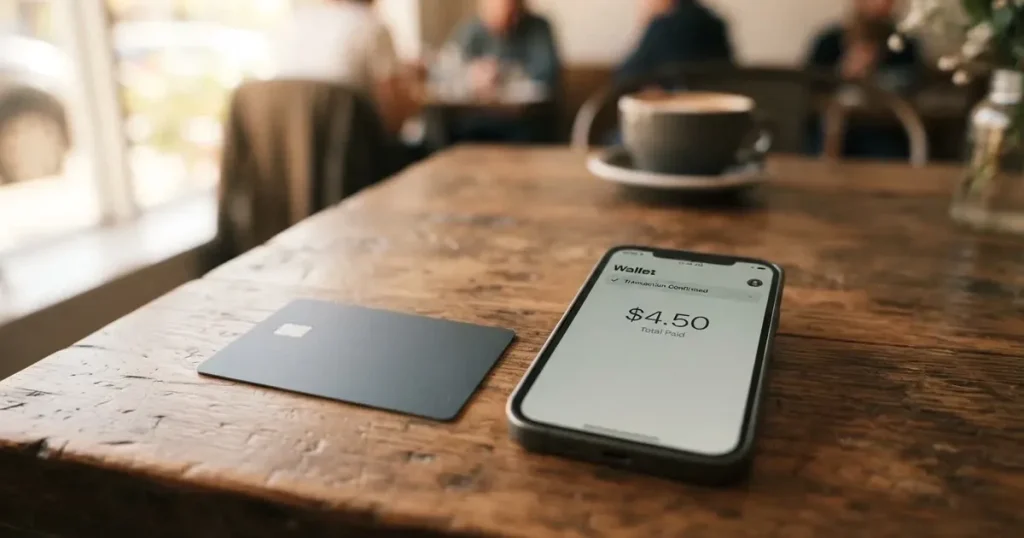
Karta is a Visa Signature card that lives inside Telegram, loads from USDT or USDC, and behaves less like a bank card than like a prepaid travel card with crypto rails bolted on. If you are someone who cannot get an ordinary bank card — no local account, a closed market, a currency you cannot easily hold — that is exactly the problem it is built to solve, and on its own terms it does it well. If you are someone who wants a normal debit card with a free year, look elsewhere: this one charges a percentage on every payment and keeps you in a stablecoin balance between purchases.
I went through the card’s own pages and what users and third-party reviewers say about it. The score below is my own, and I explain every line of it. Where the card’s public pages leave something out, I say so rather than filling the gap.
The conditions described here are current as of October 28, 2026.
Verdict: 7.9 out of 10
| Criterion | Mark | Why |
|---|---|---|
| Who can get it | 9 / 10 | Works in 200+ countries and territories where Visa is accepted; availability depends on local regulations and partner coverage |
| Cost | 7 / 10 | Virtual Visa activation 5.00 USDT, physical from 100.00 USDT; crypto top-ups free; card payments 1.5%; ATM 1.5% + 1 USDT |
| Top-up options | 10 / 10 | USDT or USDC on Tron (TRC-20), Ethereum, BNB Smart Chain, Polygon, Arbitrum, Optimism, Base, Solana; plus fiat rails — ACH, SWIFT, SEPA, PIX, SPEI |
| Reliability and complaints | 5 / 10 | Karta Finance Inc., not a bank, issuer not named; Trustpilot 3.9 out of 25 reviews, complaints about high fees; unofficial sources call “0% commission” and “25% cashback” misleading |
| Everyday use | 9 / 10 | Visa Signature, virtual and physical, Apple Pay and Google Pay, ATMs worldwide |
Two things pull this score apart, and they pull in opposite directions. Access and top-ups are genuinely strong — 200+ countries, eight networks, two stablecoins, plus bank wires in several currencies, is a wider choice than most competitors offer. Daily use is also strong in the ordinary sense: a real Visa Signature number, a physical card, Apple Pay and Google Pay, cash at ATMs. Those are the two categories a person who needs a card actually cares about, and both score 9 or 10.
The drag is cost and, more than that, reliability. Cost is 7 because the number is not small: a flat percentage on every purchase, an ATM fee on top of the network’s own withdrawal charge, and a card balance kept in stablecoins. Reliability is 5, and it is the weakest line on the sheet, for reasons that have nothing to do with whether the card works and everything to do with who stands behind it. The company is Karta Finance Inc., registered in Wilmington, Delaware, and it says outright that it is not a bank and that its funds are not FDIC insured. It does not name the entity that actually issues the Visa. Users rate it 3.9 out of 5 on Trustpilot from 25 reviews — a small sample, and small samples move easily — with complaints about fees and about not being told enough before registering.
I want to address the claims you may have seen elsewhere. Some unofficial write-ups, none of them from Karta, repeat “0% commission” and “25% cashback”. The card’s own fee page says card payments cost 1.5%, so a 0% claim cannot describe the card as it is presented today. A third-party aggregator also treats the cashback figure as misleading and says the reward is paid in a token that is hard to sell. Neither of those claims should shape your decision.
One more thing about who this suits. The card’s natural user is a Telegram user who already holds multi-network USDT and wants to spend it without selling to a bank first. If that is you, the top-up section of this review is the part that matters most, and it is the strongest part of the card. If you are in the United States or the EU and you have a functioning bank card, the 1.5% payment fee is a cost you have no reason to pay.
Will they give you the card?
Karta says it works in 200+ countries and territories wherever Visa is accepted. That is an unusually broad claim and, on the face of it, the strongest thing about the card. It is also qualified in the same breath: availability “depends on local regulations and partner coverage”. Those two sentences together mean something specific — the card is not blocked in a fixed list of countries the way some competitors are, but it can still be unavailable in a given place because of local rules or because no partner operates there.
So the honest answer to “is Karta available in my country” is: probably, but check. The card’s own pages say something less satisfying, and I want to flag it rather than paper over it — whether eligibility turns on your citizenship, your country of residence, or both, is not stated. That distinction matters more than it might look. Sanctions screening and issuer risk policy are applied to citizenship and country of birth as well as to country of address, so a card that is open to residents of a country may still not be open to citizens of certain ones. If your situation is complicated in that way, ask support directly before you load any money.
What I can tell you is that Karta does not publish a country list either way. There is no “restricted countries” page to check and no eligible-countries page to check against it. The Visa acceptance claim is the whole of the official position. One unofficial source, an aggregator with no date on its page, describes the verification step as requiring an email address, a phone number and an identity document, and says proof of address and a selfie are not required. I have no way to confirm that, and the card itself does not confirm it either — treat it as a hint about what to have ready, not as a checklist.
How to get it
The route is short and it runs entirely through Telegram, which is the single fact that most shapes what this card feels like to use.
You start the Karta Telegram bot. You verify your identity — the card describes this as “quick verification (it takes up to 5 minutes)”, done in the app inside Telegram. Then you top up, and the virtual card activates. That is the whole sequence: bot, verification, top-up, card. There is no application form, no branch, no waiting on a decision.
Two things you will not find written down. The card does not say which documents it needs or what age it requires. The unofficial description above is the only thing pointing at email, phone and ID document, and its author left no date on the page. Verification level, what each level unlocks, and the reasons a verification might be refused — none of that is stated. I would not build a plan around the five minutes, because a figure that reassuring tends to describe the happy path, and I would not send a large first deposit until I had seen the verification succeed.
The card itself is Visa Signature, available as a virtual card or a physical one. The card currency is not stated. That omission turns out to matter more than it sounds, and I come back to it in the costs section, because it decides what happens to the price of your coffee when you are not in your own country.
Physical cards activate from 100.00 USDT. Where they ship, how long delivery takes, what delivery costs, and what a replacement card costs — none of that is stated. If the physical card is a reason you are considering Karta, that is four unanswered questions, and you should have all four answered before you buy.
Fees: what it really costs
The card’s own fee page is unusually clear, which makes it easier to tell you exactly what you will pay. Two of the numbers surprise people in opposite directions: topping up is free, and paying is not.

| Fee or limit | Value |
|---|---|
| Visa Virtual activation | 5.00 USDT (the FAQ shows “30 USDT 5 USDT”, apparently an old price struck through) |
| Visa Physical activation | from 100.00 USDT |
| Virtual accounts | free |
| Monthly fee | none listed |
| Crypto top-up | free |
| Card payment | 1.5% |
| SEPA top-up | 1.5% + EUR 2 |
| SWIFT top-up (USD) | 1.4% + $2 |
| Send to crypto wallet | network fee only |
| ATM withdrawal | 1.5% + 1 USDT |
| Free ATM allowance or limits | not stated |
| Daily and monthly spending limits | not stated |
| FX fee | separate from the above, not stated |
| Card currency | not stated |
| Reward tiers | not stated on the site |
Now let that table sit for a second and notice the shape of it. A conventional bank card in most of the world is free to hold and free to spend: your bank earns a small percentage from the merchant and gives you the rest. This one charges you 1.5% of every purchase. That is not a foreign-exchange fee, not a loading fee, not a penalty for spending abroad — it is the price of using the card. Combined with an unknown FX cost on top, it means the card is meaningfully more expensive per purchase than the free bank card many readers already have. The reason to accept that is simple, and it is the entire reason to read the rest of this review: you may have no free bank card to compare it to.
Three everyday payments, priced against the published figures.
- A €40 grocery shop. The card fee on its own is 1.5%. If the shop charges in euros and your balance is not already in euros, a further conversion cost applies — and the card does not state what that is. This is the case where the missing FX figure hurts most, because you cannot total it.
- A $25 taxi. Card fee 1.5% again, plus whatever conversion applies if the fare is not in your balance currency. Note also that a taxi may add a small authorisation hold, and a declined authorisation can sit on a balance for several days.
- A €120 flight. The same 1.5%, and here the difference is no longer rounding error — it is a fixed amount you can see. If the airline sells in a currency you are not holding, the unknown FX fee attaches to the larger amount.
Two more lines in that table deserve comment rather than silence. There is no monthly fee listed, and there are no reward tiers on the site at all — the only card types named are Visa Virtual and Visa Physical. That is a simpler product than competitors that sell you a ladder of paid tiers, and for most people it is a feature. But Karta does market cashback on spending, claiming that the more you spend the more you earn, and neither the rate nor what currency the reward is paid in is stated. Unofficial sources quote a 25% figure and describe the reward as paid in KARAT points, at 1 KARAT = 0.01 USDT, referral rewards using the same points. Treat the percentage as unconfirmed and the points as real only in the sense that they exist.
One contradiction worth your attention. The card’s own page says ATM withdrawals cost 1.5% + 1 USDT. An unofficial aggregator says the ATM fee is free and withdrawals are “unlimited”. Those two claims cannot both be true, and the official page is the one I would plan around. The same aggregator says daily and monthly spending is unlimited on the virtual Visa, and that the Personal Visa Signature has a $25,000 daily spend limit. The card states no limits of its own — not stated, either way. If you are planning to move meaningful sums through this card, the limits are the thing to confirm in writing before you move them.
One more cost that is not on the card’s list at all: on-chain network fees for your deposit are charged by the blockchain, not by Karta. If you top up from a wallet on Ethereum, some of your money goes to the network, not to your balance.
Top up: how the money gets in
This is where Karta is better than almost anything else I have looked at, and if one section of this page convinces you, it should be this one.
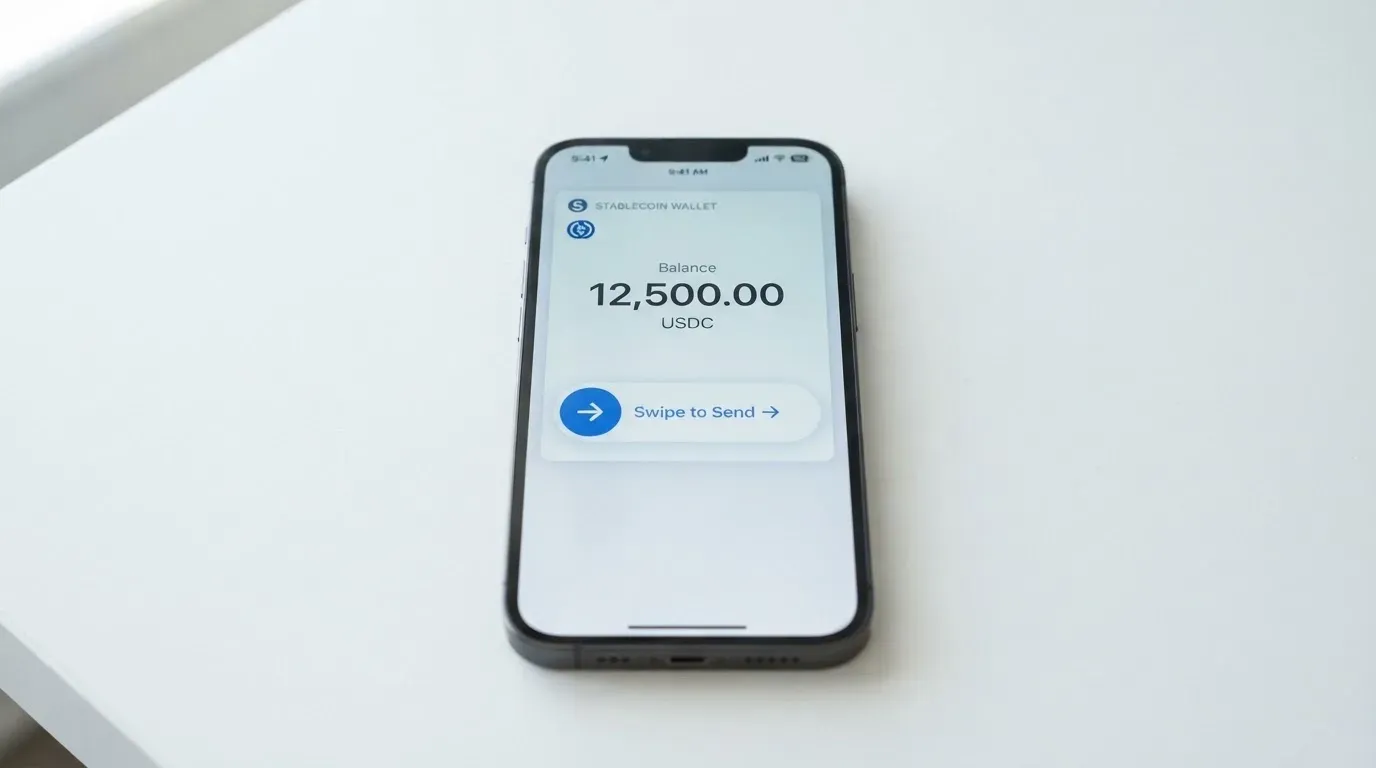
You can fund the card with USDT or USDC on eight networks: Tron (TRC-20), Ethereum, BNB Smart Chain, Polygon, Arbitrum, Optimism, Base and Solana. That list is the whole product, honestly stated. Covering eight networks and two major stablecoins means that whatever chain your exchange or self-custody wallet already sits on, you can almost certainly send from it directly — no bridging, no wrapping, no intermediary exchange where you would pay a spread to get into a network the card accepts.
You can also fund by fiat, depending on where you are: ACH, SWIFT, a domestic wire in USD, SEPA in euros, PIX in reais, a bank transfer in Colombian pesos, and SPEI in Mexican pesos. Crypto top-ups are free. SEPA costs 1.5% + EUR 2, SWIFT in USD 1.4% + $2. Sending on to an external crypto wallet costs the network fee only. The minimum top-up is not stated.
Two practical warnings that follow from how these rails work, and neither is a Karta rule so much as a fact about the plumbing.
First: getting money out. You can withdraw to an external crypto wallet at the network fee only. Bank withdrawals are listed as “coming soon” — so if you fund with a SEPA transfer and later want your money back as a bank transfer, that route is not open today. What happens to a balance if you close the account is not stated, and that is exactly the question to ask before you close one.
Second, and this is the one that costs people real money: send on a network the provider supports, to an address of that network. Crypto transfers are irreversible. A deposit sent on the wrong network can be lost entirely, or need manual recovery with no guarantee of success. Check the network twice. You will notice that USDC is the awkward one here — Circle stopped supporting USDC on Tron in February 2024, so “USDC over TRC20” is not a native option, while USDT on Tron is the chain most people in this category use.
And one thing to be calm about: stablecoins are not censorship-proof. Tether says it disables tokens in wallets on the OFAC sanctions list and has frozen funds tied to illicit activity. That is a fact about the asset you are loading, not about Karta, and it applies to every card that accepts USDT.
Paying with it every day
For ordinary spending, the card does the ordinary things well. It works as a Visa Signature, in virtual and physical form, at ATMs worldwide, and it is compatible with Apple Pay and Google Pay. That last point matters more than it sounds: tokenised mobile payments put a device-specific number in the phone’s secure hardware rather than the card number itself, and each payment carries a one-time code, so using your phone is both more convenient and safer than handing over a card number online.
Restricted merchant categories are not stated, and that is worth asking about if gambling is part of your life — many issuers block the category that covers casinos, betting and lotteries by policy rather than by law, and the blocked list is the issuer’s own.
The whole interface lives in Telegram. The site does not list App Store or Google Play ratings, and an unofficial source gives the Android app 3.0 stars. The card says the product is “used monthly by over 20,000 people”. The site’s news section is not stated — there is no way to see what changed and when.
Two more gaps, both of which I would rather name than pretend away. The dispute process — what happens when a payment is wrong, a subscription double-charges, a merchant takes the money and never delivers — is not stated. And whether you can raise a chargeback at all is not stated, which matters because a chargeback is a refund ordered by the issuer, and if you do not know who the issuer is, you do not know to whom you would even address the complaint. That is why I return to the missing issuer name below. In several countries, consumer protection for prepaid cards is thinner than for bank cards, and I am not going to tell you what your rights are here — check them for yourself where you live.
What can go wrong
The reliability score of 5 is not about bugs. The card apparently works. It is about structure, and it is worth walking through plainly.
Who stands behind it. Karta Finance Inc., 221 W 10th St, 4th Floor, Wilmington, DE 19801, USA. Not a bank. Not FDIC insured. The issuing entity is not named — the card refers to “regulated financial and card-issuing partners” and stops there. Licences are not stated. When something goes wrong, the question you want answered is which institution you make the claim against, and the card does not give you an answer. Nor does it say what safeguarding or insurance applies to your balance, if any.
This matters more here than with a bank, because of how these cards are built. Visa and Mastercard do not issue crypto cards to consumers themselves; they license issuers and can suspend a programme. That has happened. Visa terminated its global agreements with FTX on 13 November 2022 and the FTX US debit card was wound down. Visa suspended WaveCrest in Europe in 2018, closing all WaveCrest-issued Visa programmes. Programme closures follow a shape: a notice period, then spending and loading stop, then you are asked to withdraw what is left. A 2026 closure reported by a single secondary source had new loads ending 8 July 2026 and spending stopping 8 August 2026 — one unconfirmed source, but the pattern is real and it has happened to real users.
Where the money actually sits. The card lists a self-custody wallet, 3-D Secure, encrypted transactions and PIN protection. What it does not mention is two-factor authentication on the app or an instant card freeze, both of which are among the standard safeguards you would expect a card to offer. And “self-custody wallet” cuts both ways: it means you hold the keys, so key loss and phishing are on you alone. A seed phrase is typically 12 to 24 words in unencrypted form, and anyone who has it can restore the wallet and spend the funds. Transfers are irreversible, and there is no recovery mechanism when a key is stolen — the network cannot freeze or return anything. That is the trade: you keep the risk, and in exchange nobody can take your funds either.
What users say. Trustpilot 3.9 out of 5 from 25 reviews, read on 2026-10-20. Twenty-five reviews is a small base; one or two angry departures move that number a long way, and I would not read it as a statistically reliable rating. What it does show is that the complaints cluster on fees and on insufficient information before registration — one reviewer praises the setup, another says the fees are high, another says there was too little transparency before signing up. An unofficial aggregator scores Karta Virtual Visa 4.0 out of 10, flags the “0% commission” marketing as misleading, and repeats the Android rating. Treat all third-party scoring as opinion.
The stability of what you hold. Stablecoins aim to hold a stable value, but as the BIS put it in July 2025, about 90% of stablecoin market capitalisation sits in just USDT and USDC, and stablecoins are not necessarily stable. USDC lost its peg briefly in March 2023; TerraUSD collapsed in May 2022. Circle says USDC is fully backed by cash and cash equivalents with monthly reserve attestations, and lists it as natively supported on 38 networks as of 16 September 2026. Reassuring, and not the same as a bank deposit.
Support, if you need it. In-app chat, email at [email protected], a Help Center and Telegram. That is a reasonable set of channels. What the card does not state is how quickly it answers, or what happens to a disputed transaction.
What to take instead
If your problem is the one Karta solves, the alternatives below will not solve it better — they are narrower, more expensive, or both. If your problem is different, one of them may fit. I have scored each on the same basis, so the numbers are comparable.
Azul Card — 5.3 out of 10
Virtual only, Mastercard, works wherever Mastercard is accepted. Its strength is an explicit country list, which is more than Karta offers: usable worldwide except Russia, Belarus, North Korea, Iran, Syria, Cuba, Sudan, Venezuela, Ukraine and the Crimea, Donetsk, Luhansk, Zaporizhzhia and Kherson regions. The restrictions apply regardless of the user’s nationality — nobody can use the card in those places. Card creation is $20 one-time, refunded after $2,000 in spending, with $5 monthly maintenance. Crypto top-up costs 4% and each transaction $0.25; FX fee not stated. You fund by sending crypto to the card in Telegram, but the pages read do not name which coins or networks, and there is no bank transfer. No cashback, though the referral programme pays “up to 40% of our fees from every transaction made by your referrals”. A physical card is not available.
Telecard — 6.1 out of 10
Virtual Mastercard only, instant, USD card currency with a 1.5% conversion fee on non-USD payments, plus a 0.5 USDT gas fee per successful card transaction and cross-border fees “up to 3% each”. Two plans: standard $5 one-time, or VIP at $49 setup then $19 per month, with $15 for a VIP reissue — though the main page also says signing up is free with no monthly fee on the basic plan, so read carefully. A $99 minimum deposit activates the card and is stated as “not a fee” since it stays in your wallet. Funding is USDT on Tron (TRC-20) or Ethereum (ERC-20), or USDC on Ethereum (ERC-20); Polygon is not supported, bank transfers are “coming soon”, and the main page lists ETH and TRX while the help page does not. On geography: the site says over 150 countries and an identity check “available in most major regions”, with no list of supported or excluded countries — and the terms only bar users blocked or sanctioned by the US Government, including OFAC. Referral rewards are Fiorini, 1 USDT = 100 Fiorini, with an unstated cashback rate.
OnCards — 4.6 out of 10
The thinnest of the three on paper, and the clearest about it. Virtual only, a virtual Mastercard or Visa directly in Telegram with the network not fixed. No country list, no mention of fees at all — the site says “simple and clear fees — no hidden charges” without giving amounts — and no cashback. Funding is USDT on BEP20 only; bank transfers are not accepted. If you want a card where the published information is thin, this is the most honest thin card here, and I would still not choose it over Karta for everyday use.
The comparison at a glance
| Karta | Azul | Telecard | OnCards | |
|---|---|---|---|---|
| Score | 7.9 / 10 | 5.3 / 10 | 6.1 / 10 | 4.6 / 10 |
| Network | Visa Signature | Mastercard | Mastercard | Visa or Mastercard, not fixed |
| Physical card | Yes, from 100.00 USDT | No | No | No |
| Crypto top-up fee | Free | 4% | 0% deposit advertised | Not stated |
| Per-payment cost | 1.5% | $0.25 per transaction | 0.5 USDT gas per transaction | Not stated |
| Networks named | 8 | Not named | 2, Polygon unsupported | BEP20 only |
| Geographic clarity | 200+ countries, partner-dependent | Explicit exclusion list | 150+ countries, terms bar sanctions | Nothing stated |
The pattern in that table is the useful part. Karta is the only one of the four that names its networks in full, charges nothing to load, and offers a physical card. It is also the only one whose fee on ordinary spending is high enough to matter if you have any banking option at all.
Who I would recommend it to
If you cannot open a normal bank card — because of where you live, your citizenship, your currency, or simply because no local bank will have you — Karta is one of the more capable ways to hold and spend crypto, and the top-up coverage across eight networks is genuinely the best thing I have seen in this category. The cost is fair for that situation, and the free crypto top-up means the 1.5% on purchases is not the only thing you are paying.
If you can get an ordinary card, do not switch to this one for everyday spending. A free bank card with Apple Pay will beat 1.5% per purchase plus an undisclosed currency conversion cost every single time, and you will get proper deposit protection, a named bank, and a dispute process that is written down somewhere.
Before you load money, in this order:
- Ask which entity issues the card. This is the question none of the pages answers, and it decides who you complain to.
- Ask what your balance is safeguarded in and what happens to it if the programme closes.
- Confirm your daily and monthly limits, and whether your country is served by a partner.
- Get the FX cost and the card currency in writing — the 1.5% is only half the cost of an ordinary purchase.
- Check physical card delivery countries, time and cost before paying from 100.00 USDT.
- Confirm the USDC network. USDC over TRC20 is not a native option since February 2024.
And one thing that is not a card matter but will eventually be a bill: in the United States the IRS treats digital assets as property, so spending crypto produces a taxable gain or loss measured in dollars at the value on the date of each payment. Each card payment funded from crypto can be a separate disposal. That is a fact, not advice — what it means for you depends on your situation, and you should take it to someone qualified rather than to me.
Frequently asked questions
What is Karta?
Karta is a Visa Signature payment card — virtual, physical, or both — issued through Karta Finance Inc. and operated from inside Telegram. You load it with USDT or USDC across eight blockchain networks, or with fiat through bank rails such as ACH, SWIFT and SEPA, and then spend the resulting balance like an ordinary card at shops, online and at ATMs. Karta says it is not a bank and that its funds are not FDIC insured.
How does Karta card work?
It behaves more like a prepaid card than a debit card. You convert or send crypto into a balance, and the card spends only that balance, so it cannot overdraw. The company running the crypto side is often just the front end: Visa routes the payment and sets the rules, while a licensed issuing partner holds the card programme. Karta does not name that partner, which is the single most useful fact it could publish.
Is Karta a bank?
No, and it says so plainly. Karta Finance Inc. is registered in Wilmington, Delaware, and states it is not a bank and that balances are not FDIC insured. Cards like this are usually issued by an e-money institution or a bank working with the crypto brand as programme manager. It also does not state what safeguarding or insurance applies to your money, which is worth asking about directly.
Does Karta require KYC, and what documents?
The card describes a “quick verification (it takes up to 5 minutes)” completed in the app inside Telegram, and does not list documents or an age requirement. An unofficial aggregator says email, phone and an identity document are required and proof of address and a selfie are not, but that page carries no date. Anticipated verification levels, what each unlocks and grounds for refusal are all not stated.
Is Karta card free?
Partly. Activating the virtual Visa costs 5.00 USDT and the physical one from 100.00 USDT, though the FAQ shows “30 USDT 5 USDT”, apparently an old struck-through price. No monthly fee is listed. Crypto top-up is free, but card payments cost 1.5% and an ATM withdrawal 1.5% + 1 USDT, so “free” describes loading, not spending.
Is Karta card safe and is the crypto safe?
The card lists a self-custody wallet, 3-D Secure, encrypted transactions and PIN protection, and it works with Apple Pay and Google Pay. It does not mention two-factor authentication or an instant card freeze. Self-custody means no provider can move your funds — and also that key loss and phishing are entirely your problem, since crypto transfers cannot be reversed.
Can I use Karta card in my country?
Karta says it works in 200+ countries and territories where Visa is accepted, with availability depending on local regulations and partner coverage. Whether eligibility depends on citizenship, residence or both is not stated, which matters because sanctions screening often follows citizenship. There is no published country list, so if your status is unusual, confirm with support before depositing.
Is Karta card worth it?
For someone without an ordinary bank card, yes: eight networks, free crypto top-ups, Visa Signature, Apple Pay and Google Pay, and worldwide ATM access. For someone with a working free bank card, no: 1.5% per payment plus an undisclosed currency conversion cost is more than a normal debit card charges. It is a tool for a specific problem, not a better version of a normal card.
How do I withdraw money from Karta?
You can send crypto to an external wallet and pay only the network fee. Bank withdrawals are listed as “coming soon”, so a fiat route in does not currently have a fiat route out. What happens to a remaining balance if you close the account is not stated — ask before you ever close one. Also check the network before sending: a transfer on an unsupported chain can be lost.
Can I get cash from an ATM?
Yes, the card offers global ATM cash access. The official fee is 1.5% + 1 USDT, with no free allowance stated, and you will also pay the ATM operator’s own charge. An unofficial source claims the fee is free and withdrawals unlimited, which contradicts the card’s own page — plan around the official figures and confirm your limits in writing.
Virtual cards put to the test – cryptocardtested
Content created by the «cryptocardtested» team