
Lava card, reviewed: a bitcoin-rewards Visa for the people regular banks have said no to
 Available in US
Lava is one of those crypto cards that markets itself as a payment card rather than a crypto product. There is no annual fee, no foreign-currency fee, and the headline reward is “up to 5%” back in bitcoin. The catch, and there is always a catch, is that the card is what the industry calls a *secured* card. The balance you spend comes out of a USD-denominated account backed by collateral you have put down, not out of a credit line. That single design choice shapes almost everything about who Lava is for and who should walk away.
This is my take after reading through the Lava terms, the comparison page and the press around the card, and lining those up against the things readers actually want to know: can I get one, what does it really cost me, how do I put money on it, what does daily use look like, and what are the failure modes? I have not held the card in my hand, so I have written this as a desk review with the card’s own wording in the foreground.
Conditions are current as of October 28, 2026.
Verdict
Lava scores 7.1 out of 10 in my reading of its own terms and the public materials. That is a respectable score for a niche product: a Visa-branded, secured card that pays bitcoin back, with no annual or FX fees, designed for people outside the United States. The number is not higher because important pieces of the picture are not stated in public, the rewards differ sharply by where you live, and the underlying model is “collateral-backed” rather than credit, which limits how many people can use it for everyday life.
I would hand the card to a non-US-resident who already holds bitcoin or stablecoins, lives somewhere an ordinary bank account is hard to open, and treats the card as a way to convert and spend crypto at point of sale without separately opening a brokerage. I would not hand it to someone who expects a credit card, a $0 balance to start, or a fully disclosed fee schedule in the small print.
Here is the score table with the criteria I weighed and a one-line reason for each.
| Criterion | Mark | Why |
|---|---|---|
| Who can get it | 7/10 | Spend works in 150+ countries, but the card is built for people outside the US, and there is no public country list. |
| Cost | 8/10 | No annual fee, no FX fee, no FX spread. ATM is 2% with a $1 minimum. The issuance fee is not disclosed. |
| Top-up options | 7/10 | Stablecoins or local currency, on Ethereum, Polygon, Optimism or Arbitrum. Specific coins are not named. |
| Reliability and complaints | 7/10 | Issued by Third National under a Visa licence. No public complaints found, but the collateral can be liquidated on a “Liquidation Event” and Lava is not a bank. |
| Everyday use | 6/10 | Visa, virtual and physical cards mentioned, ATM 2%. Apple Pay and Google Pay are not disclosed. |
| Total | 7.1/10 | A solid secured Visa for non-US bitcoin holders, with gaps in disclosure. |
If you read no further than this paragraph, take two things away. First, this is a card that pays bitcoin back rather than points; the upside is straightforward if you already think in BTC. Second, it is built on collateral, not credit, so the spending limit floats with what you have put down and can be set to $0 by the issuer at any time.
Who Lava will and will not give the card to
The card is pitched at people outside the US. The international terms require you to attest that you are “not a United States citizen” and not on a US sanctions list, and the card is intended for personal, family or household use. There is a separate US terms document, but the main product the comparison page is selling is the non-US version.
That is the only real eligibility statement the card makes on the public pages. The card issuer, Third National, does not publish a list of accepted countries, and the comparison page points only to “150+ countries” of merchant acceptance. That is the spend-side figure: where the card *works*, not where Lava is *willing to send it*. For the list of countries you can actually order the card to, you have to read the international terms in full or contact client services.
What I would check before applying:
- Your citizenship and your country of residence, because the terms screen on both.
- Any sanctions-list exposure, including indirect ones, because the terms name it as a hard cut-off.
- Whether you are over the age of majority in your country. The card pages do not name a minimum age, but the issuer’s cardholder agreement is for adults.
- Whether you have a local bank account or a stablecoin wallet in one of the four supported networks, because the top-up paths assume one or the other.
What is not stated publicly: a list of supported countries, a minimum age, or the documents required to verify your identity.
How to get the card
The card is called the “Lava Card” and is meant to spend at 150 million merchants in 150+ countries. It is a Visa. The terms describe it as a “secured” card that draws on a USD balance, and a “Visa credit card” in some passages; the international terms do not draw a clean line between physical and virtual, but virtual and physical are both mentioned, and replacements go through the Lava account.
The application path is the Lava app on mobile and web. App Store and Google Play links are not on the site, and Lava has not published KYC processing times, tiers, or what the issuer will ask for. The terms only say you have to give “true, complete” information and pass the sanctions check, and the cardholder agreement channels are where card issues go.
What is not stated publicly: the issuance fee, the KYC documents, the time to issue, and the cost or lead time of a replacement.
I have to be straight with you: the gap between what is on the public site and what a regulated card usually discloses is wider than I would like. If you go into this card expecting every fee and every turnaround time on a one-page summary, you will be disappointed. If you go in expecting to have a short email exchange with client services to confirm your country and your documents, you will be fine.
What the card really costs
This is the strongest part of the Lava pitch. The card has no annual fee, no foreign transaction fee, and no FX spread. The comparison page says there are no exchange fees or spread on bitcoin buy/sell either. So the headline number is genuinely zero for the things that bite most cards on the market.
The bits that do cost money are:
- ATM withdrawals: 2% with a $1 minimum, in the international terms. A separate Lava page says ATM withdrawal is fee-free in all 50 US states, which is a US-context remark. The free allowance and the maximum cash you can take out in a day are not stated.
- Issuance: not stated. The card pages do not publish a one-time fee for the physical or virtual card.
- Borrowing against bitcoin: if you use the BLOC feature to borrow USD against your bitcoin, separate terms apply and rates are fixed between 6.50% and 8.50%.
Spend is from a USD balance, and non-USD transactions are billed with 0% FX fee, 0% cross-border fee, and “zero spread” on the foreign currency. Multi-currency balances are not stated, which I read as: there is one USD balance, and that is what you pay with.
There are no minimum-spend rules, and the card is single-tier: no paid metal or premium version, no higher monthly fee for more rewards. Reward rates vary by where you shop rather than by what tier you hold, which I will come back to in the everyday-use section.
Here is the costs table, values from the card’s own terms.
| Fee or limit | Value |
|---|---|
| Issuance fee | Not stated |
| Monthly / annual fee | None |
| Foreign transaction fee | 0% |
| FX spread | 0% |
| Crypto exchange fee (buy/sell) | 0% |
| ATM withdrawal | 2% with $1 minimum (international terms); fee-free in 50 US states (US context) |
| Daily / monthly spend limit | No fixed limit; tied to USD value of collateral, reducible to $0 at any time |
| Minimum spend | None |
| Card tiers | Single tier |
Three everyday payments and the fees they trigger
To translate that table into something you can feel, here is what three typical purchases look like.
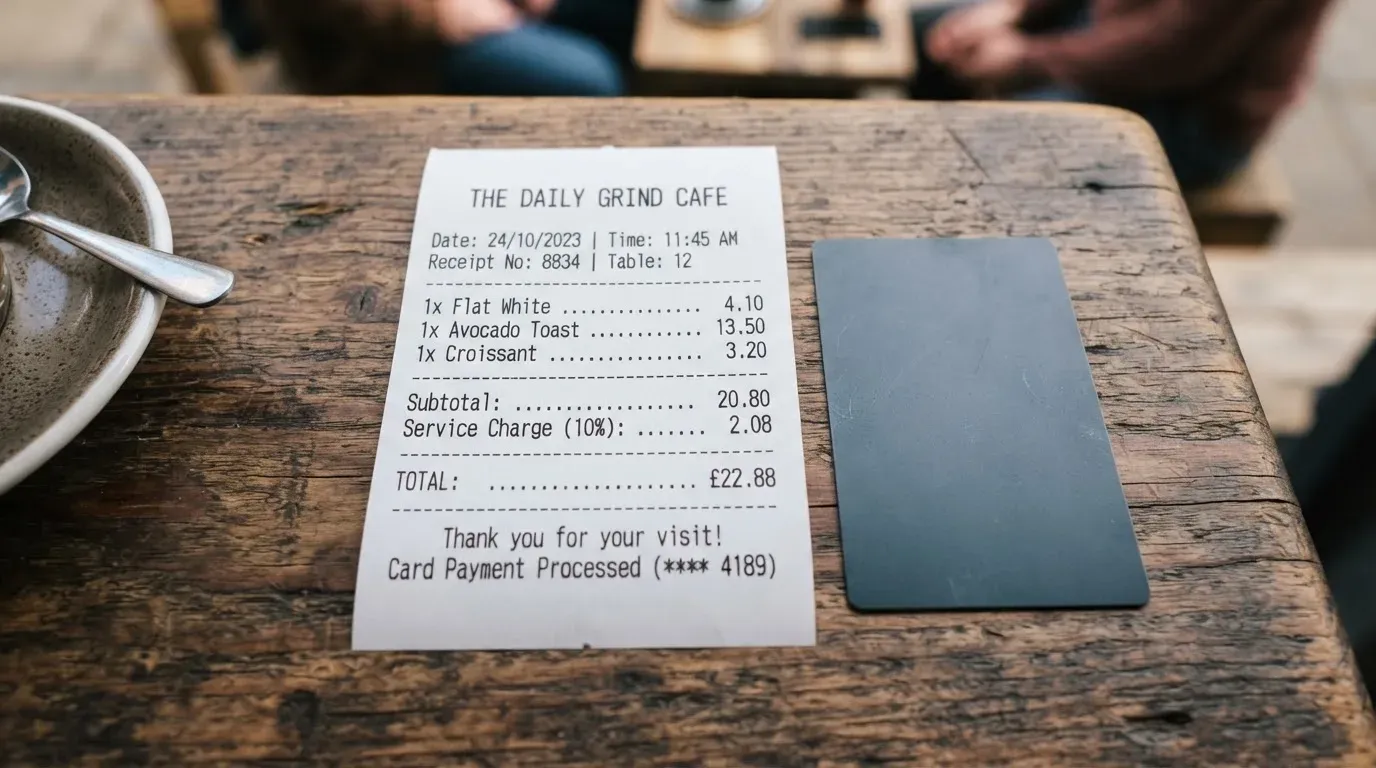
Coffee in euros, paid in Paris. You tap the card, the merchant charges you in EUR, Visa converts at the wholesale rate, the issuer debits your USD balance, and the conversion is 0% FX fee, 0% cross-border fee, 0% spread. The only thing that costs you money is the bitcoin-back reward calculation, which is a credit, not a charge.
A laptop from a US store, paid in USD. Pure domestic USD transaction, no FX at all, no fees on Lava’s side, reward applied as per the rate at the merchant (see below). This is the cheapest possible use of the card because nothing has to be converted.
Cash from an ATM. The card charges 2% with a $1 minimum, applied to the USD equivalent at the wholesale rate. Whether the ATM operator charges you on top is between you and the operator; Lava’s own fees end at 2%.
The pattern: in-store and online card payments are essentially free on Lava’s side, and the only Lava-controlled charge is the ATM fee. Anything else you pay is on-chain, on your bank, or on the ATM operator.
How to top up the Lava card
The top-up section is where Lava shows its colours. You can put money on the card in two broad ways: a transfer of local currency from a bank, or a stablecoin transfer on one of four blockchains. The international terms list the supported collateral blockchains as Ethereum, Polygon, Optimism and Arbitrum — what the card calls a “Supported Blockchain”. Specific stablecoins are not named on the page, and the deposit fee and minimum top-up are not stated.
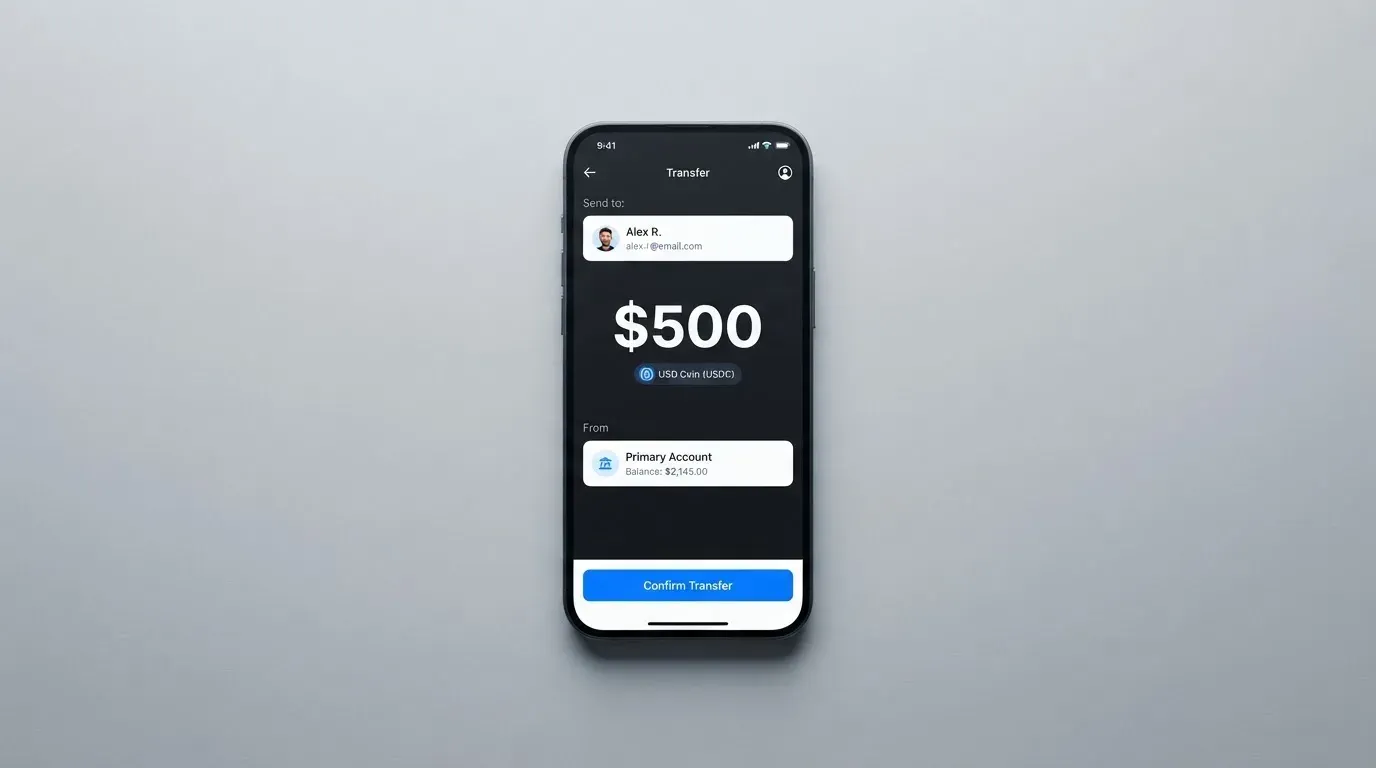
The methods, in Lava’s own words:
- Stablecoin transfer, instant and 24/7.
- Bank transfer from a local bank account.
- Direct deposit, presumably employer- or platform-driven.
- Borrow USD against bitcoin via BLOC, which has its own terms and rates between 6.50% and 8.50%.
The terms do not list USDT, USDC or DAI by name, but Ethereum, Polygon, Optimism and Arbitrum are the four networks the collateral wallet runs on, so the practical reality is that you need a wallet that can send a stablecoin on one of those four chains. Circle publishes USDC as native on Polygon, Arbitrum and the OP-mainnet, and on Ethereum, which is the cleanest match. USDT is also issued on Ethereum and on Polygon, less commonly on Optimism or Arbitrum in the public listings I would trust. If you only have USDT on Tron, that is a real problem: Circle stopped supporting USDC on Tron in February 2024, and Tron is not on Lava’s list, so you would have to bridge out first.
Two more points to weigh:
- On-chain fees are not Lava’s. The blockchain charges them, and you pay them in the network’s native asset — ETH for an ERC-20 transfer on Ethereum or Optimism, for example. If your sending wallet has no ETH, the transfer will not go out.
- Transfers are irreversible once a blockchain confirms them. Lava says you can deposit by stablecoin transfer, but if you send on the wrong network or to a deposit address for a different chain, no one at Lava can roll that back for you. This is the single biggest practical mistake readers make with this category of card.
The withdrawal path back to fiat or crypto is the soft spot of the disclosures. Cash advances and balance transfers are not available. The card is secured, the issuer can suspend or cancel the account at any time, closure does not cancel what you owe, you can prepay without penalty, and the collateral can be liquidated on a “Liquidation Event” — which the terms define as a payment unpaid one calendar day or collateral below charges. The path to take your USD balance back out, to a bank or to crypto, is not stated in the public pages.
Paying with it every day
The day-to-day picture is mostly positive, with two real gaps.
The positives: a Visa that spends from a USD balance at 150 million merchants, virtual and physical cards both mentioned, ATM 2% (or fee-free in 50 US states in the US context), 24/7 US-based client services by email or phone, and a set of included Visa benefits that are unusually broad for a secured product. Those benefits are:
- Purchase protection up to $20,000.
- Extended warranty up to $25,000.
- Global auto rental insurance.
- Travel accident insurance.
- Lost luggage insurance.
The reward side is the most-asked-about and the most-confusing piece, because Lava is honest that the rate depends on where you are and what you are buying. The “up to 5%” headline is real, but the breakdown is:
- 5% bitcoin back at partner merchants.
- 3% on other purchases, for US cardholders, per Lava’s comparison article.
- 1% for non-US cardholders, on the same article.
- Some merchants and categories are ineligible.
- Rewards are issued when a transaction settles, not when you tap.
- A 100,000-satoshi minimum applies before you can redeem, per a Lava announcement.
The pattern that matters: the headline is 5%, the realistic everyday rate for a non-US cardholder is 1%, and the 5% only kicks in at partner merchants. The Visa benefits do not depend on the rate, so the package is broader than the reward number alone.
The gaps:
- Apple Pay and Google Pay are not stated on the public pages. If a mobile wallet is the way you pay, that is a question to ask client services before you apply.
- Blocked categories are not stated. Some issuers exclude gambling, crypto purchases or cash-equivalent purchases; Lava has not published a list.
- The app experience is described as available on mobile and web, but the third-party App Store listing I would see — “Lava: Secure Bitcoin Loans”, 4.8/5 from 132 reviews, last updated 16 February 2026 — suggests the public-facing app is the bitcoin-loans product rather than a dedicated card app.
Disputes follow the standard pattern: you have 60 days after a charge posts to raise it, you are asked to try the merchant first, chargebacks resolved in your favour are credited on a current or future statement, and any card-level problem goes to the issuer through the cardholder agreement channels. That is the regulated path; it does not change the fact that the underlying balance is collateral and a chargeback does not rehypothecate the issuer’s funds.
What can go wrong
Three things can hurt you specifically with this card, and the terms spell them out. None are unique to Lava, but on a collateral-backed product the consequences are different.
The “Liquidation Event”. The terms let Lava sell your collateral if a payment is unpaid one calendar day or your collateral value falls below the charges on your account. The point of a Liquidation Event is to protect the issuer from credit loss, but on a secured card the effect is to convert your crypto into USD at Lava’s chosen time, not yours, to settle what you owe. If the market moves against you while you have an unpaid charge, you can lose more than the charge itself.
Issuer discretion. The card is not a credit card in the unsecured sense. The terms let the issuer “suspend or cancel the account at any time”, and your spending limit can be reduced to $0 at any moment. The same terms say you can prepay without penalty, so closing on your side is fine; it is the issuer’s ability to move first that is worth knowing about.
No FDIC-style insurance on the balance. Lava says it is not a bank, says it does not rehypothecate (“we don’t trade, lend out, or otherwise use your funds”), and describes its infrastructure as something that “minimises trust and eliminates single points of failure”. The collateral sits in a wallet on a supported blockchain. Insurance on the balance is not stated, and the issuer itself, Third National at 2100 Southbridge Pkwy STE 650, Birmingham, AL 35209, is a small US bank I have no independent public track record on. The governing law is Puerto Rico and the arbitration seat is New York, which is a thing to know before you click.
Two further things to be aware of:
- No public complaints page or Trustpilot profile came up in my search. That cuts both ways: there is no pile of bad reviews to warn you off, but there is also no third-party track record of how the issuer handles problems.
- The card runs from a single USD balance. If you live in Europe and get paid in EUR, the top-up involves a conversion (from a bank, with whatever fee your bank charges) before the USD balance is even touched.
What to take instead
The honest answer is that the closest peers to Lava are not direct competitors. The card I would point a reader towards depends on what they actually want. I have lined up three alternatives and given the same treatment I gave Lava, using the public pages only.
Gemini Credit Card
The Gemini credit card is a Mastercard World Elite credit card, paid off in fiat, with rewards paid in bitcoin or 50-plus other cryptos on Gemini. There is no annual fee and no foreign transaction fee, but the KYC path is not published on the public page and the issuance fee is not stated. Rewards are richer than Lava’s: 4% on gas, EV charging and transit (capped at the first $300 a month), 3% on dining, 2% on groceries, 1% on everything else, paid instantly into the crypto of your choice. There is also a referral bonus. The trade-off: this is a credit card, not a secured card, so eligibility is on credit rather than on collateral, and the rewards are paid in Gemini’s own programme, not in bitcoin you already hold. Score: 4.9/10 in my own read of the public materials — strong product, weak disclosure on the card page.
GoMining Card
The GoMining card is virtual today with a physical version “coming soon”. Top-up is with BTC, USDT, GOMINING and other coins from a GoMining wallet, and opening a card grants a free 1 TH miner. Cashback is paid in mining power and rises with VIP level, with “up to 5%” as the headline. The fees, the network and the card currency are not stated on the card page, and the card “may not be available in your jurisdiction”. Score: 6.6/10 in my read, mostly because the cashback model is unusual and the eligibility map is honest about being narrow.
Kinesis Virtual Card
The Kinesis virtual card is a virtual card, with the network and card currency not stated on the public page. Spending converts gold (KAU), silver (KAG), crypto or C1USD at point of sale from a Kinesis account, and the headline cashback is 2% paid in gold, with a “6 months free from launch” access window. Fees, the KYC path and the supported jurisdictions are not stated on the public page. Score: 4.8/10 in my read, with the conversion-at-point-of-sale model being the most distinctive part.
The honest comparison, side by side:
| Card | Type | Back | Where it suits |
|---|---|---|---|
| Lava Card | Secured Visa, USD balance | Up to 5% BTC at partners, 1% non-US / 3% US otherwise | Non-US bitcoin holders with collateral |
| Gemini Credit Card | Mastercard World Elite credit card | Up to 4% in BTC or 50+ cryptos | US residents with a Gemini account |
| GoMining Card | Virtual, physical coming | Up to 5% in mining power | GoMining users who want the miner perk |
| Kinesis Virtual Card | Virtual, multi-asset | 2% in gold | Users already inside the Kinesis system |
If you are outside the US and want a Visa that spends from a crypto-backed USD balance, Lava is the most direct match. If you want a credit card with stronger everyday rewards, Gemini is the better deal in the US but not a direct fit elsewhere. If you want a card that pays cashback in something other than bitcoin, GoMining or Kinesis are closer to your use case, with their own disclosure gaps.
Who I would recommend Lava to
I would recommend the Lava card to three kinds of readers, and I would steer the other kinds away.
Yes, in this order of fit:
- A non-US bitcoin or stablecoin holder who already has a self-custody wallet on Ethereum, Polygon, Optimism or Arbitrum. The card is essentially a fiat off-ramp at point of sale. The 1% non-US rate is real if low, the 5% partner rate is worth chasing at the merchants you already use, and the absence of FX fees makes travel a clean experience.
- A non-US freelancer or remote worker who is paid in stablecoins and has trouble opening a bank account locally. The card is collateral-backed, so it is not a credit decision, and the USD balance is what the merchant sees. This is the use case Lava is actually built for.
- A non-US traveller who wants a Visa with broad acceptance, no annual fee, no FX fees, and a path to fiat off-ramp at the till. The included Visa benefits (purchase protection, extended warranty, rental insurance, travel accident, lost luggage) make the package broader than the reward rate alone suggests.
No, or not yet:
- US residents looking for a credit card. The international terms exclude US citizens, and the US version has its own terms, which I have not reviewed in detail here. The Gemini card is a better fit in the US.
- Anyone expecting a credit line, a $0 start, or a fully disclosed fee schedule in the small print. Lava does not publish KYC documents, processing time, issuance fee, ATM free allowance, daily cash limit, withdrawal path, blocked categories, mobile-wallet support, or country list. If that matters to you, this is not your card.
- Anyone uncomfortable with collateral liquidation. The Liquidation Event is the risk you sign up for, and a 24-hour missed payment is enough to trigger it. If you would not be comfortable with that, the credit-card alternatives are safer.
The single thing I would ask the issuer before signing up:
> I live in my country. I am a citizen of my country. Please confirm in writing that I can be issued a card, what the issuance fee is, and what the KYC documents are.
If they cannot or will not answer, the card is not for you.
Frequently asked questions
What is the Lava card?
Lava is a Visa credit card branded by Lava and issued by Third National under a Visa licence. It is a “secured” card, which means spending is drawn from a USD balance you fund, rather than from a credit line the issuer extends to you.
How does the Lava card work?
You fund the card by transferring local currency from a bank or by sending a stablecoin on Ethereum, Polygon, Optimism or Arbitrum. The card holds a USD balance against that collateral, and at point of sale it debits that balance. The reward is paid in bitcoin once a transaction settles.
Is Lava a bank?
No. Lava says it is not a bank. The card is issued by Third National, a small US bank in Birmingham, Alabama, which is the entity behind the Visa programme.
Where is the Lava card available?
The international terms are for people outside the US, and the card spends at 150 million merchants in 150+ countries. Lava has not published a list of countries it will actually issue to, so the safe move is to ask client services before you apply.
Does the Lava card require KYC?
The terms require true, complete information and a sanctions-list check. The card’s public pages do not list the documents required, the processing time, or any tiered KYC levels, so the answer in practice is “yes, but the details are not on the site”.
How do I top up the Lava card?
You can top up with a stablecoin transfer (instant, 24/7), a bank transfer from a local account, a direct deposit, or a USD loan against your bitcoin via BLOC. The supported collateral networks are Ethereum, Polygon, Optimism and Arbitrum.
Is the Lava card free?
There is no annual fee and no monthly fee. The ATM withdrawal fee is 2% with a $1 minimum outside the US context, the issuance fee is not stated, and the supported coins and minimum top-up are not stated on the public pages.
How do I add the Lava card to Apple Wallet or Google Pay?
The public card pages do not say whether Apple Pay or Google Pay are supported, and the App Store listing I would expect to see describes the app as “Lava: Secure Bitcoin Loans” rather than a dedicated card app. Email client services at [email protected] to confirm before you rely on either wallet.
Is the Lava card safe?
The card is a Visa, the issuer is a licensed US bank, and Lava says it does not rehypothecate customer funds and stores collateral on a supported blockchain. The things to weigh are the Liquidation Event clause, the absence of stated balance insurance, and the issuer’s right to suspend or close the account at any time.
How do I close or delete my Lava account?
The terms allow you to prepay without penalty, and the cardholder agreement channels are the route for card-level issues. Contact 24/7 client services by email at [email protected] or by phone at (347) 588-9745 to start the process.
Credit and cashback cards put to the test – cryptocardtested
Content created by the «cryptocardtested» team